
REVIEW · VISTULA RIVER CRUISES
1 Hour Traditional Gondola Sightseeing Vistula River Cruise
Krakow looks different from the river. This 1-hour Vistula cruise gives you a mellow, low-effort way to see Wawel Castle and the bridges around Kazimierz and Podgórze, while the Polish-English audioguide keeps things moving. My favorite part is how calm it feels for the time you spend, but one thing to plan for is that it is not a long ride, so you will mostly spot highlights from the water.
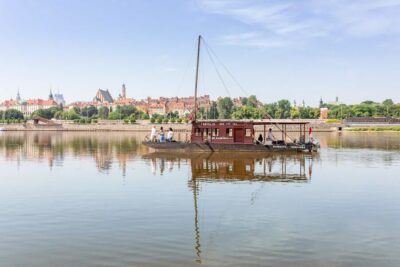
I also like the boat setup. The traditional wooden gondola is built in the style of Polish folk boatbuilders and it is designed for a cozy group, plus you get helpful onboard audio and clear pointing out of what you are passing. My only real caution is practical: there is no restroom on the boat, so use facilities at the dock before you board.
If you want a simple Krakow break that is scenic, easy, and reasonably priced, this is a strong choice. It starts and ends at the same place near the Kazimierz waterfront, so you do not have to fight your way across town again afterward.
In This Review
- Key Things I’d Bet You’ll Like
- Why the Vistula Cruise Changes How You See Krakow
- Getting On Board at Barka Mauretania (and What to Expect Up Front)
- The Wooden 12-Person Gondola Vibe: Cozy, Calm, and Surprisingly Practical
- Following the River, From Kazimierz Toward the Bridges
- The Old Bridge Link: Kazimierz to Podgórze
- On the Rock Church: St. Michael and St. Stanislaus
- Big River Crossings and the Wawel Moment
- Grunwaldzki Bridge: Old Town Meets Podgórze
- Wawel Hill and the Royal Castle at the River Bend
- Dębnicki Bridge: A 1951 Landmark in Steel and Concrete
- Zwierzyniec and Salwator: Green Breathing Space on the Way
- Zwierzyniec District: Between Two Rivers
- Salwator and Kościuszko Mound
- Rudawa River and the Norbertan Sisters Monastery Pass-By
- Rudawa River: A Drinking Water Source
- Norbertan Sisters Monastery: 17th-Century Reconstruction
- Dębniki’s River Crafts to the Manggha Center of Japanese Art
- Dębniki: Where Leather and Fabric Crafts Happened
- Manggha Center of Japanese Art: A Wave-Shaped Building
- Podgórze and Father Bernatek’s Footbridge: Romance, Art, and Memory
- The Podgórze Bank: A Different Krakow Mood
- Father Bernatek’s Footbridge: The Bridge of Lovers
- Cricoteka and Tadeusz Kantor: Theater Meets the River
- Rolling Back to Kazimierz: Finishing Where You Started
- Price and Value: Is $17.80 a Good Deal?
- Timing Tips: When to Go and How to Stay Comfortable
- Who This Cruise Is Best For
- Should You Book This 1-Hour Wooden Gondola Cruise?
- FAQ
- How long is the Vistula river cruise?
- Where does the cruise start and where does it end?
- What is included with the ticket?
- Are drinks included in the price?
- Is the gondola small?
- Is there a restroom on the boat?
- What sights will I see during the cruise?
- Is the ticket mobile?
- Is cancellation free?
- Are service animals allowed?
Key Things I’d Bet You’ll Like
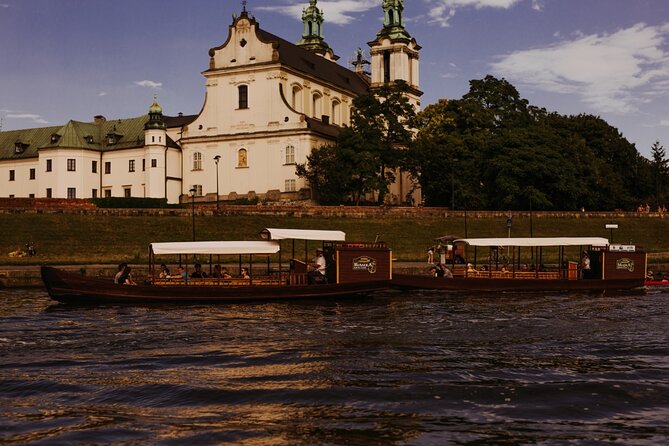
- A traditional wooden gondola made for a small group, with a timeless feel
- Wawel Castle views from the Vistula plus multiple bridges and river landmarks
- Audio commentary in Polish and English that explains what you are seeing as you go
- A calm, easy pace for about 1 hour, good for afternoons or evenings
- Dockside drinks nearby at the meeting point, but food is not included
- Small-group feel (max 24 travelers) that often feels more personal than big sightseeing boats
Same river, different boats. Our other Vistula reviews
- Krakow: Sightseeing Cruise by Vistula River
★ 4.1 · 1,897 reviews - Krakow: 1-Hour Evening Vistula River Cruise
★ 4.1 · 952 reviews - Krakow: Vistula River Sightseeing Cruise with Audio Guide
★ 4.4 · 820 reviews - Krakow: Sightseeing Cruise on Vistula River with Audio Guide
★ 4.4 · 480 reviews
Why the Vistula Cruise Changes How You See Krakow
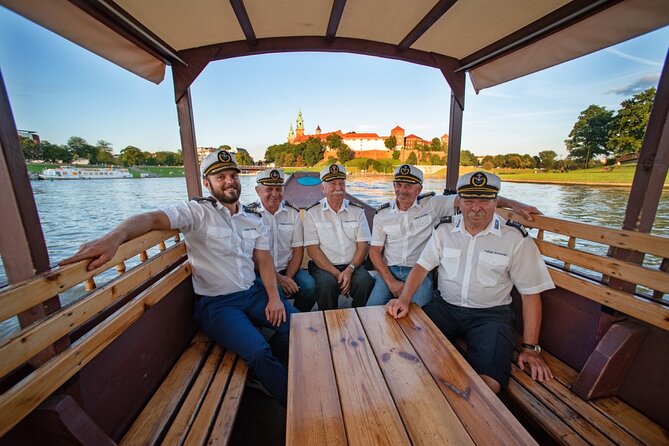
Krakow is easy to experience on foot, but the river adds a second layer. From the water, Wawel sits in a bend of the Vistula like it was placed there for a reason, and the city’s bridges become part of the skyline instead of just roads you cross.
This cruise is built for people who want movement without rushing. You get around a dozen or so well-chosen stops and viewing moments, but the whole experience is still about one hour, so you can pair it with dinner, a walking loop in Kazimierz, or a museum visit without eating up your entire day.
The value is strongest for travelers who like “high payoff per minute.” For $17.80 per person, you are paying for a short river circuit plus onboard audio narration, not a complex multi-stop bus day.
Getting On Board at Barka Mauretania (and What to Expect Up Front)
You meet at Barka Mauretania, located at Bulwar Kurlandzki 137/7, 31-061 Kraków. The tour ends back at the same meeting point, which makes the whole thing easier to slot into your plans.
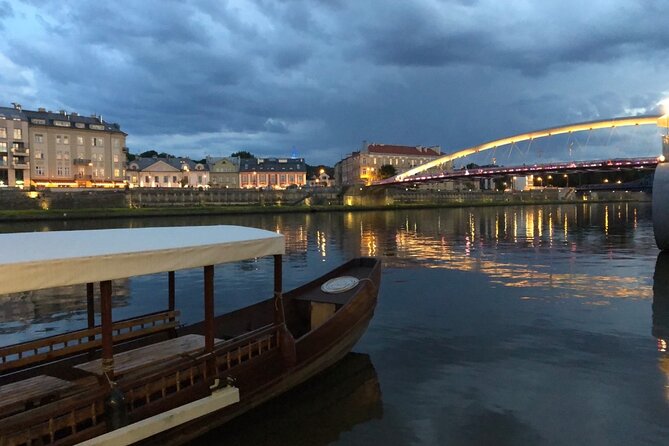
The ride itself is on a traditional wooden gondola-riverboat designed to feel old-school. It is made entirely of wood, built using historical patterns of spruce or oak wood, with modern wood preservation and connections so it is considered safe. In plain terms: it looks charming and feels sturdy, not flimsy.
This is also a boat where your choice of where you sit matters. In past rides, people have recommended getting to the top deck for the best views, and an onboard sound system helps you catch the narration as you pass each landmark.
One small reality check: there is no restroom on the boat. Plan to handle that at the dock before boarding, especially if you are traveling with kids or you do not want to step away mid-cruise.
The Wooden 12-Person Gondola Vibe: Cozy, Calm, and Surprisingly Practical
The company’s “traditional gondola” approach is not just marketing. The design is meant for a compact onboard experience. The boat is described as a traditional wooden gondola for about 12 people, which keeps it from turning into a loud cattle-car situation.
That size matters because of how the ride feels. People tend to describe the cruise as peaceful, and it is easy to understand why. Even when you are moving through the more built-up parts of Krakow, you are still on a river, with an easy pace and fewer distractions than on a busy street.
Comfort extras also show up. One review specifically mentioned blankets provided, which is a big deal if you go when the weather turns or if you are sensitive to cool river air. If rain rolls in, the ride is still enjoyable, since you are under cover and the narration continues as you pass major landmarks.
Following the River, From Kazimierz Toward the Bridges
The cruise starts in Kazimierz, Krakow’s historic district on the left side of the city’s old river story. This matters because it sets the tone. Kazimierz has a mix of Jewish and Christian heritage, and from the water you get a calmer read on the neighborhood than you do when you are weaving through streets.
From the start you are also watching bridges come and go. Bridges on the Vistula here are not just infrastructure. They are viewing platforms and timeline markers.
Here are the viewing highlights you will catch in order, and what to look for:
Below are the other Krakow trips we have logged
- Kraków: Evening or Night River Cruise★ 4.0 · 7,386 reviews
- Krakow: Evening Cruise with a Glass of Wine★ 4.0 · 1,054 reviews
- Krakow: Vistula River Cruise with Historical Views★ 3.5 · 357 reviews
- Krakow: UNESCO Bochnia Salt Mine Tour & Boat Expedition★ 5.0 · 284 reviews
- Krakow: Vistula River Sightseeing Cruise with Audio Guide★ 3.9 · 270 reviews
The Old Bridge Link: Kazimierz to Podgórze
Early on, you pass the bridge in Kraków connecting Kazimierz and Podgórze. The key detail is that it is described as the oldest complete road bridge in Kraków over the Vistula River that still stands today. From the boat, you can see how old routes shaped the city’s growth, not just modern traffic patterns.
On the Rock Church: St. Michael and St. Stanislaus
Next is Church On the Rock, dedicated to St. Michael and St. Stanislaus the Bishop and Martyr. It is listed as one of Krakow’s oldest sacred monuments, and the narration also points you toward the Three Millennium Altar in the church’s garden. The fun here is that the church sits where the city’s story and the river’s motion meet, so it feels like a snapshot rather than a distant landmark.
Big River Crossings and the Wawel Moment
This is where the cruise starts delivering that “yes, this is why we came” feeling. The closer you get to the royal core of Krakow, the more the river framing makes Wawel feel like a centerpiece.
Grunwaldzki Bridge: Old Town Meets Podgórze
You then pass Grunwaldzki Bridge, a crossing that connects the Old Town with Podgórze. One practical detail is that there are water tram stops on both banks near the bridge, so this area functions like a transport hub, not only a view.
Wawel Hill and the Royal Castle at the River Bend
Then comes the anchor: Wawel Hill with the Royal Castle. It sits in a bend of the Vistula, and it is described as the former seat of Polish kings. From the boat, Wawel’s position makes sense in a way it sometimes does not from land. You see it as part of the river loop, not just a hill you have to climb.
In reviews, people often single out this castle view as the best payoff. If you only have limited time in Krakow and you want one “wow” moment without buying more tickets or walking uphill, this is that moment.
Dębnicki Bridge: A 1951 Landmark in Steel and Concrete
After Wawel, you pass Dębnicki Bridge, currently built in 1951. It is 157 meters long and 19 meters wide, supported on two spans. This is a good stop if you enjoy contrast. Wawel is the old seat of power, and then you see a bridge from the mid-20th century, showing how Krakow kept rebuilding and connecting as the river city evolved.
Zwierzyniec and Salwator: Green Breathing Space on the Way
Not every part of Krakow on the river is pure monument viewing. Some sections feel more local, more everyday, and that is part of the charm.
Zwierzyniec District: Between Two Rivers
You glide through Zwierzyniec, described as stretching between the Vistula and Rudawa rivers and noted as one of the greenest areas of Krakow. From the deck, this tends to feel like the cruise takes a breath. The contrast between city buildings and greener stretches is what makes the ride feel relaxing rather than just sightseeing.
Salwator and Kościuszko Mound
Then you reach Salwator, including the area of the former Zwierzyniec village. Here you see Kościuszko Mound, one of Krakow’s recognizable forms. Even if you do not jump off to explore, seeing it from the water gives you a better mental map of the city’s geography.
Rudawa River and the Norbertan Sisters Monastery Pass-By
These are the “quiet but meaningful” moments. You get fewer huge headline sights and more places that help you understand Krakow as a lived-in city with religious and community sites close to the river.
Rudawa River: A Drinking Water Source
The Rudawa River, described as the left tributary of the Vistula, is noted as one of Krakow’s drinking water sources. The narration here helps you connect what you see to how the city works, not just what it looks like.
Norbertan Sisters Monastery: 17th-Century Reconstruction
Next is the Monastery of the Norbertan Sisters. The current appearance comes from major reconstruction in the 17th century, and the description includes the monastery’s motto: One heart, one soul in God. From the boat, monasteries tend to look more monumental because you are watching them from a consistent, moving distance.
If you like architecture and you enjoy understanding why buildings have the shapes they do, this stop is worth paying attention to even if it is not the most famous name on the river.
Dębniki’s River Crafts to the Manggha Center of Japanese Art
The cruise also threads in history and culture beyond the “big ticket” landmarks.
Dębniki: Where Leather and Fabric Crafts Happened
You pass Dębniki, described as the former village location where craftsmen made tannins for dressing leather and dyes for dyeing fabrics among oak forests. This is one of those narration moments that makes the river feel connected to everyday work, not only royal power and tourist highlights.
Manggha Center of Japanese Art: A Wave-Shaped Building
Then comes Manggha Center of Japanese Art. It is described as a modern building whose shape resembles a wave of the Vistula. The concept behind it also comes through: it was intended as a house for a Japanese art collection in Krakow. Even if modern architecture is not your top interest, the river angle makes the wave-like form easier to “get” in one glance.
Podgórze and Father Bernatek’s Footbridge: Romance, Art, and Memory
On the right bank, Podgórze adds another chapter. It dates back to a city founded at the end of the 18th century. The area also includes flint deposits linked to Paleolithic and Neolithic settlement, with Slavic settlement developing from the 7th century. You do not need a lecture degree to feel the depth of time here, because the river keeps moving and the city keeps layering.
The Podgórze Bank: A Different Krakow Mood
From the deck, Podgórze can feel more open and less staged than the inner core. It also helps you understand Krakow as a city of neighborhoods, not only a postcard center.
Father Bernatek’s Footbridge: The Bridge of Lovers
You then pass Father Bernatek’s footbridge, a pedestrian and bicycle bridge connecting Kazimierz with Podgórze. It is built on the site of the former Podgórze Bridge and is described as a bridge of lovers. This is a great visual moment to watch because footbridges feel more intimate when you can see the water beneath them.
Cricoteka and Tadeusz Kantor: Theater Meets the River
You also pass the Museum of Tadeusz Kantor, located in the former building of the Podgórze power plant. The focus here is on the work promoted by Cricoteka across theater and visual arts.
From the water, this kind of adaptive reuse hits differently. Power plant buildings are typically industrial and plain, but turning that space into art space keeps the city’s industrial bones visible while giving them a new role. If you like culture that is not trapped in old palaces, this is a nice reminder that Krakow’s story did not stop with castles.
Rolling Back to Kazimierz: Finishing Where You Started
The cruise ends back at Kazimierz, and you return to the starting dock at Barka Mauretania. That’s a practical win. You do not need to coordinate transport after, and you can walk off the cruise in whichever direction fits your evening plans.
If you are pairing this with time in Kazimierz, the best part is that you can “see first, walk second.” The cruise gives you the river geography, then the streets become easier to navigate because you already know where major landmarks sit relative to the water.
Price and Value: Is $17.80 a Good Deal?
For $17.80 per person, you are paying for three main things: a 1-hour Vistula cruise, onboard audio narration, and the traditional wooden gondola experience. Since the tour includes a Polish-English audioguide and you do not need to rent anything or find a driver, it is a fairly low-friction way to get guided city context.
What is not included is also clear. You should expect coffee, tea, and food not included. Drinks are possible around the starting point, since the meeting area is linked with a bar, but you will still want to bring or buy anything beyond that.
If you compare this to longer half-day tours, the price feels more about efficiency than depth. In exchange, you get the best highlights without spending your whole day traveling between sites.
Timing Tips: When to Go and How to Stay Comfortable
Because the cruise is about one hour, your timing choices matter more than on longer tours. If you can, plan for a time when you can relax at your pace after. A calm afternoon or early evening tends to fit well.
A couple of practical pointers based on what people liked:
- If the deck has open seating upstairs, aim for top deck for the views.
- Bring a light layer. Reviews note blankets provided, but weather can still shift quickly near water.
- If it is rainy, the cruise still works, but you will feel more comfortable if you are prepared for damp conditions.
Also, keep one small thing in mind: the route passes through urban sections as it moves between key river areas. That is not a problem, it just means this is not a wilderness cruise. The tradeoff is that you get lots of landmarks in one compact hour.
Who This Cruise Is Best For
This is a good fit if you:
- Want a low-stress Krakow activity that does not require museum lines or big climbs
- Like guided context but do not want a long bus tour
- Are traveling with family members who still want something scenic and easy
- Care about seeing Wawel Castle from the Vistula without committing to an entire day at the site
It may be less satisfying if you expect the entire cruise to be nonstop “only iconic spots.” The river includes city sections and a few quieter stretches, and the ride is short by design.
Should You Book This 1-Hour Wooden Gondola Cruise?
Yes, if you want an efficient, scenic Krakow moment with easy onboard narration and a charming traditional boat. The biggest reasons to book are the Wawel Castle river views, the calm one-hour pace, and the fact that the experience stays focused without dragging on.
I would skip it only if you are the type who needs a deep, long-form guided tour. This cruise is about getting the highlights, feeling the river, and then moving on with your day. If that sounds like your style, this is a solid value pick.
FAQ
How long is the Vistula river cruise?
The cruise is about 1 hour.
Where does the cruise start and where does it end?
It starts at Barka Mauretania on Bulwar Kurlandzki 137/7, 31-061 Kraków and ends back at the same meeting point.
What is included with the ticket?
The ticket includes the 1 hour Vistula River cruise and a Polish-English audioguide commentary.
Are drinks included in the price?
No. Coffee and/or tea and food and drink are not included, though drinks are available at the starting bar area.
Is the gondola small?
The traditional wooden gondola is described as a comfort-focused boat for about 12 people, and the tour has a maximum of 24 travelers.
Is there a restroom on the boat?
No restroom is available on the boat, so it is best to use facilities at the dock before boarding.
What sights will I see during the cruise?
You pass areas and landmarks such as Wawel Hill and the Royal Castle, multiple bridges, Church On the Rock, Kościuszko Mound, Manggha Center of Japanese Art, Podgórze, Father Bernatek’s footbridge, and the Museum of Tadeusz Kantor.
Is the ticket mobile?
Yes, the tour uses a mobile ticket.
Is cancellation free?
Yes, free cancellation is offered, with a full refund if you cancel at least 24 hours before the experience start time.
Are service animals allowed?
Yes, service animals are allowed.
More Cruises & Boat Tours in Krakow


More Tour Reviews in Krakow
Krakow From the Water


Recently written up around Krakow
More Vistula River Cruises.
 ★ 4.1Sightseeing Cruise by Vistula RiverFrom $201,897 reviews
 ★ 4.6Traditional Galar Cruise on The Vistula RiverFrom $201,640 reviews
 ★ 4.11-Hour Evening Vistula River CruiseFrom $23952 reviews
 ★ 4.4Vistula River Sightseeing Cruise with Audio GuideFrom $18820 reviews
 ★ 4.4Sightseeing Cruise on Vistula River with Audio GuideFrom $26480 reviews
 ★ 3.5Vistula River Cruise with Historical ViewsFrom $22357 reviews
★ 3.9Vistula River Sightseeing Cruise with Audio GuideFrom $18270 reviews
 ★ 3.5Krakow by night 60 minutes cruise The Vistula River KrakowFrom $25245 reviews
Also on these Poland lists