
REVIEW · KAZIMIERZ JEWISH QUARTER TOURS
Jewish Krakow Walking Tour
One walk can change how you see a whole city. This Jewish Krakow tour strings together synagogues, streets, and WWII sites into a story you can actually follow, not a random checklist. I love that it starts with the Old Synagogue and keeps moving toward the WWII reality at Plac Bohaterów Getta.
Two things I especially like. First, the guide-led narrative helps you understand what the places meant to real people, not just what they look like today. Second, you get guided time at key moments like the hidden Schindler’s List courtyard, where the movie connection comes with the real story behind it.
One possible drawback: several stops are shorter and you will be outside, with a strong emphasis on moving and listening. If you prefer long, sit-down museum pacing, this may feel like a lot of standing in one place at a time, especially in cold or wet weather.
In This Review
- Key highlights you’ll feel immediately
- Why this tour begins at the Old Synagogue
- Szeroka Street and Remuh Synagogue, reading the Jewish Quarter
- Market Square, where the neighborhood’s story includes life after the damage
- The Mrs. Dresner courtyard and stairs, Schindler’s List with the real story
- Plac Bohaterów Getta, the WWII ghetto square that needs time
- Eagle Pharmacy, a non-Jewish witness inside the ghetto story
- Price and what you really get for $26.60
- Timing, walking pace, and weather reality
- What guides do well on this walk, and why it matters
- Should you book this Jewish Krakow walking tour?
- FAQ
- What language is the tour offered in?
- How long is the Jewish Krakow walking tour?
- Where do I meet the guide, and where does the tour end?
- Is the Old Synagogue admission ticket included?
- Are other sites on the route included with admission?
- Is food or drinks included?
- What should I know about weather and cancellation?
Key highlights you’ll feel immediately
- Old Synagogue first, so you build context before you hit the neighborhood’s streets and WWII sites
- A narrative that stays human, linking architecture, community life, and destruction into one thread
- Schindler’s List courtyard stop, with the real backstory attached to what you might have seen on screen
- 50 minutes at Plac Bohaterów Getta, enough time to understand what the Nazis carved out and how it functioned
- A small group size (max 35), which usually makes questions and flow easier
Kazimierz on foot, by cart and after dark. Our other write-ups
- Krakow: Jewish Quarter and Former Ghetto Tour
★ 4.9 · 1,441 reviews - Krakow: Bike Tour of Old Town, Jewish Quarter and the Ghetto
★ 4.9 · 1,155 reviews - Krakow: Kazimierz Jewish Quarter Walking Tour
★ 4.8 · 571 reviews - Krakow: Kazimierz, Schindler’s Factory & Ghetto Guided Tour
★ 4.8 · 460 reviews
Why this tour begins at the Old Synagogue
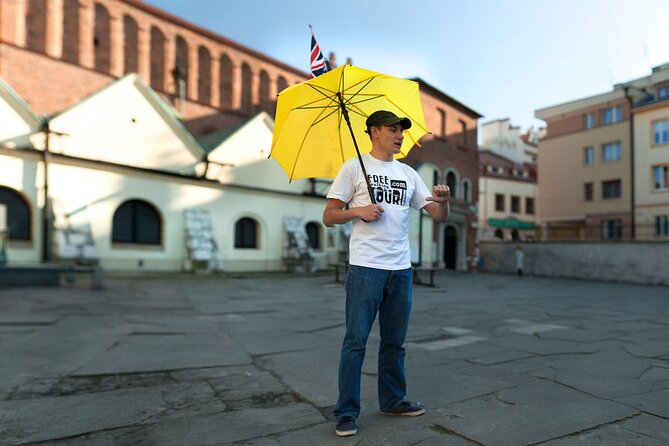
You get the foundation right away, starting at the Old Synagogue on Szeroka 24. The tour frames it as the oldest synagogue in Poland, and the emphasis is not just on dates. You’ll pay attention to architectural details and to what this building meant for the community that used it, which matters because it changes how the rest of the walk lands in your mind.
A practical win here: the stop lists 15 minutes with a free admission ticket. That makes the opening feel like more than a photo stop. And because the tour starts at a clearly defined location, you can walk in with your bearings already set.
Even if you have seen synagogue exteriors before, I think this stop works because it gives you a lens. You start noticing symbols, design choices, and the idea that a synagogue was both a spiritual space and a public statement of community life.
Szeroka Street and Remuh Synagogue, reading the Jewish Quarter
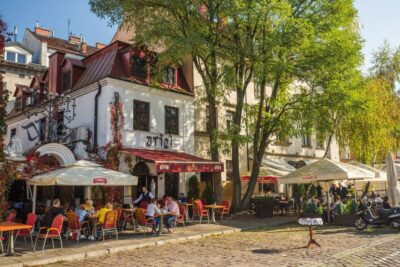
After the Old Synagogue, the walk turns to Szeroka Street, the main street of the Jewish Quarter. This is where the tour slows down enough to explain why certain routes mattered, since Szeroka was tied to the people who came through the neighborhood and the way the quarter functioned day to day.
Next comes Remuh Synagogue (Synagoga Remuh). The tour describes it as a private praying house built for the most significant rabbi of Krakow. That distinction is important. You are not only learning religious geography, you’re learning social geography. A synagogue like this can represent authority, continuity, and local leadership, all packed into one site.
These stops are relatively short, around 10 minutes each. That can be great if you like motion and context building, but it also means you may want to pause later on your own if something really grabs you. Still, the value is that the guide connects the places you see to why they mattered.
Market Square, where the neighborhood’s story includes life after the damage
Market Square enters the picture as the revival and nightlife area of the Jewish Quarter. That might sound like a surprising angle in a tour that also tackles genocide and ghetto life, but it helps you avoid a trap: thinking the story is only destruction.
Spending time here gives you a sense that the Jewish Quarter is not frozen in one chapter of history. Even if you know Krakow’s WWII story, the tour’s framing reminds you that communities also rebuild, re-use space, and keep culture moving.
This stop is listed at 10 minutes and does not include admission tickets. So you’re mainly learning how to look at the area and understand its role in the broader neighborhood story, not collecting museum-style content.
The Mrs. Dresner courtyard and stairs, Schindler’s List with the real story
Then you reach one of the most emotionally charged parts of the walk: Mrs. Dresner courtyard and stairs, tied to the Schindler’s List site. The tour notes a focus on the hidden courtyard and the real story behind the movie connection.
What I like about this stop is that it gives you a bridge. If you’ve watched Schindler’s List before coming, you’ll likely recognize the vibe and understand why this place became attached to that film. If you haven’t seen it, you still gain something important: the point is not the movie reference itself. The point is what happened here and why the courtyard matters historically.
The itinerary lists 10 minutes for this stop. That’s short, but the tour is built as a narrative, so the guide usually uses the time to give you enough context to make the moment stick. If you want more, plan to linger in the area on your own afterward, but go in with the guide’s framing first. It makes a difference.
Below are the other Krakow trips we have logged
- Old Town Krakow & Wawel Castle Walking Tour★ 5.0 · 1,508 reviews
- Creepy Krakow: 2-Hour City Walking Tour★ 4.7 · 1,131 reviews
- Krakow: The Old Town Walking Tour★ 4.8 · 794 reviews
- Kraków: Old Town & Wawel Castle Walking Tour in English★ 4.8 · 532 reviews
- Krakow: Evening Walking Tour with Spooky Stories★ 4.7 · 500 reviews
Plac Bohaterów Getta, the WWII ghetto square that needs time
The tour’s longest stop is Plac Bohaterów Getta, the main square of the WWII ghetto. Here the itinerary sets 50 minutes, which is a strong hint that this is not meant to be rushed.
The tour frames it as the area of the district created by the Nazis. That wording matters because it highlights how ghetto life was engineered. This is where the tour shifts from describing sites and meanings to explaining systems, control, and how space was turned into a mechanism of oppression.
In my opinion, this is the stop where you’ll feel the most weight, even if you’re not a history superfan. The guide time helps because you’re standing in an outdoor space where it is easy to think, I understand this already. You still need someone to connect what you’re seeing to what it represented.
A quick consideration: because it’s a long stop, you’ll want to dress for weather and pace yourself mentally. If you start to feel overwhelmed, take a breath and keep walking with the guide’s storyline. The structure is designed to help you process it.
Eagle Pharmacy, a non-Jewish witness inside the ghetto story
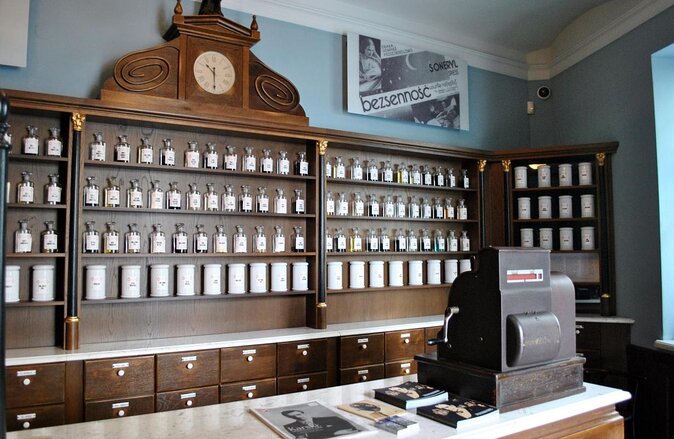
After the ghetto square, the tour heads to Eagle Pharmacy, also connected with the Museum of Krakow. The stop is described as the place of living of the only non-Jewish ghetto inhabitant, an eyewitness of Nazi regime crimes.
This is an outside look, listed at 15 minutes, and admission tickets are not included. What makes it valuable is the role it plays in the tour’s overall perspective. It’s not another synagogue or street. It’s a reminder that witnesses and records mattered, and that the ghetto story includes not only victims, but also the people who saw what was happening and could testify.
If you care about how history gets preserved, this stop adds a layer. It turns the tour from a landscape of suffering into a conversation about testimony and memory.
Price and what you really get for $26.60
At $26.60 per person for about 2 hours 30 minutes, the price lands in the “good value if you care about context” category. The itinerary notes a local expert guide and a thoroughly constructed narrative, and that is exactly where guided tours earn their keep.
One practical detail: the tour is listed as booked on average 17 days in advance, and it has a maximum of 35 people. If you want your preferred time slot, booking ahead is smart. Smaller groups can make the walk feel less like a line and more like a conversation.
Here’s another value angle: the tour description notes you will join a pay as you wish format. The amount you pay covers the reservation fee and the guide’s payment, and if you want, you can volunteer a contribution at the end. I like this approach because it makes sense for people who want to reward great guiding without feeling locked into an all-or-nothing tariff.
What is not included? No hotel pickup or drop-off, and no food or drinks. Also, admission tickets are only called out as free for the Old Synagogue stop. Other sites on the walk do not include admission tickets, so think of the guided portion as your ticket into meaning rather than an all-access pass.
Timing, walking pace, and weather reality
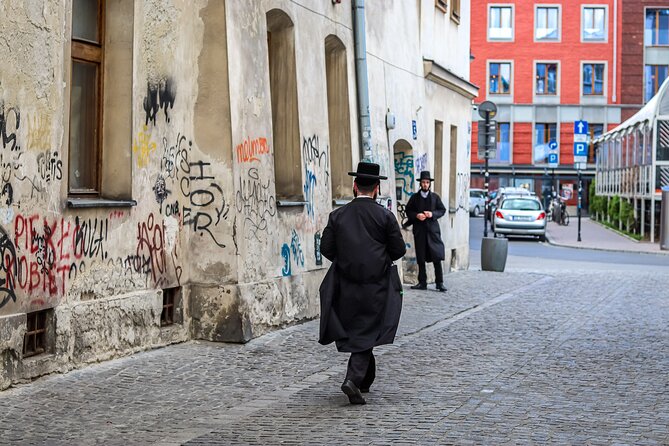
This is a walking tour with moderate physical fitness needed. The itinerary includes multiple short stops, plus one longer 50-minute segment. So yes, you will move, but you will also spend time stopped for narration.
A balance point from real-world experience: sometimes people want fewer pauses and more motion. If you’re the type who gets restless standing still, plan to bring patience, especially at the ghetto square where the time is built in.
Weather is also part of the deal. The tour operates in all weather conditions, and the guide can shorten or end the tour if conditions pose a threat to life or health. I’d treat this as a sign to dress like you’re going to be outside for a while, not like you’re ducking in and out of buildings.
Practical kit that pays off: wear grippy shoes, bring a warm layer, and keep a small umbrella or rain layer handy. Even if it looks mild at booking time, Krakow weather has a habit of changing.
What guides do well on this walk, and why it matters
The biggest predictor of whether this tour feels powerful in a good way is the guiding style. The tour format tends to attract guides who can hold a delicate tone while keeping you oriented.
Across the guiding styles tied to this walk, names come up like Big Tom, Jakob, Lucy, Natalia, Matt, and Nalalia. While different guides will emphasize different details, the common thread is story structure, not name-dropping for its own sake. You’re more likely to remember connections than a list of facts.
If you want to maximize that, arrive with one simple prep step: if you’re unfamiliar with Schindler’s List, watch it before Krakow. The tour’s Schindler’s List courtyard stop makes more sense once you understand what the film set out to communicate, and you can focus on the real location and context the guide provides.
Should you book this Jewish Krakow walking tour?
I’d book it if you want more than a self-guided stroll through the Jewish Quarter. This route is built to give you context fast, starting at the Old Synagogue and then walking you into the WWII ghetto space with time to absorb it. The 50 minutes at Plac Bohaterów Getta is the kind of pacing that does not happen on casual tours.
You might skip or reconsider if you mainly want casual sightseeing photos, or if you strongly dislike spending time stopped for narration. Also, because the tour is listed as offered in English, double-check language expectations before you go, especially if you booked through a reseller and planned for another language.
Bottom line: for first-time visitors, for people who want a structured understanding of the Jewish Quarter and the ghetto sites, and for anyone who appreciates a guide that can tell a story without turning tragedy into trivia, this is a very solid pick.
FAQ
What language is the tour offered in?
The tour is offered in English.
How long is the Jewish Krakow walking tour?
It runs for approximately 2 hours 30 minutes.
Where do I meet the guide, and where does the tour end?
You start at Old Synagogue, Szeroka 24, 31-053 Kraków, Poland and the tour ends at Plac Bohaterów Getta, Kraków, Poland.
Is the Old Synagogue admission ticket included?
Yes. The itinerary lists an admission ticket free stop for the Old Synagogue.
Are other sites on the route included with admission?
The itinerary lists admission ticket not included for the other stops, including Szeroka Street, Remuh Synagogue, Market Square, the Schindler’s List courtyard stop, Plac Bohaterów Getta, and Eagle Pharmacy.
Is food or drinks included?
No. Food and drinks are not included.
What should I know about weather and cancellation?
The tour operates in all weather conditions, and the guide may shorten or end the tour if weather poses a threat. It also has free cancellation up to 24 hours in advance for a full refund.
More Tours in Krakow
More Tour Reviews in Krakow
Kazimierz, Keep Going
Recently written up around Krakow

More Kazimierz Jewish Quarter Tours.
 ★ 4.9Jewish Quarter and Former Ghetto TourFrom $191,441 reviews
 ★ 4.9Bike Tour of Old Town, Jewish Quarter and the GhettoFrom $371,155 reviews
 ★ 4.8Kazimierz Jewish Quarter Walking TourFrom $27571 reviews
 ★ 4.8Kazimierz, Schindler’s Factory & Ghetto Guided TourFrom $81460 reviews
 ★ 5.0Full Bike Tour – the Old Town, Jewish Qtr & the Ghetto NEW BIKESFrom $35437 reviews
 ★ 4.9Bike Tour of the Old Town, Kazimierz, and the GhettoFrom $26350 reviews
 ★ 4.6Jewish Quarter and Ghetto Electric Golf Cart TourFrom $34348 reviews
 ★ 4.8Jewish Quarter Segway TourFrom $55271 reviews
Also on these Poland lists