
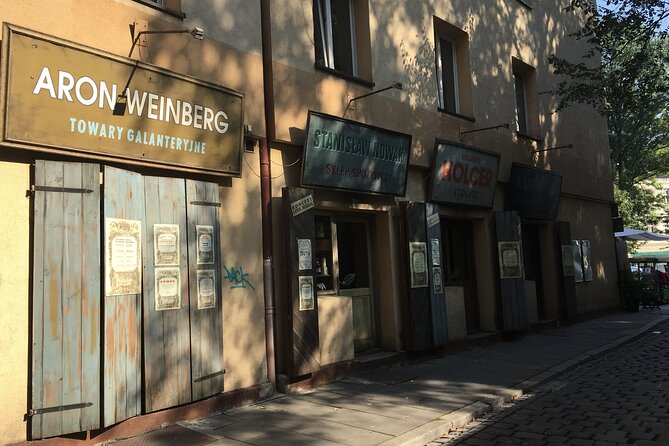
REVIEW · WAWEL CASTLE AND ROYAL HILL TOURS
Kazimierz District, the Wawel Hill and Cracow Old Town
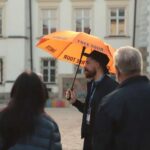
Cracow tells stories if you know where to look. This half-day route stitches together Kazimierz, Wawel, and the Old Town core, so you get the big historical beats without hopping around town. I especially liked the whisper system, and I had a great time with guide Marta, who was friendly, helpful, and clearly knew her stuff.
One thing to plan for: several of the best interiors are optional, and entry tickets are not included for those parts. Also, bottled water and drinks are not included, so come with a bottle if you think you’ll need it.
In This Review
- Key things that make this tour work
- Kazimierz and Remuh Synagogue, where Jewish Krakow shows up fast
- The Kazimierz streets that connect to a famous film scene
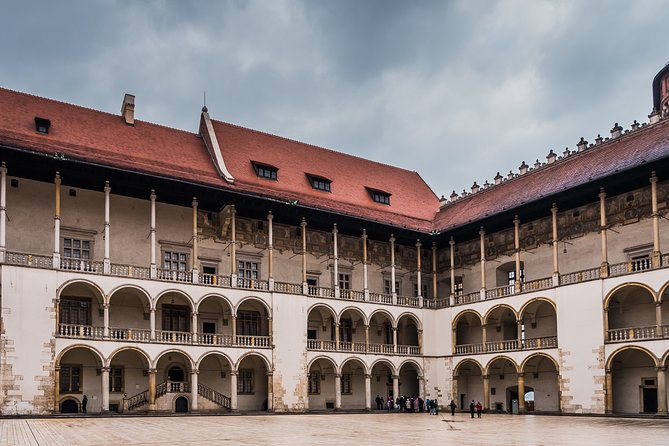
- Wawel Royal Castle patio views and Renaissance details
- Wawel Cathedral, optional entry into the royal burial and coronation place
- Franciscan basilica on Kanonicza and Grodzka, polychromy meets modernist stained glass
- Collegium Novum and Jagiellonian University, a campus story that reaches back to 1364
- Rynek Main Square and the Cloth Hall, the Mongol invasion rebuild you can still see
- St Mary’s Basilica and the Hejnał, a small tradition with big presence
- Kraków Barbican and Florian’s Gate, finishing at the city walls
- Price and value, what $65 buys you in real time
- Who this tour suits best
- Should you book this tour?
- FAQ
- How long is the tour?
- Where does the tour start and what time is it?
- Where does the tour end?
- How much does the tour cost?
- What is included in the tour price?
- Is admission to the churches and synagogues included?
- Are there free stops during the tour?
- Does the tour use a ticket you can access on your phone?
- What is the cancellation policy?
- Is the tour private?
Key things that make this tour work
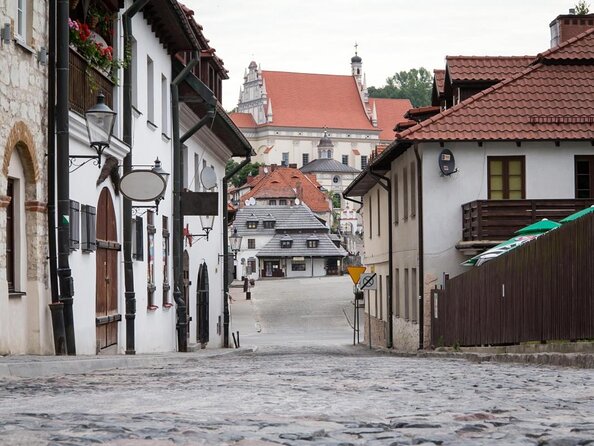
- Whisper system for clarity so you do not miss details while walking
- Marta’s guidance keeps the story focused and easy to follow
- Kazimierz to Wawel in one route covers three major Krakow areas fast
- Optional interiors let you choose how much paid entry you want
- Old Town highlights in time order helps the city feel less random
- Schindler’s List courtyard moments appear naturally along the walk, not as forced stops
Kazimierz on foot, by cart and after dark. Our other write-ups
- Krakow: Jewish Quarter and Former Ghetto Tour
★ 4.9 · 1,441 reviews - Krakow: Bike Tour of Old Town, Jewish Quarter and the Ghetto
★ 4.9 · 1,155 reviews - Krakow: Kazimierz Jewish Quarter Walking Tour
★ 4.8 · 571 reviews - Krakow: Kazimierz, Schindler’s Factory & Ghetto Guided Tour
★ 4.8 · 460 reviews
Kazimierz and Remuh Synagogue, where Jewish Krakow shows up fast
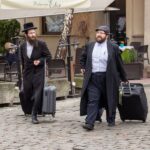
I love starting in Kazimierz because it changes the mood of the city right away. This is Krakow’s historic Jewish district, and the walk begins on Szeroka Street, which long served as a hub for Jewish religious, cultural, and political life. You are not just seeing buildings, you are getting a sense of how the neighborhood functioned.
The first optional highlight is Remuh Synagogue (Synagoga Remuh), a 16th-century synagogue with an adjacent Jewish cemetery. If you go inside, it helps you understand that this area is not only about story and architecture. It is also about memory and continuity, since the cemetery is among the oldest Jewish cemeteries in Europe and is the resting place of noted Jewish sages such as Rabbi Moses and Natan Spira. The tour includes the time for the visit, and admission is not included, so treat it as a choose-your-own-adventure moment.
Even if you skip the interior, the exterior context is still worth it. Kazimierz streets feel lived in, and the early start means you are less rushed getting your bearings.
Practical tip: if you know you want the Remuh visit, budget time for it and consider that you may need to adjust based on the group’s pace.
The Kazimierz streets that connect to a famous film scene
After Remuh, the route keeps you moving through Kazimierz, passing key locations and crossing Nowy Square. One of the most interesting moments is the walk toward the famous courtyard between Józefa and Meiselsa streets, the one many people recognize from Schindler’s List.
What I like about including this kind of stop is that it is not presented as a movie trivia break. It is used as a doorway into the neighborhood layout and the way Krakow’s old streets shaped real life. You get the visual geography, and then the guide can tie that geography back to the broader historical narrative of the city.
The courtyard itself is free to view, and that matters for value. You get a memorable image and a real sense of place without adding extra ticket cost.
What to watch for: the route is walking-heavy, so if you dislike tight spaces or crowds, just keep a steady pace and let the group flow.
Wawel Royal Castle patio views and Renaissance details
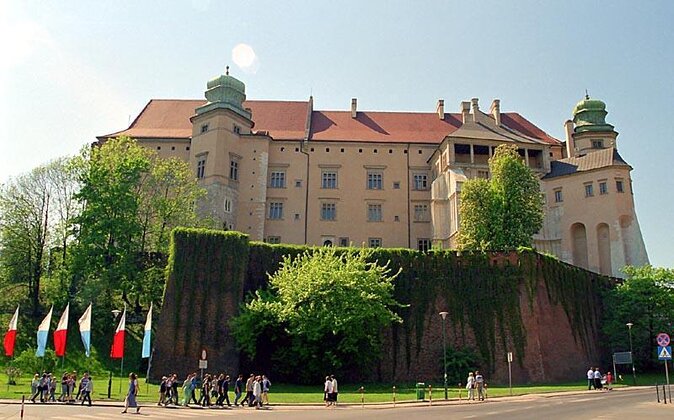
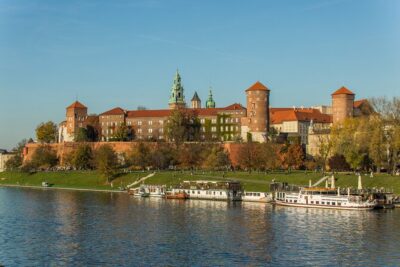
Then the tour shifts from Kazimierz to the Wawel hill area, and the change feels immediate. This is the royal zone, and you can sense it in the scale and the architecture.
At the Royal Castle, you are mainly admiring the patio from outside. Even from the exterior viewpoint, the Renaissance flavor comes through. The patio is connected to major work attributed to Francesco Fiorentino and Bartolomeo Berrecci, which gives you a quick way to place the castle in the Renaissance story of Europe. You are not staring at random stone. The guide’s job here is to connect form to time period, so you understand why it looks the way it does.
This segment is timed well for a 4-hour tour. You get an anchor point for the whole Wawel area without burning half your morning on ticket lines or deep interior tours.
Wawel Cathedral, optional entry into the royal burial and coronation place
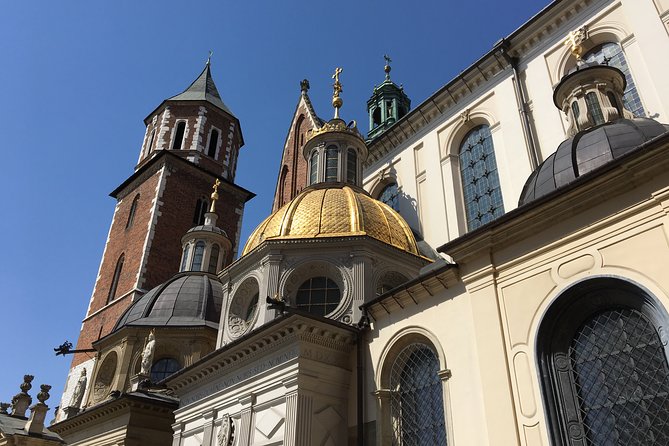
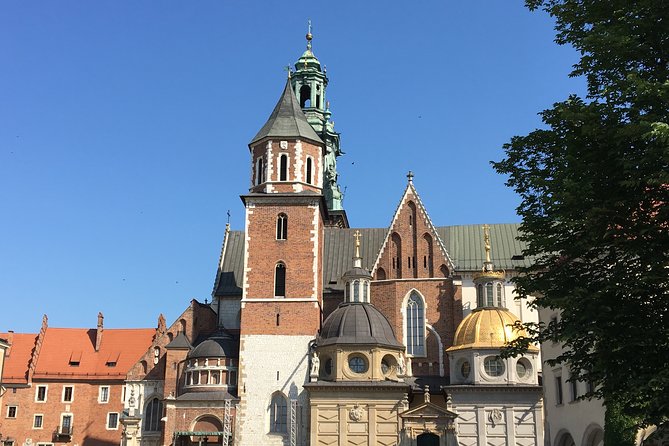
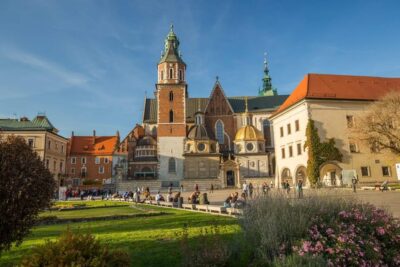
From the castle patio, the next natural stop is Wawel Cathedral, dedicated to Saint Stanislas and Saint Venceslas. The cathedral is described as having more than a thousand years of history, and it served as the place of coronation of Polish kings as well as their burial site.
That is a big claim for a single optional entry, and it is exactly why this part is worth thinking through. If you like interiors, carved details, and the feeling of standing where major national ceremonies happened, consider adding the cathedral visit. If you are more of an outdoor architecture and street-walk person, you can keep it outside and still get the essentials.
Admission for the cathedral is not included, so again it is a value tradeoff. I like that the tour gives you the choice rather than forcing one expensive commitment.
The Old Town gets walked a dozen ways. Here are the other ones we rated
- Complete Cracow Bike Tour (small group of maximum 15 people!)★ 5.0 · 1,322 reviews
- Krakow: Rynek Underground Museum Guided Tour★ 4.6 · 1,122 reviews
- Auschwitz Birkenau Guided Tour with Hotel Pickup from Cracow★ 5.0 · 823 reviews
- WOMAI Cracow – Into the darkness experience★ 5.0 · 363 reviews
- From Cracow: Auschwitz- Birkenau Tour with transportation★ 3.5 · 206 reviews
Franciscan basilica on Kanonicza and Grodzka, polychromy meets modernist stained glass
Next comes one of my favorite kinds of surprises on walking tours: the moment where a place does not fit your first impression. The route heads down some of Krakow’s oldest streets, including Kanonicza and Grodzka, toward the gothic basilica of Franciscan friars.
Here you get the polychromy and also modernist stained glass windows designed by Stanislas Wyspiański. That mix is interesting because it shows how one sacred space can carry different artistic layers over time. It is not just medieval, and it is not just modern. It is both, in the same visual field.
The tour keeps this to about 15 minutes, and for me that’s the sweet spot. You do not need a long museum-style visit to get the idea, and you still have time for the Old Town pieces that follow.
If you plan to enter: wear something comfortable. Churches can mean a bit of standing and slow shuffling depending on the space and group flow.
Collegium Novum and Jagiellonian University, a campus story that reaches back to 1364
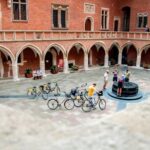
After the Franciscans, you move into the university quarter. The focus first lands on Collegium Novum, a prominent 19th-century building that serves as the seat of the rector of Jagiellonian University.
Then the route shifts to medieval buildings tied to the former Cracow Academy, founded in 1364 by King Casimir the Great. Today, that institution is part of Jagiellonian University. The oldest university building highlighted here is Collegium Maius from the 15th century, and the guide ties it to Nicolaus Copernicus, noting that the famous Polish astronomer studied there.
What I find valuable is how this turns “a pretty old campus” into an actual timeline. You understand the university’s age and why Krakow mattered in European learning. Even in a short visit, the point lands.
Time reality check: this part is only around 10 to 15 minutes, so think of it as orientation and story, not a full campus tour.
Rynek Main Square and the Cloth Hall, the Mongol invasion rebuild you can still see
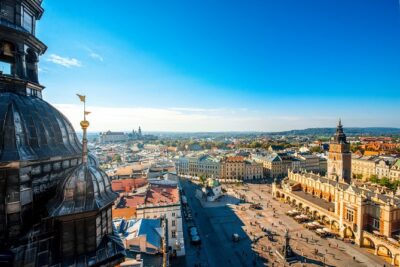
Now you hit Rynek, Krakow’s Main Market Square, described as the largest medieval square in Europe. The square dates back to 1257, and the plan is traced after the Mongolian invasion that ravaged Krakow in 1241.
That detail matters. When you stand in the square, it becomes more than a photo stop. It becomes a reset point in the city’s history. You start to see why the Old Town layout looks the way it does and why the city’s rebuilding efforts took a recognizable shape.
Inside the tour time, you enter the Cloth Hall (Sukiennice), an old textile market dating back to the 13th century and remodeled in the 16th century thanks to Santi Gucci, a Florentine artist. This is one of those places where the building is doing two jobs: it is market history and it is art and design history.
The best part is that the stop is long enough, about 30 minutes, for you to take in the architecture without feeling like you are sprinting.
St Mary’s Basilica and the Hejnał, a small tradition with big presence
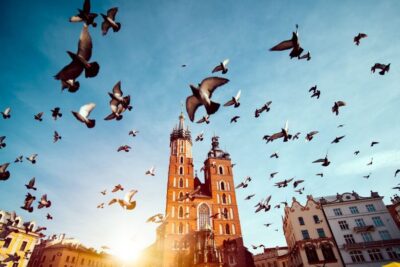
From Rynek, the next major cultural anchor is St Mary’s Basilica. This is an optional interior visit, so you can choose based on your preferences and ticket budget. The basilica is described as the most important church of Krakow’s bourgeoisie.
Inside, the tour points you toward the impressive wooden High Altar from the 15th century, carved in linden wood by German artist Veit Stoss. It is a gothic masterpiece showing scenes from the lives of Virgin Mary and Jesus Christ.
If you care about sculpture and woodwork, this is the kind of stop that can shift your attention from the outside to the craft behind the look. If you are not an interior person, you can still appreciate the exterior and move on, but you will be skipping that particular masterpiece.
Right nearby, the tour also includes plac Mariacki 5, where the famous Hejnał melody is played each hour four times from the highest tower of the church. This is one of those city sounds that feels like Krakow itself is keeping time.
Tip: if your timing lines up, you might catch the performance. The tour gives a short window by the plaza, so it is worth being ready for the sound.
Kraków Barbican and Florian’s Gate, finishing at the city walls
To close the walk, you head to the area of the city walls, including Saint Florian’s Gate and the adjacent Barbican. The walls date back to the 14th century, which gives this final segment a grounded, defensive feel after all the royal and religious stops.
Staying at the walls is a smart ending because it pulls everything into one final idea: Krakow was a city that needed protection, trade, and institutions all at once. You get a last look at how the city’s physical boundaries shaped its story.
The tour ends by the Barbican, near the final meeting point area at Barbican Basztowa.
Price and value, what $65 buys you in real time
At around $65 for roughly 4 hours, the value is mostly about three things.
First, you are paying for guided pacing. This tour threads through multiple major zones that are easy to visit alone, but hard to connect in your head without help. The route turns separate sights into one timeline.
Second, the whisper system is genuinely helpful. If you have ever been on a group walk where you miss half the story because people drift or traffic noise rises, you know why this matters. The tour is designed for listening, which is a quality-of-life upgrade.
Third, you get flexibility. Several entrances are optional and not included, which means you can control how much you spend beyond the base price. If you add every optional interior, your total spend rises, but you also choose your level of depth.
The main value drawback is the same theme: some admissions are not included. So if you are budgeting carefully, decide in advance which optional interiors you really want.
Who this tour suits best
This is a strong match if you want a structured, story-driven overview of Krakow without doing lots of ticket planning day-of. It is also a good pick if you like history tied to place, not just facts read from a page.
It may not suit everyone equally. The tour information notes it is not recommended for travelers with impaired mobility, which makes sense given that it is a walking-focused route. If that applies to you, you might look for a more accessible format.
Otherwise, most people should find it doable, and the main question becomes your comfort with a half-day walking pace and your willingness to add optional ticketed entries.
Should you book this tour?
I would book it if you want a guided line through three big Krakow areas, Kazimierz, Wawel, and the Old Town. You get a clear route, strong listening support from the whisper system, and a guide like Marta who brings the city into focus with the right timing and the right details.
I would think twice only if you strongly dislike optional paid entries, or if you need step-free mobility options. If you are flexible about tickets and you enjoy learning while walking, this is a very practical way to get your bearings fast and still see the places people come for.
FAQ
How long is the tour?
The tour is approximately 4 hours.
Where does the tour start and what time is it?
It starts at Szeroka 40, 31-053 Kraków, Poland, with a start time of 9:30 am.
Where does the tour end?
The tour ends at Kraków Barbican, Basztowa, 30-547 Kraków, Poland, close to the Barbican.
How much does the tour cost?
The price is $65.
What is included in the tour price?
It includes a whisper system for a better experience during the visit.
Is admission to the churches and synagogues included?
No. Admission tickets are not included for several optional visits, including Remuh Synagogue, Wawel Cathedral, and St Mary’s Basilica.
Are there free stops during the tour?
Yes. Several parts are free, including Kazimierz highlights, Wawel patio views, Bazylika i Klasztor Franciszkanow, Collegium Novum, Jagiellonian University buildings, Main Square and Cloth Hall, plac Mariacki 5, and Kraków Barbican.
Does the tour use a ticket you can access on your phone?
Yes, it offers a mobile ticket.
What is the cancellation policy?
You can cancel for free up to 24 hours in advance for a full refund. Canceling less than 24 hours before start time is not refunded.
Is the tour private?
Yes. It is a private tour/activity, so only your group participates.
Still on Wawel Hill



The Old Town, Three More Ways



Kazimierz, Keep Going
Recently written up around Krakow

More Wawel Castle and Royal Hill Tours.
 ★ 4.7Wawel Castle & Cathedral Guided TourFrom $572,111 reviews
 ★ 5.0Old Town Krakow & Wawel Castle Walking TourFrom $261,508 reviews
 ★ 4.2Wawel Royal Hill with Optional Castle and CathedralFrom $191,220 reviews
 ★ 4.6Wawel Castle and Cathedral Guided TourFrom $57595 reviews
 ★ 4.8Old Town & Wawel Castle Walking Tour in EnglishFrom $26532 reviews
 ★ 4.2Wawel Hill Audioguide TourFrom $8512 reviews
 ★ 4.4Wawel Castle Guided Tour with Entry TicketsFrom $35381 reviews
 ★ 5.0Krakow’s Essential Tour of the Old Town and Wawel CastleFrom $3340 reviews
Also on these Poland lists