
REVIEW · CYCLING TOURS
Polish Countryside and Tyniec Abbey Bike Tour from Krakow
Bike ride to a living monastery. This half-day outing takes you from central Krakow along the Vistula River to Tyniec Abbey, then out into sunset views territory with Wolski Forest and John Paul II related stops timed for great photos.
I like how the route mixes active biking with real, on-the-ground story time. You get a helmet, a proper bike, and a professional guide who keeps things moving, with a small group size that helps you stay together. One possible drawback: the ride is not flat, and you should be ready for a few hills plus a simple monastery rule like no bare shoulders.
In This Review
- Key things you should notice before you go
- How the route balances city views and countryside quiet
- Tyniec Abbey: Poland’s oldest working monastery, with a real visit tempo
- The Vistula River ride: why this stretch feels like a shortcut to countryside calm
- Pope John Paul II stops beyond the postcard
- Wolski Forest and the hillside fortress ruins: nature plus a touch of the dramatic
- The sunset viewpoint by the cliffside lake: a photo stop with real payoff
- Bike reality check: hills, bike condition, and what moderate fitness means
- Value and price: what $62.31 gets you in real terms
- Who this tour fits best, and who should think twice
- What to bring so the ride feels easy
- Should you book this Krakow countryside bike tour?
Key things you should notice before you go
- Small groups up to 15 make the pace feel calm, not chaotic.
- Tyniec Abbey is the centerpiece: Poland’s oldest functioning monastery, with a church and museum visit.
- You ride into nature fast via the Vistula River edge, then out toward Wolski Forest.
- John Paul II sites are part of the fun, not just a quick photo stop.
- Sunset timing matters for the cliffside views back toward Krakow.
Below are the other Krakow trips we have logged
- Complete Cracow Bike Tour (small group of maximum 15 people!)
★ 5.0 · 1,322 reviews - Krakow: Bike Tour of Old Town, Jewish Quarter and the Ghetto
★ 4.9 · 1,155 reviews - Highlights of Krakow Bike Tour – Small group
★ 5.0 · 662 reviews - Full Bike Tour – the Old Town, Jewish Qtr & the Ghetto NEW BIKES
★ 5.0 · 437 reviews
How the route balances city views and countryside quiet
This tour is built like a gentle escape from Krakow’s Old Town rhythm. You meet in central Krakow, get fitted with a helmet, and roll out with your guide while the city is still in full view. The early part of the ride is a great way to get oriented fast, because you pass familiar landmarks and then transition toward the open air along the Vistula River.
Once you leave the densest streets, the pace shifts. You’re still cycling with purpose, but the scenery changes from buildings to river edges, then to forest paths and open viewpoints. That is what makes this feel like more than just a sightseeing outing. It’s a route that gives you time to look around, stop for photos, and actually enjoy the ride instead of rushing from one ticket line to another.
And because the group is capped at 15, you can usually follow along without feeling like you are playing bicycle bumper cars. I especially like the practical rhythm, short segments, then a stop with context, then another segment. If you prefer your history with a view, this format works well.
Tyniec Abbey: Poland’s oldest working monastery, with a real visit tempo
The highlight is Benedictine Abbey of Tyniec, tied to an 11th-century story and still active as a working monastery. Your time there is about 45 minutes, which is not enough for a slow spiritual retreat, but it is a solid, focused stop for seeing the church and museum.
What you will take away is not just architecture for architecture’s sake. You learn about monks’ daily routines and what life inside a functioning monastery looks like. You may even hear monks chanting in Latin, which is one of those moments that instantly turns the visit from sightseeing into something more human.
You also get time to wander the grounds and step into the church and museum areas at a comfortable pace. And yes, there is a shop. It is the kind of place where you can pick up items made by the monastery, like wine, oils, teas, and other small gifts. If you like souvenirs that feel connected to the place instead of mass-produced, this stop is worth it.
One practical detail to plan around: no bare shoulders inside the monastery. If you show up in a tank top or strap dress, you might need a quick fix like a light layer. I’d plan to bring something small you can throw on right away.
The Vistula River ride: why this stretch feels like a shortcut to countryside calm
After leaving central Krakow, you pedal toward the countryside by way of the Vistula River. This matters because it turns the ride into a smooth on-ramp. The river corridor helps you transition from city noise to open views without needing a long, intense climb right away.
There is also a practical reason this section is memorable: it is scenic and it sets your energy level for what comes next. You will pass key Pope John Paul II related spots, including his former residence as you travel outward. That is a smart way to connect modern Krakow to the 20th-century story without turning the trip into a lecture.
You stop for refreshments along the way, at a riverside cafe where you can grab snacks and recharge. Food and drinks are not included in the tour price, so think of this as your built-in chance to buy something without breaking the flow of the ride. I like that the stop happens before the more monastery and forest-heavy portions, so you are not scrambling for energy in the middle of the most scenic but hilly parts.
Pope John Paul II stops beyond the postcard
This tour treats John Paul II like a living thread rather than a single photo location. You move through two distinct phases of the story.
First, you pass his former home as you ride out of the city toward Tyniec. It helps you understand why Krakow matters in his life. Instead of reading about it, you see how the city and its surroundings fit together.
Later, the ride brings you to a scenic lake ringed by cliffs. This is tied to a former quarry where John Paul II worked during Poland’s Nazi occupation. That detail changes the tone of the viewpoint. You still get dramatic scenery, but you also have context for why these cliffs and this area mattered.
The overall effect is that you leave with more than photos. You get a sense of how place geography shapes historical memory. It is especially meaningful on a bike, because you are physically moving through the region rather than looking at it from behind a bus window.
- From Krakow: Auschwitz-Birkenau Guided Tour & Hotel Pickup★ 4.5 · 33,358 reviews
- From Krakow: Auschwitz-Birkenau Guided Tour & Hotel Pickup★ 4.5 · 29,340 reviews
- Krakow: Auschwitz Guided Tour with Optional Hotel Pickup★ 4.5 · 15,280 reviews
- Krakow–Zakopane: Cable Car, Chocholow Baths, Cheese & Vodka★ 5.0 · 10,720 reviews
- Krakow: Auschwitz-Birkenau Guided Tour with Pickup & Lunch★ 4.5 · 9,800 reviews
Wolski Forest and the hillside fortress ruins: nature plus a touch of the dramatic
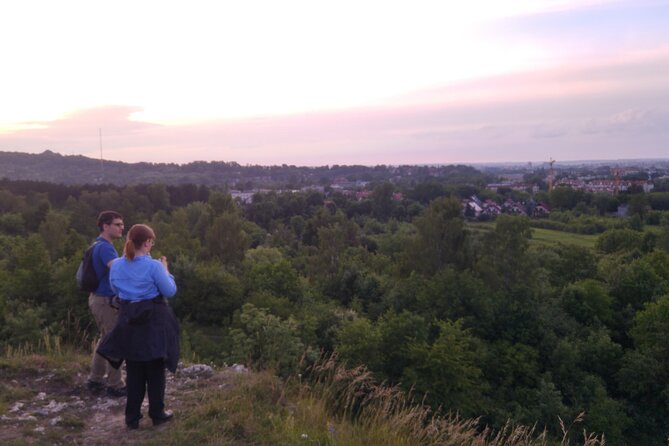
Once you leave the river corridor, the trip turns more outdoorsy. You ride through Wolski Forest, which gives you the feeling of being away from the city while still being close enough that you are not mentally done with Krakow.
There is also a stop to explore ruins of a hillside fortress. Even if you only have a short amount of time, the ruins add texture. You are not just cycling through trees and then jumping to the next viewpoint. You pause to look at remnants of past defenses, which makes the forest feel layered with history instead of just green scenery.
This is also a section where your bike handling skills actually matter a bit. Some parts may involve uneven ground or turns that require attention. If you have basic cycling comfort, you will likely be fine. If you are uneasy on two wheels, you may want to slow your pace and keep your focus tight, especially around the ruins and any changes in gradient.
It’s a good idea to pay attention to the guide’s instructions at each turn. In small group tours, the guide’s timing and direction cues often prevent the most common stress, getting surprised by a sudden pitch change or an unexpected path shift.
The sunset viewpoint by the cliffside lake: a photo stop with real payoff
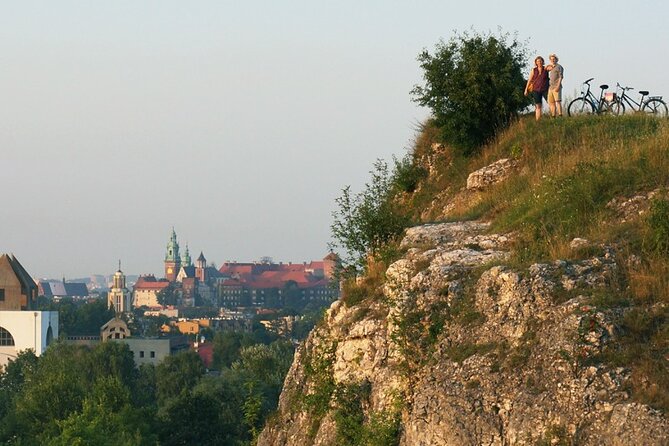
The final act is about views. You reach a cliffside lake area that is tied to that former quarry site. The point of this stop is not just a quick glance. The timing is set so you can photograph Krakow as the light drops.
This is where the half-day format pays off. You are not stuck doing a long day tour and you are not racing to squeeze everything in before dark. You get a proper sunset moment, which makes the ride feel like it ended the way it should, with the city in the distance and you still having energy.
If you care about photos, this is the moment to slow down. Get set, take a few wide shots, then step back for a calmer view. The cliffs create a strong sense of depth, and Krakow looks different from this angle than it does from the Old Town streets.
And when the sun finally finishes doing its job, you ride back to the starting point. The route is set up as a circular outing, so you are not constantly retracing every single step.
Bike reality check: hills, bike condition, and what moderate fitness means
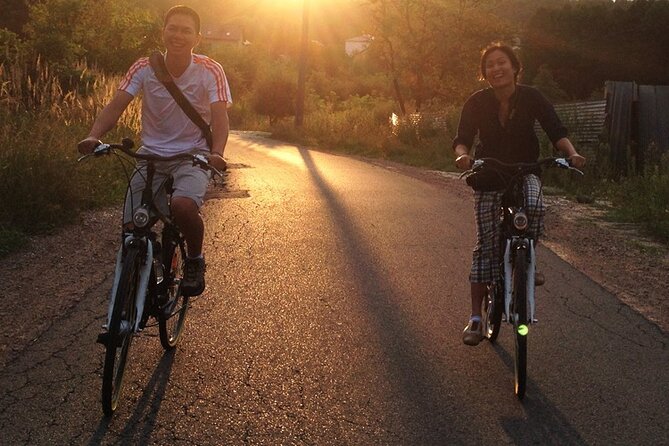
Let’s talk about the bike part honestly. The tour is about 4 hours and includes several segments with hills. One of the main considerations is that you should have moderate physical fitness and be comfortable riding through a route that is not completely flat.
In practice, this means:
- Expect a few short climbs, especially on the return leg.
- Bring a mindset that this is work, but manageable work.
- If hills make you nervous, start at an easy effort and let your legs warm up.
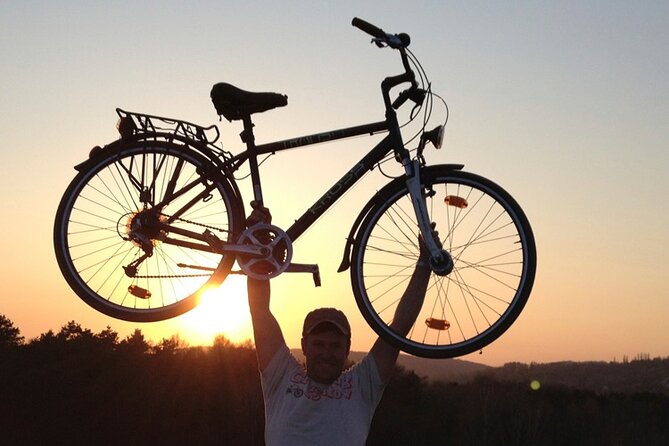
Your bike use and helmet are included, and you ride a trek bike. That said, I recommend doing a quick personal check before you roll out: confirm the seat height feels right, test the brakes, and make sure gears shift smoothly. One person noted that bikes were not all perfectly tuned, so it is worth taking 60 seconds to make sure you are comfortable before the ride really gets going.
Also remember the guide is managing a group of up to 15, so they will likely adjust the pace to keep you together. That is good for many people, but it can still feel physically demanding if you arrive out of cycling shape. If you are active already, you will probably find the hills reasonable.
Value and price: what $62.31 gets you in real terms
At about $62.31 per person for an approximately 4-hour group ride, the value is pretty clear if you break down the components.
You are paying for:
- A professional guide who handles route knowledge and historical context.
- Bike and helmet use, so you are not spending extra money or time finding equipment.
- A structured experience that combines city exit, countryside riding, a major monastery visit, and multiple viewpoint stops.
Food and drinks are not included. That is the one cost you should plan for. On a tour like this, I treat it as a buffer for snacks at the riverside cafe and anything you want during breaks. The monastery shop also offers monastery-made items, so you might spend a bit there too if you want souvenirs.
Where this feels like strong value is that you get to see a lot of variety in a short window. You get the monastery, a forest stop, and John Paul II related sites without needing to plan transit connections, rental logistics, or a full day itinerary.
If you are already in Krakow and you want your last days to feel different, this is the kind of paid experience that actually saves time. It turns a long list of sights into one guided route with built-in rhythm.
Who this tour fits best, and who should think twice
This bike tour is a strong match if you want an active way to see outside Krakow while still keeping the day manageable. It works well for people who like nature without wanting a multi-day hike, and for history lovers who enjoy context tied to place.
It is also ideal if you travel with limited time. A half-day gives you the monastery and viewpoints, and you still have the rest of the day free for Krakow’s main streets, restaurants, and museums.
You should think twice if:
- You are not comfortable riding on mixed terrain or handling short climbs.
- You cannot meet the monastery dress code, meaning no bare shoulders.
- You plan to eat a full meal from what the tour provides. Since food and drinks are not included, you need to bring snacks or budget for the cafe stop.
On the guide side, different guides lead different departures. I’d look for names like Chris, Tom, or Mike if you see them listed, because people highlighted clear guiding and patient, calm directions on the route.
What to bring so the ride feels easy
Here are the basics I’d plan for, based on how the tour is structured:
- A light layer for the monastery, since no bare shoulders is required.
- A small bag or crossbody for snacks and personal items. You will have a cafe stop and a shop stop.
- Water. Food and drinks are not included, so hydration is on you.
- A little patience at the hills. Short climbs are part of the deal, and the guide will help keep the group together.
Also, wear biking-friendly shoes. You will be on foot briefly at the abbey grounds and at ruins. If you show up in stiff dress shoes or sandals, you will feel it.
Good weather matters. The tour requires it, so if rain or heavy conditions hit, you should expect the operator to handle a different date or a refund option.
Finally, since the route starts near public transportation and you get a mobile ticket, it is easy to fit into your Krakow day without complicated transfers.
Should you book this Krakow countryside bike tour?
Yes, if you want a short, well-paced day that combines Tyniec Abbey, Wolski Forest, John Paul II related places, and sunset views, all on a bike with a guide who keeps things moving. It is especially worth it if you want more than Old Town photos and you like the idea of biking into the countryside without doing logistics yourself.
I would skip it if you hate hills, struggle with basic bike confidence, or cannot follow the monastery dress rule. But if you are comfortable cycling for a few hours and you want an authentic dose of Krakow beyond the center, this is an easy yes.
More Cycling Tours in Krakow


More Tours in Krakow
More Tour Reviews in Krakow
Recently written up around Krakow

More Cycling Tours.
 ★ 5.0Complete Cracow Bike Tour (small group of maximum 15 people!)From $391,322 reviews
 ★ 4.9Bike Tour of Old Town, Jewish Quarter and the GhettoFrom $371,155 reviews
 ★ 5.0Highlights of Krakow Bike Tour – Small groupFrom $36662 reviews
 ★ 4.93-Hour Guided Cycling Tour of WarsawFrom $41624 reviews
 ★ 5.0Full Bike Tour – the Old Town, Jewish Qtr & the Ghetto NEW BIKESFrom $35437 reviews
 ★ 4.9Bike Tour of the Old Town, Kazimierz, and the GhettoFrom $26350 reviews
 ★ 5.0Hidden Krakow Bike TourFrom $39275 reviews
 ★ 5.0Half-Day Warsaw City Sightseeing Bike Tour for Small GroupFrom $43240 reviews
Also on these Poland lists