
REVIEW · KAZIMIERZ JEWISH QUARTER TOURS
Discover the Jewish Quarter with a Bike Tour
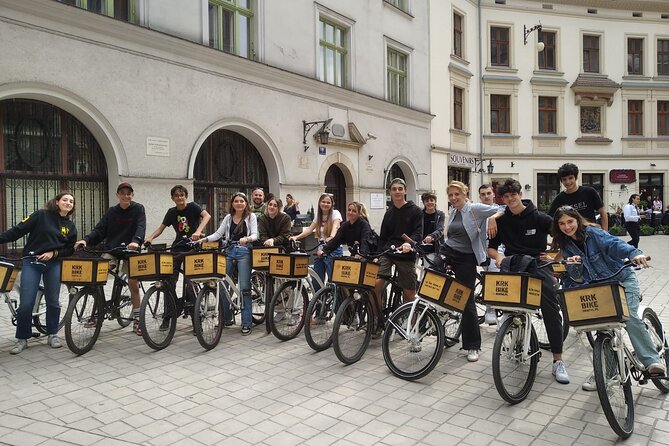
Krakow’s Jewish Quarter comes fast on two wheels. This 2-hour bike tour strings together synagogues, churches, and story stops without wasting time, and I love the English commentary plus the max 30 group size that helps you actually hear your guide. It also feels efficient in the best way, lots of short stops so you can understand what you are looking at, not just speed past it.
One possible drawback: several synagogue visits are marked as not included, including Tempel, Old, and Remuh synagogues. So you may want to budget for a bit of extra admission if you decide to go inside.
If you are pairing this with a bigger history day later, this tour works well as context. It brings the Jewish community story into focus before you move on to heavier sites.
In This Review
- Key things you will love about this bike tour
- How the Jewish Quarter bike tour fits into your Krakow day
- Meeting at Wiślna 4 and getting your bearings quickly
- Tempel Synagogue: stories of community before the war
- Jewish Community Centre (JCC Krakow) and the Prince Charles connection
- Market Square and Zapiekanki, the fast-food stop you should not skip
- Schindler’s List Passage: film, documentaries, and real place names
- Singer bar and the meaning behind the name
- Old Synagogue and Popper Synagogue: two stops with different entry options
- Remuh and optional cemetery time, plus Kupa Synagogue history
- Corpus Christi Church and plac Wolnica legends for a wider Krakow view
- Price and value: what $30.23 buys you in real sightseeing time
- Who this bike tour suits best, and who might want a different format
- Should you book the Jewish Quarter with a Bike Tour?
- FAQ
- How long is the bike tour?
- Is the tour offered in English?
- What is the meeting point for the tour?
- Do I need an admission ticket for the synagogues?
- How big is the group?
- What happens if the weather is bad?
- Can I cancel for free?
Key things you will love about this bike tour
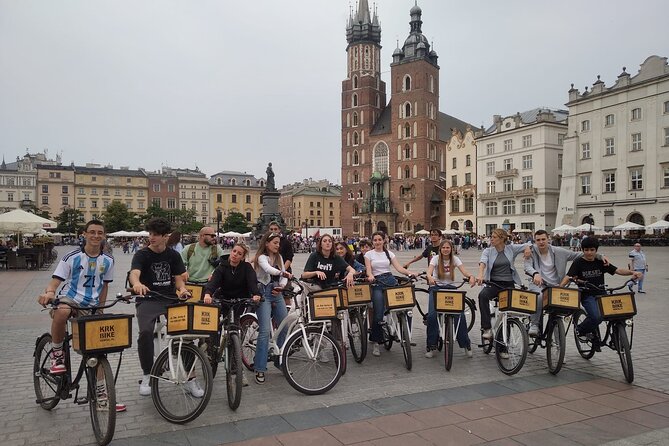
- A tight 2-hour route with frequent stops so you get context while you are still moving through the neighborhood
- Major synagogue sights, including optional Remuh and cemetery access depending on what you want to do
- Schindler’s List Passage stop that connects film and documentaries to real place names
- Market Square time for Zapiekanki plus a local feel for Kazimierz
- Singer bar stop where you learn why the place is called Singer
- Corpus Christi Church and plac Wolnica legends for a view of Jewish and Christian Krakow side by side
Kazimierz on foot, by cart and after dark. Our other write-ups
- Krakow: Jewish Quarter and Former Ghetto Tour
★ 4.9 · 1,441 reviews - Krakow: Bike Tour of Old Town, Jewish Quarter and the Ghetto
★ 4.9 · 1,155 reviews - Krakow: Kazimierz Jewish Quarter Walking Tour
★ 4.8 · 571 reviews - Krakow: Kazimierz, Schindler’s Factory & Ghetto Guided Tour
★ 4.8 · 460 reviews
How the Jewish Quarter bike tour fits into your Krakow day
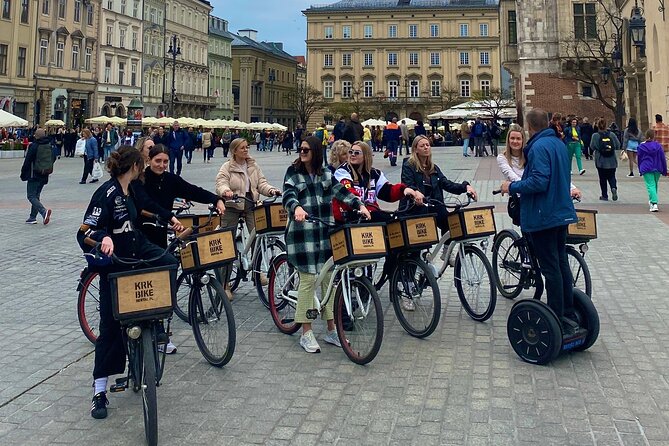
This tour is built for people who want meaning, but also want efficiency. You cover the Jewish Quarter by bike, yet you do not treat it like a long ride with one big stop at the end. Instead, you get a sequence of short, story-driven moments that help you connect buildings to community life, loss, memory, and the way Krakow still carries those threads today.
The length, about 2 hours, is a sweet spot. Long enough to see a lot of the neighborhood, short enough that it does not eat your whole afternoon. If you have limited time, this is a strong way to get oriented fast. If you have more time, it sets you up so later wandering makes sense.
What really matters is the pacing. The tour is designed around quick introductions and frequent scene changes, so you are not stuck listening for long stretches. That matters in old city areas where you might otherwise waste time figuring out where to look next.
Also, the tour operates with a mobile ticket and is offered in English. That is a practical mix for travelers who do not want ticket-printing hassles and who want real-time explanations in a language they can follow without strain.
Meeting at Wiślna 4 and getting your bearings quickly
The tour starts at Wiślna 4, and the activity ends back at the same meeting point. That round-trip setup is handy. You are not left hunting for a pickup location halfway across the neighborhood, and you can plan your next stop right after.
Expect a short opening moment before the main story areas start. Even when the ride segments are brief, the bike part helps you glide between the key sights without losing momentum. You get your bearings in a way that pure walking tours sometimes struggle with, especially if you are new to Krakow’s layout.
Because this is a bike tour, do not think of it like a museum marathon. The bike keeps you moving, while the guide keeps you oriented. Your job is to be ready to stop and look. If you like learning as you go, this format fits.
Tempel Synagogue: stories of community before the war
Tempel Synagogue is one of the first major history anchors on the route. The tour spends about 10 minutes here, focusing on the thriving Jewish community before the war. Admission is not included, so you can decide whether you want to add a paid entry to your experience.
Even if you choose not to go inside, the outside context matters. Synagogues are not just buildings in Kazimierz, they are tied to daily life, community organization, and cultural identity. That is the angle the tour takes, and it helps you understand why later stops feel heavier.
Practical note: if you think you might want to enter, it is smart to keep an eye on how much time you have left on the tour. You do not want to rush a paid visit at the end of a stop. If you are deciding on the fly, prioritize the sites labeled as not included if you feel strongly about seeing inside.
Jewish Community Centre (JCC Krakow) and the Prince Charles connection
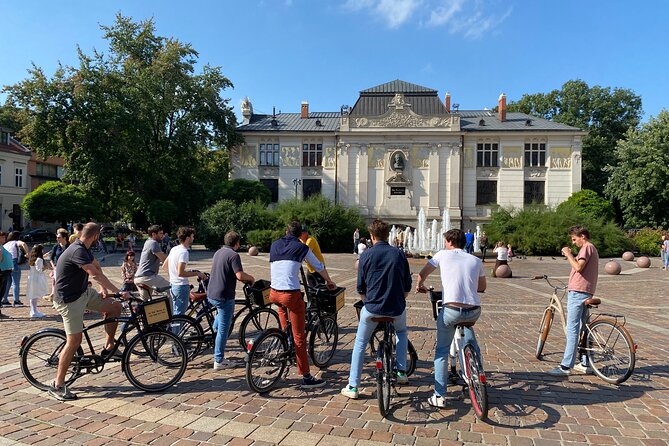
Next comes the Jewish Community Centre of Krakow, JCC Krakow. You get an introduction to the center’s role in the Jewish community and the neighborhood, including a mention of Prince Charles and why this institution matters locally.
This stop is valuable because it shifts the story from only past eras into a sense of how community institutions can shape a neighborhood’s life. Even without deep technical detail, you start to understand that Kazimierz is not only history. It is also an address for community presence.
Admission is listed as free here, which makes it easy to spend the time the guide gives you. If you tend to enjoy learning about social spaces, this is one of the stops you will remember because it feels less like a single monument and more like a living part of the area.
Below are the other Krakow trips we have logged
- Complete Cracow Bike Tour (small group of maximum 15 people!)★ 5.0 · 1,322 reviews
- Highlights of Krakow Bike Tour – Small group★ 5.0 · 662 reviews
- Full Bike Tour – the Old Town, Jewish Qtr & the Ghetto NEW BIKES★ 5.0 · 437 reviews
- Krakow: Bike Tour of the Old Town, Kazimierz, and the Ghetto★ 4.9 · 350 reviews
- Hidden Krakow Bike Tour★ 5.0 · 275 reviews
Market Square and Zapiekanki, the fast-food stop you should not skip
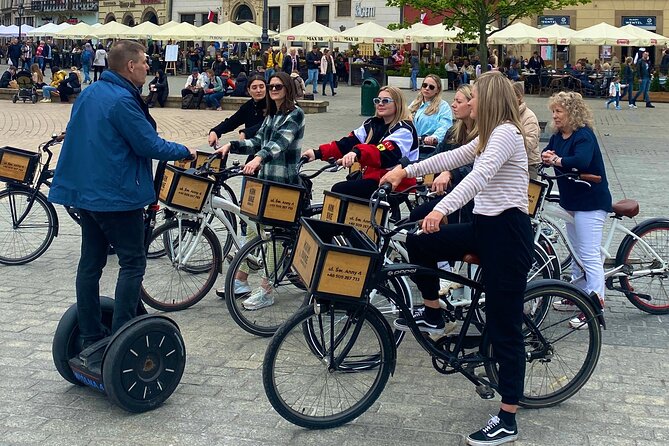
Market Square is where the tour slows down just enough to connect history to everyday taste. You get story time about the new square, and then you are invited to meet locals in Kazimierz and try Zapiekanki, which are described as Poland’s finest fast food.
This is not filler. Food breaks up a history-heavy route and gives your brain a reset. Also, Zapiekanki is one of the simplest ways to “do” a place without needing a long sit-down meal. It is ideal when you are touring by bike and want to stay flexible.
If you go for this stop, I would treat it like your unofficial lunch plan. Grab something small, eat where it makes sense, and use the snack time to look around. You will get more out of later stops if you have a short moment of normal city life in the middle of the tour.
Schindler’s List Passage: film, documentaries, and real place names
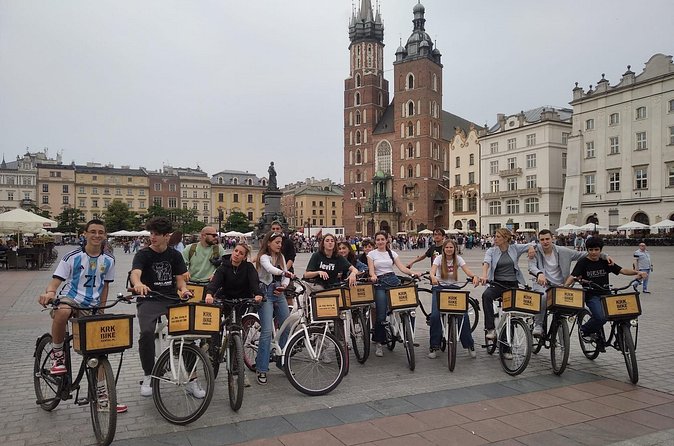
Schindler’s List Passage is the tour’s film-to-place moment. The guide talks about the movie and adds documentaries and facts tied to the area.
This stop matters because it helps you separate what a screen can show from what the streets actually hold. Even when you have seen the film before, standing in a named passage area changes the way you think about it. You are no longer processing a story in your living room.
You get about 15 minutes here, which is usually enough for an effective orientation. It is also a good pause point if the earlier synagogue stories feel emotionally intense. You can let the facts and context sink in before moving to the next sites.
Singer bar and the meaning behind the name
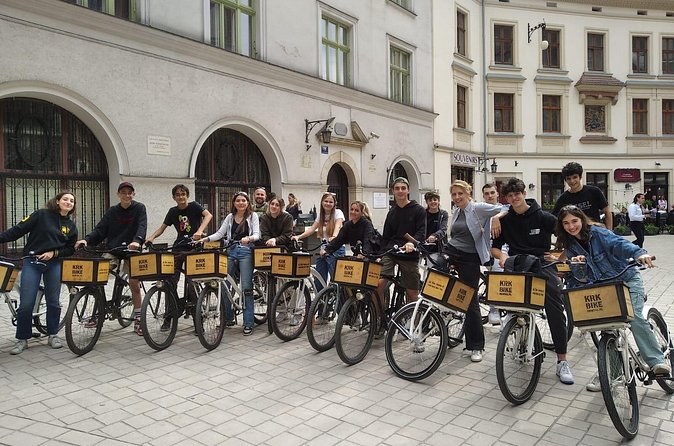
The tour then heads to Singer, a bar stop that includes an explanation of the bar’s meaning and why it is called Singer. It lasts about 5 minutes, so do not expect a long hangout. Think of it as a quick, high-value naming lesson.
Why does a bar name belong on a historic tour? Because place names are how cities store memory in plain sight. The guide’s job here is to connect a recognizable modern spot to a deeper story, so you understand what you are seeing instead of treating it like just a place to grab a drink.
If you like these quick “what is this and why does it have that name” moments, this stop will feel like a fun payoff. If you only want heavy history, you may skim your attention here. But even then, it adds color and shows that the neighborhood is not frozen in time.
Old Synagogue and Popper Synagogue: two stops with different entry options
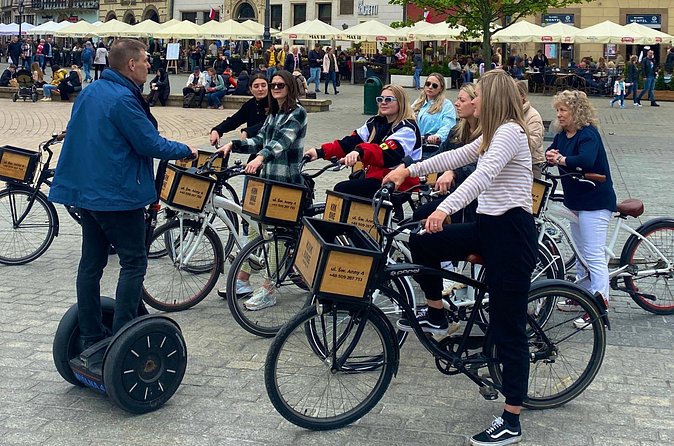
Old Synagogue comes next. The tour includes a story about it for about 10 minutes, and admission is not included. So you can decide whether you want to pay to go inside. This is one of the places where your interest in interior spaces should drive your decision.
After that, Popper Synagogue gets around 10 minutes, with an introduction to the synagogue itself plus details about a bookshop next to it and about Wolf Popper. Admission is listed as free for this stop.
This part of the route is useful because it mixes architecture with people. Synagogue stories work best when you connect them to who lived around them and what ideas stayed active nearby. The mention of a bookshop is a hint that learning and community culture mattered alongside worship.
If you are the type who likes to collect small details, Wolf Popper is the kind of name that makes a stop more than a photo moment.
Remuh and optional cemetery time, plus Kupa Synagogue history
Remuh Synagogue is a standout stop. The guide talks about Remuh’s history, and there is a note that if you wish, you can visit the cemetery as well. The stop lasts about 10 minutes, and admission is not included.
This is also where you should think about your energy. Tours with many religious and historical sites can feel intense. If you want the cemetery visit, be mentally ready for that shift, and consider timing so you do not feel rushed.
Then the tour moves to Kupa Synagogue (Synagoga Kupa), about 10 minutes with a story about its history. Admission is listed as free here.
This sequence works well because you get both a major emotional anchor (Remuh) and another architectural history lesson (Kupa). Together, they fill out the map of what the tour is trying to show: the neighborhood’s Jewish heritage is not one building, it is a whole set of places with different roles and timelines.
Corpus Christi Church and plac Wolnica legends for a wider Krakow view
The route does not stay only within synagogue landmarks. Corpus Christi Church (Kosciol Bozego Ciala) is included, with about 10 minutes of story time. You learn about the origin of the church’s name and the detailed history of the place. You can also visit this unique church.
Admission is listed as free for this stop, which makes it an easy add if you have the time and energy. It is a helpful change of pace too. When you see Christian and Jewish landmarks close together, you get a broader sense of how Krakow has always been layered.
The final stop is plac Wolnica 1, with a short 5-minute story about facts and local legends. It is brief, but it leaves you with a sense that the area is still full of meaning beyond the big named sites.
If you like finishing a tour with a little sense of local storytelling, this last stop does the job.
Price and value: what $30.23 buys you in real sightseeing time
At $30.23 per person for roughly 2 hours, the value depends on how you travel. If you plan to bike anyway, you are getting a guide-led structure for a fraction of what it would cost to piece together transport and timed visits on your own.
The biggest value is not the bikes. It is the order of stops and the way the guide connects them. You are moving through multiple key locations, including a Schindler’s List Passage story, several synagogue introductions, and the Zapiekanki moment. That mix is exactly what a first-time visitor needs.
Keep your expectations practical about admissions. Several synagogue stops list admission as not included. So think of this as a guided overview plus optional paid entries, not a fully paid all-access pass into every interior space.
Still, for many travelers, paying a small extra admission at one or two places is an acceptable trade for getting to see a lot of the neighborhood with context. The tour is efficient enough that even without interior access at every synagogue, you can still come away with a strong sense of the story arc.
Who this bike tour suits best, and who might want a different format
This tour is a great match if you:
- want a fast, structured introduction to Krakow’s Jewish Quarter
- like learning while moving, rather than listening while standing still for long periods
- plan to pair this with a heavier history day, since it adds human-scale context
It may be less ideal if you:
- prefer long, unhurried time inside sites
- expect every major synagogue stop to be included for free entry
- are sensitive to emotionally heavy content, since the route includes stories tied to the war and memorial memory
The group size cap of 30 also matters. It is not a tiny private tour, but it is large enough to feel social while still keeping the guide’s attention relevant.
Also, this experience requires good weather. If rain is in the forecast, you will want to check your date plan.
Should you book the Jewish Quarter with a Bike Tour?
Yes, book it if you want to get oriented quickly and you value a story-led route through multiple key places. The pacing makes it easy to cover a lot, and the stops hit the balance between community history, landmark context, and everyday Krakow life with Zapiekanki.
I would especially consider it if you like tours that do not treat the neighborhood as one big site. Instead, you see several synagogues, a church, a named passage tied to Schindler’s List, and even a naming explanation for Singer. That variety helps you understand Kazimierz as a whole area, not just a single highlight.
Skip or switch if you know you want to linger inside buildings for long periods, since the tour is short and includes several stops where admission is not included.
FAQ
How long is the bike tour?
It lasts about 2 hours.
Is the tour offered in English?
Yes, it is offered in English.
What is the meeting point for the tour?
The tour starts at Wiślna 4, 33-332 Kraków, Poland, and ends back at the same meeting point.
Do I need an admission ticket for the synagogues?
Some synagogue stops are listed as admission ticket not included, while others are listed as free. The guide will help you navigate which ones require separate entry.
How big is the group?
The tour has a maximum of 30 travelers.
What happens if the weather is bad?
The tour requires good weather. If it is canceled due to poor weather, you will be offered a different date or a full refund.
Can I cancel for free?
Yes. You can cancel up to 24 hours in advance for a full refund. If you cancel less than 24 hours before the start time, the amount paid is not refunded.
More Tours in Krakow
More Tour Reviews in Krakow
Kazimierz, Keep Going
Recently written up around Krakow
More Kazimierz Jewish Quarter Tours.
 ★ 4.9Jewish Quarter and Former Ghetto TourFrom $191,441 reviews
 ★ 4.9Bike Tour of Old Town, Jewish Quarter and the GhettoFrom $371,155 reviews
 ★ 4.8Kazimierz Jewish Quarter Walking TourFrom $27571 reviews
 ★ 4.8Kazimierz, Schindler’s Factory & Ghetto Guided TourFrom $81460 reviews
 ★ 5.0Full Bike Tour – the Old Town, Jewish Qtr & the Ghetto NEW BIKESFrom $35437 reviews
 ★ 4.9Bike Tour of the Old Town, Kazimierz, and the GhettoFrom $26350 reviews
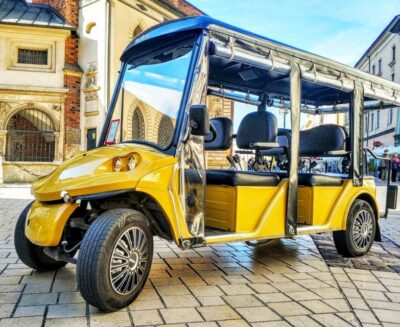 ★ 4.6Jewish Quarter and Ghetto Electric Golf Cart TourFrom $34348 reviews
 ★ 5.0Jewish Krakow Walking TourFrom $26307 reviews
Also on these Poland lists