

REVIEW · LUBLIN AND EASTERN POLAND TOURS
Fascinating Highlights of Lublin – Private Walking Tour
Lublin’s history is easy to follow here. This private English-language walking tour threads together medieval walls, Renaissance art, and today’s cultural spaces in just about two hours. You get a local professional guide to explain what you are seeing and why it matters, instead of wandering in guesswork mode.
What I like most is the way the tour handles big-ticket sights without rushing. Lublin Castle’s painting gallery, including Jan Matejko’s The Union of Lublin, is a strong anchor, and the stop on Brama Krakowska helps you visualize the old city’s defenses. I also love the shift to the Centre for the Meeting of Cultures, where the Avenue of Cultures and the opera hall show how Lublin connects old and new.
One thing to plan for: some entrances cost extra. The National Museum in Lublin admission fee for the castle area and the Królewska admission fee are not included, so check the totals before you commit, especially at $269.83 per person.
In This Review
- Key highlights before you go
- Lublin Castle, the painting gallery, and what you should notice
- Brama Krakowska: a 14th-century gate you can picture fast
- Hostel Królewska Lublin and why the location matters
- Centre for the Meeting of Cultures: Avenue of Cultures and the opera hall feel
- The 2-hour private format and how to pace yourself
- Price and ticket costs: what $269.83 per person really buys
- Who this tour suits best (and who should pick something else)
- Should you book this Lublin walking tour?
- FAQ
- How long is the Fascinating Highlights of Lublin private walking tour?
- Is this a private tour?
- What language is the tour offered in?
- Do I get a mobile ticket?
- What is included in the price?
- Where does the tour start?
- Where does the tour end?
- Which admissions are not included?
- Which stops have free admission?
- What is the cancellation policy?
Key highlights before you go
- Jan Matejko’s Union of Lublin at the castle: a famous painting stop that makes the rest of the old town feel more anchored.
- Brama Krakowska as a “walk-through-the-walls” moment: a 14th-century gate tied to the city walls, built when the city was seriously protecting itself.
- Królewska’s Old Town location: it is only about 200 m from the Old Town’s Main Market, so it feels in-place for exploring.
- Centre for the Meeting of Cultures design: the multi-level glazed passageway called the Avenue of Cultures is a big part of the experience.
- Private, small-group pacing: only your group participates, so your guide can slow down when you want photos or extra context.
Further east, the trips we have covered
- Lublin: Old Town Highlights Private Walking Tour
★ 5.0 · 6 reviews - Fascinating Highlights of Lublin – Private Walking Tour
★ 5.0 · 4 reviews
Lublin Castle, the painting gallery, and what you should notice
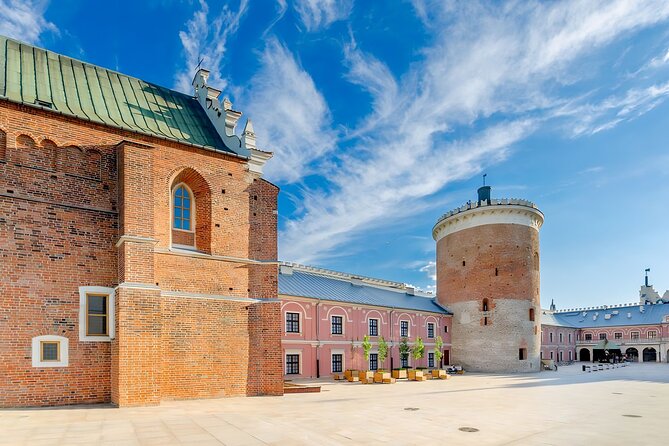
This stop sets the tone. Lublin Castle is not just a fortress landmark, it is also where you get pulled into the visual story of Polish history and culture. Your guide points out the castle’s painting gallery, including Jan Matejko’s The Union of Lublin. If you have ever felt like museum art titles float above your head, this is the kind of stop that helps you understand what you are looking at and why it is famous.
You can also expect other artworks in the same painting-gallery space, including works by Polish and foreign artists. That matters because it gives you a wider view of what this site holds, not only one headline piece. It is a good choice for first-timers because it ties Lublin to broader cultural currents without needing a full museum day.
Time-wise, you have about 23 minutes. That is enough to get oriented, read the right details, and let the guide explain the meaning behind what you are seeing. It is not enough for lingering for hours, so go in with the mindset of “connect the dots,” not “study every brushstroke.”
Practical tip: since admission is not included for this castle stop, consider arriving with your plans already made. If you know you want to spend extra time inside, you might budget for the ticket and give yourself a little breathing room around this portion.
Brama Krakowska: a 14th-century gate you can picture fast
After the castle, the tour shifts gears in a smart way. Brama Krakowska is one of Lublin’s symbols, and it is easier to understand when you have just heard the larger story of the city. This gate was constructed in the 14th century alongside the city walls. Once you know that, you start noticing how gates were built for control, protection, and movement, not just decoration.
This stop is also the kind of place where a good guide makes the difference between seeing a wall and understanding a system. You learn how city walls shaped daily life, why gates were critical bottlenecks, and how the 14th-century architecture still shapes the old-town feel today.
Good news: admission is free here. In a tour that already has a few paid entrances elsewhere, a free stop is a nice balance. It also means you can spend more time looking without worrying about the clock.
You get about 23 minutes at Brama Krakowska, which is a comfortable window for a quick exterior read plus explanation. If you like medieval details, you will probably want to slow down for photos, especially if you enjoy old stonework and proportions.
Practical tip: if you are the type who likes to read signs, use a corner of your time here. Take a slow look first, then let your guide add the historical framing so it lands faster.
Hostel Królewska Lublin and why the location matters
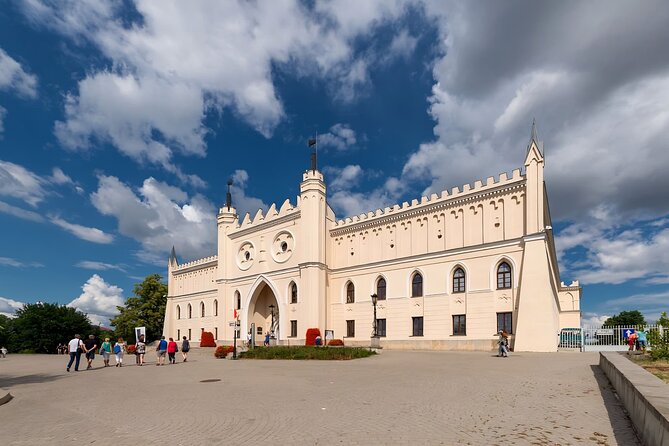
This stop is different from a traditional “attraction stop,” and that is part of why I think it works. Hostel Królewska sits in Lublin’s historical center, about 200 m from the Old Town’s Main Market. That proximity means the tour can connect you to where people actually move through the city today.
The bigger value here is perspective. Even if you do not stay at the hostel, it gives you a sense of the old-town layout and sightlines. The rooms offer views of either the Gothic watchtower or the boulevard, and that detail hints at how close the historic layers sit next to the everyday streetscape.
You should also know what is not included. The Królewska admission fee is not included, so if the tour stop includes entry areas, you might need to pay separately. The good part is that the tour still uses this as a contextual waypoint, so even if you keep it brief, you are not losing the main plot.
Time on this stop is about 23 minutes. That is enough for a guided orientation, plus a look around so you understand where you are in relation to the Main Market.
If you like Renaissance buildings and the way old streets connect to later development, this is a “grounding” stop. One reviewer connection I found particularly useful is how the guide can connect architecture you see outside to interiors you might seek later, including places like the Saint John and the Baptist Cathedral. You do not have to enter every building on day one to get the value. It is more about understanding what you are seeing and where it fits.
Practical tip: wear comfy shoes for this portion. Streets and sidewalks in historic centers can vary, and you are on your feet for the whole 2 hours.
Centre for the Meeting of Cultures: Avenue of Cultures and the opera hall feel
This is the modern pivot, and it makes the tour more satisfying than a list of old stones. The Centre for the Meeting of Cultures is built around the professional opera hall, designed to host a wide range of events. That is a useful detail because it tells you this center is not only a building, it is an active cultural venue.
Even more central is the Centre’s main passageway, the Avenue of Cultures. It is a multi-level glazed passageway that functions as a meeting space for artists, cultural organisers, audiences, and guests. In other words, it is designed for movement and connection, not just for sitting still.
Admission is free for this stop, which is a strong value add after any paid entrances earlier in the walk. You also end at plac Teatralny 1, so it is a decent place to keep exploring on your own after the tour.
Time is about 23 minutes. That is enough to see the architectural idea, understand how the space works, and get the “why” from your guide. If you like architecture, you will probably enjoy how the tour contrasts the solidity of old defenses with the lightness of a glazed, multi-level design.
Practical tip: bring your phone for photos of the passageway. Glazed spaces show reflections and lines, and a guide’s framing can help you notice angles you might otherwise miss.
The 2-hour private format and how to pace yourself
This is a private tour, meaning only your group participates. That changes the feel right away. Instead of being pulled along in lockstep with strangers, you can ask questions, linger briefly, and get clarifications without needing to shout across a group.
The itinerary is structured with four main stops, each around 23 minutes. That makes the whole tour feel short but complete. In real terms, about two hours gives you time to get bearings, learn the names and roles of major city landmarks, and walk away with a mental map that helps you explore the rest of Lublin.
It also helps that the tour ends near a major cultural landmark. Leaving with one “anchor” modern destination makes it easier to plan your next hours. You can head back toward the old town center or keep moving toward other areas, depending on what you feel like.
You also have a mobile ticket. That tends to mean less fumbling and fewer last-minute surprises when you arrive, especially when you are walking between locations.
Practical tip: plan to do a little light planning for the paid entrances. When you know which parts cost extra, you can decide on the spot whether you want to spend more time inside or keep the walk pace.
Price and ticket costs: what $269.83 per person really buys

Let’s talk value honestly. At $269.83 per person for a 2-hour private walking tour, this is not a budget activity. You are paying for a local professional guide plus a focused route that covers four high-signal stops, two of which have free entry.
Here is how the costs likely shake out:
- Included: local professional guide, and you get a mobile ticket.
- Not included: the National Museum in Lublin admission fee for the castle stop, and the Królewska admission fee.
So the final total depends on whether you choose to pay for the areas tied to those two stops. If you only do the guided explanation outside and keep entrances minimal, you may spend less. If you want to take full advantage inside the castle area and at Królewska, budget extra.
There is also group discounts. If you are traveling with friends or family, this can soften the price impact. Private tours become a better deal when you can split the guide cost across multiple people.
My practical advice: treat the listed price as your baseline for guidance and route design, then add whatever entrance fees you personally decide to use. That way, you avoid the common “I thought it was included” frustration.
Also, the tour is offered in English. If you are an English speaker who wants historical context without language barriers, that makes the price feel more reasonable, because you are buying understanding, not just movement.
Who this tour suits best (and who should pick something else)
I think this tour is best for you if:
- you want a quick, guided orientation to Lublin without spending an entire day hopping between tickets
- you care about how architecture and art connect, not only about dates and facts
- you enjoy storytelling that helps you notice details while you walk
- you prefer private pacing, where questions do not get ignored because the group is too big
This tour might be less ideal if:
- you only want free stops and zero admission costs, since two stops have added fees
- you expect a long museum visit. This is time-boxed for walking and interpretation.
One reviewer theme that keeps coming up in a useful way is how the guide ties architecture to lived context, including how interiors you might later see, like the Saint John and the Baptist Cathedral, fit into the city’s bigger story. Even when you are not entering every site, the explanations help you plan what to seek next.
Should you book this Lublin walking tour?
Yes, I would book it if you want a guided “map and meaning” experience. The route is compact, it balances medieval and modern, and it includes the kind of art reference that makes the rest of the city feel more connected, especially with Jan Matejko’s The Union of Lublin. The free entries at Brama Krakowska and the Centre for the Meeting of Cultures also help you get a good return on time.
I would pause and double-check your budget if you do not plan to pay the extra admissions. Since the castle and Królewska fees are not included, the total depends on how fully you want to take part at those stops. If you like guided pacing and you are traveling with a group that can use the discount, the price becomes easier to justify.
FAQ
How long is the Fascinating Highlights of Lublin private walking tour?
It is listed as about 2 hours.
Is this a private tour?
Yes. It is private, and only your group will participate.
What language is the tour offered in?
The tour is offered in English.
Do I get a mobile ticket?
Yes, the tour includes a mobile ticket.
What is included in the price?
The local professional guide is included.
Where does the tour start?
The start point is Lublin Castle at Zamkowa 9, 20-117 Lublin, Poland.
Where does the tour end?
The end point is the Centre for the Meeting of Cultures in Lublin at plac Teatralny 1, 20-029 Lublin, Poland.
Which admissions are not included?
Admission fees are not included for the National Museum in Lublin (for the Lublin Castle stop) and for Królewska (for the Hostel Królewska stop).
Which stops have free admission?
Brama Krakowska is free, and the Centre for the Meeting of Cultures stop is free.
What is the cancellation policy?
You can cancel for free up to 24 hours in advance for a full refund.
More Tours in Lublin
More Tour Reviews in Lublin
Further East from Lublin
Recently written up around Lublin

More Lublin and Eastern Poland Tours.
 ★ 5.0Majdanek Concentration Camp & Lublin Full Day Private Tour from WarsawFrom $36170 reviews
 ★ 4.8Lublin and Majdanek State Museum Day TourFrom $23121 reviews
 ★ 5.0Bialowieza National Park Small Group Tour from Warsaw with Lunch includedFrom $38618 reviews
 ★ 4.5Lublin and Majdanek Small Group Tour from Warsaw with LunchFrom $35216 reviews
 ★ 4.9Bialowieza National Park and European Bison TourFrom $24513 reviews
 ★ 5.0Majdanek Concentration Camp & Lublin Guided Day TourFrom $35311 reviews
 ★ 5.0Lublin Old Town Highlights Private Walking TourFrom $1078 reviews
 ★ 4.0Białowieża Forest Unesco World Heritage Tour Packages (Native English Speaker)From $988 reviews
Also on these Poland lists