
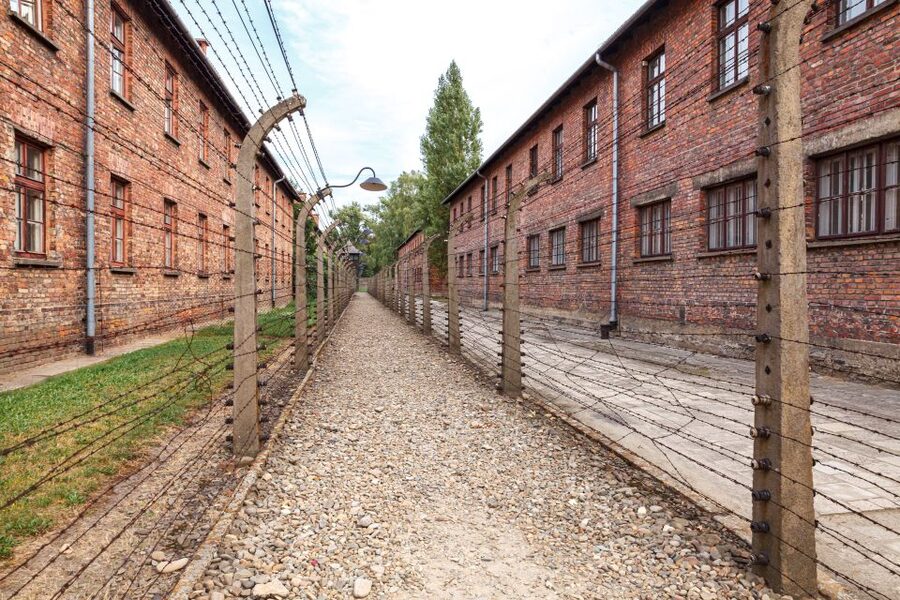
REVIEW · AUSCHWITZ-BIRKENAU MEMORIAL TOURS
From Krakow: Auschwitz Birkenau Tour with Transfer
Auschwitz is not a casual outing. This day trip from Krakow is interesting because it gives you organized transport and tickets plus a route you can follow at your own speed. I also like the support on the ground, from help collecting admissions to an assistant available from pickup to drop off. One drawback to keep in mind: the self-guided option uses a brochure and has no live guide, so you are doing more on your own.
This is the kind of trip where structure matters. The schedule is built around the two big areas, Auschwitz I and Auschwitz II-Birkenau, with time blocks that help you cover the key parts without feeling completely rushed. And yes, this place is heavy, so having someone handle the logistics so you can focus on what you see is a real quality-of-life win.
If you choose the version with a professional guide, you may even get the added benefit of a calm, respectful human voice at the right moments. Some departures include guides and drivers known from past groups, like Andrianna or Adriana, and a coach driver named Magik. That sort of service can make a difficult day feel more manageable, even when emotions are doing their thing.
In This Review
- Key things to know before you go
- Why this Auschwitz-Birkenau day trip starts in Krakow
- Transfer, pickup points, and the timing that matters
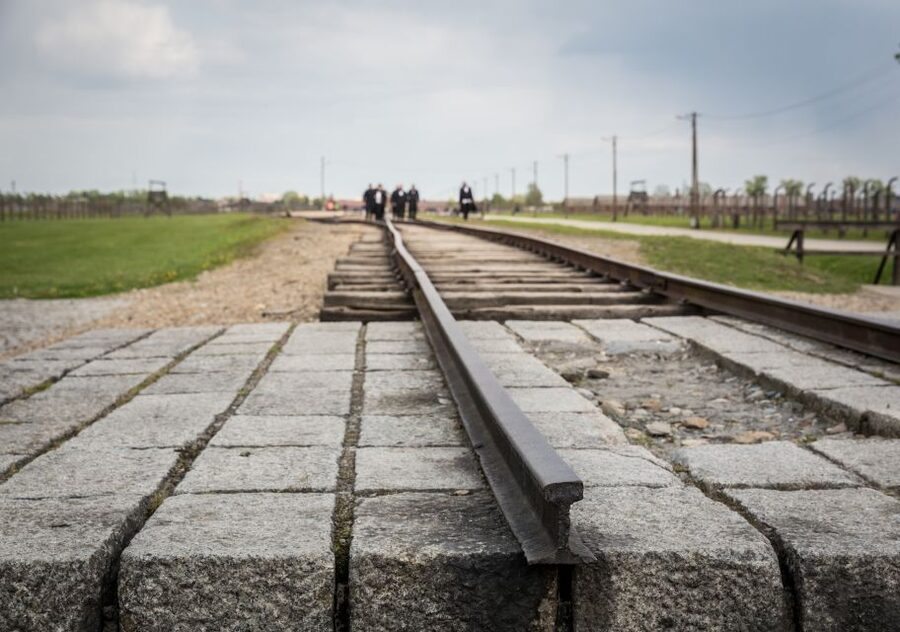
- Judenrampe: where your route begins on your own
- Auschwitz I: Auschwitz’s built-on-Polish-soil story in 1.5 hours
- Auschwitz II-Birkenau: scale, shock, and why 40 minutes feels fast
- Comfortable coach ride and a break you will actually use
- What the brochure and tour assistant support really mean
- Price and value: what you get for around $21
- Who this Auschwitz transfer tour suits best
- Should you book? A quick, honest decision guide
- FAQ
- How long is the Auschwitz Birkenau tour from Krakow?
- What does the tour include for admission?
- Is there a live guide?
- What languages are available?
- Where are the pickup locations in Krakow?
- Do I get time for a break?
- What should I bring, and what is not allowed?
- Is it suitable for wheelchair users or very young children?
Key things to know before you go
- Transported in an air-conditioned shared coach with roundtrip logistics handled from Krakow
- Two-site admission included, covering both Auschwitz I and Auschwitz II-Birkenau
- Brochure-based route lets you move at your pace, with the option of a professional guide depending on what you book
- Judenrampe plus Auschwitz I and Birkenau time blocks help you cover the grounds in one day
- On-trip assistance is available from pickup through drop-off, including help with admissions
- Birkenau time can feel short if you want extra reading and lingering in the open areas
Other Auschwitz-Birkenau visits we have reviewed, with entry and transport noted
- From Krakow: Auschwitz-Birkenau Guided Tour & Hotel Pickup
★ 4.5 · 33,358 reviews - From Krakow: Auschwitz-Birkenau Guided Tour & Hotel Pickup
★ 4.5 · 29,340 reviews - Krakow: Auschwitz Guided Tour with Optional Hotel Pickup
★ 4.5 · 15,280 reviews - Krakow: Auschwitz-Birkenau Guided Tour with Pickup & Lunch
★ 4.5 · 9,800 reviews
Why this Auschwitz-Birkenau day trip starts in Krakow
Krakow is a smart base for this visit. It keeps your day simple: you board a bus in the morning, you reach the memorial with time to get oriented, and you return to the city afterward. That matters because Auschwitz-Birkenau is not something you want to tack onto your schedule like a museum stop between errands.
I like that this experience is framed around the two realities you came for: Auschwitz-Birkenau as both a concentration camp and an extermination camp, and Birkenau as where mass killings took place. The highlights also point you toward what you will actually notice on the grounds, like remnants and personal artifacts left behind. This is not just big facts on a screen. It is the physical weight of the site, and the way the tour route is designed helps you encounter it in order.
If you are someone who needs structure to handle hard information, this format can fit well. If you prefer a deep, live lecture the whole time, note that the self-guided option relies on the brochure route rather than a live educator.
Transfer, pickup points, and the timing that matters
You are choosing a start time window, but it is not guaranteed. In exceptional situations, the departure may shift earlier or later than the time frame you picked. I recommend treating your day like a punctual plan, not a fragile one. Add buffer time in Krakow so a small schedule change does not stress you out.
Pickup is optional, with set points listed for some options, including Pawia 18a near the Kiss and Ride Lane in front of the Mercure Hotel, or Wielopole 2 near the Kiss and Ride Lane bus stop. If you do not want to hunt for meeting details, selecting one of these pickup options can be the easiest path.
The overall duration runs about 7 to 10 hours, and the memorial sets the pace. That means you are not fully in control of how long you spend at each area, even if you have a brochure route. In practice, this structure keeps the day coherent: bus travel, a break, then the site sequence, then the ride back.
Judenrampe: where your route begins on your own
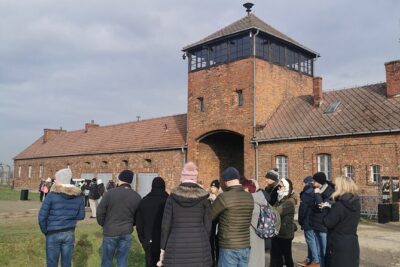
Your first on-site time block is at Judenrampe with a self-guided stop. You get about 45 minutes there, which is enough time to take in what the route sets up before you move into Auschwitz I.
The value of starting here with a brochure-based approach is that you can go at a pace that works for you. Some people need a minute to absorb before reading. Others read first and look second. A set time window gives you permission to do both without drifting into a too-long pause that can steal time from later sections.
One practical note for this stop: you will want comfortable shoes and a steady, mindful rhythm. This is not the place for quick sightseeing. Even if you are self-guided, the route and descriptions aim you down a logical path, so you are not wandering without context.
Auschwitz I: Auschwitz’s built-on-Polish-soil story in 1.5 hours
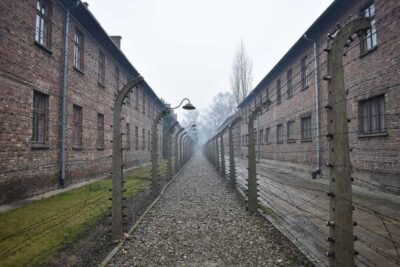
Auschwitz I is where the day turns from orientation into the main historical core. You typically get about 1.5 hours for this self-guided section, which is a lot and not a lot, depending on how you read and how much you stop.
The key idea to keep in mind is the role Auschwitz played. The experience is designed around Auschwitz-Birkenau being the largest camp built on Polish soil by the Nazis, serving as both a concentration camp and an extermination camp. That is the kind of information that changes how you read the buildings and displays. You are not just seeing structures, you are seeing a system.
The included brochure is doing the heavy lifting here. It provides a route plus detailed descriptions in the language you choose. Since the self-guided option does not include a live guide, you will get the most out of Auschwitz I if you actually use the brochure as you walk, not after you finish.
Also, take advantage of the fact that you have help on the edges. The tour leader or assistant handles the admission ticket collection support so you do not lose time or get stuck at the start.
Below are the other Krakow trips we have logged
- Krakow to Auschwitz Birkenau Guided Tour with Transfer and Ticket★ 5.0 · 8,197 reviews
- From Krakow: Auschwitz Birkenau Tour with Transfer★ 4.0 · 6,134 reviews
- Krakow: Auschwitz-Birkenau Guided Tour with Ticket and Transfer★ 4.5 · 3,784 reviews
- Krakow to Wieliczka: Salt Mine Guided Tour with Ticket & Transfer★ 4.5 · 3,193 reviews
- Krakow to Auschwitz Birkenau Guided Tour with Ticket and Transfer★ 3.5 · 3,062 reviews
Auschwitz II-Birkenau: scale, shock, and why 40 minutes feels fast
Then you head to Auschwitz II-Birkenau, where mass killings took place. This is scheduled for about 40 minutes in the self-guided format.
I want to be honest about this timing. Birkenau’s open spaces and sheer scale make you want to linger. In prior experiences, people have wished they had a bit more time in Birkenau. With only 40 minutes, you will probably feel rushed if you stop frequently to read, zoom in on details, and stand quietly. The trade-off is that the day is still manageable and you will still have enough time to move through the site without burning out.
Still, the brochure route helps here, too. The highlights emphasize seeing remnants and poignant personal artifacts. Birkenau is the kind of place where your brain tries to translate scale into meaning. A good route keeps you from getting lost in the overwhelming.
If you are doing this as a self-guided day and you want less pressure, choose a slower reading style at Auschwitz I so Birkenau feels calmer. Or, if you can book a version with a professional guide, consider it for Birkenau, where a live explanation can pace your understanding.
Comfortable coach ride and a break you will actually use
The bus segments are built into the day: travel from Krakow, short transfers between areas, then the return trip. The ride is shared, but you get air-conditioned transportation, which matters in colder or hot months when long hours can drain your focus.
There is also a local café break of about 40 minutes. You will appreciate this more than you think. After the first on-site section, you need a reset, and having a scheduled pause means you do not scramble for food while you are mentally loaded.
Try to plan your day like this: water first, food second, then shoes check. You are going to do a lot of walking and standing. The memorial experience is emotionally intense, so protecting your physical comfort helps you stay present rather than distracted by discomfort.
What the brochure and tour assistant support really mean
This setup is either self-guided with a brochure or guided by a professional, depending on what you book. The self-guided option includes no live guide, so the brochure becomes your main tool for understanding the route and what you are seeing.
The tour assistant support is what makes the brochure approach easier. You are helped with collecting admission tickets with assistance before you start walking. And the assistant is at your disposal from pickup to drop off, so if something feels off, you do not have to solve it alone.
In reviews, the human element shows up strongly. People praised guides like Andrianna or Adriana for being friendly and helpful, with drivers such as Magik described as lovely. Others credited guides such as Daniel and Simon for communicating the factual side respectfully and in a way that also connects to the emotional impact. I take that as a sign that when you have a good guide briefing, your self-guided time on-site tends to feel more grounded.
If you are picking the self-guided format, read a bit of the brochure before you enter each section. It takes maybe five minutes, and it changes how you notice details.
Price and value: what you get for around $21
At about $21 per person, you are paying for the essentials that are hard to DIY cleanly: roundtrip transfer from Krakow, shared air-conditioned coach service, entry arrangements for both Auschwitz I and Auschwitz II-Birkenau, plus a language brochure with the route and descriptions.
What you are not buying at this price level is an all-day live educator for every minute. In the self-guided option, the brochure replaces the live narration. So the value depends on how you learn and what you want from the experience.
One more detail that affects your sense of value is admissions handling. Entry tickets are booked in advance by the tour operator when possible, and in some situations the tickets are collected individually before the tour with the help of the tour leader. Also, there is a note that entry passes for individual visitors without educators are free and provided by the museum under official regulations. The practical takeaway is that your operator handles the admission process so you are not standing in uncertain lines with your day already starting.
Who this Auschwitz transfer tour suits best
This works best if you want a structured day with logistics handled and you are comfortable learning on-site with a brochure. It is also a good fit if you are traveling from Krakow and you do not want to negotiate transport, tickets, and timing on your own.
I would also recommend this format if you like the idea of having an assistant available, because Auschwitz can overwhelm your planning instincts. The ability to get admission support and clarification without feeling alone makes a big difference.
Who should skip it? The tour data says it is not suitable for wheelchair users and people with mobility impairments, and it lists age restrictions for very young children. If you fall into those categories, it is worth looking for a different accessibility-focused option.
If you are someone who strongly prefers a live guide throughout, consider choosing the option that includes a professional guide rather than relying only on the brochure. Birkenau in particular can benefit from a live explanation to help you process scale and meaning while you are walking.
Should you book? A quick, honest decision guide
Book it if you want the simplest possible Auschwitz-Birkenau day from Krakow, with transport, entry arrangements, and a language brochure that keeps you on a clear route. The added assistant support from pickup to drop off is also a big plus. With this setup, you spend less energy coordinating and more energy paying attention.
Consider another option if you need a live guide for deeper context during every section, or if you know you will struggle with a self-guided format where the brochure is your primary explanation. Also think carefully about Birkenau time, since 40 minutes can feel brief if you want to slow down a lot.
If you are willing to follow the route, use the brochure actively, and accept that the memorial controls the pace, this tour offers solid value for a heavy, important day.
FAQ
How long is the Auschwitz Birkenau tour from Krakow?
The duration is listed as about 7 to 10 hours, though the exact timing can vary because the memorial sets the pace and visitor service timing.
What does the tour include for admission?
You get entry ticket access for Auschwitz I and Auschwitz II-Birkenau. Your tour operator arranges the tickets in advance when possible, or helps collect them before the tour when needed.
Is there a live guide?
It depends on the option you choose. The self-guided option uses an informative brochure and does not include a live guide. A professional guide option may be available through booking.
What languages are available?
The brochure and support are listed in Dutch, English, Polish, Italian, Spanish, and German.
Where are the pickup locations in Krakow?
Pickup is optional and may include Pawia 18a near the Kiss and Ride lane in front of the Mercure Hotel, or Wielopole 2 near the Kiss and Ride lane bus stop. The exact meeting point can vary by option booked.
Do I get time for a break?
Yes. There is a local café break of about 40 minutes included in the schedule.
What should I bring, and what is not allowed?
Bring a passport or ID card. Large bags or luggage are not allowed.
Is it suitable for wheelchair users or very young children?
No. The activity is listed as not suitable for wheelchair users and people with mobility impairments, and it also has minimum age restrictions for young children.
More Tours in Krakow
More Tour Reviews in Krakow
Auschwitz-Birkenau: Other Reviewed Visits
Recently written up around Krakow
More Auschwitz-Birkenau Memorial Tours.
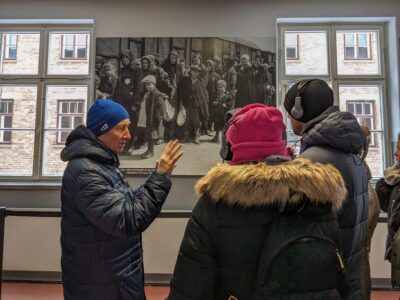 ★ 4.5Auschwitz-Birkenau Guided Tour & Hotel PickupFrom $2133,358 reviews
★ 4.5Auschwitz-Birkenau Guided Tour & Hotel PickupFrom $2129,340 reviews
★ 4.5Auschwitz-Birkenau Guided Tour & Hotel PickupFrom $2133,358 reviews
★ 4.5Auschwitz-Birkenau Guided Tour & Hotel PickupFrom $2129,340 reviews
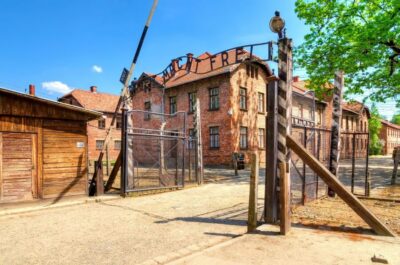 ★ 4.5Auschwitz Guided Tour with Optional Hotel PickupFrom $6915,280 reviews
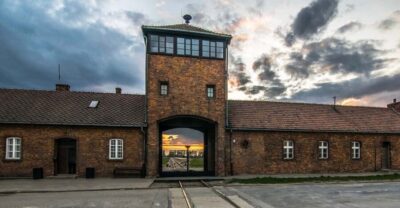 ★ 4.5Auschwitz-Birkenau Guided Tour with Pickup & LunchFrom $219,800 reviews
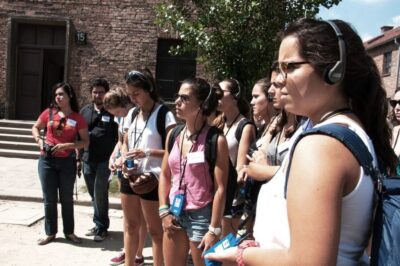 ★ 4.5Auschwitz-Birkenau Guided Tour Pickup/Lunch OptionsFrom $2009,057 reviews
 ★ 4.7Auschwitz-Birkenau and Salt Mine Guided TourFrom $549,020 reviews
 ★ 5.0Krakow to Auschwitz Birkenau Guided Tour with Transfer and TicketFrom $368,197 reviews
 ★ 4.3Auschwitz-Birkenau Day Trip with Tour LeaderFrom $375,452 reviews
Also on these Poland lists