
REVIEW · KAZIMIERZ JEWISH QUARTER TOURS
Jewish Krakow in German
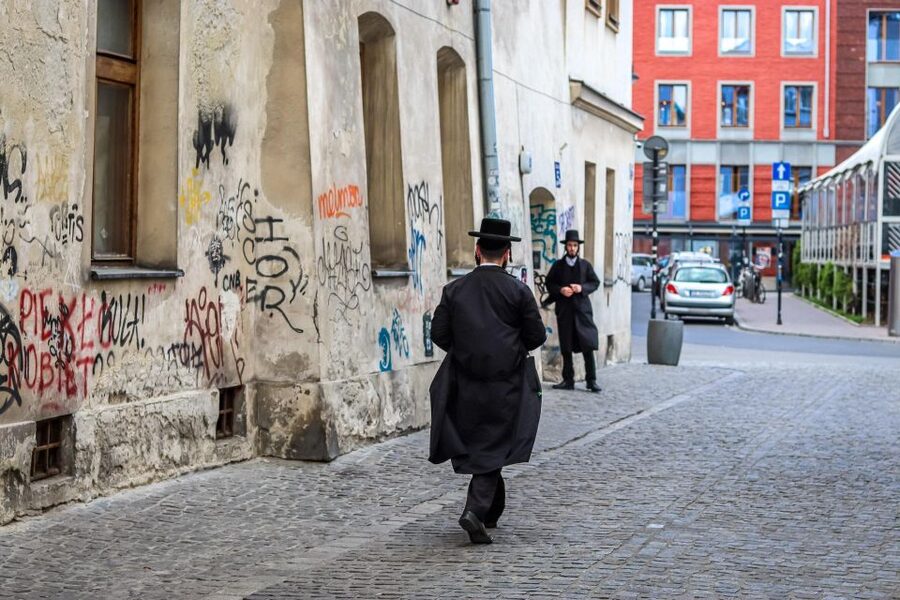
Kazimierz and Podgórze hit differently when you walk them. This Jewish Krakow in German tour connects pre-war Jewish life, World War II destruction, and the later Holocaust sites in Krakow in one clear, well-paced story. I especially like how the route brings you past places tied to the Jewish quarter, including the fact that seven old synagogues surprisingly survived the war.
I also like the emotional balance. You get context on what happened in the Second World War, then you also see how Jewish culture has revived in today’s Krakow, not just how it ended. One thing to consider: part of the tour covers tragedy from 1941 to 1943 in the former ghetto area, so come prepared for a heavy tone.
The meeting setup is simple and smart, you gather on the stairs in front of the old synagogue on the main street in the Jewish district. The guide runs the tour in German, and the timing works well if you want a focused history walk without eating your whole afternoon.
In This Review
- Key things to know before you go
- Why Kazimierz and Podgórze make this tour matter
- Meeting on the synagogue stairs: the start that sets the pace
- The Jewish quarter and the meaning of surviving synagogues
- World War II and the Holocaust sites in Krakow, explained with context
- Kazimierz today: revival, a small community, and modern Krakow life
- Podgórze ghetto area: 1941 to 1943 on the ground
- Price and value of a 150-minute German walk
- Who this tour is best for (and who should skip it)
- Should you book Jewish Krakow in German?
- FAQ
- How long is the Jewish Krakow in German tour?
- What language is the live guide?
- Where is the meeting point?
- Is the tour only about the Holocaust, or does it also cover Jewish life before and after?
- What is included in the price?
- What is not included?
- When should I arrive, and can I change my plans?
Key things to know before you go
- Seven old synagogues that survived WWII, explained in a way that makes the architecture feel personal.
- Kazimierz then and now, with the past connected to the small but lively Jewish community today.
- Podgórze ghetto area (1941 to 1943), where the tragedy is placed in time and geography.
- A carefully structured story, not a random list of stops.
- German live guide, and the style tends to be factual and easy to follow, with strong language skills like those praised for a guide named Max.
Kazimierz on foot, by cart and after dark. Our other write-ups
- Krakow: Jewish Quarter and Former Ghetto Tour
★ 4.9 · 1,441 reviews - Krakow: Bike Tour of Old Town, Jewish Quarter and the Ghetto
★ 4.9 · 1,155 reviews - Krakow: Kazimierz Jewish Quarter Walking Tour
★ 4.8 · 571 reviews - Krakow: Kazimierz, Schindler’s Factory & Ghetto Guided Tour
★ 4.8 · 460 reviews
Why Kazimierz and Podgórze make this tour matter
Krakow’s Jewish story is not one chapter. It’s a stack of chapters, and walking lets you feel how they overlap. You start in the Jewish quarter, then you move toward Podgórze, where the ghetto’s footprint still shapes the area.
What I like most is that the tour does not treat history like a lecture. It frames the historical Jewish quarter as a real neighborhood, with buildings that still exist and streets that you can stand on. That’s the difference between reading about it and actually seeing it.
You also get the full arc. The tour talks about local Jewish life and its cultural flowering, then covers death and destruction during the Second World War, and finally points you to the revival of Jewish culture in today’s Krakow. That last part matters because it prevents the trip from ending in only one emotion.
Meeting on the synagogue stairs: the start that sets the pace
You meet on the stairs in front of the old synagogue, on the main street in the Jewish district. Arrive about 10 minutes early. That timing helps you avoid the classic travel problem of rushing while trying to locate a group at street level.
A 150-minute walking tour is not a long marathon, but it’s also long enough to do more than stop at one or two photo spots. You’ll get a structured sequence of locations, with the guide building meaning step-by-step so you do not feel lost while moving between areas.
The German live guide is another practical detail. If you’re traveling in Germany, Austria, or Switzerland, or you just want your questions answered in German, this is a straightforward way to do it. And the German delivery seems to land well, with past guides praised for excellent German and strong explanations.
The Jewish quarter and the meaning of surviving synagogues
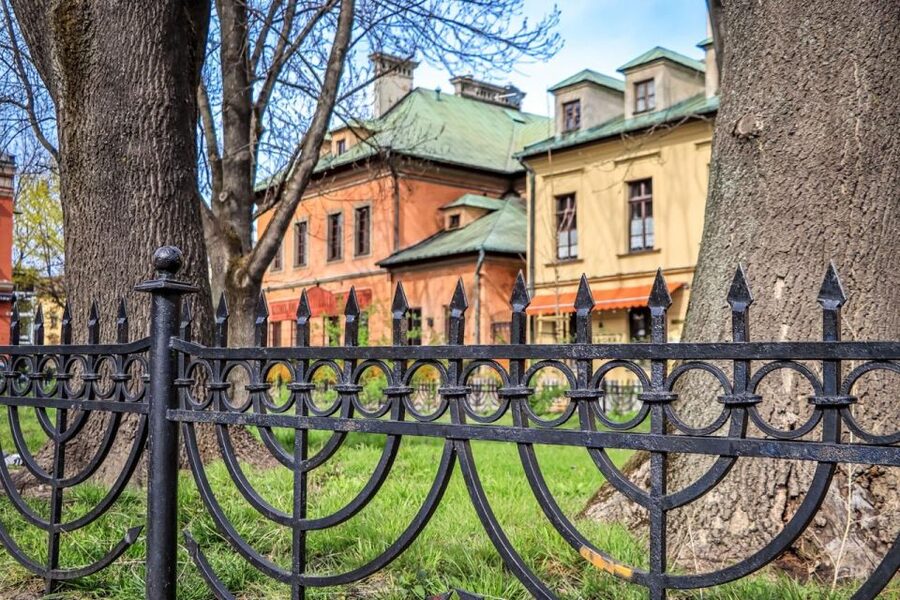
This is one of the tour’s biggest selling points: you’re in the historical Jewish quarter, and you hear what those old synagogue buildings represent. The tour highlights that there were seven old synagogues in the area, and that they surprisingly survived the destruction of World War II and the Holocaust.
I like how that fact becomes more than a trivia line. Surviving buildings carry a kind of visual grammar. Even without detailed museum-style explanations, you can sense that something endured here, which makes the later history feel even sharper and more tragic.
Expect the guide to connect the architecture and the neighborhood layout to the community’s life. You’re not only hearing names. You’re learning why these places mattered, and why their survival still matters today in Krakow.
Possible drawback to note: because the tour focuses on meaning and story, you may wish you had more time at certain corners to look slowly on your own. If you’re the type who wants to linger for photos and quiet reflection, plan to add a little free time in Kazimierz afterward.
World War II and the Holocaust sites in Krakow, explained with context
No matter how well a tour is written, this part requires a steady tone. The tour includes discussion of the death and destruction of the Second World War and the places connected to the Holocaust in Krakow.
The value here is sequencing. You learn the historical context of the local Jewish community before the worst events, so you understand what was lost. Then the guide places the tragedy into the right time frame, so it doesn’t feel like disconnected fragments.
You’ll also hear about the difference between pre-war Jewish quarter life and the later reality shaped by Nazi persecution. That contrast is not just emotional, it’s logical. It helps you see why the neighborhood’s meaning changed so completely.
I appreciate that the tour does not only point you at grim spots and move on. It aims to give you understanding of what happened and why those locations matter now.
- From Krakow: Auschwitz-Birkenau Guided Tour & Hotel Pickup★ 4.5 · 33,358 reviews
- From Krakow: Auschwitz-Birkenau Guided Tour & Hotel Pickup★ 4.5 · 29,340 reviews
- Krakow: Auschwitz Guided Tour with Optional Hotel Pickup★ 4.5 · 15,280 reviews
- Krakow–Zakopane: Cable Car, Chocholow Baths, Cheese & Vodka★ 5.0 · 10,720 reviews
- Krakow: Auschwitz-Birkenau Guided Tour with Pickup & Lunch★ 4.5 · 9,800 reviews
Kazimierz today: revival, a small community, and modern Krakow life
After the heavy parts, the tour shifts to something hopeful, the revival of Jewish culture in today’s Krakow. You’ll spend time in Kazimierz, which is described as the cultural heart of modern Krakow and also the home of a small but lively Jewish community.
This is where the tour helps you avoid the common travel trap of treating history as a closed museum. Instead, you see that the Jewish presence did not vanish forever. Even if it’s smaller than in the past, it’s active, visible, and part of the city’s rhythm.
You’ll likely leave with a better sense of what it means for culture to revive. It’s not only about buildings. It’s about people continuing traditions, adding contemporary community life, and keeping memory connected to daily reality.
If you’re short on time, this is a smart way to get both sides of the story. If you already plan to visit a synagogue or two on your own, the tour can still help because it gives you context before you go inside or around.
Podgórze ghetto area: 1941 to 1943 on the ground
Podgórze is the former ghetto area from World War II, and the tour specifically points to what the original buildings experienced during 1941 to 1943. You’re not just hearing dates. You’re getting oriented in the area where those events played out.
I recommend you treat this as a slow segment, even if the group keeps moving. The point is to let the place catch up to your understanding. When the guide ties events to geography, it becomes easier to grasp what it meant to live through that period.
Because the tour covers tragedy, the best mindset is quiet attention. Put your phone away for a few minutes. Let the guide’s wording do the work. You’ll probably remember the lesson more clearly than you would by chasing photos.
One practical consideration: this part can feel emotionally intense. If you tend to get overwhelmed, take short breathing breaks when you need them. A guided walk should feel manageable, not like you’re forcing yourself through pain.
Price and value of a 150-minute German walk
At $26 per person for 150 minutes, this tour is built for value. You’re paying for two things that usually cost more separately: an expert local guide and a carefully structured story. That means you’re not paying only for walking through the neighborhood.
It’s also good value because it covers multiple key themes in one session: the historical Jewish quarter, surviving synagogues, World War II and Holocaust context, and then the revival in modern Kazimierz. If you were to piece this together on your own, you’d spend more time figuring out what to look at, and you might miss the connective tissue.
What’s not included is equally important. There is no collection or return transport from your hotel, and there’s no snack provided. Bring water, and if you know you get hungry during walks, add a snack before you start. A $26 tour can still feel expensive if you end up stressed or distracted by hunger.
Also, the language matters. Since the tour is in German, it’s great if you want a guided explanation without switching to English or relying on your own reading. The experience also seems to reflect strong German delivery, including praise for guides who explain in a grounded, factual way, like Max.
Who this tour is best for (and who should skip it)
This tour is a strong match for you if you want a guided Jewish Krakow overview with meaning, not just a photo walk. It’s ideal if you’re specifically interested in Kazimierz, the Krakow Jewish quarter, and how Podgórze connects to the ghetto story from 1941 to 1943.
It’s also a good pick if you like structured storytelling. The tour is built as a sequence, with context first and then the darker chapters. That approach helps you follow the big picture.
You might want to choose something else if you prefer purely museum time or you dislike guided walking. Because it’s 150 minutes and designed around multiple stops, you won’t get a long sit-down, quiet viewing format.
Should you book Jewish Krakow in German?
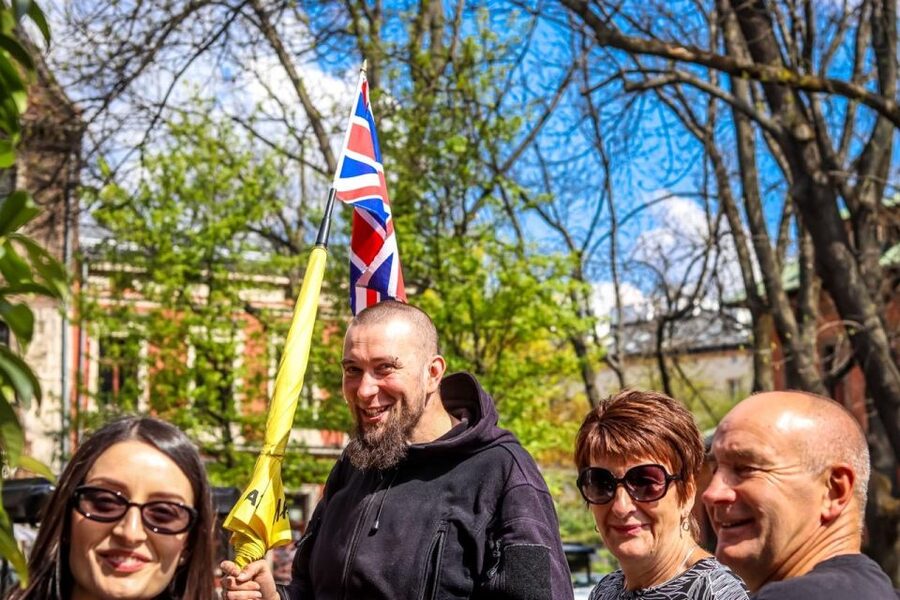
I think you should book this tour if you want a clear, local-guided route through Kazimierz and Podgórze, with enough context to understand why each place matters. At $26 for 150 minutes, the price feels fair for what you get: an expert guide, a structured narrative, and both the painful and hopeful sides of the Jewish story in Krakow.
I’d skip it only if you know you cannot handle emotionally heavy WWII and Holocaust content, or if you want deep, slow time inside specific sites rather than a walking, story-driven tour. If you fall in the middle, this is a solid way to make your Krakow visit feel connected, respectful, and actually informative.
FAQ
How long is the Jewish Krakow in German tour?
The tour lasts 150 minutes.
What language is the live guide?
The tour is guided live in German.
Where is the meeting point?
You meet on the stairs in front of the old synagogue, in the main street of the Jewish district.
Is the tour only about the Holocaust, or does it also cover Jewish life before and after?
The tour covers the historical context of the local Jewish community, the destruction during the Second World War, places where the Holocaust took place in Krakow, and also the revival of Jewish culture in today’s Krakow.
What is included in the price?
Included are an expert, local travel guide and a carefully structured story.
What is not included?
Not included are hotel pickup and return transport, and a snack.
When should I arrive, and can I change my plans?
Please arrive at the meeting point 10 minutes before the activity starts. You can also reserve now and pay later, and you can cancel up to 24 hours in advance for a full refund.
More Tour Reviews in Krakow

Kazimierz, Keep Going
Recently written up around Krakow

More Kazimierz Jewish Quarter Tours.
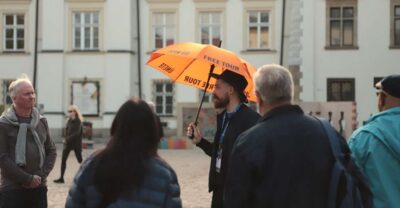 ★ 4.9Jewish Quarter and Former Ghetto TourFrom $191,441 reviews
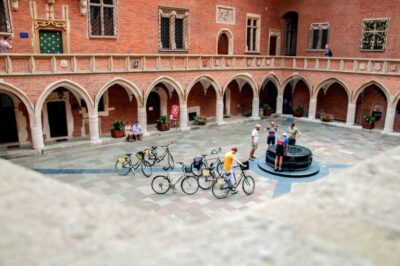 ★ 4.9Bike Tour of Old Town, Jewish Quarter and the GhettoFrom $371,155 reviews
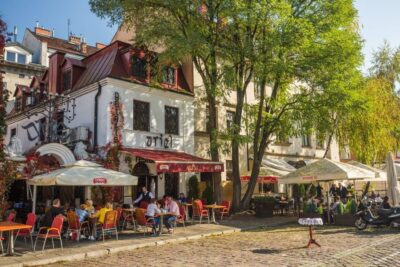 ★ 4.8Kazimierz Jewish Quarter Walking TourFrom $27571 reviews
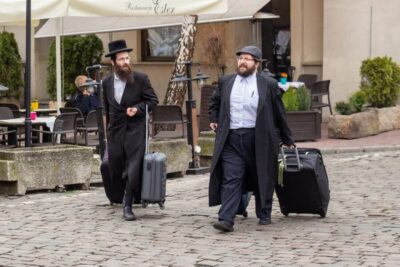 ★ 4.8Kazimierz, Schindler’s Factory & Ghetto Guided TourFrom $81460 reviews
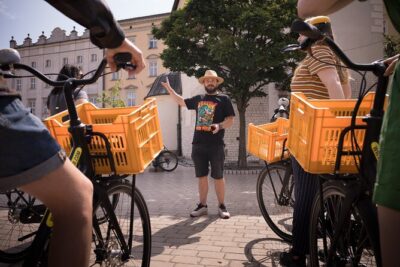 ★ 5.0Full Bike Tour – the Old Town, Jewish Qtr & the Ghetto NEW BIKESFrom $35437 reviews
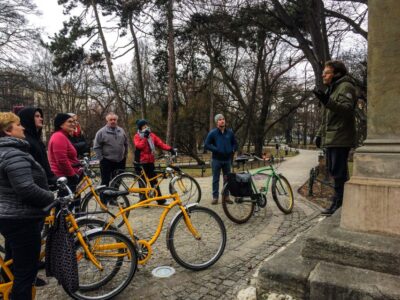 ★ 4.9Bike Tour of the Old Town, Kazimierz, and the GhettoFrom $26350 reviews
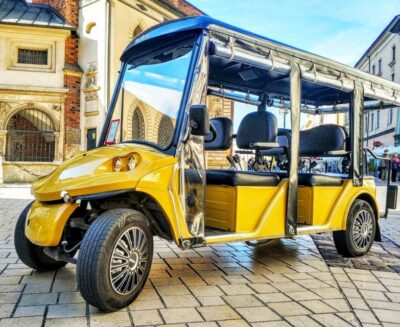 ★ 4.6Jewish Quarter and Ghetto Electric Golf Cart TourFrom $34348 reviews
 ★ 5.0Jewish Krakow Walking TourFrom $26307 reviews
Also on these Poland lists