
REVIEW · KATOWICE AND UPPER SILESIA TOURS
Katowice Old Town Walking Tour
Katowice has a talent for mixing eras, and this walking tour follows the thread. You get stunning church exteriors and world-class Polish art inside, plus a strong sense of Silesian identity through architecture, monuments, and institutions. One catch: you will cover about 6.5 km, so comfortable shoes and steady walking pace matter.
I like that the tour keeps things practical, not museum-only. You start at the Silesian Theatre in Rynek 10, hit major landmarks in about 3 hours, and return to the same meeting point, with free admission at each stop. If weather turns bad, the experience depends on good conditions, so plan for a reroute or reschedule if needed.
In This Review
- Key highlights
- Why Katowice Old Town Reads Like a Family Story
- Start at Silesian Theatre, Then Make Market Square Your Compass
- Kosciol Mariacki Brings the Drama, Then the Art Does the Talking
- The Academy of Music in Katowice, Prestige in Human Form
- Silesian Parliament and the Local Theatre Mood Check
- Cathedral of Christ the King: Catholic Outside, Protestant Inside
- Stawowa Street Through Miarka, Dworcowa, and 3 Maja
- Silesian Insurgents’ Monument, Then Spodek to End the Loop
- Price and What Makes It Feel Fair at $81.62
- Who This Katowice Old Town Walking Tour Best Fits
- Quick Practical Tips Before You Go
- Should You Book This Katowice Old Town Walking Tour?
- FAQ
- How long is the Katowice Old Town Walking Tour?
- How far will I walk?
- Where does the tour start and end?
- Is the tour offered in English?
- Do I pay for admission at the stops?
- Is this a private tour?
- Will I receive a mobile ticket?
- What fitness level do I need?
- What happens if the weather is bad?
- What is the cancellation policy?
Key highlights
- Market Square first, with the Silesian Theatre area, communist-era shopping streets, and the city’s everyday energy
- Kosciol Mariacki (Immaculate Conception Church) outside wow factor, inside top Polish artworks
- Academy of Music in Katowice, giving you context for why the city has a serious music reputation
- Silesian Parliament and local theatre stops, where autonomy and local culture show up in real buildings
- Stawowa street walk, 19th-century tenements plus the oldest high-school in Katowice
- Spodek, Katowice’s instantly recognizable arena symbol to close the loop
More from the coal country around Katowice
- Private One-Way Transfer from Kraków to Katowice Airport
★ 5.0 · 157 reviews - Auschwitz – Birkenau from Katowice
★ 4.5 · 37 reviews - Katowice Airport Krakow Private Transfer, Private Driver Service
★ 5.0 · 7 reviews - Private Tour to Auschwitz & Birkenau from Katowice
★ 4.5 · 6 reviews
Why Katowice Old Town Reads Like a Family Story
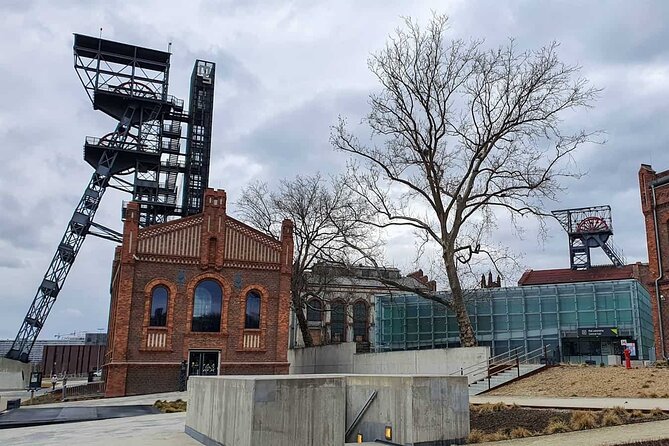
This is the kind of tour where streets do more than connect points on a map. Katowice sits in Silesia, a region shaped by shifting borders and changing cultures, so the city you see feels layered. As you walk, you start noticing how people used to build, what they honored, and what they argued over, all without needing a ticket counter every few minutes.
Two things I really like about this route are the balance and the payoff. First, you get major landmarks like churches and monuments, but you also get human-scale stops, the kind that explain everyday life. Second, the tour is structured around short, easy segments, so you keep momentum without feeling rushed.
One thing to consider is the pace. Even though it is about 3 hours, you will walk roughly 6.5 km. If you prefer slow wandering with long pauses, you might want extra breaks, water, and a light plan for the rest of your day.
Start at Silesian Theatre, Then Make Market Square Your Compass
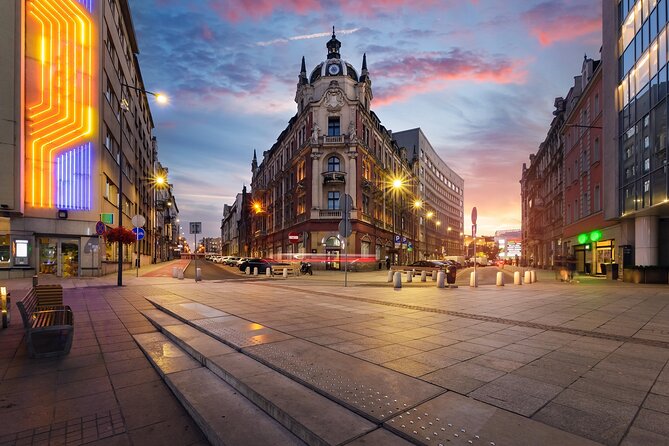
Your tour begins at the Silesian Theatre, Rynek 10, right in the Market Square area. This is a smart starting point because Market Square is Katowice’s core, not a side street you only visit if you already know the name. From here, you see how the city gathers around culture, commerce, and community.
At this first stretch, you will pass the Silesian Theatre area and also landmarks tied to shopping and 20th-century design. Skarbek and Zenit are included here, and the guide frames them as the sort of shopping dream place associated with communist-era Poland. That matters because it helps you interpret what you see, not just recognize it. You start thinking in terms of how public life worked, where people went to browse, and how the city used buildings to project everyday normalcy.
You also hear about the oldest buildings in the city and how this neighborhood plays host to Silesia’s party and eating and drinking scene. In plain terms: Market Square is where the story shows up in your senses. You can feel why the tour anchors here.
Practical tip: In this first hour, your camera will do heavy lifting. Bring a fully charged phone or camera early, since early architecture shots set the tone for the whole walk.
Kosciol Mariacki Brings the Drama, Then the Art Does the Talking
The next stop is the Immaculate Conception Catholic Church, known as Kosciol Mariacki. Outside, it is described as breath-taking, and that is exactly the kind of landmark you want to see early. Big exterior impact helps you reset your brain, then you step inside with a better sense of how important the building is to local identity.
Inside, the focus shifts to artworks by top Polish artists. This is where the tour works well for people who normally only glance at churches. You do not just get a quick look and a goodbye. You get context, so the art stops feel like part of the region’s story instead of random decoration.
One downside: churches can have their own rhythm, like crowds, lighting changes, and sometimes limited time to move around freely. The tour keeps stops short, so you should plan to do a slow scan quickly: look up first, then look for key details the guide points out.
If your goal is to understand Katowice beyond a photo list, this is one of the best anchor moments.
The Academy of Music in Katowice, Prestige in Human Form
The route includes the Academy of Music in Katowice, described as the most prestigious music academy in Poland. Even if you are not a music student, you will likely appreciate why this matters. Institutions like this shape a city’s identity, because they attract people, talent, and cultural energy.
This stop is brief, so it is not the place for a long interior visit unless the day’s conditions allow for it. Still, what you get is interpretation. You start connecting why Katowice takes music seriously, and how that serious reputation fits into the mix of cultures you are seeing across the day.
For you, this is a good palate cleanser between heavier history stops. If you like learning how a city produces creativity, this brief stop hits the sweet spot.
Below are the other Krakow trips we have logged
- Old Town Krakow & Wawel Castle Walking Tour★ 5.0 · 1,508 reviews
- Creepy Krakow: 2-Hour City Walking Tour★ 4.7 · 1,131 reviews
- Krakow: The Old Town Walking Tour★ 4.8 · 794 reviews
- Kraków: Old Town & Wawel Castle Walking Tour in English★ 4.8 · 532 reviews
- Krakow: Evening Walking Tour with Spooky Stories★ 4.7 · 500 reviews
Silesian Parliament and the Local Theatre Mood Check
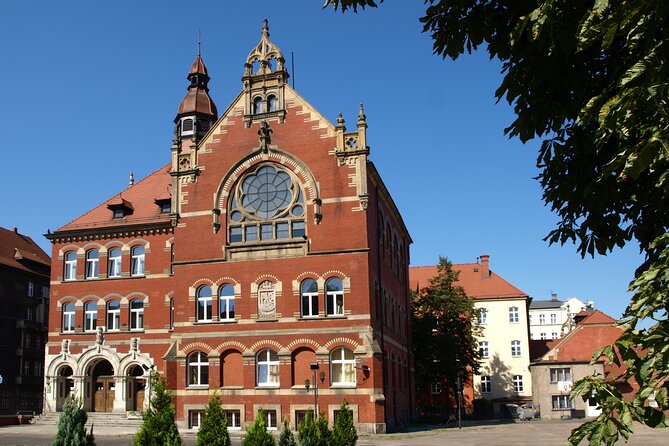
Next up is the Silesian Parliament, formerly the seat of parliament of the Autonomous Silesia Region. This is not just a building stop. It is a shortcut to understanding the region’s political personality. Autonomy sounds abstract until you see it reflected in real walls and civic spaces.
Right near this, the tour includes a local favorite theatre stop with an informal vibe. That contrast is useful. You get government gravitas, then you get the cultural side that keeps daily life alive. It helps you see autonomy as more than paperwork. It shows up in how communities organize themselves, argue, perform, and gather.
If you are traveling with kids or friends who get bored with political history, this section helps, because the tone shifts quickly. One minute you are thinking about autonomy, the next you are looking at a theatre setting that suggests how people enjoy the arts close to home.
Cathedral of Christ the King: Catholic Outside, Protestant Inside
The Cathedral of Christ the King is a standout stop because it is intentionally explained through contrast. Outside, it feels Catholic-like, while inside it is described as Protestant-like. That specific mix is tied to Silesia’s mixed origins and spirituality, where different traditions have lived side by side.
This is exactly the kind of stop that makes the tour feel more than “look at the next building.” You are not just collecting sights. You are learning how belief and culture can leave physical fingerprints.
If you are used to churches looking one way inside, this might surprise you. Bring patience for details like layout, furnishings, and the overall feel once you step into the space. The guide’s framing helps you read those differences instead of getting stuck in confusion.
Small consideration: religious sites still follow normal rules, so plan for quiet movement and respect for ongoing routines.
Stawowa Street Through Miarka, Dworcowa, and 3 Maja
The Stawowa segment is where the tour turns more “walkable neighborhood” and less “big-ticket landmark.” You pass through Miarka Square, Dworcowa street, and 3 maja street on the way to Stawowa. Along this route, you are meant to appreciate 19th-century tenements and see the oldest high-school in Katowice.
This is valuable because older residential and educational buildings tell you how a city grew up. Tenements explain housing and social patterns. An older high-school points to education as a long-running priority, not a recent makeover.
Then the tour adds a historical layer right along the way: a monument commemorating Silesian scouts who opposed Nazis in 1939. That detail matters because it connects street-level history to real moral courage, not just dates on a plaque. You also get that this area works today for art exhibitions, international meetups, and other events. That is the city’s talent for keeping memory and modern use in the same place.
If you want a “now I get Katowice” moment, this is it. The route gives you both architecture to look at and meaning to hold onto.
Silesian Insurgents’ Monument, Then Spodek to End the Loop
The last stretch starts with the Silesian Insurgents’ Monument (Pomnik Powstańców Śląskich), built to commemorate three Silesian uprisings. It is one of those stops that can feel heavy, but it is also a key way to understand why Silesia’s identity is so tightly guarded and so deeply personal for locals.
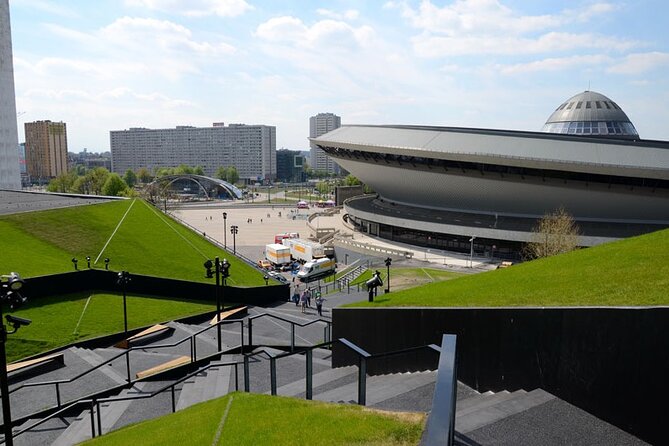
After that, you finish with Spodek, the symbol of the city. It is included as a visual punctuation mark, the futuristic arena silhouette that most people recognize once they see it. Ending here works because it brings the story forward. You have spent the day with older buildings, churches, and memorials, and then you land at a modern icon.
This final stop is also a good opportunity to grab one last skyline or building shot. If you have energy left, look back the way you came. The shift between past and present feels clearer from the outside looking in.
Price and What Makes It Feel Fair at $81.62
At $81.62 per person, this tour sits in a mid-range bracket for a guided experience. The value comes from a few specific choices.
First, the tour lasts about 3 hours and covers around 6.5 km, so you are not paying for a slow stroll with endless waiting. Second, multiple stops include free admission, which is a big deal on a walking tour. You spend your money on guidance and interpretation, not entry fees.
Third, it is an English-language tour with a mobile ticket, and it is a private setup for your group. That matters if you like more direct question-and-answer time, or if you prefer your group to move together without mixing with strangers.
My take: if your goal is “understand the city, not just see it,” this price makes sense. If you only want a few photos and no context, you might feel the cost more than the value. But if you enjoy how guides connect buildings to culture, monuments, and daily life, you will likely feel this was money well spent.
Who This Katowice Old Town Walking Tour Best Fits
This is a great fit for travelers who want a guided explanation of Silesian culture through real places. If you enjoy architecture, churches, monuments, and how institutions shape local identity, you are in the right lane.
You will also appreciate it if you like a paced structure. The route keeps stops timed and walk segments short, so you keep moving but still get meaning at each place. It works for solo travelers too, especially if your guide is quick to respond and keeps the flow easy.
Who might find it less ideal? If you have mobility constraints or you dislike walking 6.5 km in a half-day frame, you may want a slower option. The tour asks for moderate physical fitness, so plan accordingly.
Quick Practical Tips Before You Go
Bring comfortable shoes, because you will walk about 6.5 km over uneven city surfaces. Start thinking about hydration, especially if the day is warm, and consider light layers so you can handle weather swings.
This experience also depends on good weather. If the tour has to change due to conditions, you should expect a different date or a full refund, so keep your calendar flexible.
Finally, since it is offered in English, you should come prepared to ask questions. The tour’s strength is the way the guide helps you connect dots, like how Silesia has kept changing hands over time between Slavs and Germans, and how those shifts show up in what you see.
Should You Book This Katowice Old Town Walking Tour?
If you want Katowice with context, this is an easy yes. You get a tight loop of Market Square, major churches, civic and cultural buildings, a neighborhood street section with schools and tenements, and closing icons like Spodek, all tied to Silesia’s layered identity.
I would book it if you care about meaning as much as visuals, and if you are comfortable walking 6.5 km. Skip it only if you dislike guided interpretation or you need a truly low-mileage day.
FAQ
How long is the Katowice Old Town Walking Tour?
The tour is about 3 hours.
How far will I walk?
You will walk about 6.5 km during the tour.
Where does the tour start and end?
You start at the Silesian Theatre at Rynek 10, 40-003 Katowice, Poland, and the tour ends back at the same meeting point.
Is the tour offered in English?
Yes, it is offered in English.
Do I pay for admission at the stops?
Admission tickets at the listed stops are free.
Is this a private tour?
Yes. Only your group participates.
Will I receive a mobile ticket?
Yes, the tour uses a mobile ticket.
What fitness level do I need?
You should have a moderate physical fitness level, since the walk is about 6.5 km.
What happens if the weather is bad?
The experience requires good weather. If it is canceled due to poor weather, you will be offered a different date or a full refund.
What is the cancellation policy?
You can cancel for free up to 24 hours in advance for a full refund. If you cancel less than 24 hours before the start time, the amount paid is not refunded.
More Tours in Krakow

More Tour Reviews in Krakow
Katowice and Upper Silesia, Continued



Recently written up around Krakow

More Katowice and Upper Silesia Tours.
 ★ 4.7Auschwitz-Birkenau Skip-the-Line Guided TourFrom $114373 reviews
 ★ 5.0Private One-Way Transfer from Kraków to Katowice AirportFrom $156157 reviews
 ★ 4.5Auschwitz – Birkenau from KatowiceFrom $10937 reviews
 ★ 4.2Pub Crawl 1hr Unlimited Beer + Vodka then Clubs in KatowiceFrom $3022 reviews
 ★ 4.3Katowice and Nikiszowiec: bicycle tour with guideFrom $9714 reviews
 ★ 4.9Katowice Old Town Highlights Private Walking TourFrom $10314 reviews
 ★ 5.0Katowice Airport Krakow Private Transfer, Private Driver ServiceFrom $1267 reviews
 ★ 4.3Auschwitz-Birkenau Tour from Katowice with Private TransfersFrom $2197 reviews
Also on these Poland lists