
REVIEW · KAZIMIERZ JEWISH QUARTER TOURS
Kazimierz Jewish Quarter Walking Tour
Kazimierz feels like time travel. I love how this walk threads synagogues, townhouses, and quiet courtyards into one clear story of everyday Jewish life, and I especially like ending in Plac Nowy, where the neighborhood still feels lived-in. One possible drawback: at 90 minutes you move briskly, and there is no food or drinks built into the tour.
You start right in the thick of it, on Szeroka Street, the historic heart of Kazimierz. From there, you’ll pass major landmarks tied to faith, community, and Kraków’s long, side-by-side relationship between Jewish and Christian life. If your guide is Pauline, her English is noted as perfect, and she tells the story in a way that makes it easy to follow.
Before you go, bring comfortable shoes and plan for weather. The tour runs in all conditions, so dress for what Kraków gives you, not what you hope for.
In This Review
- Key things you will notice on this Kazimierz walk
- Entering Kazimierz: meeting on the Old Synagogue steps
- Szeroka Street synagogues and old townhouses you can read like clues
- The Old Synagogue museum: Poland’s oldest preserved synagogue
- Remuh Synagogue and Cemetery: how faith continues in place
- Kupa Synagogue: from community hardship to community identity
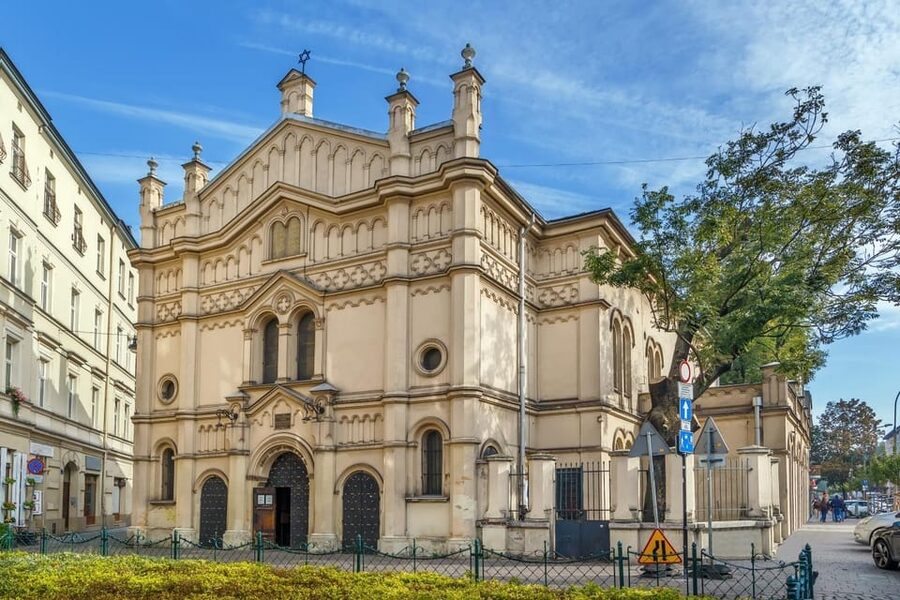
- Tempel Synagogue and active cultural life
- Quiet courtyards and practical context about coexistence in Kraków
- Why Plac Nowy is the right ending point
- Price, value, and what you get for $27
- Who should book this Kazimierz Jewish Quarter tour
- Should you book this tour?
- FAQ
- How long is the Kazimierz Jewish Quarter Walking Tour?
- Where do I meet the guide?
- What languages are available for the guided tour?
- What should I bring for the walking tour?
- Is food or drinks included in the tour?
- Does the tour run in bad weather?
Key things you will notice on this Kazimierz walk
- Szeroka Street first: You begin on the neighborhood’s historic core, framed by old synagogues and 16th to 18th century townhouses.
- Old Synagogue focus: You’ll see the oldest preserved synagogue in Poland, which operates today as a museum of Jewish history.
- Remuh Cemetery visit: You pass one of Poland’s most important Jewish religious sites, tied to synagogue life and burial tradition.
- Kupa Synagogue backstory: You learn how a synagogue once served the poorest residents of Kazimierz.
- Tempel Synagogue today: You see how at least one major site continues as an active center of cultural life.
- Plac Nowy finish: The walk ends on a lively square with cafés, markets, and local art.
Kazimierz on foot, by cart and after dark. Our other write-ups
- Krakow: Jewish Quarter and Former Ghetto Tour
★ 4.9 · 1,441 reviews - Krakow: Bike Tour of Old Town, Jewish Quarter and the Ghetto
★ 4.9 · 1,155 reviews - Krakow: Kazimierz Jewish Quarter Walking Tour
★ 4.8 · 571 reviews - Krakow: Kazimierz, Schindler’s Factory & Ghetto Guided Tour
★ 4.8 · 460 reviews
Entering Kazimierz: meeting on the Old Synagogue steps
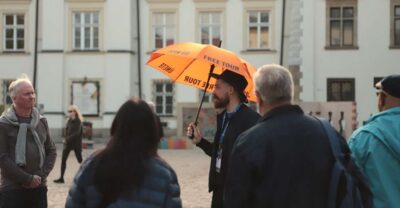
The tour begins where it should, at the Old Synagogue. Meet your guide on the steps there, and look for the Kazimierz Guided Tour sign. This matters more than it sounds. Starting at a landmark keeps you oriented, especially because Kazimierz streets can feel like they fold into each other.
You’ll step into Kazimierz with an explanation of what the area was, and what it represents now. Once a major center of Jewish life in Kraków, the district today holds layers of memory. Your guide helps you read those layers without turning it into a textbook. The goal is practical, you understand what you are seeing, and why it mattered to people’s daily lives.
The tour is 90 minutes, so you are not doing a slow, wander-everywhere stroll. It is a focused walking route with key stops. That is great if you want an efficient first look. Just know your feet will do most of the sightseeing work.
Szeroka Street synagogues and old townhouses you can read like clues
Szeroka Street is the spine of the neighborhood, and it is where the story clicks into place. As you walk, you pass synagogues and traditional townhouses dating to the 16th to 18th centuries. These buildings are not just decoration. They help explain how tight community life was, and how public religious life shaped the rhythm of the streets.
What I like about this part is that the guide keeps connecting architecture to human detail. You might learn how certain synagogues served different segments of the community, or how neighborhoods like this grew around faith and everyday routines. It is the kind of explanation that makes you look at a doorway twice.
Also, if you have questions, this is one of those tours where your guide may answer beyond the exact script. One guide was praised for answering questions even when people got off-topic, and for still bringing it back to the bigger context. If you are the type who likes to ask why something is arranged a certain way, you should feel comfortable doing that.
The Old Synagogue museum: Poland’s oldest preserved synagogue
Your first big landmark is the Old Synagogue, the oldest preserved synagogue in Poland. Today it functions as a museum of Jewish history. Even if you do not spend hours inside, the moment you connect what you see with what the site is now, the experience changes.
Here is the practical value. You stop treating synagogues as isolated monuments. Instead, you see them as living community institutions that have been preserved, repurposed, and interpreted over time. The museum angle helps you understand that what you are viewing is not only about a building. It is about records, memory, and the story of Jewish life in the region.
If you want to go deeper after the tour, this is the kind of stop that sets up your next move. The Old Synagogue being a museum gives you a clear option for continuing on your own, especially if you feel curious once you see the bigger framework your guide provides.
Remuh Synagogue and Cemetery: how faith continues in place
Next comes the Remuh Synagogue and Cemetery. This site is one of the most important Jewish religious sites in Poland. It is also one of the spots where you feel the tour slow down emotionally, even though you are still walking.
What you are really learning here is how religion shapes spaces of daily practice and spaces of remembrance. Cemeteries are not just about the past. They are about ongoing tradition, respect, and continuity. Your guide’s job is to explain what you are seeing in plain terms, so you do not feel like you are guessing at meanings.
One thing I suggest: stay mindful here. Even if you are just passing through as a group, act like the site matters. You are seeing a working legacy, not a set built for photos.
Below are the other Krakow trips we have logged
- Old Town Krakow & Wawel Castle Walking Tour★ 5.0 · 1,508 reviews
- Creepy Krakow: 2-Hour City Walking Tour★ 4.7 · 1,131 reviews
- Krakow: The Old Town Walking Tour★ 4.8 · 794 reviews
- Kraków: Old Town & Wawel Castle Walking Tour in English★ 4.8 · 532 reviews
- Krakow: Evening Walking Tour with Spooky Stories★ 4.7 · 500 reviews
Kupa Synagogue: from community hardship to community identity
You also pass the Kupa Synagogue. The key detail is that it once served the poorest residents. That single fact does a lot of work. It tells you Kazimierz was not uniform. Jewish community life included different social realities, and religious institutions were tied to those realities.
When a guide highlights a detail like this, it changes how you interpret the rest of the neighborhood. Instead of thinking of Kazimierz only as a historic district you visit, you understand it as a place where people experienced religion in very different ways depending on their circumstances.
This is also where the tour’s balance shows. It is not only about grand monuments. It helps you grasp how faith and community support functioned when life was harder.
Tempel Synagogue and active cultural life
Later in the walk, you pass the Tempel Synagogue, which is now an active center of cultural life. That is a big idea, and it is worth lingering on mentally for a moment.
Kazimierz tells two stories at once. One is the older, religious and communal life of the neighborhood. The other is how cultural institutions carry forward after dramatic historical change. Seeing a synagogue site operating in a cultural role helps you understand continuity without pretending history was unchanged.
If you are in Kraków for a short stay, this stop is a reminder not to treat the Jewish Quarter as only memorial tourism. It is also a living neighborhood with ongoing cultural activity, and your route ends to show that in a more everyday way.
Quiet courtyards and practical context about coexistence in Kraków
Between the landmarks, the tour includes quieter moments, including courtyards and the smaller lanes that connect everything. These are not filler stops. They give you breathing room from the major sites so the guide can explain the broader identity of Kraków.
The big theme is coexistence. You learn about the long relationship between Jewish and Christian cultures that shaped Kraków’s identity. Your guide uses the neighborhood to make that idea real, by showing how close communities lived, interacted, and built their public lives around faith.
This is one of those experiences where the route matters. If you only see major sites from a distance, the message can be vague. Walking these connections helps you understand how a city’s identity is shaped by proximity, not by separate worlds.
Why Plac Nowy is the right ending point
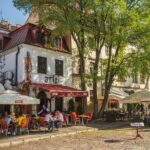
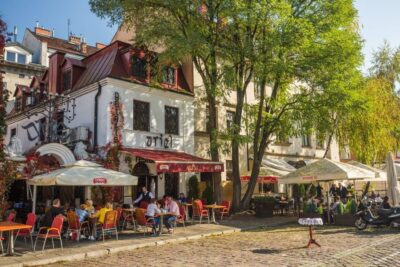
The walk concludes at Plac Nowy, a lively square with cafés, markets, and local art. Ending here makes practical sense. You come in with solemn context, and you leave with a sense of how Kazimierz functions today.
It is also a smart way to handle the 90-minute timing. You can keep exploring on your own immediately after the tour, without needing to plan your next transfer. If your guide shared recommendations during the walk, this is the point where those ideas become actionable, like where to grab a coffee or where to browse for local items.
If you have any energy left after all the walking, Plac Nowy is a good place to slow down. Think of it as the neighborhood’s pulse check.
Price, value, and what you get for $27
At $27 per person for a 90-minute guided walk, this tour prices itself as a solid orientation to Kazimierz. You are paying for two big things: a licensed guide and a curated route that hits key landmarks. That is often the difference between reading about a place and actually understanding what you are seeing while you are standing there.
You are not getting food included. That is common for walking tours, but it means you should plan your timing. If you want a meal after, schedule the tour earlier in the day or plan to eat near Plac Nowy once you finish.
The value also depends on your guide. Most of the feedback emphasizes strong guiding and engagement. One guide was praised for passion and for answering questions thoroughly. Another guide named Pauline was noted for excellent English and making the tour extremely enjoyable. The other side of the coin is that not every run is perfect. One experience mentioned the explanations felt hesitant and the tour ended about 20 minutes early due to another commitment. That does not mean every tour will be like that, but it is a reminder: your best strategy is to arrive ready, and keep expectations aligned with a 90-minute walking format.
Who should book this Kazimierz Jewish Quarter tour
Book it if you want:
- A structured, first-time walk through Kazimierz that ties landmarks to everyday life
- A guide to help you connect synagogues, cemeteries, and community institutions into one story
- A manageable 90-minute option that still covers major sites
Consider skipping or pairing differently if you only want a museum-focused experience, since the tour is built as a walking overview. It is also best for travelers who enjoy historical context presented through street-level details, not those who want a quiet, self-paced stroll with no guidance.
Should you book this tour?
I think this is a worthwhile booking if you want to get your bearings fast in Kazimierz and understand what you are seeing. The route covers the most meaningful landmarks, and the explanations seem to be the main reason people rate it highly, especially when a guide like Pauline is leading. The end at Plac Nowy is also practical, because it gives you an immediate place to decompress and keep exploring.
Just do two things to make it smoother. Wear comfortable shoes, and arrive early on the Old Synagogue steps so you are not rushed at the start. If you like asking questions and hearing the story in plain language, this tour is built for that.
FAQ
How long is the Kazimierz Jewish Quarter Walking Tour?
The tour lasts 90 minutes.
Where do I meet the guide?
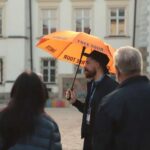
Meet your guide on the steps of the Old Synagogue. The guide will be holding a Kazimierz Guided Tour sign.
What languages are available for the guided tour?
The tour guide is available in English, Spanish, French, German, and Italian.
What should I bring for the walking tour?
Bring comfortable shoes and dress in weather-appropriate clothing.
Is food or drinks included in the tour?
No, food and drinks are not included.
Does the tour run in bad weather?
Yes, the tour takes place as planned in all weather conditions.
More Tours in Krakow

More Tour Reviews in Krakow
Kazimierz, Keep Going

Recently written up around Krakow

More Kazimierz Jewish Quarter Tours.
 ★ 4.9Jewish Quarter and Former Ghetto TourFrom $191,441 reviews
 ★ 4.9Bike Tour of Old Town, Jewish Quarter and the GhettoFrom $371,155 reviews
 ★ 4.8Kazimierz Jewish Quarter Walking TourFrom $27571 reviews
 ★ 4.8Kazimierz, Schindler’s Factory & Ghetto Guided TourFrom $81460 reviews
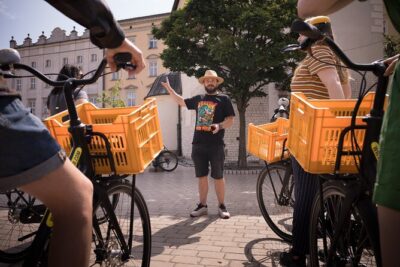 ★ 5.0Full Bike Tour – the Old Town, Jewish Qtr & the Ghetto NEW BIKESFrom $35437 reviews
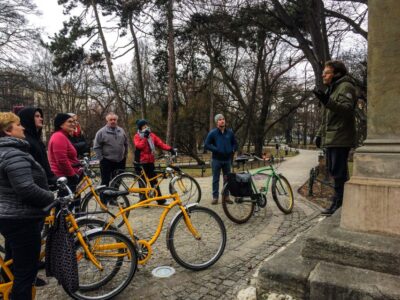 ★ 4.9Bike Tour of the Old Town, Kazimierz, and the GhettoFrom $26350 reviews
 ★ 4.6Jewish Quarter and Ghetto Electric Golf Cart TourFrom $34348 reviews
 ★ 5.0Jewish Krakow Walking TourFrom $26307 reviews
Also on these Poland lists