
REVIEW · GOLF CART AND ELECTRIC CAR TOURS
Krakow: Sightseeing Tour by Electric Golf Cart
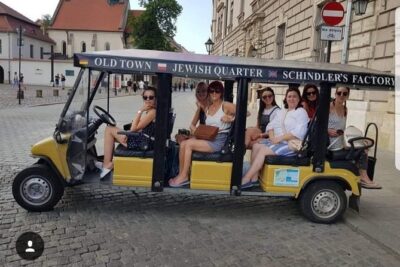
Electric carts make Krakow’s past glide by. This electric golf cart tour strings together the medieval core and the Jewish Quarter and Podgórze storytelling, keeping the pace easy while you still see the key places. I especially like that you get more than a quick drive, you get stop-by-stop history.
I also like the human touch. The driver speaks Polish and English, and the audio guide covers a long list of languages, including Hebrew and Japanese. In one memorable account, the guide Natalie was described as friendly and smart, and she even offered to drop people anywhere they wanted after the tour.
One thing to consider first: this is not a gentle, universal ride for everyone. It has strict limits on age, height, weight, fitness level, and it is not suitable for pregnant women, so check your details before you book.
In This Review
- Key things to know before you go
- Electric Golf Cart Tour Through Krakow, 90 Minutes That Actually Fit a Busy Day
- Where You Meet, What You Can Bring, and What Might Not Work for You
- Planty Park and the Medieval City Framing That Sets the Tone
- Jewish Krakow Stops: Squares, Synagogues, and Streets You Can Picture Fast
- Memorial Stone, Old Shops, and the Ghetto Storyline Becoming Physical
- Ghetto Wall and Church of St. Joseph: Ending With Concrete Memory
- Driver and Audio Guide Setup: The Languages Matter More Than You Think
- Price, Timing, and Value for Short Visits
- Should You Book This Krakow Electric Golf Cart Tour?
- FAQ
- Where is the meeting point for the tour?
- How long is the Krakow sightseeing tour by electric golf cart?
- What is included with the tour?
- What languages are available for the audio guide?
- Is smoking allowed during the tour?
- What should I bring, and what should I avoid bringing?
Key things to know before you go
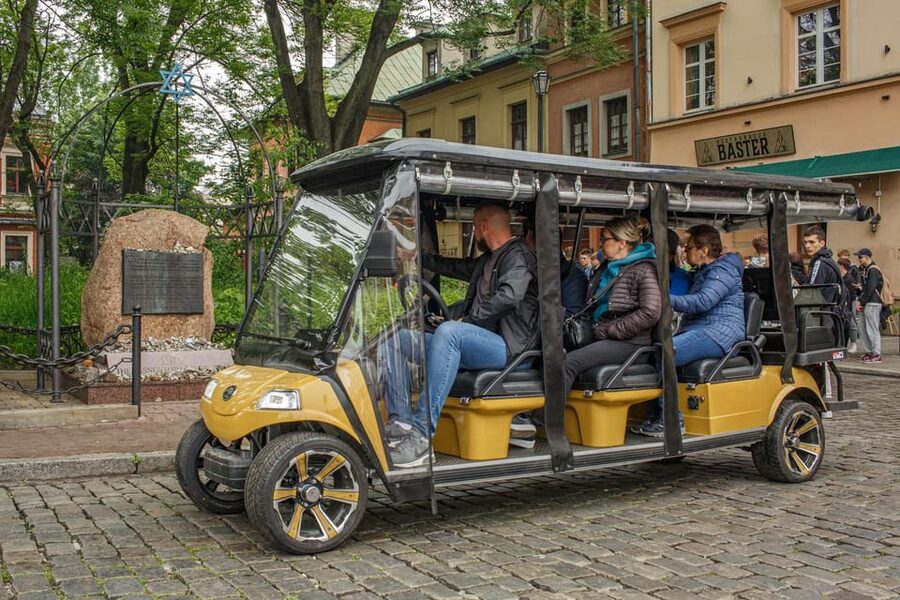
- 24+ stops in 90 minutes means you can cover a lot without feeling like your legs lost the day.
- Jewish Quarter and Podgórze focus gives you a structured route through the most important memorial sites and landmarks.
- Audio guide in many languages (with a driver in Polish and English) helps you control your understanding of each stop.
- Electric cart sightseeing is built for people who want history without stairs and long walking stretches.
- No luggage and no large bags keeps the ride tidy, but you’ll need a light plan.
If the walking is the problem, these rolled-through reviews help
- Krakow: City Sightseeing Tour by Electric Golf Cart
★ 4.5 · 3,264 reviews - Krakow: City Sightseeing Tour Eco Electric Buggy Golf Cart
★ 4.7 · 3,143 reviews - Krakow: Extended City Sightseeing Tour – Eco Buggy Golf Cart
★ 4.7 · 794 reviews - Krakow: Electric Car Sightseeing Tour
★ 4.4 · 450 reviews
Electric Golf Cart Tour Through Krakow, 90 Minutes That Actually Fit a Busy Day
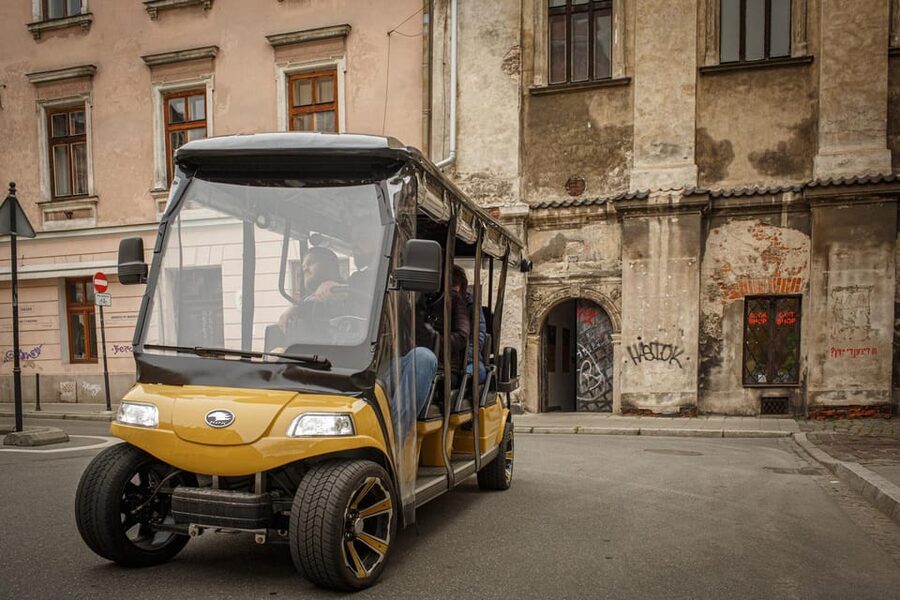
This is the kind of tour that makes sense when you land in Krakow with one day that feels too short. Ninety minutes is long enough to connect neighborhoods and stories, but short enough that you can still do dinner, a museum, or a night walk afterward.
You’ll start in the center and move through Krakow’s older streets and landmark areas, then shift into the Jewish Quarter storyline and Podgórze, the area tied to the former Krakow ghetto. The big advantage is the format: you can see major places while staying seated most of the time. That is a real value if you are traveling with limited mobility, or if you simply do not want your sightseeing day to be a stair workout.
Price-wise, it is listed at about $33 per person for 90 minutes, with transportation by golf cart, a driver, and an audio guide included. For a short stay, that can be a good deal because you are paying for time, not just for a route. You are also not paying extra for the audio content, which matters on a theme-heavy tour like this.
Where You Meet, What You Can Bring, and What Might Not Work for You
Meet at the Kiss&Ride parking opposite the Żabka store. That small detail matters, because this kind of tour runs on a tight timeline. Arrive a few minutes early, check you are in the right Kiss and Ride zone, and be ready to board.
Bring water. That’s it. Krakow can be warm in season, and you will likely be out in the open streets even if you are mostly riding.
Now the practical limits. You cannot bring luggage or large bags, and there is no smoking in the vehicle. Alcohol and drugs are also not allowed, and you should keep the noise down once you are on board. If you like to travel with a backpack, switch to something small that you can manage without turning it into a “cargo situation.”
This tour also lists strict “not suitable” conditions. It is not for very young children, and it is not suitable for pregnant women. It also lists limits tied to height, age ranges, weight, and fitness level. If you fall in a borderline category, do not guess. Check the restrictions carefully before you book.
Planty Park and the Medieval City Framing That Sets the Tone
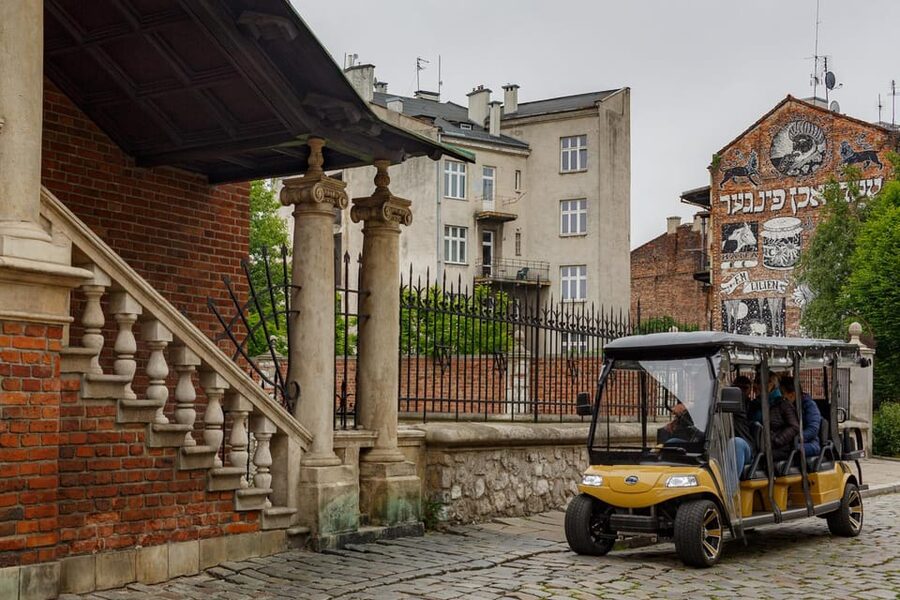
The tour starts with Planty Park. Even if you have never been to Krakow before, Planty is a great way to get oriented. It gives you a sense of the medieval city core without immediately throwing you into the densest streets.
From there, you get story framing stops like History Krakow and a Jewish Quarter description. These are your “connect the dots” segments. They matter because the tour is doing two big things at once. It shows physical places, and it also explains how Krakow’s medieval life connected to the Jewish Quarter and, later, to the tragedy and memory of the ghetto period in Podgórze.
Then you move into the area around Skałka Church. This is one of those landmarks that helps you understand the city as a living place, not just a museum. Nearby, you also pass Church of St. Catherine. A church stop in this context is not about a long worship tour. It’s about seeing how the city’s major buildings sit within everyday medieval streets.
Jewish Krakow Stops: Squares, Synagogues, and Streets You Can Picture Fast
The Jewish Quarter portion is the heart of the route, and it is built with clear, recognizable stops. You start with Wolnica Square, described as the Jewish City Hall area. A square is perfect for storytelling because it is easy to imagine civic life. You will likely get the sense that this was more than one neighborhood, it was a community with institutions.
Next comes Church of Corpus Christi. That might sound like a curveball if you booked expecting only Jewish sites. But that mix is part of what makes Krakow’s old center feel real. Cities are layered. While the tour’s focus is the Jewish Quarter and ghetto memory, you are also seeing the surrounding Christian landmarks that sit in the same urban fabric.
Then the synagogues begin, and you will see several in sequence:
- Tempel Synagogue
- Kupa Synagogue
- Isaac Synagogue
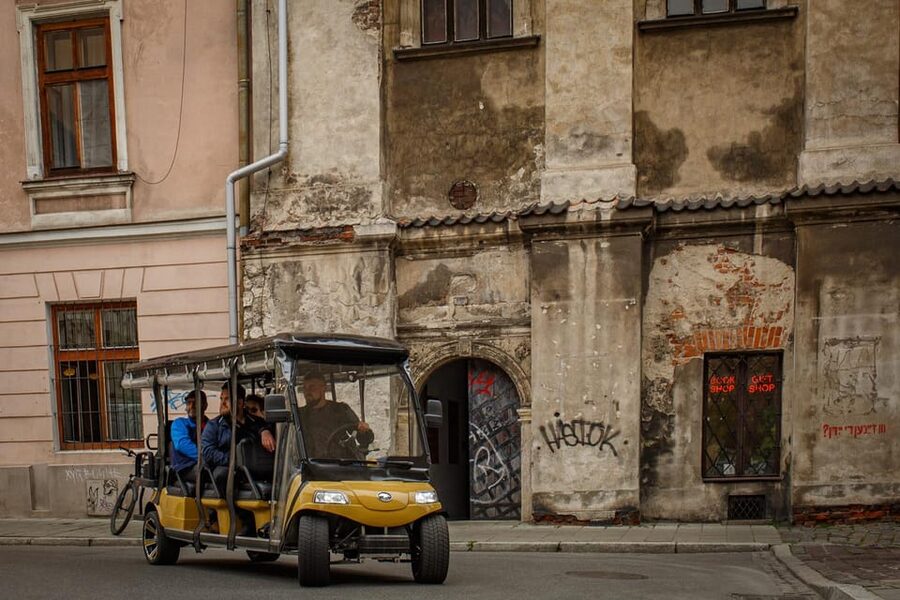
After those, the tour continues to Ciemna Street. A street stop like this helps you picture how daily life moved, especially when you are hearing descriptions while you ride past the buildings. If you like to visualize, this section is where the tour clicks.
You then reach Old Synagogue and Popper Synagogue. By now, you have the pattern: multiple synagogues, multiple architectural identities, all connected by one neighborhood story. It is a lot to take in, so the audio guide is doing the heavy lifting here.
One stop that adds a different angle is the Family House of Helena Rubinstein. That gives the tour a human-scale detail tied to a person, not only institutions and memorials. It’s a good pause point in the middle of the religious-site run.
Then you move to Remuh Synagogue and old cemetery. Cemetery stops can feel heavier, and this one is clearly part of the tour’s purpose. When you are cycling through many religious buildings, the cemetery adds a gravity that words alone cannot fully replace.
- From Krakow: Auschwitz-Birkenau Guided Tour & Hotel Pickup★ 4.5 · 33,358 reviews
- From Krakow: Auschwitz-Birkenau Guided Tour & Hotel Pickup★ 4.5 · 29,340 reviews
- Krakow: Auschwitz Guided Tour with Optional Hotel Pickup★ 4.5 · 15,280 reviews
- Krakow–Zakopane: Cable Car, Chocholow Baths, Cheese & Vodka★ 5.0 · 10,720 reviews
- Krakow: Auschwitz-Birkenau Guided Tour with Pickup & Lunch★ 4.5 · 9,800 reviews
Memorial Stone, Old Shops, and the Ghetto Storyline Becoming Physical
After Remuh, you’ll see the Memorial Stone of the Nissembaum Family Foundation. That is one of the ways the tour keeps the storytelling tied to real objects. Memorial stones help you slow down, even if you are still on a cart.
The tour also includes Old Jewish Shops. That is a practical kind of stop, because it reminds you that life included commerce, not only landmarks. You get to connect the idea of a community with the way people lived day to day.
From there you enter the former ghetto section, starting with Former Ghetto description and then Ghetto Heroes Square. This is the moment when the tour shifts from neighborhood storytelling to memory and survival. Square stops work well here because they give you a “place name” that anchors what the audio is explaining.
The route then includes Pharmacy under the Eagle, Residence of Tadeusz Pankiewicz. That stop is powerful for its specificity. A pharmacy residence tied to a named person makes the history less abstract. Even if you do not know the details going in, the format encourages you to pay attention to what the guide says at the stop.
Next comes Oskar Schindler’s history. That adds another named connection in the storyline. After that you get Life in Ghetto description. This kind of “description” stop usually does best what it can do on a cart. It fills in the emotional and historical context while you are moving past the physical surroundings.
Ghetto Wall and Church of St. Joseph: Ending With Concrete Memory
The tour continues to the Ghetto Wall. A wall is the most literal kind of historical evidence you can see in a city. Even without deep explanation, it communicates separation and control. It also creates a clear endpoint for the ghetto theme, before the tour shifts back to other landmarks.
Finally, you visit Church of St. Joseph. Ending with a church makes sense in Krakow. It brings you back to the broader city. After the heavy ghetto portion, a familiar city landmark can help you re-balance before you continue your own travel day.
Driver and Audio Guide Setup: The Languages Matter More Than You Think
You get a driver who speaks Polish and English. That matters because if you have a question in the moment, you can likely get a direct answer.
The audio guide includes many languages, including English, French, German, Italian, Spanish, Polish, Russian, and also languages such as Hebrew, Chinese, Japanese, and Korean. It is a long list, so odds are good you can listen in your preferred language. If you are traveling with someone who does not speak the same language as you, this is a nice feature because the content can still match.
I also like that the tour is audio-guided rather than relying only on live narration. When the route is busy with stops, an audio track lets you pace your listening. You can listen closely at the heavy stops, then relax a bit during transitions.
One more detail that can shape your experience is how the guide handles the ride. In one account, the guide Natalie was praised as friendly and smart, and she even offered to drop people anywhere they liked after the tour. Even if every tour does not include that extra bit, it hints at the style of guides you might encounter, warm and flexible at the end.
Price, Timing, and Value for Short Visits
At $33 per person for 90 minutes, this tour is built for efficiency. You are paying for three things at once: transport on an electric cart, a multi-language audio guide, and a driver to manage the route.
If you have only a day or two in Krakow and you want the major Jewish Quarter and ghetto memory places without planning a complex self-guided day, this is a strong option. It gives structure. It also reduces decision fatigue, because the route is already mapped out for you.
The main tradeoff is that you cannot expect deep, stop-by-stop lingering the way you might on a private walking tour. That is not a flaw, it is the format. Ninety minutes means some stops will feel like “see it, learn it, move on.” If you like long museum-style pacing, pair this with a longer, focused visit elsewhere. If you like a survey that gets you oriented fast, this is exactly the right size.
Should You Book This Krakow Electric Golf Cart Tour?
Book it if:
- you want a fast way to see medieval streets plus the Jewish Quarter and former ghetto area
- you prefer less walking and want to keep your energy for the rest of your day
- you like the idea of audio guidance in your language while you ride
Skip it or think twice if:
- you fall into the listed height, age, weight, pregnancy, or fitness limitations
- you want a slow, long, in-depth experience at each site
- you will need to carry luggage or large bags with you
My honest take: this tour is best as a “get your bearings fast” day. It helps you understand Krakow’s key neighborhood storylines, and it does it without making your legs pay the price.
FAQ
Where is the meeting point for the tour?
You meet at the Kiss&Ride parking opposite the Żabka store.
How long is the Krakow sightseeing tour by electric golf cart?
The duration is 90 minutes.
What is included with the tour?
Transportation by golf cart, a driver, and an audio guide are included.
What languages are available for the audio guide?
The audio guide is listed in many languages, including English, French, German, Spanish, Polish, Russian, Hebrew, Chinese, Japanese, Korean, and several others.
Is smoking allowed during the tour?
No, smoking is not allowed in the vehicle.
What should I bring, and what should I avoid bringing?
Bring water. Avoid luggage or large bags, and do not bring items like alcohol, drugs, or large bags. Bikes are also not allowed.
More Tours in Krakow

More Tour Reviews in Krakow
Sightseeing Without the Walking
Recently written up around Krakow
More Golf Cart and Electric Car Tours.
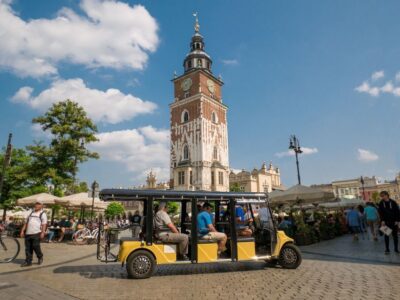 ★ 4.5City Sightseeing Tour by Electric Golf CartFrom $133,264 reviews
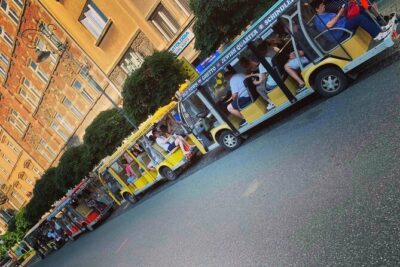 ★ 4.7City Sightseeing Tour Eco Electric Buggy Golf CartFrom $133,143 reviews
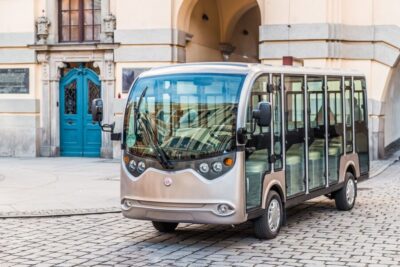 ★ 4.6E-Car Tour and Audio GuideFrom $161,738 reviews
 ★ 4.82-Hour Private Guided Tour by Electric CarFrom $38805 reviews
 ★ 4.7Extended City Sightseeing Tour – Eco Buggy Golf CartFrom $13794 reviews
 ★ 4.9City Sightseeing Tour by Golf Cart/Buggy Guided TourFrom $40510 reviews
 ★ 4.4Electric Car Sightseeing TourFrom $25450 reviews
 ★ 5.0Guided City Tour by Golf Buggy (with hotel pickup)From $53426 reviews
Also on these Poland lists