
REVIEW · AUSCHWITZ-BIRKENAU MEMORIAL TOURS
Krakow to Auschwitz Birkenau and Salt Mine 1 Day Tour
Auschwitz plus a salt mine, in one long day. I like the fact that this pairs two UNESCO sites with round-trip transfers, so you spend less time figuring things out. The tradeoff is time and temperature, this can mean very early pickup and long waits before entry.
If you like a plan that moves, you’ll appreciate the guided flow through Auschwitz, then a guided run through the Wieliczka underground chambers. In particular, guides like Joanna at Auschwitz (mentioned in multiple experiences) seem to make the emotional material easier to follow, not just hear. Just be ready for a physically demanding day with lots of walking and stairs, including 700 steps down in the salt mine.
In This Review
- Key things I think you should know first
- A one-day Auschwitz and Wieliczka combo that actually works
- Price and value: what $314.42 buys you
- The early pickup gamble, and how to handle it
- Auschwitz-Birkenau: what you are really paying for
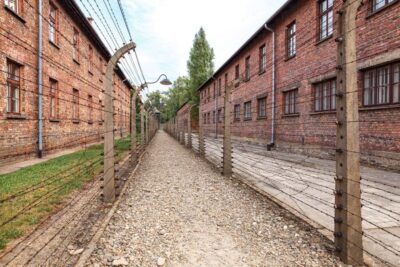
- Auschwitz I: getting oriented before the scale hits
- Auschwitz II Birkenau: the vastness is part of the message
- Breaks matter more than you think
- Wieliczka Salt Mine: 700 steps, plus chapels carved in salt
- A long day timetable, and why it can feel rushed anyway
- Guides and drivers: where the experience seems to swing
- What to bring (and what to leave behind)
- Should you book this Auschwitz and Salt Mine day trip?
- FAQ
- How long is the Krakow to Auschwitz and Salt Mine tour?
- Does the price include tickets and guided visits?
- Is hotel pick-up included?
- How early can pickup be?
- Is lunch provided?
- What is the bag size limit at Auschwitz?
- Is the tour physically demanding?
- Are there temperature checks?
Key things I think you should know first
- Two UNESCO World Heritage sites in a single day, with admission tickets included
- Round-trip transport from Krakow in an air-conditioned vehicle (hotel pick-up if you select it)
- Auschwitz is fully guided through the main memorial and Birkenau, with an experienced English-speaking guide
- Wieliczka is a real workout, 700 steps down, plus a guided route featuring chapels, lakes, and salt sculptures
- It can start extremely early, with pickup times sometimes around 3:00 to 4:00 AM depending on schedules
- You’ll deal with crowds and waiting, especially at Auschwitz, so go prepared for standing and temperature swings
Other Auschwitz-Birkenau visits we have reviewed, with entry and transport noted
- From Krakow: Auschwitz-Birkenau Guided Tour & Hotel Pickup
★ 4.5 · 33,358 reviews - From Krakow: Auschwitz-Birkenau Guided Tour & Hotel Pickup
★ 4.5 · 29,340 reviews - Krakow: Auschwitz Guided Tour with Optional Hotel Pickup
★ 4.5 · 15,280 reviews - Krakow: Auschwitz-Birkenau Guided Tour with Pickup & Lunch
★ 4.5 · 9,800 reviews
A one-day Auschwitz and Wieliczka combo that actually works
This is built for people with limited time in Krakow who still want the big two: Auschwitz-Birkenau and Wieliczka Salt Mine. The value is not just convenience. It is that you get timed access with a guided structure, so you are not wandering around trying to stitch together two separate day trips.
On paper, the Auschwitz part is about 3 hours total, split between Auschwitz I (about 2 hours) and Auschwitz II Birkenau (about 1 hour). Then you add the salt mine tour, about 3 hours, with a long drive day around it. The result is a full day, not a leisurely outing.
The best part, if you manage your expectations, is pacing with a purpose. When the guides are on their game, you can walk out knowing what you just saw, not just that you saw it.
Price and value: what $314.42 buys you
At $314.42 per person, this is not a budget excursion. But you are paying for three costly items that add up fast if you do it yourself:
- Round-trip transfers from Krakow in an air-conditioned vehicle
- Admission tickets included for both Auschwitz-Birkenau and Wieliczka Salt Mine
- Guided time at the memorial complex and at the mine, offered in English
Also, the tour includes a mobile ticket, which usually saves time on the day. If you choose an option that includes it, you may also get a lunchbox.
Where the value can wobble is not the headline price, it is the “long day reality.” If you are prone to fatigue, or you hate early mornings, that is where the cost feels heavier. A few experiences mention missed lunchboxes or pickup timing changes. That is the kind of small headache that makes you feel the price more sharply.
My take: this is good value if you want a guided, timed day and you can handle a marathon. If you prefer a calmer pace, doing Auschwitz and the salt mine on separate days might feel kinder to your brain and your knees.
The early pickup gamble, and how to handle it
Here is the part that decides whether you love this tour or dread it.
You will get an exact pickup time the day before, after 5:00 PM, and it can be very early. The details mention pickups may be 3:00 to 4:00 AM depending on the museum schedule. That lines up with the reality that Auschwitz mornings can mean limited entry windows.
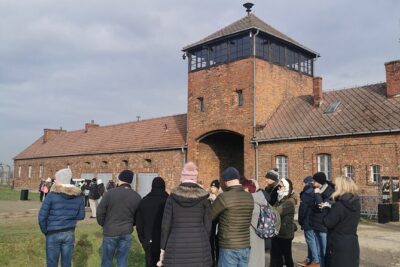
Then comes the next expectation: even with a pre-arranged tour, you may still wait. The tour info is clear that there can be waiting before entry. Multiple people describe long lines, chilly waiting, and standing around on damp ground at early hours.
So, what should you do?
- Dress for cold and wet. This is a memorial site, and waiting before entry can be long.
- Wear layers you can remove fast. You might be outside early, then sit indoors later.
- If you get dropped at a different end location, plan a simple ride back to your base. Do not schedule anything urgent right after.
I also like that the tour measures temperature before start and may refuse participation if the temperature is above 37.5°C / 99.5°F. It feels stricter than a casual tour, but it is also consistent with how they manage entry rules.
Auschwitz-Birkenau: what you are really paying for
Auschwitz-Birkenau is not a museum you should do like sightseeing. It is heavy, structured, and it demands context. That is exactly why a guide matters.
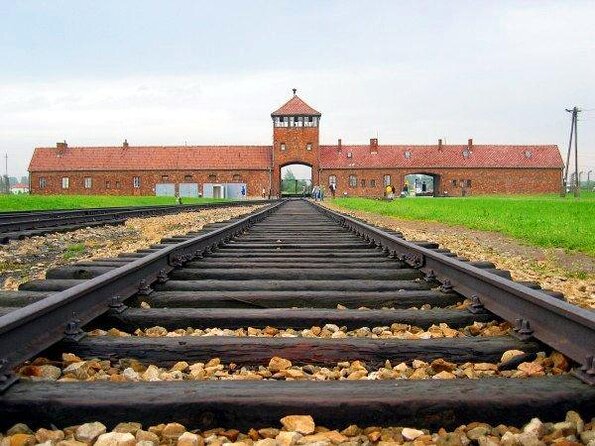
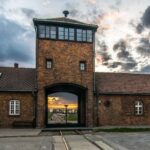
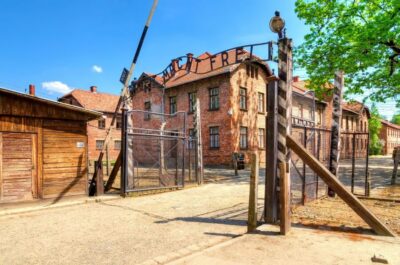
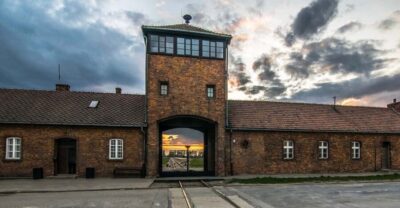
The tour starts at the Panstwowe Muzeum Auschwitz-Birkenau memorial. You go through the complex with an experienced English-speaking guide, and you cover the three concentration camps in the complex. The Auschwitz portion is described as including the ruins of gas chambers and crematoria as part of the museum grounds, along with preserved relics and historical displays.
Salt mine tickets and transfers vary a lot. Compare these
- From Krakow: Wieliczka Salt Mine Tour★ 4.6 · 9,393 reviews
- Krakow: Auschwitz-Birkenau and Salt Mine Guided Tour★ 4.7 · 9,020 reviews
- Krakow: Wieliczka Salt Mine Guided Tour with Transport★ 4.4 · 7,429 reviews
- Krakow: Wieliczka Salt Mine Fast-Track Ticket & Guided Tour★ 4.5 · 5,872 reviews
- Day Trip: Auschwitz-Birkenau and Wieliczka Salt Mine from Krakow★ 4.5 · 4,282 reviews
Auschwitz I: getting oriented before the scale hits
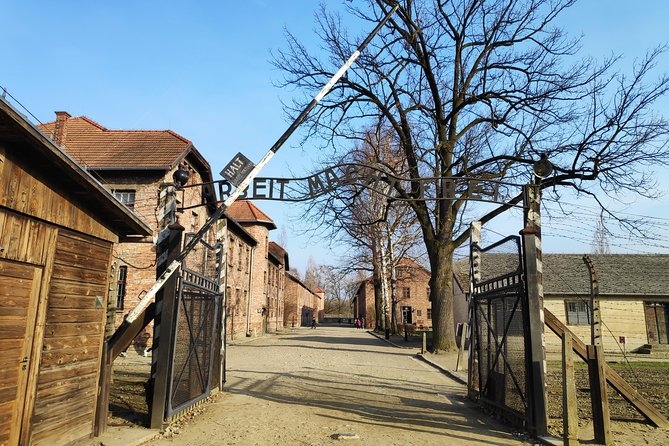
Auschwitz I is about 2 hours in this schedule. This is where orientation helps. You need the guide’s framing to understand what you are looking at, and what those buildings and spaces meant for the people forced into the camp system.
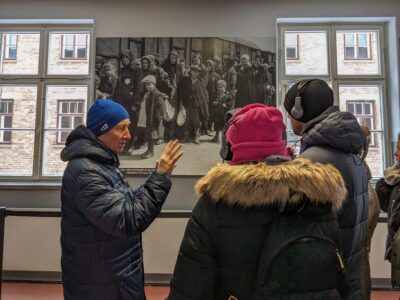
What I like about a guided Auschwitz I stop is that it prevents a common mistake: walking through rooms and yards with only half the story. When the guide explains what each area represents, your memory sticks to the meaning, not just the images.
Auschwitz II Birkenau: the vastness is part of the message
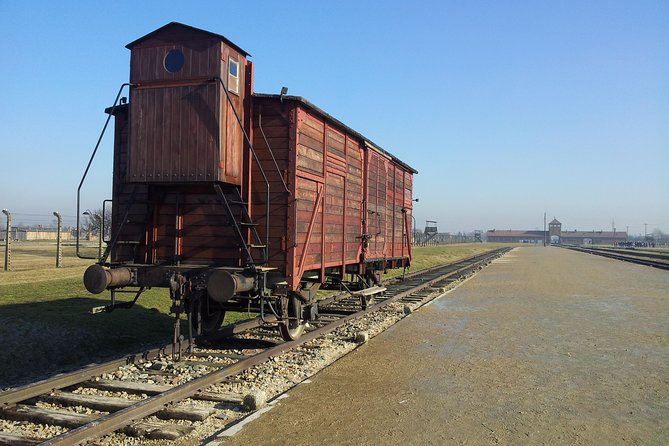
Then you go to Auschwitz II Birkenau for about 1 hour. This is where the scale can overwhelm you, because the camp layout is bigger and emptier-looking in many areas. You feel exposed to distance and silence, even while you are surrounded by people.
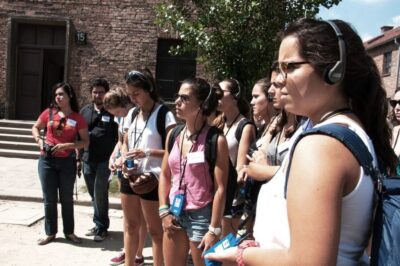
One practical note from real-world experiences: if the audio setup at the memorial is not working perfectly, hearing the guide can become harder. If you are sensitive to sound, it helps to position yourself closer when allowed and keep your attention on the guide rather than on photos.
Breaks matter more than you think
Several experiences mention breaks before and after entering at each site. That may sound minor, but it makes a long day survivable. Auschwitz is emotionally intense. The breaks create a small pocket of air, so the next segment hits with clarity instead of chaos.
Wieliczka Salt Mine: 700 steps, plus chapels carved in salt
After Auschwitz, you shift gears to something totally different: a living underground world built from rock salt, mining tunnels, and human effort that stretches back centuries.
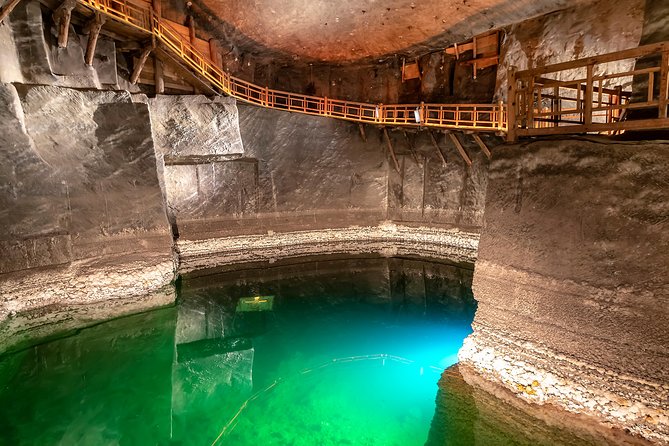
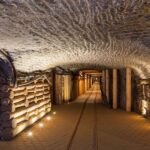
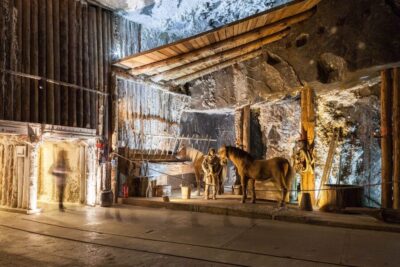
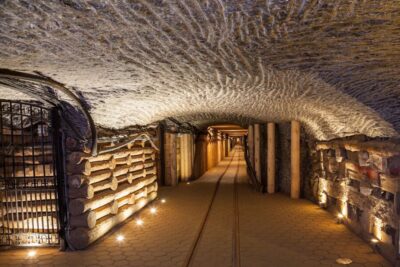
The Wieliczka Salt Mines tour covers about a 3 km stretch underground. You can expect chapels, shafts, lakes, salt sculptures, and displays of mining technology used for a long time. It is not just a tourist tunnel. It feels like a place where generations worked the same ground in different eras.
The physical part is real:
- You go down 700 steps to reach the mine level.
- After the tour, you come back up via an elevator.
Because of that stair count, the tour asks for moderate physical fitness. If stairs are your limit, consider whether a 700-step descent is realistic for you, especially after hours of walking at Auschwitz.
What I love about Wieliczka as a follow-up is contrast. Auschwitz is about human destruction, Wieliczka is about human industry. The switch is emotional, but it is also mentally useful, because it gives your brain a different kind of story to hold.
A long day timetable, and why it can feel rushed anyway
This experience runs about 11 to 12 hours on average, and the tour schedule can stretch a bit in practice. The day is basically three blocks:
- Auschwitz I and II combined, about 3 hours
- Salt mine tour, about 3 hours
- Drives and transitions making up the rest
Even when everything goes smoothly, you are trading comfort for time. If you are sensitive to fatigue, you may want to do Auschwitz and the salt mine as separate days, because you will have more room to process and to breathe.
Also, the tour can end in a different location than where you start. That matters if you are using public transit, trying to pick up a friend, or planning dinner. Keep your end-of-day plan flexible.
One more reality check: group size is listed as maximum 30 travelers, and the tour is capped that way. Still, that number can feel crowded in small spaces. If you are not great with tight seating during transfers, it can help to bring patience, not just water.
Guides and drivers: where the experience seems to swing
This tour lives or dies on people. The strongest praise shows up again and again around:
- Site guides who explain clearly and stay respectful
- Punctual, polite drivers and smooth transfers
- A feeling that the day is well organized, not just shoved into your hands
I noticed several specific guide names in experiences: Daniel, Charlie, Jacob, Justina (mentioned as a driver or transfer guide), and Joanna (mentioned at Auschwitz and also again at the salt mine). When those moments are good, you feel taken care of and informed.
But balance matters too. A few experiences mention things like cramped seating on certain vehicles, lunchbox issues, and audio difficulty during one segment at Auschwitz. Those are not the core of the sites, but they affect comfort during a day you cannot really pause.
So here is my practical advice: if hearing your guide is essential to you, pick a seat near the front when possible during bus transitions, and at the sites keep yourself positioned so you are not struggling with sound.
What to bring (and what to leave behind)
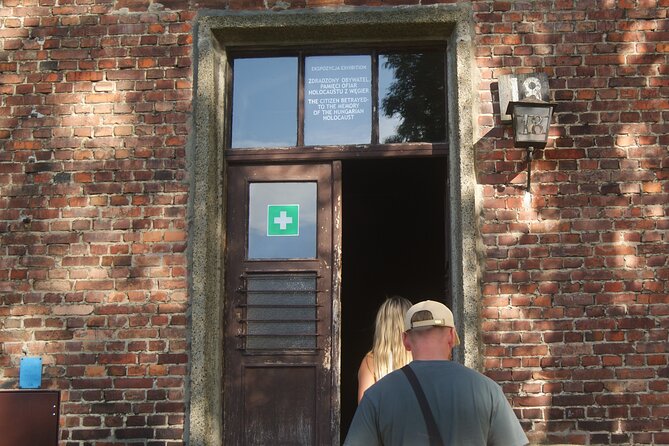
You will enjoy the day more if you prepare like this is an early-morning, emotional, stair-heavy day.
Bring
- Warm layers for very early pickup and waiting
- Rain protection if the forecast is messy
- A small day bag that fits the limit: 30 x 20 x 10 cm
- Water and simple snacks, because food is not automatically part of the package
Also consider
- If you select a lunchbox option, review diet needs in advance. Diet restrictions need to be sent by 5:00 PM the day before, otherwise you may get a regular lunchbox (ham is mentioned as the standard).
Know before you go
- At Auschwitz, you must provide full names of all participants. If your booking names do not match your passport spelling, fix it early.
- The tour team may measure temperature before start.
Small preparation pays off when you are tired and the lines are long.
Should you book this Auschwitz and Salt Mine day trip?
Book it if you want a guided, timed “hit the highlights” day and you can handle a very full schedule. This is especially good for you if:
- you have limited time in Krakow
- you value English-guided explanation at Auschwitz
- you do not mind early mornings and lots of walking
- you like the idea of contrasting Auschwitz with the underground wonder of Wieliczka
Skip or rethink it if:
- you hate extreme early pickups, especially if you will arrive cold and need seats fast
- you have a hard limit on stairs after a long day
- you want a slower pace for emotional processing, because this is a marathon schedule
If you do book it, I’d go in with two expectations: it will be intense at Auschwitz, and it will be a workout in the mine. If you can accept that, this combo is one of the most efficient ways to see both sites from Krakow in a single day.
FAQ
How long is the Krakow to Auschwitz and Salt Mine tour?
It runs about 11 to 12 hours in total, though time can vary slightly. The Auschwitz portion is about 3 hours, and the salt mine tour is about 3 hours, with driving and transitions making up the rest.
Does the price include tickets and guided visits?
Yes. Admission tickets are included for Auschwitz-Birkenau and the Wieliczka Salt Mine, and the tour offers English-speaking guides for the site visits.
Is hotel pick-up included?
Hotel pick-up is included if you select that option. Exact pickup time is sent the day before after 5:00 PM, and it can be very early depending on the museum schedule.
How early can pickup be?
Pickup can be extremely early, sometimes around 3:00 to 4:00 AM, depending on museum schedules.
Is lunch provided?
Food and drinks are not included, but an optional lunchbox may be provided if you choose that option. If dietary restrictions apply, you need to send them by 5:00 PM the day before.
What is the bag size limit at Auschwitz?
Backpacks and bags are limited to 30 x 20 x 10 cm (roughly 12 x 8 x 4 inches). You can leave belongings in the vehicle or in the Auschwitz luggage store.
Is the tour physically demanding?
Yes. It requires moderate physical fitness, including a staircase in the salt mine with 700 steps down. An elevator is used to go back up.
Are there temperature checks?
Yes. The team measures temperature before the start, and they may refuse to attend if the temperature is above 37.5°C / 99.5°F.
More Tour Reviews in Krakow

Wieliczka, Other Tickets and Transfers


Auschwitz-Birkenau: Other Reviewed Visits
Recently written up around Krakow


More Auschwitz-Birkenau Memorial Tours.
 ★ 4.5Auschwitz-Birkenau Guided Tour & Hotel PickupFrom $2133,358 reviews
★ 4.5Auschwitz-Birkenau Guided Tour & Hotel PickupFrom $2129,340 reviews
★ 4.5Auschwitz-Birkenau Guided Tour & Hotel PickupFrom $2133,358 reviews
★ 4.5Auschwitz-Birkenau Guided Tour & Hotel PickupFrom $2129,340 reviews
 ★ 4.5Auschwitz Guided Tour with Optional Hotel PickupFrom $6915,280 reviews
 ★ 4.5Auschwitz-Birkenau Guided Tour with Pickup & LunchFrom $219,800 reviews
 ★ 4.5Auschwitz-Birkenau Guided Tour Pickup/Lunch OptionsFrom $2009,057 reviews
 ★ 4.7Auschwitz-Birkenau and Salt Mine Guided TourFrom $549,020 reviews
 ★ 5.0Krakow to Auschwitz Birkenau Guided Tour with Transfer and TicketFrom $368,197 reviews
 ★ 4.0Auschwitz Birkenau Tour with TransferFrom $216,134 reviews
Also on these Poland lists