
REVIEW · KATOWICE AND UPPER SILESIA TOURS
Nikiszowiec Industrial District Private Tour
A planned mining town can be surprisingly human. That is the magic of a Nikiszowiec Industrial District private tour, where you move through workers’ housing, gardens, and art that explain how people lived in Silesia. I especially like how the guide’s storytelling makes the architecture feel practical, not just pretty, and how the history links World War I, the Silesian Uprisings, and later communist change to everyday streets.
I also love the artistic stops, because you get Silesian legends and the Janów Group mural world in the same walk as the mining past. One more strong point is Ms. Malwina, whose cheerful, clear presentation turns this area into an easy place to understand, even if you are new to Silesian history.
The main drawback to consider is weather. This experience is built around outdoor walking and passing through different parts of the district, so you will want good conditions to enjoy it fully.
In This Review
- Key points worth your attention
- A planned workers’ district you can read like a map
- Starting in Katowice: Church of St. Anne sets the tone
- The Zillmann Square and the big idea of the district
- Liberation Square portals and the rhythm of daily life
- Historic mining district sections and the World War I to uprisings story
- Łukasz Kohut’s Silesian Embassy and the interwar identity shift
- Pułaski Shaft Complex: where the coal work happened
- Grzegorz Chudy’s atelier and the art legends angle
- A school by historic Nikiszowiec, then artist squares and murals
- Museum of Katowice History: a typical flat and the Janów Group art
- Price, time, and why this feels like good value
- Who this tour is best for
- A quick note on practical timing and what to bring
- Should you book the Nikiszowiec industrial district private tour?
- FAQ
- What is the duration of the Nikiszowiec Industrial District Private Tour?
- Is the tour offered in English?
- Is this a private tour or a shared group tour?
- What is included in the ticket price?
- Where does the tour start and end?
- Does the tour have any weather or cancellation limitations?
Key points worth your attention
- A private, English-led walk through Nikiszowiec, so your group sets the pace and you only share with your party.
- Industrial history without dry facts, with context for World War I, the Silesian Uprisings, World War II, and communism.
- Planned workers’ housing you can actually picture, thanks to explanations of quarters, portals, and the district layout.
- Silesian art stops on the route, including murals and a museum showing daily and festive life.
- Good value for time, at about 2 hours 45 minutes with a museum interior included.
More from the coal country around Katowice
- Private One-Way Transfer from Kraków to Katowice Airport
★ 5.0 · 157 reviews - Auschwitz – Birkenau from Katowice
★ 4.5 · 37 reviews - Katowice Airport Krakow Private Transfer, Private Driver Service
★ 5.0 · 7 reviews - Private Tour to Auschwitz & Birkenau from Katowice
★ 4.5 · 6 reviews
A planned workers’ district you can read like a map
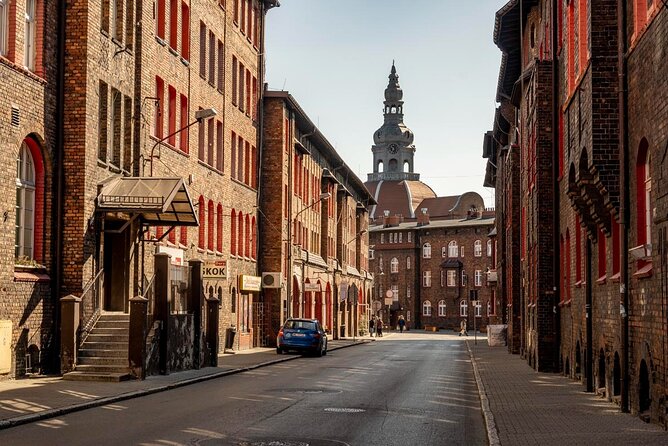
Nikiszowiec is in the Katowice area, but it feels like its own separate world from the postcard centers most people know in Poland. What I like is that it is not treated like a monument you stand at and admire from one angle. Instead, you walk through spaces designed for real life, then you learn what those spaces were meant to do.
The district was planned for a mining workforce, and the layout matters. As you move through squares and residential sections, you start to see the logic behind the quarters, how buildings relate to each other, and why certain areas were set up for particular daily routines. The result is a place that is both visually distinctive and easy to understand once someone points out what to look for.
This is also where Silesia’s identity comes through. The stories are about ethnicity, shifting governments, and the long stretch of industrial labor. In the middle of that, you get color and creativity, including murals and contemporary artwork inspired by Nikiszowiec and the wider region.
Starting in Katowice: Church of St. Anne sets the tone
Your tour begins at Kościół pw. św. Anny w Katowicach, right by plac Wyzwolenia 21. It is a good first stop because it pulls you into the local setting before the walk becomes strictly about the industrial district.
Admission here is free, and the short introduction helps you get oriented. Even if you have no background in the area, this opening moment acts like a “slow down and look” cue. It signals that what you are about to see is tied to community life, not only work and machinery.
If you like tours that start with a meaningful anchor, this one does that early.
The Zillmann Square and the big idea of the district
Next you visit skwer Emila i Georga Zillmannów, also known as the Square of Zillmanns. This stop is brief, but it matters because you are learning the district’s overall purpose and architectural plan.
The Zillmanns are the architects associated with the idea behind Nikiszowiec. So instead of just staring at streets, you learn what the planners were thinking: how the district should function, how people would move through it, and how housing relates to the rest of the industrial system nearby.
This is the kind of stop that can sound abstract if you only skim the facts. On this tour, the explanation helps those facts become visual. You start noticing patterns you might otherwise miss.
Liberation Square portals and the rhythm of daily life
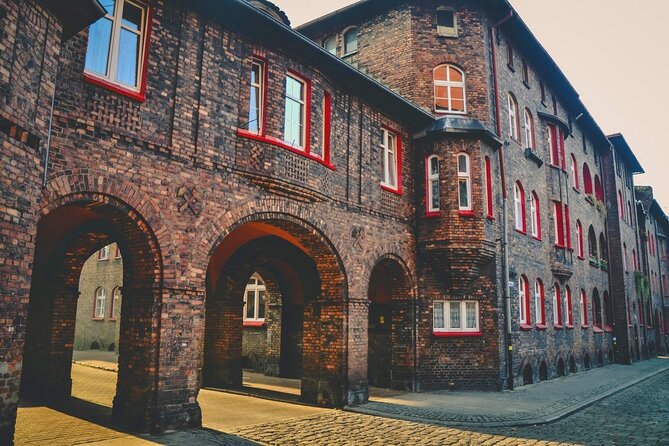
Then you move through Nikiszowiec, including a pass by common portals in the area linked to Liberation Square. This is where the tour’s approach really clicks for me. You are not just collecting sights. You are learning how the district is divided into quarters and what each area was meant to support.
As the guide points out the district structure, you learn how quarters are organized and how buildings fit together. You also get an idea of daily routines of the inhabitants, which helps you see the “why” behind the physical layout.
One practical benefit: once you understand the quarter logic, you can keep tracking it as you walk. Places stop being random and start being parts of a system.
Below are the other Krakow trips we have logged
- Krakow Airport Private Transfer★ 5.0 · 2,227 reviews
- Private Departure Transfer: Krakow City To Krakow Airport Balice★ 4.5 · 367 reviews
- Legendary Private Nowa Huta Communism Tour with Crazy Guides★ 5.0 · 262 reviews
- Skip-the-Line Wawel Castle Chambers Private Tour★ 4.7 · 262 reviews
- From Krakow: Auschwitz-Birkenau and Salt Mine with Private Transfer★ 5.0 · 247 reviews
Historic mining district sections and the World War I to uprisings story
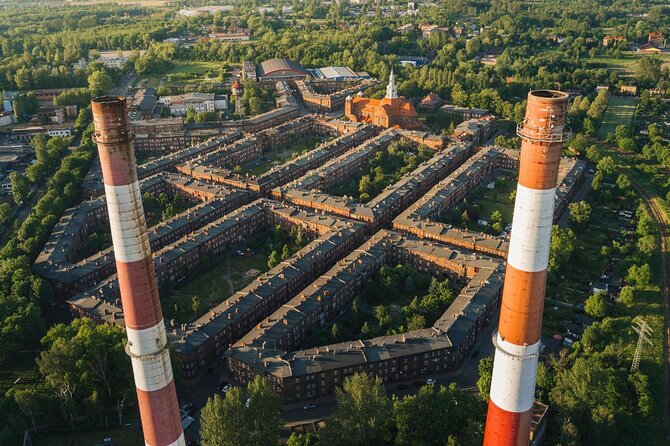
A longer pass brings you into the Nikiszowiec Historic Mining District area. Here you hear how daily life worked in the past and how it looks today.
This part focuses on residential sections plus interior gardens, and that is important. It is easy to associate industrial towns with only work and crowded housing. The interior gardens add a human scale, showing that life still included pauses, neighbors, and outdoor shared space.
You also get key historical context: the situation during World War I and the Silesian Uprisings. This is one of the most praised elements, and it makes sense. Those events can feel distant in a textbook. On your feet, the explanations connect the timing and pressures to the lived environment.
If you care about history that connects to real places, this is where the tour earns its keep.
Łukasz Kohut’s Silesian Embassy and the interwar identity shift
You then pass Łukasz Kohut, labeled as the Ślōnsko Ambasada. Think of this as a shift from workers’ housing and daily routine toward identity, governance, and political change.
Here the guide explains the meaning of the interwar period, including the Autonomous Region of Silesia. Then you hear how World War II and later communist changes affected Nikiszowiec.
I like that this is handled as a story of change over time rather than a list of dates. When you have already seen the district layout, these political shifts feel less theoretical. You can better imagine how power and policy would ripple into housing life, industry, and local culture.
Pułaski Shaft Complex: where the coal work happened
After the identity stories, you head toward Pułaski Shaft Complex. This stop is all about the former coal mine, the workplace for Nikiszowiec residents.
The highlight here is the historic railway, used to transport industrial materials and people between industrial estates of Silesia. That railway detail gives the industrial world a physical shape. You can understand that Nikiszowiec was not isolated. It was tied into a wider industrial network that moved goods and workers.
This is also a strong moment for anyone who likes “objects with stories,” because the district’s industrial purpose stops being an idea and becomes a concrete system you can picture.
Grzegorz Chudy’s atelier and the art legends angle
Next comes a pass by Grzegorz Chudy – Atelier z akwarelami. This is one of the more creative stops on the route.
Instead of only looking backward at mining history, you see contemporary paintings of Nikiszowiec, Katowice, and the broader Silesian region. You also get Silesian legends and mythical creatures shown through art.
I like this balance. It reminds you that regional identity does not freeze at a certain date. It keeps evolving, and artists keep translating what they see into images that feel both personal and local.
If you are the type who enjoys street-level culture, this is a good contrast to the industrial settings.
A school by historic Nikiszowiec, then artist squares and murals
You pass next to Szkoła Podstawowa im. S. Żeromskiego 53, the historical Nikiszowiec school. The stop is short, but it reinforces something important: this district was built for families, not just workers.
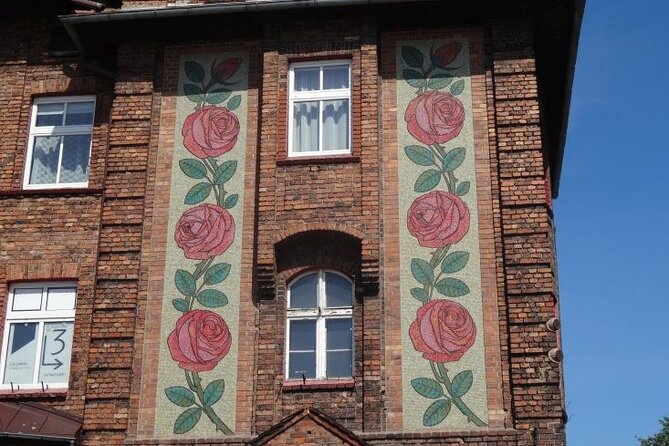
Then you reach Skwer Artystów Grupy Janowskiej, the square tied to Janów District artists. Here you admire colorful murals, described as reproductions of artworks from top artists associated with Nikiszowiec.
This is a fun moment, and it also works as a bridge. You have already seen historical context and industrial infrastructure. Now you are looking at art that carries the memory forward, using public walls and bright visuals rather than only museum display cases.
Museum of Katowice History: a typical flat and the Janów Group art
The final major stop is the Museum of Katowice History, specifically the City Ethnology Department. Admission is included, and you get about 30 minutes inside.
This is one of the most valuable parts of the experience because you step into interiors that show typical flat life in Nikiszowiec. That matters because the district walk gives you the outside shell, but interiors show you the everyday reality.
You also see original works by the Janów Group artists depicting daily and festive life in Nikiszowiec. Another specific detail: you will also encounter surrealistic artworks described as Silesian Slavador Dali, which adds a playful twist to all the serious history you just heard.
If you have any doubt that this tour is about more than coal and old streets, this museum stop clears it up fast. It turns the stories into a lived environment you can picture.
Price, time, and why this feels like good value
At $93.45 per person for about 2 hours 45 minutes, the value depends on one thing: how much you want a guided, structured route through Nikiszowiec.
A big advantage is that it is private, meaning only your group participates. You are not stuck at the speed of a larger crowd, and your guide can tailor explanations to your interests, especially if you ask about the uprisings, the World War impacts, or how the district changed with communism.
You also get more than just exterior viewing. The route includes a museum interior with admission included, which is a concrete part of the price, not an optional add-on.
Finally, the English offering and the free admission style at several stops help keep the experience focused. You are paying primarily for interpretation and route timing, not for entrance fees stacked on top of each other.
Who this tour is best for
This private Nikiszowiec industrial district tour is a strong fit if you want:
- A guide who explains the district layout, not just a list of places
- Clear historical context tied to the actual streets and buildings
- Art and local culture mixed in, not left for later
It also works well for families. One review highlighted that it was a great fit for family time, with learning that felt both accessible and genuinely interesting.
If your travel style is mostly museums and old-city architecture, this tour still has appeal because it offers a walkable “in-between” experience: neighborhood life, industrial remains, and art in one connected route.
A quick note on practical timing and what to bring
The tour runs close to 3 hours, and some stops are short passes while others take more time. That means you should plan to stay fully present, because the guide’s explanations tend to reference what you are seeing right then.
Also, the experience is noted as requiring good weather. If skies are poor, you might want to choose a day that gives you enough outdoor comfort for the walk.
You will also want to have your mobile ticket ready, since that is part of the setup.
Should you book the Nikiszowiec industrial district private tour?
I would book this tour if you like your travel with context. Nikiszowiec is visually distinctive, but it becomes truly memorable when you understand why it was planned the way it was and how historical events shaped the district over time.
I would skip it only if you want a purely self-guided photo wander with no structured explanations. The value here is in the guide-led storytelling, the English interpretation, and the balanced mix of industrial, residential, and art stops.
If you are aiming for an authentic Silesian slice of Poland, this is a smart way to spend an afternoon or early evening in the Katowice area, and it should leave you with a much clearer mental map of Nikiszowiec than you would get on your own.
FAQ
What is the duration of the Nikiszowiec Industrial District Private Tour?
It lasts about 2 hours 45 minutes.
Is the tour offered in English?
Yes, it is offered in English.
Is this a private tour or a shared group tour?
This is a private tour/activity, and only your group participates.
What is included in the ticket price?
A museum visit is included, with entry to the Museum of Katowice History, City Ethnology Department. Other stops on the route include admission that is listed as free.
Where does the tour start and end?
The tour starts at Kościół pw. św. Anny w Katowicach, plac Wyzwolenia 21, 40-423 Katowice, Poland, and ends back at the meeting point.
Does the tour have any weather or cancellation limitations?
The experience requires good weather, and if it is canceled due to poor weather, you will be offered a different date or a full refund.
More Tours in Krakow

More Tour Reviews in Krakow
Katowice and Upper Silesia, Continued


Recently written up around Krakow


More Katowice and Upper Silesia Tours.
 ★ 4.7Auschwitz-Birkenau Skip-the-Line Guided TourFrom $114373 reviews
 ★ 5.0Private One-Way Transfer from Kraków to Katowice AirportFrom $156157 reviews
 ★ 4.5Auschwitz – Birkenau from KatowiceFrom $10937 reviews
 ★ 4.2Pub Crawl 1hr Unlimited Beer + Vodka then Clubs in KatowiceFrom $3022 reviews
 ★ 4.9Katowice Old Town Highlights Private Walking TourFrom $10314 reviews
 ★ 4.3Katowice and Nikiszowiec: bicycle tour with guideFrom $9714 reviews
 ★ 5.0Katowice Airport Krakow Private Transfer, Private Driver ServiceFrom $1267 reviews
 ★ 4.3Auschwitz-Birkenau Tour from Katowice with Private TransfersFrom $2197 reviews
Also on these Poland lists