
REVIEW · KRAKOW OLD TOWN AND MARKET SQUARE
Cracow – Guided Tour of the Jewish Ghetto
In Krakow, the streets can still carry weight. This Jewish Ghetto guided tour in Podgórze is a short but focused walk past buildings where thousands of displaced Jews once lived, with stops at Plac Bohaterów Getta and the remaining ghetto wall fragment. I especially like that the tour ends with a real landmark, Under the Eagle pharmacy, instead of stopping with only memorials. One thing to keep in mind: at just 1 hour, the pacing can feel tight if you want slower, deeper storytelling on every corner.
You’ll meet your guide at the entrance to the Schindler Factory Museum, then head out into the neighborhood that served as the wartime ghetto area. Reviews back this up from multiple angles, including notes about compassionate delivery and strong command of languages like Italian. Still, one past booking complained that the narration was extremely brief, so it’s smart to go in expecting a tight overview, not a long-form lecture.
In This Review
- Key takeaways
- Meeting at Schindler Factory Museum: getting oriented fast
- Walking Podgórze: the ghetto was made of ordinary buildings
- Plac Bohaterów Getta: the identification and deportations you can’t skip
- The ghetto wall fragment: why a small piece matters
- Under the Eagle pharmacy: ending on resilience, not only tragedy
- Price and value: $15 for a guided, emotional walking hour
- Timing and pacing: what you can realistically absorb in 60 minutes
- Language options: pick the one you’ll actually understand
- Who should book this tour, and who might want something longer
- Should you book this Krakow Jewish Ghetto guided tour?
- FAQ
- How long is the Krakow Jewish Ghetto guided tour?
- How much does the tour cost?
- Where do we meet the guide?
- What does the tour include?
- Is food and drink included?
- What places will we visit during the tour?
- Which languages are available for the live guide?
- Can I get a full refund if my plans change?
- Can I reserve without paying right away?
- Final word: is it worth your time?
Key takeaways
- Podgórze street walking through the wartime ghetto area, not just a single monument
- Plac Bohaterów Getta as the identification and deportation point for Krakow’s Jewish residents
- A surviving fragment of the ghetto wall you can see and stand beside
- Under the Eagle pharmacy as a concrete stop tied to resilience and survival
- Professional guide in multiple languages (English, German, French, Spanish, Italian)
Further Jewish heritage and ghetto routes documented in Krakow
- Krakow: Schindler’s Factory & Ghetto Guided Tour
★ 4.7 · 1,694 reviews - Krakow: Jewish Quarter and Former Ghetto Tour
★ 4.9 · 1,441 reviews - Krakow: Bike Tour of Old Town, Jewish Quarter and the Ghetto
★ 4.9 · 1,155 reviews - Krakow: Kazimierz, Schindler’s Factory & Ghetto Guided Tour
★ 4.8 · 460 reviews
Meeting at Schindler Factory Museum: getting oriented fast
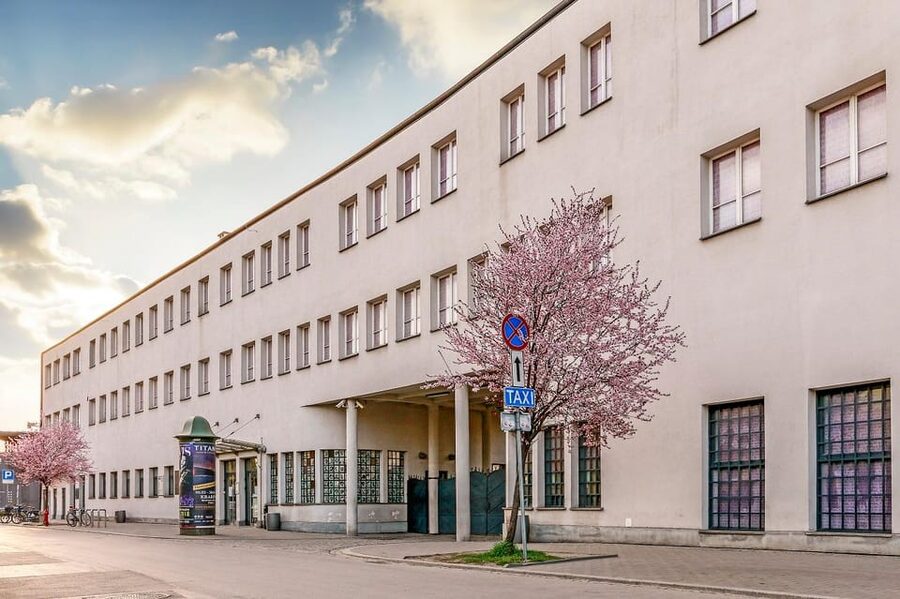
This tour starts where many people are already thinking about Krakow’s wartime story: the Schindler Factory Museum entrance. Look for your guide holding an excursions.city sign. It’s a practical setup because you can arrive earlier, get your bearings in the area, and reduce the stress of hunting for a meeting point in a busy museum zone.
You’ll likely feel the tone shift quickly after you meet. This is not a “highlights only” wander where everything stays light. The route takes you into a part of town tied to forced displacement, cramped housing, identification, and deportations. I find that starting near a well-known wartime site helps you mentally transition into the right frame.
Walking Podgórze: the ghetto was made of ordinary buildings
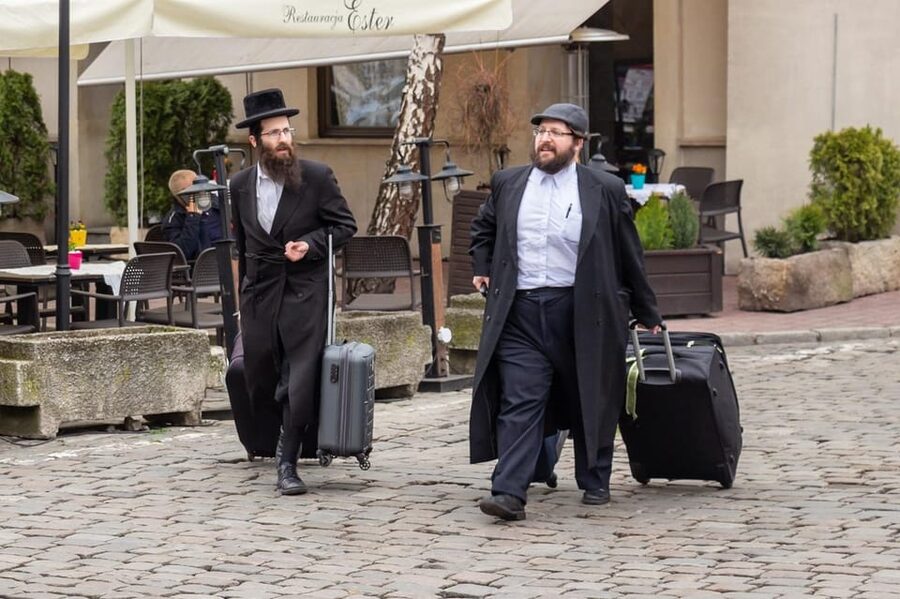
Your guide leads you through the Podgórze district, the area that functioned as the Jewish Ghetto during World War II. The emotional impact here comes from the everyday setting. You’re walking past buildings where thousands of displaced Jews lived, meaning the history isn’t only on a board or behind glass. It’s in the street scale, the arrangement of buildings, and the sense that people were forced to live inside a system with walls and checkpoints.
Two practical reasons I like this approach:
- You connect facts to place. When you can stand near the kind of buildings where people were crowded, the story feels less abstract.
- You get a guided filter. The guide’s job is to place each stop into the timeline and explain what mattered and why.
The tour is only an hour, so you won’t get a full neighborhood lecture. But you will get enough context to understand what you’re seeing, and that matters. If you were to visit alone, you could still find plaques and memorials, but you’d probably miss the “why this point, why here, why that wall fragment” kind of explanation.
Plac Bohaterów Getta: the identification and deportations you can’t skip
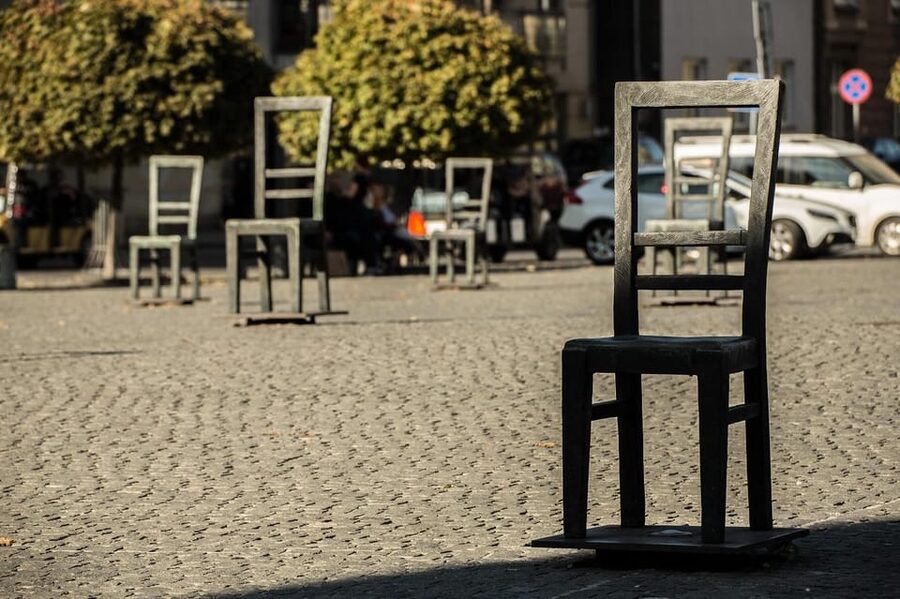
One of the most important stops is Plac Bohaterów Getta (Ghetto Heroes’ Square). This is where Jewish residents of Krakow were identified and deported to concentration camps.
That phrasing is heavy for a reason. The square is not a casual sightseeing stop, it’s a reminder that the ghetto system was designed to trap people, mark them, and move them onward. Your guide’s explanation is what helps you connect what you see around you with what happened here.
In the reviews, I noticed a strong emphasis on guides who bring compassion to the material. One Italian review even described a moment where a different person, Fabio from Foggia, provided more rapid storytelling in a few minutes at this square after the official narration felt too brief. That highlights a key point for you: if you want the emotional and historical meaning to land, choose this tour because you want guided context, not because you want a quick walk.
The ghetto wall fragment: why a small piece matters
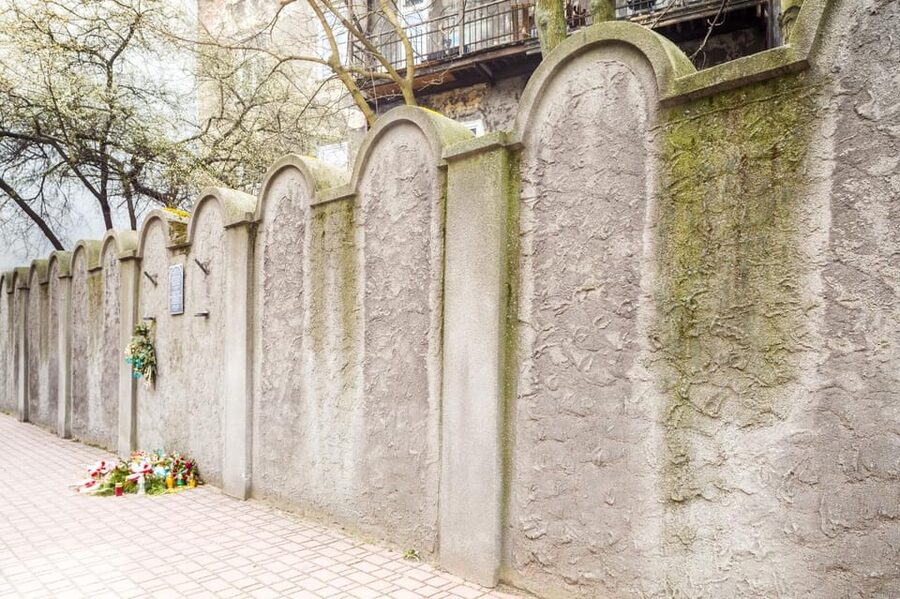
You’ll also see a remaining fragment of the wall that once surrounded the ghetto. Even if it looks modest compared to full walls in other historic sites, it carries weight because it’s physical proof of confinement.
This is one of those moments where I think people benefit from slowing down, even if the tour schedule is moving. Stand close enough to notice the texture and structure your guide points out, and read what’s there if signs or plaques accompany the monument. The point of this stop is not just to photograph. It’s to understand that a wall is a policy you can’t ignore.
If you’re sensitive to difficult topics, this is the moment to take a breath. The tour is respectful, but it deals with real persecution. Going in with a calm pace helps you absorb it rather than rushing past it.
The Old Town gets walked a dozen ways. Here are the other ones we rated
- Complete Cracow Bike Tour (small group of maximum 15 people!)★ 5.0 · 1,322 reviews
- Krakow: Rynek Underground Museum Guided Tour★ 4.6 · 1,122 reviews
- Auschwitz Birkenau Guided Tour with Hotel Pickup from Cracow★ 5.0 · 823 reviews
- WOMAI Cracow – Into the darkness experience★ 5.0 · 363 reviews
- From Cracow: Auschwitz- Birkenau Tour with transportation★ 3.5 · 206 reviews
Under the Eagle pharmacy: ending on resilience, not only tragedy
The tour’s finale is the famous Under the Eagle pharmacy. Ending here is a smart choice because it shifts the focus from what was done to people to a symbol of persistence through hardship.
Your guide frames the pharmacy as a poignant example of resilience and survival amid turmoil. I like this ending because it avoids leaving you only with suffering. It also helps you connect Krakow’s wartime story to continuity, how communities tried to keep going even under impossible circumstances.
One practical tip: as you approach the final stop, listen closely to what your guide says before you take photos. Since the tour is only an hour, the narration at the end is often where the “so what” becomes clear.
Price and value: $15 for a guided, emotional walking hour
At $15 per person for a 1-hour guided tour, this is budget-friendly, especially for a specialist topic. You’re paying for a professional guide and for having someone connect multiple site-level stops into one coherent story.
Here’s how I think about value for this specific experience:
- You get access to several key locations in a short window, including the wall fragment and Under the Eagle pharmacy.
- You get interpretation, not just sightseeing. For history that’s easy to misunderstand or oversimplify, a guide adds real value.
- You’re not paying for food. That keeps the price down, but it also means you should plan what you’ll eat afterward.
If you like self-guided exploring, you might be tempted to skip a tour. But for this topic, I think a guide is the difference between seeing places and understanding what they meant.
Timing and pacing: what you can realistically absorb in 60 minutes
The tour runs for 1 hour, with live guide narration in English, German, French, Spanish, Italian.
That duration works well if you want:
- a strong overview
- a respectful walkthrough of the major points
- a starting point for deeper reading afterward
It can feel short if you tend to slow down for every plaque and want a long, story-heavy pace. One review explicitly noted that 1 hour can be too short to follow the guide through the streets of the ghetto. That doesn’t mean you should avoid it. It means you should manage expectations: think of this as a guided sampler that helps you decide what you want to spend more time on later.
Language options: pick the one you’ll actually understand
The tour offers live guides in English, German, French, Spanish, and Italian. That matters because historical tours depend on clear storytelling. If you choose your strongest language, you’ll track the timeline more easily, and you’ll absorb why each stop matters.
One review highlighted an Italian-speaking guide doing excellent work in Italian. Another praised the guide’s compassion and extensive knowledge. Those are exactly the qualities that make a 1-hour tour work, because there’s no time to guess.
Who should book this tour, and who might want something longer
I’d recommend this tour if you:
- want a focused introduction to Krakow’s Jewish Ghetto sites in Podgórze
- like guided context for difficult history
- want to combine memorial stops with a real landmark like Under the Eagle pharmacy
- are short on time but still want a structured, meaningful route
I’d think twice if you:
- want a very detailed, slow-moving narrative with extra historical background at every stop
- prefer to spend a long time reading and reflecting without time pressure
- are hoping for a “complete history of everything” type experience (this is not that)
In a perfect world, this pairs well with additional independent time around Krakow’s major wartime sites, so you can come back later for deeper layers.
Should you book this Krakow Jewish Ghetto guided tour?
Yes, if you want a guided walking overview of the Podgórze ghetto area, with the wall fragment and Under the Eagle pharmacy as key anchors. For the money, you’re getting a professional guide and a route that keeps you moving through the places where history happened, not just through a list of points on a map.
Just book with the right expectations: it’s 1 hour, and the quality of narration matters. If you’re the type who needs slow, detailed storytelling, consider pairing this with extra time in the area afterward or choosing a longer format if one is available. But as an introduction that gives you direction and context fast, it’s a strong pick.
FAQ
How long is the Krakow Jewish Ghetto guided tour?
It lasts 1 hour.
How much does the tour cost?
The price is $15 per person.
Where do we meet the guide?
Meet at the entrance to the Schindler Factory Museum, and look for a guide with an excursions.city sign.
What does the tour include?
A professional guide is included.
Is food and drink included?
No, food and drink are not included.
What places will we visit during the tour?
You will walk through the Podgórze district, see Plac Bohaterów Getta, visit a remaining fragment of the ghetto wall, and end at Under the Eagle pharmacy.
Which languages are available for the live guide?
The tour is offered in English, German, French, Spanish, and Italian.
Can I get a full refund if my plans change?
Yes. You can cancel up to 24 hours in advance for a full refund.
Can I reserve without paying right away?
Yes. You can reserve now and pay later.
—
Final word: is it worth your time?
If you’re in Krakow and want one guided hour that links the ghetto wall, Plac Bohaterów Getta, and Under the Eagle pharmacy into a clear route, this tour is worth booking. Go in ready for an emotional walk, keep expectations realistic for the time limit, and you’ll leave with a much firmer grasp of what you’re seeing.
More Tour Reviews in Krakow

The Old Town, Three More Ways



Jewish Heritage and Ghetto Routes in Krakow

Recently written up around Krakow

More Krakow Old Town and Market Square.
 ★ 5.0Complete Cracow Bike Tour (small group of maximum 15 people!)From $391,322 reviews
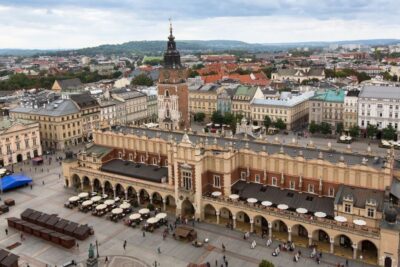 ★ 4.6Rynek Underground Museum Guided TourFrom $341,122 reviews
 ★ 5.0Auschwitz Birkenau Guided Tour with Hotel Pickup from CracowFrom $32823 reviews
 ★ 5.0WOMAI Cracow – Into the darkness experienceFrom $17363 reviews
 ★ 3.5Auschwitz- Birkenau Tour with transportationFrom $36206 reviews
 ★ 4.1Czartoryski Museum Guided Tour in italianFrom $16170 reviews
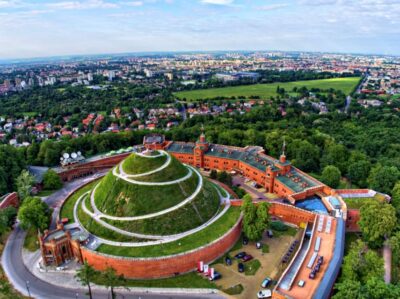 ★ 4.3Czartoryski Museum Tour / Entrance with Krakow CardFrom $53166 reviews
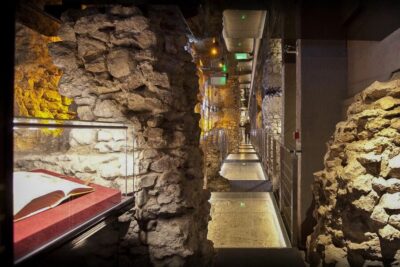 ★ 4.6Guided Tour of Rynek UndergroundFrom $33113 reviews
Also on these Poland lists