
REVIEW · WARSAW CITY TOURS
Faces of Warsaw’s 3-hour orientation city tour with hotel pick-up
Warsaw hits you fast, then explains itself. This 3-hour orientation tour is built to get you oriented quickly with hotel pickup, while a patient guide like Marzena helps you connect the dots between empires, communism, and modern-day life. The possible drawback is simple: with so many stops in just a few hours, you will move on quickly, so it is not a slow, deep museum day.
I love that the route focuses on the places that matter, not just scenic corners, and you get transport by air-conditioned car or minibus with parking handled. You also get free admission at several major stops, which makes the price feel more reasonable for a guided highlights run. If you want to linger in museums or take your time at each monument, you might find the pace a bit brisk.
In This Review
- Key highlights to know before you go
- A 3-hour Warsaw orientation route, with the comfort of pickup
- Where you start at Sigismund’s Column, and why the location is smart
- Lazienki Krolewskie: Royal Łazienki Park and Palace Complex in a short window
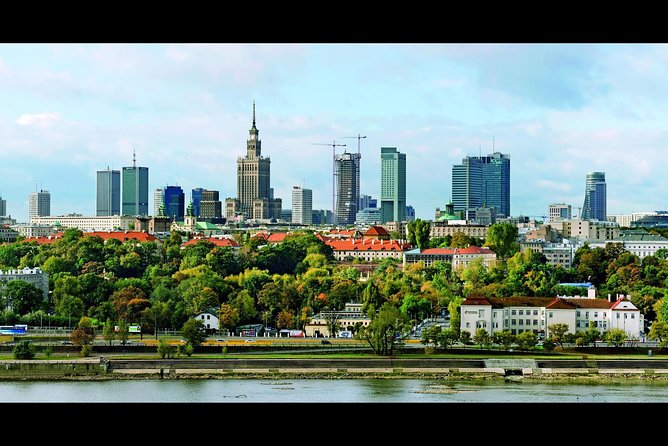
- Communism symbols and reconstructed power, from the Reichstag area to the Palace of Culture
- Grzybowski Square and the former Warsaw ghetto grounds
- POLIN Muzeum Historii Zydow Polskich and the ghetto uprising story
- Umschlagplatz: seeing the real places where deportations were carried out
- King Sigismund’s Column again, then into the reconstructed UNESCO Old Town area
- President’s Palace area and the famous Polish names tied to it
- Rynek Starego Miasta: the romantic Old Town square that ties it together
- Maria Skłodowska-Curie’s birthplace: your tour ending point and next-step opportunity
- Price and value: what $72.72 buys you in Warsaw
- Who this tour suits best, and when to choose something else
- Final verdict: should you book Faces of Warsaw?
Key highlights to know before you go
- Hotel pickup makes it friction-free: you meet your guide at your reception or see the PolinTours sign at the front of your hotel area.
- A tight route through Warsaw’s big themes: royal power, communist-era symbols, and the city’s Jewish history sites.
- Free admission for most stops: several visits are listed as admission ticket free, so you spend less time hunting tickets.
- Your guide’s explanations matter: Marzena stood out for historical perspective and for answering questions with patience.
- You end in the Old Town area: finishing near Maria Skłodowska-Curie’s birthplace sets you up for easy wandering after the tour.
Warsaw rebuilt itself twice over. Here is how else we saw it
- Warsaw: Chopin Concert in the Old Town
★ 4.8 · 2,287 reviews - Warsaw: Traditional Galar Cruise on The Vistula River
★ 4.6 · 1,640 reviews - Warsaw: Old Town Highlights Walking Tour in English
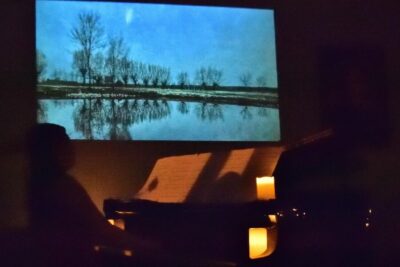
★ 4.7 · 1,516 reviews - Warsaw Concert: Chopin – Painted by Candlelights with Wine
★ 4.8 · 1,442 reviews
A 3-hour Warsaw orientation route, with the comfort of pickup
This tour is designed for people who want a smart overview of Warsaw without spending the first day figuring out logistics. You start at Sigismund’s Column at Plac Zamkowy, then move through royal parks, major memorial sites, and the reconstructed Old Town. It is only about three hours, but the sequence is curated to tell a story: how Warsaw has been shaped, erased, and rebuilt.
The biggest practical win is the private transportation plus pickup and return from your hotel in the city center. You are not decoding bus routes or timing trams while you are tired. Parking fees are also covered, which matters in central Warsaw where stopping can be slow.
What you should expect is a fast-moving highlights format. Stops are short, typically around 10 to 30 minutes each, with some sites having free admission. If you show up ready to walk, ask questions, and take it all in, this time box works well. If you prefer long museum sessions, you will likely want to add separate time later.
Where you start at Sigismund’s Column, and why the location is smart
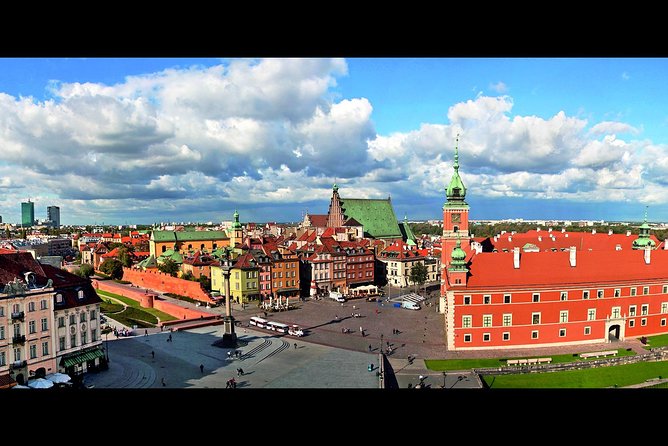
You meet at Sigismund’s Column near Plac Zamkowy. This spot is useful for an orientation tour because it sits at a crossroads of history. From here, Warsaw feels like it has layers, and your guide can point out how the modern city and the reconstructed historic core relate to each other.
Even before you dive into specific sites, the opening sets expectations. You get a quick sense of scale, where the main sights cluster, and how the day will flow. It also gives you a reference point you can use after the tour when you are choosing your next walk or meal.
One practical note: the tour ends at Maria Skłodowska-Curie’s birthplace in the old town area. So the start location helps you avoid feeling like you are trudging back and forth across town later.
Lazienki Krolewskie: Royal Łazienki Park and Palace Complex in a short window
Stop one is Łazienki Krolewskie w Warszawie, the Royal Łazienki Park and Palace Complex. You get about 30 minutes here, and the key value is perspective. This is not just a pretty park stop. It is a way to understand how Warsaw represented power and culture through its royal spaces.
You also have admission ticket free listed for this stop, which helps if you are trying to keep the day’s add-on costs low. In practical terms, it means more of your time is used for seeing and listening, not for figuring out ticket logistics.
How to get the most from a half-hour here:
- Wear comfortable shoes, because even “park time” involves uneven walking.
- Use the guide’s pacing to ask questions early, while you still have enough energy to absorb explanations.
Possible drawback: because your time is limited, you will not experience every corner of the complex at a leisurely pace. Think of this as a highlight that sets up deeper choices later.
Communism symbols and reconstructed power, from the Reichstag area to the Palace of Culture
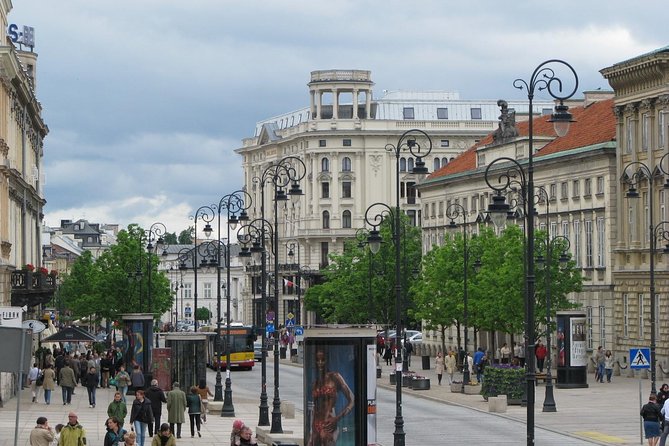
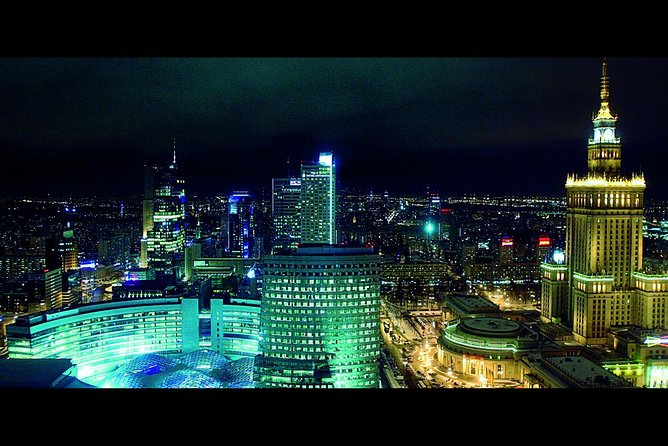
Between the park and the Jewish history sites, the route includes an important viewpoint moment: you look at the seat of the Polish Reichstag. You will also learn about the legacy of communism, including a controversial gift from Stalin, the Palace of Culture.
This part of the tour is valuable because it gives you a framework for reading the skyline. In Warsaw, the built environment is not neutral. It reflects political shifts, propaganda, and attempts to shape public life.
The Palace of Culture is one of those landmarks people either love for its scale or critique for what it represents. Having your guide explain the background helps you see it as history you can’t ignore. It turns what might feel like just another large building into something you understand.
If you are the type who likes asking questions, this is a great section to do it. It is the kind of topic where your guide can connect facts to what you are actually seeing outside your window.
Below are the other Warsaw trips we have logged
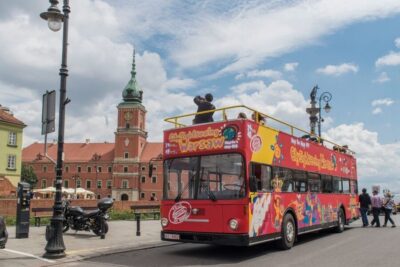
- Warsaw: City Sightseeing Hop-On Hop-Off Bus Tour★ 3.6 · 1,415 reviews
- Private Tour: Warsaw City Sightseeing by Retro Fiat★ 5.0 · 562 reviews
- Warsaw: Afternoon Public City Tour with Pickup and Drop-off★ 4.4 · 421 reviews
- Half-Day Warsaw City Sightseeing Bike Tour for Small Group★ 5.0 · 240 reviews
- Warsaw City Sightseeing in a Retro Bus★ 5.0 · 196 reviews
Grzybowski Square and the former Warsaw ghetto grounds
Next comes Grzybowski Square, with about 15 minutes on the ground. The focus is the former Warsaw ghetto and what that history meant for Warsaw’s Jewish communities.
This stop is brief, but it matters because it places later memorials into a larger geography. You get a sense that the ghetto was not an abstract story far away in time. It was a real set of streets and spaces within the city.
The admission ticket is listed as free, so you are not paying extra to access this historical grounding. Still, keep your expectations realistic. Fifteen minutes is enough for orientation and first-time understanding, not for reading every detail.
Practical tip: if you want to remember this part of the day, take a moment to look around, then ask your guide what you should be noticing. A good guide will point out the specific cues you might otherwise miss.
POLIN Muzeum Historii Zydow Polskich and the ghetto uprising story
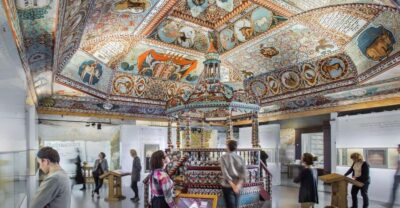
Stop three is POLIN Museum of the History of Polish Jews. You have about 20 minutes here, with a listed focus on times of heroic uprisings in the Warsaw ghetto and a stop at the ghetto hero monument, where Willy Brandt knelt down.
Even in a short visit, this is a powerful sequence because it combines memorial space with a bigger narrative. You are not only learning tragedy. You are also learning about resistance and courage, which changes how the day lands emotionally.
Two things make this stop especially useful for first-time visitors:
- It provides context for what you saw earlier at ghetto-adjacent areas.
- It links Warsaw’s Jewish history to broader European memory, symbolized by Willy Brandt’s moment of respect.
Time note: 20 minutes is a quick pass. If POLIN is a priority for you, you will probably want a return visit on another day when you can slow down and read more.
Umschlagplatz: seeing the real places where deportations were carried out
After POLIN, you visit Umschlagplatz for about 15 minutes. This is one of the most solemn stops on the route, with the stated purpose of showing the real places where the final solution of the Jewish question was put into practice.
When you visit sites like this, the value of a guided format is that you can stay respectful while still understanding what the location represents. Your guide helps you read the setting, and you do not waste time wondering what you are supposed to take in.
The listed admission is free, which is good because it keeps the focus on learning rather than payments. The bigger consideration is emotional. If you are sensitive to heavy history, plan some quiet time after the tour so you can process it.
King Sigismund’s Column again, then into the reconstructed UNESCO Old Town area
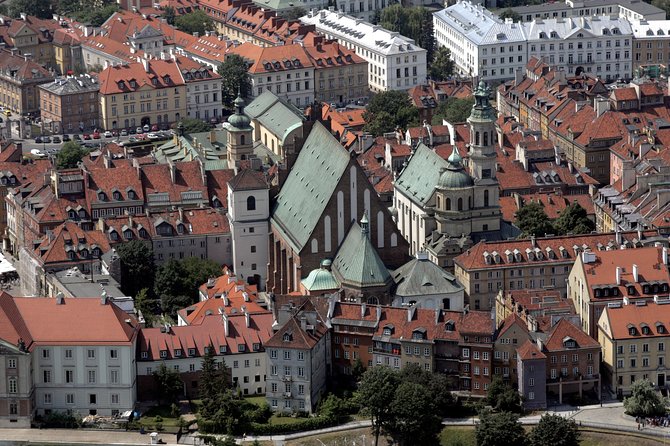
You spend time at King Sigismund’s Column (Kolumna Zygmunta) with about 15 minutes. The key idea here is historical Warsaw, including the completely reconstructed old town that is declared a World Heritage Site by UNESCO.
This is where the tour shifts gears from remembrance to reconstruction, from loss to rebuild. You will see important monuments and architectural pearls, along with royal palaces and residences. In other words, this is where Warsaw shows you what it tried to restore, and why.
Why this stop works well after the earlier ghetto sites is that you start seeing Warsaw as an ongoing story, not a single chapter. Your guide’s explanations help you hold both realities in your mind at the same time.
If you are trying to take photos, you will find plenty of dramatic views in and around the Old Town area. Still, keep your pace in check. Your guide will likely want you to listen first, then look again.
President’s Palace area and the famous Polish names tied to it
Next is Palac Prezydencki for about 10 minutes. The tour framing here is quick but interesting: you hear about great Poles to name Frederick Chopin, Marie Curie, and Lech Wałęsa.
This part feels like a bridge between the Old Town and the tour’s ending at Marie Curie’s birthplace. Even if the stop is short, it helps connect Poland’s global figures to specific places you are walking through.
Possible drawback: ten minutes is not long enough to do anything beyond an orientation stop. If you want deeper political or cultural detail, you will need a separate visit or follow-up reading later.
Rynek Starego Miasta: the romantic Old Town square that ties it together
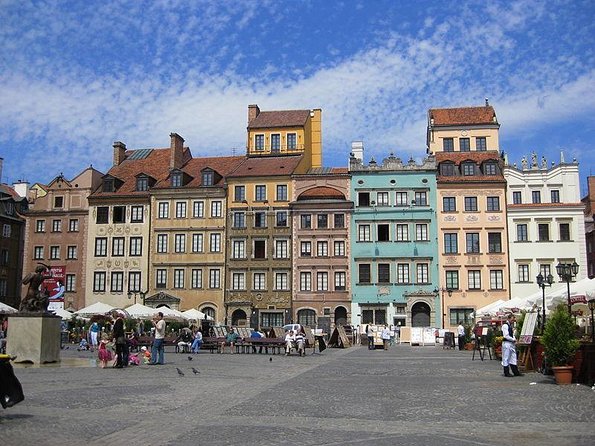
Stop seven is Rynek Starego Miasta, with about 30 minutes for strolling through the Old Town streets and admiring the UNESCO World Heritage Site.
This is the part of the day where you can relax your brain a bit and let the place work on you. After the heavy historical stops earlier, the Old Town offers a visual reset: architecture, street layout, and the feeling of a city that rebuilt itself.
Also, this is practical sightseeing. A good chunk of this area is easy to navigate on foot, and it is a convenient base for dinner afterward. If your energy is running low, it is still a satisfying stop because you can move at your own pace while staying within an iconic zone.
Maria Skłodowska-Curie’s birthplace: your tour ending point and next-step opportunity
The final stop is Muzeum Marii Sklodowskiej-Curie, about 10 minutes for seeing Madame Curie’s birthplace and learning more about the most famous woman from Warsaw. The key detail for your planning is that the admission ticket for this stop is listed as not included.
So here is the practical way to decide:
- If you want to go inside and you care about Curie history, expect to pay for the ticket separately.
- If you are more focused on outdoor walking and you are museumed out, you can still use the area to orient and head for food or a longer walk in the Old Town.
Because the tour ends here, you get a natural transition from guided learning into self-guided exploring.
Price and value: what $72.72 buys you in Warsaw
At $72.72 per person for an approximately 3-hour private city orientation with pickup, transportation, parking fees, and free admission at several stops, the value is pretty strong if you are new to Warsaw.
The price starts making sense when you break it down by what you would otherwise pay for:
- Guided time by an English-speaking guide who can explain what you are seeing.
- Air-conditioned transport by car or minibus.
- Hotel pickup and return from city-center accommodations.
- Several stops where admission is ticket-free.
What is not included is lunch, and the Curie museum ticket is not included. That is normal for many orientation tours. The key is that the tour does not try to hide extra costs in the middle of the route. You can plan for them.
Who gets the best value:
- First-timers who want highlights plus context.
- Travelers staying in the city center who can actually use hotel pickup smoothly.
- People who want a tight structure, especially if they only have a day or two in Warsaw.
Who this tour suits best, and when to choose something else
This tour is best if you want a guided walkthrough that touches major Warsaw stories, especially the royal and rebuilt Old Town, plus the Jewish history sites around the Warsaw ghetto.
It also fits you if you care about learning the meaning behind landmarks. A guide like Marzena stood out for historical perspective and for answering questions with patience and good cheer. That kind of interaction is exactly what makes a short tour feel complete.
Choose something else instead if:
- You want long museum time at POLIN.
- You prefer fewer stops with more breathing room.
- You are traveling with someone who needs lots of rest between sites.
Final verdict: should you book Faces of Warsaw?
If you are trying to get your bearings fast and learn how Warsaw’s biggest landmarks connect, this is a smart booking. The combination of hotel pickup, private transport, and a guide who can explain heavy and hopeful parts of Warsaw in one short run is a strong value.
I would book it if your goal is orientation plus memorable stops, not deep standalone museum time. If Curie and POLIN are top priorities, I would still do this tour, then schedule extra time later on your own or with a longer themed tour.
More Tours in Warsaw

More Tour Reviews in Warsaw
Warsaw, Keep Looking
Recently written up around Warsaw

More Warsaw City Tours.
 ★ 4.8Chopin Concert in the Old TownFrom $262,287 reviews
 ★ 4.6Traditional Galar Cruise on The Vistula RiverFrom $201,640 reviews
 ★ 4.7Old Town Highlights Walking Tour in EnglishFrom $261,516 reviews
 ★ 4.8Warsaw Concert: Chopin – Painted by Candlelights with WineFrom $251,442 reviews
 ★ 3.6City Sightseeing Hop-On Hop-Off Bus TourFrom $411,415 reviews
 ★ 4.7POLIN Museum of the History of Polish Jews TicketFrom $121,142 reviews
 ★ 5.0#1 Pub Crawl Warsaw with Optional Premium 1 Hour Open BarFrom $28790 reviews
 ★ 4.6Polish Vodka Museum Tour with TastingFrom $22788 reviews
Also on these Poland lists