
REVIEW · WARSAW CITY TOURS
World War II Warsaw Old Town, Military Cemetery Walking Tour
WWII Warsaw feels personal fast, if you do it right. This private walking tour uses a local licensed guide to connect the Old Town’s rebuilt streets with the occupation, terror, and resistance that shaped August 1944. You’ll also trace the lines of the Warsaw Ghetto and end at key memorials, with an optional extension to Powązki Military Cemetery and the Military Museum.
I especially like two things. First, the guide focuses on how the story actually unfolded, from German occupation and Nazi rule to the Warsaw Rising. Second, you’re not just staring at monuments, you’re learning who made the choices, including leaders such as General Tadeusz Komorowski and the underground fighters around him.
One consideration: the history here is heavy, and the tour is timed for walking and guided stops. If you want a lighter, purely sightseeing Old Town experience, this one may feel too intense.
In This Review
- Key highlights worth planning for
- Warsaw Mermaid to Old Town streets with wartime meaning
- Market Square: where the story begins and why ruins matter
- Warsaw Rising Monument and the people behind resistance
- The Warsaw Ghetto boundary markers: hard geography, clear context
- Tomb of an Unknown Soldier: respectful, symbolic, and human
- Powązki Military Cemetery and the Military Museum (4-hour option)
- Price and what $112 buys you in real terms
- Logistics that actually affect your experience
- What I think you should do before you go
- Who this tour suits best
- Should you book this WWII Warsaw Old Town and Military Cemetery tour?
- FAQ
- Where is the meeting point for the tour?
- How long is the tour?
- What’s included in the 2-hour tour?
- What’s included in the 4-hour tour?
- Do you provide pickup from my hotel?
- What languages are available for the guide?
- Can I get a full refund if I cancel?
Key highlights worth planning for
- Market Square ruined by the liberation fight, explained in plain human terms
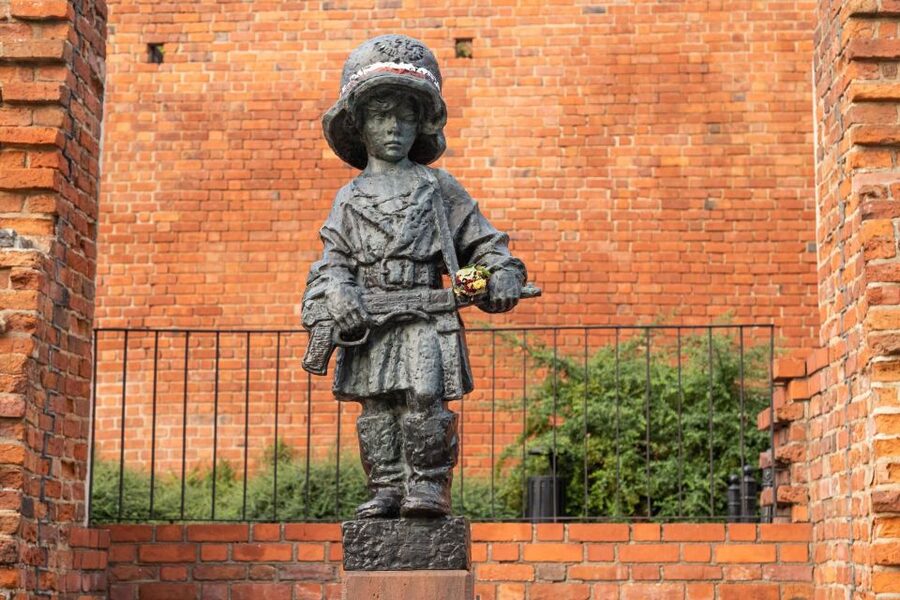
- Warsaw Uprising Monument and resistance stories, including General Tadeusz Komorowski
- Former Warsaw Ghetto boundary markers, passed in the flow of Old Town streets
- Tomb of an Unknown Soldier, a quiet, symbolic end point
- Powązki Military Cemetery plus Military Museum on the 4-hour option, with public transport provided
- Private-group pacing with a licensed guide fluent in multiple languages
More wartime history routes we have written up in Warsaw
- World War 2 in Warsaw walking tour in English
★ 4.7 · 237 reviews - Warsaw for WWII Buffs – private tour with hotel pickup
★ 5.0 · 166 reviews - From Warsaw: Tour of the Wolf’s Lair, Hitler’s HQ by Car
★ 4.7 · 116 reviews - Majdanek Concentration Camp & Lublin Full Day Private Tour from Warsaw
★ 5.0 · 70 reviews
Warsaw Mermaid to Old Town streets with wartime meaning
You start at a point that’s easy to find and hard to ignore: next to the Warsaw Mermaid (Pomnik Syrenki) in the Old Town area. It’s a good match for the tour style, because you begin where Warsaw’s identity is proudly displayed, then quickly shift into the WWII layers that sit underneath that beauty.
Here’s what I like about approaching Old Town this way: the area looks orderly today, with reconstructed facades and a postcard-ready layout. But those same streets were shaped by occupation decisions, resistance actions, and mass destruction. With a guide, you don’t just memorize dates. You learn how the city’s layout mattered, where movement was dangerous, and why certain places became symbols.
This tour is private, so the guide can pace you and clarify questions as you go. That matters because WWII history in Warsaw is dense, and the details connect to specific locations.
Market Square: where the story begins and why ruins matter
The tour’s main opening scene is the Market Square, which was completely destroyed during the fighting around Warsaw’s liberation from German occupation. That statement sounds dramatic, but the guide’s job is to translate it into what it meant day to day, and why the square became more than just a central landmark.
You’ll hear what led to the Warsaw Rising of August 1944, and how occupation set up the pressures that built toward open resistance. The tour isn’t abstract. It ties Nazi policy, the occupation reality, and the growth of underground resistance into a timeline that makes the uprising feel understandable instead of random.
Practical takeaway for you: if you’re arriving in Warsaw with only a general WWII background, this stop will help you organize your knowledge fast. You’ll leave with a clearer sense of the chain of events, not just a list of battles and names.
Possible drawback in this section: because the Market Square is central and public, it can be busy at times. The guide can still work through it, but if you’re sensitive to crowds, choose timing carefully and bring patience.
Warsaw Rising Monument and the people behind resistance

A key emotional anchor comes next, the Warsaw Uprising Monument. This stop is about commemoration, but also about cause and consequence. You’ll learn how resistance fighters challenged Nazi rule, and you’ll hear about anti-Nazi resistance figures such as General Tadeusz Komorowski.
What makes this more than a statue-and-photos moment is the way the guide explains the underground world that made resistance possible. The tour covers the underground movement, spies, and everyday heroes, which is important because “resistance” can sound like an abstract label. Here, it’s shown as a network of people making risky choices under extreme control.
If you like history that names roles and explains how information traveled, you’ll likely enjoy this part. It helps you imagine what it took to coordinate actions in a city where surveillance was part of daily life.
The Warsaw Ghetto boundary markers: hard geography, clear context
One of the most powerful segments of the walking route is seeing the former boundary markers of the Warsaw Ghetto as you move through the Old Town streets. Even though the physical layout has changed over time, these markers help you understand where one part of the city ended and another began under Nazi segregation.
The guide walks you through the role of the largest Nazi ghettos during World War II, including the ghetto uprising. The point is not to throw numbers at you. The point is to make the geography legible so the story lands in the right places.
For you, this stop is valuable because it changes how you read Warsaw. You start noticing how the city’s modern streets overlay older divisions. That’s the difference between seeing a historic city and understanding it.
A consideration here: this portion is emotionally intense. It’s appropriate, and it’s meant to be faced directly. If you’re planning this tour after a long travel day, give yourself a little buffer so you can take it in without rushing your feelings.
Warsaw rebuilt itself twice over. Here is how else we saw it
- Warsaw: Chopin Concert in the Old Town★ 4.8 · 2,287 reviews
- Warsaw: Traditional Galar Cruise on The Vistula River★ 4.6 · 1,640 reviews
- Warsaw: Old Town Highlights Walking Tour in English★ 4.7 · 1,516 reviews
- Warsaw Concert: Chopin – Painted by Candlelights with Wine★ 4.8 · 1,442 reviews
- Warsaw: City Sightseeing Hop-On Hop-Off Bus Tour★ 3.6 · 1,415 reviews
Tomb of an Unknown Soldier: respectful, symbolic, and human

At the end of the Old Town walk, you’ll have a chance to pay your respects at the Tomb of an Unknown Soldier. This stop brings the tour’s big WWII themes back to the idea of individual sacrifice.
Even if you know the broad WWII narrative, memorial spaces do a different job than museum halls. They force a slower pace. The guide’s context keeps it grounded, but the location itself helps you land the emotional weight of what you’ve been learning.
If you like tours that end with reflection rather than a quick photo line, you’ll appreciate the way this stop works as a closing note.
Powązki Military Cemetery and the Military Museum (4-hour option)
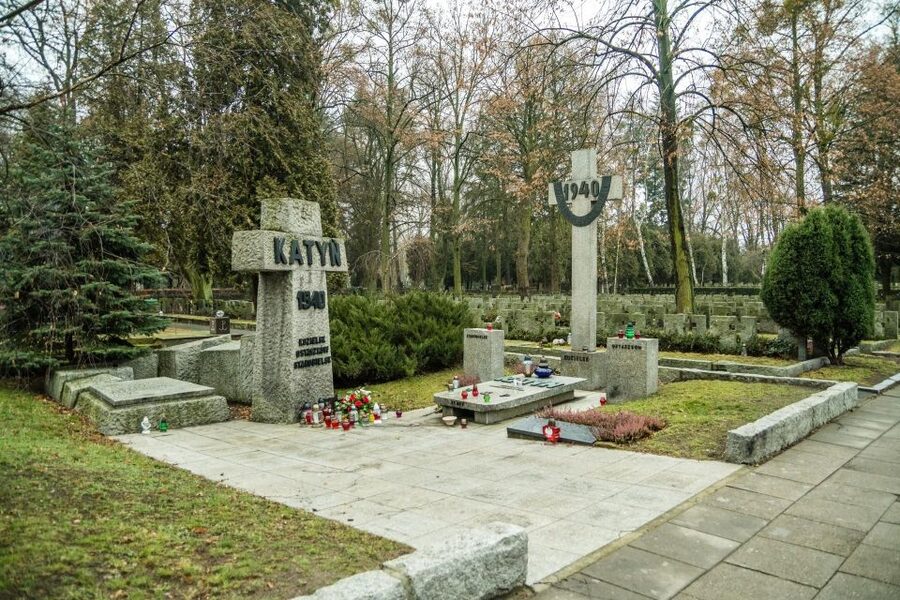
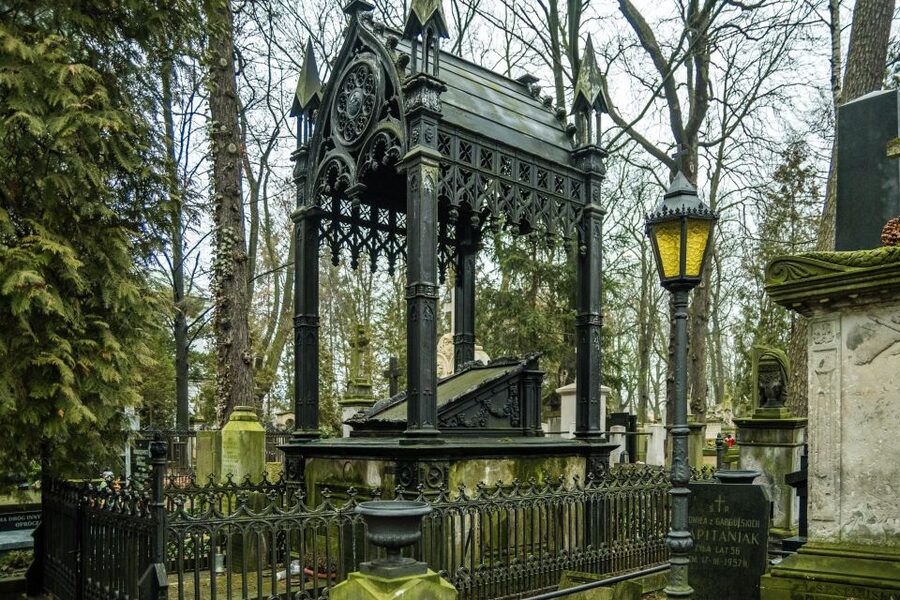
If you book the 4-hour version, the tour extends beyond Old Town into Powązki and the Military Museum in Powązki, with two-way public transport tickets included for your convenience. This is one of the smartest logistics choices on the tour plan because it lets you spend your energy on the content, not on figuring out how to get there.
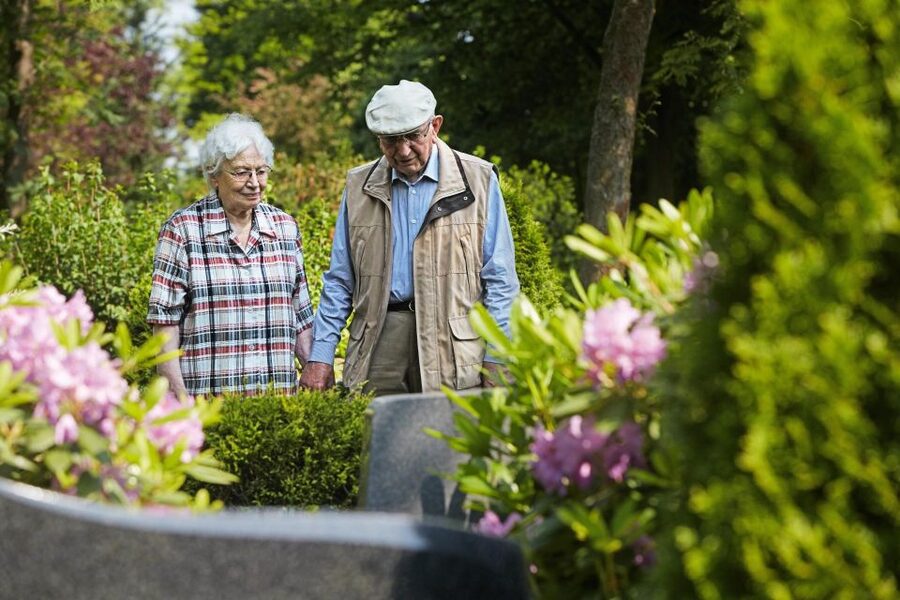
In Powązki, you’ll visit the Military Cemetery, described as a necropolis that honors members of the Polish military, including many WWII heroes. This is where WWII history stops being only about plans and battles and becomes about burial ground, memory, and names.
You’ll also learn more through the Military Museum visit. The museum time matters because memorial cemeteries often raise questions that the outdoor stops can’t answer on their own. With the museum added, you get a more complete sense of what Polish heroes did, and what the occupation cost them personally and collectively.
A practical note for you: this 4-hour option is better if you want to go deeper, not just “see the sites.” If you’re short on time but still want the full arc, it’s the choice that adds substance rather than just extra walking.
Price and what $112 buys you in real terms

At $112 per person, the value comes from structure: a private, licensed guide for a focused route, plus optional museum entry and transport for the longer format.
Here’s how I think about pricing for a tour like this:
- You’re paying for context, not just access. Sites like ghetto boundary markers and uprising memorials are powerful, but they can feel confusing without a guide.
- You’re paying for local expertise that connects the WWII narrative to exact streets and monuments.
- On the 4-hour option, you’re also getting public transport tickets and free entry to the Military Museum in Powązki, which reduces friction and extra costs.
Is it the cheapest thing in Warsaw? No. But for WWII history, you’re paying for an experience that makes the city’s layers understandable. If you’re the kind of traveler who wants meaning, not just movement, this price starts to feel fair.
Logistics that actually affect your experience
The tour meets at Warsaw Mermaid at Rynek Starego Miasta 18i (Old Town). If you want hotel pickup, it’s available for accommodations in Warsaw Old Town. If your hotel is more than 1.5 km away from the meeting point, the guide will meet you at the Mermaid instead.
Languages are a big deal here because WWII history is emotionally charged and detail-heavy. You can choose among German, English, French, Italian, Spanish, Russian, and Polish, with a licensed guide fluent in the selected language.
Timing is straightforward: the tour is listed as 2 to 4 hours, depending on the option you choose. The shorter format focuses on Old Town and excludes Powązki, while the longer format includes the cemetery and museum, using public transport to get you there without turning the day into a transit slog.
What I think you should do before you go

This tour works best if you walk in with a few anchors:
- You’ll want a basic awareness that the Warsaw Rising happened in August 1944.
- Be ready to hear about German occupation of Poland, Nazi policies, and the role of Adolf Hitler and the Nazis.
- If you’re sensitive to heavy topics, plan your emotional pacing. This isn’t a casual photo walk.
Then, let the guide do what they’re good at. The tour format is built for guided storytelling, and the best part is how it keeps coming back to real places. When the guide mentions a person, a unit, or an underground role, they tie it back to something you can see or a boundary you can walk past.
Who this tour suits best
This is a strong fit if:
- You want a clear WWII narrative tied to Warsaw’s actual streets.
- You like history that includes both leadership and ordinary people.
- You want to understand the Warsaw Ghetto boundaries and how they connect to later resistance.
It might not be ideal if:
- You’re looking for a light, mostly visual Old Town stroll.
- You want minimal walking, since it’s built around a guided route and multiple stops.
Should you book this WWII Warsaw Old Town and Military Cemetery tour?
If you care about understanding what you’re seeing, I’d book it. The combination of Old Town WWII sites, ghetto boundary markers, and memorial stops gives you a meaningful route that feels more like a guided understanding than a checklist. And if you choose the 4-hour option, the Powązki add-on is the part that turns remembrance into deeper context, with museum time included and transport handled.
One last practical reason to consider it: private tours are good for emotionally intense topics. You can take breaks, ask questions, and slow down without feeling like you’re holding up a big group.
If you want to see Warsaw as more than a restored facade, this tour does that job.
FAQ
Where is the meeting point for the tour?
Meet your guide next to the Warsaw Mermaid (Pomnik Syrenki), Rynek Starego Miasta 18i, 00-272 Warsaw.
How long is the tour?
It runs for 2 to 4 hours, depending on the option you choose.
What’s included in the 2-hour tour?
The 2-hour tour includes a private walking tour of WWII memorial sites in Warsaw Old Town. The Powązki Military Cemetery is not included in the 2-hour option.
What’s included in the 4-hour tour?
The 4-hour tour includes the Powązki Military Cemetery and includes two-way public transport tickets, plus free entry to the Military Museum in Powązki.
Do you provide pickup from my hotel?
Pickup is available for accommodations or hotels located in Warsaw Old Town. If your accommodation is more than 1.5 km from the meeting point, the guide will meet you at the Warsaw Mermaid.
What languages are available for the guide?
The tour offers live guide service in German, English, French, Italian, Spanish, Russian, and Polish.
Can I get a full refund if I cancel?
Yes. The tour offers free cancellation up to 24 hours in advance for a full refund.
More Tour Reviews in Warsaw




Warsaw, Keep Looking
Wartime History in Warsaw

Recently written up around Warsaw



More Warsaw City Tours.
 ★ 4.8Chopin Concert in the Old TownFrom $262,287 reviews
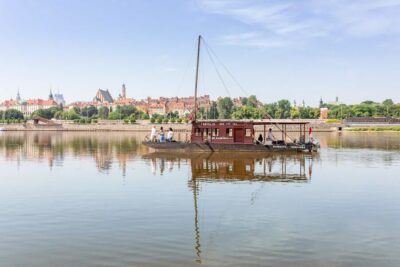 ★ 4.6Traditional Galar Cruise on The Vistula RiverFrom $201,640 reviews
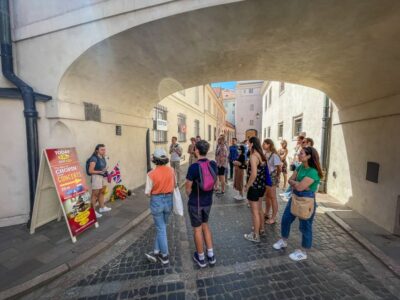 ★ 4.7Old Town Highlights Walking Tour in EnglishFrom $261,516 reviews
 ★ 4.8Warsaw Concert: Chopin – Painted by Candlelights with WineFrom $251,442 reviews
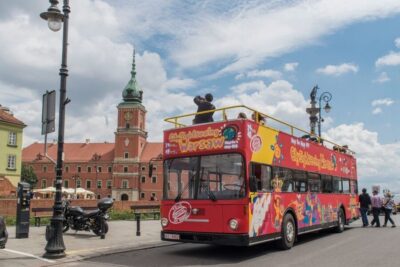 ★ 3.6City Sightseeing Hop-On Hop-Off Bus TourFrom $411,415 reviews
 ★ 4.7POLIN Museum of the History of Polish Jews TicketFrom $121,142 reviews
 ★ 5.0#1 Pub Crawl Warsaw with Optional Premium 1 Hour Open BarFrom $28790 reviews
 ★ 4.6Polish Vodka Museum Tour with TastingFrom $22788 reviews
Also on these Poland lists