
REVIEW · WROCLAW CITY TOURS
Famous Islands of Wroclaw – Cathedral Island and Sand Island Private Tour
Churches on two islands, one smart walk. This private route makes Wroclaw’s church crowns feel personal, with a guide who ties buildings to real local stories, from medieval justice to modern Solidarity-era drama. I like that you get a private tour pace, so you can ask questions without fighting for attention.
One heads up: this is still a walking tour, and it runs best in good weather, so rain can push things to another date.
In This Review
- Key highlights worth planning around
- Why this Cathedral Island and Sand Island walk feels different
- Start at Wroclaw Cathedral and walk the island of medieval escapes
- St. Giles, the Leaning Tower, and Dumpling Gate in one smooth circuit
- Archbishop’s Palace and the 1980 Solidarity money plot
- Holy Cross and Bartholomew, plus the copy of the Turin shroud
- Tumski Bridge: the jurisdiction border that splits the story
- Sand Island’s biggest Gothic finale: Our Lady on the Sand
- Price and value: is $75 fair for a private 2-hour route?
- What to expect from the private format (and how to get the most out of it)
- Getting there and timing: a quick plan so you do not stress
- Who this tour is best for
- Should you book this Cathedral Island and Sand Island private tour?
- FAQ
- How long is the Famous Islands of Wroclaw tour?
- Is this tour private or shared?
- What language is the tour offered in?
- Where does the tour start?
- Where does the tour end?
- What will I see during the tour?
- Is the price listed per person?
- Is the tour weather dependent?
- What is the cancellation policy?
Key highlights worth planning around
- Cathedral Island medieval justice: learn how the island’s layout and history linked to escapes from law
- St. Giles plus the Leaning Tower: hit classic landmarks on a route that stays easy to follow
- Solidarity-era money story: a cardinal’s 1980 hiding of 80 million zloty becomes a memorable stop
- Turin shroud connection: see a Church of the Holy Cross and Bartholomew with a copy tied to the famous relic
- Tumski Bridge as a jurisdiction border: a quick crossing that explains why the Sand Island feels different
- Our Lady on the Sand: Wroclaw’s biggest Gothic church lands on Sand Island for a strong finale
More of Wroclaw, dwarves and islands included
- Wroclaw: E-Car Tour and Audio Guide
★ 4.6 · 1,738 reviews - Wroclaw: 2-Hour Private Guided Tour by Electric Car
★ 4.8 · 805 reviews - Wrocław: Old Town and Ostrów Tumski Walking Tour in English
★ 4.8 · 311 reviews - Wroclaw: Private Old Town Guided Walking Tour (2 hours)
★ 4.8 · 275 reviews
Why this Cathedral Island and Sand Island walk feels different
Wroclaw’s church scene is impressive, but what makes this tour work is the way it connects places that look separate on a map. You’re not just ticking off beautiful facades. You’re hearing why dukes and clergy lived here, how the city’s rules shaped daily life, and what later generations did with power and faith.
I like that it is structured like a story: Cathedral Island sets the medieval tone, then the tour shifts to political courage and religious symbolism, and ends on Sand Island with one big Gothic statement. The private setup helps. In roughly 1 hour 40 minutes to 2 hours, you get an intimate flow instead of standing in a crowd for brief photo stops.
Start at Wroclaw Cathedral and walk the island of medieval escapes
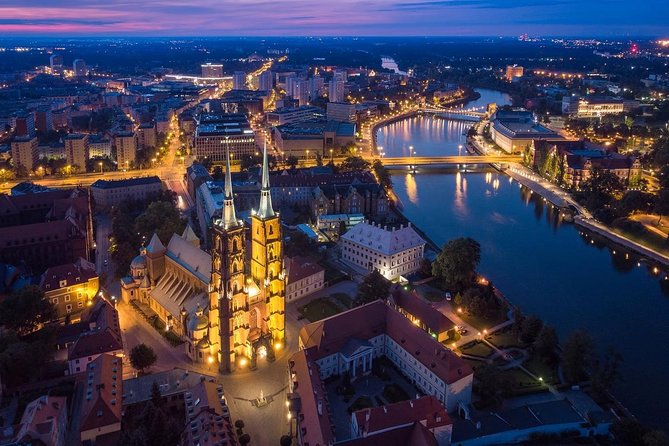
Your tour begins outside the main entrance of Wrocław Cathedral at Plac Katedralny. From there, you head along the Cathedral Island loop, and the first thing you’ll hear is not just architectural trivia. It’s the darker side of medieval life, how wrongdoers could escape justice because of how this space worked.
As you walk, your guide explains why people in power chose to live here centuries ago, including dukes and clergy. You’ll also learn a key detail that changes how you see the geography: Cathedral Island is not an island anymore. That matters, because it turns the landscape from a static background into part of the city’s story.
Practical note: the route is designed for easy walking, but this is still time on your feet at a steady pace. Wear comfortable shoes. You’ll be glad later when you want to linger outside the churches.
St. Giles, the Leaning Tower, and Dumpling Gate in one smooth circuit
Next you’ll spot the Church of St. Giles, described as the oldest existing church in Wroclaw. That gives the stop instant meaning. It’s not just old. It’s old enough to have shaped what came after.
Then the tour keeps rolling with the Leaning Tower of Wroclaw and the Dumpling Gate. These are the kind of landmarks that you might notice on your own, but with a guide you get the why behind the what. You also get a small nature break option: near this area is an entrance to the 19th century Botanical Gardens.
If you like city walks that include at least one place to reset your senses, this is a good moment. You’re not stuck in stone walls the entire time.
Archbishop’s Palace and the 1980 Solidarity money plot
One of the more dramatic parts of the tour is the story connected to the Archbishop’s Palace. Your guide shares what happened in 1980, when a brave cardinal hid 80 million zloty for the Solidarity movement. The tale doesn’t just sound exciting. It also gives you a lens for understanding why religious leaders mattered in political life.
This stop changes the tone in a useful way. Up to this point, the churches could feel like a “look at the past” exercise. Then suddenly it’s not only history behind glass. It’s a story about risk, money, and moral choices in a real modern crisis.
If you enjoy understanding how faith and politics tangled in everyday life, you’ll probably remember this segment long after the photo gallery look of the churches fades.
Below are the other Wroclaw trips we have logged
- 2-Hours Private Electric Car Tour with a Guide, Wroclaw★ 4.5 · 87 reviews
- Wroclaw: Old Town Highlights Private Walking Tour★ 4.8 · 65 reviews
- Wroclaw: Project Riese and Ksiaz Castle Private Tour★ 4.7 · 39 reviews
- Wroclaw: 2-Hour Private Electric Bus Tour with Guide or Tape★ 4.7 · 28 reviews
- Wroclaw: Private Tour by smal Historic Tram (1,5h, 16 seats)★ 4.8 · 24 reviews
Holy Cross and Bartholomew, plus the copy of the Turin shroud
Across the street, you’ll see a two-tier Gothic church: the Church of the Holy Cross and Bartholomew. It’s considered one of the most beautiful Gothic churches in the Silesia area, and the tour adds a detail most sightseeing plans miss. There is a copy of the Turin shroud connected to the church, and your guide will explain what’s worth paying attention to as you look around.
This is also a good chance to notice how Wroclaw’s religious identity mixes with wider European symbolism. You go from local medieval survival stories to a relic-related connection that stretches beyond Poland.
Nearby, you’ll hear about the Orphanotropheum, a former orphanage. This isn’t just another building. It gives the neighborhood a social history angle, showing that religious institutions were often tied to care, not only worship.
Tumski Bridge: the jurisdiction border that splits the story
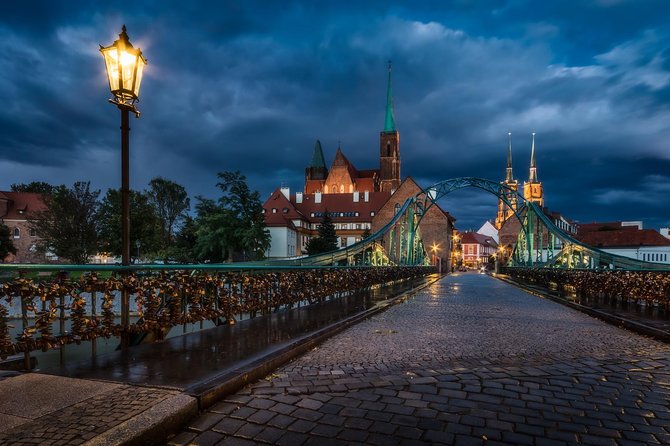
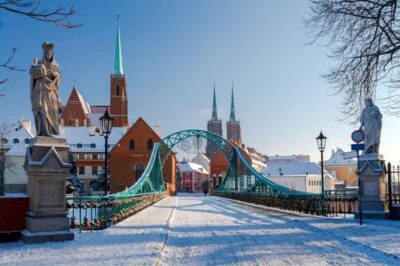
As you move toward the end, you’ll finish your Cathedral Island walk passing Tumski Bridge. Your guide points out that the bridge represents a border for the church’s jurisdiction and helps explain why this side and the Sand Island side feel like different chapters.
This is one of those teaching moments that improves your independence later. When you understand that a boundary can be spiritual as well as physical, you start seeing Wroclaw’s layout differently. You stop treating the river crossing as a simple stroll and start treating it as a historical line.
If you like tours that help you read a city, not just watch it, this bridge explanation is a highlight.
Sand Island’s biggest Gothic finale: Our Lady on the Sand
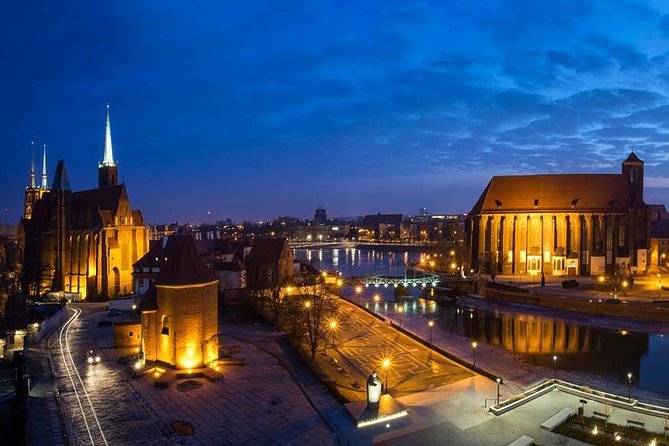
Once you reach Sand Island, the tour targets its centerpiece: the Church of Our Lady on the Sand, described as the biggest Gothic church in Wroclaw. This is a strong end point because it’s the “scale” moment. Cathedral Island was rich and story-driven, but Sand Island brings size, drama, and a big architectural payoff.
You’ll also see the former Augustinians monastery in the area. That helps you connect the church to the wider religious complex that used to operate here. It’s easier to understand what you are looking at when you know it wasn’t just a building, it was a working institution.
As you wrap up, you’ll notice charming tenement houses, and the guide explains they are the only remains of the old residential buildings on Sand Island. That detail matters because it keeps the story from becoming only about grand stone monuments. You get a sense of where ordinary people lived in the same historical setting.
Price and value: is $75 fair for a private 2-hour route?
At $75 per person for a private tour lasting around 1 hour 40 minutes to 2 hours, the value depends on how you like to travel.
This price starts to make sense if:
- You want a private format so the guide can match your pace and answer questions
- You care about story context, not just photos
- You’re traveling in a small group and prefer “one guide, one plan” over joining a large crowd
It may feel steep if you’re the kind of traveler who only wants quick highlights and doesn’t care about historical backstory. But the tour’s stops are chosen to stack stories, not random stops. The Solidarity money episode and the Turin shroud copy are two examples of why this route is more than a pretty walk.
Also, because it ends on Sand Island near a different landmark, you come away with a clearer sense of how the city’s sides connect. That kind of “understanding value” is hard to measure, but it’s real.
What to expect from the private format (and how to get the most out of it)
This is a private tour/activity, meaning only your group participates. That detail affects everything: your timing, your questions, and how much time you get to linger at church exteriors and key viewpoints.
The tour is offered in English, and you’ll receive a confirmation after booking. You’ll likely get a mobile ticket, which is the modern kind of convenience you want when you’re moving between stops.
To get the most out of it, I recommend you walk in ready to ask questions. When you hear a story like the cardinal hiding 80 million zloty, it is exactly the kind of moment where your curiosity can turn into a much richer understanding. Don’t be shy about asking your guide how one era led to the next. That is where a private guide shines.
Getting there and timing: a quick plan so you do not stress
The meeting point is Wrocław Cathedral, Plac Katedralny 18. The tour ends at Sand Bridge (most Piaskowy), so you’ll be finishing near a different part of the river than where you started.
This matters for your day plan. If you plan lunch or coffee right after the tour, check the walking distance from Sand Bridge first. Ending on Sand Island is part of the tour design, so expect your final area to be slightly shifted from your start.
Since the tour depends on good weather, I’d also suggest you keep the rest of your schedule flexible on that day. If weather forces a change, you’ll want easy plans for the backup date.
Who this tour is best for
This tour is a strong match if you:
- Love church architecture and want the human stories behind it
- Want a guided explanation of Wroclaw’s layout, especially the Cathedral Island versus Sand Island feel
- Prefer smaller, private interaction over group logistics
- Enjoy historical moments that connect to modern courage, like the Solidarity movement story
If you’re visiting Wroclaw for the first time and want a high-impact route that is not exhausting, this fits well. The walking is meant to be manageable, and the stop order keeps your attention moving.
If your travel style is strictly “I take my time on my own,” you might still enjoy it. But I’d suggest this is best for visitors who like structure and narrative.
Should you book this Cathedral Island and Sand Island private tour?
Yes, if you want Wroclaw’s churches to mean something beyond looks. The combination of medieval justice on Cathedral Island, the political courage story tied to the Solidarity movement, and the Sand Island finale at Our Lady on the Sand makes this more memorable than a standard highlights walk.
Book it especially if you value private pacing and clear explanations. The tour seems designed for travelers who want to understand the city’s bones, including why a place stops being an island and why a bridge can mark jurisdiction.
I’d think twice only if you dislike walking, or if you are visiting during a period where weather is unreliable and you cannot adjust your plans. Otherwise, this is a very solid way to spend a couple of hours seeing Wroclaw’s most story-rich church neighborhood.
FAQ
How long is the Famous Islands of Wroclaw tour?
It runs about 1 hour 40 minutes to 2 hours.
Is this tour private or shared?
It is a private tour, so only your group participates.
What language is the tour offered in?
The tour is offered in English.
Where does the tour start?
The meeting point is outside Wrocław Cathedral, Plac Katedralny 18, 50-329 Wrocław, Poland.
Where does the tour end?
The tour ends at Sand Bridge (most Piaskowy), Wrocław, Poland.
What will I see during the tour?
You’ll see Cathedral Island highlights, including the Church of St. Giles, the Leaning Tower of Wroclaw, Dumpling Gate, the Archbishop’s Palace, the Church of the Holy Cross and Bartholomew with a copy of the Turin shroud, Orphanotropheum, Tumski Bridge, and Sand Island highlights such as the Church of Our Lady on the Sand.
Is the price listed per person?
Yes. The price is $75 per person.
Is the tour weather dependent?
Yes. It requires good weather. If canceled due to poor weather, you’ll be offered a different date or a full refund.
What is the cancellation policy?
You can cancel for free up to 24 hours in advance for a full refund. If you cancel less than 24 hours before the start time, the amount paid is not refunded.
More Tours in Wroclaw



More Tour Reviews in Wroclaw
More of Wroclaw
Recently written up around Wroclaw

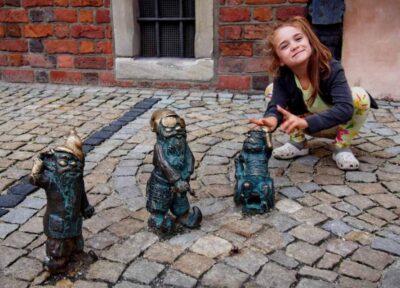
More Wroclaw City Tours.
 ★ 4.6E-Car Tour and Audio GuideFrom $161,738 reviews
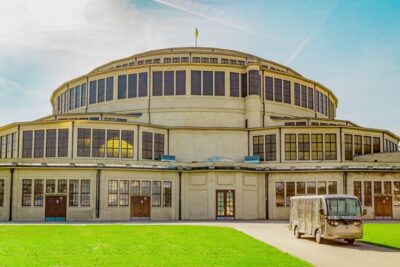 ★ 4.82-Hour Private Guided Tour by Electric CarFrom $38805 reviews
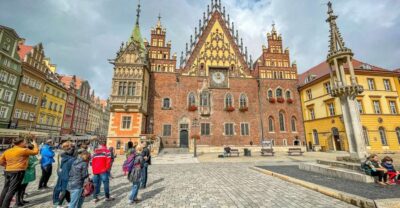 ★ 4.8Old Town and Ostrów Tumski Walking Tour in EnglishFrom $19311 reviews
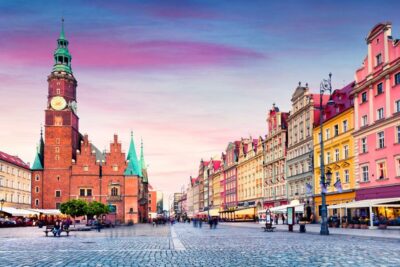 ★ 4.8Private Old Town Guided Walking Tour (2 hours)From $164275 reviews
 ★ 5.0Old Town Wrocław Walking TourFrom $26249 reviews
 ★ 4.8City Tour Sightseeing By Golf Cart Shared Or PrivatFrom $27189 reviews
 ★ 5.0Auschwitz-Birkenau Tour from WrocławFrom $266129 reviews
 ★ 4.4Wroclaw Pub Crawl with Free DrinksFrom $25127 reviews
Also on these Poland lists