
REVIEW · WROCLAW CITY TOURS
Old Town Wrocław Walking Tour
Wrocław tells its story in layers. This Old Town walking tour strings together the big sights with the city’s shifting past, from the Town Hall area to Ostrów Tumski.
I especially love how the stop at the Town Hall turns a pretty gothic building into a real history lesson, including the story of the oldest beer cellar in Europe and how the city was shaped by five different countries.
My other big plus is the ending at Ostrów Tumski, where you get cathedral-island churches and palaces, plus that strong Polish-German context, with great views over the Oder. One possible drawback: group size and sound can vary, and there’s a chance you’ll be in a larger group where it’s harder to hear without a microphone.
In This Review
- Key Highlights That Make This Walk Worth It
- Town Hall To Cathedral Island: Why This Route Works
- Price and Logistics: What to Expect Before You Go
- Group size reality check
- Finding the Start Point Like a Pro
- Stop 1: Town Hall and the Beer Cellar Story You’ll Remember
- What to watch for here
- Stop 2: Rynek Market Square, Pillory, and Cloth Hall Passages
- Drawback to keep in mind
- Stop 3: St. Elizabeth of Hungary Church, 91-Meter Tower, and Dwarfs
- Tip for enjoying this stop
- Stop 4: Wrocław University and the Baroque Nobel Connection
- What you’ll likely enjoy most
- Stop 5: Ostrów Tumski Cathedral Island, Oder Views, and Polish-German History
- How to pace yourself at the end
- What the Tour Includes (and What It Doesn’t)
- Tips From the Best Parts of the Experience
- Who This Tour Suits Best
- Should You Book the Old Town Wrocław Walking Tour?
- FAQ
- How long is the Old Town Wrocław Walking Tour?
- What does the tour cost?
- Where does the tour start and where does it end?
- Is the tour offered in English?
- What sights are included on the route?
- Is food included?
Key Highlights That Make This Walk Worth It
- Town Hall beer cellar story and why it matters to Wrocław’s identity
- Rynek Market Square loop with key buildings, including the pillory and cloth hall passages
- St. Elizabeth of Hungary Church and its 91-meter tower, plus modern art and Wrocław dwarfs
- Baroque University of Wrocław with its Nobel Prize connection
- Ostrów Tumski (Cathedral Island), 10th-century roots, and Oder river views
- Small-group feel, capped at 15, with a listed max of 35 for busier days
More of Wroclaw, dwarves and islands included
- Wroclaw: E-Car Tour and Audio Guide
★ 4.6 · 1,738 reviews - Wroclaw: 2-Hour Private Guided Tour by Electric Car
★ 4.8 · 805 reviews - Wrocław: Old Town and Ostrów Tumski Walking Tour in English
★ 4.8 · 311 reviews - Wroclaw: Private Old Town Guided Walking Tour (2 hours)
★ 4.8 · 275 reviews
Town Hall To Cathedral Island: Why This Route Works
If you’ve never been to Wrocław, this tour is a smart first move because it gives you a mental map fast. You start in the historic center, move through the classic postcard sights, then finish where the city feels older, wider, and more dramatic along the Oder.
I like that the tour is built around stories, not just photo stops. Wrocław’s history is complicated, and the guide approach here helps you connect the dots between architecture and power, from medieval trade life to the modern city that was rebuilt after WWII.
The price also feels fair for what you get. At $26.60 for about 2 hours 30 minutes, you’re paying mainly for an expert guide and a guided narrative that helps you understand why each place looks the way it does. You’re not spending extra on food, but you are walking past landmarks that are usually the reason you came in the first place.
Price and Logistics: What to Expect Before You Go
This is a guided, walking-focused experience. The tour runs about 2.5 hours, and you’ll finish on Cathedral Island. Plan on an extra 15-minute walk back after the tour ends, unless you hop on local transport.
You’ll likely want comfortable shoes. Even with a relaxed pace, you’re moving through cobblestones and around large public spaces like the Market Square and the river area. If you’re visiting in rainy weather, bring a rain layer and expect the tour to keep going in all-weather conditions.
Language is English, and you use a mobile ticket, which is convenient if you’re traveling light and keeping everything on your phone. The stops include places with free entry as noted (so the tour’s value is in the storytelling, not buying paid attractions).
Group size reality check
The tour is described as capped at 15 people, but the overall listed max is 35 travelers. In practice, that means your experience can be more personal on quieter dates, and more crowded on busier ones. If you’re sensitive about crowd noise or you hate waiting for your turn to hear, it’s worth choosing a time that looks less busy.
Finding the Start Point Like a Pro
You start at the Monument of Alexander Fredro in the Rynek area (50-438 Wrocław). If you’re standing on the square and unsure where to go, look for the Fredro monument first, then match your group with the guide.
A small planning tip that saves stress: arrive a few minutes early, even if the tour is scheduled to start on time. With popular walking tours, the biggest chaos is usually not the route. It’s people trying to confirm where they are while holding a phone and a jacket and a map.
Below are the other Wroclaw trips we have logged
- Old Town Wrocław Walking Tour★ 5.0 · 249 reviews
- Wroclaw Old Town Guided Walking Tour★ 5.0 · 100 reviews
- Group city tour (walking tour) through Wroclaw in German★ 4.9 · 89 reviews
- Wroclaw: Guided City Walk★ 4.9 · 87 reviews
- Wrocław: Long City Walk and River Cruise★ 4.8 · 68 reviews
Stop 1: Town Hall and the Beer Cellar Story You’ll Remember
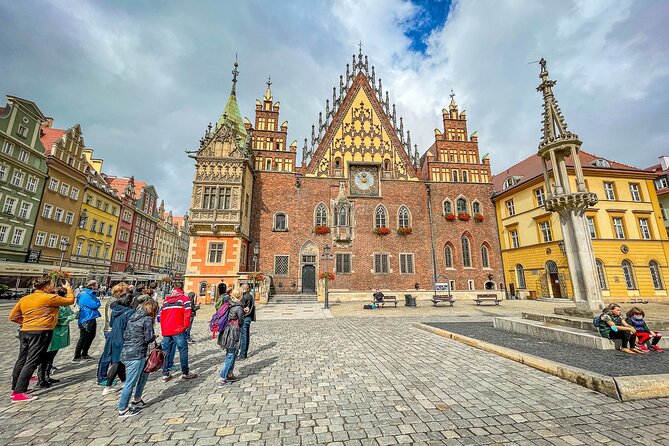
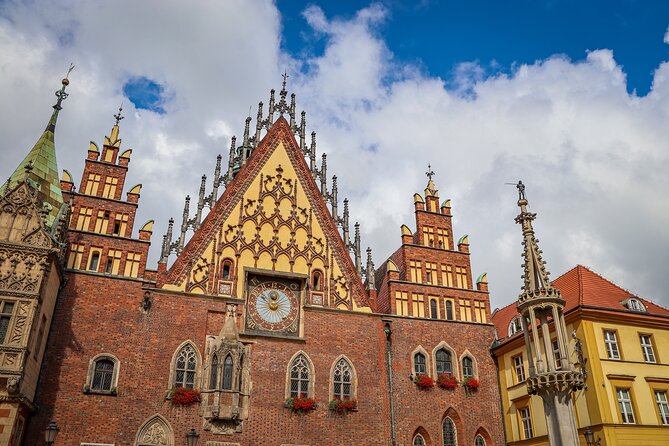
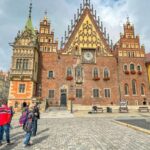
The Town Hall stop is one of the anchors of the whole tour. You’re not just seeing a gothic landmark, you’re learning how Wrocław became Wrocław. The guide connects the building’s style to the city’s role in trade and civic life, and then zooms into a fascinating detail: the story of the oldest beer cellar in Europe.
This is also where the tour starts getting into political layering. Wrocław’s history involves a long chain of rule and influence, and this stop helps you understand how those eras left marks not only on dates, but on local pride and identity. When your guide mentions five different countries shaping the city’s story, it stops sounding abstract. You start recognizing how architecture and civic institutions tend to follow whoever holds power.
What to watch for here
- Take a moment to look up at the Town Hall details. If you’re only looking at the square from street level, you’ll miss the design drama the guide is pointing out.
- If you like questions, this is a good stop to ask. This is where the background story clicks into place.
Stop 2: Rynek Market Square, Pillory, and Cloth Hall Passages
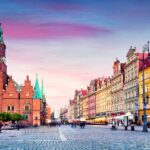
Rynek is the core of the Old Town. It’s also where you’ll get your bearings for the rest of your visit. The tour walks around the Market Square and points out the most significant structures around it, including baroque and modernist houses, the pillory, and the cloth hall with its many passages.
This is where you start seeing Wrocław as a city of commerce. Market squares were practical spaces, not just scenic ones. The pillory is a reminder that civic life had rules and consequences. The cloth hall and its corridors point to trade and the daily flow of goods and people.
Then there’s the architectural mix. One side of the square might feel different from the other, and the guide helps you understand why. In Wrocław, that kind of visual variety is part of the story, not a design accident.
Drawback to keep in mind
Market Square is busy. Even on a small-group day, you’ll be sharing space with street life, photos, and tour groups at other times. If you’re easily distracted, this stop can feel like sensory overload. The good news is the guide keeps you focused by pointing out specific things to look for.
Stop 3: St. Elizabeth of Hungary Church, 91-Meter Tower, and Dwarfs
Next up is the Church of St. Elizabeth of Hungary, one of the Old Town highlights. You’ll hear about its 91-meter tower and its importance in the city’s old-town profile.
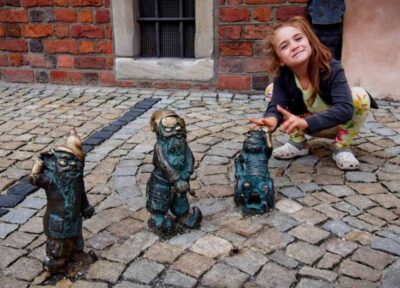
This stop also connects the historic with the playful. Around it, your guide talks about modern art and the famous Wrocław dwarfs that people come to spot. It’s a nice contrast: medieval architecture on one side, quirky contemporary culture on the other.
That mix makes the tour feel current. Wrocław isn’t preserved in amber. It’s a living city, and the dwarfs are part of how the city keeps storytelling fun and accessible.
Tip for enjoying this stop
Look around the church area for small details. Dwarfs and public art are often the kind of thing you miss if you keep your eyes locked on the biggest landmark. Take the extra minute the guide suggests, and you’ll be rewarded.
Stop 4: Wrocław University and the Baroque Nobel Connection
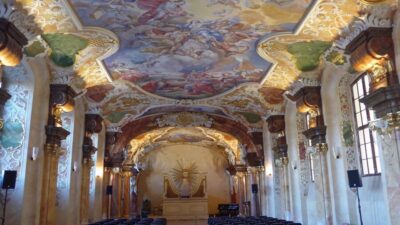
The tour moves to the University of Wrocław, a baroque building tied to the intellectual side of the city. The key fact you’ll hear here is that the university is home to as many as 10 Nobel Prize winners.
This stop changes the tone again. Up to now, you’ve been walking through civic and religious history. At the university, the focus shifts to scholarship and the kind of legacy that outlasts borders.
If you’re the type who likes to connect culture to place, this is a satisfying moment. It’s not just, Here’s a pretty building. It’s, Here’s why this city has mattered beyond its geography.
What you’ll likely enjoy most
- The contrast with the churches and the market square.
- The way the guide ties big historical eras to the buildings you’re standing in front of.
Stop 5: Ostrów Tumski Cathedral Island, Oder Views, and Polish-German History
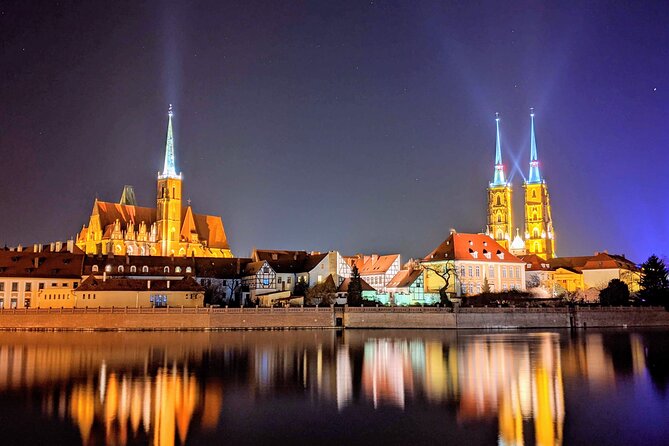
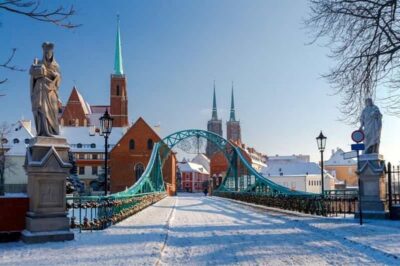
The final stop is the reason you’ll want a good view of the river area. The tour crosses bridges into Ostrów Tumski, the Cathedral Island that traces back to the 10th century.
Here, you get a different kind of Wrocław. Instead of the tight flow of the market square, the island feels like a layered world of churches and palaces. You’ll see gothic churches and structures that read like they belong to a longer timeline than the rest of the city.
You also get the complex heart of Wrocław’s identity: the guide talks about Polish-German relations and the city’s shifting past. This is the part where the tour stops being “history facts” and starts being “history you can feel in the streets.”
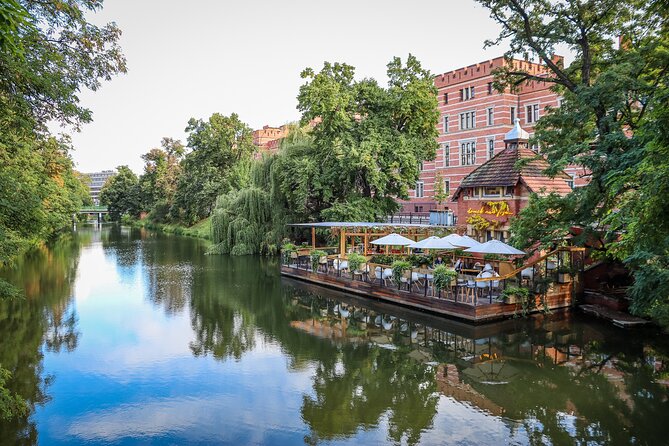
And then there are the views. Standing where you can see toward the Oder river, it clicks why these places were built where they were. Waterways shaped trade, power, and movement for centuries.
How to pace yourself at the end
Because the tour ends here, your energy will matter. Don’t race through this section. If you want photos, take them. If you want to linger, linger. This is the one part you’ll likely want to revisit later in your trip on your own.
Also remember: you’ll walk about 15 minutes back to the start area afterward. If you’re tired, plan for it and consider using transport once you’re off the island.
What the Tour Includes (and What It Doesn’t)
Included:
- An expert guide
- A specially created narrative that ties together the history of multiple nations across Wrocław
Not included:
- Foods
This is a key difference from some tours that stop for a coffee or snack. Here, you’ll want to build your own rhythm. If you need a break, look for a café near Rynek. That’s where you’ll likely find the easiest options before or after the walk.
Tips From the Best Parts of the Experience
A pattern shows up again and again in strong tours like this: the guide makes you feel like you’re learning, not being lectured. In this case, the English delivery often gets praised, and the best guides bring the city alive with small anecdotes while keeping the main story clear.
If you care about hearing well, pick a departure time when the group looks manageable. Also, position yourself where the guide can see you and where sound carries. If it’s raining, people tend to cluster closer, which can help or hurt depending on crowd flow.
And bring curiosity. Ask about anything that connects architecture to the city’s shifting rulers. When the guide mentions topics like the beer cellar, the pillory, or the Polish-German story, those are invitations to understand how history is embedded in daily life.
Who This Tour Suits Best
This is a great fit if:
- You’re visiting Wrocław for the first time and want a fast mental map
- You want the Old Town highlights without hopping between far-flung areas
- You like history tied to real buildings, not just dates and names
- You enjoy a walk that ends somewhere scenic and visually memorable
It may be less ideal if:
- You dislike walking for extended city blocks, even though the total time is only about 2.5 hours
- You get frustrated in larger groups, especially if you need help hearing clearly
- You prefer a strictly quiet, low-story approach (this is built around narrative)
Should You Book the Old Town Wrocław Walking Tour?
Yes, if you want a practical way to understand Wrocław and see the highlights that matter. For the $26.60 price, you’re buying guide-led context for major sights, and that context pays off immediately when you wander afterward on your own.
I’d book it especially if you’re the type who likes walking tours for orientation, because the route sets you up for the rest of your days. Town Hall and Rynek help you connect to the city center fast. Ostrów Tumski gives you the deeper, older layer and a strong sense of why Wrocław feels the way it does.
Just keep one expectation in check: on busier dates, crowd size can get bigger, and you may find it harder to hear. If that’s a deal-breaker for you, choose your time carefully and arrive early.
FAQ
How long is the Old Town Wrocław Walking Tour?
It lasts about 2 hours 30 minutes (approx.).
What does the tour cost?
The price is $26.60 per person.
Where does the tour start and where does it end?
It starts at the Monument of Alexander Fredro in Rynek and ends at Ostrów Tumski (Cathedral Island). You should expect about a 15-minute walk back after the tour ends.
Is the tour offered in English?
Yes, it is offered in English.
What sights are included on the route?
You’ll stop at the Wrocław Town Hall, Rynek Market Square, the Church of St. Elizabeth of Hungary, Wrocław University, and Ostrów Tumski.
Is food included?
No. Foods are not included in the tour price.
More Tours in Wroclaw

More Tour Reviews in Wroclaw
More of Wroclaw
Recently written up around Wroclaw
More Wroclaw City Tours.
 ★ 4.6E-Car Tour and Audio GuideFrom $161,738 reviews
 ★ 4.82-Hour Private Guided Tour by Electric CarFrom $38805 reviews
 ★ 4.8Old Town and Ostrów Tumski Walking Tour in EnglishFrom $19311 reviews
 ★ 4.8Private Old Town Guided Walking Tour (2 hours)From $164275 reviews
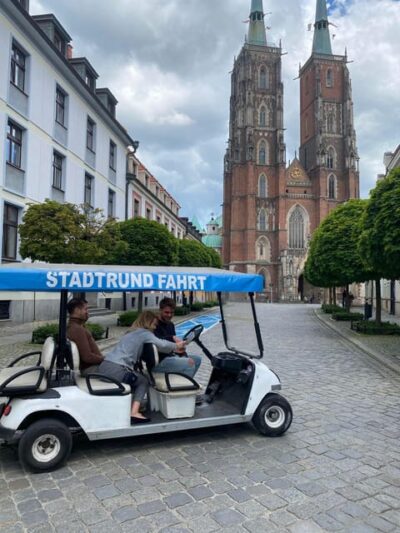 ★ 4.8City Tour Sightseeing By Golf Cart Shared Or PrivatFrom $27189 reviews
 ★ 5.0Auschwitz-Birkenau Tour from WrocławFrom $266129 reviews
 ★ 4.4Wroclaw Pub Crawl with Free DrinksFrom $25127 reviews
 ★ 4.8Full-Day Auschwitz-Birkenau Guided TourFrom $261117 reviews
Also on these Poland lists