
REVIEW · AUSCHWITZ-BIRKENAU MEMORIAL TOURS
From Krakow: Auschwitz-Birkenau and Self-Guided Day Tour
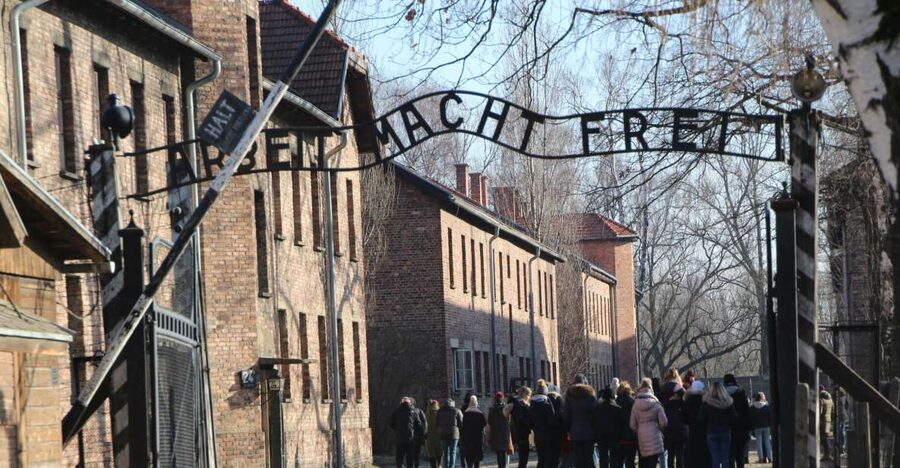
A hard day, with room to breathe. This Auschwitz-Birkenau trip from Krakow is built for structure, then gives you space to move at your own speed with a self-guided route and a language brochure. You’ll also stop at the Judenrampe, the infamous place where prisoners were selected.
I love that the day combines practical support with independence. Your tour leader helps with admission tickets, you get a brochure for your language, and a tour assistant is available during your visit. I also like the pacing idea, you’re not stuck listening to one script the whole time.
The big tradeoff is time. Birkenau gets about 40 minutes in this format, so if you want slow, long looking, plan to feel a bit rushed.
In This Review
- Key points before you go
- Getting from Krakow to Auschwitz, without turning it into a travel project
- That first break at the café, how to use it wisely
- Judenrampe: the selection point, explained through your own pace
- Auschwitz I: where the artifacts and layout do the heavy lifting
- The short coach hops, and why they’re part of the design
- Auschwitz II-Birkenau: the scale, the silence, and the 40-minute reality check
- Self-guided with real support, what that usually means in practice
- Transportation and timing: comfort is nice, but don’t plan a late-night recovery
- Price and value: how $21 makes sense for this day
- Who this tour fits, and who should look elsewhere
- Quick practical tips that make the day easier
- Should you book this Auschwitz-Birkenau day trip from Krakow?
- FAQ
- What does the self-guided part include?
- Is a live guide included?
- How much time do you spend at Auschwitz I and Auschwitz II-Birkenau?
- Where are the pickup and drop-off locations in Krakow?
- What language is the tour support in?
- Is food included?
- Are tickets included?
- Is luggage allowed?
- Is this tour suitable for people with mobility impairments or wheelchair users?
- What documents do I need to bring?
Key points before you go
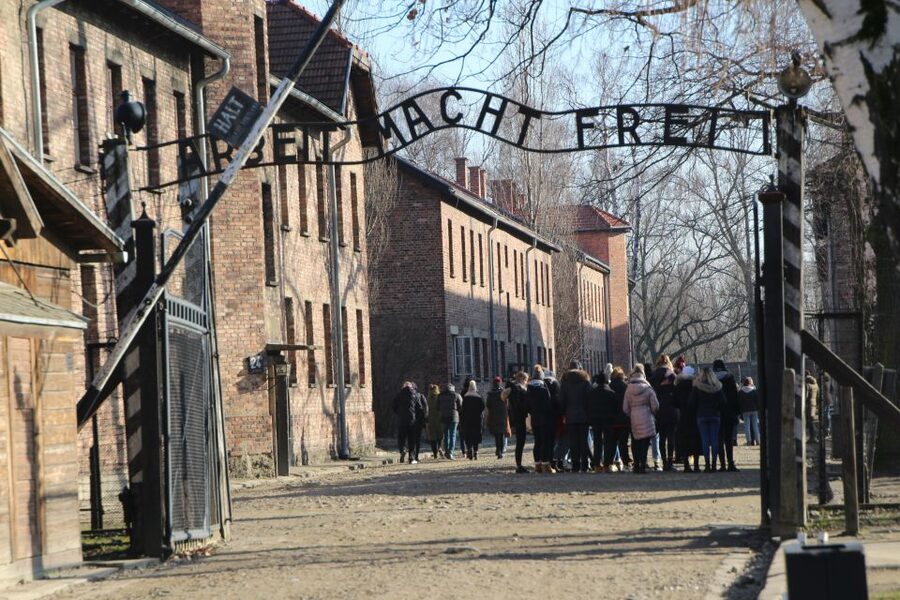
- Self-guided with a brochure in your language so you can stop, read, and re-route your own pace.
- Ticket help from a tour leader, not just a shove toward the entrance.
- Judenrampe included with a short self-guided window focused on the selection area.
- Auschwitz I first, Birkenau second, which helps you connect the story in order.
- Short Birkenau time (around 40 minutes), so bring your emotional stamina and sensible footwear.
Other Auschwitz-Birkenau visits we have reviewed, with entry and transport noted
- From Krakow: Auschwitz-Birkenau Guided Tour & Hotel Pickup
★ 4.5 · 33,358 reviews - From Krakow: Auschwitz-Birkenau Guided Tour & Hotel Pickup
★ 4.5 · 29,340 reviews - Krakow: Auschwitz Guided Tour with Optional Hotel Pickup
★ 4.5 · 15,280 reviews - Krakow: Auschwitz-Birkenau Guided Tour with Pickup & Lunch
★ 4.5 · 9,800 reviews
Getting from Krakow to Auschwitz, without turning it into a travel project
The day starts in Krakow, with pickup at one of three bus stops: Pawia 18b, Pawia 18B, or Wielopole 2. Pickup is optional, so you can choose the option that fits your hotel location, then you ride out by coach. The total trip runs roughly 7 to 11 hours, and the starting time can fall anywhere between 05:30 AM and 01:30 PM, depending on the departure you book.
What matters here is not the exact minute, it’s that this is an early-to-all-day commitment. You’ll get a communication the day before your tour (WhatsApp, email, or phone) to confirm details, so treat that message as part of the itinerary. Also, you can’t simply show up and reach the sightseeing location on your own, the experience is designed to start from that Krakow meeting point.
On the road, expect about 1.5 hours of bus time. Then you get a break at a local café for about 40 minutes. That pause is practical because the rest of the day is concentrated, serious, and mostly walking.
That first break at the café, how to use it wisely
The café stop is not free time to roam the whole area. It’s there so you can eat something simple, use the restroom, and reset your body before you enter a site that can drain you fast. Bring your own water if you can, the tour asks you to bring food and drinks, and you’ll be grateful later.
I also think it’s smart to avoid going in hungry. Auschwitz-Birkenau is not the place for a shaky stomach, and if you end up with a long line or slower entry at any point, you’ll want the energy you already loaded.
Judenrampe: the selection point, explained through your own pace
Your first major on-site moment is Judenrampe, with about 45 minutes for self-guided exploration. This is the place where prisoners were selected, so even a short visit can hit hard. Because it’s self-guided, you get to control what you read and how long you pause.
This part of the day is valuable for one reason: it gives you a mental map before the bigger camp sections. You’ll see remnants and deeply moving personal artifacts as you move through the site, and starting with the selection area helps the rest of Auschwitz make more sense in your head.
The drawback is simple: 45 minutes goes quickly here. If you’re the type who needs time to take it all in slowly, you may want to treat this stop like orientation and save your longest reading for the main camp section.
Auschwitz I: where the artifacts and layout do the heavy lifting
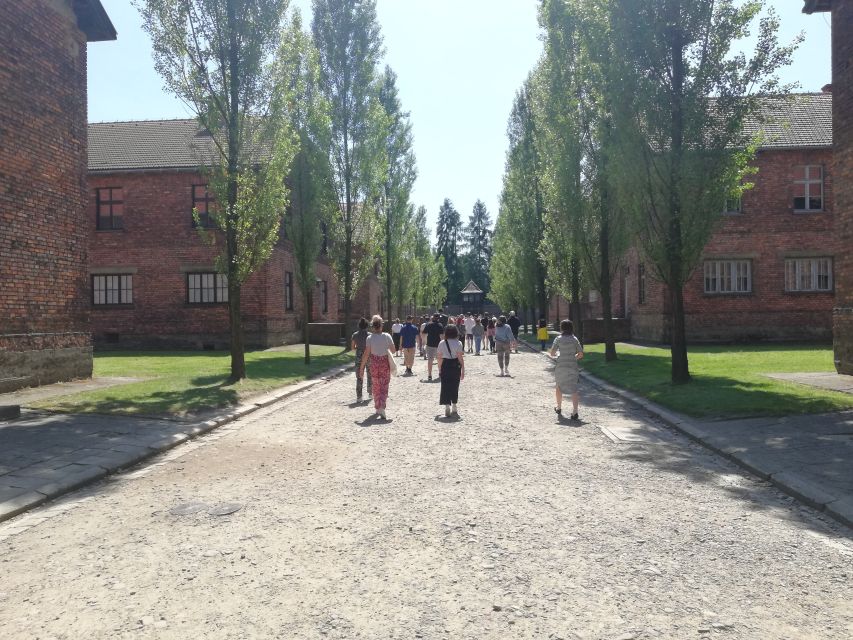
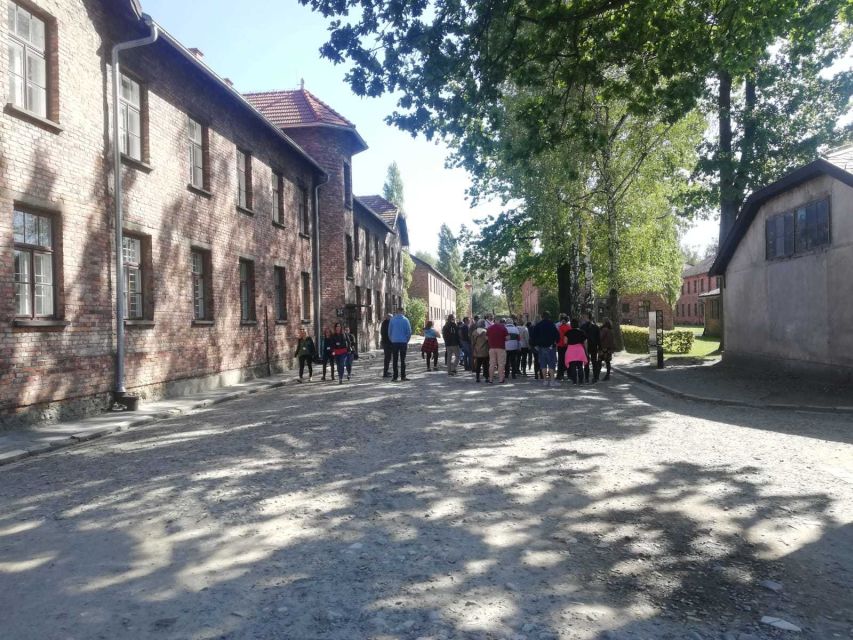
After Judenrampe, you transfer briefly by coach (about 10 minutes), then you arrive at Auschwitz I. Plan on about 1.5 hours for self-guided touring. This is one of the places where the museum experience can feel both structured and emotionally overwhelming.
Auschwitz I matters because it was the largest camp constructed by the Nazis on Polish soil, and it functioned both as a concentration camp and an extermination camp. You’re not just looking at buildings. You’re reading the story through exhibits and personal artifacts, including remnants tied to individual lives.
The best way to make Auschwitz I work for you is to pick a few anchors. You don’t need to see everything to understand what you’re looking at. Use the brochure to guide your route, then spend extra time where the objects feel the most personal. That approach turns the chaos of a big site into something manageable.
One more practical point: this is a site where you will walk. Even if you’re not racing, your body will notice the distance. Comfortable shoes matter more than you think, especially if you’re visiting during cooler months or peak season.
Below are the other Krakow trips we have logged
- From Krakow: Auschwitz-Birkenau Guided Tour & Hotel Pickup★ 4.5 · 33,358 reviews
- From Krakow: Auschwitz-Birkenau Guided Tour & Hotel Pickup★ 4.5 · 29,340 reviews
- Krakow: Auschwitz Guided Tour with Optional Hotel Pickup★ 4.5 · 15,280 reviews
- Krakow: Auschwitz-Birkenau Guided Tour with Pickup & Lunch★ 4.5 · 9,800 reviews
- Krakow: Auschwitz-Birkenau Guided Tour Pickup/Lunch Options★ 4.5 · 9,057 reviews
The short coach hops, and why they’re part of the design
Between Auschwitz I and Auschwitz II, there’s another short transfer (about 10 minutes). These quick bus segments can feel minor, but they help you stay on schedule, and they keep the day from turning into an unplanned route hunt.
Then you arrive at Auschwitz II-Birkenau, the site of the mass executions. This is where the scale can hit you in a different way. It’s not only about objects and buildings, it’s about space, distance, and what that space was used for.
Auschwitz II-Birkenau: the scale, the silence, and the 40-minute reality check
Birkenau is listed at about 40 minutes for self-guided touring. That number is the one you should keep in your head all day, because it shapes your expectations. If you need slow looking, you might feel like you’re speeding even when you’re trying to be respectful.
Still, the value is huge. Birkenau is where the largest concentration-extermination operations were carried out, and it’s the most visually sprawling part of the memorial experience. The combination of remnants and the sheer extent of the site can make the history feel unavoidable.
Since you’re self-guided here, you’re not trapped in a fixed group pace. You can focus on what you came to understand, and you can take breaks when your mind needs a reset. A tour assistant is available to support you during your museum visit, so if you have questions or need directions, there’s backup.
But be honest with yourself about time. Forty minutes can be enough to see the core areas if you plan your route in advance using the brochure, and if you’re okay with leaving some sections for another day. It’s less ideal for anyone who wants to read every caption slowly.
Self-guided with real support, what that usually means in practice
This is not a live-guide tour. There’s no live guide included, and there’s no audio guide included. Instead, you get:
- a tour leader who helps you get admission tickets
- an informative brochure in your language
- a tour assistant available during your visit
- flexibility to explore at your own pace
That format is great when you want control. You’ll spend time only where you choose to stop. You can also avoid the awkward feeling of trailing a group when your brain needs to linger.
Where it can get tricky is ticket flow. The tour includes skip-the-ticket-line wording, and tickets are booked in advance in many cases. But if ticket collection is needed at the museum, you can still face lines in the cold. I’d treat this as a day where waiting can happen, even if the operator is trying to prevent it. In other words, show up on time, and dress for a potentially chilly start.
Transportation and timing: comfort is nice, but don’t plan a late-night recovery
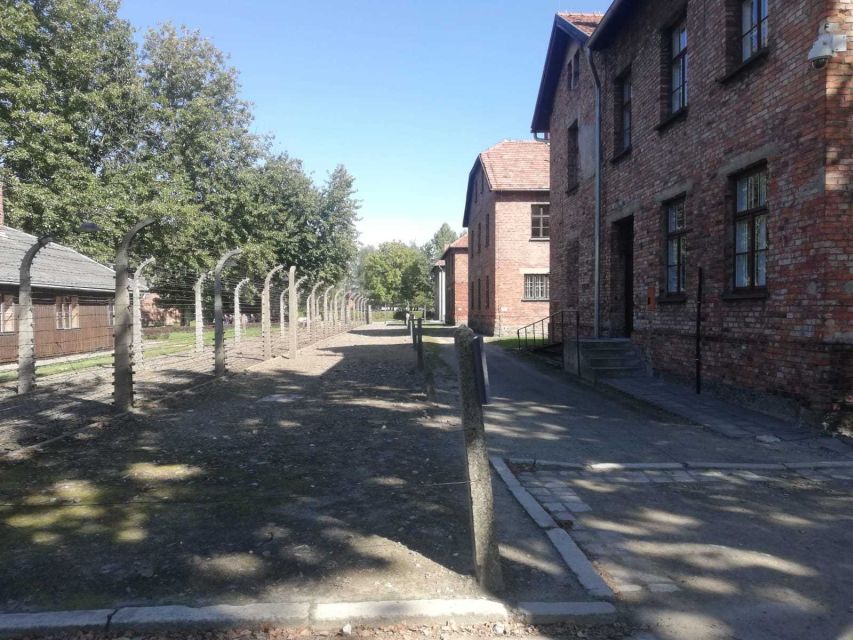
The bus is included round-trip from Krakow. You’ll ride out for about 1.5 hours, stop for around 40 minutes at a local café, then return with about 1.5 hours back to Krakow. The day also includes drop-offs at three locations: Pawia 18b, Pawia 18B, and Wielopole 2.
The practical takeaway is this: plan your day like you’re doing a full itinerary, not a quick excursion. By the time you’re done, you’ll probably feel travel-fatigued even if you kept a steady pace. Bring water, eat something before you go inside, and avoid scheduling anything demanding right after.
Also note the restrictions. You can bring food and drinks, but you can’t bring luggage or large bags. That matters for packing, and it can also matter emotionally, you don’t want to be juggling your bag while you’re trying to concentrate on exhibits.
Price and value: how $21 makes sense for this day
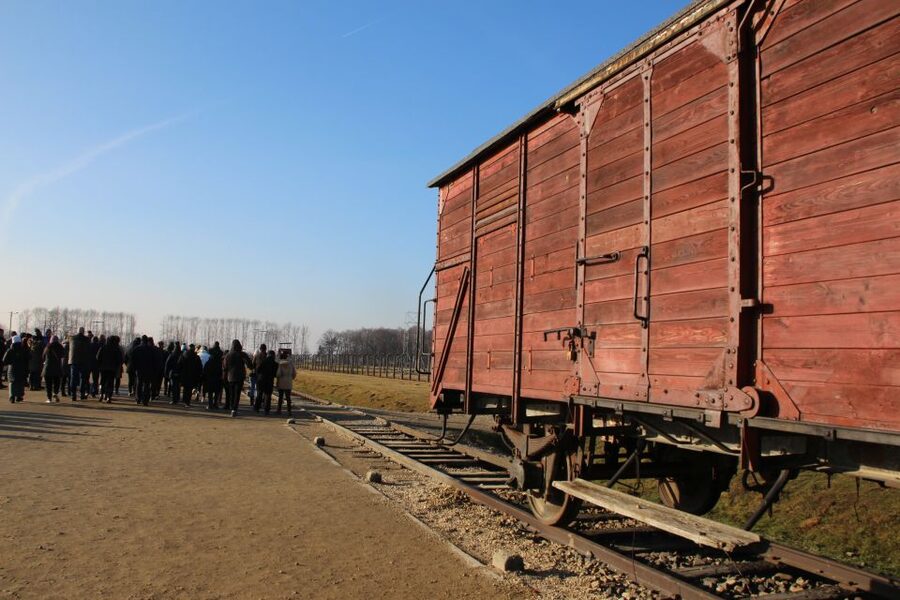
At $21 per person, this is positioned as a budget-friendly way to get to one of the world’s most important memorial sites. On the surface, it’s inexpensive. The value becomes clearer when you break down what’s included.
Your price covers:
- round-trip transportation from Krakow
- entry tickets
- a self-guided brochure
- access to Auschwitz-Birkenau Memorial and Museum, plus Judenrampe
- assistance from staff
A smart detail here is that entry passes for individual visitors without educators are free at Auschwitz-Birkenau Museum. Yet this tour still sells because it packages the logistics that eat your time, like transportation and getting you the right passes and directions. In a day like this, saving mental energy is real value.
Is it perfect value? Not if you need a long, fully guided narrative time at Birkenau. With only about 40 minutes there, this format is more efficient than leisurely. But if you’re prepared for a hard day and you’re comfortable using a brochure to guide your path, the price can feel fair.
Who this tour fits, and who should look elsewhere
This tour is a good match if:
- you want self-guided flexibility rather than following a live guide for the whole day
- you like the idea of using a brochure in your language
- you’re okay with a structured day that still lets you linger when you need to
It may not fit if:
- you need full accessibility support, since it is not suitable for wheelchair users and people with mobility impairments
- you’re traveling with young kids, since it is not suitable for children under ages listed (under 2, 3, 4, 5) and also not for babies under 1
It’s also not the right choice if you want an audio guide or a live educator-led explanation. This experience is built around self-guided reading and on-site support.
Quick practical tips that make the day easier
A few small moves can change the whole experience.
1) Wear shoes you won’t regret. The day includes multiple stops and museum walking, and it’s not the time for sandals.
2) Pack light. Large bags and luggage are not allowed.
3) Bring a passport or ID card, as required.
4) Use the brochure like a route planner, not a textbook. Spend time where you feel pulled in.
5) Don’t cut it close on pickup. Being late can create more waiting stress later.
Also, keep your expectations realistic about time. If you’ve always dreamed of a long Birkenau experience, you may want a different format with more time there.
Should you book this Auschwitz-Birkenau day trip from Krakow?
If you want a cost-effective, organized way to get from Krakow to Auschwitz-Birkenau, this can be a solid booking. The self-guided setup gives you control, and the inclusion of transport, entry tickets, and a language brochure means you spend less time wrestling logistics.
I’d book it if you’re emotionally prepared for a long, heavy day and you’re okay with Birkenau being about 40 minutes in this format. I’d skip it or look for another option if you need a longer Birkenau visit, want a live guide, or have accessibility needs that don’t match the tour restrictions.
FAQ
What does the self-guided part include?
You’ll tour Auschwitz and Birkenau on your own using an informative brochure in your language. A tour leader helps with admission tickets, and a tour assistant is available to support you during your visit.
Is a live guide included?
No. The experience includes assistance, but it does not include a live guide or audio guides.
How much time do you spend at Auschwitz I and Auschwitz II-Birkenau?
You get about 1.5 hours at Auschwitz I. You get about 40 minutes at Auschwitz II-Birkenau. You also spend about 45 minutes at Judenrampe.
Where are the pickup and drop-off locations in Krakow?
Pickup and drop-off options include three bus stops: Pawia 18b, Pawia 18B, and Wielopole 2.
What language is the tour support in?
English is listed for the host or greeter. You also receive a brochure for self-guided touring in your preferred language.
Is food included?
No. The itinerary includes a local café break of about 40 minutes, so you can buy food there. You should bring food and drinks as the tour asks you to.
Are tickets included?
Yes. Entry tickets are included, and the tour includes access to Auschwitz-Birkenau Memorial and Museum.
Is luggage allowed?
No. Luggage or large bags are not allowed.
Is this tour suitable for people with mobility impairments or wheelchair users?
No. It is not suitable for people with mobility impairments or wheelchair users.
What documents do I need to bring?
Bring a passport or ID card.
More Tours in Krakow
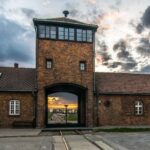
More Tour Reviews in Krakow
Auschwitz-Birkenau: Other Reviewed Visits
Recently written up around Krakow
More Auschwitz-Birkenau Memorial Tours.
 ★ 4.5Auschwitz-Birkenau Guided Tour & Hotel PickupFrom $2133,358 reviews
★ 4.5Auschwitz-Birkenau Guided Tour & Hotel PickupFrom $2129,340 reviews
★ 4.5Auschwitz-Birkenau Guided Tour & Hotel PickupFrom $2133,358 reviews
★ 4.5Auschwitz-Birkenau Guided Tour & Hotel PickupFrom $2129,340 reviews
 ★ 4.5Auschwitz Guided Tour with Optional Hotel PickupFrom $6915,280 reviews
 ★ 4.5Auschwitz-Birkenau Guided Tour with Pickup & LunchFrom $219,800 reviews
 ★ 4.5Auschwitz-Birkenau Guided Tour Pickup/Lunch OptionsFrom $2009,057 reviews
 ★ 4.7Auschwitz-Birkenau and Salt Mine Guided TourFrom $549,020 reviews
 ★ 5.0Krakow to Auschwitz Birkenau Guided Tour with Transfer and TicketFrom $368,197 reviews
 ★ 4.0Auschwitz Birkenau Tour with TransferFrom $216,134 reviews
Also on these Poland lists