
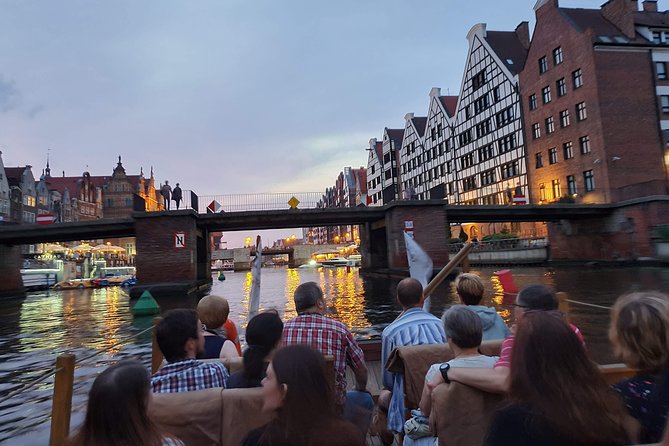
REVIEW · GDANSK OLD TOWN TOURS
Gdansk Guided City Cruise on Historical Polish Boat
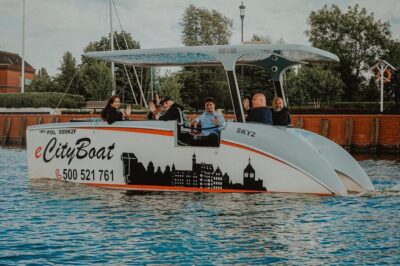
Gdansk looks different from the water. This historical 12-seater boat ride gives you close-up views of Gdansk’s old-world riverside landmarks, plus live guide commentary that keeps the hour moving. You get to pass spots taller ships cannot reach, so the city feels hands-on, not far away.
I especially like the mix of industrial shipyard beginnings and medieval riverfront sights in one smooth loop. I also love the comfort touches that make it practical, blankets on cooler days, and a ride that stays calm and easy for most people.
One thing to consider: it’s an open boat. If you’re sensitive to wind or rain, and if seasickness is a concern, plan accordingly, because you will feel the weather.
In This Review
- Key highlights worth your time
- Why this 12-seater historical boat feels like a smarter way to see Gdansk
- Finding the Dokowa meeting point near the old shipyard
- First sights: Imperial Shipyard mood, cranes, and a u-boat era
- Floating the Motlawa River embankment: gates, the Swan Tower, and the 15th-century crane
- Ołowianka Island: Philharmonic and museum areas from the waterline
- Granary Island and the Blue Lamb granary, plus Green Bridge connections
- What the ride is like: timing, comfort, and when weather matters
- Price, value, and what you’re paying for at about $21.92
- Who should book this cruise and who might skip it
- Should you book the Gdansk guided city cruise?
- FAQ
- How long is the Gdansk guided city cruise?
- Where does the cruise start?
- What do we see during the cruise?
- What time of year is best?
- Is the boat open or enclosed?
- Are blankets and life jackets provided?
- How big are the groups?
- What’s the cancellation policy if plans change?
Key highlights worth your time
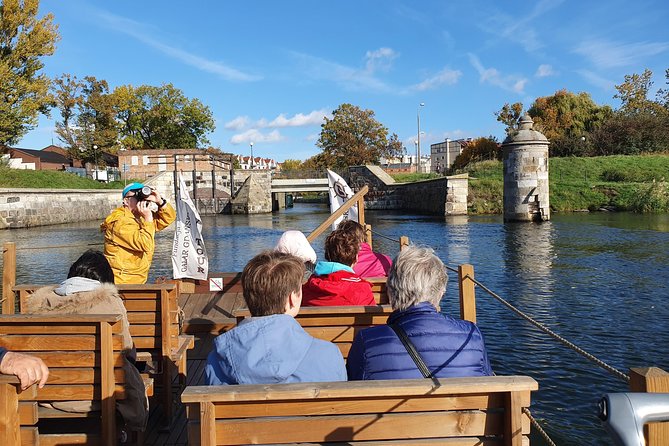
- A small 12-seater size, so you actually hear the guide and see details instead of craning your neck
- Historical Polish river-boat style, built for narrow channels and views walkers miss
- Motlawa River gates and bridges, including the 15th-century crane and the St. Mary and Green Gates
- Island stops with major landmarks, like the Polish Baltic Philharmonic and the National Maritime Museum area
- Comfort on the water, blankets provided for cooler seasons
- Guides who bring the city alive, with stand-out storytelling from people like Simon and Damian
Gdansk repeats itself well. The other versions we reviewed
- Gdańsk City Sights & History Guided Walking Tour in English
★ 4.8 · 876 reviews - Gdansk: Firearm Shooting Experience with Instructor
★ 4.8 · 866 reviews - Gdansk: Guided Round-Trip Cruise to Westerplatte
★ 4.3 · 865 reviews - Gdańsk: Sightseeing EcoCruise around the Old Town of Gdansk
★ 4.6 · 719 reviews
Why this 12-seater historical boat feels like a smarter way to see Gdansk
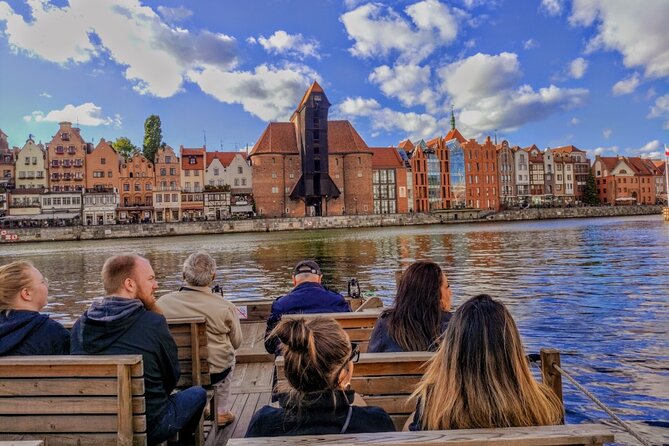
Big sightseeing boats can be fun, but they often turn the city into a distant postcard. This cruise stays small, with a 12-seater layout that makes it easier to focus on what matters: the riverfront details, the bridges, the gates, and the shapes of the buildings along the Motlawa.
The boat is based on a model used on Polish rivers for centuries. That matters because it is built for the kind of waterways and clearances you get in older cities. You are not just touring from the water, you are threading the river in a way that keeps you close to the places that define Gdansk.
Pace is another quiet win. You get about 1 hour 10 minutes, which is long enough for a satisfying loop but short enough that it does not swallow your day. And with live commentary, you are not stuck guessing what you are looking at when the scenery slides by.
Finding the Dokowa meeting point near the old shipyard
The cruise starts at Dokowa 1, 80-863 Gdańsk, and it ends back there. The start area sits by the former Imperial Shipyard, and it also stays close to today’s active shipbuilding environment, so the setting already hints at what the guide will connect for you.
This is one of those times where I say give yourself a little margin. The walk can be a bit out of the way, and the path is not always obvious at first glance. If you’re arriving on foot, I recommend arriving early and checking your route before you’re in a hurry.
There is also a practical advantage here. Being near port and public transport makes it easier to slot this into your day, even if you are juggling other sights. And since the tour uses a mobile ticket, you do not need to hunt for paperwork once you arrive.
First sights: Imperial Shipyard mood, cranes, and a u-boat era
The opening stretch sets a strong tone. You start near the former Imperial Shipyard, a place tied to u-boat production, and the atmosphere is clearly industrial. That contrast is part of the charm, because Gdansk is not only medieval stone. It’s a working maritime city.
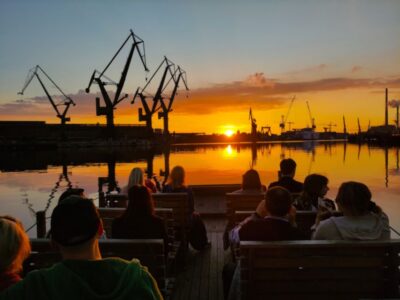
As you glide out, you’ll see characteristic Gdansk cranes, specialized ships, and yachts. Even if you are not a port-spotting nerd, this helps you understand why the city grew where it did, and why so much of Gdansk’s power story is tied to water.
Guides often bring these early stops to life with humor and storytelling. Names like Simon and Damian show up in the best experiences I saw, and their common thread is delivery that feels like you’re getting a guided walk, just with better angles. You get the feeling of history as something practical, not just a list of dates.
Floating the Motlawa River embankment: gates, the Swan Tower, and the 15th-century crane
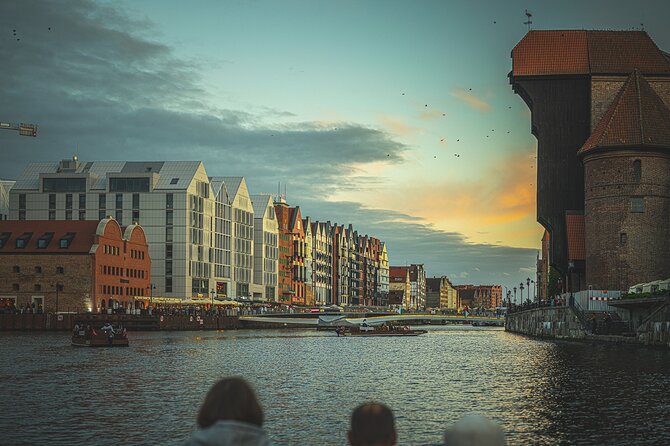
Once you’re cruising along the long Motlawa River embankment, the tour becomes visual fast. This stretch is where you see the riverfront landmarks that define old Gdansk’s identity, and you also see how the city’s power was expressed through walls and gates.
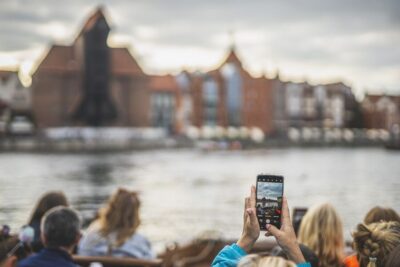
You’ll pass the remains of the Teutonic Castle wall, with the Swan Tower in the mix. Then comes the run of water gates leading into the city, including the famous 15th-century crane. From the boat, the crane does not feel like a single monument. It reads like part of a working system that once moved goods and people along the river.
Keep an eye out for the gates the guide highlights: St. Mary’s Gate and the Green Gate. From the water, you get a more layered view of their setting, how they sit relative to the embankment and river bends. That context is hard to recreate from street level, where buildings compete with each other for attention.
This part of the ride is also a good time to ask questions. If something feels unclear, like how the water gates connect to the city layout, the live commentary is your fastest way to turn sightseeing into understanding.
Below are the other Gdansk trips we have logged
- Gdańsk: Motlawa River Yacht Cruise★ 4.6 · 272 reviews
- Gdansk: Scenic Evening Yacht Cruise with Welcome Drink★ 4.4 · 234 reviews
- Gdansk Guided City Cruise on Historical Polish Boat★ 4.5 · 230 reviews
- Gdańsk: Scenic Sunset Cruise with Welcome Drink★ 4.3 · 220 reviews
- Gdańsk: Motława River Eco Cruise at Sunset with Prosecco★ 4.8 · 142 reviews
Ołowianka Island: Philharmonic and museum areas from the waterline
After the main riverfront pass, the cruise moves toward Ołowianka Island, and the feel changes again. This island has had different uses over time, so it works as a quick lesson in how Gdansk shifted with changing needs.
On Ołowianka Island, you’ll see places including the Polish Baltic Philharmonic, the Royal Granary, the National Maritime Museum, and Stonemason’s Bridge. Even if you do not plan to enter buildings, the view helps you place what you might want to visit later. The boat acts like a moving map, but one you get to watch unfold in real time.
The best way to enjoy this stop is simple: look for the bridge lines first. Bridges reveal how people connect neighborhoods, and they also hint at why certain buildings were built where they were. When you notice those connections, the island stops feeling random and starts feeling intentional.
Also, this is a great area for photographs because you get angles that streets usually block. If you like city photos with story, the Ołowianka stretch is one of the tour’s highlights.
Granary Island and the Blue Lamb granary, plus Green Bridge connections
From there, the cruise includes Granary Island, linked to the main old town area by the Green Bridge. The name is a clue: the island historically functioned as a storehouse where goods were kept. You’re not just hearing a fact, you’re seeing why that role mattered in a port city.
On the island, you’ll spot the remains of old granaries, including the best preserved granary called Blue Lamb. What I like about this part is that it makes economics visible. A city built on shipping, trade, and distribution leaves physical traces, and the granaries are some of the clearest ones.
The tour also points out the modern incarnation of the area, including the reconstruction of the island after the Second World War. That adds balance, because you’re seeing both what survived and what was rebuilt. For many visitors, this is the moment the city starts to feel like a living place rather than a museum of the past.
If you like historical details tied to specific places, this island segment is a strong payoff. It also pairs well with the earlier shipyard introduction, because you can mentally connect industry, storage, and city access along the same waterways.
What the ride is like: timing, comfort, and when weather matters
The whole experience runs about 1 hour 10 minutes. That’s a sweet spot. You get enough time to cover shipyard to river gates to the island loop without getting tired before dinner plans.
The boat itself is open, but comfort is clearly part of the design. Blankets keep you snug during cooler times of year, and life jackets are available. On a calm day, the ride feels smooth and the views stay steady.
One practical note: the cruise is dependent on weather. If it’s canceled due to poor conditions, you’ll be offered another date or a full refund. And because it’s open water, windy or rainy weather can change the experience. If you’re the type who gets uncomfortable in cool wind, bring a layer you can trust.
Also, expect small variations in pacing. On one ride, the group paused behind a lock gate for about 20 minutes, and it turned into part of the entertainment rather than a problem. You might find yourself in a similar situation, so do not plan this tour as a tight-to-the-minute connection with another activity.
If seasickness is a concern, take it seriously. The tour does mention seasickness as a consideration, which is your clue to pack your usual remedy if you’ve needed one before.
Price, value, and what you’re paying for at about $21.92
At $21.92 per person, this cruise is priced like a budget activity, but it delivers more than a quick sightseeing loop. The value comes from three things.
First, you’re paying for a live guide, not just a recorded audio track. The commentary is a big part of why people come away feeling like they learned more than they expected in an hour.
Second, you’re paying for water access. In Gdansk, the riverfront landmarks are the star, and a boat puts you at working angles to see gates, cranes, and embankments that walking tours only partially reveal.
Third, you’re getting comfort help. Blankets sound small, but they extend the season when the cruise is enjoyable. That can turn a cold, gray afternoon into something worth doing.
You also get a clean, simple time commitment. With an hour and change, this works even on days when you’re trying to fit in multiple neighborhoods without burning your whole schedule.
Who should book this cruise and who might skip it
I think this tour is a great fit if you want an easy first introduction to Gdansk. You’ll see key medieval and port-era landmarks in one ride, and the live storytelling helps you connect what you see to what it meant.
It’s also a nice choice for people who do not want a museum day. You get historical context while staying outdoors, with views that change every few minutes.
This might not be your best pick if you hate open boats or if you get seasick easily. The experience requires good weather, and the boat design means you feel wind and water conditions.
For families, couples, and solo travelers, the small group size keeps it friendly and manageable. And because the service animals policy allows service animals, it also fits more travel styles than some strict sightseeing formats.
Should you book the Gdansk guided city cruise?
If you’re doing Gdansk for the first time, I’d book this. It’s one of the quickest ways to build real orientation, because you see shipyard industrial Gdansk and old-town gate Gdansk in a single loop.
If your schedule is tight, this is also a smart anchor activity. Start at the water, get the stories, then use what you learned as you walk through the city afterward.
If you’re traveling in a season where rain and wind are common, check the forecast and take it seriously. When conditions are good, the cruise is a relaxing way to see landmarks you cannot easily match from land.
FAQ
How long is the Gdansk guided city cruise?
It lasts about 1 hour 10 minutes.
Where does the cruise start?
The meeting point is Dokowa 1, 80-863 Gdańsk, Poland. The tour ends back at the same meeting point.
What do we see during the cruise?
You cruise along the Motlawa River embankment and see key waterfront sights, then continue around Ołowianka Island and Granary Island. Stops include areas such as the 15th-century crane, St. Mary’s Gate, Green Gate, and island landmarks like the Polish Baltic Philharmonic and the National Maritime Museum area.
What time of year is best?
The experience requires good weather. In cooler times of year, blankets are provided.
Is the boat open or enclosed?
It is an open small boat, so weather conditions matter.
Are blankets and life jackets provided?
Blankets are provided to keep you snug. Life jackets are available.
How big are the groups?
The tour has a maximum of 48 travelers.
What’s the cancellation policy if plans change?
Cancellation is free up to 24 hours in advance for a full refund. If you cancel less than 24 hours before the start time, you will not receive a refund.
More Cruises & Boat Tours in Gdansk

More Tour Reviews in Gdansk


Gdansk, Three More Ways
Recently written up around Gdansk





More Gdansk Old Town Tours.
 ★ 4.8City Cruise on Historical Polish BoatFrom $222,913 reviews
 ★ 4.9Sunset Cruise on a Historic Polish BoatFrom $26977 reviews
 ★ 4.8Gdańsk City Sights & History Guided Walking Tour in EnglishFrom $26876 reviews
 ★ 4.8Firearm Shooting Experience with InstructorFrom $41866 reviews
 ★ 4.3Guided Round-Trip Cruise to WesterplatteFrom $33865 reviews
 ★ 4.6Sightseeing EcoCruise around the Old Town of GdanskFrom $19719 reviews
 ★ 5.0Main Town Gdańsk Walking TourFrom $26644 reviews
 ★ 5.0Gdansk Pub Crawl with Free DrinksFrom $21553 reviews
Also on these Poland lists