
REVIEW · GDANSK OLD TOWN TOURS
Gdańsk Old Town Private Walking Tour with Legends and Facts
Gdańsk gets real fast on foot. This private Old Town walking tour mixes street-level stories with clear history so the city feels understandable, not overwhelming. I love that you’re not stuck in a script, you can ask questions as you go.
One big plus is the mix of major sights in a single outing, including the Town Hall area and Arthur’s Court.
The route also makes great use of your time, pairing the classic long-stroll landmarks with Solidarity-era places that many first-time visits miss. I also like how the pacing stays human, not a sprint, so you can actually look up and read details.
The only real drawback to plan around is walking time, since the tour runs roughly 2 to 6 hours and includes longer indoor stops at churches and museums.
In This Review
- Key things that make this tour worth your time
- Private walking tour, not a group shuffle
- Upland Gate start: Brama Wyzynna sets the medieval tone
- Długa Street and the Long Market: Town Hall, Golden Gate, Neptune’s Fountain
- Artus Court (Dwor Artusa): where merchants gathered
- Motława River embankment views at Długie Pobrzeże
- St. Mary’s Basilica: huge brick church energy
- Great Armoury finish: Renaissance architecture that rewards slowing down
- Wyspa Spichrzow on the Motława islands: the trade-warehouse story
- St. Bridget’s Church (Kosciol sw. Brygidy): Solidarity scenes and an amber altar
- The 1970 worker memorial and the European Solidarity Centre
- Price and value: what $107.89 really buys
- How your guide shapes the day
- Practical tips so you enjoy every stop
- Should you book this Gdańsk legends-and-facts Old Town tour?
Key things that make this tour worth your time
- Private guide, private questions along the way, not just photo stops
- Gdańsk Old Town highlights in one loop, with Town Hall and Neptune’s Fountain
- Arthur’s Court gives you context for the merchants who shaped the city
- St. Mary’s Basilica plus the Renaissance Great Armoury finish point
- Wyspa Spichrzow trade-story walk across the Motława River islands
- European Solidarity Centre and the worker memorial for modern history without the heaviness getting chaotic
Gdansk repeats itself well. The other versions we reviewed
- Gdańsk City Sights & History Guided Walking Tour in English
★ 4.8 · 876 reviews - Gdansk: Firearm Shooting Experience with Instructor
★ 4.8 · 866 reviews - Gdansk: Guided Round-Trip Cruise to Westerplatte
★ 4.3 · 865 reviews - Gdańsk: Sightseeing EcoCruise around the Old Town of Gdansk
★ 4.6 · 719 reviews
Private walking tour, not a group shuffle
If you want Gdańsk to click, a private walk helps. You can slow down when something catches your eye, and you can speed up when you just want the facts. That matters in Old Town, where streets tighten, crowds shift, and the best views often come from stepping a few meters left or right.
This is also a smart format for first-time visitors. You get a guided path through the places you would otherwise feel unsure about, like what you’re looking at and why it mattered. And because it’s only your group, you avoid the slow-motion effect of everyone regrouping.
Upland Gate start: Brama Wyzynna sets the medieval tone
The tour kicks off at the main entrance to the medieval city wall, Upland Gate (Brama Wyzynna). This isn’t just a convenient landmark. It’s your first clue that Gdańsk grew up as a fortified port city, not a random collection of pretty streets.
The good news is that this start point is easy to find, and admission here is free. You’ll get a mental map right away, which helps later when you’re walking Długa Street and realizing how the Old Town layout connects.
Długa Street and the Long Market: Town Hall, Golden Gate, Neptune’s Fountain
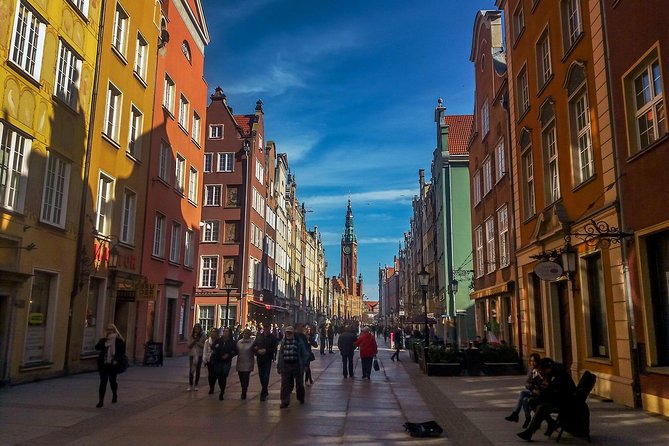
From the gate area you continue past Langgasser Tor, also called Golden Gate (Goldenes Tor), and move along Długa Street into the Long Market. This is the heart-of-it part of Gdańsk Old Town, the zone where architecture is doing its job, showing wealth, power, and trade connections.
Expect stops and time for major sights such as the Gdańsk Town Hall, the Golden House, and Neptune’s Fountain. These are the classic scenes people photograph, but the value here is that your guide helps you read the buildings, not just pass them.
Also note the time block you get here is about an hour, which is enough to see the key façades without feeling rushed into the next location. And the good part: admission for this segment is free.
Practical tip: bring a phone with good map skills, but use your guide for orientation. Once you know the “spine” of the Old Town streets, everything else gets easier.
Artus Court (Dwor Artusa): where merchants gathered
Next you’ll visit Artus Court, now a branch of the Gdańsk History Museum, and this stop is about local history tied to real daily life. The name sounds like fantasy to some people, but the idea is grounded in the merchant culture that shaped the city.
You’ll get around 20 minutes here. That’s not a long museum visit, so I’d treat it as a foundation stop. You’re learning what kind of city Gdańsk was before you go deeper into religious and political history later.
Admission for this part is free, which helps you feel like you’re actually getting value without paying extra just to get context.
Below are the other Gdansk trips we have logged
- Main Town Gdańsk Walking Tour★ 5.0 · 644 reviews
- Discover Gdansk Walking Tour★ 5.0 · 495 reviews
- Gdańsk: Old Town Private Walking Tour with Legends and Facts★ 4.9 · 245 reviews
- Gdansk Old Town 2-Hour Walking Tour★ 4.5 · 94 reviews
- Gdansk Old Town Half-Day Private Walking Tour★ 4.9 · 62 reviews
Motława River embankment views at Długie Pobrzeże
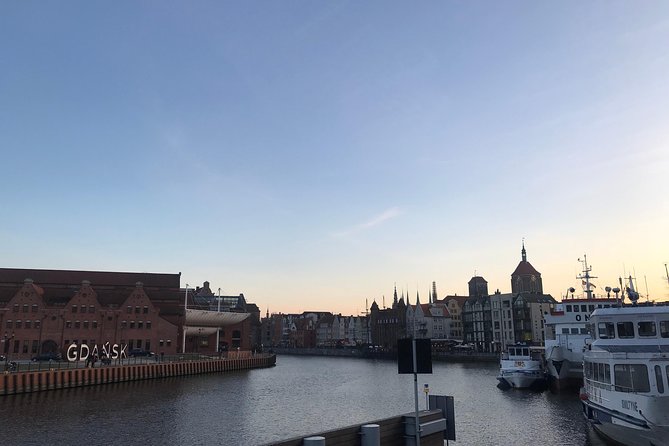
When you reach the Motława River embankment (Długie Pobrzeże), the tour shifts from “read the buildings” to “look at the city’s lifeline.” You’ll follow your private guide toward the Green Gate area for scenic views along the river.
This is the kind of stop that breaks up a heavy walk. Even if you’re not a river person, it helps you understand why Gdańsk’s trade story could grow into a power story.
One thing to plan: admission here is not included. That doesn’t mean you’ll be blocked from seeing anything, but it’s the only segment in this plan that signals an extra cost might apply.
St. Mary’s Basilica: huge brick church energy
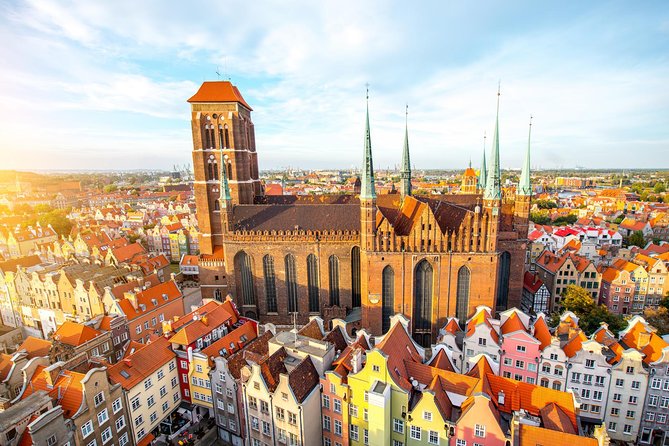
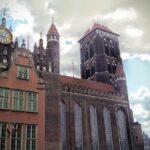
Then comes St. Mary’s Basilica, and yes, it’s one of the biggest brick churches in the world. What I appreciate about adding this stop is that it shifts your understanding from civic trade and merchant halls to spiritual life and public space.
You’ll step inside to see the grand hall, the ornate altar, the organ setup, and the royal chapel. There’s also a real practical payoff: the guide helps you time your visit so you can be in the right place for the clock show at the end.
Admission is free for this segment, which makes it easier to justify the stop as a must-see.
Great Armoury finish: Renaissance architecture that rewards slowing down
The walking tour ends near the Great Armoury, a standout example of Renaissance architecture. This finish works well because it’s a strong visual landing after St. Mary’s.
You get about 20 minutes here. That’s long enough to notice details without turning it into homework. If you like architecture, this is where the city’s layers start to feel connected: medieval street structure, merchant power, and later artistic influence.
Admission is free for this stop.
Wyspa Spichrzow on the Motława islands: the trade-warehouse story
The extended route takes you onto the islands in the Motława River, including Wyspa Spichrzow. This is where you get a different angle on Gdańsk, away from the main “cardboard cutout” Old Town view and toward the story of warehouses, trade storage, and port logistics.
You’ll walk through the redeveloped island area where you can see old brick structures and warehouse ruins. And you’ll connect what you saw earlier with why it all mattered: trade isn’t only people and ships, it’s the storage and movement systems that supported a city’s wealth.
Time here is about an hour, and the admission ticket is included. If you’re trying to pick one option between a short and long tour window, this is the part that most often turns a highlights walk into a deeper sense of place.
Also, you’ll pass Ołowianka Old Town, where the Baltic Symphony Hall is a beautiful modern contrast to the older brick shapes around it.
St. Bridget’s Church (Kosciol sw. Brygidy): Solidarity scenes and an amber altar
This is the stop that changes the mood. St. Bridget’s Church is known as a sanctuary for leaders of Solidarnosc under martial law. That alone makes it worth your attention, but the details are what give it weight.
On the huge church door, you can see Solidarity scenes from August 1980 until the imposition of martial law in December 1981. And inside you’ll find religious artifacts plus a remarkable amber altar made from the region’s most recognizable raw material.
The visit time is about two hours, and the admission ticket is included. That length is meaningful. It gives you space to read, look, and take in what is being memorialized, without feeling shoved through.
The 1970 worker memorial and the European Solidarity Centre
If you want the modern history side without confusion, this part is key. You’ll visit the Monument to the Fallen Shipyard Workers of 1970, then head into the European Solidarity Centre.
The monument is a direct remembrance. It commemorates workers who died during the anti-communist riots. It’s not a place for casual wandering, so your guide’s framing helps you understand what you’re seeing.
Then the European Solidarity Centre brings it into a wider story. You’ll learn about the Solidarity riots and how the trade union movement helped initiate the end of communist government in Poland. This is the kind of museum that many people find makes later headlines feel less abstract.
Time here is about 30 minutes at each segment, and the centre admission is included. If you’re a history geek, you’ll likely want more time. If you’re not, the guided context helps you keep up.
Price and value: what $107.89 really buys
At $107.89 per person, this tour isn’t the cheapest way to see Gdańsk. But it’s not only about “access.” It’s about a private guide who can turn a pile of landmarks into an actual story.
You’re paying for three things:
- Time efficiency across Old Town highlights plus the Solidarity-era sites
- Curated pacing so you don’t waste minutes figuring out what to prioritize
- In-town interpretation for places that can feel confusing without context, like Artus Court and the Solidarity Centre
Also, most of the stops here have free admission, which helps keep your out-of-pocket costs under control. The ones flagged as included, like Wyspa Spichrzow, St. Bridget’s Church, and the European Solidarity Centre, are the heavier stops where included entry adds real value.
Finally, you’ll often see tours like this get booked early. This one is typically booked about 85 days in advance, which tells me demand is steady. If you’re traveling in peak season or with fixed plans, booking early is a smart move.
How your guide shapes the day
Because it’s private, the guide matters. In real-world feedback tied to this experience, guides named like Kaja, Elwira, Thomas, Marta, Joanna, and Marek are praised for bringing humor and local perspective into the walk, not just reciting dates.
You’ll likely feel that difference in two ways:
1) You’ll get answers to the questions you didn’t know you’d have, like what certain buildings symbolized and how different eras connected.
2) You’ll have flexibility. Some guides have adjusted pace to match a group’s needs, and some have added small side stops when time allows.
One consideration: not every guide will match every person’s language needs. English is offered, but if you require very precise communication, I’d suggest you plan to confirm that before you show up. Also, meet at the right spot and check the email information sent the day before, because starting location errors can derail the first 15 minutes of any tour.
Practical tips so you enjoy every stop
Gdańsk is easiest when you dress for walking and changing weather. Wear comfortable shoes. The Old Town streets are not designed for slow rolling and your legs will do most of the work.
A second practical tip: expect a rhythm of outdoor sights, then indoor history, then back outside. That’s built into the mix of churches and museums. If you’re sensitive to long indoor waits, tell your guide early so you can optimize timing.
If you’re doing the extended route, build in mental stamina. The day covers both classical Old Town and modern political history. The payoff is that you leave understanding more than postcard Gdańsk.
Should you book this Gdańsk legends-and-facts Old Town tour?
I think you should book it if you fall into any of these groups:
- You’re a first-time visitor who wants Old Town orientation fast
- You like history that connects architecture, trade, and politics
- You want a private format where you can ask questions and set the pace
- You want both classic highlights and the Solidarity story without piecing it together alone
I’d hesitate if you hate walking or you prefer a lighter day focused only on scenic streets. This tour includes churches and museums, and the longer options can feel like more of a history day than a relaxed stroll.
If you want Gdańsk with meaning, this is a strong pick. You’ll see the famous places, then you’ll understand what they were doing in the city’s long arc.
More Tours in Gdansk


More Tour Reviews in Gdansk



Gdansk, Three More Ways
Recently written up around Gdansk





More Gdansk Old Town Tours.
 ★ 4.8City Cruise on Historical Polish BoatFrom $222,913 reviews
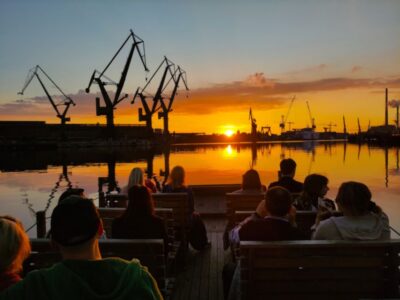 ★ 4.9Sunset Cruise on a Historic Polish BoatFrom $26977 reviews
 ★ 4.8Gdańsk City Sights & History Guided Walking Tour in EnglishFrom $26876 reviews
 ★ 4.8Firearm Shooting Experience with InstructorFrom $41866 reviews
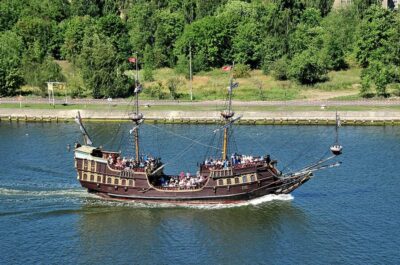 ★ 4.3Guided Round-Trip Cruise to WesterplatteFrom $33865 reviews
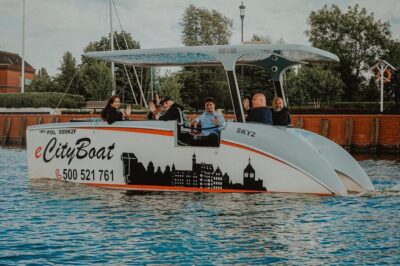 ★ 4.6Sightseeing EcoCruise around the Old Town of GdanskFrom $19719 reviews
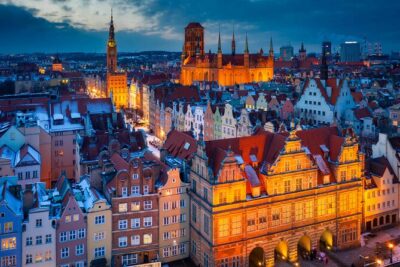 ★ 5.0Main Town Gdańsk Walking TourFrom $26644 reviews
 ★ 5.0Gdansk Pub Crawl with Free DrinksFrom $21553 reviews
Also on these Poland lists