
REVIEW · TRAIN EXPERIENCES
In 10 days around Poland – by train, with hotels and local tours
A rail trip that does the heavy lifting for you. This 10-day Poland loop strings together big-hitters like Warsaw’s Royal Route, Gdansk and the Solidarity shipyard, and a final half-day decision near Krakow. You move city to city by 1st-class train, and local guides handle the walking parts.
Two things I like a lot are the built-in city context with local guides, and the practical logistics, meet-and-greet pickups, and central hotels that keep your day from turning into bus-tag. I also appreciate the small-group limit, max 10 travelers, because it feels easier to ask questions and adjust.
One consideration: the schedule is busy. You get mornings plus guided blocks, then you’re on your own in the afternoons, so you’ll want moderate stamina and a flexible mindset for travel days.
In This Review
- Key things to know before you go
- How this train loop around Poland actually works
- Price and value: what $3,900 gets you and what it does not
- The Warsaw half-day that gives you bearings fast
- Gdansk history plus the Oliva organ concert
- Malbork Castle: one of the most dramatic day trips in the loop
- Poznan: cathedral, town hall, and old-town polish
- Wroclaw: riverside city energy and the Aula Leopoldina
- Krakow’s Old Town focus, Rynek Glowny, and Wawel
- Day 10 choice near Krakow: Auschwitz-Birkenau, Wieliczka, or Kazimierz
- Hotels, meals, and how to use your free afternoons well
- The people factor: what makes the trip feel organized
- Practical tips to get the most from this Poland-by-train route
- Should you book this rail tour around Poland?
Key things to know before you go
- 1st-class trains between major cities so you spend less energy on long transit.
- Central 3-star and 4-star hotels with breakfast included for 9 days.
- Guided walking tours with admission support on key sights, plus free-time for your own pace.
- Gdansk plus Oliva organ concert for a mix of history and music.
- Malbork Castle visit as a real change of scenery from Baltic cities.
- Day 10 is a choice day: Auschwitz-Birkenau, Wieliczka Salt Mine, or Kazimierz.
Weighing options? These Warsaw write-ups sit closest to this one.
- Warsaw: Chopin Concert in the Old Town
★ 4.8 · 2,287 reviews - Warsaw: Traditional Galar Cruise on The Vistula River
★ 4.6 · 1,640 reviews - Warsaw: Old Town Highlights Walking Tour in English
★ 4.7 · 1,516 reviews - Warsaw Concert: Chopin – Painted by Candlelights with Wine
★ 4.8 · 1,442 reviews
How this train loop around Poland actually works
If you want the highlights, but you do not want to plan like a project manager, this style of trip is made for you. The route covers a clean arc from Warsaw down to Krakow, then loops through Gdansk, Malbork, Poznan, and Wroclaw. You get a new base each night, and you travel by train rather than stacking all your time in cars or mini-buses.
Here’s what makes it feel efficient: you are rarely figuring out the next step alone. A driver meets you at the arrival station or airport, you transfer to your hotel, then a local guide leads the main walking portion. In the background, the trains do their job, including direct routes on several days.
I also like that the group stays small, max 10. That matters for questions, pacing, and not feeling like you are disappearing into a crowd. Plus, the tour is offered in English, and you receive a mobile ticket, which keeps day-to-day details simpler.
Price and value: what $3,900 gets you and what it does not
$3,900 per person sounds like real money, so you should ask: what are you buying? In this case, you are buying a lot of the expensive friction points.
What’s included:
- Accommodation in 3-star and 4-star hotels
- Breakfast for 9 days
- 1st-class train tickets between cities
- Local guides and drivers
- Admission tickets on several major days (depending on the stop)
- Air-conditioned vehicles for transfers where they apply
What’s not included:
- Dinners (you plan and pay your own meals)
So the value logic is this: you pay once for the structure, then you spend your energy on the sights and experiences. If you tried to plan the same mix of cities, first-class rail, and timed guided visits yourself, you would likely spend time and money you did not intend to spend.
Also, note the “mostly included” rhythm. You do not get pulled into a long list of paid optional extras every day. The biggest decision point is on Day 10, where you choose between major cultural and history experiences.
The Warsaw half-day that gives you bearings fast
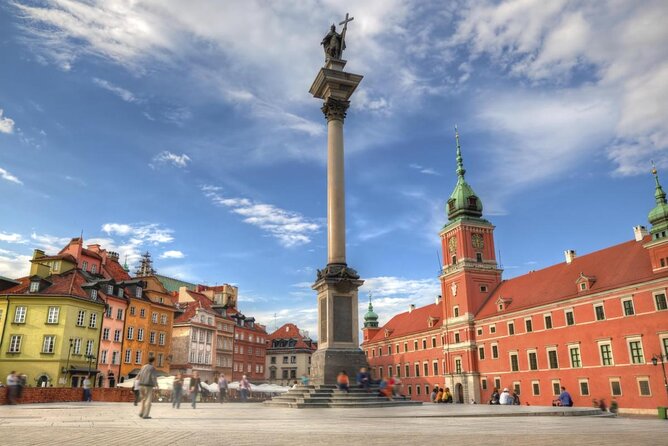
Warsaw can feel big and rebuilt, and that’s exactly why a guided Old Town block is useful. You start with a half-day tour built around the core landmarks: the Royal Castle, the Royal Route, Old Market Square, the Barbican, Krakowskie Przedmiescie, and then the Lazienki area with its gardens plus the Palace on the Water.
The practical benefit: you get to walk the city’s story in a short span. You are not trying to connect dots in a single afternoon after a travel day. You land, you settle in, and then you get a guided orientation that makes your later strolls make sense.
Then you get downtime. After your tour, you are free to relax and explore on your own. For me, that is the right balance. It gives you energy for Day 3 when you switch over to a Baltic-focused pace.
A small reality check: half-day tours move briskly. If you want long museum time, plan to return later or keep your afternoon flexible.
Gdansk history plus the Oliva organ concert
Gdansk is where Poland’s modern history feels very close. Your day begins with transfer to the station and a direct train to Gdansk. Once you arrive, you check in, then the next day becomes your deep-historic walking day.
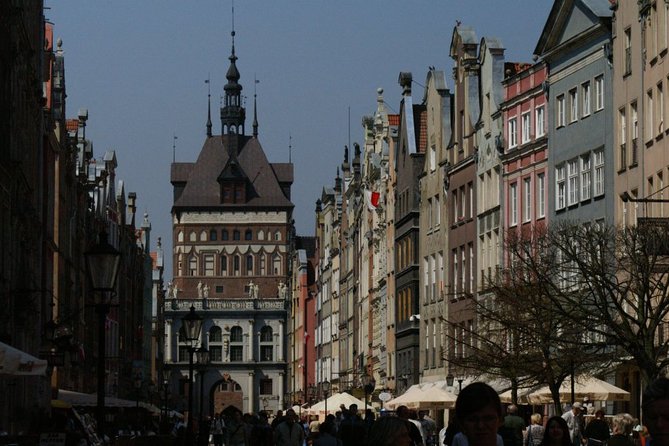
Your Gdansk guided highlights include the Golden Gateway, Neptun’s Fountain, Artus Court, Uphagen house, Dluga Street, Mariacka Street, the wooden Crane on the Motlava River, and the Solidarity Monument at the Gdansk Shipyard. That list tells you what you are getting: architecture and street texture, but also labor, identity, and political turning points.
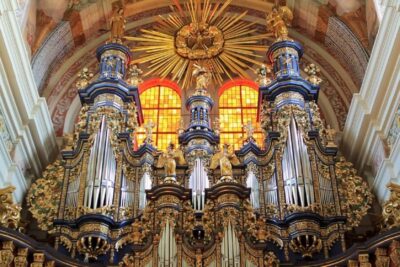
Then comes the music. You visit Oliva for an organ music concert in the Oliva Dome, tied to the famous organs there. This is a smart contrast day. History in the morning, sound and ceremony in the afternoon.
If you like when a trip changes gears, this is one of those moments. Organ concerts can be quiet and reflective, and they give you something Poland has a reputation for, music that feels grown-up and serious.
One practical note: concerts often come with strict start times. Keep your group schedule in mind, and do not plan to wander too far right before the concert.
- Warsaw: City Sightseeing Hop-On Hop-Off Bus Tour★ 3.6 · 1,415 reviews
- Warsaw: POLIN Museum of the History of Polish Jews Ticket★ 4.7 · 1,142 reviews
- #1 Pub Crawl Warsaw with Optional Premium 1 Hour Open Bar★ 5.0 · 790 reviews
- Warsaw: Polish Vodka Museum Tour with Tasting★ 4.6 · 788 reviews
- Chopin Concerts at Fryderyk Concert Hall★ 4.7 · 687 reviews
Malbork Castle: one of the most dramatic day trips in the loop
Malbork is the type of place that makes you stop saying “cool” and start saying “wow.” You travel from Gdansk, and you get a half-day guided visit to the massive medieval brick castle. It is one of Poland’s major highlights, and it is also the kind of sight that makes other ruins feel small.
You also have a built-in option for lunch at the castle restaurant. That is a nice detail because it reduces decision fatigue. You can eat in place, then return to Gdansk with your feet still under you.
In the afternoon, you go back for downtime, plus time for gift shopping or private walks. I like that structure because Malbork is intense visually. You need that breathing space after.
A consideration: half-day castle visits are great for first-time experiences, but if you want to study every room, you might want more time. Still, for most people, this amount of guided time is the right ratio.
Poznan: cathedral, town hall, and old-town polish
Poznan is known as a fairs center, but your tour focuses you on the city’s historic core. You travel by direct train, check in, then enjoy an afternoon guided walk.
Your highlights include the Cathedral, the Renaissance Town Hall, and the Baroque Church of St. Mary Magdalene. That mix gives you a sense of how Poznan grew over centuries. You are not stuck in one architectural period, and you can see transitions in style while you walk.
If you want a quieter city than the big tourist magnets, this stop works well. It gives you a different rhythm, less monument overload, more “city life you can picture.”
The afternoon format also helps. You see the big landmarks with a guide, then you can choose your own pace afterward.
Wroclaw: riverside city energy and the Aula Leopoldina
Wroclaw is a city I recommend when you want something more personal than the usual postcard track. You arrive by direct train, transfer to your hotel, and then the following morning you get a guided city tour.
The tour includes Ostrów Tumski with the Cathedral, the University and its Baroque Aula Leopoldina, and then a stroll around the Market Square with restored tenement houses and the Gothic City Hall. That combination matters because it mixes sacred space, scholarship, and street-scale detail.
Also, Wroclaw is a river city. Even if you are not doing a boat ride on this specific plan, the geography of the place influences how you move and where views pop up. Expect pleasant walking and photo angles around the old core.
Your afternoon is then free for private time. This is a good window for food and wandering without a timer.
Krakow’s Old Town focus, Rynek Glowny, and Wawel
Krakow is the grand finale that feels worth the effort. You travel by direct train into Krakow, check in, then get a half-day guided tour centered on the Old Town.
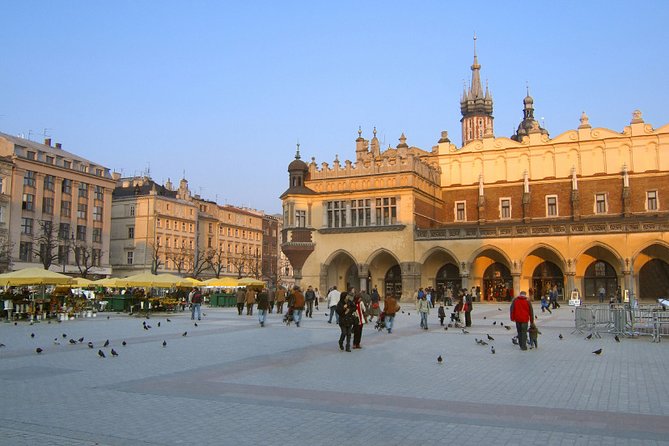
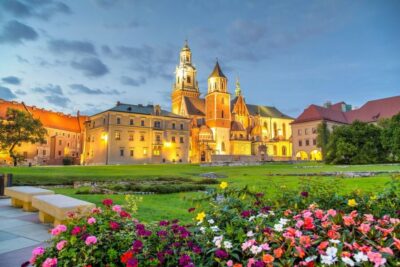
Key stops include the Central Square, Rynek Glowny, with the Cloth Hall and St Mary Basilica. You then walk along the Royal Route toward Wawel Hill, home to the cathedral and the Royal Castle.
Here’s why this part is valuable: Krakow’s history is visible on the street. You can stand in the middle of the square and feel why art, commerce, and power shaped the city. The guide helps you read what you see without turning it into a textbook.
You also get time later in the day for private walking and an optional dinner with live music in a regional restaurant. The plan lists a cost of 45 USD per person for that optional dinner. If you like folk music and you do not want to research where to go, this is an easy add-on.
A small practical tip: keep your evening open. Even if you do the tour in the afternoon, Krakow has a way of pulling you out for one more stroll after dinner.
Day 10 choice near Krakow: Auschwitz-Birkenau, Wieliczka, or Kazimierz
Your final day is designed as a decision, not a fixed checklist. After breakfast, you choose one major regional highlight for a half-day tour.
Options:
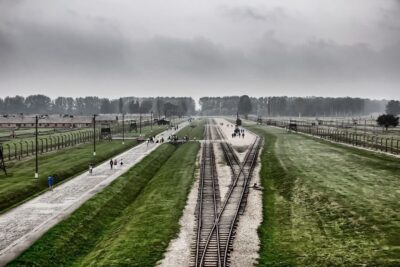
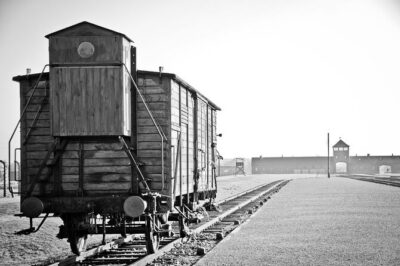
- Auschwitz-Birkenau Nazi German Camp Museum
- Wieliczka Royal Salt Mine tour
- Kazimierz, the Jewish district in Krakow
This structure is smart for two reasons. First, it lets you match your interests, history, human stories, religious and cultural spaces, or underground industrial art. Second, you can choose based on energy level. If you want the emotional weight, pick Auschwitz. If you want a different kind of wow, pick Wieliczka. If you want neighborhoods and culture, pick Kazimierz.
After your chosen tour, you transfer to Krakow airport or the train station for departure.
One consideration: because these are big sites, build in mental focus. Do not schedule heavy sightseeing the morning you plan your main choice unless you know you can handle it.
Hotels, meals, and how to use your free afternoons well
You stay in centrally located 3-star and 4-star hotels, and breakfast is included for 9 days. Dinners are not included, so you are free to eat where the atmosphere fits your mood.
Central hotels are a big deal on this kind of trip. When you have half-days and then free afternoons, being close to the action lets you walk instead of spending your time on transit. You will also have an easier time grabbing a snack, coffee, or a quick shop stop between guided activities.
The itinerary is also built with relaxation time in mind. After each major guided block or day trip, you get an overnight in the next city and a calmer afternoon. It is a good pacing strategy, especially if you like to wander and you want your own photos, not just guided snapshots.
One more thing: the plan expects moderate physical fitness. That usually means walking a fair amount, standing at sites, and moving efficiently through old towns. You do not need to be an athlete, but you should not assume this is a “sit down all day” trip.
The people factor: what makes the trip feel organized
Logistics can make or break a multi-city rail tour. Here, the staff-and-driver setup is clearly a strong point.
The trip includes drivers and local guides, and the goal is simple: you arrive, you get picked up, you move to the hotel, and then your guided time is ready to start. In the past, the manager behind the scenes has been described as flexible and responsive when plans changed due to an emergency. That kind of follow-through matters more than people think.
One review mentioned being met by a guide named Jola at the airport, and that kind of human handoff is exactly what reduces stress after travel days. Another review credited the company manager Tomasz and said the guides were on time and personal.
So for you, the takeaway is this: you can ask questions, and you can count on the day-to-day flow not falling apart. That is the real value of a small group rail plan.
Practical tips to get the most from this Poland-by-train route
- Keep a simple daily rhythm. Guided mornings or afternoons plus free time means you do not need to jam in extra stops.
- Wear shoes you trust. Old Town streets and castle grounds are not built for flimsy soles.
- Plan around your Day 10 choice. If you care about Auschwitz, mentally prepare for a heavy experience and keep your day afterwards calm.
- Use central locations. After tours, go explore on foot rather than searching for transit routes.
- If you are sensitive to long transfers, pay attention to how you’re arriving and departing your country entry points.
Also, if you land at a more distant airport option, you might face longer transfers. One past traveler flagged that as something they would avoid next time. If you have a choice of arrival airports, compare travel time, not just flight cost.
Should you book this rail tour around Poland?
Yes, if you want a high-signal “first time to Poland” experience with minimal planning stress. This trip is a strong match if you like guided history walks, you want to see multiple cities without packing and unpacking daily beyond a normal hotel night, and you value rail comfort with first-class tickets.
I would also recommend it if you prefer structure with room to roam. You get guided context and admission support at key places, and you still have afternoons to do your own thing.
Skip it, or at least think twice, if you hate busy schedules. Half-day tours plus travel days can feel intense, and dinners are on your own, so you need to enjoy choosing restaurants rather than relying on the itinerary for meals.
If you are deciding between options, use this rule of thumb: if you want Poland’s big landmarks and you do not want to manage the moving parts yourself, this rail loop is a smart booking. If you want slow travel and deep time in one or two cities, you may be happier with a shorter route and more nights in a single base.
More Tours in Warsaw


More Tour Reviews in Warsaw
Recently written up around Warsaw

More Train Experiences.
 ★ 4.6Tour to Krakow and Auschwitz by Train with PickupFrom $174603 reviews
 ★ 4.5From Warsaw Auschwitz and Krakow one day tour by train with pick up and drop offFrom $182267 reviews
 ★ 4.7Auschwitz-Birkenau Guided Tour with Fast TrainFrom $18150 reviews
 ★ 5.0Krakow Sightseeing Tour by Express TrainFrom $31213 reviews
 ★ 4.0Auschwitz-Birkenau Tour with Premium Train TransportationFrom $2247 reviews
Also on these Poland lists