
REVIEW · KAZIMIERZ JEWISH QUARTER TOURS
Jewish Quarter, Oskar Schindler’s sites and Kraków under Nazi occupation
Nazi-occupied Krakow is heavy to study, and this tour helps you see it in the right places. You spend focused time in Kazimierz and Podgórze, then you visit the former Płaszów concentration camp area and Schindler’s Factory museum, all with a private guide explaining what you’re looking at as you go.
What I like most is how the stops are practical and efficient. You get help getting oriented fast in Kazimierz, and you also get inside Oskar Schindler’s Factory at Fabryka Emalia Oskara Schindlera, with a solid two-hour museum visit included.
One drawback to plan for: this is emotionally serious subject matter, and you should have a moderate fitness level for the walking and stop-and-go pacing, plus bring your own water since it is not included.
In This Review
- Key points to know before you go
- What you are really doing: seeing Nazi-occupied Krakow by geography
- Kazimierz orientation: Plac Wolnica and the old Market Square
- Szeroka Street: the Jewish Quarter’s main spine
- Synagogues that shape the story, from Kraków’s largest to Remuh
- Ghetto remembrance at Plac Bohaterów Getta and the wall at Lwowska Street
- Fabryka Emalia Oskara Schindlera: the “inside” part that makes the tour click
- Płaszów concentration camp area: what’s left and how to look at it
- Price and logistics: does $65 feel fair for this route?
- Who should book this private Kraków tour?
- Practical tips so the day goes smoothly
- Should you book this Jewish Quarter, Schindler’s sites, and Płaszów tour?
- FAQ
- How long is the tour?
- Is this a private tour?
- What is included in the $65 price?
- Is the Schindler’s Factory museum ticket included?
- Is Remuh Synagogue admission included?
- Do I get a mobile ticket?
- How many stops are there and what areas does it cover?
- Is bottled water or snacks provided?
- When will I receive confirmation after booking?
- Can I cancel or change the booking for a refund?
Key points to know before you go
- Private guide, private van, no group chaos: you travel as just your party and get the guide’s full attention.
- Schindler’s Factory museum visit is built in: you do not have to figure out timing or ticket logistics for that key site.
- Kazimierz in “real place order”: you start around Plac Wolnica and move through the market area and Szeroka Street.
- Active synagogue time at Remuh: it is the only active synagogue in Kraków, and it requires a separate admission ticket.
- Memorial stops matter: you visit the Ghetto Monument chairs area and you also see a remainder of the ghetto wall at Lwowska Street.
- Płaszów is shorter but significant: you get an overview stop at the camp area, including the leftovers connected to two Jewish cemeteries.
Other reviewed ways into the Schindler factory museum
- Krakow: Oskar Schindler’s Factory Entry Ticket & Guided Tour
★ 4.2 · 3,793 reviews - Krakow: Schindler’s Factory Tour with Entrance Ticket
★ 4.5 · 3,182 reviews - Krakow: Schindler’s Factory Tour with Entrance Ticket
★ 4.6 · 1,737 reviews - Schindler’s Factory in Krakow: Guided Tour & Skip the Line Ticket
★ 4.5 · 1,714 reviews
What you are really doing: seeing Nazi-occupied Krakow by geography
This tour is not built around lectures in a room. It is built around movement through neighborhoods, monuments, and sites that connect one brutal system to the next.
You cover two main story zones. Kazimierz (formerly its own town) gives you the Jewish Quarter context through squares, streets, and synagogues, while Podgórze brings you into the areas tied to the Kraków ghetto experience and the nearby Płaszów labor and concentration camp grounds. The museum at Fabryka Emalia Oskara Schindlera is the bridge, since it is specifically framed as Kraków under Nazi occupation.
Because it is private, you can ask the questions that pop up in the moment. That matters here, because the point is not memorizing facts, it is understanding what it meant for daily life and community structures when persecution arrived and intensified.
Kazimierz orientation: Plac Wolnica and the old Market Square
You begin at Plac Wolnica, the main square at Kazimierz. Even if you do not know the area yet, this is a smart first stop because it quickly sets the “this was its own town” context, which helps you understand why the Jewish Quarter has such a distinct feel compared to other parts of Kraków.
Next you spend time at the Market Square, the former Jewish market place. I like this because market areas are where daily routines leave the clearest footprints. You can picture commerce, gathering, and community life, then the guide helps you connect that everyday world to what changed under Nazi occupation.
These first stops are short, around ten minutes each, so you should use them to get your bearings. Wear shoes you can walk in comfortably, because once you move into the heart of the quarter, you will be doing more on-foot time.
Szeroka Street: the Jewish Quarter’s main spine
Szeroka Street is often the corridor where everything feels closer, more connected, and more “real.” This is the heart of the Jewish Quarter, and the tour gives you around twenty minutes there.
This is also a useful pace. You are not rushing through a checklist, but you are also not stuck long enough to lose the thread. The guide’s job here is to help you read what you see: the street layout, the way major religious and community spaces connect, and how the occupation era reoriented life.
If you only ever glance at postcards, you miss what a place feels like. This stop is designed to prevent that. You’ll get enough time to look up, scan details, and still keep moving toward the religious sites.
Synagogues that shape the story, from Kraków’s largest to Remuh
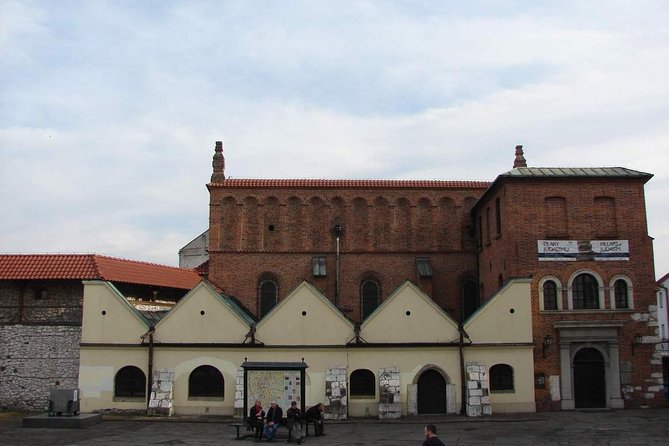
The tour includes visits tied to Kraków’s synagogue landmarks. You will stop at the largest synagogue in Kraków (the schedule lists this twice), and then you also visit Remuh Synagogue, which the tour identifies as the only active synagogue in Kraków.
I like that the tour does not treat synagogues as museum props. Even with the tragic historical context, having an active synagogue in the route is a reminder that Jewish life did not stop with the occupation, and it is continuing as a living tradition.
Practical note: Remuh Synagogue admission is not included in the tour price. So if you want to avoid last-minute hassle, build in a little buffer for that separate ticket and keep some cash or a card ready, depending on how you plan to purchase it.
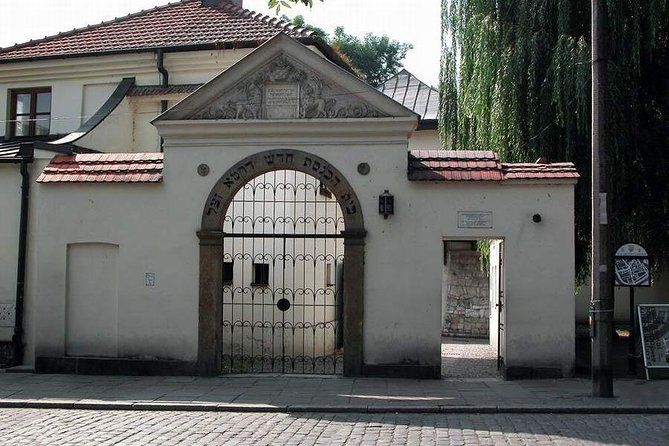
Also, the tour notes Remuh as Poland’s oldest synagogue. That alone makes it worth the time, but what makes it meaningful on this route is the guide framing, which helps you see how religious space connects to community survival and identity.
Kazimierz on foot, by cart and after dark. Our other write-ups
- Krakow: Jewish Quarter and Former Ghetto Tour★ 4.9 · 1,441 reviews
- Krakow: Bike Tour of Old Town, Jewish Quarter and the Ghetto★ 4.9 · 1,155 reviews
- Krakow: Kazimierz Jewish Quarter Walking Tour★ 4.8 · 571 reviews
- Full Bike Tour – the Old Town, Jewish Qtr & the Ghetto NEW BIKES★ 5.0 · 437 reviews
- Krakow: Bike Tour of the Old Town, Kazimierz, and the Ghetto★ 4.9 · 350 reviews
Ghetto remembrance at Plac Bohaterów Getta and the wall at Lwowska Street
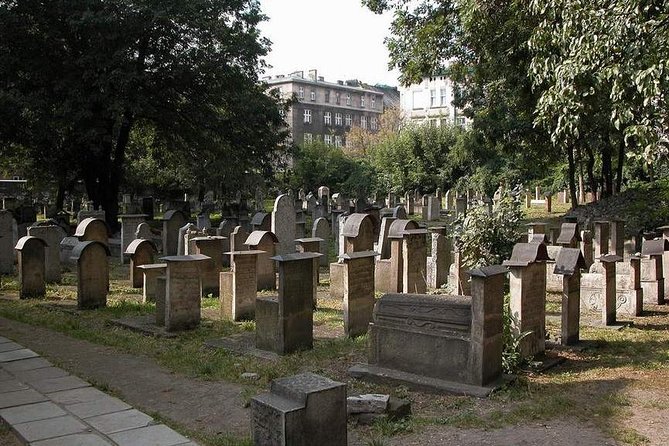
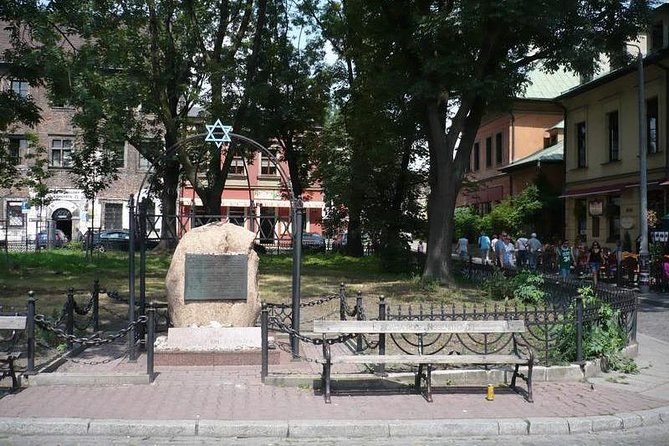
After the synagogue portion, the tour moves into the memorial landscape. You visit Plac Bohaterów Getta, where you see the Ghetto Monument chairs.
I appreciate this stop because it turns abstract history into a physical symbol. You get a short window, around ten minutes, but it is the kind of stop where you can slow down mentally and let the meaning land.
Then the tour continues with two additional reminders tied to the ghetto period: where Tadeusz Pankiewicz used to work, and a remainder of the ghetto wall at Lwowska Street. These are the kinds of details that can feel easy to miss if you are sightseeing alone, and that is exactly where a private guide adds value.
One thing to keep in mind: this area is about remembering and documenting. You will likely want to keep your phone use respectful and save most photos for the moments that feel appropriate to you. If you come with a calm mindset, you will get more out of the explanation.
Fabryka Emalia Oskara Schindlera: the “inside” part that makes the tour click
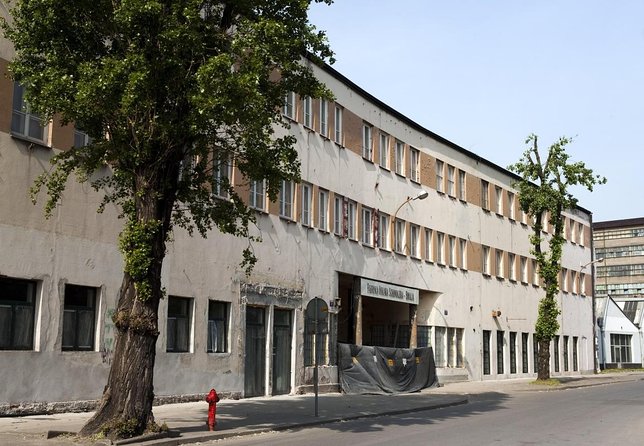
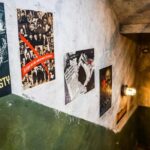
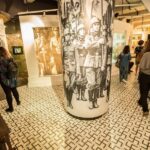
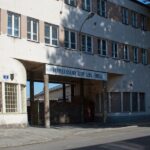
The biggest anchor stop is Fabryka Emalia Oskara Schindlera, the museum at Schindler’s Factory. This is where the schedule gives you the most time, about two hours, and it is included in the price.
If you care about how people tried to survive under occupation conditions, this is the part you do not want to rush. Being able to go inside matters, because the museum format helps you connect what the guide has been pointing out in Kazimierz and the ghetto memorial sites to what happened under Nazi control.
The tour frames the museum as Kraków under Nazi occupation, so expect exhibits and interpretation centered on how the occupation reshaped the city and its residents. I also like that this stop is included rather than tacked on as an optional add-on. It makes planning simpler, and it ensures you get the main “Schindler connection” experience rather than just seeing the outside.
Because the museum takes time, make sure you have water and you are not hungry. Snacks are not included, and even if you think you are fine, two hours in a museum can add up faster than you expect.
Płaszów concentration camp area: what’s left and how to look at it
After the museum, you head to Płaszów Concentration Camp, specifically described as the area of the large labor and concentration camp Płaszów. You spend around twenty minutes here, which is brief compared to the museum, but the stop focuses on what remains.
The tour notes leftovers of two Jewish cemeteries and camp buildings. That combination can hit hard, because you are not only looking at structures tied to imprisonment, you are also seeing the traces of Jewish burial grounds.
On a route like this, twenty minutes can feel like enough if you keep your attention sharp. Let the guide explain what you are seeing and why it is significant. Then, give yourself a minute to process after you finish, because walking out of a site like this back into normal streets can feel strange.
This is also where comfort and respect matter most. You will get more from the experience if you keep the mood quiet and observant, not distracted.
Price and logistics: does $65 feel fair for this route?
At $65 for about 4 hours 30 minutes, this tour can feel like good value because several key costs are wrapped in. The tour includes a professional guide service (private tour), private transportation, and all fees and taxes. On top of that, the museum ticket for Fabryka Emalia Oskara Schindlera is included.
That inclusion is not a small detail. It is one of the biggest reasons to book a guided route for this topic, because the museum is time-heavy and the whole day can suffer if you lose time figuring out entry.
The items not included are also important to know ahead of time. Remuh Synagogue admission is not included, and snacks and bottled water are not included. So your real spend might be a bit higher depending on the Remuh ticket.
For me, the biggest “value” signal is the match between time and what you do with it. Private transport saves energy, the guide’s explanations prevent you from misreading the sites, and you get a structured sequence that connects Kazimierz, ghetto remembrance points, and Schindler’s Factory into one coherent walk.
Who should book this private Kraków tour?
This is a strong fit if you want to see the Jewish Quarter and related Nazi-era sites in a single day without stitching together separate tickets and research on your own.
It also fits well if you like city walking but you do not want to do the heavy planning. The route includes key squares and streets like Plac Wolnica, Market Square, and Szeroka Street, plus the museum and a stop at Płaszów. You are not guessing what to prioritize.
If you are very sensitive to difficult topics, you should consider how you handle emotionally heavy history. Also consider that the tour expects a moderate physical fitness level, so if walking is hard for you, you may want to plan differently or ask the provider ahead of time about pacing.
Best matches:
- First-timers who want the most important parts connected
- People who prefer guided context over reading alone
- Anyone planning to spend time in Kraków but wants a focused half-day
Practical tips so the day goes smoothly
This tour uses a mobile ticket, so make sure your phone is charged and your ticket is easy to access. Confirmation is expected within 48 hours of booking, subject to availability, so you should not wait until the last minute.
Bring a bottle of water, since bottled water is not included. Also bring a light snack if you tend to get hungry, because snacks are not included either.
For clothing, this route includes outdoor stops and religious buildings, so dress comfortably and respectfully. You might find it helps to have layers, since Kraków weather can shift.
Finally, keep a calm pace mentally. This is a route built for understanding, not for nonstop photo ops.
Should you book this Jewish Quarter, Schindler’s sites, and Płaszów tour?
Yes, if you want a guided, private route that connects Kazimierz, ghetto-era memorial sites, Schindler’s Factory museum, and the Płaszów concentration camp area into one clear experience. The private guide and the included Schindler’s Factory entry are the strongest reasons to book, because they save you time and help you read what you see.
Hold off if you are not comfortable with difficult, emotionally serious history, or if a moderate fitness level for a walking and stop-based route would be a problem for you. If you can handle the subject matter and you want structure, this tour is a solid way to spend a half-day in Kraków with meaning behind every stop.
FAQ
How long is the tour?
The tour is approximately 4 hours 30 minutes.
Is this a private tour?
Yes. It is a private tour/activity, and only your group will participate.
What is included in the $65 price?
The price includes a professional guide service (private tour), private transportation, and all fees and taxes.
Is the Schindler’s Factory museum ticket included?
Yes. Admission to the Fabryka Emalia Oskara Schindlera exhibition is included, and the stop lasts about 2 hours.
Is Remuh Synagogue admission included?
No. Admission ticket for Remuh Synagogue (Synagoga Remuh) is not included.
Do I get a mobile ticket?
Yes. The tour uses a mobile ticket.
How many stops are there and what areas does it cover?
The route includes Plac Wolnica, the Market Square, stops connected to major synagogues, Remuh Synagogue, Plac Bohaterów Getta, Fabryka Emalia Oskara Schindlera, and the Płaszów Concentration Camp area.
Is bottled water or snacks provided?
No. Snacks and bottled water are not included.
When will I receive confirmation after booking?
Confirmation will be received within 48 hours of booking, subject to availability.
Can I cancel or change the booking for a refund?
No. This experience is non-refundable and cannot be changed for any reason. If you cancel or ask for an amendment, the amount you paid will not be refunded.
More Tour Reviews in Krakow
Kazimierz, Keep Going
The Schindler Factory, Other Ways In
Recently written up around Krakow
More Kazimierz Jewish Quarter Tours.
 ★ 4.9Jewish Quarter and Former Ghetto TourFrom $191,441 reviews
 ★ 4.9Bike Tour of Old Town, Jewish Quarter and the GhettoFrom $371,155 reviews
 ★ 4.8Kazimierz Jewish Quarter Walking TourFrom $27571 reviews
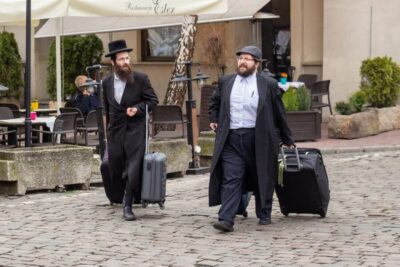 ★ 4.8Kazimierz, Schindler’s Factory & Ghetto Guided TourFrom $81460 reviews
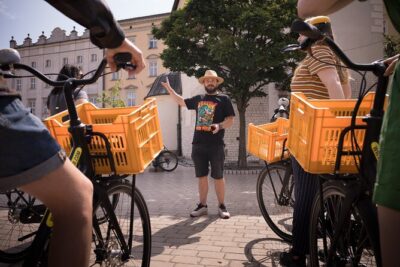 ★ 5.0Full Bike Tour – the Old Town, Jewish Qtr & the Ghetto NEW BIKESFrom $35437 reviews
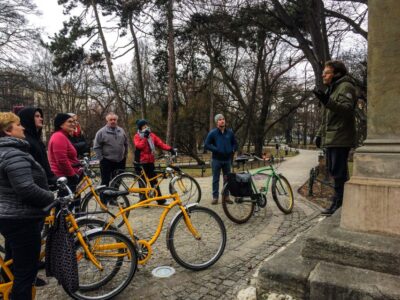 ★ 4.9Bike Tour of the Old Town, Kazimierz, and the GhettoFrom $26350 reviews
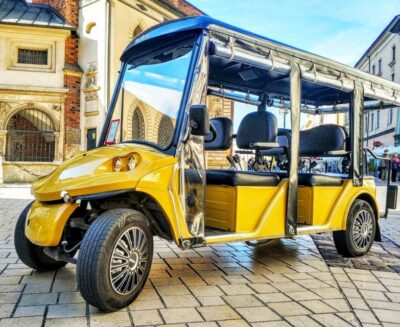 ★ 4.6Jewish Quarter and Ghetto Electric Golf Cart TourFrom $34348 reviews
 ★ 5.0Jewish Krakow Walking TourFrom $26307 reviews
Also on these Poland lists