
REVIEW · OSKAR SCHINDLER FACTORY TOURS
Kraków: Schindler’s Factory and Former Ghetto Tour
Candlelit stories are not the vibe here, and that is the point. This 2 hour Krakow tour pairs a pre recorded audio walk through Podgórze with a visit to Schindler’s Factory, all in an easy, eco friendly electric car. I especially like how it hits the key sites fast, with clear audio and a layout that makes it simple to stop, look, and take photos. The one drawback I would plan for is this is largely self guided, so if you want live answers to your questions, you may feel a bit on your own.
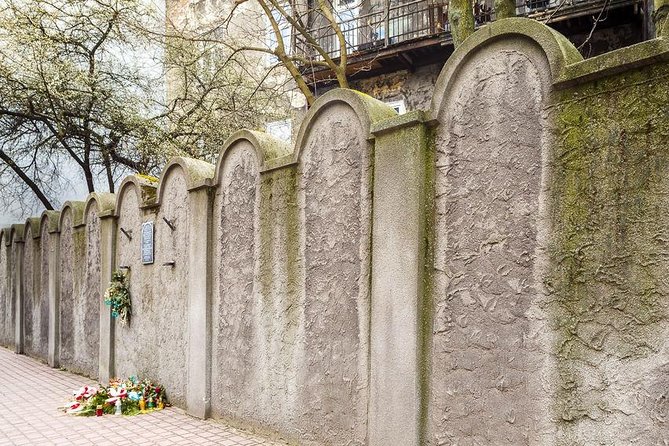
You’ll start by choosing one of two central meeting points, then get greeted and set up for the route. From there, the focus stays on the former Jewish district in Krakow, including the heartbreaking public spaces that survive today as reminders of what repression looked like day to day. Along the way, you also see physical remnants, including part of the WWII wall that once ringed the ghetto.
The tour is built for momentum. It is a comfortable way to cover a lot in a short window, especially if this is one of your few days in the city. Just keep your expectations aligned: the audio does the heavy lifting, and the museum time is your chance to slow down and read at your own pace.
In This Review
- Key things to know before you go
- A fast, respectful way to see Krakow’s former ghetto in 2 hours
- Cost and value: is $65 a fair deal for this route?
- Getting set up: two meeting points and an audio tour you control
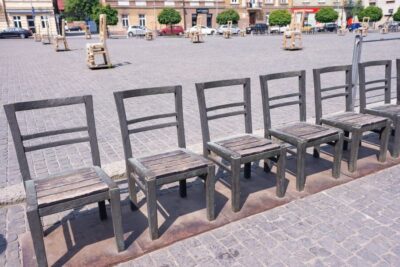
- Stop 1: Plac Bohaterow Getta and Heroes of the Ghetto Square
- Stop 2: Apteka pod Orłem and the significance of the Eagle Pharmacy
- Stop 3: Oscar Schindler’s Enamel Factory and what the exhibition emphasizes
- The WWII ghetto wall remnants, and how to look for meaning
- How the pre recorded audio guide shapes your experience
- Who this tour suits best, and who might want a different style
- Should you book this Kraków ghetto and Schindler’s Factory tour?
- FAQ
- How long is the Krakow Schindler’s Factory and former ghetto tour?
- How much does the tour cost?
- Does the tour offer pickup?
- Where do you meet for the tour?
- What kind of tour format is it?
- What stops are included?
- Are admission tickets included?
- Is the tour mainly indoors or outdoors?
- What weather conditions are required?
- What is the cancellation policy?
Key things to know before you go
- Audio guided Podgórze: pre recorded narration keeps you oriented through key ghetto locations
- Electric car transport: easy hops between stops, less time walking than you might expect
- Real sites, not just photos: Heroes Square, the Eagle Pharmacy area, and WWII wall remnants
- Museum entry included: Oscar Schindler’s Enamel Factory exhibition time is built in
- Short stop structure: each location has a set window, so you cover more without rushing wildly
- Limited to 100: smaller than some big-group city tours, which helps keep the experience manageable
Other reviewed ways into the Schindler factory museum
- Krakow: Oskar Schindler’s Factory Entry Ticket & Guided Tour
★ 4.2 · 3,793 reviews - Krakow: Schindler’s Factory Tour with Entrance Ticket
★ 4.5 · 3,182 reviews - Krakow: Schindler’s Factory Tour with Entrance Ticket
★ 4.6 · 1,737 reviews - Schindler’s Factory in Krakow: Guided Tour & Skip the Line Ticket
★ 4.5 · 1,714 reviews
A fast, respectful way to see Krakow’s former ghetto in 2 hours
Krakow’s story of WWII is not hidden. In Podgórze, you can still stand near places that shaped daily life under occupation, then step into a major museum that ties the local world to the wider catastrophe.
What makes this tour work is the pacing. In about two hours, you cover the public squares and landmark sites, then shift into the museum where you can read and watch at your own speed. You are not stuck for long stretches on long explanations, and you are not left with only quick photo stops either.
I also like that the tour is designed to help you observe carefully. The ghetto sites are not all obvious at first glance. The audio narration is there to tell you what you are looking at, including the human impact behind each place. That matters, because without context you can miss the meaning of what you are seeing.
This is not a lighthearted tour. The tone is serious, and the locations are heavy. If you’re the kind of traveler who likes to ask lots of follow up questions, consider that the experience leans more on listening and independent viewing than on a live historian at every stop.
Cost and value: is $65 a fair deal for this route?
At around $65 for roughly two hours, the best way to judge value is to look at what you get packaged together.
First, you get transport in an electric car that keeps you from spending the entire time just getting from point to point. In a city center like Krakow, that can save real time, and it helps you stay focused on the places you actually came to see.
Second, you get a structured route with multiple stops. Heroes of the Ghetto Square is free, while the Eagle Pharmacy stop includes entry, and the Oscar Schindler’s Enamel Factory museum time is included as well. So you are paying for more than just narration. You are paying for access to two key site experiences plus the guided audio format that connects them.
Finally, you are not buying a long full day excursion. This is ideal if you want a concentrated dose of Podgórze and Schindler’s story without committing half your vacation. The price makes more sense when you compare it to what it costs to line up separate visits, and to arrange your own local transport and timing.
Getting set up: two meeting points and an audio tour you control
The tour starts with a choice of one of two meeting points in central Krakow. From there, your driver greets you and gets you ready for the audio guided portion through Podgórze. That matters because it means you are not arriving and trying to figure out the route yourself.
Once you’re underway, the format is straightforward. You listen to pre recorded audio that cues you on where to look and what each location meant during the occupation. Then you handle the actual exploring at your own pace at each stop.
I like this style when I want to move at my own speed. You can pause to take a photo, step back to read details, and then restart the narration when you feel ready. It is also convenient if you are traveling with a group and people have different attention spans for museums.
Just be aware of the tradeoff. The tour structure gives you audio guidance, but it does not promise ongoing human Q and A on the spot. If you like to ask a lot of why questions, bring the basics you want to know ahead of time, then use your museum reading time to fill gaps.
Stop 1: Plac Bohaterow Getta and Heroes of the Ghetto Square
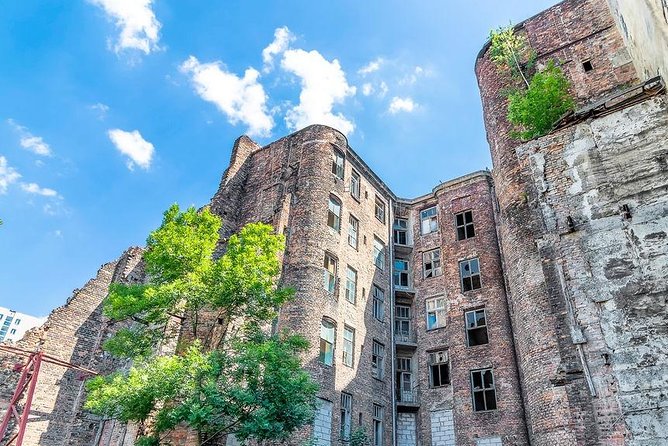
Your first major moment is Plac Bohaterow Getta, the Heroes of the Ghetto Square. This is one of the most recognizable places in Podgórze, and it is also one of the most emotionally direct.
You get about fifteen minutes here, which is short, but not random. The point is to get you oriented to the broader story of repression and survival, then get you moving to the next landmark while the context is still fresh.
What I would focus on during this stop is reading the space as a memorial. Squares and monuments can feel abstract if you only glance. With audio running, you’re not just looking at architecture. You’re connecting what you see to the experience of people who lived under occupation.
The great thing about a short first stop is that it sets your mental map fast. After you leave, the rest of Podgórze makes more sense because you already understand what the sites are trying to say.
If you need longer to process, you can still take a moment at the edge of the route to slow down. Just remember the tour is scheduled, so don’t plan on spending a long time here if you want the museum visit to feel unhurried later.
Further Jewish heritage and ghetto routes documented in Krakow
- Krakow: Schindler’s Factory & Ghetto Guided Tour★ 4.7 · 1,694 reviews
- Krakow: Bike Tour of the Old Town, Kazimierz, and the Ghetto★ 4.9 · 350 reviews
- Krakow: Jewish Ghetto Walking Tour★ 4.6 · 349 reviews
- Krakow: Jewish Quarter and Ghetto Electric Golf Cart Tour★ 4.6 · 348 reviews
- Krakow: Schindler’s Factory and Jewish Ghetto Guided Tour★ 4.6 · 124 reviews
Stop 2: Apteka pod Orłem and the significance of the Eagle Pharmacy
Next up is Apteka pod Orłem, the Eagle Pharmacy. You’ll have around thirty minutes here, and entry is included.
This stop works because it connects a place you might think of as ordinary with the reality of a repressive system. A pharmacy sounds like the kind of detail you’d never expect to become a key historical marker. But in places like this, everyday life was controlled, redirected, and constrained, and that includes access to care and supplies.
I like the way this location changes the tone from public space to something closer to lived experience. A square can tell you about collective memory. A specific institution helps you feel how occupation affected daily rhythms, even when the setting looks familiar.
During your time here, give yourself enough minutes to walk around what remains and to follow the audio cues. The Eagle Pharmacy stop is not just about one view. It is about the layering of meaning in the surrounding area and the traces of what the ghetto was.
The main consideration is that thirty minutes can feel tight if you stop to read everything at once. If you’re the kind of visitor who likes long pauses, you may want to skim first, then circle back for the details that truly catch your eye.
Stop 3: Oscar Schindler’s Enamel Factory and what the exhibition emphasizes
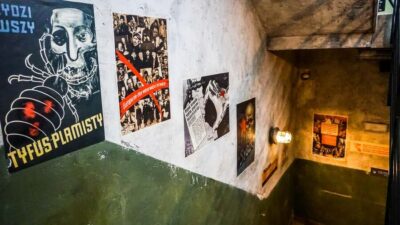
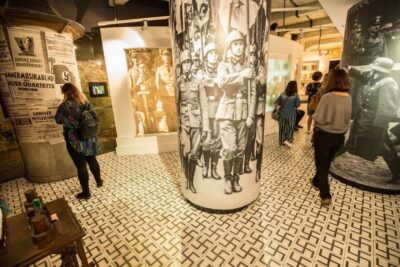
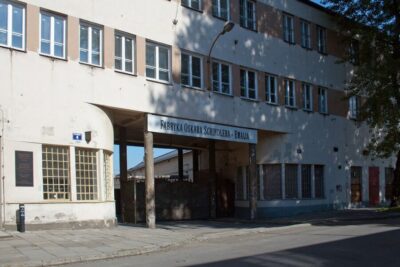
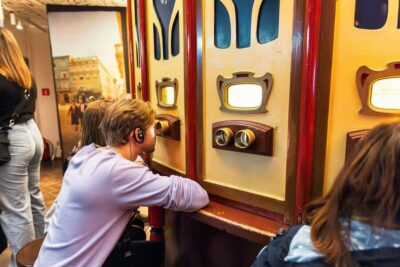
The heart of the experience is the Oscar Schindler Factory visit, specifically the Oscar Schindler’s Enamel Factory museum exhibition. You’ll have about one hour and fifteen minutes, and admission is included.
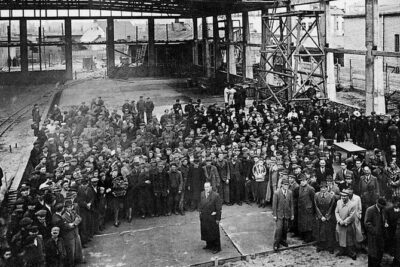
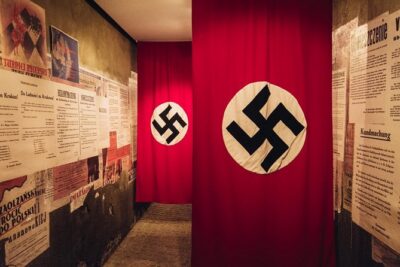
Here is what makes this museum time valuable: the exhibition is primarily about Krakow and its residents, both Polish and Jewish, during World War Two. It also brings Nazi Germans, the occupiers who arrived on 6 September 1939, into focus as part of the disruption they imposed on the city’s long relationship between Polish and Jewish communities.
So instead of treating Schindler as the only center of gravity, the exhibition frames him within a broader local and historical story. I found that approach useful because it helps you understand the setting, the pressures, and the way ordinary life got pulled into extraordinary violence.
That said, there is one clear potential drawback to keep in mind. If you are expecting a full biographical deep dive into Schindler himself, you might come away wanting more personal background, such as how he grew up or his training. The museum time is still important, but it may not satisfy every viewer’s specific curiosity about Schindler as a standalone character.
How to make the most of your time in the exhibition: pick a few themes that matter to you before you walk in, then let the audio and signage guide you through those threads. With 75 minutes, you can do a solid pass without rushing, as long as you don’t try to read every word on every panel.
The WWII ghetto wall remnants, and how to look for meaning
One of the most striking parts of this tour is seeing remnants of the WWII wall that once surrounded the ghetto. These pieces are not always dramatic like a fully intact monument, but that is part of the power.
When walls are broken or reduced to fragments, you are forced to notice shape and placement. You start to understand the ghetto not as an idea but as a lived boundary. The audio narration helps here, because it gives you a sense of what the wall represented in daily movement, safety, and control.
I recommend treating these remnants as “location clues.” Stand for a minute, then ask yourself what would have been possible and what would have been forbidden in that space during the occupation. That mental exercise turns a few physical traces into something clearer.
Also, because the tour is time structured, you’ll likely see the wall remnants before you spend your longer stretch in the museum. That sequencing matters. It makes the museum story feel more grounded, because you’ve already seen the kind of physical restriction the exhibition discusses.
How the pre recorded audio guide shapes your experience
The narration is a key part of this tour. It is pre recorded, and the sound quality is described as clear and easy to hear, which is a big deal on outdoor sites where wind and city noise can interfere.
The audio does two jobs well. It keeps you from feeling lost at each stop, and it also helps you understand why a place matters. Without that, some sites would read as simply “things to see.” With audio, they become points in a continuous story.
I also like that the audio format gives you control. You can linger at points of interest, then restart when you’re ready. It also makes the experience consistent across the group.
The tradeoff is simple. Audio can’t follow up on your personal question the way a live guide might. If you’re the type of traveler who likes deeper discussion, build that curiosity before you go, then use your museum reading time to answer some of the bigger questions yourself.
Who this tour suits best, and who might want a different style
This experience is a good match if you want a structured overview of Podgórze and Schindler’s Factory in a short time. It is also a strong pick if you value convenience, like central meeting points and electric car transport.
It is especially helpful if you are not sure how to connect the sites on your own. The audio does the linking. You get a clear flow from square to pharmacy to museum, with the WWII wall remnants acting as a physical anchor.
You might want to choose a different format if your main goal is live expert conversation. Since the experience is largely self guided once you arrive at locations, you won’t have someone answering questions in real time in every moment. And if your priority is learning Schindler’s personal biography in detail, the exhibition may feel more centered on the broader Krakow and occupation story.
If you’re traveling with limited time, this tour is a practical way to cover the basics well without turning your day into a logistics puzzle.
Should you book this Kraków ghetto and Schindler’s Factory tour?
I would book it if you want a focused, time efficient way to see the key Podgórze sites and spend meaningful time in Oscar Schindler’s Enamel Factory. The combination of electric car transport, clear audio guidance, and included museum entry gives you a lot of value for the money, especially when you only have a couple hours to spare.
Skip it or rethink your expectations if you specifically want a deep biographical Schindler narrative, or if you need frequent live Q and A during the stops. In that case, you may find the self guided structure too hands off.
If you decide to go, do yourself a favor: arrive mentally ready for a serious subject, plan to read and reflect during your museum time, and let the audio guide you through what you might otherwise miss.
FAQ
How long is the Krakow Schindler’s Factory and former ghetto tour?
The tour lasts about 2 hours.
How much does the tour cost?
The price is $65.
Does the tour offer pickup?
Yes, pickup is offered.
Where do you meet for the tour?
You choose from 1 of 2 meeting points in the center of Krakow.
What kind of tour format is it?
It is an audio guided tour through the Podgórze district, and most of the visiting is self guided at each location.
What stops are included?
You visit Plac Bohaterow Getta, Apteka pod Orłem, and Oskar Schindler’s Enamel Factory.
Are admission tickets included?
Admission is free for Plac Bohaterow Getta, included for Apteka pod Orłem, and included for Oskar Schindler’s Enamel Factory.
Is the tour mainly indoors or outdoors?
It includes outdoor stops in Podgórze plus museum time at Oskar Schindler’s Enamel Factory.
What weather conditions are required?
The experience requires good weather.
What is the cancellation policy?
You can cancel for a full refund up to 24 hours in advance. If you cancel less than 24 hours before the start time, you do not get a refund.
More Tour Reviews in Krakow

Jewish Heritage and Ghetto Routes in Krakow

The Schindler Factory, Other Ways In


Recently written up around Krakow
More Oskar Schindler Factory Tours.
 ★ 4.2Oskar Schindler’s Factory Entry Ticket & Guided TourFrom $353,793 reviews
 ★ 4.5Schindler’s Factory Tour with Entrance TicketFrom $493,182 reviews
 ★ 4.4Schindler’s Factory Skip-the-Line TicketFrom $253,105 reviews
★ 4.6Schindler’s Factory Tour with Entrance TicketFrom $401,737 reviews
 ★ 4.5Schindler’s Factory in Krakow: Guided Tour & Skip the Line TicketFrom $351,714 reviews
 ★ 4.7Schindler’s Factory & Ghetto Guided TourFrom $571,694 reviews
 ★ 4.3Schindler’s Factory Ticket with Guided Tour OptionFrom $421,485 reviews
 ★ 4.0Krakow Schindler’s Factory Guided Tour with Admission TicketFrom $351,156 reviews
Also on these Poland lists