
REVIEW · WARSAW CITY TOURS
Offbeat Warsaw: Explore the Edgy & Artsy Praga District
Praga shows Warsaw without the polish. This 2-hour walk through the Praga district turns big themes into street-level moments, with Jewish landmarks, movie locations, and photo-ready art all in one go.
I especially like the Jewish Warsaw stops, because each one has a clear story hook you can connect on the walk. I also like the small group size, max 10 travelers, which keeps the guide interaction real instead of rushed.
The only drawback to plan for is time. You move quickly from stop to stop, so if you want long interior visits or a slow, sit-and-stare photo session, you’ll need extra time before or after the tour.
In This Review
- Key points to know before you go
- Praga, Not the Postcard Warsaw: How This Walk Feels
- Tour Value for $42.14: Free Stops, Small Group, Real Local Time
- Getting There and Starting at plac Weteranów 1863 Roku
- Jewish Praga in Order: St. Florian’s, Orphanage, and the Nożyk Synagogue Site
- From Loreto Chapel to a 19th Century Park Break
- Jagiellońska 44 and Communist-Era Architecture You See Every Day
- Movie Magic on Mała and Street Art Energy on Stalowa
- Konopackiego’s House and Ending at Fabryka Schichta Bohema
- Who This Tour Fits Best
- Should You Book Offbeat Warsaw: Praga District?
- FAQ
- FAQ
- How long is the Offbeat Warsaw Praga district tour?
- How much does the tour cost?
- What language is the tour offered in?
- How many people are in a group?
- Where does the tour start and where does it end?
- Is the tour ticket mobile?
- Is it close to public transportation?
- Can I cancel for a full refund?
Key points to know before you go
- Max 10 travelers means questions get answered as you walk, not at the end
- Jewish sites and Praga memorials are treated as part of everyday neighborhood geography
- Street art and café culture show up on the route, especially around Stalowa
- The Pianist filming location is included at Mała, a fun stop for movie fans
- End at Fabryka Schichta Bohema so you can keep exploring with metro and tram nearby
Warsaw rebuilt itself twice over. Here is how else we saw it
- Warsaw: Chopin Concert in the Old Town
★ 4.8 · 2,287 reviews - Warsaw: Traditional Galar Cruise on The Vistula River
★ 4.6 · 1,640 reviews - Warsaw: Old Town Highlights Walking Tour in English
★ 4.7 · 1,516 reviews - Warsaw Concert: Chopin – Painted by Candlelights with Wine
★ 4.8 · 1,442 reviews
Praga, Not the Postcard Warsaw: How This Walk Feels
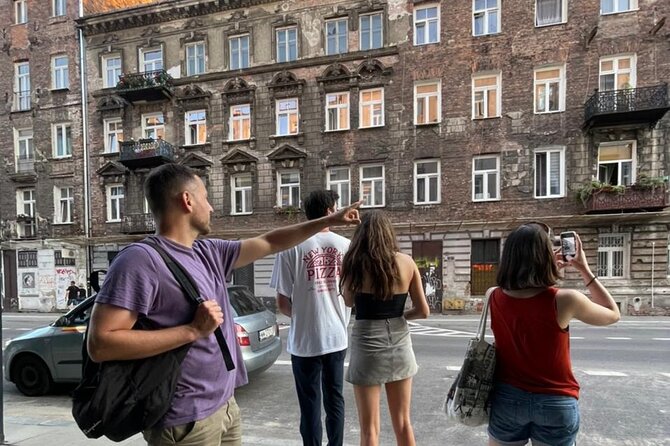
If your Warsaw wish list is Old Town and royal palaces, you’ll still get that later in your trip. But this is the side of the city that feels more like real life: more grit, more local texture, and more wall art than monument photos.
This tour works because it stitches together multiple “Pragas” at once. You go from memorials and former Jewish sites to communist-era housing and present-day café and gallery streets. And along the way, you get lots of short context you can actually use when you look around and start noticing details.
I like that it leans off the main tourist loop while still staying practical. The route is designed for walking, and it ends somewhere you can transition into the rest of your day without needing a second plan.
Tour Value for $42.14: Free Stops, Small Group, Real Local Time
At $42.14 per person for about two hours, you’re really paying for the guide’s time and direction. The big value play here is that the scheduled stops all show admission ticket free, so you’re not budgeting extra just to “see things.”
The other value factor is group size. With a cap of 10 travelers, you’re less likely to be herded. You can ask questions about what you’re seeing, and you’re more likely to get useful Warsaw tips that match your interests, not generic lines.
One more practical angle: Praga can be a little confusing if you’re trying to navigate by vibes alone. This tour gives you the thread to follow, so you don’t just wander streets and wonder what you’re looking at.
Getting There and Starting at plac Weteranów 1863 Roku
You meet at plac Weteranów 1863 Roku in Warsaw, with the start point described in relation to St. Florian’s. The tour starts at 1:00 pm, and it ends at Fabryka Schichta Bohema, at Szwedzka 20.
Why this matters: starting in the right place means you spend your first minutes oriented, not searching. Also, meeting at a well-known church landmark makes it easier to regroup if anyone in your group is running late.
The tour also uses a mobile ticket, which is convenient in a city where you might be moving between metro and tram stops during the same day. And since this is offered in English and capped at 10 travelers, it’s a straightforward choice if you want structure without a full-day commitment.
If you’re deciding when to book, note that the experience is often reserved fairly ahead of time, averaging 53 days in advance. With only 10 spots, booking early can save you the last-minute scramble.
Jewish Praga in Order: St. Florian’s, Orphanage, and the Nożyk Synagogue Site
This walk doesn’t treat Praga as a single theme. It begins by setting you up to understand the neighborhood through history that you can read from the street.
You start at St. Florian’s area, then head toward Praga’s older cultural markers. One of the first stops is a monument to Praga music bands, tied to a local tradition. Even if you don’t know the details yet, a monument like this is a good way to train your eyes for what matters to locals.
Then you hit a particularly meaningful section. Teatr Baj is a key stop here, described as the former Jewish Orphanage. Seeing a building repurposed as a theater helps the message stick: history didn’t vanish, it changed form. The guide’s job in moments like this is to connect the dots so you understand why that transformation matters.
Next comes Nożyk Synagogue, described as the former site of the Praga Synagogue from the 1830s. This stop is powerful because it turns a “former location” into something you can still grasp in your mind as a real place where community life happened. The building and site context makes it easier to understand how the area’s identity shifted over time.
A practical note for this part of the tour: since these are short stops, you’ll get the core story fast. If you want extra reading later, plan to take a photo of any plaques or signage you see, then look up details back at your hotel or on your next walk.
- Warsaw: City Sightseeing Hop-On Hop-Off Bus Tour★ 3.6 · 1,415 reviews
- Warsaw: POLIN Museum of the History of Polish Jews Ticket★ 4.7 · 1,142 reviews
- #1 Pub Crawl Warsaw with Optional Premium 1 Hour Open Bar★ 5.0 · 790 reviews
- Warsaw: Polish Vodka Museum Tour with Tasting★ 4.6 · 788 reviews
- Chopin Concerts at Fryderyk Concert Hall★ 4.7 · 687 reviews
From Loreto Chapel to a 19th Century Park Break
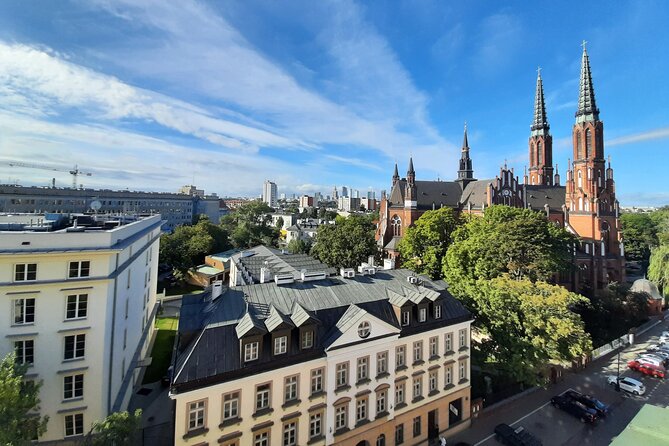
After the more somber stops, the route pivots to a calmer kind of beauty. The Chapel of Our Lady of Loreto is listed as a 17th century Loretto Chapel, and it’s described as the oldest historical monument in Praga.
This is the kind of stop that changes your pace. When you stand in front of an older monument like this, the neighborhood starts to feel layered. You realize you’re not only seeing recent street life, you’re walking through a place that has held meaning for centuries.
Then you get a break at a 19th century park. Even without a long pause scheduled, a park stop is a smart reset during a walking tour. It’s also a chance to reset your photography settings and catch your breath before the more urban, street-level segments kick in.
If you’re the type who likes to photograph architectural details, this is a good moment to slow down. Look for angles that show both the building context and the street rhythm nearby, since Praga’s character often comes from the mix of old and newer.
Jagiellońska 44 and Communist-Era Architecture You See Every Day
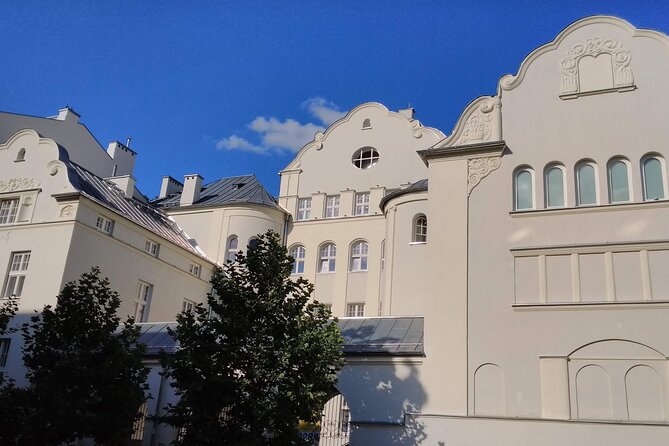
One of the most useful parts of the tour is the stop at Jagiellońska 44. It’s described as one of the first communist-era housing estates in Warsaw, designed by prominent Polish avant-garde architects.
This stop matters because it teaches you a way to look at architecture you might otherwise ignore. Housing blocks can feel like background noise when you’re rushing through a city, but these kinds of estates shaped how generations lived, moved, and formed communities.
What you’re really getting here is a street lesson in why buildings matter. The guide helps connect design to the broader social story, so the architecture stops being abstract and starts being personal.
Drawback to consider: housing estates and apartment areas can feel more exposed and less “designed for visitors.” Stick with the guide, keep your movements respectful, and don’t expect the kind of built-in photo viewpoints you might find around classic tourist landmarks.
Movie Magic on Mała and Street Art Energy on Stalowa
If you’re a fan of The Pianist, the tour includes Mała as a movie location. This is one of those “now you can picture the scene” stops. Even when you can’t remember every frame, filming locations turn a movie into geography, and geography makes your memories stick.
Next is Stalowa, an important Praga street known for cafes, bars, galleries, and street art. This is where the tour leans hard into the artsy side. Street art is more than decoration here, it signals what kind of neighborhood you’re in: creative, opinionated, and very much alive.
This is also a practical stop for your day plan. Because there are cafes and bars nearby, you can decide whether you want a snack or drink at the end of the walk, without needing to figure it out from scratch.
For photography, Stalowa is a strong zone. You’ll likely want to move slowly, look up, then look down, since the best street art shots often combine the wall itself with street activity around it.
Tip: bring your phone or camera with enough storage and battery. A street art route can be surprisingly photo-hungry, especially when you start noticing layers and small details.
Konopackiego’s House and Ending at Fabryka Schichta Bohema
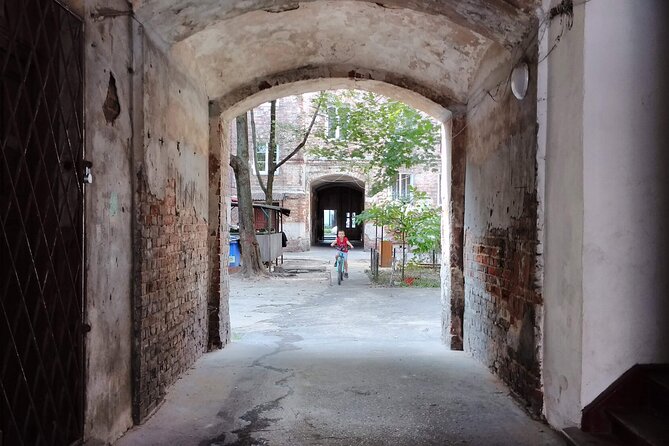
Pałacyk Ksawerego Konopackiego is one of the last stops, described as the former residence of the founder of the neighborhood. Even if you don’t know the founder’s name before the tour, the stop gives you a sense of how Praga’s identity was shaped from the top down, then evolved on the street.
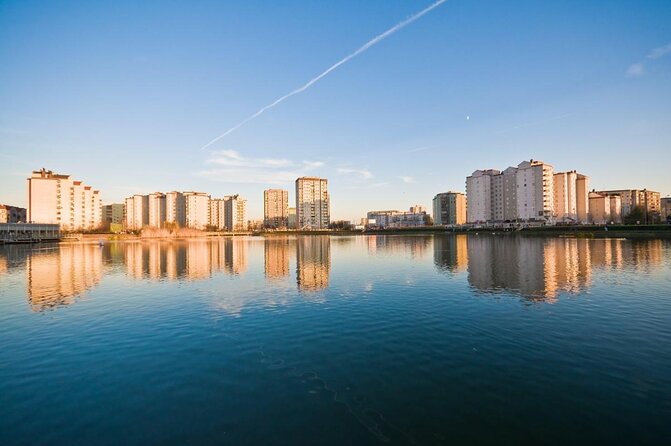
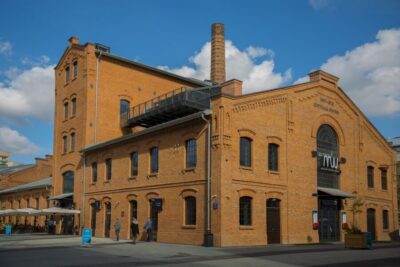
After that, you end at Fabryka Schichta Bohema, a multi-functional hub combining 19th century post-industrial architecture with contemporary buildings. It’s a smart ending choice because it’s both visual and functional.
You’re also set up for easy transit. The Szwedzka metro station is nearby, and there is a tram stop about 400 meters away that can take you back toward Castle Square in Old Town. That means you can end the tour and still keep your day going without a long commute.
Your guide can point you to cool hip cafes and restaurants in the area, which is a nice benefit if you want to keep exploring Praga right after you learn it. And since this ending spot is a modern reuse of older factory structures, it ties back to the tour theme: the past remains, it just changes jobs.
Who This Tour Fits Best
This is a great fit if you want Warsaw that feels lived-in, not just staged. You’ll enjoy it if you like street art, small-scale neighborhoods, and history explained in a way that helps you look outward, not just inward.
It’s also a strong choice for:
- Movie fans who want to connect The Pianist to real places
- People interested in Jewish history that’s grounded in actual locations
- Anyone who wants a shorter, high-impact walk instead of a full museum day
- Photographers who enjoy streets and textures, not only landmark façades
If you mainly want quiet, fully polished sights or you need lots of indoor time, this may feel fast. The scheduled stops are short, so you’ll absorb the story more than you’ll linger.
Should You Book Offbeat Warsaw: Praga District?
Yes, if you want a compact, well-structured way to see Praga with meaning, not just wandering. The mix of Jewish sites, a specific local music tradition monument, a real film location, and street art on Stalowa is the kind of combination that makes a neighborhood click.
I would especially book it if you’re the type who likes walking for two hours and then continuing with your own plan. You end at Fabryka Schichta Bohema, with transit close by, so you’re not stuck in “tour purgatory” afterward.
Skip it only if you need long stops and deep interior time. Otherwise, grab a spot early, wear comfortable shoes, and get ready to see Warsaw in a moodier, more creative frame.
FAQ
FAQ
How long is the Offbeat Warsaw Praga district tour?
The tour is about 2 hours long.
How much does the tour cost?
It costs $42.14 per person.
What language is the tour offered in?
The tour is offered in English.
How many people are in a group?
The group is capped at a maximum of 10 travelers.
Where does the tour start and where does it end?
You start at plac Weteranów 1863 Roku, and the tour ends at Fabryka Schichta Bohema on Szwedzka 20, 03-420 Warszawa.
Is the tour ticket mobile?
Yes, it uses a mobile ticket.
Is it close to public transportation?
Yes. The meeting area is near public transportation, and the tour ends near metro and tram options, including Szwedzka metro and a nearby tram stop.
Can I cancel for a full refund?
You can cancel up to 24 hours in advance for a full refund.
More Tour Reviews in Warsaw


Warsaw, Keep Looking
Recently written up around Warsaw


More Warsaw City Tours.
 ★ 4.8Chopin Concert in the Old TownFrom $262,287 reviews
 ★ 4.6Traditional Galar Cruise on The Vistula RiverFrom $201,640 reviews
 ★ 4.7Old Town Highlights Walking Tour in EnglishFrom $261,516 reviews
 ★ 4.8Warsaw Concert: Chopin – Painted by Candlelights with WineFrom $251,442 reviews
 ★ 3.6City Sightseeing Hop-On Hop-Off Bus TourFrom $411,415 reviews
 ★ 4.7POLIN Museum of the History of Polish Jews TicketFrom $121,142 reviews
 ★ 5.0#1 Pub Crawl Warsaw with Optional Premium 1 Hour Open BarFrom $28790 reviews
 ★ 4.6Polish Vodka Museum Tour with TastingFrom $22788 reviews