
REVIEW · OSKAR SCHINDLER FACTORY TOURS
Schindler’s Factory Museum
War feels close in Krakow. Schindler’s Factory Museum is an emotional, guided walkthrough of Nazi-occupied city life, tied to the famous Schindler’s List location and explained by a Polish guide. One of the biggest draws is how the exhibits focus on people’s choices, fear, and survival during occupation, not just dates.
I really like that you go with a professional local guide in Spanish, which makes the storytelling easier to follow than wall text. I also like the small size, with a maximum of 15 travelers, so the guide can actually keep the group together.
My only real caution: the museum can be crowded, and there’s a lot to read, so the pace may feel intense if you prefer quiet, slow galleries.
In This Review
- Key things I’d plan around
- Schindler’s Factory Museum: a WWII story told through a workplace
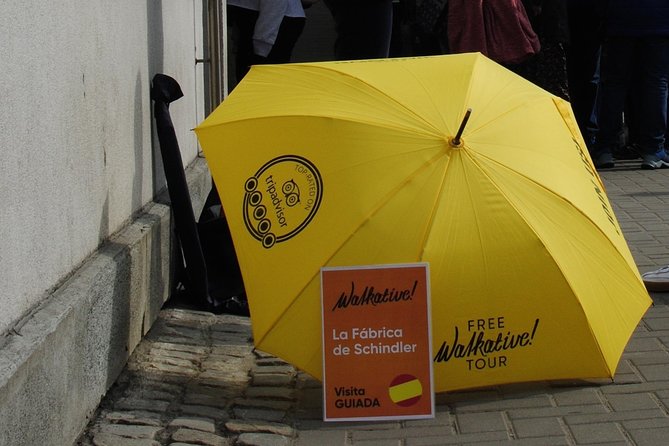
- Your guide in Spanish, and the yellow-umbrella queue plan
- Inside the factory: how the visit moves like a timeline
- What you actually learn: occupation life, not just the famous name
- Timing, crowds, and how to pace yourself through the exhibits
- Price and value: is $36 worth it?
- Where this tour fits best in your Krakow day
- Should you book this Schindler’s Factory tour?
- FAQ
- How long is Schindler’s Factory Museum?
- How much does it cost?
- Where is the meeting point?
- Do I need hotel pickup?
- What is included in the ticket price?
- What about avoiding the ticket line?
- What language is the tour?
- What group size should I expect?
- Is it suitable for children or teens?
- Is there public transportation nearby?
- Can I cancel for a refund?
Key things I’d plan around
- Small group (max 15): you get a guided flow instead of a loose self-walk.
- Spanish narration: a Polish guide keeps the story coherent in a language many visitors can use comfortably.
- Former Nazi factory setting: you’re moving through an actual workplace footprint tied to wartime industry.
- Queue-avoidance tip: look for the guide with the yellow umbrella at the start.
- Timeline path: the layout pushes you forward in order, which helps you understand the occupation story.
Other reviewed ways into the Schindler factory museum
- Krakow: Oskar Schindler’s Factory Entry Ticket & Guided Tour
★ 4.2 · 3,793 reviews - Krakow: Schindler’s Factory Tour with Entrance Ticket
★ 4.5 · 3,182 reviews - Krakow: Schindler’s Factory Tour with Entrance Ticket
★ 4.6 · 1,737 reviews - Schindler’s Factory in Krakow: Guided Tour & Skip the Line Ticket
★ 4.5 · 1,714 reviews
Schindler’s Factory Museum: a WWII story told through a workplace
This is not a museum you drift through. It’s a straight, story-driven walk through Krakow under Nazi occupation, with a strong focus on what ordinary people faced and how their lives changed as the war escalated.
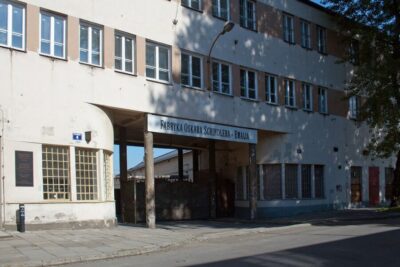
The setting matters. You’re in the context of a factory owned by the Nazi party, and the experience is framed around how this place intersected with saving lives during WWII. The big idea is simple but heavy: when the world was brutal and nothing felt controllable, people still found ways to act, sometimes at enormous personal cost. That’s the emotional engine of the visit.
And yes, it’s also connected to Schindler’s List. Even if you don’t treat that film as your main reference point, the connection gives you an anchor for why the location is famous in the first place.
Your guide in Spanish, and the yellow-umbrella queue plan
What makes this tour work well for most people is the guide. You’re not just getting an audio description. You’re getting a local Polish perspective, delivered in Spanish, plus context that links the exhibits into a clear narrative.
Two practical perks stand out. First, you avoid the worst waiting by using the group flow, and you’re instructed to look for the guide holding a yellow umbrella. Second, because the group is capped at 15, it’s easier for the guide to manage the pace inside a space that can get busy.
One more detail I’d factor in: the tour experience is about 1 hour 30 minutes. That’s a good length for a museum like this because it keeps you moving through the timeline without turning it into an all-day reading project.
Inside the factory: how the visit moves like a timeline
The core structure is a guided timeline as you follow the occupation story. The museum experience is designed so your path is forward, stage by stage. That helps you build understanding fast, because the exhibits are not random. They connect to the next moment in the story.
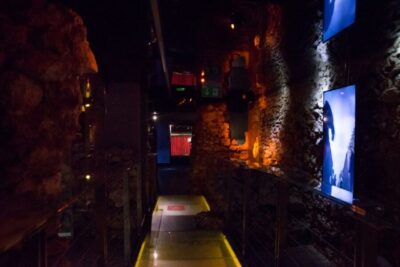
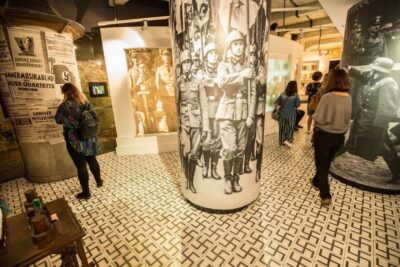
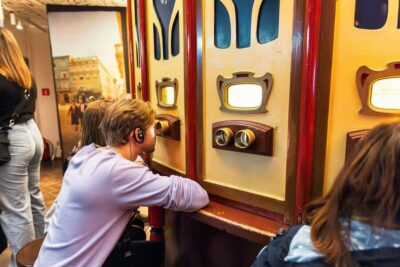
One thing I’d point out from the way people describe the visit is that it can feel packed with visuals and text. There are many artifacts and period items, and the path is built to keep you moving through them in sequence. Some visitors find it powerful but also a bit overwhelming if you try to stop at every label.
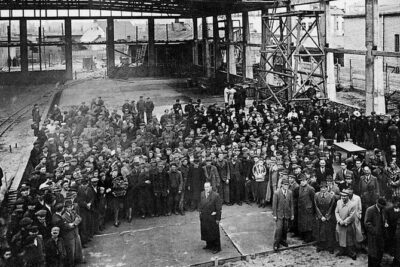
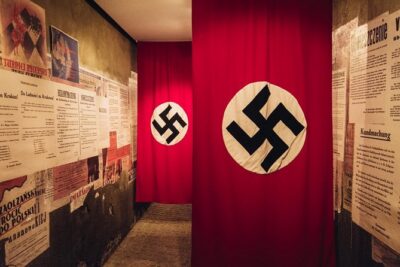
The visit centers on Krakow citizens during the occupation, showing how life shifted from normal routines toward forced control. The museum also covers more than just the Holocaust angle tied to Schindler. It looks at the broader occupation environment that shaped choices, fear, and survival strategies for both Jewish and non-Jewish residents.
If you happen to have a guide like Damian, people praised the way he handled anecdotes and connected the local story to the bigger war picture. Another guide mentioned by name, Lucy, was praised for expanding the timeline beyond WWII into what came after, including the long stretch of Soviet communism. That kind of framing can make the museum feel like it explains the full arc, not just one chapter.
What you actually learn: occupation life, not just the famous name
I like how this experience doesn’t treat Oskar Schindler as the sole focal point. The museum’s emphasis is on the occupied city and the people inside it, and that gives you a wider lens on what occupation meant in real life.
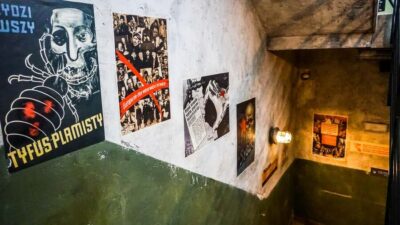
Here’s what that means for your understanding. You get context for how the Nazi regime reshaped daily life in Krakow, and how personal belongings, posters, and other period material help translate policy into lived experience. You’re not only learning about large events. You’re seeing the smaller, human-scale impacts that make the larger story feel real.
Still, it’s worth being honest about expectations. Some visitors come in wanting more detail on Schindler himself, and they felt the emphasis can skew more toward the Nazi occupation and Krakow’s experience than toward Schindler biography. If your top priority is Schindler as a character study, you might leave wanting more about him specifically. If your goal is to understand the environment where that story unfolded, the museum fits very well.
Below are the other Krakow trips we have logged
- Auschwitz-Birkenau Museum and Memorial Guided Tour from Krakow★ 4.5 · 1,510 reviews
- Krakow: Rynek Underground Museum Guided Tour★ 4.6 · 1,122 reviews
- Krakow Schindler’s Factory Museum Guided Tour in English★ 4.5 · 650 reviews
- Krakow: Auschwitz Birkenau Museum Guided Tour with Pickup★ 3.6 · 544 reviews
- Museum of illusions Entry Ticket★ 4.5 · 521 reviews
Timing, crowds, and how to pace yourself through the exhibits
The museum takes about 1 hour 30 minutes on this guided version, but the real variable is your reading pace. This is one of those places where you can either let the guide carry you through the story, or you can get stuck reading everything. In busy moments, that tension is real.
Crowding is the main consideration. Some people noted the museum was very busy, and others mentioned issues with how the flow of visitors is managed during peak times. Even when nothing goes wrong, the physical space and the popularity of the topic can make it feel tight.
A few pacing tips that help a lot:
- Decide what you want most, story flow or every label. If you want the whole narrative, trust the guide.
- If you’re sensitive to reading overload, focus on key moments the guide points out, then skim supporting text.
- Plan to stay for the full path. Some visitors note the ticket setup does not allow you to leave and return, so don’t treat it like a quick stop you can pause.
One practical note from visitor feedback: there is luggage storage, but if you rely on a specific locker setup, you may want to confirm where it is when you arrive. That matters if you’re traveling with a backpack and you do not want to drag it through corridors.
Price and value: is $36 worth it?
At $36 for about 90 minutes, the value comes down to one thing: are you using the guide well.
This ticket includes the museum entrance, VAT, and a professional local guide in Spanish. You’re also given a queue-avoidance advantage by meeting up with the guide holding the yellow umbrella. In a popular museum, that small operational help can be worth real money in time and stress.
Compared to a self-guided visit, the biggest advantage is interpretation. The museum contains a lot of information, and many people would need to work harder to piece it into a coherent story. A guided walkthrough takes that mental load off you and replaces it with a guided storyline that explains why the artifacts matter.
My balanced take: if you read slowly and want to “live inside the labels,” you might still find the museum intense and crowded even with a guide. But if you want to understand Krakow under occupation quickly and respectfully, $36 is a fair price for the combination of access and context.
Where this tour fits best in your Krakow day
This is a focused stop, not a multi-attraction day. The tour meets at Lipowa 4F, 30-702 Kraków, Poland, and it ends back at the same meeting point. That is convenient because you do not have to reorganize your plans afterward.
It’s also near public transportation, which is useful because many people stay around the Old Town and need a simple ride or a short trip to reach it. Even if you walk in, expect it to be a reasonable distance rather than next door to the main squares.
Who will enjoy it most:
- You want the occupation story with clear guidance.
- You prefer Spanish narration and want it explained by a Polish perspective.
- You like museums that connect history to real people and real consequences.
Who should consider carefully:
- You want a detailed biography of Oskar Schindler above all else. The visit leans more toward the occupied city and the occupation system around him.
- You need very quiet, uncrowded galleries. Crowds can affect how comfortable the reading-heavy exhibit feels.
- You strongly dislike following a guided group pace, even if you’re still curious.
Should you book this Schindler’s Factory tour?
Yes, if you want a guided, Spanish-led understanding of Nazi-occupied Krakow in the actual factory setting, and you value queue help and a clear timeline. For $36 and about 1.5 hours, it’s a strong use of limited time in Krakow, especially if you’re not planning to spend hours reading every panel on your own.
I’d skip or reconsider if your main goal is Schindler himself as the center of the story, or if you can only tolerate very quiet museums. In that case, you might still visit, but you should know what kind of focus this experience emphasizes.
If you do book, I’d show up ready to move through a lot of material. Let the guide do the heavy lifting. You’ll walk out with a much clearer sense of how Krakow under occupation worked, and how the famous Schindler connection fits into that reality.
FAQ
How long is Schindler’s Factory Museum?
The tour is approximately 1 hour 30 minutes.
How much does it cost?
It costs $36.
Where is the meeting point?
The tour meets at Lipowa 4F, 30-702 Kraków, Poland, and returns there at the end.
Do I need hotel pickup?
No, hotel pickup is not included.
What is included in the ticket price?
Entrance to the Schindler’s Factory Museum is included, along with VAT and a professional local guide in Spanish.
What about avoiding the ticket line?
You can avoid the queue by looking for your guide with the yellow umbrella.
What language is the tour?
The guide provides the tour in Spanish.
What group size should I expect?
This experience has a maximum of 15 travelers.
Is it suitable for children or teens?
It’s recommended for youth from 14 years.
Is there public transportation nearby?
Yes, it is near public transportation.
Can I cancel for a refund?
Free cancellation is available, and you can cancel up to 24 hours in advance for a full refund. If you cancel within 24 hours of the start time, no refund is offered.
More Museums in Krakow


More Tour Reviews in Krakow

The Schindler Factory, Other Ways In



Recently written up around Krakow
More Oskar Schindler Factory Tours.
 ★ 4.2Oskar Schindler’s Factory Entry Ticket & Guided TourFrom $353,793 reviews
 ★ 4.5Schindler’s Factory Tour with Entrance TicketFrom $493,182 reviews
 ★ 4.4Schindler’s Factory Skip-the-Line TicketFrom $253,105 reviews
★ 4.6Schindler’s Factory Tour with Entrance TicketFrom $401,737 reviews
 ★ 4.5Schindler’s Factory in Krakow: Guided Tour & Skip the Line TicketFrom $351,714 reviews
 ★ 4.7Schindler’s Factory & Ghetto Guided TourFrom $571,694 reviews
 ★ 4.3Schindler’s Factory Ticket with Guided Tour OptionFrom $421,485 reviews
 ★ 4.0Krakow Schindler’s Factory Guided Tour with Admission TicketFrom $351,156 reviews
Also on these Poland lists