
REVIEW · OSKAR SCHINDLER FACTORY TOURS
Schindler’s Factory Visit & Skip-the-Line Entry
Krakow’s history hits hard. This guided walk through Schindler’s Factory Museum uses multimedia and real wartime context to explain what happened to Krakow’s Polish and Jewish communities. You also get the human story behind the film you may have seen, and you walk through recreations and original-style exhibits that make the timeline easier to hold in your head.
What I like most is the skip-the-line promise, which can save real time in a very popular site. I also appreciate how the tour is built around an expert guide and clear audio via headsets, so the commentary stays easy to follow even when you are moving through tight spaces. Some guides, like Helen and Barbara, come through in the reviews as especially strong at explaining the story.
The main drawback to plan for is crowding. This is often run in fairly large groups, and the museum rooms can feel tight, so you may get less time to read and linger than you want, especially toward the end of the tour.
In This Review
- Key Things to Know Before You Go
- What You’re Actually Touring at Schindler’s Factory
- Skip-the-Line Entry and the ID Rule You Cannot Ignore
- How the 1.5-Hour Guided Walk Flows Through Occupied Krakow
- Entering Through The City Under Occupation
- Hairdresser and Photographer Spaces
- The Photoplasticon Experience
- A Tram Ride Through the Windows
- The Ghetto Labyrinth, Jewish Apartments, and Eyewitness-Style Context
- Płaszów and the Schindler Thread: How One Person Fits
- Guide Quality, Headsets, and Why Group Size Matters
- Walking, Timing, and How to Make It Feel Less Rushed
- Price and Value: Is $50.46 Worth It?
- Who This Tour Best Suits
- Should You Book Schindler’s Factory Skip-the-Line Tour?
- FAQ
- How long is the Schindler’s Factory Museum guided tour?
- Is the tour offered in English?
- Does the price include admission?
- Do I need to bring ID for entry?
- Is skip-the-line entry included?
- What exhibits and scenes does the tour include?
- Can I cancel for a full refund?
Key Things to Know Before You Go
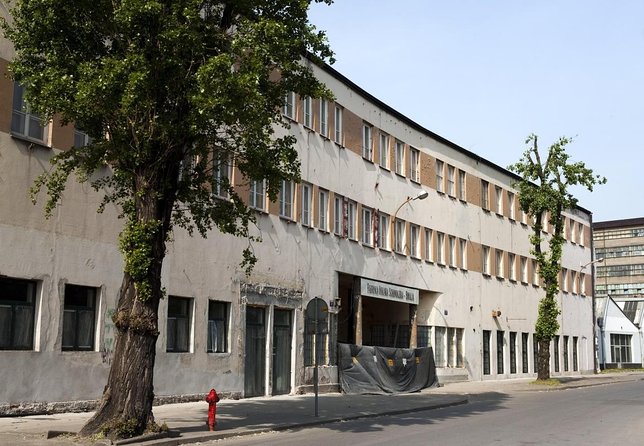
- Skip-the-line entry is included, but expect some crowding around the check-in point
- English guide commentary keeps the story clear as you move from room to room
- Headsets can make it easier to hear over crowds and in louder exhibit areas
- Multimedia and rare materials help connect names, places, and dates
- You must match your ticket name to your ID for entry
- Walking and standing are part of the experience, with sections that feel narrow
Other reviewed ways into the Schindler factory museum
- Krakow: Oskar Schindler’s Factory Entry Ticket & Guided Tour
★ 4.2 · 3,793 reviews - Krakow: Schindler’s Factory Tour with Entrance Ticket
★ 4.5 · 3,182 reviews - Krakow: Schindler’s Factory Tour with Entrance Ticket
★ 4.6 · 1,737 reviews - Schindler’s Factory in Krakow: Guided Tour & Skip the Line Ticket
★ 4.5 · 1,714 reviews
What You’re Actually Touring at Schindler’s Factory
Schindler’s Factory in Krakow is one of those places where the setting matters. The building is the anchor, but the emotional weight comes from how the museum tells the story of occupation in Krakow, not just a single character. You see how the city changed under Nazi rule, and you learn what happened to both Polish and Jewish residents.
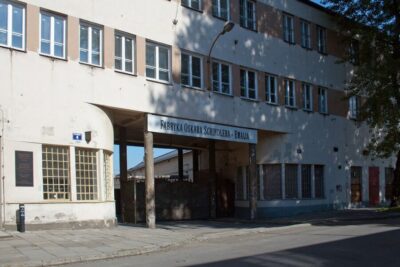
One detail I found important for setting expectations: the factory itself was not kept in Krakow in the way you might assume. A review noted that the factory operation was moved elsewhere near the end of World War II, and what remains today is the museum setup in the original structure. So yes, you will feel like you are in Schindler’s world, but the real product here is the exhibition and guided interpretation.
If you have seen Schindler’s List, you will notice the tour threads the film’s narrative into a bigger map of what led up to it and what followed. That makes the experience more useful than a simple biography. You leave with a clearer sense of the machinery of occupation and persecution, and where Schindler fits inside that timeline.
Skip-the-Line Entry and the ID Rule You Cannot Ignore
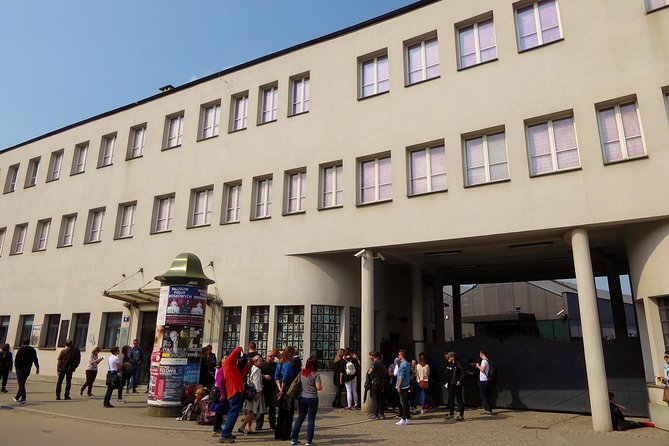
This tour includes admission ticket access and a skip-the-line entry guarantee. That matters because this museum is popular, and waiting can eat into your short time there. Still, from what I’ve gathered, the “skip” benefit is most reliable once you are inside the system. The first moments can be chaotic, especially if multiple groups are gathering outside.
Here is the part you must treat like a checklist item: the museum uses personalized tickets. You need to provide full names for every participant when reserving, and you must bring your passport or ID for entry. The name on your ticket must match the name on your document. If it does not match, entry can be denied. Bring your ID card or other identification document and be ready to show it to the museum staff.
Also note timing flexibility. For departures starting January 1, 2026, times are approximate and may change based on museum scheduling. You can choose a preferred time, but the exact start is not guaranteed. I would book the time that fits your Krakow plan best, then give yourself a little buffer so you are not sprinting between attractions.
How the 1.5-Hour Guided Walk Flows Through Occupied Krakow
The tour runs about 1 hour 30 minutes. That is long enough for a real guided narrative, but not long enough to slow down and read every label at your own pace. The biggest payoff is that you are not left on your own trying to connect the dots.
As you move through the museum, the guide helps you understand what you are looking at and why it matters. Several exhibits are set up like scenes rather than just display cases, so you spend your time moving through different “stations” of the story.
A typical flow includes these kinds of stops and transitions:
Entering Through The City Under Occupation
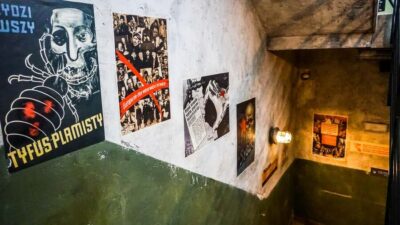
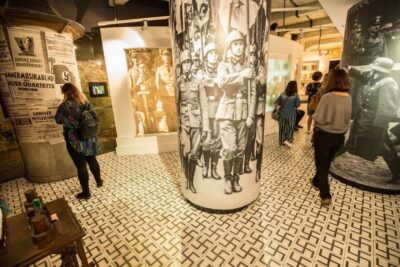
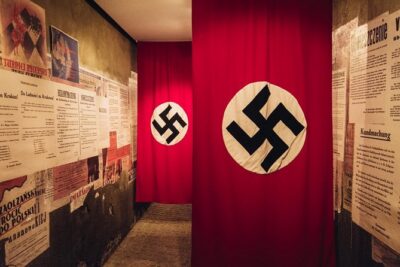
You start by learning how the exhibition frames Krakow during the Nazi occupation. The point is not only what happened, but how persecution was systematized, how daily life changed, and how quickly “normal” became dangerous.
The guide’s role is practical here. Without a guide, it is easy to treat the museum like a series of separate rooms. With the guide, you get a chronological thread that helps you remember key points later.
Below are the other Krakow trips we have logged
- From Krakow: Wieliczka Salt Mine Tour & Skip the Line Ticket★ 4.4 · 3,925 reviews
- Krakow: Schindler’s Factory Skip-the-Line Ticket★ 4.4 · 3,105 reviews
- Schindler’s Factory in Krakow: Guided Tour & Skip the Line Ticket★ 4.5 · 1,714 reviews
- Auschwitz-Birkenau: Skip-the-Line Ticket and Guided Tour★ 4.2 · 1,034 reviews
- Auschwitz Birkenau Guided Tour/Skip The Line/PickUp/Guide ENG★ 4.5 · 930 reviews
Hairdresser and Photographer Spaces
You will walk into rooms that reference everyday services, like a hairdresser and a photographer. That sounds simple, but it is a powerful technique. These spaces make it easier to picture life continuing under impossible conditions, instead of jumping straight from politics to camp history.
If you are sensitive to the subject matter, pace yourself here. These sections use staging and interpretation to connect everyday routines to the reality of occupation.
The Photoplasticon Experience
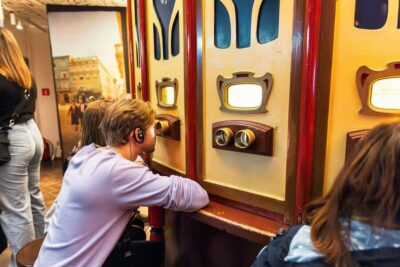
One of the more distinctive exhibit moments is the authentic photoplasticon. This kind of display uses layered media and visual presentation to represent how propaganda, observation, and control worked in that era.
This is where headsets can matter. Even when rooms feel noisy or crowded, you are still getting the story explanation aligned with what you are seeing.
A Tram Ride Through the Windows
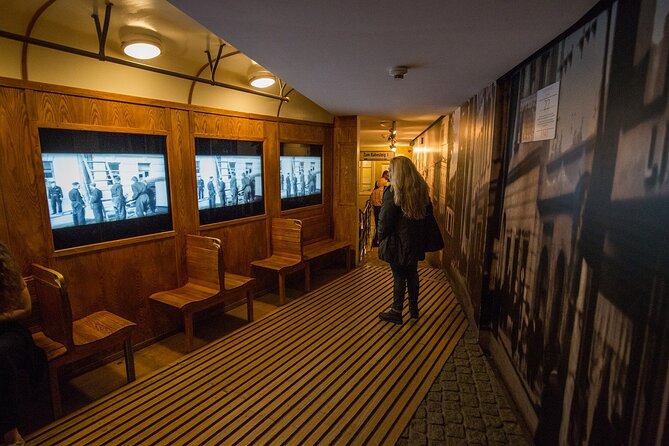
You get on a tram inside the exhibit and, through the windows, you watch film about city life. It is a clever way to show the city as a living place, not just a background.
From a practical point of view, this also breaks up the walking and standing. You still need your attention, but your body gets a small rest between tight rooms.
The Ghetto Labyrinth, Jewish Apartments, and Eyewitness-Style Context
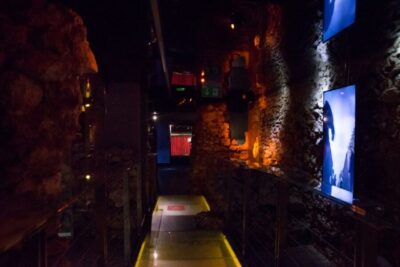
After the more general city changes, the tour moves into the narrow, maze-like sections of the ghetto area. One room includes a Jewish apartment setup, so you can see domestic life presented within the larger framework of confinement and persecution.
This part of the tour is intense. The exhibition uses modern multimedia and guided commentary to connect the facts to lived experience. It is not just names and dates. It is more like building a mental map of how life could be both close and trapped at the same time.
A few things I would keep in mind so you get more out of this section:
- Give your eyes time to focus. The rooms can be crowded, and you will get pulled forward by the group pace.
- Listen closely to the guide’s explanations of what you are seeing, because the apartment scenes are designed to communicate more than decoration.
- If you come with young kids or highly sensitive adults, decide in advance whether this is the right place for them. Most people can participate, but “can” is not always “should.”
Płaszów and the Schindler Thread: How One Person Fits
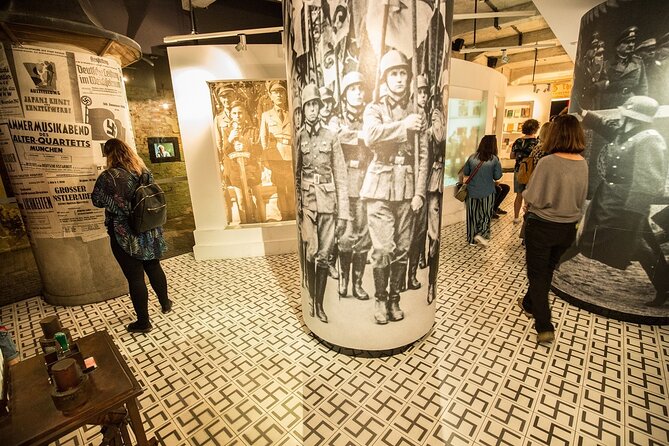
As the tour continues, it follows the story toward the camp in Płaszów. This is where the exhibition shifts from “city and ghetto” into the consequences of the system, and you get a clearer idea of how people were moved, categorized, and destroyed.
At the same time, the tour does not ignore Schindler. The exhibition includes the story of the factory owner and occupier dynamics, and that is where the connection to the film becomes more concrete. One review noted that the tour begins chronologically prior to World War II and ends after liberation, which helps explain why Schindler’s actions happened when they did, instead of feeling random.
Also, do not expect the tour to be only about Schindler the man. One review pointed out that the tour is broader, with a strong focus on Krakow and the fates of Polish and Jewish inhabitants. If you want a pure biography, you may feel you need extra reading afterward. If you want the bigger context so the film’s story lands with weight, you will likely feel satisfied.
Guide Quality, Headsets, and Why Group Size Matters
The tour is built around a professional guide, and the best sessions are the ones where the guide keeps the timeline crisp and ties exhibits together. Multiple reviews praised guides for being clear, friendly, and strong at answering questions afterward.
Audio support also matters. Reviews specifically noted that headsets worked well and that sound quality was good. In tight rooms, that can be the difference between understanding what is happening and getting lost in background noise.
Then comes the tricky part: group size. Several reviews describe groups that were large, including a group of 20 that felt too big for narrow areas. In some rooms, you may have to stand close and move quickly, which reduces the time you can spend reading and really absorbing the details.
If you hate rushing, pick a start time that feels less peak for your schedule, and go in with the mindset that this is a guided narrative more than an independent museum wander. You can still look closely as you go, but you will not have unlimited time in every room.
Walking, Timing, and How to Make It Feel Less Rushed
You should plan for walking and standing. The experience is structured around movement through rooms and scenes, including parts that are confined. The total time is about 1 hour 30 minutes, and a few reviews described the tour feeling rushed, with limited time to absorb exhibits.
So here is how to get the most out of a short schedule:
- Wear comfortable shoes. Your feet will do most of the work.
- Keep your phone put away until you are sure you can use it in a specific area. In crowded museums, it slows things down.
- If you want extra time with specific sections, plan a self-guided return later. That way you do not fight your own expectations during the group tour.
For 2026 dates, remember that times are approximate. Arrive a bit early so you can get settled without stress if your start shifts.
Price and Value: Is $50.46 Worth It?
At $50.46 per person, this is not a budget activity. But you are buying three things at once:
- Guided interpretation for about 1.5 hours, not just a ticket
- Admission included to a major museum
- Skip-the-line entry that can save time
You can absolutely visit the museum on your own. But the value here is that the guide connects what you see to what it means, especially in a complex, emotionally heavy exhibition. If you go in with only a vague idea of World War II in Krakow, a good guide helps you build clarity fast.
The price also becomes easier to justify if you are there for the film connection. You want that Schindler thread explained in a way that does not flatten everything into a single headline.
If you are very detail-oriented and like to read every label, you might feel constrained by tour pacing and group size. In that case, consider whether a self-paced visit plus one extra museum hour is a better match.
Who This Tour Best Suits
This tour fits best if you want a guided, structured experience. It is a strong match for:
- Film fans who want the real-world context behind Schindler’s List
- History-minded travelers who want the Krakow and occupation storyline, not just one person’s biography
- Teens and families who are ready for serious World War II content (one review specifically mentioned taking two teenagers and having a good experience)
It may be less ideal if you:
- Hate crowds and narrow spaces
- Need long quiet time to read every exhibit
- Are looking strictly for Schindler-focused storytelling
Should You Book Schindler’s Factory Skip-the-Line Tour?
I think you should book this if your priority is clarity and speed with a guide. You will walk into a powerful museum and come out with a more organized understanding of Krakow under occupation, the fate of Polish and Jewish inhabitants, and the Schindler thread that the film made famous.
I would book with a plan for crowding and pacing. Bring your ID, wear good shoes, and accept that you are in a guided format where the group sets the tempo. If you do that, the experience is very likely to feel worth the money, because the combination of skip-the-line access, guided commentary, and strong exhibit presentation is exactly what helps this story land.
FAQ
How long is the Schindler’s Factory Museum guided tour?
It runs about 1 hour 30 minutes.
Is the tour offered in English?
Yes, the tour is offered in English.
Does the price include admission?
Yes, admission ticket is included.
Do I need to bring ID for entry?
Yes. You must bring your passport or ID, and the name on your ticket must match the name on your document. Entry may be denied without this.
Is skip-the-line entry included?
Yes. The tour includes a guarantee for skip-the-line entry to Schindler’s Factory Museum.
What exhibits and scenes does the tour include?
You will go through parts of the museum such as a hairdresser and photographer areas, an authentic photoplasticon, a tram area with a film about city life, and a ghetto labyrinth area with a Jewish apartment setup, with the story continuing toward Płaszów.
Can I cancel for a full refund?
You can cancel up to 24 hours in advance for a full refund.
More Skip the Line in Krakow



More Tour Reviews in Krakow



The Schindler Factory, Other Ways In


Recently written up around Krakow



More Oskar Schindler Factory Tours.
 ★ 4.2Oskar Schindler’s Factory Entry Ticket & Guided TourFrom $353,793 reviews
 ★ 4.5Schindler’s Factory Tour with Entrance TicketFrom $493,182 reviews
 ★ 4.4Schindler’s Factory Skip-the-Line TicketFrom $253,105 reviews
★ 4.6Schindler’s Factory Tour with Entrance TicketFrom $401,737 reviews
 ★ 4.5Schindler’s Factory in Krakow: Guided Tour & Skip the Line TicketFrom $351,714 reviews
 ★ 4.7Schindler’s Factory & Ghetto Guided TourFrom $571,694 reviews
 ★ 4.3Schindler’s Factory Ticket with Guided Tour OptionFrom $421,485 reviews
 ★ 4.0Krakow Schindler’s Factory Guided Tour with Admission TicketFrom $351,156 reviews
Also on these Poland lists