
REVIEW · SOPOT AND GDYNIA TRICITY TOURS
Sopot Private City Walking or Bike Tour with a local architect
Sopot looks different when you read the buildings. This private tour uses an architect’s eye to connect Sopot’s spa era, villas, and seaside landmarks into one easy route, with historical photos to show how the town changed. You’ll get a story at street level, not a lecture from far away.
I love the way this tour blends design and atmosphere, especially at spots with quiet garden paths, old beachfront glamour, and real architectural details you can actually point to. You’ll also like that it’s small, up to 9 people, and you can meet the guide who has a track record for explaining things in a way that does not drown you in facts, like Agnieszka Łasota.
One thing to plan for: the pace stays active, and the lighthouse stop involves climbing steps. If wind off the Baltic is rough, you may want to dress warm and treat the lighthouse climb as a choose-your-moment decision.
In This Review
- Quick highlights
- A private, architect-led Sopot walk or bike ride (up to 9 people)
- Bohaterów Monte Cassino: Sopot’s first pedestrian street and the sea road
- Dworek Sierakowskich: 18th-century calm, garden time, and Chopin echoes
- From the ravine bridge to Villas Street and Poland’s Montmartre
- Goyki 3 Art Inkubator and Alpine-style spa fashion far from the Alps
- Spa architecture stroll: rich complexes, the crooked house, and the Dahlberg connection
- Haffner Monument, the early Sopot settler, and the Riviera of the North mood
- Sofitel Grand Sopot and the 1920s beachfront investment that changed everything
- Skwer Kuracyjny: the 1925 plaza and old photos of Sopot in full swing
- Ending at the Changing Rooms and 1905 fishermen-house relocation stories
- Pier and Sopot Lighthouse: steps optional, views not
- Price and value: when $204.04 per group makes sense
- Who this tour is for (and who should choose a different fit)
- Should you book this Sopot private architect tour?
- FAQ
- How long is the Sopot private city walking or bike tour?
- How much does the tour cost, and how many people are in a group?
- Is the tour offered in English?
- Is pickup available?
- Where does the tour start?
- Where does the tour end?
- Are any admission tickets included?
- Are service animals allowed?
Quick highlights
- Architect-led storytelling focused on how the buildings grew into Sopot’s identity
- Historical photos at key corners, so you can see change over centuries while you walk
- Free-entry stops sprinkled throughout, so you spend more time outside and less time in ticket lines
- Spa architecture and villa streets that explain the Riviera of the North vibe
- Sofitel Grand Sopot and Skwer Kuracyjny for the 1920s beachfront boom
- Pier and Sopot Lighthouse with a reward view, plus flexibility on the stairs
The other two cities, and how we got around them
- Highlights of Gdańsk, Gdynia and Sopot 1-day Private Tour
★ 4.9 · 59 reviews - Gdansk Sopot and Gdynia 3 Cities Private Full-Day Tour
★ 5.0 · 56 reviews - Best of Gdańsk, Gdynia and Sopot in 1-Day Private Car Tour
★ 5.0 · 37 reviews - Undercover City Games: Gdynia
★ 5.0 · 34 reviews
A private, architect-led Sopot walk or bike ride (up to 9 people)
This is a private tour for one group, capped at up to 9 people, and it runs about 1 hour 30 minutes to 2 hours. That time window matters in Sopot because the sights are close, but the walking can still add up fast if you also stop for photos.
You can do it as a walking tour or a bike tour, and English is offered. Pickup is available, and you’ll get a mobile ticket, which is handy if you do not want to fuss with paper confirmations.
The guide is a local architect, and the vibe is practical: you get explanations you can use, plus plenty of room for questions. From experience with how Agnieszka Łasota teaches, the goal feels like helping you notice details without turning it into homework.
Bohaterów Monte Cassino: Sopot’s first pedestrian street and the sea road
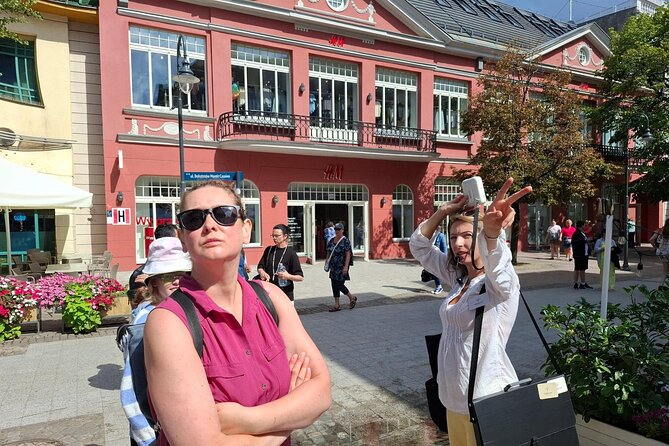
You start at Restauracja McDonald’s, Bohaterów Monte Cassino 21, and the first stop sets the tone fast. Bohaterów Monte Cassino is described as the first pedestrian street in Poland, and it still carries that “main route to the sea” energy from when Sopot was smaller and more fishing-focused.
This is where the historical photo element really pays off. You’ll compare what you see now with older views of the center, which helps you understand why modern façades feel the way they do.
A small caution here is timing. If it is windy or cold, the open pedestrian stretch can feel brisk, so layer up early rather than waiting until mid-tour.
Dworek Sierakowskich: 18th-century calm, garden time, and Chopin echoes
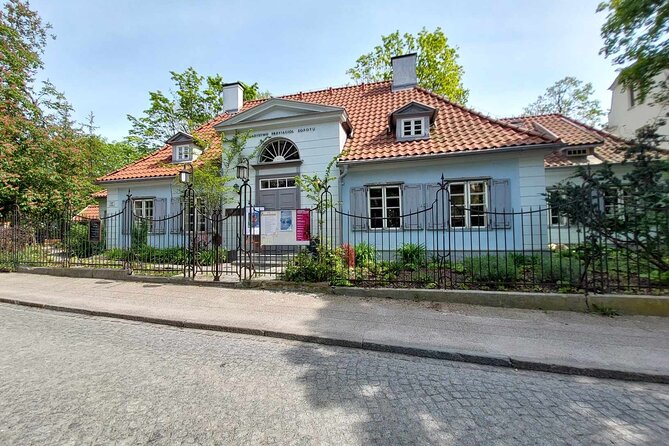
Next you head to Dworek Sierakowskich, an 18th-century building tied to the world of manor estates. It worked as a guest house off a larger manor, so the feeling is calmer, less “high street” and more “this is where people slowed down.”
The interiors are noted as interesting, and the back garden is a big part of the appeal. If you like architecture, small courtyards, and the quiet corners that do not show up in quick guidebooks, this stop is for you.
There is also a Chopin connection. You’ll see a bust of Fryderyk Chopin, and the story suggests he may have stayed and played piano here during a holiday. It is the kind of detail that makes a building feel lived-in, not just old.
From the ravine bridge to Villas Street and Poland’s Montmartre
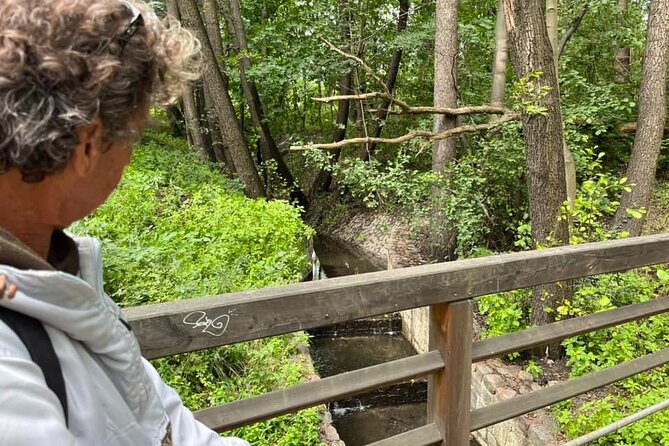
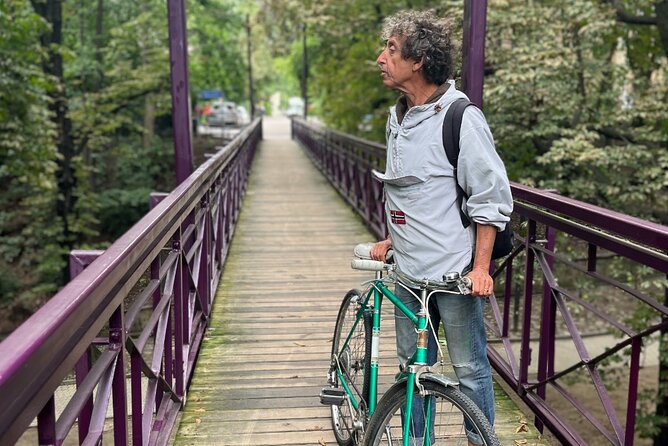
Between major stops, the route includes passing a picturesque bridge over a deep ravine, which adds a scenic pause to the walk. Then you move to a street once called Villas Street, where architectural styles shift into a classic villa look.
The oldest house there dates to 1881, and that timeline helps you connect the idea of Sopot as a health and leisure destination. This stretch also has a strong identity through the stories attached to the walls and houses you pass.
A standout theme here is that in the second half of the 20th century the street was nicknamed Poland’s Montmartre. That label helps explain why people associate Sopot with creative energy and stylish residential architecture, even though it is not a hilltop neighborhood.
Below are the other Gdansk trips we have logged
- Main Town Gdańsk Walking Tour★ 5.0 · 644 reviews
- Discover Gdansk Walking Tour★ 5.0 · 495 reviews
- Gdańsk: Old Town Private Walking Tour with Legends and Facts★ 4.9 · 245 reviews
- Gdansk Old Town 2-Hour Walking Tour★ 4.5 · 94 reviews
- Gdansk Old Town Half-Day Private Walking Tour★ 4.9 · 62 reviews
Goyki 3 Art Inkubator and Alpine-style spa fashion far from the Alps
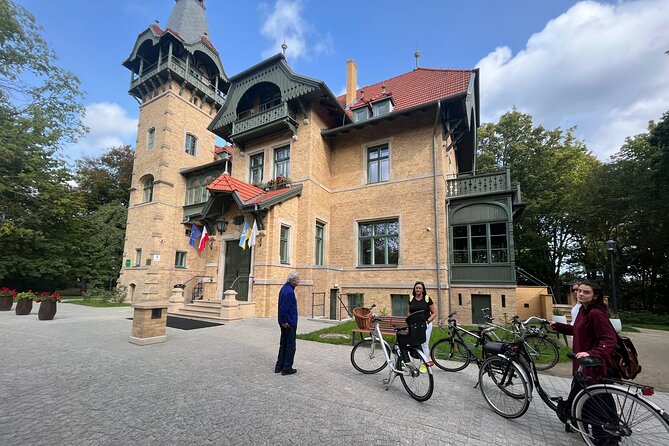
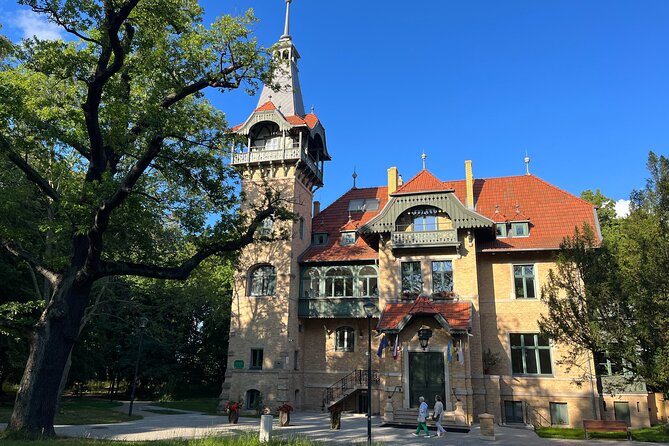
At Goyki 3 Art Inkubator, you get one of the bigger late-19th-century villa stories on the route. The building is described as the Tower Villa, built by a merchant for his family, with a long and rather sad story linked to music.
Today it functions as an art institution, and here comes the fun architectural question. The place is described as having Alpine Resort style, but it is far from the Alps and it sits in a seaside spa town. The guide explains why that style trend spread, including how European spa resorts took off starting in the 18th century.
What I like about this stop is the “why” behind the shapes and styles. It turns a façade into a cultural clue, and you start noticing how spa towns borrowed prestige from elsewhere.
Spa architecture stroll: rich complexes, the crooked house, and the Dahlberg connection
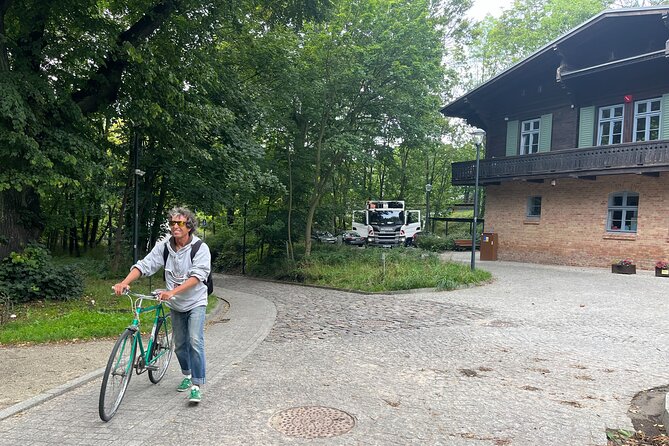
After the villa and art stop, the tour turns to what Sopot is famous for: spa architecture. Sopot is said to have the richest complex of spa architecture in Europe, and the walk helps you understand what that means when you are standing on the streets.
Along the way you also get a creative thread through the neighborhood’s artist connection. The tour highlights Per Oscar Gustav Dahlberg, a Swedish artist who moved to Sopot in 1996 after falling in love with the place.
If you feel like taking something tangible home, Dahlberg’s studio and the chance to buy graphics or an album about Sopot or Gdańsk architecture are mentioned. There is also a nod to the famous crooked house, with its design inspiration said to come from Dahlberg’s drawings. Even if you just look, you’ll see the connection more clearly once you know where the idea originated.
Haffner Monument, the early Sopot settler, and the Riviera of the North mood
Next comes Jan Jerzy Haffner Monument, and the stories move from buildings to people. Haffner is described as the town’s godfather, previously a surgeon in Napoleon’s army, and the guide connects him to the decision to live in Sopot long before the area was widely known.
This stop is short, but it works as a bridge between eras. It reminds you that spa towns did not appear by accident. Someone picked the place early, and then the town’s image grew from that first wave.
You’ll also hear about Sopot’s mix of tennis courts, parks with big trees, and sandy beaches. That blend is part of the “Riviera of the North” story, and it helps you understand why spa life here was not only medicinal, it was also social and sporty.
Sofitel Grand Sopot and the 1920s beachfront investment that changed everything
At Sofitel Grand Sopot, you stand in front of one of the most prominent symbols of Sopot’s beachfront boom. The Grand Hotel sits majestically on the beach, and the guide shares how the city itself helped drive the investment decision in the 1920s.
This is where the tour gives you context for the splendor. It is not just “pretty hotel,” it is a snapshot of how Sopot wanted to compete with bigger European seaside destinations.
If your thing is architecture and urban planning, you’ll enjoy the way the guide connects the hotel’s presence to the larger spa-town ambition. You get a sense of what the town promised visitors, and why the resort identity became so strong.
Skwer Kuracyjny: the 1925 plaza and old photos of Sopot in full swing
Then it is Skwer Kuracyjny, a beautiful plaza created in 1925. The focus here is again on old photos, showing Sopot when it was known all over Europe as the Riviera of the North.
This stop is great for resetting your eye. After villas and hotel glamour, the open plaza gives you room to take in scale and layout. You can also compare the “then” photos with what you see now, which makes the history feel less abstract.
A drawback to keep in mind: if it is very busy or windy, plazas can be noisy and you might have to concentrate harder to catch the finer details. Still, this is a stop that rewards patience.
Ending at the Changing Rooms and 1905 fishermen-house relocation stories
The tour’s final stretch heads to the Changing Rooms built in 1905. The guide notes there are funny stories here, and this is one of those moments where seaside leisure history becomes more human and less ceremonial.
Right around this area, you’ll hear about fishermen’s houses that were gently relocated in 1905. That detail matters because it shows how spa tourism and city planning affected real daily life, not only the guest experience.
You’ll likely feel this part of the walk as the tour ties together the spa world with the working coast. It is an effective ending because it leaves you near the waterfront, so your head stays in “Sopot” mode.
Pier and Sopot Lighthouse: steps optional, views not
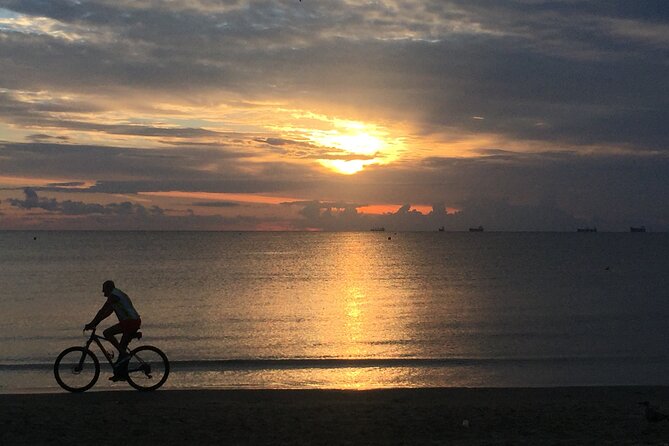
At some point during the route, you pass the famous pier. You’ll learn about it during the walk, so you have a better sense of what you are seeing when you come back later to enjoy it at your own pace.
Then comes Sopot Lighthouse. The climb involves steps, and the guide explicitly frames it as your call, because it can feel tiring. The upside is the view, and that is why this stop is built into the tour.
This is a smart inclusion because you can decide based on energy. If your legs are fine, take the climb. If not, you still get the meaning of the lighthouse so you do not feel like you skipped a “must.”
Price and value: when $204.04 per group makes sense
The price is $204.04 per group for up to 9 people, and the duration is about 1 hour 30 minutes to 2 hours. On a per-person basis, it tends to become good value faster when you share with friends or family.
What makes it feel fair is the design of the stops. You are not paying for a schedule of paid museums. Many buildings are listed with free admission, and the tour uses historical photos and street-level architecture reading to make the time count.
Also, the lighthouse admission is listed as included, so you do not get surprised by one final add-on ticket. And if your plans shift, the tour includes free cancellation up to 24 hours in advance for a full refund.
If you are traveling solo, the cost can still make sense when you really care about architecture and you want a small-group, guided route rather than trying to piece Sopot together alone. The private format also means you can ask for clarifications and adjust your pace.
Who this tour is for (and who should choose a different fit)
This tour is a strong fit if you like design, urban history, and reading a city through its details. It is also ideal if you want a route that mixes grand beachfront identity with quieter villa neighborhoods, without turning the day into museum hopping.
It is less ideal if you want a strictly laid-back stroll with zero effort. The lighthouse steps and active walking time mean you’ll probably want comfortable shoes and a weather-aware outfit.
It can also suit different language needs. English is offered, and the teaching style shared by Agnieszka Łasota is reported as easy to follow even when Polish comes up, including with tools like Google Translate.
Should you book this Sopot private architect tour?
Yes, if you want Sopot to make sense fast. The best reason to book is the architecture-based storytelling plus the historical photo approach, because it turns familiar streets into a clearer timeline.
I’d book it when you have limited time and you want a smart route from the pedestrian center to the spa-focused buildings, then out to the coast for the pier and lighthouse. If you love details like Chopin-linked corners, spa-era plaza design, and villa street identities such as Poland’s Montmartre, this tour will feel like a shortcut to real understanding.
Skip or swap plans if stairs are a problem for you, or if you only want major landmarks with no attention to the smaller architectural clues. Otherwise, this is one of the more thoughtful ways to experience Sopot beyond the postcard view.
FAQ
How long is the Sopot private city walking or bike tour?
It lasts about 1 hour 30 minutes to 2 hours.
How much does the tour cost, and how many people are in a group?
The price is $204.04 per group, up to 9 people. It is a private tour, so only your group participates.
Is the tour offered in English?
Yes, it is offered in English.
Is pickup available?
Yes, pickup is offered.
Where does the tour start?
The tour starts at Restauracja McDonald’s, Bohaterów Monte Cassino 21, 81-706 Sopot, Poland.
Where does the tour end?
The activity ends in a different location. The route description says it ends next to the Changing Rooms built in 1905.
Are any admission tickets included?
The lighthouse stop lists admission as included. Other stops are described with free admission.
Are service animals allowed?
Yes, service animals are allowed.
More Tours in Gdansk


More Tour Reviews in Gdansk



Sopot, Gdynia and the Rest of the Tricity


Recently written up around Gdansk




More Sopot and Gdynia Tricity Tours.
 ★ 4.7Sunset Yacht Cruise with Welcome DrinkFrom $44278 reviews
 ★ 4.8Yacht Cruise Around the Bay with Welcome DrinkFrom $26231 reviews
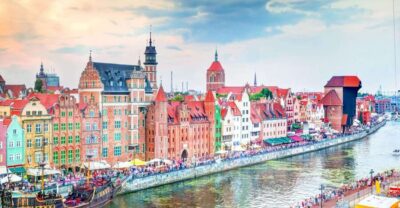 ★ 4.9Highlights of Gdańsk, Gdynia and Sopot 1-day Private TourFrom $39759 reviews
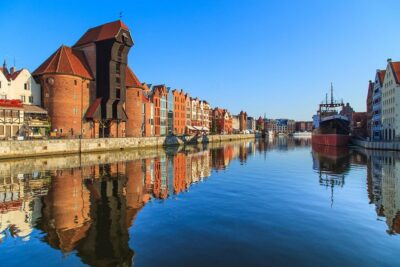 ★ 5.0Gdansk Sopot and Gdynia 3 Cities Private Full-Day TourFrom $25456 reviews
 ★ 4.9Gdansk/Sopot: Breakfast Cruise on a CatamaranFrom $5342 reviews
 ★ 5.0Best of Gdańsk, Gdynia and Sopot in 1-Day Private Car TourFrom $39637 reviews
 ★ 5.0Undercover City Games: GdyniaFrom $2534 reviews
 ★ 5.0Gdańsk Shore Excursion: Private Gdańsk, Sopot & Gdynia TourFrom $25220 reviews
Also on these Poland lists