
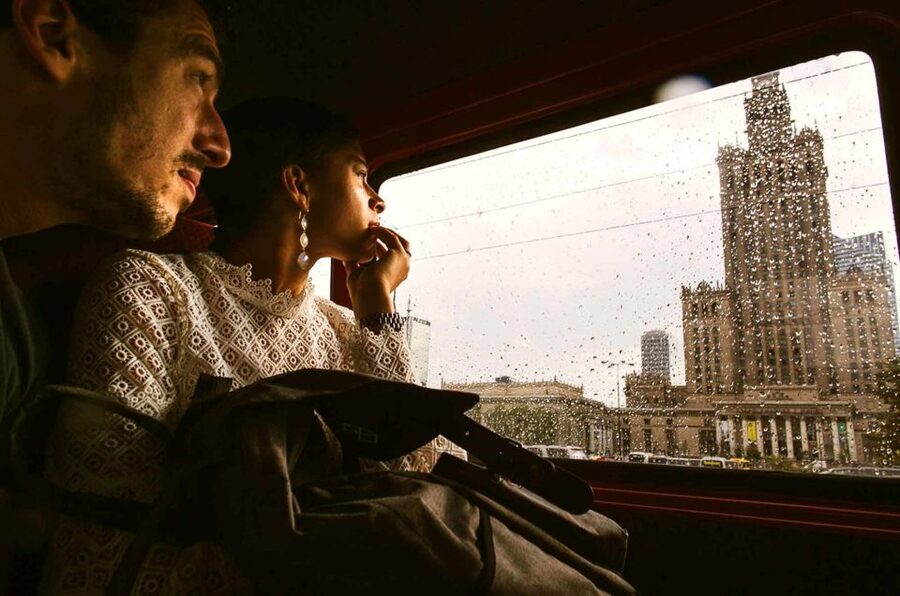
REVIEW · WARSAW CITY TOURS
Warsaw: Behind the Scenes City Tour with Hotel Pickup
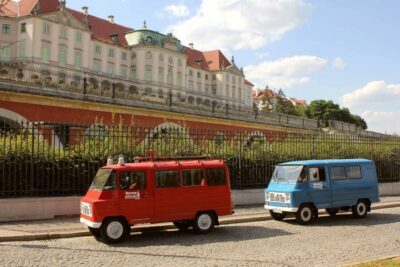
Warsaw has layers you feel in your gut, not just your head. This behind-the-scenes tour uses a classic Żuk retro minibus to move you through neighborhoods and eras most sightseeing routes miss, with guides like Konrad and Marcin bringing the city’s turning points to life.
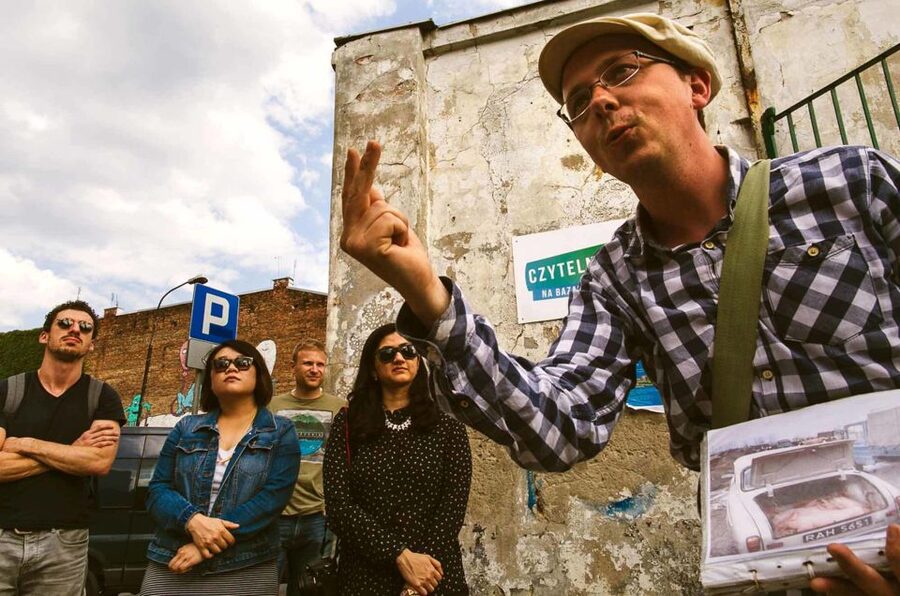
What I really love is how the trip is built around story, not checklist stops, starting with the long arc from pre-war Warsaw to the destruction of WWII and the changes after 1989. Second, I love the people factor: you ride with a small group (up to 8 per minibus) and you get an English-speaking guide who can be funny, clear, and responsive, not robotic.
One thing to consider is comfort. These vintage minibuses are not air-conditioned, and some do not have seat belts (per rules for historic vehicles), plus there are walking segments at each stop, so wear real shoes.
In This Review
- Key things that make this tour worth your time
- A retro Żuk ride that makes Warsaw’s past feel present
- Hotel pickup and the real meaning of a 3-hour tour
- The Jewish Ghetto remnants and uprising sites that change how you see the map
- Muranów reconstruction: Soviet planning you can still read in streets today
- Crossing the Vistula into Praga: where old Warsaw survived
- Communist-era city rebuilding and why it still shapes your walk
- Ending with modern Warsaw: growth, innovation, and a second chance
- Price and value: what $129 buys you in Warsaw time and access
- Comfort, rules, and practical tips before you go
- Should you book this behind-the-scenes Warsaw tour?
Key things that make this tour worth your time
- Retro Żuk minibus rides that turn transportation into part of the experience
- A history thread from ghetto to communism to 1989 so places make sense
- Neighborhoods you might not find alone, including Praga across the Vistula
- Small-group format with up to 8 passengers per vehicle
- English-speaking guides known for humor and tailoring information
- Comfort limits to plan for (no A/C, heating included in winter)
Warsaw rebuilt itself twice over. Here is how else we saw it
- Warsaw: Chopin Concert in the Old Town
★ 4.8 · 2,287 reviews - Warsaw: Traditional Galar Cruise on The Vistula River
★ 4.6 · 1,640 reviews - Warsaw: Old Town Highlights Walking Tour in English
★ 4.7 · 1,516 reviews - Warsaw Concert: Chopin – Painted by Candlelights with Wine
★ 4.8 · 1,442 reviews
A retro Żuk ride that makes Warsaw’s past feel present
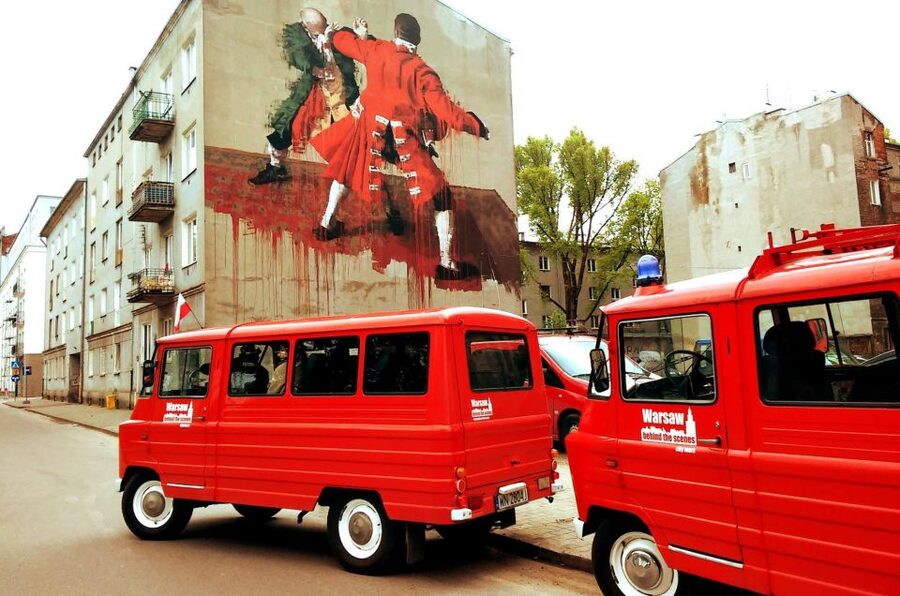
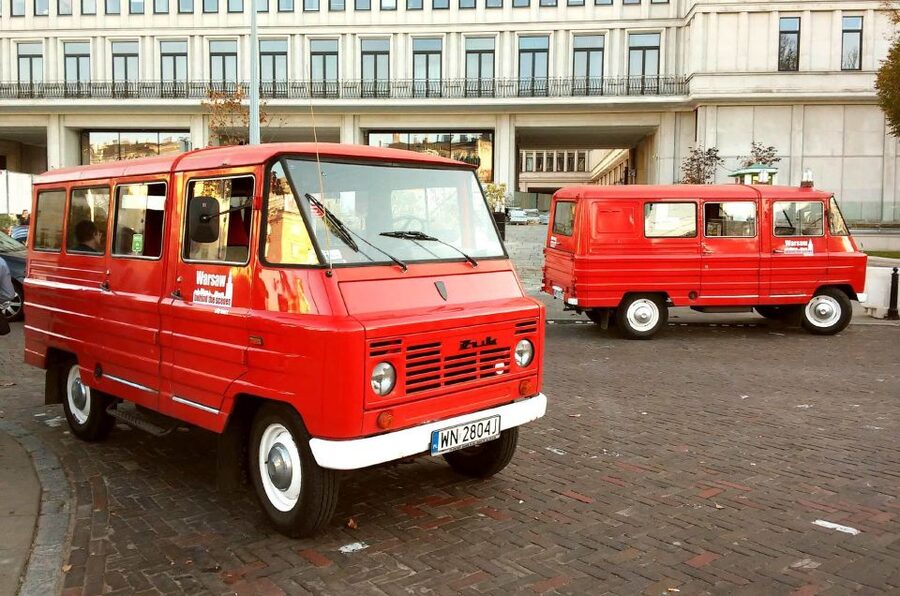
The coolest part is not just that you’re in a vintage car. It’s how the ride changes your rhythm. Instead of jumping on and off buses all day, you’re in a vehicle that looks and sounds like the city’s communist-era memories, while your guide connects what you’re seeing to what happened there.
The experience leans practical. The minibuses mostly transfer you between stops, and then you step out for short walks. That means you’re not stuck staring at the same view from a window the whole time, and you still get the context your brain needs.
Also, you should know the comfort setup. Classic minibuses can be warm or stuffy depending on the season because they’re not air-conditioned, though heating is provided for winter. If you’re sensitive to heat, plan around cooler hours.
Hotel pickup and the real meaning of a 3-hour tour
Three hours sounds short, but here it works. The format is designed to cover major chapters without swallowing your whole day.
Pickup is included from centrally located hotels, within 1 kilometer of the city center. That matters because it prevents the most common half-day pain: losing time on transport before you even start. If your hotel is outside that pickup radius, you’ll want to confirm details with the operator before you book.
In the vehicle, you’re not just passively watching. Your guide typically starts with an overview of Warsaw’s history to set the scene, then moves you into the dramatic districts and themes. The goal is that, by the end, you can look at parts of Warsaw and say: oh, that’s why this neighborhood looks like this, and why the city rebuilt the way it did.
The Jewish Ghetto remnants and uprising sites that change how you see the map
A big reason this tour earns a near-perfect rating is how it handles heavy subject matter without turning it into a lecture. You’re led to the remnants of the Jewish Ghetto, then into sites connected with both uprisings, and it’s presented as part of one continuing story rather than separate facts.
Even if you’ve read about WWII, seeing those locations in sequence helps your understanding click. The city layout itself becomes evidence, because you start noticing how what survived and what was erased shaped everything that came next.
One practical tip: these stops can be emotionally intense. Bring a calm mindset, and if you want, ask your guide questions on the spot. The guides mentioned in recent experiences, like Konrad and Marcin, have a reputation for being approachable, not just delivering information.
Muranów reconstruction: Soviet planning you can still read in streets today
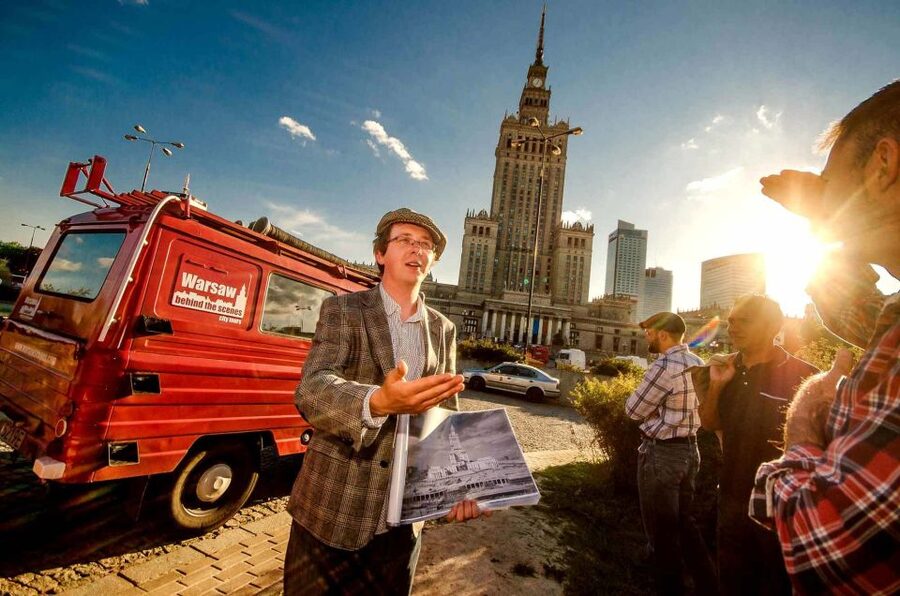
After WWII devastation, Warsaw faced a brutal planning challenge: rebuild a functioning capital fast, while also navigating political control. On this tour, you’ll look at post-war reconstruction of Muranów, and you’ll also see how Soviet ideology shaped the city’s new look.
Here’s why that part is valuable for you. Warsaw didn’t simply rebuild to restore old streets. In many areas, the rebuilding was a decision about power, symbolism, and the kind of future officials wanted. When your guide connects those decisions to what you see on the ground, the “why” becomes obvious.
A side benefit: you get a more usable mental model for the cityscape. Even after your tour ends, you’ll likely notice big planning features, long avenues, and district patterns in a way that feels less random.
One consideration: since the minibuses transfer you and you walk at each stop, you’ll want comfortable clothing and shoes. The tour isn’t designed for flip-flops or stiff dress shoes.
Below are the other Warsaw trips we have logged
- Warsaw: City Sightseeing Hop-On Hop-Off Bus Tour★ 3.6 · 1,415 reviews
- Private Tour: Warsaw City Sightseeing by Retro Fiat★ 5.0 · 562 reviews
- Warsaw: Afternoon Public City Tour with Pickup and Drop-off★ 4.4 · 421 reviews
- Half-Day Warsaw City Sightseeing Bike Tour for Small Group★ 5.0 · 240 reviews
- Warsaw City Sightseeing in a Retro Bus★ 5.0 · 196 reviews
Crossing the Vistula into Praga: where old Warsaw survived
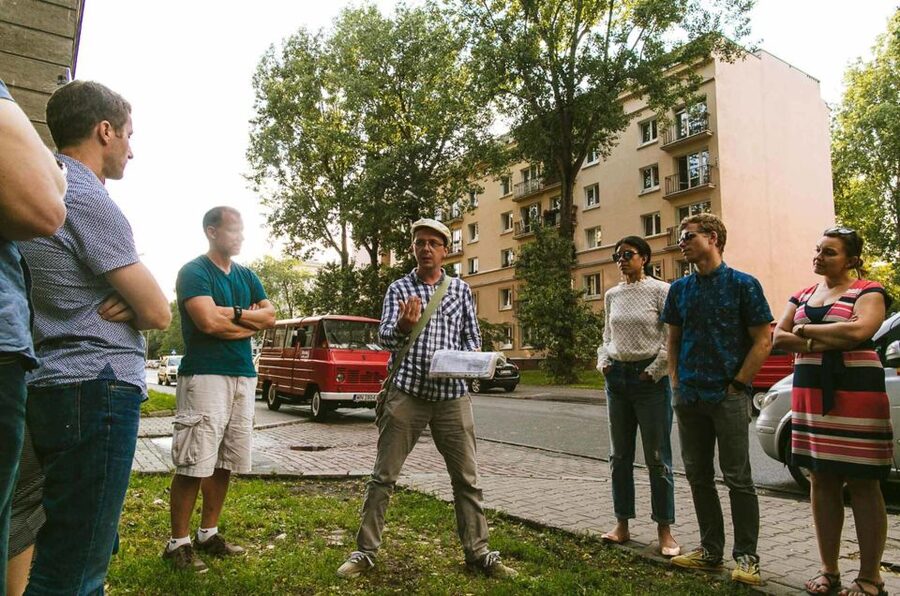
Then you cross the Vistula River and land in Praga, a district known for surviving the war with far less destruction than many other parts of the city. That’s not just trivia. It changes the whole feel of the streets you walk.
Praga today carries the charm of old Warsaw, but it’s also developed into a more creative area. You’ll see a mix of original architecture and modern street life, including murals, workshops, and a creative energy that wasn’t there in the same way before.
This is where the “behind the scenes” label makes sense. Most first-timers see the classic center, then go home with only half the story. Praga adds the other half, and it does so in a way that still feels alive.
If you’re the type who likes to photograph without turning every corner into a production, Praga is a good fit. It feels less staged, and the contrasts between past and present are easier to notice.
Communist-era city rebuilding and why it still shapes your walk
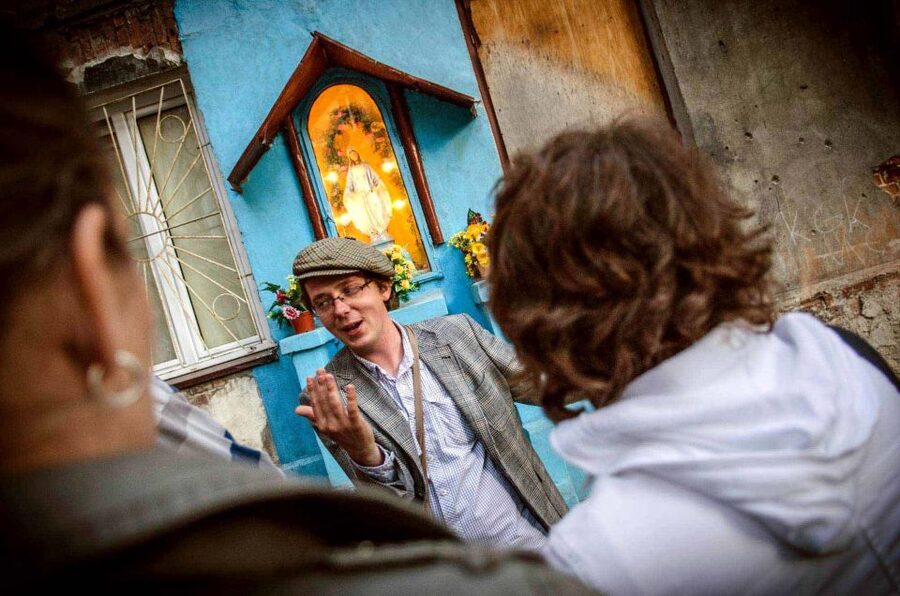
The tour doesn’t treat communism like a dark chapter that ends when the guide stops talking. It explains how planning choices made under Soviet influence changed how neighborhoods formed and how people moved through the city.
This matters because you’re not just learning dates. You’re learning how systems show up in streets. When you connect reconstruction decisions to current urban form, you start understanding why some areas feel wide, institutional, or designed for different kinds of life than pre-war Warsaw.
Guides like Marcin and Konrad are especially strong here because they tend to connect facts to what you can actually see. And the best part is the tone. Instead of making you feel like you’re studying for an exam, the tour makes the city’s shifts make sense in plain language.
Ending with modern Warsaw: growth, innovation, and a second chance
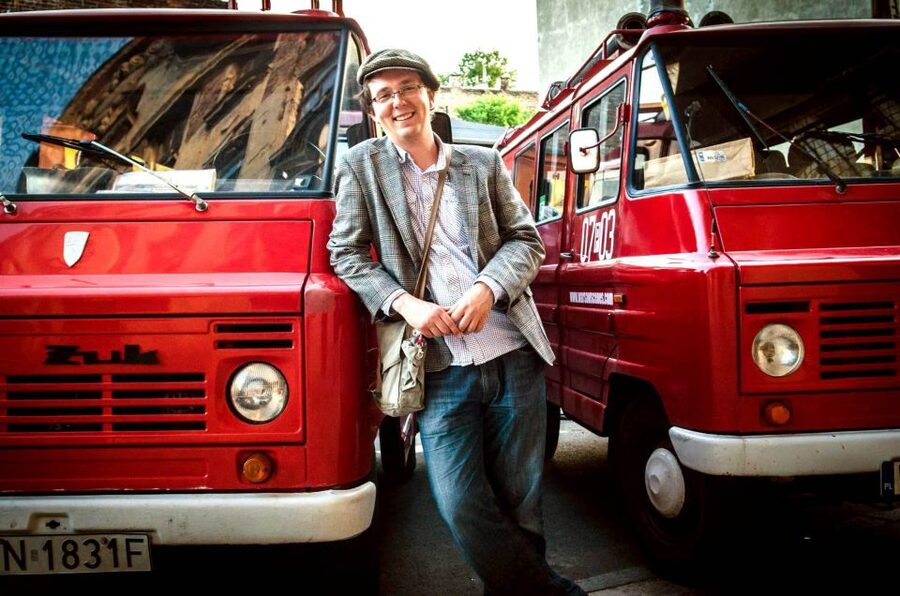
After crossing the war scars and the planning era, you end with a look at modern Warsaw. The message is simple: the city is an active European capital with rapid growth, innovation, and cultural revival.
This ending helps you avoid the all-too-common problem with history-heavy tours. You don’t just leave thinking about destruction. You leave thinking about rebuilding as an ongoing process, and you notice how the city’s identity keeps evolving.
If you have time after the tour, this final perspective helps you choose what to explore on your own. You’ll understand which parts feel like they were shaped by reconstruction, which parts retain pre-war DNA, and which areas show the energy of the newer city.
Price and value: what $129 buys you in Warsaw time and access
At $129 per person for about 3 hours, the price can look steep compared with basic walking tours. But in this case, the value is in three places.
First is access and efficiency. You get pickup and drop-off from centrally located hotels within 1 kilometer of the city center, which can save you stress and transport time.
Second is transportation quality. Riding in a Żuk minibus is not the same as being chauffeured in a standard coach. It’s part of the themed experience, and it keeps the route compact.
Third is the guide. English-speaking guides are described as friendly, passionate, and willing to tailor information. In several experiences, people mentioned humor, personal interaction, and guides who highlighted lesser-known parts of Warsaw.
Where the cost may feel harder to justify is if you already know Warsaw’s history deeply and you’re only chasing a single quick highlight. But if you want context and a route that goes beyond the usual center loop, the price starts to make sense fast.
Comfort, rules, and practical tips before you go
This tour has clear rules so everyone stays safe and comfortable.
Pets are not allowed, and luggage or large bags are not permitted. If you’re traveling with a big backpack, plan to pack light.
The tour is not suitable for wheelchair users. Also, it’s for people 150 cm (4 ft 9 in) and taller. If you’re bringing a child under 150 cm, you’ll need seat boosters, which are mandatory under Polish law.
Finally, since there’s no air-conditioning in these vintage vehicles and there are walking segments, come prepared:
- wear comfortable clothing and suitable footwear
- bring a light layer for temperature swings
- keep water handy if you’re traveling in warmer months
Should you book this behind-the-scenes Warsaw tour?
If your goal is to understand Warsaw as a living city shaped by WWII, Jewish history, uprisings, communism, and the post-1989 transformation, then yes, book it. This is the kind of tour that helps you see the city in layers, not in isolated postcards.
It’s also a strong choice if you like small groups and human guides. A max 8 passengers per minibus setup means it’s easier for questions and discussion, and guides like Marcin, Konrad, and Marius show up repeatedly in the experience record as standout narrators.
I’d hesitate only if comfort is your top priority. No air-conditioning, some minibuses without seat belts, and short walks mean you should plan for the physical realities.
If you want one solid half-day that gives you a better Warsaw than a first-day center stroll, this is a smart pick.
More Tours in Warsaw


More Tour Reviews in Warsaw
Warsaw, Keep Looking
Recently written up around Warsaw

More Warsaw City Tours.
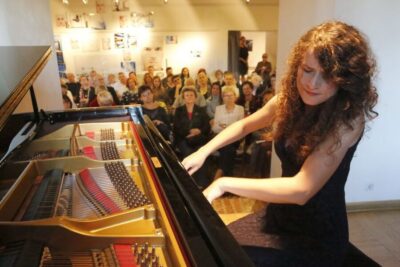 ★ 4.8Chopin Concert in the Old TownFrom $262,287 reviews
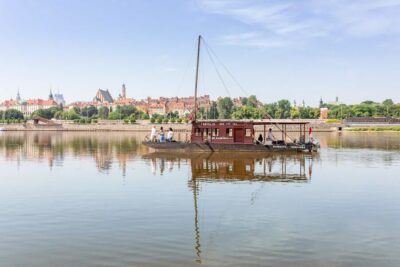 ★ 4.6Traditional Galar Cruise on The Vistula RiverFrom $201,640 reviews
 ★ 4.7Old Town Highlights Walking Tour in EnglishFrom $261,516 reviews
 ★ 4.8Warsaw Concert: Chopin – Painted by Candlelights with WineFrom $251,442 reviews
 ★ 3.6City Sightseeing Hop-On Hop-Off Bus TourFrom $411,415 reviews
 ★ 4.7POLIN Museum of the History of Polish Jews TicketFrom $121,142 reviews
 ★ 5.0#1 Pub Crawl Warsaw with Optional Premium 1 Hour Open BarFrom $28790 reviews
 ★ 4.6Polish Vodka Museum Tour with TastingFrom $22788 reviews
Also on these Poland lists