
REVIEW · WARSAW CITY TOURS
Warsaw City Tour – PRIVATE (4h)
Warsaw tells its story fast. This private, 4-hour tour threads Old Town landmarks, royal Warsaw, and WWII memory into a tight route, with hotel pickup and a professional local guide. I especially like how the guide keeps the bigger picture in view, so you are not just checking off sights.
Second, I love the balance: you get the grand outdoor calm of Lazienki Park after the heavier wartime stops, plus time to actually stroll rather than rush through everything. On some departures, guides such as Anya or Margarita are known for staying friendly while packing in the details, and Karolina is the type who can adjust the pace if needed.
One thing to consider is logistics. Some parts are car-limited or done on foot, so the experience can feel more like a walking tour than a pure drive-through, especially in hot weather or if your group needs frequent rest.
In This Review
- Key things you will appreciate
- How a 4-hour private Warsaw tour fits the city’s “then and now”
- King Sigismund’s Column, and why Warsaw keeps rebuilding symbols
- Strolling UNESCO Old Town, built for trade, wrecked in 1944, reborn
- Royal Castle, the cathedral of May 3, and the organ-concert detail
- Rynek Starego Miasta, the Mermaid, and the Barbican’s survival geometry
- Warsaw Uprising Monument and the emotional math of remembrance
- Miodowa Street and Theatre Square, where palace faces share space with everyday life
- Tomb of the Unknown Soldier and the Royal Route, a shortcut through power and ideas
- Lazienki Park, Rose Garden pause, and the Chopin concert tradition
- Palace of Culture, the National Stadium site, and Copernicus for a modern finish
- Price and value for a private 4-hour Warsaw circuit
- Make it work smoothly, even if the city is car-restricted
- Should you book this Warsaw City Tour (private, 4h)?
- FAQ
- What is the duration of the private Warsaw City Tour?
- Does the tour include hotel pickup and drop-off?
- Is the tour offered in English?
- Is there a private guide and transportation included?
- Are tickets and admissions included?
- Is the Copernicus Science Centre admission included?
- Do we get a mobile ticket?
- What is the cancellation policy?
- Where will the guide meet us?
Key things you will appreciate
- UNESCO Old Town, rebuilt after devastation, with context you can actually visualize
- WWII story points like the Warsaw Uprising Monument and Tomb of the Unknown Soldier
- A mix of strolling and driving, so you see far more than you could comfortably do alone
- Lazienki Park time to unwind in the Rose Garden area and feel the Chopin concert vibe
- A route that spans royal, modern, and science Warsaw, not just monuments
Warsaw rebuilt itself twice over. Here is how else we saw it
- Warsaw: Chopin Concert in the Old Town
★ 4.8 · 2,287 reviews - Warsaw: Traditional Galar Cruise on The Vistula River
★ 4.6 · 1,640 reviews - Warsaw: Old Town Highlights Walking Tour in English
★ 4.7 · 1,516 reviews - Warsaw Concert: Chopin – Painted by Candlelights with Wine
★ 4.8 · 1,442 reviews
How a 4-hour private Warsaw tour fits the city’s “then and now”
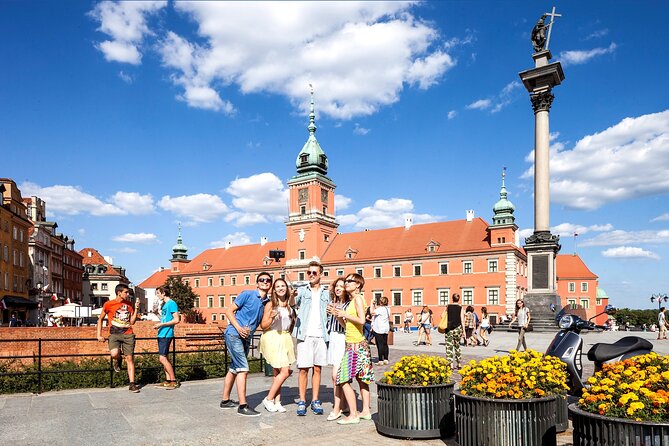
Warsaw can feel like two cities layered on top of each other: the royal, historic core and the modern capital that rose through rebuilding. In four hours, this tour gives you a practical arc, starting with old symbols, moving through Old Town and church history, then shifting into wartime remembrance before ending at major modern landmarks and a hands-on science stop.
The private format matters. With hotel pickup and drop-off, you do not waste half your morning figuring out transport, and you can ask quick questions when something piques your interest. You also get a “guided eyes” view, where the guide explains why a spot matters before you reach it.
King Sigismund’s Column, and why Warsaw keeps rebuilding symbols
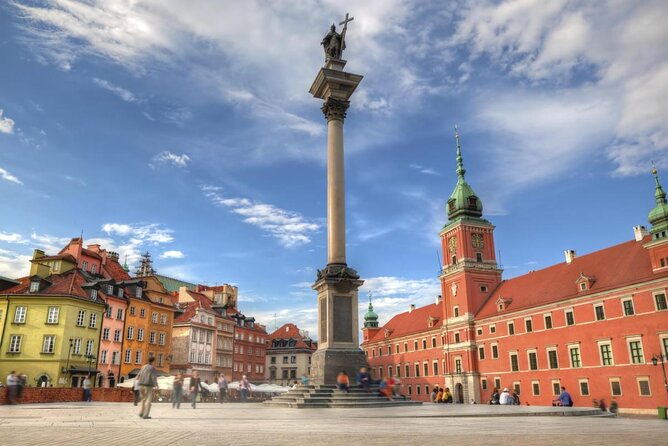
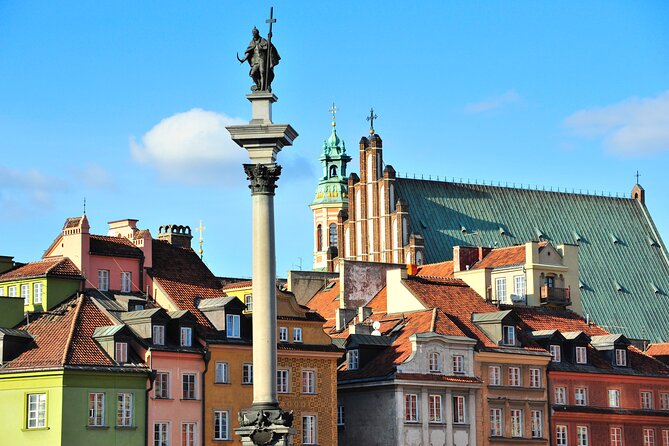
Your tour starts at King Sigismund’s Column (Kolumna Zygmunta), one of Warsaw’s key symbols. It is the oldest public memorial in the city, but it has not always stood where you see it today. It was moved when the axis of Krakowskie Przedmieście Street changed in the 19th century, and again later during the development of the WZ route.
The most striking wartime detail is what happened in 1944. German troops brought the column down on September 2, 1944, and reconstruction finished in 1949. Nearby, earlier columns are displayed next to the walls of the King’s Castle from the direction of the WZ route, which helps you “see” Warsaw’s continuity even when buildings did not survive.
Tip: look around the surroundings for how the column relates to the nearby royal buildings. The guide’s framing makes it click fast.
Strolling UNESCO Old Town, built for trade, wrecked in 1944, reborn
Old Town is where you get the fast history lesson with your feet on the stones. This area began as a practical trading stop on the route between the Baltic Sea and the Black Sea, and that commercial logic helps explain why wealthy craftsmen and tradesmen settled here early on.
The architecture story is part of what makes Old Town teachable. Wooden structures were replaced by masonry tenement houses after fires, and earthen ramparts later became stone walls. A town hall was built in 1429 (it no longer exists), along with a parish church (today the Cathedral of St. John), plus defensive towers and a barbican.
Then World War II hits hard. In 1944, about 90 percent of the Old Town area was razed. The reconstruction took years and ultimately earned UNESCO World Heritage status, so you are not just seeing a pretty center. You are seeing a carefully rebuilt place with a clear message about survival.
Drawback to watch for: this segment is a lot of walking, and central zones can be car-limited. If your group prefers lots of seating, ask your guide to set a realistic pace early.
Royal Castle, the cathedral of May 3, and the organ-concert detail
The tour includes time at the Royal Castle, a site with a roller-coaster past. It gained royal residence status in the 16th century, rebuilt after multiple conflicts, and survived until World War II. It was bombed in the first days of the war, nearly destroyed by fire, and many works were saved in time, only to face looting and later destruction.
In 1944, the castle was blown up in retaliation after the Warsaw Uprising. Reconstruction began much later, with a decision in 1971, and it opened to visitors in 1984. Like Old Town, it is also recognized through UNESCO for its faithful reconstruction of an historic structure.
Just a short hop away is the Archcathedral Basilica of St. John the Baptist, one of Warsaw’s oldest churches. The big historical moment here is the May 3 Constitution oath, described as the first of its kind in Europe, which gives you a strong sense of Poland’s political self-image. You can also catch music: there are Sunday organ concerts at 4 PM from July to September as part of an international organ festival.
If you want something a bit more “quiet and real,” the crypt holds tombs of historical figures, including the Chapel-Mausoleum of the Primate of the Millennium. It is free, and time permitting it is worth the detour for the atmosphere.
Below are the other Warsaw trips we have logged
- Warsaw: City Sightseeing Hop-On Hop-Off Bus Tour★ 3.6 · 1,415 reviews
- Private Tour: Warsaw City Sightseeing by Retro Fiat★ 5.0 · 562 reviews
- Warsaw: Afternoon Public City Tour with Pickup and Drop-off★ 4.4 · 421 reviews
- Half-Day Warsaw City Sightseeing Bike Tour for Small Group★ 5.0 · 240 reviews
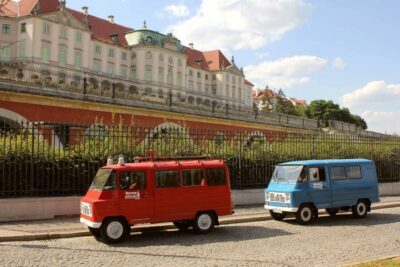
- Warsaw City Sightseeing in a Retro Bus★ 5.0 · 196 reviews
Rynek Starego Miasta, the Mermaid, and the Barbican’s survival geometry
Rynek Starego Miasta, the Old Town marketplace, gives you an easy win: a gorgeous open square surrounded by tenement buildings with restaurants, cafes, and galleries. The center has a statue of Warsaw’s symbol, the Warsaw Mermaid, which is the kind of visual anchor that helps you remember the whole area.
The square is also tied to enlightenment-era divisions. It was subdivided into four sections named for Kołłątaj, Dekert, Barss, and Zakrzewski, so when you look around you can connect architecture with ideas.
Then you head to Warsaw Barbican (Barbakan Warszawski), built in 1548 as a defensive wall element. Today it is a walkway and a creative spot, sometimes hosting painters and musicians, so you get a less “museums-only” feel than you might expect.
From May to October, there is an exhibition inside the Barbican with historical photos and scale models of former defensive lines and towers that no longer exist. Even if you do not spend long here, comparing how the Old Town looks now to the old plans is a quick way to “understand the shape” of the city’s defenses.
Warsaw Uprising Monument and the emotional math of remembrance
Next comes one of the hardest stops: the Warsaw Uprising Monument. It depicts insurgents during battle, and it is built around the cost of the Uprising, which ended in defeat with the death of about 200,000 Poles. This is not a casual photo stop, but the guide’s pacing matters. You are more likely to absorb it when you move with the narrative instead of treating it like a quick stop.
The tour also includes nearby Krasiński Palace (Palace of the Republic). It started as a residence for Jan Krasiński and now hosts special collections for the National Library. The palace is described as Warsaw’s most enchanting Baroque structure, and the park behind it gives you a solid breather if you need one after the Uprising.
A small extra bonus: there is a park and open space here, and those pauses help when your tour day is compressed into four hours.
Miodowa Street and Theatre Square, where palace faces share space with everyday life
Miodowa Street is narrow, lively, and lined with historic residences, which makes it perfect for a “lean and look” style walk. Key details include:
- Collegium Nobilium at number 24, the first school for young members of the ruling elite, which now houses the Academy of Theatre
- The Primate of Poland’s residence at number 17, the Palace of Warsaw’s Archbishops from the 18th century
- Warsaw’s only Eastern Catholic Church at number 16
- The Church of the Capuchins, where the right side of the altar features the heart of Jan III Sobieski
You also get a viewpoint toward the Monument of Warsaw’s Heroes, often called the Monument of Nike.
Then the tour shifts to Theatre Square, a compact concentration of restored and rebuilt city fabric. You will pass the Late Baroque Blank Palace and Jabłonowski Palace, which used to function as city hall before World War II. It was razed, rebuilt in the 1990s, and today only the façade and clock tower remain from the original design. There is a gate under the tower where you can see foundations laid in the 19th century.
If you like performing arts, the Grand Theatre is the big anchor. It is a classicist giant facing Jabłonowski Palace and houses the National Opera and the National Theatre. Its opera stage is described as one of the largest in Europe, and if you attend a performance, you can see the interiors, including cut glass chandeliers, a spacious foyer with columns, and impressive floor tiling.
The square ends near the Petrykus Tenement House from 1821, filled with restaurants and clubs that fit Warsaw’s everyday rhythm.
Tomb of the Unknown Soldier and the Royal Route, a shortcut through power and ideas
The Tomb of the Unknown Soldier is both symbolic and practical to understand. It commemorates millions of soldiers who fought for Poland’s freedom, and it holds ashes and soil urns from battlefields. The tomb contains urns from every battlefield where Polish troops fell in the last century, plus an eternal flame guarded by a military honor guard.
The guard changes daily at noon, so if you time it right it becomes one more reason to linger, even if you only have a few minutes.
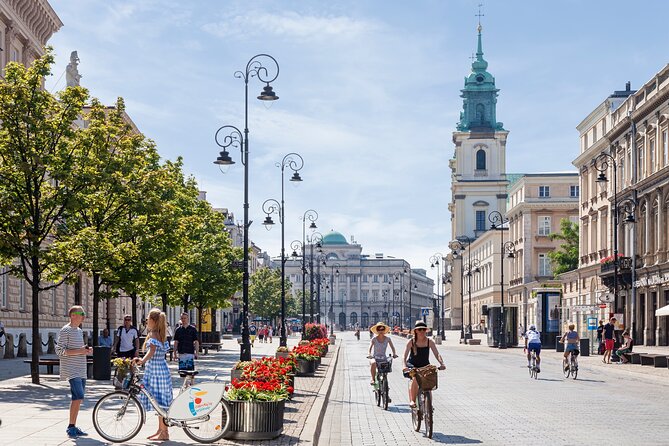
Then the tour rolls into the Royal Route, the historic corridor stretching from Zamkowy Square to Trzech Krzyży Square. In a short time you get the sense of how Warsaw presented itself as a seat of state and culture. Must-see points on the route include St. Anne’s Church (and the view from its tower), Polonia House, and the Radziwiłł Palace, currently the residence of the President of Poland. You also pass the Warsaw University campus with Kazimierzowski Palace and Czapski Palace, home to an Academy of Fine Arts.
The route also highlights Nowy Świat Street as an extension of Krakowskie Przedmieście, which helps you connect “where you are” to “where Warsaw went.”
Lazienki Park, Rose Garden pause, and the Chopin concert tradition
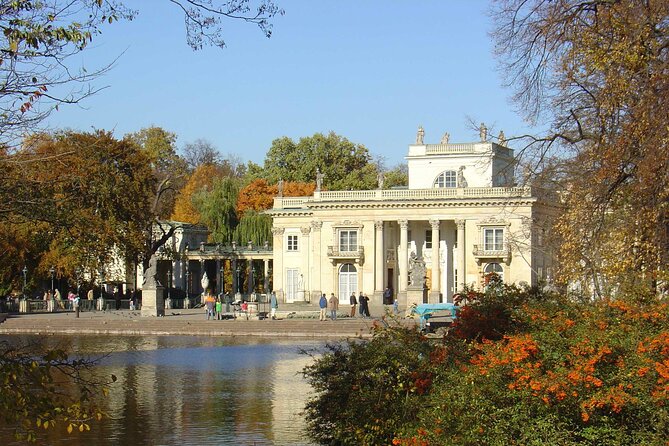
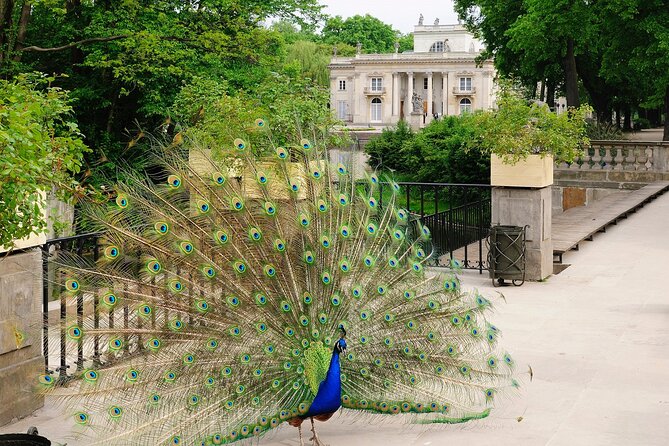
Now for a breather: Lazienki Krolewskie w Warszawie, commonly linked with the Royal Łazienki Park. It is one of Europe’s most beautiful palace and garden complexes, combining historical monuments with a park area that used to be a wild forest.
You are there as a museum and event space too. For 50 years, free piano concerts have taken place next to the famous monument of F. Chopin on summer weekends. Crowds include both tourists and local classical music lovers, and the atmosphere is exactly what makes a tour stop feel more alive than a statue photo.
This part of the day usually works well even if you are tired, because it is built for walking slowly. Take your time and let the guide point out the key corners rather than trying to absorb everything at once.
Palace of Culture, the National Stadium site, and Copernicus for a modern finish
The tour then shifts to modern Warsaw, and it does it in a way that feels connected instead of random.
You visit the Palace of Culture and Science, built between 1952 and 1955 as a gift from the Soviet people to Poland. It is the tallest building in the country at 230.5 m, and the highlight is the observation deck on the 30th floor for big views over the city. The building has about 3,000 rooms, including business offices, the Polish Academy of Sciences, and even a post office, cinema, swimming pool, museums, libraries, theaters, a café, and clubs.
After that, the tour includes the modern stadium symbol built for the European Football Championship in 2012. It sits on the site of the historic Tenth Anniversary Stadium, which from the mid-1950s hosted major sporting events, Polish football finals, the Warsaw Derby, the Peace Race, and massive propaganda rallies. After 1989, the area was linked to the huge Jarmark Europa market, which gives you an easy way to contrast political eras.
To finish, you stop at the Copernicus Science Centre, opened in November 2010 and known for hands-on exhibits designed to spark curiosity and independent thinking. Expect hundreds of interactive attractions, including an earthquake simulator and a magic carpet. There is also a roof garden observation deck with panoramas. Admission is not included, but the quick orientation and the surrounding gallery, climbing wall, and art park can make it feel like a modern Warsaw “reset” after history.
Price and value for a private 4-hour Warsaw circuit
At $195.18 per person for a private, 4-hour tour, the value comes from three things: time, comfort, and context. You are paying for hotel pickup and drop-off, a professional local guide, and private transportation that includes an air-conditioned vehicle. In a city where some areas are car-limited, that “door-to-door” structure can still save stress, even if you do walk inside the Old Town core.
It is also priced for people who want a coherent story. The guide connects royal sites, religious anchors, and wartime remembrance points so you leave with a sense of how Warsaw fits together.
One practical note: entry or admission fees are not included, and some stops like Copernicus have an extra cost. If you plan to go inside major attractions, factor that into your budget so you are not surprised.
Make it work smoothly, even if the city is car-restricted
This is where you can protect your comfort. Since the itinerary includes UNESCO Old Town and parts of the Royal Route, car access can be limited, so the day may include more walking than a pure sightseeing-drive plan.
Here is what I recommend you do before you start:
- Wear comfortable shoes, because several key sites are best enjoyed on foot.
- Bring water and a light layer for shade, since outdoor time is built into the route.
- If your group has mobility needs, tell the guide early so the pace can be adjusted.
- At the first stop, ask how much walking is expected and how they plan to handle heat or rest breaks.
The tour already has a “private guide problem-solver” advantage. You do not have to follow a rigid group script, and some guides are able to modify the order or reduce walking when necessary.
Should you book this Warsaw City Tour (private, 4h)?
Book it if you want a first-timer-friendly sweep of Warsaw that still feels thoughtful: Old Town and the Royal Castle, St. John’s Cathedral, the Barbican, WWII memory stops, plus a modern finish with the Palace of Culture and Copernicus. The private guide format is the real win, especially if you like history but also want breaks and a logical flow.
Skip or reconsider if you want minimal walking, or if you strongly prefer staying inside air-conditioned vehicles the whole time. This tour includes areas where walking is part of the point, and that can be a deal-breaker for some people.
If you fall into the middle, this is a smart way to get your bearings quickly, and to understand why Warsaw looks the way it does today.
FAQ
What is the duration of the private Warsaw City Tour?
The tour is approximately 4 hours.
Does the tour include hotel pickup and drop-off?
Yes. Hotel pick-up and drop-off are included.
Is the tour offered in English?
Yes, it is offered in English.
Is there a private guide and transportation included?
Yes. It includes a professional local guide, private transportation, and an air-conditioned vehicle.
Are tickets and admissions included?
Entry or admission fees are not included. Some stops are listed as free, but admissions can still be required for certain activities.
Is the Copernicus Science Centre admission included?
No. Admission to Copernicus Science Centre is not included.
Do we get a mobile ticket?
Yes. A mobile ticket is offered.
What is the cancellation policy?
You can cancel for a full refund up to 24 hours in advance of the experience start time.
Where will the guide meet us?
Your guide will wait for you at the hotel lobby with your name. Please be ready on time.
More Tours in Warsaw


More Tour Reviews in Warsaw


Warsaw, Keep Looking
Recently written up around Warsaw

More Warsaw City Tours.
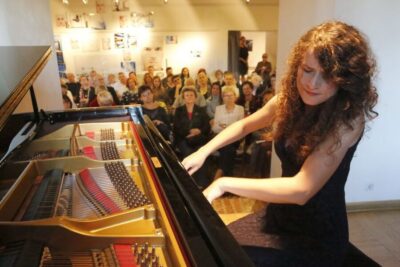 ★ 4.8Chopin Concert in the Old TownFrom $262,287 reviews
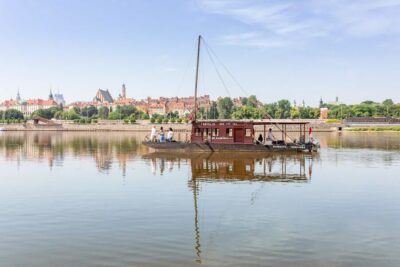 ★ 4.6Traditional Galar Cruise on The Vistula RiverFrom $201,640 reviews
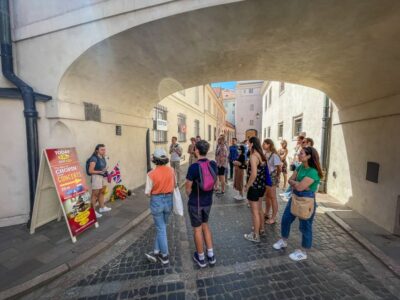 ★ 4.7Old Town Highlights Walking Tour in EnglishFrom $261,516 reviews
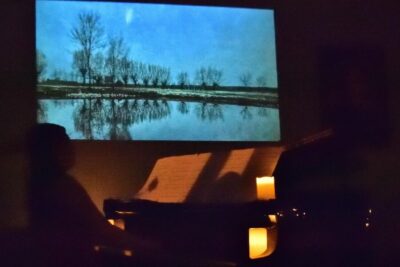 ★ 4.8Warsaw Concert: Chopin – Painted by Candlelights with WineFrom $251,442 reviews
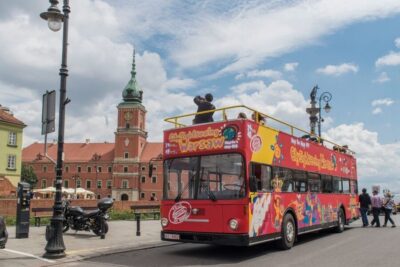 ★ 3.6City Sightseeing Hop-On Hop-Off Bus TourFrom $411,415 reviews
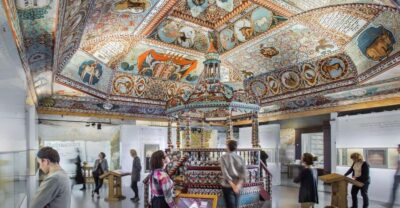 ★ 4.7POLIN Museum of the History of Polish Jews TicketFrom $121,142 reviews
 ★ 5.0#1 Pub Crawl Warsaw with Optional Premium 1 Hour Open BarFrom $28790 reviews
 ★ 4.6Polish Vodka Museum Tour with TastingFrom $22788 reviews
Also on these Poland lists