
REVIEW · GOLF CART AND ELECTRIC CAR TOURS
Wroclaw: City Tour Sightseeing Golf Cart Old City+Cathedral
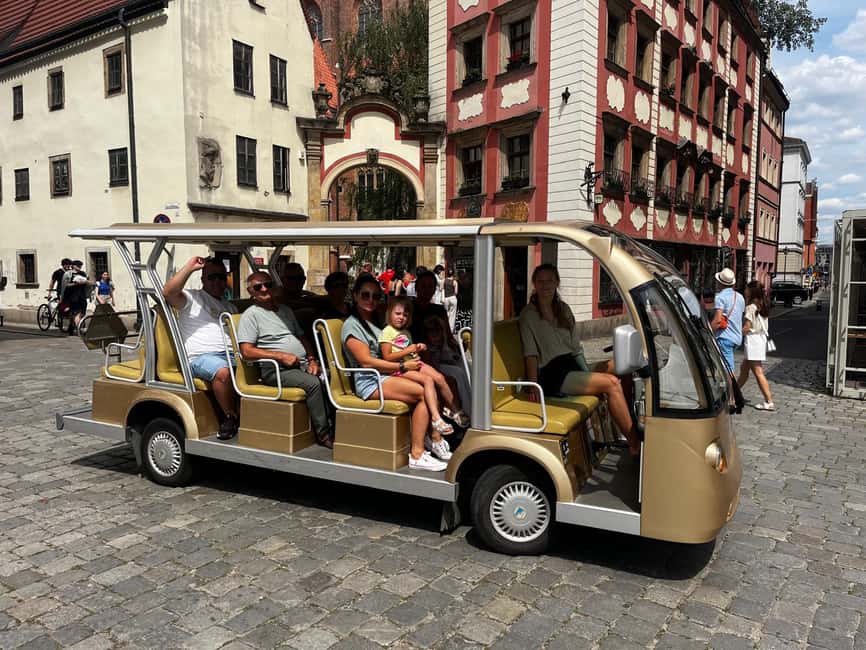
Wroclaw from a golf cart feels genius. This electric golf cart tour is a fast, comfortable way to get your bearings and learn the city’s major landmarks in one loop. I especially liked the guided storyline that connects places like St. Elizabeth’s Church and the Market Hall, and the way you can actually enjoy the Old Town streets instead of fighting tired feet.
The one drawback to consider is time. In just 1 hour, this is an overview tour, so you will see a lot and learn a lot, but you will not have long, slow museum time at every stop.
In This Review
- Key highlights to look for
- Why a 1-hour electric golf cart tour makes sense in Wroclaw
- Getting oriented fast on the Old Town route
- St. Elizabeth’s Church: where the stories feel real
- Hansel and Gratel, the Old Meat Market, and the city’s human scale
- Ossolineum and the Market Hall: civic pride and culture in one view
- University and Province office: power buildings you can actually spot
- Sand Island and Cathedral Island: Wroclaw’s water connections
- National Museum and Polish Hill: viewpoint energy
- Panorama Raclawicka: the stop that turns photos into context
- Spatgen Palace: a final architectural note you will remember
- What the guides are really good at, and why it matters
- Price and value: is $33 for 1 hour fair?
- Who should book this Wroclaw golf cart tour
- Small practical tips so you get more out of the hour
- Should you book this tour?
- FAQ
- How long is the Wroclaw Old Town plus Cathedral golf cart tour?
- What is included in the price?
- Are hotel pickup and drop-off included?
- What languages are offered for the live guide and audio guide?
- Can I skip the ticket line?
- Is the tour wheelchair accessible?
- Where do I meet, and where does the tour end?
- What is the cancellation policy?
- Is there an option to pay later?
Key highlights to look for
- Electric comfort for a compact 1 hour: easy sightseeing without the walking grind
- Stops that anchor the story: St. Elizabeth’s Church, Ossolineum, Market Hall, and more
- Old Town street views: you get the charm without needing perfect weather legs
- Island and panorama viewpoints: Sand Island, Cathedral Island, and Panorama Raclawicka on your route
- Guides who answer follow-up questions: from Simon and Barter to Michał and Michael, the Q and A matters
More of Wroclaw, dwarves and islands included
- Wroclaw: E-Car Tour and Audio Guide
★ 4.6 · 1,738 reviews - Wroclaw: 2-Hour Private Guided Tour by Electric Car
★ 4.8 · 805 reviews - Wrocław: Old Town and Ostrów Tumski Walking Tour in English
★ 4.8 · 311 reviews - Wroclaw: Private Old Town Guided Walking Tour (2 hours)
★ 4.8 · 275 reviews
Why a 1-hour electric golf cart tour makes sense in Wroclaw
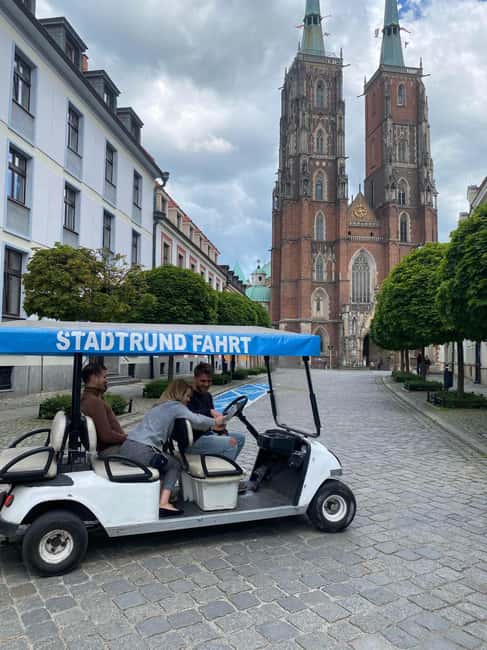
Wroclaw is a city you notice with your eyes. It is full of bridges, church towers, and town-hall style buildings that look great from the street, and even better when you are not rushing. On a golf cart, you move at sightseeing speed, so you can focus on what you are passing, not on your next step.
What I like most is the balance between motion and context. You are not just transported from point A to point B. You get a guided explanation that helps you recognize the places when you come back later on your own. Think of it as the fastest way to learn how Wroclaw “hangs together.”
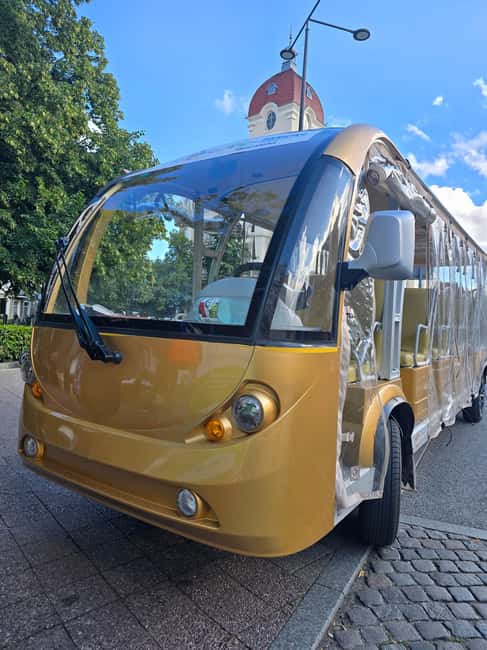
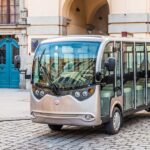
The tour uses eco-friendly electric vehicles, which also means a quieter ride than you get with bigger vehicles. And since the route is timed for sightseeing, you do not lose half the experience to city traffic or parking.
Getting oriented fast on the Old Town route
The tour’s core goal is simple: get you oriented in Wroclaw’s medieval core and show you the key spots that make the city feel like itself. You meet at their station, start riding, and end back at the meeting point. No hotel pickup, so you arrive and depart on your own schedule.
As the cart rolls through the Old Town, you will pick up the “map” of the city. You start to see how the squares, churches, and civic buildings relate, and where the bigger landmarks sit in relation to the water and bridges. That matters because Wroclaw’s charm is not only in one famous building. It is the way the different neighborhoods link visually.
If you have only a short time in the city, this is a smart use of your first day. Even if you plan to explore longer afterward, an hour of guided orientation saves you from wandering aimlessly. You will know what is worth a return trip and what you just want to glance at once.
St. Elizabeth’s Church: where the stories feel real
One of the first major anchors on the route is St. Elizabeth’s Church. This is the kind of landmark that makes a city tour click, because churches in Wroclaw are not only architecture. They are also reference points for local identity and changing eras.
On a short tour, you do not get unlimited time inside every stop. Still, you should expect the guide to treat key churches as more than photo backdrops. Some guides will pause so you can see details and ask questions, and in at least some cases you may get a chance to look inside a church, not just stand outside.
I like this stop because it gives you an immediate “before and after” effect. After hearing what you are looking at, the façade and surroundings become easier to interpret. Later, when you walk around independently, you will recognize the building’s significance without needing to re-learn it from scratch.
Hansel and Gratel, the Old Meat Market, and the city’s human scale
Not every stop on this tour is a grand monument. You also get places that show the city at eye level, the way locals probably experience it: with legends, markets, and distinctive street corners.
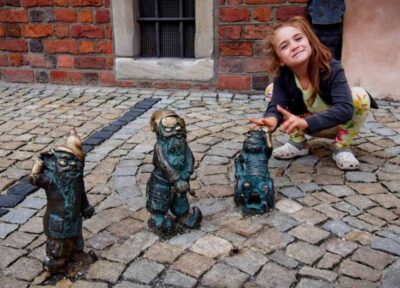
Two examples from the route are Hansel and Gratel and the Old meat market. Even without a long explanation at each one, these are the kind of landmarks that add personality. They help prevent your tour from becoming only a list of famous buildings.
The Old meat market stop is also helpful for orientation. Markets often sit near important streets and gathering areas, so they help you understand where daily life has historically clustered in the Old Town. That makes later self-guided wandering easier, because you can picture the city’s layout in practical, human terms.
If the walking is the problem, these rolled-through reviews help
- Wroclaw: City Tour Sightseeing By Golf Cart Shared Or Privat★ 4.8 · 189 reviews
- 2-Hours Private Electric Car Tour with a Guide, Wroclaw★ 4.5 · 87 reviews
- Wroclaw, 1- hour or 2-hours Group Tour by Electric Car★ 4.5 · 73 reviews
- Wroclaw: 2-Hour Tour by Electric Car with a driver-guide★ 4.8 · 66 reviews
- Wroclaw: 2-Hour Private Electric Bus Tour with Guide or Tape★ 4.7 · 28 reviews
Ossolineum and the Market Hall: civic pride and culture in one view
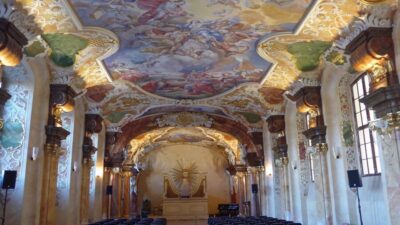
Two stops that help broaden the tour beyond churches are the Ossolineum and the Market Hall.
Ossolineum is a major cultural reference point in Wroclaw, and it is the sort of place that signals how seriously the city takes education and public life. When a guide points out what you are seeing, it turns a building you might otherwise pass into a meaningful landmark.
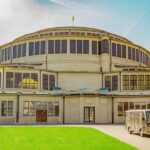
The Market Hall adds another layer. You are not just touring history in the abstract. You are seeing how trade and public gatherings shaped the city’s center. That is valuable because it changes how you interpret Wroclaw’s squares. Instead of thinking only about aesthetics, you start recognizing the functions that shaped those spaces.
If you enjoy tours where the guide ties architecture to real life, this part of the route is a strong payoff.
University and Province office: power buildings you can actually spot
As you continue, you also see the University and the Province office. These are the types of civic buildings that help you understand how Wroclaw organizes itself, not just how it decorates.
This is a useful section if you like to build mental landmarks. University buildings and administrative offices tend to be easy to recognize later, and they often sit near major squares or routes. That means this tour can pay off later when you try to plan your walking route for museums, cafes, and longer stops.
Also, they provide a change of pace from religious architecture. It keeps the tour balanced, so it feels like you are learning a city, not only ticking off sights.
Sand Island and Cathedral Island: Wroclaw’s water connections
Wroclaw is famous for its water and bridges, and this route takes you toward the river islands, including Sand Island and Cathedral Island. Even if you do not spend a lot of time on foot there, seeing these areas on the cart helps you understand why Wroclaw is so photogenic from multiple angles.
These island stops also help you connect the Old Town to the broader city. You start to see that Wroclaw is not one flat center. It is shaped by waterways, and those waterways influence views, movement, and the placement of major buildings.
If you are the type of traveler who likes panoramas, islands are your friend. They give you breathing room from the tight Old Town streets and let the city feel bigger than a single neighborhood.
National Museum and Polish Hill: viewpoint energy
The route includes the National Museum and Polish Hill. I like these because they often shift the tour from close-up details to a bigger sense of position.
Polish Hill, in particular, is a good place to understand sightlines. When you hear what the guide points out, you start noticing how different parts of the city are visible from certain spots. Even on a short tour, a viewpoint concept makes your independent exploring more efficient. You know where to stand later for better photos and clearer orientation.
Panorama Raclawicka: the stop that turns photos into context
Panorama Raclawicka is included, and it is one of those landmarks that can change how you experience a city tour. Panoramas are not just another building. They represent how a city chooses to tell big stories to visitors.
On a golf cart, you do not want to expect a full museum-style visit unless the tour specifically includes that. But the guided framing still matters. When a guide explains what the panorama represents and why it matters to Wroclaw, the exterior and surrounding area become meaningful.
This stop is also a great transition moment. By the time you reach it, you have seen a lot of architectural variety. The panorama helps connect those sights to a larger cultural theme.
Spatgen Palace: a final architectural note you will remember
The route concludes with another standout, Spatgen Palace. I think palace stops work well at the end of a short tour because they leave you with a clear visual memory. Even if you forget every detail of a lecture, you usually remember the look of a palace.
It also gives you one last chance to compare building styles you already saw earlier. When you revisit the area later, Spatgen Palace helps you anchor your mental map.
And since the tour ends back at the meeting point, you are not left stranded somewhere confusing. You can keep your sightseeing flexible right after the ride, rather than needing a long commute.
What the guides are really good at, and why it matters
This tour is rated highly, and the common thread is the guiding style. In particular, I love how guides such as Simon, Barter, Michał, and Michael focus on more than memorizing facts.
You get the kind of guidance where the route becomes a conversation. Guides answer questions, and they share practical tips on what to see next after the cart ride ends. That is a big deal in Wroclaw, because it gives you direction beyond the tour itself.
The guide speaks live in English and Polish, and you also get an audio guide in English, German, and Polish. That audio support is great if you want to pause mentally and catch up, or if the cart is moving at a pace that makes it hard to absorb every spoken detail.
For me, this is one of the best ways to learn a city quickly. You do not just receive information. You receive guidance that helps you decide what to do with the rest of your day.
Price and value: is $33 for 1 hour fair?
At $33 per person, the value comes down to two things: the comfort of the electric ride and what the guide helps you do with your time.
You get a guided tour plus the golf cart itself. For many people, that combination is more efficient than trying to cover the same variety of landmarks by foot in the same hour, especially if you want Old Town plus island scenery and a viewpoint stop. Even if you are a strong walker, a cart route can prevent fatigue from eating your attention span.
You also get audio support and live guiding, which turns the hour into a structured orientation. That structure is what makes this a good buy. If you spend the rest of the day self-guided with better decisions, the tour has paid you back.
One more point on value: the tour duration is short by design. If you only want an overview, that fits perfectly. If you want long museum stops or extended church interiors, you will likely need to plan additional time afterward.
Who should book this Wroclaw golf cart tour
This tour is a strong fit if you want:
- A quick overview of Wroclaw’s Old Town landmarks
- A comfortable way to see islands and major sites without heavy walking
- A guided storyline that helps you navigate later
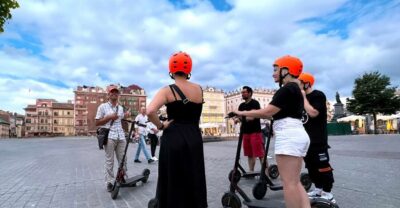
It also helps if weather is unpredictable. You still get to enjoy the city, even when you do not feel like doing a full walking day. One review experience specifically noted a cool wet afternoon with a small group, which is the kind of scenario where this format shines.
Who might consider a different option? If you already know Wroclaw well and only need specific deep museum time, you might find the 1 hour pace a bit tight. Also, if you expect every stop to include extensive indoor time, this tour’s format suggests shorter visits.
Small practical tips so you get more out of the hour
I recommend treating this tour like your Wroclaw primer. When you finish, you should be able to choose a couple priorities for your next hours.
A few ways to make that easier:
- Bring a phone with maps ready, so when the guide mentions locations like Cathedral Island or Panorama Raclawicka, you can instantly place them in your mind.
- Wear shoes you can stand in, since even on a cart, you will likely step out near key viewpoints and buildings.
- Keep a short list of questions. If the guide like Barter or Michał is on form, Q and A time is where the tour turns from sightseeing into actual understanding.
If you do this, the value is not just the ride. It is what you take away for the rest of your trip.
Should you book this tour?
If you want a smart first-day move, I say book it. For $33, you get a guided electric golf cart overview of major Wroclaw landmarks, including the Old Town core and sites tied to the city’s islands and viewpoints. The guide quality seems consistently strong, and the combination of live guiding plus multi-language audio support is a practical way to learn quickly.
Skip it only if you have plenty of time for deep, slow visits and you already know exactly which buildings you want to study for hours. Otherwise, this is the kind of tour that helps you start exploring with confidence, not confusion.
FAQ
How long is the Wroclaw Old Town plus Cathedral golf cart tour?
The tour duration is 1 hour. Starting times depend on availability.
What is included in the price?
The tour includes a live guide and the golf cart tour.
Are hotel pickup and drop-off included?
No, hotel pickup and drop-off are not included.
What languages are offered for the live guide and audio guide?
The live tour guide is available in English and Polish. An audio guide is included in English, German, and Polish.
Can I skip the ticket line?
Yes, skip the ticket line is listed as included.
Is the tour wheelchair accessible?
Yes, the tour is wheelchair accessible.
Where do I meet, and where does the tour end?
Meet at the station. The activity ends back at the meeting point.
What is the cancellation policy?
Free cancellation is available up to 24 hours in advance for a full refund.
Is there an option to pay later?
Yes, you can reserve now and pay later to keep plans flexible.
More Tour Reviews in Wroclaw
Sightseeing Without the Walking
More of Wroclaw
Recently written up around Wroclaw
More Golf Cart and Electric Car Tours.
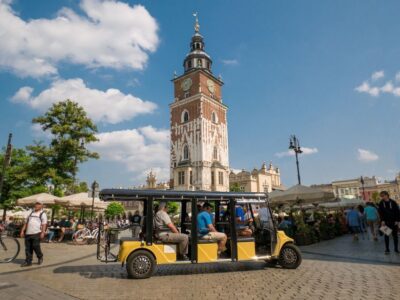 ★ 4.5City Sightseeing Tour by Electric Golf CartFrom $133,264 reviews
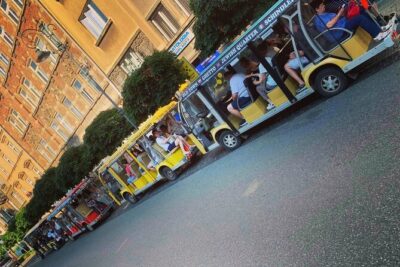 ★ 4.7City Sightseeing Tour Eco Electric Buggy Golf CartFrom $133,143 reviews
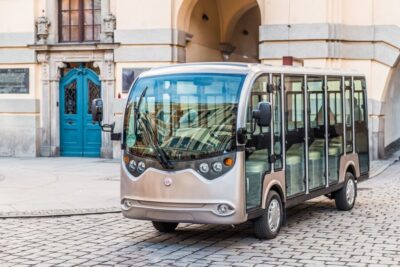 ★ 4.6E-Car Tour and Audio GuideFrom $161,738 reviews
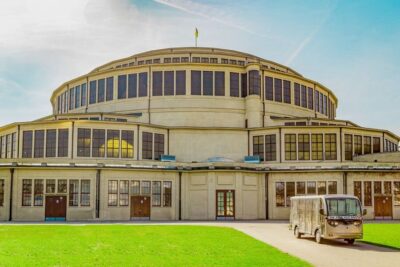 ★ 4.82-Hour Private Guided Tour by Electric CarFrom $38805 reviews
 ★ 4.7Extended City Sightseeing Tour – Eco Buggy Golf CartFrom $13794 reviews
 ★ 4.9City Sightseeing Tour by Golf Cart/Buggy Guided TourFrom $40510 reviews
 ★ 4.4Electric Car Sightseeing TourFrom $25450 reviews
 ★ 5.0Guided City Tour by Golf Buggy (with hotel pickup)From $53426 reviews
Also on these Poland lists