
REVIEW · WARSAW CITY TOURS
From Warsaw: Tour to Malbork Castle and Gdansk or Sopot
Malbork Castle in a single day is a serious flex. I love the big scale of Malbork Castle and the fact that you do it with time in the courts and halls, plus an English tour and audio support. I also love pairing it with either Gdansk (for medieval street-life) or Sopot (for seaside boardwalk energy). The main drawback is simple: it is a long day, so you will want comfy shoes and patience for road time.
You start in Warsaw city center, then head north toward the Vistula River delta. From there, the day is built around two very different styles of northern Poland, with a real lunch break in the middle and a guided walk at the end.
In This Review
- Key highlights at a glance
- Road trip from Warsaw, with a guide who keeps it moving
- Malbork Castle, where the Teutonic Order left their footprint
- High Castle: courtyards, cloisters, and the castle as a stage
- Middle Castle: Gothic drama and the Grand Masters’ Palace
- Don’t plan to read everything
- The lunch break that keeps the day sane
- Gdansk Old Town walking loop: markets, gates, and merchant power
- Coal Market area, and the seasonal echo of market life
- Amber Museum in the former Prison Tower
- Golden Gate, Long Market, and Green Gate
- Artus Court and the feel of merchant gatherings
- Basilica of the Assumption: the biggest brick church claim
- Sopot instead: seaside promenade, Crooked House, and the pier
- Longest wooden pier in Europe
- Sopot Lighthouse built 1903-1904
- How to choose: Gdansk day or Sopot day
- Price and value: what you are really paying for
- Who this tour fits best
- Should you book this Warsaw to Malbork and Gdansk or Sopot tour?
- FAQ
- Where does the tour pick up in Warsaw?
- How long is the tour?
- Is Malbork Castle entry included?
- Do you get guided help in Gdansk or Sopot?
- How much time is set aside for Malbork Castle and lunch?
- What is included in the lunch?
- What language is the tour offered in?
- How big is the group?
- Do I need more than one booking for the tour to run?
Key highlights at a glance
- Skip-the-line entry at Malbork Castle, so you spend more time inside
- A focused Malbork guided visit (3.5 hours) with time for courtyards, cloisters, and major rooms
- English-speaking guidance in Gdansk or Sopot, plus an English audio guide during the castle experience
- A proper lunch stop with soup, a main course, and water
- Choice of finish: Gdansk Old Town or Sopot by the sea
- Small group size (up to 8) with an English-speaking driver
Warsaw rebuilt itself twice over. Here is how else we saw it
- Warsaw: Chopin Concert in the Old Town
★ 4.8 · 2,287 reviews - Warsaw: Traditional Galar Cruise on The Vistula River
★ 4.6 · 1,640 reviews - Warsaw: Old Town Highlights Walking Tour in English
★ 4.7 · 1,516 reviews - Warsaw Concert: Chopin – Painted by Candlelights with Wine
★ 4.8 · 1,442 reviews
Road trip from Warsaw, with a guide who keeps it moving
This is a straight-up long-day itinerary, built for people who want real variety without planning a thing. Pickup happens at Marszałkowska 98-100, and the tour includes transportation by car or minibus. An English-speaking driver is part of the experience, and I like that you are not stuck in silence for the whole drive.
A good day trip lives or dies by pacing. Here, the structure gives you a big anchor first (Malbork), a break (lunch), then a guided walk where everything is walkable and concentrated. If you hate rushing, you will still want to pace yourself mentally, especially knowing the day runs about 17 hours total.
Malbork Castle, where the Teutonic Order left their footprint
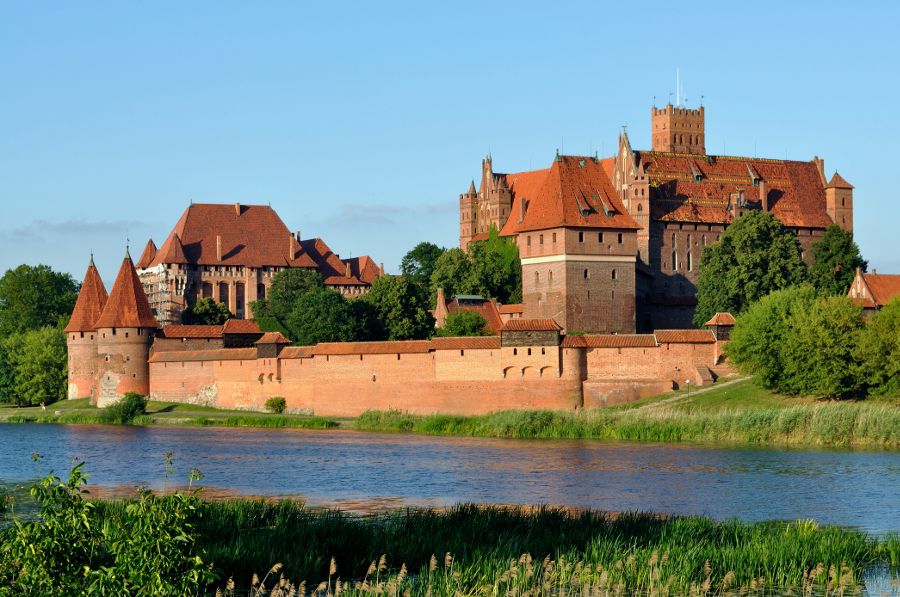
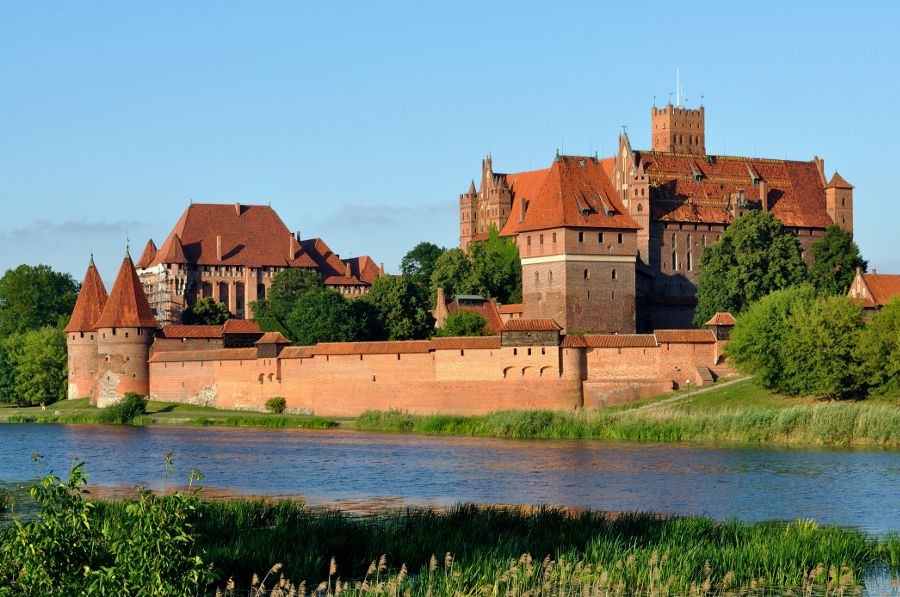
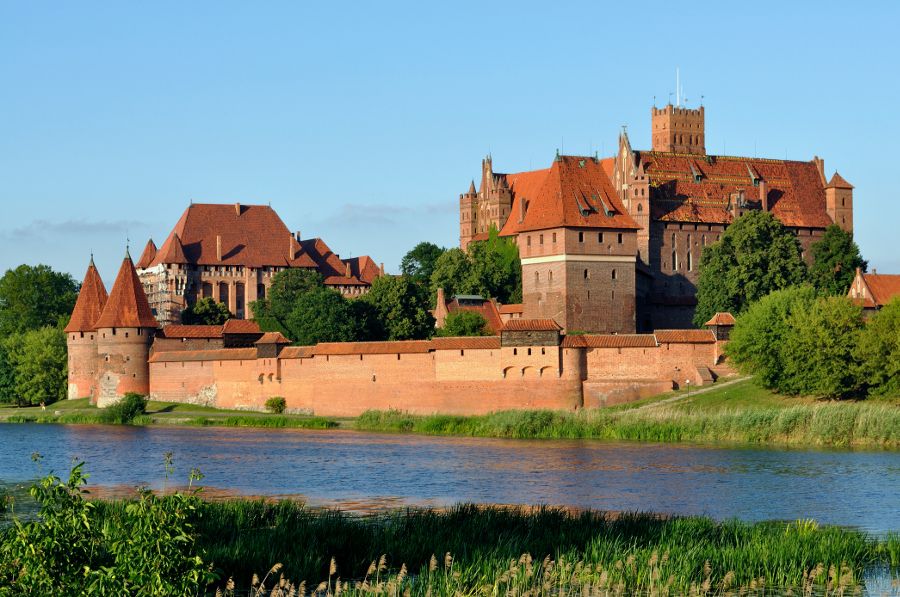
Malbork Castle is the headline for a reason. The Teutonic Order founded it, and it is described as the largest castle complex in Europe by land area. Even if you have seen other medieval fortresses, Malbork hits differently because it is not one building. It is a whole system, with spaces that were meant for power, administration, and ceremony.
You get about 3.5 hours on a guided tour inside the castle complex. That time matters because Malbork is built around a rhythm of courtyards, cloisters, and rooms that can feel confusing if you are wandering alone. With a guide, you get the story behind where you are standing, not just a list of features.
High Castle: courtyards, cloisters, and the castle as a stage
In the High Castle, you focus on the courtyard and cloisters. I like that this portion helps you understand how daily life and official life blended in a fortress. It also sets you up visually for the larger scale of the complex, because you start to see how everything connects.
You will also get a look at where feasts were held at the Summer Refectory. That is one of those details that turns a “cool old building” into a “wait, this is how people lived and celebrated.” It gives you a sense of social life inside walls built for serious business.
Middle Castle: Gothic drama and the Grand Masters’ Palace
Next comes the Grand Masters’ Palace in the Middle Castle, known for its Gothic style. This is where the architecture does the talking. I find it helpful that the tour moves through the different sections rather than treating Malbork as one long hallway.
Even if you are not a hard-core architecture person, the palace portion is worth paying attention to because it explains what the castle was supposed to communicate: authority, structure, permanence.
Gdansk repeats itself well. The other versions we reviewed
- From Warsaw: Tour to Malbork Castle and Gdansk or Sopot★ 5.0 · 10 reviews
Don’t plan to read everything
Malbork is big, and even with a guide, you cannot absorb everything. Your best move is to pick two or three spaces that catch your eye and listen closely to the explanation for those. An English audio guide is also included, which helps if you want to slow down after the main guided flow.
The lunch break that keeps the day sane
You get 1 hour for lunch at a local restaurant. Lunch includes soup, a main course, and water. That is a nice balance for a day trip like this because you are not skipping food or eating something random standing up.
In practice, the lunch slot is part of the itinerary logic. It resets your energy before the final guided walk in Gdansk or the seaside wandering in Sopot. If you arrive hungry, you might miss the best parts of the guided segments, so the scheduled meal is more valuable than it looks on paper.
Gdansk Old Town walking loop: markets, gates, and merchant power
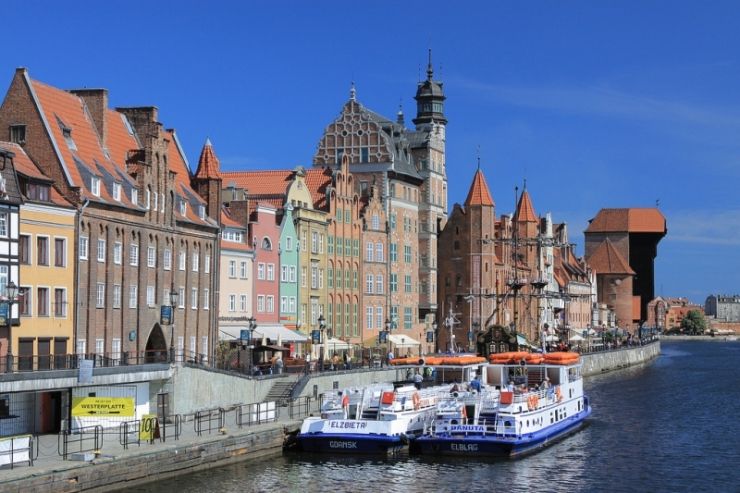
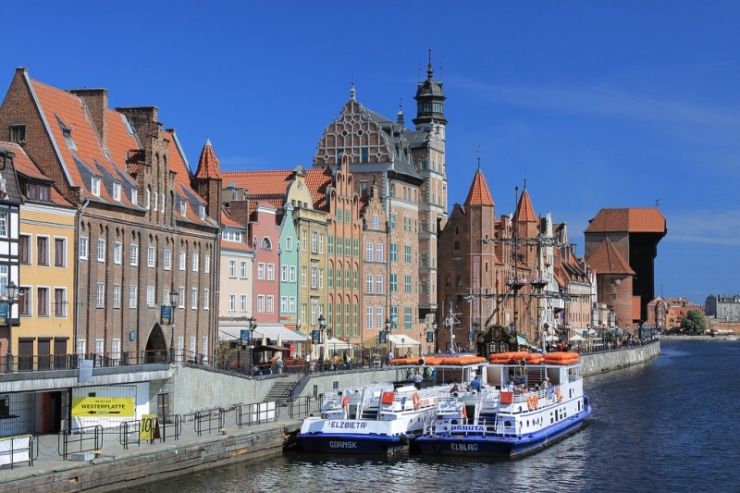
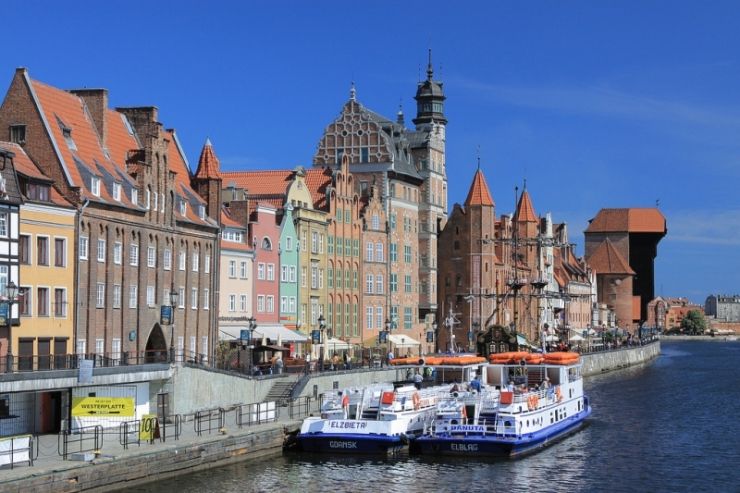
If you choose Gdansk, your guided time is about 2 hours. You walk through the Old Town and key sights that connect to the city’s role in trade. The route is designed to move from landmarks to landmarks, so you keep momentum without constantly checking maps.
Coal Market area, and the seasonal echo of market life
You pass the Coal Market (Targ Węglowy), known for hosting the annual Christmas Market. Even if you are not there in December, it gives context for why Gdansk felt important for centuries. Markets like this were not just food and goods. They were where the city’s social and economic life met.
Amber Museum in the former Prison Tower
You also see the Amber Museum, housed in the former Prison Tower. This pairing of a museum with a prison setting is clever. It helps you remember that cities like Gdansk were shaped by trade, wealth, and control all at once.
Golden Gate, Long Market, and Green Gate
As you enter the medieval core, you pass through the Golden Gate, then continue through Long Market toward Green Gate. I like this segment because gates and market streets give you a quick sense of urban design. You can see how movement was guided, where people gathered, and where the city’s “public face” lived.
Artus Court and the feel of merchant gatherings
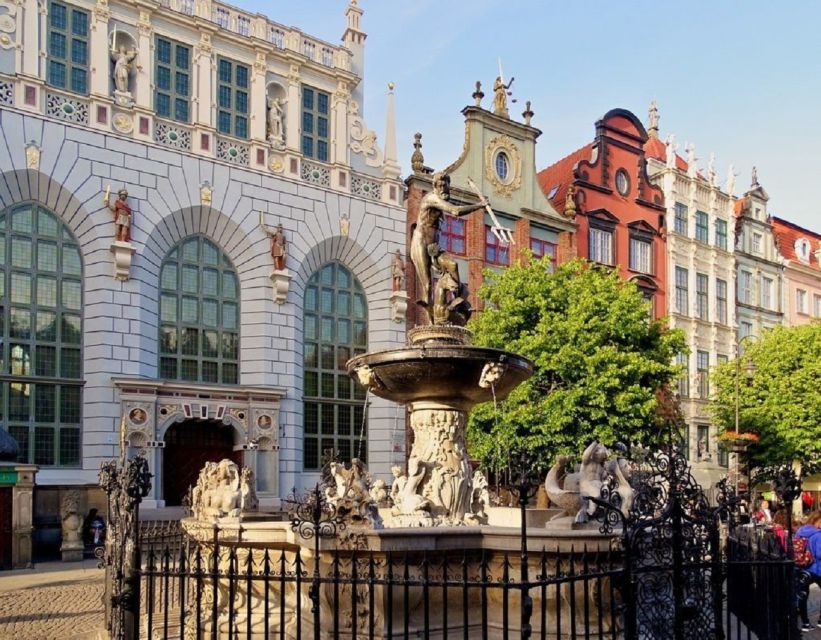
Then you step into Artus Court, a place where wealthy merchants gathered in the evenings in earlier times. It is a key moment because Gdansk is not only about medieval walls. It is about the people who financed the city’s growth.
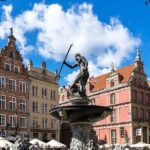
A small but memorable detail is Neptune’s Fountain at the entrance to Artus Court. It gives you a visual pause, and it is the kind of landmark you will recognize in photos later.
Basilica of the Assumption: the biggest brick church claim
The tour also includes the Basilica of the Assumption of the Blessed Virgin Mary, noted as the largest brick church in the world. That stat is the kind you hear and wonder about, but it is also the kind that affects how you experience the space. Even from the street, you can feel the scale.
If churches are not usually your thing, consider focusing on proportions and materials here, since it is brick construction that shapes the building’s presence.
Sopot instead: seaside promenade, Crooked House, and the pier
Prefer the coast? The alternative option is Sopot. Instead of the medieval core energy of Gdansk, you get a seaside day with a mix of famous sights and a classic pedestrian stroll.
You walk along Bohaterów Monte Cassino Street, a pedestrianized promenade lined with energy and people-watching. You will also see the famous Crooked House, a playful piece of architecture that is basically made for quick photos and curiosity.
Longest wooden pier in Europe
Sopot’s signature stop is a stroll on the longest wooden pier in Europe. A pier sounds simple, but it changes your perspective. It forces you to see the coastline and gives you that slow, steady “this is why we’re here” feeling.
Sopot Lighthouse built 1903-1904
You also visit the Sopot Lighthouse, built in 1903-1904 as part of the Balneological Institute. I like that the lighthouse is tied to the health and resort history of the town, not just its function as a marker.
The tour includes a climb to the top of the lookout tower for views over the city and sea. That viewpoint is the reward for standing on all that wooden decking.
How to choose: Gdansk day or Sopot day
This is not a “better” vs “worse” choice. It is a mood choice.
Choose Gdansk if you want medieval streets, market history, gates, and a big church stop where the city’s past feels tangible. It is also a good pick if you enjoy architecture and walking routes that make sense in order.
Choose Sopot if you want a break from fortress-and-church mode. It is more about atmosphere, the sea, and a few instantly recognizable landmarks, including the pier and the lighthouse.
If you are unsure, here is the practical way to decide: if you are the type who can spend time looking at façades and city landmarks, go Gdansk. If you would rather get outdoors with sea views and a clear walking loop, pick Sopot.
Price and value: what you are really paying for
At $477 per person for a 17-hour day trip, this is not a budget excursion. The value comes from the combination of transportation plus guided time where it counts.
You are paying for:
- Guided time at Malbork (3.5 hours) plus an English audio guide support
- English-speaking guidance in Gdansk or Sopot
- Skip-the-ticket-line benefit at Malbork
- Lunch with soup, main, and water
- Pickup in Warsaw city center (with a specified pickup point at Marszałkowska 98-100)
- Small group size up to 8, which helps the experience feel less chaotic
If you were to DIY this on your own, you might save money, but you would likely spend more time figuring out timing, entry logistics, and how to make the castle make sense. For people who want a smooth, guided day without stress, this cost can feel reasonable.
Who this tour fits best
This tour is ideal for you if:
- You want Malbork Castle as a top priority and appreciate guided context
- You like a mix of medieval sights plus either a city walk or a seaside walk
- You prefer a small group and English guidance
- You are fine with a long day and want the payoff of seeing two big places in one
It might not be the best fit if you hate road time, need lots of free time to wander without structure, or are easily tired by walking and standing during guided segments.
Should you book this Warsaw to Malbork and Gdansk or Sopot tour?
I would book it if Malbork Castle is on your must-see list and you want it handled with clear guidance and efficient entry. The big win is how the day is balanced: fortress first, then lunch, then a focused guided walk in Gdansk or a seaside route in Sopot.
I would think twice if you dislike long days. This is a 17-hour plan, and even with a lunch break, you need endurance. If you do book, bring comfortable shoes, keep your expectations realistic for pacing, and decide in advance which ending you want: merchant-medieval streets in Gdansk or sea-and-pier time in Sopot.
FAQ
Where does the tour pick up in Warsaw?
Pickup is from Marszałkowska 98-100.
How long is the tour?
The duration is 17 hours.
Is Malbork Castle entry included?
Yes. Entry fee to Malbork Castle is included, and you can skip the ticket line.
Do you get guided help in Gdansk or Sopot?
Yes. There is an English-speaking guide in Gdansk or Sopot, depending on which option you choose.
How much time is set aside for Malbork Castle and lunch?
You’ll have 3.5 hours for the guided Malbork Castle visit and 1 hour for lunch.
What is included in the lunch?
Lunch includes soup, a main course, and water at a regular restaurant.
What language is the tour offered in?
The tour is in English, with an English live guide and an English audio guide included.
How big is the group?
It is a small group limited to 8 participants.
Do I need more than one booking for the tour to run?
Yes. The tour requires a minimum of two reservations for the same date.
Malbork, Other Day Runs
Gdansk, Three More Ways
Warsaw, Keep Looking



Recently written up around Warsaw


More Warsaw City Tours.
 ★ 4.8Chopin Concert in the Old TownFrom $262,287 reviews
 ★ 4.6Traditional Galar Cruise on The Vistula RiverFrom $201,640 reviews
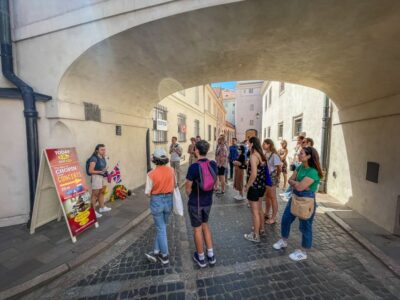 ★ 4.7Old Town Highlights Walking Tour in EnglishFrom $261,516 reviews
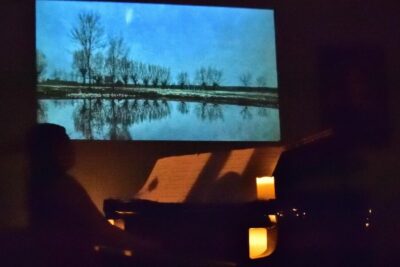 ★ 4.8Warsaw Concert: Chopin – Painted by Candlelights with WineFrom $251,442 reviews
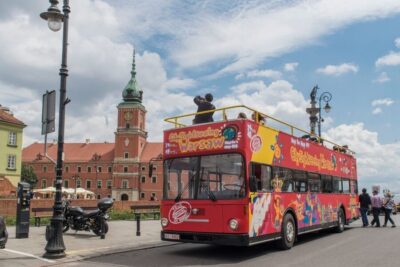 ★ 3.6City Sightseeing Hop-On Hop-Off Bus TourFrom $411,415 reviews
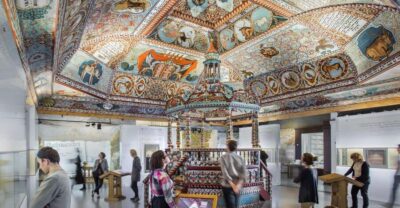 ★ 4.7POLIN Museum of the History of Polish Jews TicketFrom $121,142 reviews
 ★ 5.0#1 Pub Crawl Warsaw with Optional Premium 1 Hour Open BarFrom $28790 reviews
 ★ 4.6Polish Vodka Museum Tour with TastingFrom $22788 reviews
Also on these Poland lists