
REVIEW · GOLF CART AND ELECTRIC CAR TOURS
Gdańsk: City Tour by Electric Golf Cart
Gdańsk’s history rolls by on silent wheels. I like the electric golf cart for zipping between top sights without burning your energy, and I love how the Solidarity story connects to what you see around the Old Town. One possible drawback: it is built as a fast highlights loop, so you will not have long, slow time inside every stop.
The ride starts at the Golden Gate, on a side street called Targ Węglowy, and you get a private guide who keeps the city understandable. Based on what I’ve learned from guides like Damian and Tomasz, expect clear explanations and a relaxed, funny tone, even when the subject matter turns serious.
In This Review
- Key things to know before you go
- Starting at Golden Gate, then rolling through Old Town
- Highland Gate and Great Armory, how walls teach history
- Prison Tower and Torture Chamber, the hard stop that sticks
- St. Mary’s Church, Brotherhood Court, and St. John’s Church
- Granary Island and the Crane, picturing shipyard life
- Polish Post Office and Solidarity Square, public space as message
- Price, timing, and whether the hour fits your style
- Should you book this electric golf cart tour?
- FAQ
- How long is the Gdańsk city tour by electric golf cart?
- Where do we meet the guide?
- Is this tour private?
- What languages is the live guide available in?
- Is the tour wheelchair accessible?
- Does it run in rainy weather, and what should I bring?
- How much does it cost, and can I cancel for a refund?
Key things to know before you go
- A private hour by electric cart: short, efficient, and ideal when you want value without long walking.
- Old Town gates and fortifications: Highland Gate and Golden Gate anchor the story of the city’s defenses.
- Communism and Solidarity symbols: the tour explains why these landmarks mattered, not just what they look like.
- Prison Tower stop: the Prison Tower and Torture Chamber provide a hard reality check.
- Waterfront industry moments: Granary Island and the Crane help you picture shipyard life.
- Gothic churches in motion: St. Mary’s Church and St. John’s Church add wow-factor while you keep moving.
Gdansk repeats itself well. The other versions we reviewed
- Gdańsk City Sights & History Guided Walking Tour in English
★ 4.8 · 876 reviews - Gdansk: Firearm Shooting Experience with Instructor
★ 4.8 · 866 reviews - Gdansk: Guided Round-Trip Cruise to Westerplatte
★ 4.3 · 865 reviews - Gdańsk: Sightseeing EcoCruise around the Old Town of Gdansk
★ 4.6 · 719 reviews
Starting at Golden Gate, then rolling through Old Town
Most Gdańsk sightseeing starts with big views, and this one starts with good orientation. You meet your guide by the Golden Gate, specifically on the side street Targ Węglowy. That location matters because the Golden Gate is not just a pretty landmark, it is a natural “starting point” for understanding the Old Town layout.
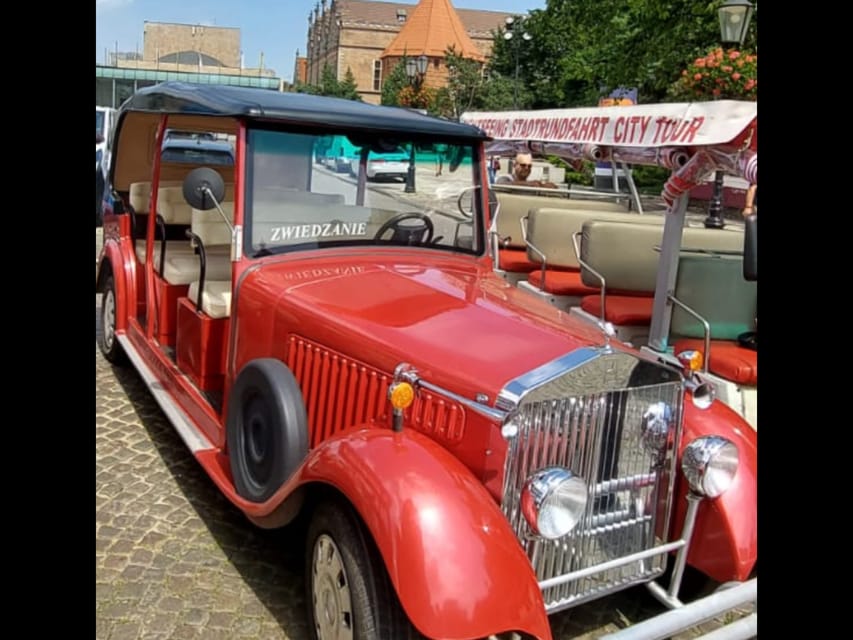
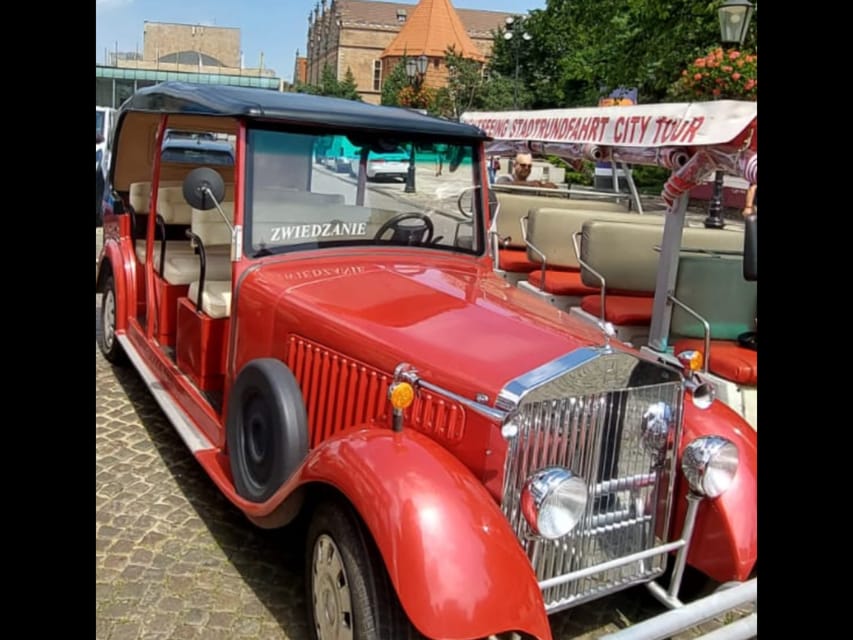
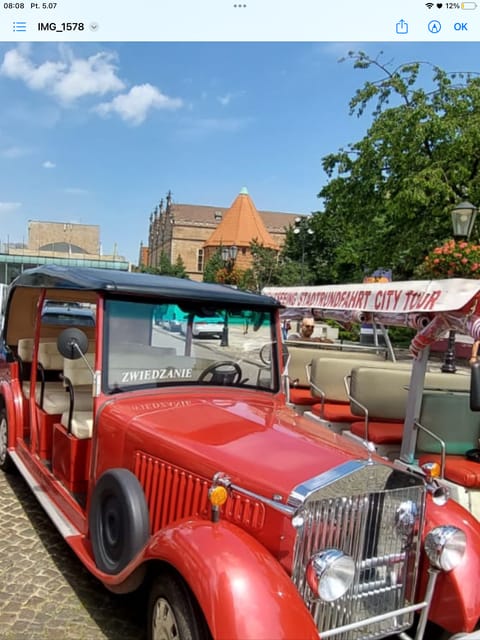
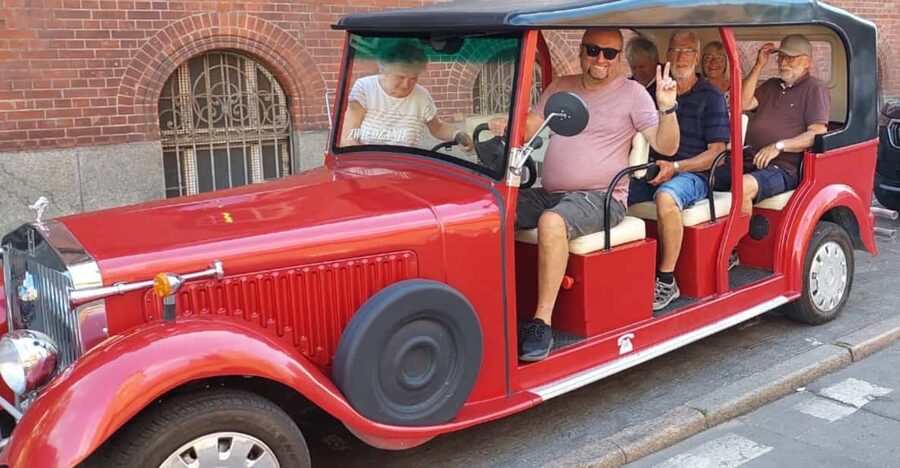
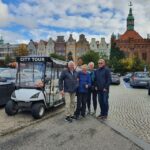
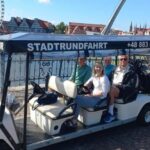
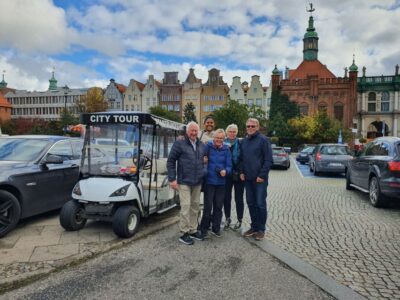
Then you hop into an electric golf cart. This is the part I think you’ll appreciate if your feet are already tired or if you want to save your stamina for later in the day. The cart lets you cover multiple historic stops efficiently, and the vibe stays calm. You are not dodging crowds for every block, and you can actually focus on what your guide is saying.
Your guide talks you through the city’s history, neighborhoods, and attractions, with a special emphasis on the symbols tied to the fall of communism and the role of the shipyards and Solidarity. That framing can change how you see everything. Instead of treating each building as a standalone photo stop, you start noticing how the city’s layout, institutions, and public spaces fit together.
One extra comfort detail: the cart tour runs rain or shine, with rain blinds available on wet days. You are still outdoors, but you are protected enough that the experience stays comfortable instead of miserable.
Highland Gate and Great Armory, how walls teach history

Once you get moving, the tour hits the “city as a system” theme. The Highland Gate is one of the stops that helps you picture how Gdańsk guarded itself. Gates like this are where power shows up. People think of walls as pure defense, but they also mark trade routes, movement, and control.
From there, you move toward the Great Armory. Even if you are not a military buff, armories are practical history. They remind you that cities had to be ready for conflict and that preparedness was part of daily life. Your guide’s job here is to connect the architecture to real meaning. You end up seeing stone and iron as “infrastructure,” not just old décor.
This part of the tour is also a good test of whether the cart format works for you. If you like guided context, you’ll find the quick drive between stops keeps your attention high. If you hate hearing facts on the move, you might prefer a slower walking tour. But most people enjoy having the guide “translate” the city as you glide past.
As you roll along, keep an eye on the way the city’s older structures line up. The gates, armory, and church areas feel like they belong to the same story arc, not random points on a map. That is the quiet win of a guided route.
Prison Tower and Torture Chamber, the hard stop that sticks
Every good history tour needs a reality check, and this one includes it with the Prison Tower and Torture Chamber. This stop is where the mood can shift. The city’s public symbols of freedom and political change become more meaningful once you also understand what oppression looked like.
I like this inclusion because it avoids “history as postcards.” You’re not only learning about the victories tied to Solidarity. You’re also seeing the machinery that made resistance costly. That combination helps you process why later landmarks and political movements mattered so much.
Prison and torture sites can be emotionally heavy, but you get them in context, not as a shock tactic. You leave with a clearer sense of the scale of what people faced, which makes the rest of the tour land harder. If you prefer everything light and scenic, this might feel intense. If you want your trip to mean something, it is exactly the kind of stop that gives the city depth.
Also, keep your expectations realistic. This is an hour-long tour, so you’ll get the story rather than a prolonged, independent museum-style visit. Think of it as a guided “chapter,” not a full thesis.
St. Mary’s Church, Brotherhood Court, and St. John’s Church
After the more serious stops, the tour balances things with major landmarks. St. Mary’s Church is the kind of sight that tends to stop you mid-sentence. Even when you are viewing it from different angles during the cart ride, the church’s presence dominates the Old Town feel.
Then you move to the Court of St. George’s Brotherhood. Courtyards like this often get overlooked by people rushing for bigger monuments. Here, it’s useful because it shows another layer of civic life. It hints at how communities organized themselves, not only how they fought or protested.
You also see St. John’s Church. Churches here are more than architecture. They act like anchors for neighborhoods and time periods. With a guide, you learn what to look for and why certain buildings mattered to locals.
What I like about this section is that the cart tour does not turn churches into pure “look and go” moments. Your guide’s explanations give you a framework, so you notice details instead of just admiring the big shapes.
There is one small practical caution. If it’s cold or rainy and you are using the rain blinds, visibility for close-up photo shots can be awkward. You might see the view clearly enough for your eyes, but getting a great picture through plastic can be trickier.
If the walking is the problem, these rolled-through reviews help
- Gdansk: City Sightseeing Tour by Golf Cart/Buggy Guided Tour★ 4.9 · 510 reviews
- Gdansk: Shared or Private City Tour Sightseeing By Golf Cart★ 4.8 · 233 reviews
- Gdańsk: City Sightseeing Tour by Buggy/Golf Cart LIVE GUIDED 1H★ 5.0 · 208 reviews
- Gdansk: Private Top City Tour by Electric Cart & Live Guided★ 4.9 · 114 reviews
- Gdansk: 2H City Sightseeing Tour LIVE GUIDED by Buggy/Golf cart★ 5.0 · 89 reviews
Granary Island and the Crane, picturing shipyard life
The tour really starts to feel like a “Gdańsk made it happen” story when you reach the waterfront area, including Granary Island and the Crane. These stops connect the city’s political identity to its economic heartbeat.
A granary is not just storage. It is trade, food supply, and the steady pulse of a working port. The Crane helps you visualize cargo and the mechanics of everyday industry. This is where the shipyard and Solidarity themes make emotional sense.
If you only see shipyard history in books, it can feel distant. But standing near structures tied to port life makes it real. You can picture how workers organized, how protests spread, and why the economy shaped the political climate.
I also like that the tour keeps the sequence logical. It takes you from gates and power structures, to prisons and resistance, then to industry and the public places where people stood up for change. That flow is what makes the tour feel coherent, not like a checklist.
Polish Post Office and Solidarity Square, public space as message
By the time you reach the Polish Post Office and Solidarity Square, you understand the city is full of political signage, even when it looks like ordinary architecture. The Polish Post Office is one of those places where a guide’s context matters. Without it, you might just clock a historic building. With it, you start to see it as part of the network of communication and action.
Then Solidarity Square lands as the emotional payoff. This is where the narrative you’ve been hearing about communism’s fall, shipyard culture, and Solidarity becomes visible in public space.
I like that you do not have to “figure it out” alone. The guide ties symbols to meaning as you go. You learn what to notice and you get a better sense of why these sites continue to matter.
And because this is a cart tour, you can stay comfortable while learning. You get the emotional and educational hits without doing a marathon between them.
Price, timing, and whether the hour fits your style
The price is $19 per person, and for what you’re getting, it’s strong value. You get a local guide, a private tour, and electric golf cart transport for about an hour total, with roughly 30 minutes of guided time.
Is $19 “cheap” in a vacuum? Maybe not. But you’re paying for efficiency plus interpretation. With multiple historic stops clustered close to each other, the cart saves time and energy, and the guide helps you read the city’s meaning instead of just walking past it.
This tour is also a smart fit if you have limited time. One hour in Gdańsk can feel short, but a highlights loop can still give you the bones of the city. Later, when you wander on your own, you’ll know what you’re looking at and why it matters.
Who should book?
- You want an easy first look at Gdańsk’s Old Town
- You prefer guided context over self-guided guesswork
- You’d rather preserve energy for other sights
- Your group includes mixed ages or mobility needs, since the cart is wheelchair accessible
Who might skip?
- You want long, slow time at each interior site
- You prefer a totally unstructured stroll with no facts on the move
- You dislike rain-day setups, especially if you expect crisp photos through rain blinds
Should you book this electric golf cart tour?
I’d book it if you want a practical, human-sized way to learn Gdańsk, quickly, with a guide who makes the city understandable and often entertaining. The big win is the combination of Old Town gates, painful political history, shipyard-related context, and public landmarks of Solidarity, all without forcing you to walk for hours.
If your goal is maximum time at a single church, museum, or waterfront corner, you may want a longer self-guided day. But if your goal is to get your bearings fast and leave with a story you can repeat while you explore, this tour is a very reasonable bet.
FAQ
How long is the Gdańsk city tour by electric golf cart?
The tour lasts about 1 hour total.
Where do we meet the guide?
Meet your guide in front of the Golden Gate on the side street Targ Węglowy.
Is this tour private?
Yes, it is a private group tour.
What languages is the live guide available in?
The live tour guide is available in English, German, Russian, Polish, Italian, Turkish, and Spanish.
Is the tour wheelchair accessible?
Yes, the tour is wheelchair accessible.
Does it run in rainy weather, and what should I bring?
The tour runs rain or shine. Weather-appropriate clothing is recommended, and rain blinds are available on rainy days.
How much does it cost, and can I cancel for a refund?
The price is $19 per person, and you can cancel up to 24 hours in advance for a full refund.
More Tour Reviews in Gdansk



Sightseeing Without the Walking


Gdansk, Three More Ways
Recently written up around Gdansk




More Golf Cart and Electric Car Tours.
 ★ 4.5City Sightseeing Tour by Electric Golf CartFrom $133,264 reviews
 ★ 4.7City Sightseeing Tour Eco Electric Buggy Golf CartFrom $133,143 reviews
 ★ 4.6E-Car Tour and Audio GuideFrom $161,738 reviews
 ★ 4.82-Hour Private Guided Tour by Electric CarFrom $38805 reviews
 ★ 4.7Extended City Sightseeing Tour – Eco Buggy Golf CartFrom $13794 reviews
 ★ 4.9City Sightseeing Tour by Golf Cart/Buggy Guided TourFrom $40510 reviews
 ★ 4.4Electric Car Sightseeing TourFrom $25450 reviews
 ★ 5.0Guided City Tour by Golf Buggy (with hotel pickup)From $53426 reviews
Also on these Poland lists