

REVIEW · GOLF CART AND ELECTRIC CAR TOURS
Gdańsk: City Sightseeing Tour by Buggy/Golf Cart LIVE GUIDED 1H
Glide through Gdańsk without the knee burn. I love the included central pickup and drop-off, and I love how the golf buggy keeps your energy for sightseeing instead of long walks. You get a fast, fun circuit that hits major landmarks with live guidance so the city makes sense quickly.
One thing to consider: this is a highlight run, not slow sightseeing. Expect short stops, so plan to come back later if you want time for deeper museum browsing or longer church visits.
In This Review
- Key things I’d plan around
- The 1-hour buggy format: why it works so well in Gdańsk
- Price and value: what $29.48 gets you
- Pickup, meeting, and practical timing that keeps stress low
- Stop-by-stop: how the route teaches you Gdańsk fast
- Green Gate, Long Market, and the old-town core
- Gates to everyday city life: armoury, shopping, and a bridge of love
- Baltic waterfront symbolism: old town hall, Solidarity, and the big memorial moment
- WWII and 20th-century memory: where the tour gets serious
- Back to the royal church cluster: Royal Chapel, St. Mary’s, and St. Nicholas
- The guide experience: why names like Michael, Alex, Magic, and Noris come up
- Weather, route changes, and how to stay flexible
- Should you book this 1-hour Gdańsk buggy tour?
- FAQ
- How long is the Gdańsk buggy tour?
- Where does the tour start and end?
- Is pickup included?
- What language is the guide offered in?
- Are admissions included for the stops?
- How many people are in the group?
- Is the tour good if the weather is poor?
- Can I cancel for free?
- Is there a mobile ticket?
Key things I’d plan around
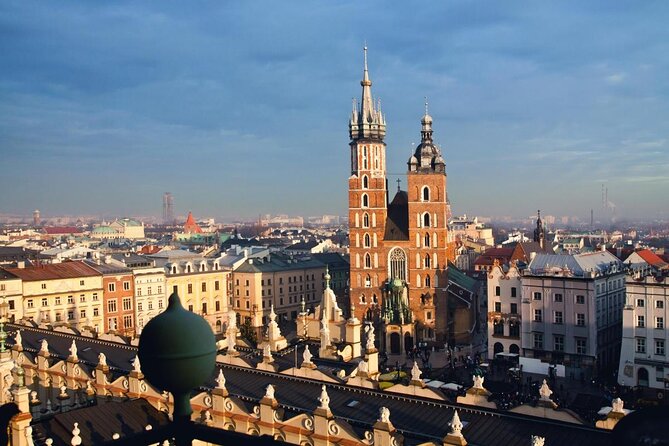
- Central pickup and drop-off in the old city core: within about 2 km of Neptune’s Fountain, plus the option to meet at the fountain itself
- Live English guide in a small vehicle: maximum 30 travelers, and the cart style keeps the vibe personal
- Free admission listed at the stops: most of the key sights on the route are marked with admission ticket free
- Comfort perks for real weather: blankets are mentioned, and the cart can be set up for rain protection
- An easy way to connect big themes: waterfront trade, city gates, WWII sites, and Solidarity-era symbolism
Gdansk repeats itself well. The other versions we reviewed
- Gdańsk City Sights & History Guided Walking Tour in English
★ 4.8 · 876 reviews - Gdansk: Firearm Shooting Experience with Instructor
★ 4.8 · 866 reviews - Gdansk: Guided Round-Trip Cruise to Westerplatte
★ 4.3 · 865 reviews - Gdańsk: Sightseeing EcoCruise around the Old Town of Gdansk
★ 4.6 · 719 reviews
The 1-hour buggy format: why it works so well in Gdańsk

Gdańsk is one of those cities where the best views are sprinkled across neighborhoods, not in one neat loop. Walking can be lovely, but it is also easy to burn your legs before you reach the really important spots. That is why I like this golf buggy setup: it is built for quick repositioning, while your guide handles the “where next” puzzle.
The route is designed around landmarks you can actually spot from a cart. So you are not spending the whole hour lost between stops. Instead, you get frequent photo points and story points, including street-level architectural details and major turning points in the city’s modern era.
This is also a good style of tour if you like asking questions. The vehicle keeps everyone close, so you can usually hear explanations without leaning over a crowd or sprinting to catch up.
Price and value: what $29.48 gets you
At $29.48 per person for roughly 1 hour to 1 hour 15 minutes, the big value is not the transportation alone. It is the combination of three things:
- Pickup and drop-off in the historical center (within about 2 km of Neptune’s Fountain). You are not stuck trying to match a meeting point while juggling luggage or jet lag.
- A live guide in English, focused on what to see and what it means. That is what turns a list of buildings into a coherent city story.
- Stops marked as free admission. The tour’s itinerary notes admission ticket free at the sights on the route, so you can spend your money later on meals and extras instead of adding entry fees at every turn.
If you are trying to get oriented on day one, this price usually feels like a smart shortcut. If you are already spending most of your trip inside museums, you might prefer a longer, slower walking plan. But for a one-shot “get the lay of the land” plan, this is strong value.
Pickup, meeting, and practical timing that keeps stress low
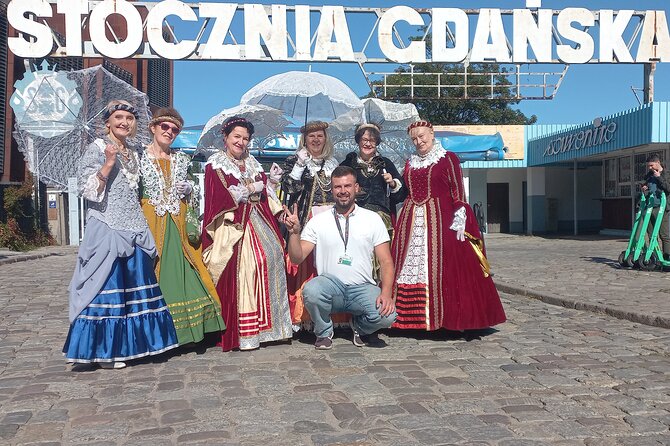
You start and end at Neptune’s Fountain (Długi Targ, 80-833 Gdańsk). If you do not want to fight for a meeting spot, the tour offers pickup and drop-off at a place you choose within about 2 km of the fountain. You just provide the exact address, and the team comes to you.
A couple practical notes matter here:
- You should wait at your pickup point 10 minutes before the scheduled start time.
- Some streets in Gdańsk have restricted access, even inside the pickup radius. If your address is in a restricted zone, your guide will coordinate a nearby pickup spot.
- Port pickup is not offered, so if you are arriving by cruise you will need to get to a point in the historical center.
One more detail that can affect your day: there may be a slight delay because normal road traffic is still traffic. This is not a high-stakes tour where you must be somewhere else at a precise minute, so build in a little buffer if you have tight connections.
Finally, this is a tour that people book early. The average booking window is about 20 days ahead, so if your travel dates are fixed, I would not wait until the last week.
Stop-by-stop: how the route teaches you Gdańsk fast

The itinerary moves through the city like a guided highlight reel. You get quick stops, usually a couple minutes each. That means you see a lot, but you also learn how each area connects to the next.
If the walking is the problem, these rolled-through reviews help
- Gdansk: City Sightseeing Tour by Golf Cart/Buggy Guided Tour★ 4.9 · 510 reviews
- Gdansk: Shared or Private City Tour Sightseeing By Golf Cart★ 4.8 · 233 reviews
- Gdańsk: City Sightseeing Tour by Buggy/Golf Cart LIVE GUIDED 1H★ 5.0 · 208 reviews
- Gdansk: Private Top City Tour by Electric Cart & Live Guided★ 4.9 · 114 reviews
- Gdansk: 2H City Sightseeing Tour LIVE GUIDED by Buggy/Golf cart★ 5.0 · 89 reviews
Green Gate, Long Market, and the old-town core
You kick off at Neptune’s Fountain on Długi Targ, the iconic start point for the royal old town look. Even if you have seen pictures, seeing it in person helps you understand the city’s layout because you can orient your bearings fast.
From there, the route hits:
- Green Gate (Brama Zielona): This is the doorway feel into the Long Market area from the Motława River side. It helps you understand how the city presented itself outward, like a polished entrance.
- Muzeum Gdańska: A quick stop tied to the Museum of Gdańsk concept. Even when you only have a short moment, the setting gives you a sense that you are in the city’s core layer.
- Main Town Hall (Museum of Gdańsk): The Main Town Hall is part of why Gdańsk feels civic and commercial at the same time. It is not just pretty streets, it is a city that ran on trade and governance.
- Golden House: This is one of the most beautiful buildings on the Long Market stretch. It is a good place to spot the style choices that make Gdańsk look different from other Polish Baltic cities.
- Gdansk Shakespeare Theatre: Near the city walls, this stop adds a modern cultural layer. It is a reminder that the city’s identity is not frozen in time.
Then the route reinforces the “this city had boundaries” idea:
- Langgasser Tor (Goldenes Tor): A major gateway view into the main street area.
- Prison Tower: A quick, sobering stop tied to how the city controlled order.
- Highland Gate: Not just another gate, this is described as the first entrance gate to the main city in the past, tied to the beginning of the royal route.
If you want one personal takeaway from this stretch, it is how quickly the city shifts from grand facades to the practical facts of gates, control, and movement.
Gates to everyday city life: armoury, shopping, and a bridge of love
After the gates, the route continues to places that show modern Gdańsk mixed with its historic shell:
- Forum Gdańsk: The largest shopping center. This is the “real-life stop” that keeps the tour from becoming museum-only sightseeing.
- Great Armoury (Wielka Zbrojownia): A key stop for how the city was armed and organized. Armoury sites always give you a more grounded view of power.
- Drzewo Millennium: The Millennium Tree is a smaller stop, but it helps you see how the city marks milestones in public spaces.
- Jan III Sobieski Monument: A major Polish history reference point. It is the kind of landmark you will remember even if you forget the exact facts, because it anchors the broader national narrative.
Then you cross into an instantly recognizable romance marker:
- Most Chlebowy (Most MiloSci), the Bridge of Love: It is short and sweet, but it is a fun stop when you want something that feels playful after walking through heavier historical themes.
Baltic waterfront symbolism: old town hall, Solidarity, and the big memorial moment
Next comes a set of stops that bring you toward the city’s waterfront culture and its modern political meaning:
- Baltic Sea Culture Centre / The Old Town Hall: This stop ties the city’s identity to the sea and to old civic buildings.
- Three Crosses Monument: This is one of the tallest monuments in Europe, and it is closely connected with Solidarity Square and the Europe Solidarity Center area. Even with a brief stop, it hits hard because of scale and placement.
After that, the route turns toward crafts, worship, and daily life:
- The Great Mill, Amber Museum: Amber is tied to the Baltic story, so this stop gives you a local material link instead of just generic “history.”
- St. Catherine’s Church (Kosciol Sw. Katarzyny): A standout church stop with photo-friendly exterior views.
- St. Bridget’s Church (Kosciol sw. Brygidy): Another major church stop that helps you see how religious architecture punctuates the city.
- Hala Targowa Kupcow Dominikanskich (Market Hall): A market hall stop is a nice change of pace. It is less about monuments and more about what people did day to day.
WWII and 20th-century memory: where the tour gets serious
This part of the route is where Gdańsk’s 20th-century story becomes impossible to ignore:
- Museum of the Polish Post Office (Museum of Gdańsk): A focused stop connected to the city’s wartime communication history.
- Museum of the Second World War: This is the big one on the route, listed as a stop with short time. Even if you do not enter, the area context matters.
- Baltic Symphony Hall: A creative pivot, showing that the city rebuilt itself into cultural life rather than only mourning.
- Crane (historical Great Crane): This is a classic waterfront industrial landmark. It helps connect trade, shipping, and rebuilding.
- St. John’s Church: You will see this on the route as well, as another key religious structure in the area.
One of the reasons this tour works is that it does not treat these themes as separate. You feel the shift from gates and trade, to wartime memory, to today’s public buildings.
Back to the royal church cluster: Royal Chapel, St. Mary’s, and St. Nicholas
The final stretches keep you in that old-town sacred zone:
- Royal Chapel (Kaplica Królewska): A major stop tied to royal religious symbolism.
- St. Mary’s Church: Another big church stop, built for you to recognize from across the city once you have the orientation.
- St. Nicholas Church: The last church stop in this run. It is a strong closer because church clusters help you remember the city center as a clear map, not a blur.
Then you roll back to Neptune’s Fountain to finish where you began. That back-to-the-start layout is helpful because you can continue exploring without needing to find your way again.
The guide experience: why names like Michael, Alex, Magic, and Noris come up
A buggy tour can be generic if the guide just reads a script. This one has a reputation for being different because the guides focus on interpretation, not reciting dates.
Guides such as Michael, Alex, Noris, Magic, Loris, Norris, and Maciek are repeatedly described as enthusiastic and clear, with strong English. That matters because Gdańsk is layered. If the explanations are shaky, you end up enjoying the ride but missing the story.
What I like to look for in any guide-led landmark circuit:
- They answer questions in real time, not just at the end.
- They connect architecture to meaning, like what gates represented or why certain monuments are placed where they are.
- They adapt to the group. Some guides are described as customizing the tour pace and stops, and even adding an extra stop when it suits the moment.
Practical comfort also shows up in the guide style. One common tip from past tours: bring a jacket, and expect the cart setup to handle colder or rainy conditions. In rain, the cart can be fitted with plastic sides, and blankets have been mentioned as part of the comfort setup.
Weather, route changes, and how to stay flexible
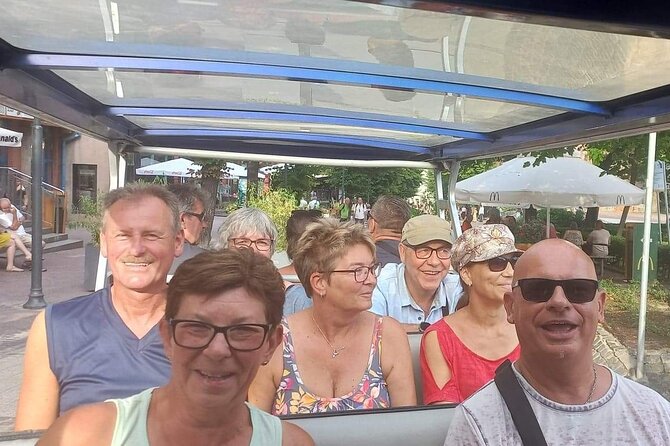
This is a tour that depends on weather. If it is too poor, you are offered a different date or a full refund, and it is best to watch the forecast.
There is also a seasonal note for July 27 to August 25, 2025, tied to the Saint Dominic’s Fair. During that window, there can be restrictions and itinerary changes. The tour is still described as keeping the same normal schedule length and high standard, but the specific routing may shift.
My advice: if your visit falls inside that window, keep your expectations flexible and plan the rest of your day so you are not rushing to a timed reservation immediately after your tour.
Should you book this 1-hour Gdańsk buggy tour?
Book it if you want:
- A fast orientation to Gdańsk’s big landmarks, including gates, waterfront symbolism, and the WWII and Solidarity-area stops.
- Central pickup and drop-off so you are not spending your limited sightseeing energy walking to the start point.
- A tour where you can sit back, ask questions, and keep moving without fatigue.
Skip it if:
- You already know the city well and want long, slow museum time inside specific sites.
- You prefer a walking-only experience where you control every minute on foot.
If you are on a first visit and you want your next day free to go deeper, this buggy tour is a smart starting move. You finish back at Neptune’s Fountain with a mental map of where to return, and the guide storytelling makes those return trips feel like more than just photo stops.
FAQ
How long is the Gdańsk buggy tour?
The tour is listed as about 1 hour to 1 hour 15 minutes.
Where does the tour start and end?
It starts and ends at Neptune’s Fountain on Długi Targ, in the historical center.
Is pickup included?
Yes. Pickup and drop-off are offered at a place of your choice within about a 2 km radius from Neptune’s Fountain. You can also meet at Neptune’s Fountain.
What language is the guide offered in?
The live guide is offered in English.
Are admissions included for the stops?
The itinerary lists the stops with admission ticket free, and the tour includes all fees and taxes.
How many people are in the group?
The maximum is 30 travelers.
Is the tour good if the weather is poor?
The experience requires good weather. If it is canceled due to poor weather, you will be offered a different date or a full refund.
Can I cancel for free?
Yes. You can cancel for a full refund up to 24 hours in advance.
Is there a mobile ticket?
Yes, the tour uses a mobile ticket.
More Tour Reviews in Gdansk




Sightseeing Without the Walking

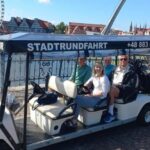

Gdansk, Three More Ways
Recently written up around Gdansk




More Golf Cart and Electric Car Tours.
 ★ 4.5City Sightseeing Tour by Electric Golf CartFrom $133,264 reviews
 ★ 4.7City Sightseeing Tour Eco Electric Buggy Golf CartFrom $133,143 reviews
 ★ 4.6E-Car Tour and Audio GuideFrom $161,738 reviews
 ★ 4.82-Hour Private Guided Tour by Electric CarFrom $38805 reviews
 ★ 4.7Extended City Sightseeing Tour – Eco Buggy Golf CartFrom $13794 reviews
 ★ 4.9City Sightseeing Tour by Golf Cart/Buggy Guided TourFrom $40510 reviews
 ★ 4.4Electric Car Sightseeing TourFrom $25450 reviews
 ★ 5.0Guided City Tour by Golf Buggy (with hotel pickup)From $53426 reviews
Also on these Poland lists