
REVIEW · GOLF CART AND ELECTRIC CAR TOURS
Gdansk: 2H City Sightseeing Tour LIVE GUIDED by Buggy/Golf cart
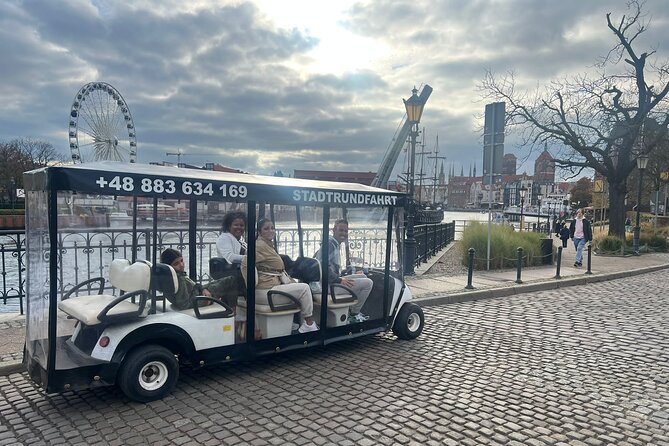
Neptune’s Fountain, then history on wheels. This 2-hour electric golf buggy tour is built for speed without feeling rushed, hitting Gdańsk’s most recognizable sights fast, with a live guide talking through what you’re seeing. You roll through old-town streets, then swing toward the city’s modern memory, all in a format that saves your legs.
What I like most is the tour’s focus on real orientation: you get a compact route through the main landmarks so you can choose what deserves a longer return visit. Second, the “small perks” add up, especially the included drink (water, coffee, or beer) to keep you comfortable while you hop between stops. One drawback to consider, though, is that the stops are brief, so think photo-and-overview, not slow museum time everywhere.
In This Review
- Key points before you go
- Why this 2-hour buggy tour works so well in Gdańsk
- Price and value: what you’re really paying for
- Meeting at Neptune’s Fountain, and how pickup actually works
- The old-town loop: Neptune, gates, and royal-route landmarks
- Neptune’s Fountain, the photo magnet with a point
- Main Town Hall and Arthur’s Court: civic power in brick
- Długi Targ and the Green Gate: the historic-center core
- Shakespeare Theatre and Katownia: culture and punishment
- Golden Gate and the Royal Road feel
- Great Armoury and a few modern markers
- Churches, stations, and the amber highlight you should not skip
- Gdańsk Główny Railway Station and the old-town church cluster
- St. Bridget’s Church and the Amber Altar
- St. Joseph, St. Elizabeth, and the rest: how to look in 60 to 90 seconds
- Solidarity, the shipyard, and how the route tells a 20th-century story
- Polish Post Office Museum: one of the first acts of the war
- European Solidarity Centre and the memorial sites
- Gdańsk Shipyard: why so many monuments cluster here
- Second World War Museum, Baltic Philharmonic buildings, and the waterfront payoff
- Museum of the Second World War and what that adds to the picture
- Baltic Symphony Hall and St. John’s Church
- The Great Crane and St. Mary’s Church: the port city at its most iconic
- Royal Chapel and St. Nicholas: two church façades that contrast
- Market Hall: where the day ends feeling practical
- Riding comfort, timing, and tips that make the whole thing better
- Should you book this buggy tour?
Key points before you go
- Electric golf buggy riding means less walking, quicker turns, and a smoother start for first-time visitors
- Live guide in English, with room for questions as you roll past each landmark
- One included drink (water, coffee, or beer), handy on a busy sightseeing loop
- Many stops are exterior or quick-inspection style, so you leave with a clear map of where to spend more time
- A smart mix of old-town icons and Solidarity-era sites helps you understand Gdańsk in layers
- Small group size (maximum 30) keeps the experience from feeling like a mass shuffle
Gdansk repeats itself well. The other versions we reviewed
- Gdańsk City Sights & History Guided Walking Tour in English
★ 4.8 · 876 reviews - Gdansk: Firearm Shooting Experience with Instructor
★ 4.8 · 866 reviews - Gdansk: Guided Round-Trip Cruise to Westerplatte
★ 4.3 · 865 reviews - Gdańsk: Sightseeing EcoCruise around the Old Town of Gdansk
★ 4.6 · 719 reviews
Why this 2-hour buggy tour works so well in Gdańsk
Gdańsk is not just pretty brick and church towers. It is a port city with a long memory, plus neighborhoods that feel totally different once you get past the historic core. This buggy format is good because it compresses the variety. In a short window, you get the “wow” of classic sights, then you pivot to the shipyard and museums tied to 20th-century history.
I also like how practical it is for planning the rest of your day. You finish the loop with a clear sense of which churches, squares, and museum stops you actually want to revisit later. Several guides on this tour are described as enthusiastic and story-driven, and the overall vibe is not stiff. You are moving fast, but you are also getting context so the city starts making sense.
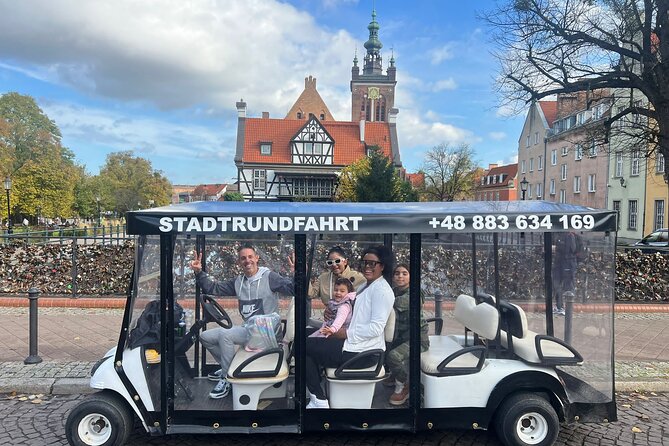
One more point: the tour includes an eco-friendly electric buggy ride, and the pace generally works even if you do not want to do a full-on walking day.
Price and value: what you’re really paying for
At $51.97 per person for about 2 to 2 hours 15 minutes, you are paying for three things that add up quickly:
1) The guided context. You are not just “seeing dots on a map.” A live guide connects the dots, from the symbolic meaning of Neptune to why the shipyard matters. That turns a quick stop into something you can remember.
2) The time you save. Gdańsk’s historic center has tight streets and lots of stops. Getting around by buggy helps you cover more ground without feeling like you’re sprinting.
3) The included drink and fees. A drink is included for each tourist, with options listed as water, coffee, or beer. The tour also notes that all fees and taxes are included, which reduces the usual small-surprise costs that pop up during tours.
If you are traveling with limited time, especially if you want to get your bearings on a first morning, the value makes sense. You are basically buying a guided orientation plus a comfortable way to see many highlights before choosing your deeper dives later.
Meeting at Neptune’s Fountain, and how pickup actually works
The tour starts and ends at Neptune’s Fountain (Fontanna Neptuna) on Długi Targ, right in the historic heart of Gdańsk. You can also request pickup within a 2 km radius from Neptune’s Fountain, and the operator says they can pick you up at your hotel or a specific place of stay in that area.
A couple logistics tips that matter:
- Be at the pickup point about 10 minutes before the scheduled start time.
- If your exact address is in a restricted-access zone, the guide will contact you to choose a new nearby pick-up point.
- Pickup is not offered at ports, so if you are arriving by cruise, you will want to plan your trip to the city center accordingly.
The tour can end either back at the Neptune’s Fountain area or at another point you choose within that same 2 km radius.
The old-town loop: Neptune, gates, and royal-route landmarks
The first segment is all about anchors. It is where the city starts to click, because you see the symbolic center, then the historic institutions around it.
If the walking is the problem, these rolled-through reviews help
- Gdansk: City Sightseeing Tour by Golf Cart/Buggy Guided Tour★ 4.9 · 510 reviews
- Gdansk: Shared or Private City Tour Sightseeing By Golf Cart★ 4.8 · 233 reviews
- Gdańsk: City Sightseeing Tour by Buggy/Golf Cart LIVE GUIDED 1H★ 5.0 · 208 reviews
- Gdansk: Private Top City Tour by Electric Cart & Live Guided★ 4.9 · 114 reviews
- Gdansk: 2H City Sightseeing Tour LIVE GUIDED by Buggy/Golf cart★ 5.0 · 89 reviews
Neptune’s Fountain, the photo magnet with a point
Stop one is Neptune’s Fountain (Fontanna Neptuna). This is Gdańsk’s most recognized symbol, and you will see people lining up for photos because the statue ties the city to the sea. Even if you have already seen pictures, seeing it in person gives you a real starting reference.
Main Town Hall and Arthur’s Court: civic power in brick
Next, you pass by the Main Town Hall Museum of Gdańsk, a 14th-century building rebuilt after World War II. Then you move on to Muzeum Gdańska, Arthur’s Court, which started as a merchant meeting place in the 14th century, later became the city’s stock exchange, and now sits under the Museum of Gdańsk umbrella.
These stops are short, but they matter. They show you how Gdańsk functioned as a commercial hub long before most people even think about the modern port.
Długi Targ and the Green Gate: the historic-center core
Then comes Dlugi Targ Square (Long Market Square), the main square of the historical center. It is the classic scene-setter: you are in the zone where the city tells its “old Gdańsk” story.
After that, you see the Green Gate (Brama Zielona), a Renaissance gate built as a royal residence. It is part of the museum complex today. The point here is not to read every detail, it is to recognize the style shift and understand why these gates feel more like civic monuments than “just entrances.”
Shakespeare Theatre and Katownia: culture and punishment
The Gdansk Shakespeare Theatre is next, noted for being the only theatre in the world with a folding roof. Even if you are not catching a performance, it is a fun landmark to connect to the city’s cultural identity.
Then you stop at Katownia, the Old Prison Tower and former torture chamber area. It is a stark reminder of how a city can preserve beautiful architecture while also remembering darker functions.
Golden Gate and the Royal Road feel
Two more major gates round out the loop: Langgasser Tor (Goldenes Tor) and Highland Gate. The Golden Gate is described as the way royal suites entered Długie Street in earlier times. Highland Gate is linked with the Royal Road and now functions as a tourist information point.
Great Armoury and a few modern markers
You also pass by the Great Armoury (Wielka Zbrojownia), a Dutch Mannerism style building from the 16th and 17th centuries. It later became associated with the city’s art academy. Finally, you see the Millennium Tree and the Jan III Sobieski Monument.
At this stage, you typically feel like you have already learned a lot, because the route keeps mixing grand landmarks with practical civic ones.
Churches, stations, and the amber highlight you should not skip
After the royal-route and gates, the tour keeps rolling through landmarks that are easy to spot and fun to compare, especially the churches.
Gdańsk Główny Railway Station and the old-town church cluster
The route includes Gdańsk Główny Railway Station, opened in 1900. Next, you pass Kościół św. Józefa (St. Joseph’s Church) and Church of St. Elizabeth, both rebuilt after World War II.
Then you stop at Ratusz Starego Miasta (Old Town Hall), which survived war damage better than many buildings, and the Great Mill (also tied to the amber museum). The Great Mill is described as the greatest industrial plant of Medieval Europe and is now connected with the amber museum.
After that you pass St. Catherine’s Church, Gdańsk’s oldest church in the city, and then the tour reaches its most famous “included ticket” moment.
St. Bridget’s Church and the Amber Altar
Stop nineteen is St. Bridget’s Church, famous for its sanctuary history related to Solidarność leaders under martial law. It was heavily destroyed in World War II and rebuilt later.
The headline for most visitors is the Amber Altar inside this church. The tour notes that the Amber Altar entrance is included, and it is described as exceptionally large, with special comparisons in size. In practice, this is the one stop where you should plan to slow down. Even with a short visit, this is the place most people remember visually.
St. Joseph, St. Elizabeth, and the rest: how to look in 60 to 90 seconds
Because many church stops are brief, your best strategy is visual scanning:
- Find the overall shape first (Gothic brick mass, doorway or tower profile).
- Then pick one detail to look for. The guide will usually point something out, but if they do not, choose a window pattern or façade sculpture.
If you care about architecture, you will appreciate this portion because you’re seeing a variety of styles without spending all day moving through line queues.
Solidarity, the shipyard, and how the route tells a 20th-century story
This is where the tour becomes more than a highlights loop. You start connecting the city’s identity with events that shaped modern Poland.
Polish Post Office Museum: one of the first acts of the war
You continue with the Museum of the Polish Post Office, tied to the Defense of the Polish Post Office during the September Campaign starting September 1, 1939. There is also a monument dedicated to the defenders. This stop is emotionally heavy, but it is also tightly connected to Gdańsk’s location and history as a strategic city.
European Solidarity Centre and the memorial sites
Next you pass the European Solidarity Centre (often called the Solidarity Museum). Then you reach Three Crosses Monument, a steel monument with anchors commemorating victims of December 1970 events. After that comes Sala BHP, linked to the August strike and to the period when agreements were signed in 1980, plus Solidarność birth context.
Gdańsk Shipyard: why so many monuments cluster here
Then you arrive at Gdańsk Shipyard, historically known as Lenin Shipyard. The shipyard gained international fame when Solidarność was founded there in September 1980. The tour notes the shipyard’s location by Martwa Wisła and Ostrów Island, but the main point for you is why all these memorial sites are near each other. This is the physical center of the story.
Second World War Museum, Baltic Philharmonic buildings, and the waterfront payoff
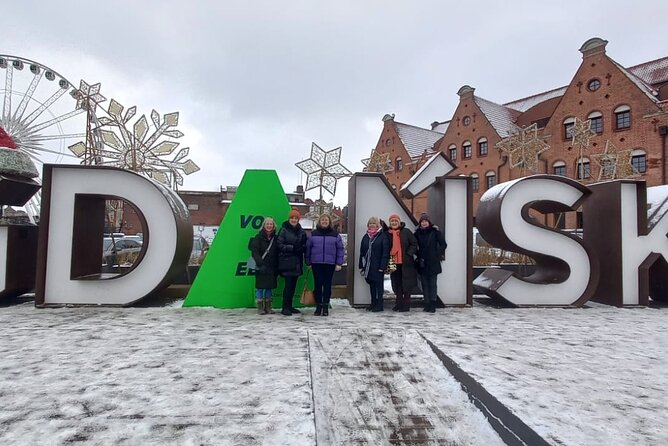
After the shipyard era stops, the route turns back toward the city’s signature waterfront and church skyline.
Museum of the Second World War and what that adds to the picture
You pass the Museum of the Second World War, a modern state cultural institution that opened in 2017. This keeps the tour’s timeline moving forward into a broader European context, instead of staying locked only to the local prewar and postwar moments.
Baltic Symphony Hall and St. John’s Church
Then you stop at Baltic Symphony Hall, part of the Polish Baltic Philharmonic Fryderyka Chopina in Gdańsk, housed in rebuilt and extended buildings of a former municipal power plant on Ołowianka island. It is one of those places where old industrial infrastructure gets a new cultural role.
After that, you pass St. John’s Church, a Gothic church that acts as a lively cultural center. It’s described as one of the last Gdańsk monuments reconstructed after World War II.
The Great Crane and St. Mary’s Church: the port city at its most iconic
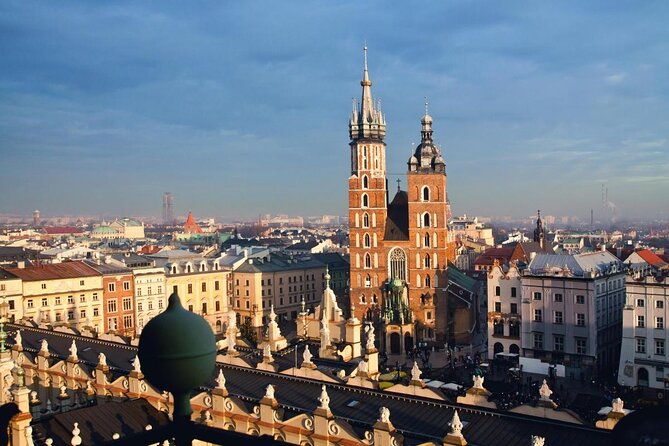
You then reach the Great Crane, one of Gdańsk’s defining symbols, described as the largest medieval port crane in Europe. Right after, you get St. Mary’s Church, noted as the biggest Gothic brick building in the world. Even with a short stop, these are the kinds of landmarks that make the city feel like itself.
Royal Chapel and St. Nicholas: two church façades that contrast
Next comes the Royal Chapel (Kaplica Królewska), a Baroque-style masterpiece with a dome in the center of Gdańsk, described as having a richly decorated façade. Then you pass St. Nicholas Church, dating back to the 12th century and described as one of the Dominican churches that survived the second world war.
Market Hall: where the day ends feeling practical
You finish with the Market Hall (Hala Targowa 1896), described as one of the oldest shopping centers in Gdańsk. This is a good landing point because it makes the tour feel grounded, not only historical.
Riding comfort, timing, and tips that make the whole thing better
The tour is built around quick stops, so comfort and pacing are everything.
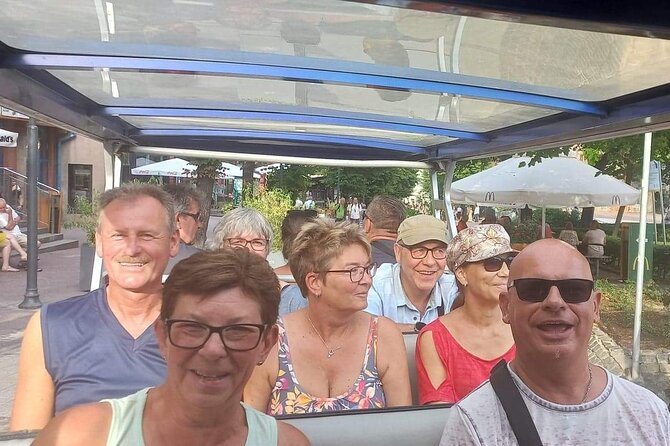
Bring layers. One review specifically calls out chilly conditions in the cart during autumn and suggests bringing a blanket. If you are visiting in cooler months, take that advice seriously.
Expect photo stops. Many stops are measured in minutes, which means your best photos happen fast. If you want a “perfect” shot, get your angle right away and then step aside so the group can move.
If you want more time, plan your return. The guide tour format is ideal for narrowing your choices. After you see the route, you will know where you want to spend extra hours on your own.
Guides can make or break the experience. The best feedback in the reviews consistently highlights the guide’s delivery: names like Michael, Matchek, Maciej, and Noris show up as especially praised. I would treat the tour like an opportunity to ask questions, because a guide who grew up in the city can connect buildings to real-life stories, not just dates.
Should you book this buggy tour?
Book it if:
- You want a high-impact orientation for a first trip, with lots of sights packed into about two hours
- You prefer saving steps by using an electric golf buggy, especially if walking a full day does not sound fun
- You want both sides of Gdańsk, the old-town landmarks and the Solidarity and shipyard history
- You like hearing local context, and you plan to ask questions during the ride
Skip it or adjust your expectations if:
- You hate brief stops, because the route is designed for quick snapshots and overview
- You want deep museum time at every location, because this tour is meant to point you toward what to revisit later
If you are short on time in Gdańsk and you want to leave with a mental map plus a shortlist of next stops, this is an easy yes.
More Tour Reviews in Gdansk



Sightseeing Without the Walking


Gdansk, Three More Ways
Recently written up around Gdansk





More Golf Cart and Electric Car Tours.
 ★ 4.5City Sightseeing Tour by Electric Golf CartFrom $133,264 reviews
 ★ 4.7City Sightseeing Tour Eco Electric Buggy Golf CartFrom $133,143 reviews
 ★ 4.6E-Car Tour and Audio GuideFrom $161,738 reviews
 ★ 4.82-Hour Private Guided Tour by Electric CarFrom $38805 reviews
 ★ 4.7Extended City Sightseeing Tour – Eco Buggy Golf CartFrom $13794 reviews
 ★ 4.9City Sightseeing Tour by Golf Cart/Buggy Guided TourFrom $40510 reviews
 ★ 4.4Electric Car Sightseeing TourFrom $25450 reviews
 ★ 5.0Guided City Tour by Golf Buggy (with hotel pickup)From $53426 reviews
Also on these Poland lists