
REVIEW · NOWA HUTA AND COMMUNISM TOURS
Gdansk Private Communism Tour with Solidarity Center Museum
Communism ended here, piece by piece.
In Gdansk, I love how this tour connects shipyard landmarks to the people who pushed back, not just dates on a board. I also like the European Solidarity Centre visit, especially the skip-the-line entry that helps you spend real time inside. One thing to watch for: the pace can feel tight on the longer option, and the shipyard itself is closed on Saturdays and Sundays.
You get a private, history expert guide with an official Gdansk license, plus hotel pickup if you are in Gdansk Old Town within 1.5 km of the meeting point. Tours run about 2 to 4 hours, and you can choose departure time and duration. If you want the story at a gentle speed, plan to go with the 4-hour option and arrive a little early.
This is not a sit-and-listen lecture. It is a walking route that mixes outdoor monuments, the PRL era shipyard complex, and a modern museum that lays out how Solidarity grew from labor demands into political change.
In This Review
- Key highlights worth planning for
- Why Gdansk shipyards matter for the end of Communism
- What the private walking route covers around Plac Solidarności
- Sala BHP and the Gdańsk Agreement, PRL explained in plain language
- Stocznia Gdańska, the shipyard finish and the vodka moment
- European Solidarity Centre skip-the-line, what you will actually see
- Price and choosing between the 2-hour and 4-hour options
- Logistics in Old Town, meeting points, and weekend closures
- Who should book this Solidarity and Communism tour
- Should you book this tour?
Key highlights worth planning for
- Official-licensed private guide who can explain the story in your chosen language
- Skip-the-line tickets for the European Solidarity Centre, included in the 2 and 4-hour options
- Sala BHP as a key PRL shipyard site, tied to the Gdańsk Agreement signed on 31 August 1980
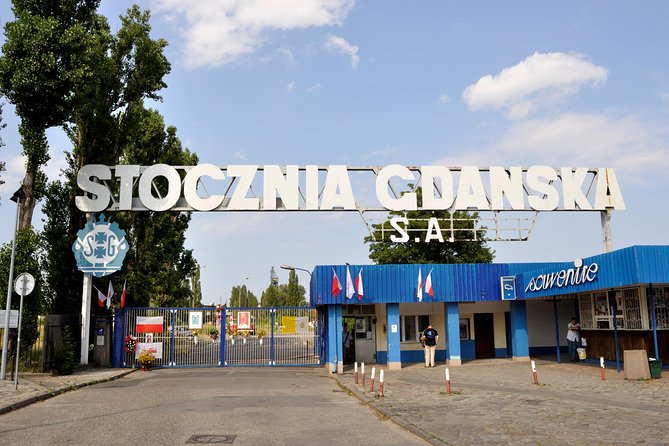
- Walk the Stocznia Gdańska story where resistance against the communist regime began in 1980
- Polish vodka shot included in the 4-hour option, a simple local touch
- Weekend reality check: Gdansk Shipyard is closed Saturdays and Sundays
More of the socialist-era district, reviewed
- Gdansk Private Communism Tour with Solidarity Center Museum
★ 5.0 · 14 reviews
Why Gdansk shipyards matter for the end of Communism
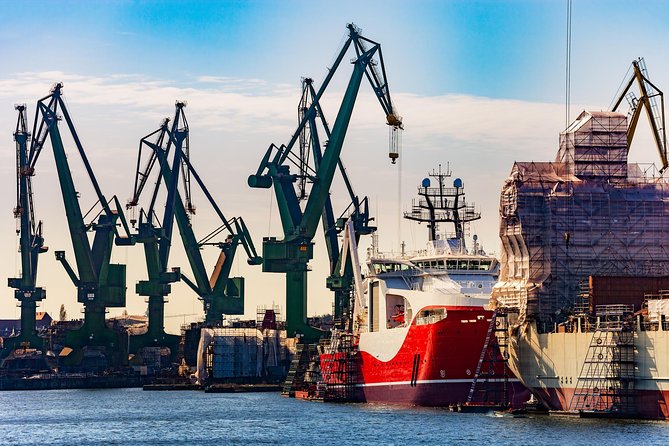
Gdansk is one of those places where history is not stuck in a museum case. The shipyard district helped shape the Solidarity movement, and that mattered far beyond Poland’s borders. You are walking through the physical framework of the struggle, the kind that still feels present when you stand in the right places.
What makes this tour especially useful is how it links three layers. First, you see the workers and the protest memory in the monuments. Next, you connect those names and events to the mechanisms of daily life under the Polish People’s Republic, known as PRL. Finally, you get the museum context that turns all those pieces into one timeline you can actually follow.
If you like history with a cause-and-effect chain, this works well. If you only want broad background, you might find the details feel heavy. But the good news is that your private guide can shape the explanations around your pace and your questions.
What the private walking route covers around Plac Solidarności
The tour starts at the Monument to the Fallen Shipyard Workers of 1970 on Plac Solidarności, with free admission and a short orientation at the meeting point. This matters because 1970 is not just a prelude. It is part of the memory that later Solidarity leaders carried forward.
From there, you move to a monument for Anna Walentynowicz, with time built in to understand who she was and how figures like Lech Wałęsa and Walentynowicz helped lead the revolution. This is where the story shifts from faceless ideology to recognizable people.
You also get a stop designed to make PRL feel concrete rather than abstract. The guide brings the Solidarity Square area into the explanation so you can see how public space shaped worker identity and protest energy. If you enjoy asking questions, this is a good moment to do it, because you are outdoors with a strong anchor point.
The walking portion is straightforward, and the tour is private, so you are not stuck moving with strangers who want to rush ahead. Still, expect to do some pacing. The route is meant to feed into the museum visit, so you cannot treat it like a slow wander.
Sala BHP and the Gdańsk Agreement, PRL explained in plain language
One of the tour’s most important stops is Sala BHP, part of the shipyard world where worker protection and union life took form. The time at this site is about an hour, and admission is free. This is not a random building included for variety. It is tied to the signing of the Gdańsk Agreement on 31 August 1980.
Here is why that detail helps your understanding. Once you know where an agreement was signed, the later political steps make more sense. You can see how labor demands became bargaining power, and how that pressure forced the authorities to negotiate.
The guide also explains the tragic story connected to the Monument to the Fallen Shipyard Workers of 1970 while you are in the area. That pairing helps because it keeps the narrative from becoming a list of separate events. You start to feel the continuity between earlier protests and the breakthrough years that followed.
If you are sensitive to heavy topics, you will want to mentally prepare for that. This stop is part of a story about repression, tragedy, and resistance. The upside is that it is handled with historical framing, not shock value.
Stocznia Gdańska, the shipyard finish and the vodka moment
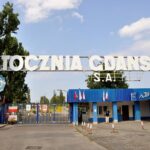
The final shipyard area on the walking route is Stocznia Gdańska, with about an hour allocated there. In 1980, around 17,000 ship builders began civil resistance against the communist regime. Standing in the shipyard environment makes that scale feel less like a number and more like a reality.
Tradition also shows up in the tour. In the 4-hour option, the tour includes a shot of traditional Polish vodka. It is a small thing, but it changes the tone from purely academic to lived-in. It is also the kind of detail that makes the experience memorable without adding much time.
One practical caution is the shipyard closure rule. Gdansk Shipyard is closed on Saturdays and Sundays. If your dates land on a weekend, you may need to consider the 2-hour option or adjust expectations for that portion.
This stop also ends at Stocznia Gdańska, specifically Doki 1, so it is useful to plan how you will get back to your evening plans. The tour’s pickup is only from a limited Old Town zone, so having a simple plan for transport after the last stop keeps your day smooth.
Gdansk repeats itself well. The other versions we reviewed
- Gdańsk City Sights & History Guided Walking Tour in English★ 4.8 · 876 reviews
- Gdansk: Firearm Shooting Experience with Instructor★ 4.8 · 866 reviews
- Gdansk: Guided Round-Trip Cruise to Westerplatte★ 4.3 · 865 reviews
- Gdańsk: Sightseeing EcoCruise around the Old Town of Gdansk★ 4.6 · 719 reviews
- Main Town Gdańsk Walking Tour★ 5.0 · 644 reviews
European Solidarity Centre skip-the-line, what you will actually see
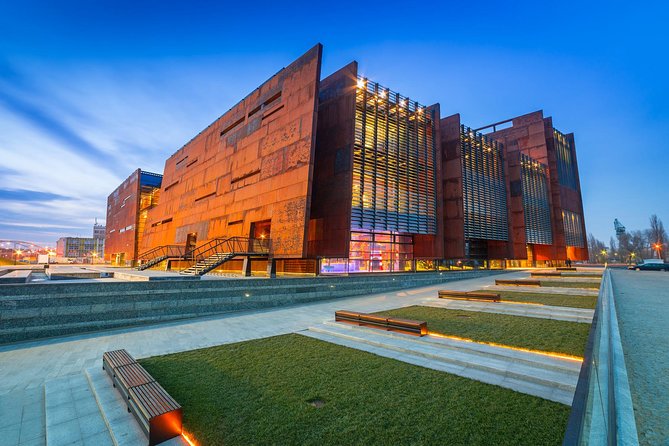
The museum upgrade is the heart of the experience for many people. In the European Solidarity Centre (Europejskie Centrum Solidarności), you get skip-the-line tickets, and admission is included. This is built for people who want a structured narrative, with objects and documents that support the story.
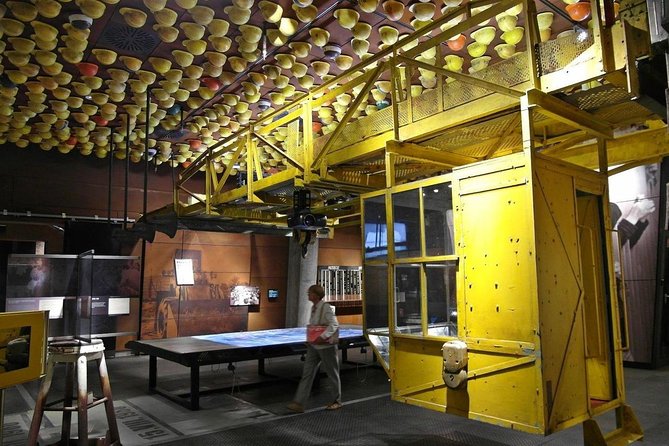
Inside, the museum walks you through the history step by step. You see the original Tables of the 21 Postulates, the written demands made by strikers at the Lenin Shipyard, which is now the Gdansk Shipyard. That kind of primary source detail makes the movement feel grounded. It is not only speeches and slogans. You see what people actually asked for.
You also get coverage of other key moments, including the strikes, the 1989 round table talks, and the first pluralistic election in Poland since 1947. If you care about how democratic change happened in the Eastern Bloc, this is where the connections become clear.
This is also where your private guide can earn their keep. The museum can be powerful on its own, but a good guide helps you spot what matters and why. Past guests have valued guides who could answer questions and explain the historical context without flattening it.
If you prefer reading at your own speed, still plan to use the guide’s explanations. Then, once you have the big structure, you can decide what to linger on in the rooms.
Price and choosing between the 2-hour and 4-hour options
The price is $139.10 per person. That sounds like a lot, but you are paying for three things at once: a private guided walk, an official licensed guide, and museum time with skip-the-line access. In a place where museum lines can eat your schedule, skip-the-line is not a luxury, it is time protection.
The tour also includes pickup from your Gdansk Old Town hotel if you are within 1.5 km of the meeting point. That reduces the stress of getting to the start and makes the experience feel easier to fit into your day.
Duration choice changes what you get. In the 4-hour option, you have free entry to Sala BHP and Gdansk Shipyard, and you also get the vodka shot. In the 2-hour option, you still get the European Solidarity Centre visit with skip-the-line entry, but the shipyard-specific inclusions are described as part of the longer option.
If you want maximum value with minimal rushing, choose the 4-hour plan. If your schedule is tight or you already know shipyard history and only want the museum payoff, the 2-hour option can be enough.
One more value note: the tour uses a mobile ticket. That is a small practical benefit, especially if you do not want to manage paper confirmations while traveling.
Logistics in Old Town, meeting points, and weekend closures
Meeting starts at Plac Solidarności, at the Monument to the Fallen Shipyard Workers of 1970, and the tour ends at Stocznia Gdańska, Doki 1. If you are staying in Gdansk Old Town, you may get pickup, but only if you are within 1.5 km of the meeting point. If your accommodation is outside that zone, the guide will meet you at the specified start location, and the itinerary may be adjusted accordingly.
This matters because it affects how smooth your morning starts. I suggest you check your exact address against that pickup limit when you book. If you are close, great. If not, just plan to meet at Plac Solidarności and keep your morning simple.
Also watch the calendar. The shipyard is closed on Saturdays and Sundays. If you are traveling on a weekend, you can still do the tour experience, but the shipyard portion may not work the way you expect.
Finally, check your email the day before the tour. The provider notes that you will receive important information there. That is where most last-minute time details are typically confirmed.
Who should book this Solidarity and Communism tour
This tour is ideal if you want history that feels connected to real places. It works well for people who like their travel guided by a clear storyline, with monuments outside and documents inside the museum.
It is also a strong match for independent travelers who do not want to herd in a crowd. Since it is a private tour where only your group participates, you can ask questions without cutting off other people’s attention.
Language flexibility is another plus. The tour is available in nine European languages, so you should be able to get comfortable explanations without relying on someone’s limited English.
If you are traveling with someone who prefers a lighter day, you can still make it work. The walking portion is manageable, and the museum visit gives structure. But you should be ready for the topic to be serious, because the sites are built around worker struggles and repression.
Should you book this tour?
Book it if you want the Solidarity story in Gdansk with a guided explanation and a museum that anchors the details. The combination of a private guide, skip-the-line access, and the focus on specific sites like Sala BHP and the Gdańsk Agreement makes it a strong value for first-timers and for anyone who wants context beyond a quick photo stop.
Consider another plan if your trip falls on a weekend and you specifically want the shipyard portion. Also consider booking the 4-hour option if you do not want the day to feel rushed, because the longer time is the one tied to more shipyard access and the vodka moment.
If your goal is to understand how worker protest turned into democracy in the Eastern Bloc, this is one of the most direct ways to do it while standing where it happened.
More Tour Reviews in Gdansk



Gdansk, Three More Ways
Nowa Huta, the Rest of Our Notes
Recently written up around Gdansk




More Nowa Huta and Communism Tours.
 ★ 4.9Nowa Huta Guided Tour in Vintage CarFrom $75277 reviews
 ★ 5.0Legendary Private Nowa Huta Communism Tour with Crazy GuidesFrom $131262 reviews
 ★ 4.9Nowa Huta: Steelworks Administration Buildings/Shelters TourFrom $24160 reviews
 ★ 5.0Private Tour: Warsaw’s Communist History by Retro FiatFrom $108115 reviews
 ★ 4.9Private Nowa Huta Adventure Tour in Communist CarsFrom $108114 reviews
 ★ 4.93.5-Hour Communism Deluxe Tour by TrabantFrom $21584 reviews
 ★ 4.9Communism Tour in an Original Socialist VanFrom $7875 reviews
 ★ 4.8Communist History Self-Driving TourFrom $6952 reviews
Also on these Poland lists