
REVIEW · KAZIMIERZ JEWISH QUARTER TOURS
Krakow Jewish District and Ghetto Guided Tour in a Small Group
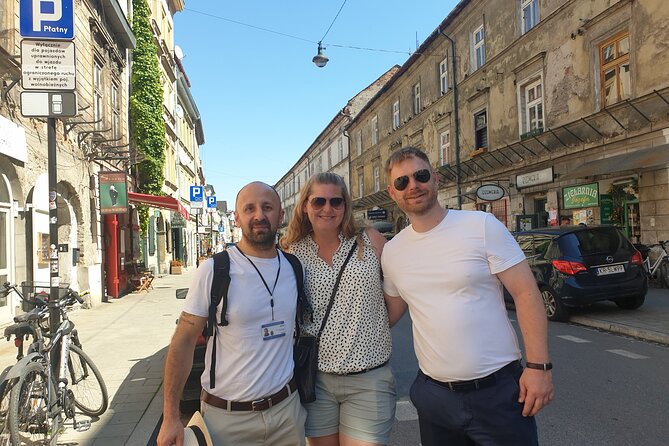
Your feet land in centuries of Krakow. This 2-hour, small-group walk maps Krakow’s Jewish District and ghetto ground using a live guide, starting on Szeroka Street and ending at the Square of Ghettos Heroes.
I especially like the way the route keeps you moving, so you are not stuck trying to read street names and figure out where to go next. With a cap of 10 people, the guide can actually answer questions as you pass landmarks like Remuh Synagogue and the Wolf Popper Synagogue. Also, the narration ties each stop to the bigger story of daily Jewish life in the city, not just dates and names.
One consideration: a lot of the stops are viewed from the outside, so if you want lots of inside time in religious buildings, you might need to plan a bit of extra time on your own.
In This Review
- Key things I’d notice before you book
- How the small-group format keeps you from getting lost
- From Szeroka Street to Remuh and the Old Synagogue: where the quarter began
- Wolf Popper, the High Synagogue, and the names that map communal life
- Plac Nowy, the JCC, and Jan Karski: Jewish Krakow meeting the wider world
- Inside the ghetto memorial area: Eagle Pharmacy to the wall fragment
- Price, timing, and practical tips to get the best value
- Should you book this Krakow Jewish District and Ghetto tour?
- FAQ
- How long is the Krakow Jewish District and Ghetto guided tour?
- What is the maximum group size?
- Is the tour offered in English?
- Where does the tour start and end?
- What is the price per person?
- Is a guide included?
- Do I get a mobile ticket?
- Is gratuity included in the price?
- Is free cancellation available?
Key things I’d notice before you book
- Max 10 people means a calmer pace and better Q and A
- Mostly outside landmarks with guide commentary keeps it moving fast
- Szeroka Street to the ghetto memorial area is a logical, walkable thread
- Synagogue names you can actually place on a map as you go
- Jan Karski, Plac Nowy, and community sites connect tragedy to everyday life
- Mobile ticket makes check-in simpler on the day
Kazimierz on foot, by cart and after dark. Our other write-ups
- Krakow: Jewish Quarter and Former Ghetto Tour
★ 4.9 · 1,441 reviews - Krakow: Bike Tour of Old Town, Jewish Quarter and the Ghetto
★ 4.9 · 1,155 reviews - Krakow: Kazimierz Jewish Quarter Walking Tour
★ 4.8 · 571 reviews - Krakow: Kazimierz, Schindler’s Factory & Ghetto Guided Tour
★ 4.8 · 460 reviews
How the small-group format keeps you from getting lost
Krakow’s Jewish District can feel like a scavenger hunt at first. Streets curve, signage varies, and memorial locations are spaced out more than you expect. This tour’s biggest practical win is that you do not have to solve the city like a puzzle. You follow a guide on a clear route, with enough time at each stop to register what you are looking at.
The group size is the real difference-maker. Up to 10 people is small enough that you can hear the guide without playing sound-volume games. It also makes the walk feel more human and less like you are being rushed through a checklist. You get a tour guide service from Krzysztof Blaszczyk Hussar Travel, in English, with confirmation received at booking and a mobile ticket format for the day of travel.
This is also a good length for fitting into a busy schedule. At about 2 hours, you get a focused hit of Jewish District landmarks and ghetto memorial ground without turning your whole day into just one long walking block. And the route is near public transportation, so it is easy to connect it to the rest of your Krakow plans.
One more value point: you get structure. Some areas are emotionally heavy, especially once you reach the ghetto sites. Having a guide’s pacing helps you absorb the meaning instead of just rushing from one photo spot to the next. I like tours that respect the material and also keep you from wandering off track.
From Szeroka Street to Remuh and the Old Synagogue: where the quarter began
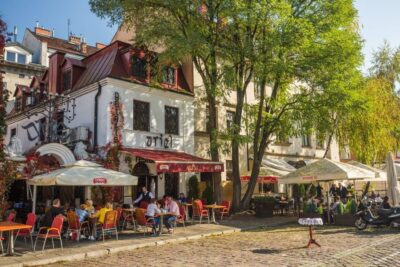
You start at Szeroka 6 on Szeroka Street, in the oldest part of the former Jewish Quarter. If you are trying to understand Krakow’s Jewish presence beyond the Holocaust memorial sites, starting here is smart. It sets the baseline: this was not only tragedy in one place. It was a real neighborhood with a real pulse.
Szeroka Street is where the tour begins with context, and the pace is gentle at first, about 10 minutes. From there, you move into a set of synagogue landmarks associated with different eras of community life.
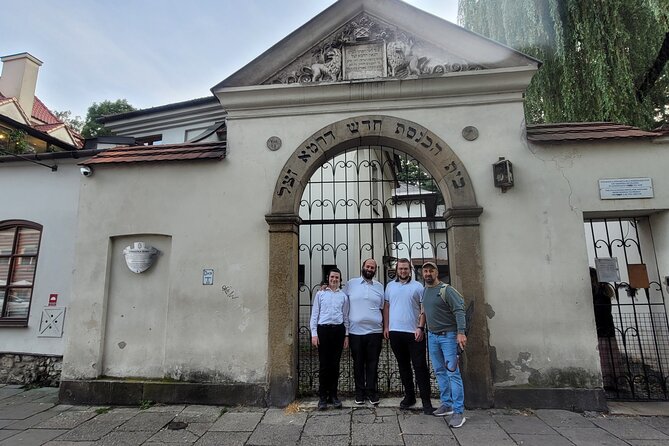
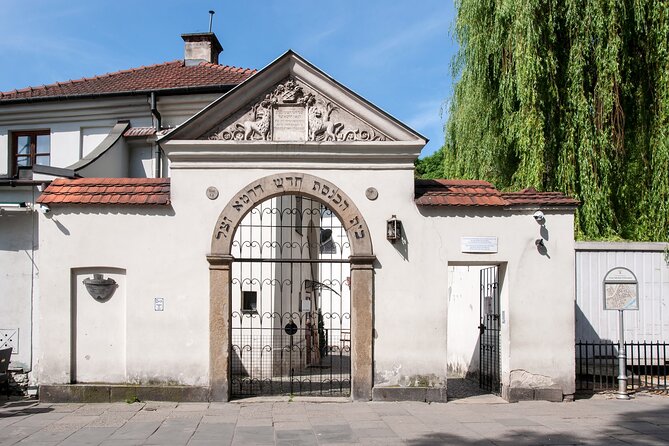
You will spend time outside Remuh Synagogue (about 15 minutes) and outside the Old Synagogue (about 10 minutes). Because these stops are from outside, you can focus on how the buildings sit in the streets and how they mark the neighborhood visually. Look at the street-facing presence and the way the sites still anchor the block. The guide commentary is key here, because the architecture alone may not tell you everything you want to know quickly.
A quick reality check that helps set expectations: since you are mostly seeing exteriors, do not expect this tour to replace a full synagogue interior visit. Think of it as map-making with stories. The guide’s job is to help you connect the names to the places you are standing near, so when you come back later on your own, you know what you are looking at.
Also, synagogues in Krakow are not just buildings. They are place-marks for community identity across time. Even when you are outside, the stops help you understand why these locations matter and why they keep appearing in the city’s story.
Wolf Popper, the High Synagogue, and the names that map communal life
After the initial synagogue cluster, the route keeps teaching you how to read Krakow’s Jewish map. Next up is the Wolf Popper Synagogue, from outside, about 5 minutes. This short stop matters because it breaks the pattern. Not every stop is long, and the guide uses the quick time to point you toward what to notice, so you stay oriented instead of mentally drifting.
Then you reach a set of synagogue-related stops that work like stepping stones along the district. You will see another synagogue from outside, then continue on toward the High Synagogue (about 5 minutes, also from outside). In a small-group format, those shorter segments still feel intentional. The guide can keep you from turning each stop into a separate tourist moment.
One reason I like this part of the tour is that it does not treat synagogue names like trivia. You get the sense that these sites represent different threads within the community, over time, and that religious life shaped how people organized their days in Krakow.
It helps that the group is capped at 10. When a stop is only 5 minutes, you need the guide to hit the right points fast. In a larger group, those quick windows can become a blur. Here, you are more likely to catch the key idea and connect it to the building you are seeing.
You also get a natural rhythm: quick exterior viewing, then a pivot into the next theme. That rhythm keeps it moving, but it does not feel like a sprint. It is the kind of pace that works for most people.
Plac Nowy, the JCC, and Jan Karski: Jewish Krakow meeting the wider world
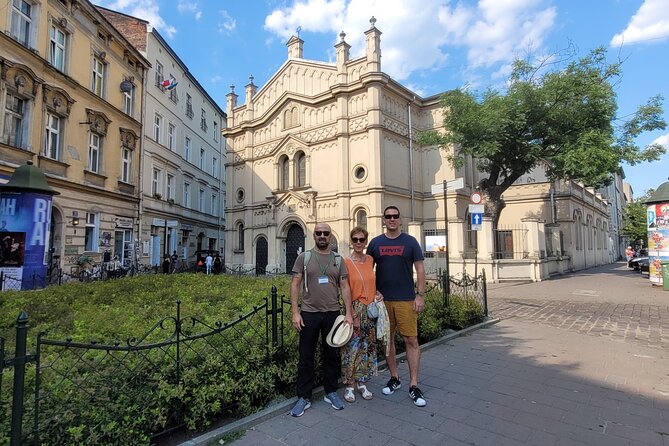
The tour then expands beyond synagogue landmarks, which is exactly what you want if your goal is a full sense of community. Next comes Plac Nowy, the former Market Square area where the Jewish community’s trade played a role in the city’s economic life. The stop is about 10 minutes, which is enough time to take in the space and let the guide explain why this kind of public square mattered.
From there, you visit JCC Krakow, the Jewish Community Center, about 5 minutes. A quick stop, yes, but it helps balance the story. If all you saw were religious buildings and memorials, you might accidentally get a one-dimensional picture. Community centers point to education, gathering, and the day-to-day structure people relied on.
Then the tour includes Jan Karski, with a statue stop about 5 minutes. This is where the broader world enters your route. Jan Karski is connected to attempts to warn others about the Holocaust, and the statue is a shift in tone. It is still part of the same Krakow narrative, but now you are dealing with how information traveled and how the outside world responded.
Right after that, the tour continues with more synagogue-related landmarks from outside, including Izzak Synagogue (about 5 minutes). Even though it is a brief exterior stop, it reinforces the idea that Jewish life in Krakow was not one single institution. It was a network of places where faith, identity, and community needs were sustained.
One practical tip for this middle stretch: take a moment to look up from your phone between stops. This is where street layouts can help you remember what you saw. The guide’s commentary gives meaning, but your memory gets built by the physical geography too.
Further Jewish heritage and ghetto routes documented in Krakow
- Krakow: Schindler’s Factory & Ghetto Guided Tour★ 4.7 · 1,694 reviews
- Full Bike Tour – the Old Town, Jewish Qtr & the Ghetto NEW BIKES★ 5.0 · 437 reviews
- Krakow: Bike Tour of the Old Town, Kazimierz, and the Ghetto★ 4.9 · 350 reviews
- Krakow: Jewish Ghetto Walking Tour★ 4.6 · 349 reviews
- Krakow: Jewish Quarter and Ghetto Electric Golf Cart Tour★ 4.6 · 348 reviews
Inside the ghetto memorial area: Eagle Pharmacy to the wall fragment
As you transition into the ghetto portion of the tour, the spacing and mood change. The route leads you to the ghetto ground, starting with Eagle Pharmacy in Krakow Ghetto. You spend about 10 minutes here from the outside. Even if you are not going inside during this particular stop, the location is powerful because it represents survival, daily life, and how people tried to keep routines going under impossible conditions.
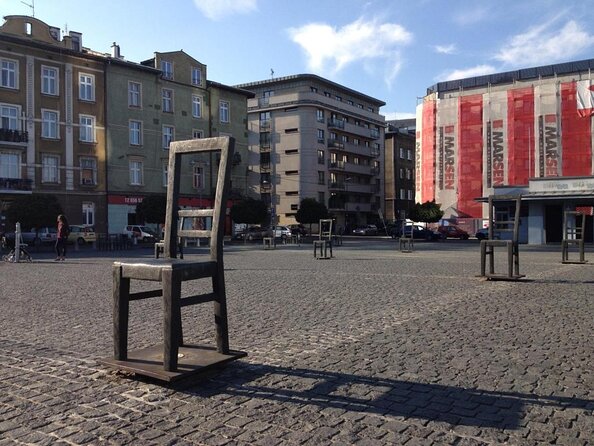
Next is Plac Bohaterow Getta, about 10 minutes. This is the main place tied to Krakow’s ghetto. If you want one marker of the tour’s emotional arc, this is it. You are not just seeing a street. You are standing on a defined memorial space, and the guide’s narration helps you understand why it sits where it does.
Finally, you see a Ghetto Wall Fragment, with about 5 minutes at the remnants. Even short stops can hit hard here, because the material evidence is plain. You can see how confinement shaped movement and daily existence. The guide’s job is to keep you from turning it into only a photo stop. It is about place, restriction, and the human cost behind the physical remnants.
This last stretch is also where your earlier understanding pays off. When you already learned the neighborhood landmarks, community sites, and the map of religious locations, the ghetto memorial area does not feel like it drops out of nowhere. It feels like a catastrophic ending to a longer story you have been walking through.
Because the tour ends at Plac Bohaterow Getta, you finish right where the ghetto memorial area is anchored. That can be convenient if you want to continue independently afterward, grab a bite nearby, or simply decompress.
Price, timing, and practical tips to get the best value
At $60.21 per person for about 2 hours, this tour sits in a midrange bracket for guided walking experiences in Krakow. The value comes from three things that matter in real life: a guide, small group size, and a structured route through multiple key areas.
First, a guide reduces wasted time. Instead of spending your energy figuring out where to go and how to connect landmarks, you are listening and learning as you walk. Second, the small group limit of 10 people makes the experience easier to manage. You get better attention at stop points, especially during the shorter 5 to 10 minute segments.
Third, many of the stops are listed with admission ticket free, which lowers the “extra costs” feeling. You are not likely to get hit with multiple entrance fees mid-tour, even though some stops are outside. (If you are planning to add extra interior visits later, you can do that with more control over where you spend your money.)
Timing-wise, you should book in advance. The tour is often booked about 33 days ahead on average, which signals demand. One reason to plan early: some high-interest sites in this area can have long waiting lines at certain times of day. Having a scheduled small-group guide plan helps you avoid losing your morning or afternoon to queue chaos.
Practical stuff that helps on the ground:
- Wear comfortable shoes. This is concentrated walking in city streets.
- Bring a light layer. Weather in Krakow can swing, and you want to feel good while standing at outside viewpoints.
- Keep the pace in mind. This is about coverage across the district and ghetto, not a slow museum day.
- Be respectful when you reach memorial sites. You will likely slow down naturally once you are there.
If you need flexibility, it helps that free cancellation is available up to 24 hours before the experience. That gives you room to adjust if plans change.
Should you book this Krakow Jewish District and Ghetto tour?
I would book it if you want a structured, English-guided route that connects multiple Jewish landmarks in Krakow with the ghetto memorial area, without forcing you to figure everything out by yourself. The small-group size is a real quality upgrade, especially with so many distinct stops in roughly 2 hours.
Skip or pair it with other plans if your top goal is maximum interior time inside major sites. Since many stops are from outside, you may want to add separate visits afterward depending on what you care about most.
If you are new to Krakow’s Jewish history and want your first pass to feel organized and humane, this tour is a strong choice. You will walk away with a clearer mental map of names, places, and what each location represents, and you will do it without the usual navigation stress.
FAQ
How long is the Krakow Jewish District and Ghetto guided tour?
The tour is approximately 2 hours.
What is the maximum group size?
The group is capped at a maximum of 10 travelers.
Is the tour offered in English?
Yes, the tour is offered in English.
Where does the tour start and end?
It starts at Szeroka 6, 31-053 Kraków, Poland and ends at the Square of Ghettos Heroes, Plac Bohaterów Getta, 30-527 Kraków, Poland.
What is the price per person?
The price is $60.21 per person.
Is a guide included?
Yes. The tour includes tour guide service and a small group up to 10 persons.
Do I get a mobile ticket?
Yes. The tour includes a mobile ticket.
Is gratuity included in the price?
No. Gratuities are optional.
Is free cancellation available?
Yes, you can cancel up to 24 hours in advance for a full refund.
More Tour Reviews in Krakow
Jewish Heritage and Ghetto Routes in Krakow

Kazimierz, Keep Going
Recently written up around Krakow
More Kazimierz Jewish Quarter Tours.
 ★ 4.9Jewish Quarter and Former Ghetto TourFrom $191,441 reviews
 ★ 4.9Bike Tour of Old Town, Jewish Quarter and the GhettoFrom $371,155 reviews
 ★ 4.8Kazimierz Jewish Quarter Walking TourFrom $27571 reviews
 ★ 4.8Kazimierz, Schindler’s Factory & Ghetto Guided TourFrom $81460 reviews
 ★ 5.0Full Bike Tour – the Old Town, Jewish Qtr & the Ghetto NEW BIKESFrom $35437 reviews
 ★ 4.9Bike Tour of the Old Town, Kazimierz, and the GhettoFrom $26350 reviews
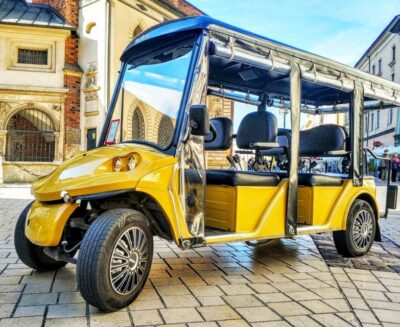 ★ 4.6Jewish Quarter and Ghetto Electric Golf Cart TourFrom $34348 reviews
 ★ 5.0Jewish Krakow Walking TourFrom $26307 reviews
Also on these Poland lists