
REVIEW · OSKAR SCHINDLER FACTORY TOURS
Krakow: Schindler’s Factory & Ghetto & Plaszow Camp Guided Tour
Krakow can feel like a fairytale, until you walk these WWII streets. This small-group tour strings together Schindler’s Enamel Factory, the Krakow ghetto area, and the Plaszow camp landscape in one focused 5-hour route, with a local guide to turn dates and names into something human. You also get a panoramic break up top at Krakus Mound.
I love the way the day mixes memorial sites with real city geography. The Schindler’s Factory museum isn’t a simple biography, so you get the bigger picture of occupied Krakow from 1939 to 1945. I also like that the group stays small (max 25), which makes it easier to ask questions and keep your bearings as the story gets heavier.
One consideration: you should expect lots of walking, and Plaszow can be muddy and hilly depending on the weather. If you show up in bad shoes, the day’s emotional weight becomes a physical nuisance.
In This Review
- Quick hits to know before you go
- A short walk through hard chapters in Krakow
- Schindler’s Enamel Factory, what you’ll actually learn inside
- Ghetto Wall Fragment and Ghetto Heroes Square chairs
- Plaszow camp remains: Liban Quarry and the Krakus Mound climb
- Your guide, group size, and how the story stays clear
- Price and logistics: what’s included, what to budget, what to bring
- Who should book this tour
- Should you book Schindler’s Factory, Ghetto, and Plaszow in one tour?
- FAQ
- How long is the Krakow Schindler’s Factory and Ghetto and Plaszow tour?
- What is included in the tour price?
- Do I need to pay for museum entry?
- Is the Plaszow camp visit free to enter?
- Where does the tour start and end?
- Do I need public transportation?
- How big is the group?
- What kind of guide experience should I expect?
- What is the cancellation policy?
Quick hits to know before you go
- Schindler’s Factory ticket included, plus your entry skips the long wait you’d likely face on your own
- A 12-metre ghetto wall fragment plus a plaque in Hebrew and Polish at the original site
- Ghetto Heroes Square chairs: dozens of metal chairs spaced apart, meant to symbolize scattered belongings
- Plaszow camp remains with time around the Liban Quarry area
- Krakus Mound climb for high views that help you understand the terrain
- Local guides get praised for clear English and calm explanations even in rough weather
Other reviewed ways into the Schindler factory museum
- Krakow: Oskar Schindler’s Factory Entry Ticket & Guided Tour
★ 4.2 · 3,793 reviews - Krakow: Schindler’s Factory Tour with Entrance Ticket
★ 4.5 · 3,182 reviews - Krakow: Schindler’s Factory Tour with Entrance Ticket
★ 4.6 · 1,737 reviews - Schindler’s Factory in Krakow: Guided Tour & Skip the Line Ticket
★ 4.5 · 1,714 reviews
A short walk through hard chapters in Krakow
This tour is designed for people who want more than postcards. You start in central Krakow and move through the Jewish ghetto area and on to Plaszow, in a route that helps you connect what happened with what you can still see today. It is not a history lecture, it is a guided walk where the city itself becomes the lesson.
What makes it work is the blend of places. You spend time inside Schindler’s Factory to understand occupied Krakow, then you shift outside to ghetto remnants like the surviving wall stretch and the memorial sculpture in Ghetto Heroes Square. Finally, you move to Plaszow, a place tied to forced labor and later concentration-camp deportations, before ending with a view from Krakus Mound so your brain can map the ground.
This tour also avoids the most frustrating part of self-guided WWII visits, the slow grind of lines and confusion. With a guided start and an included museum ticket, you keep the day moving and spend your energy where it matters.
Schindler’s Enamel Factory, what you’ll actually learn inside
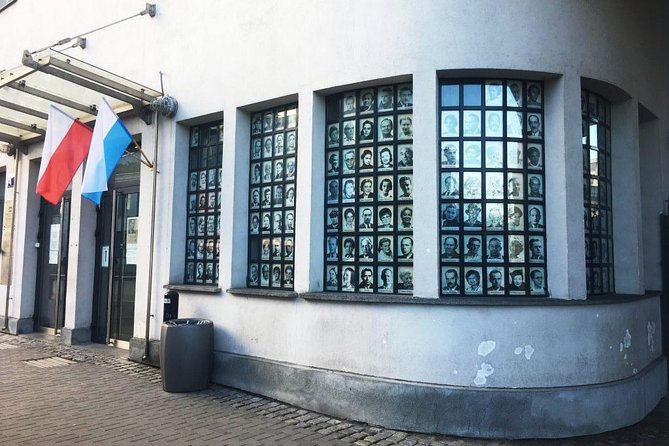
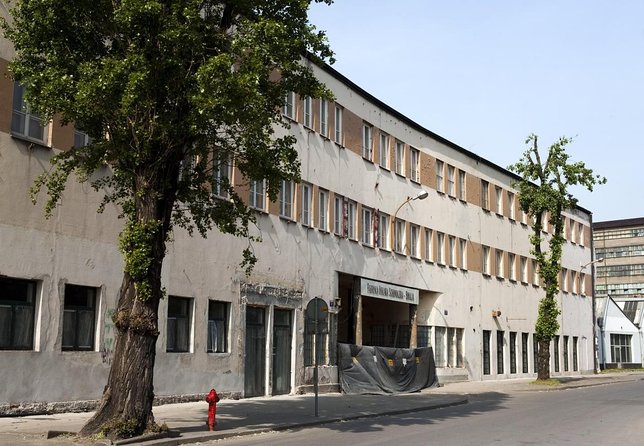
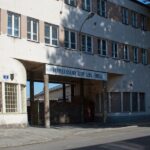
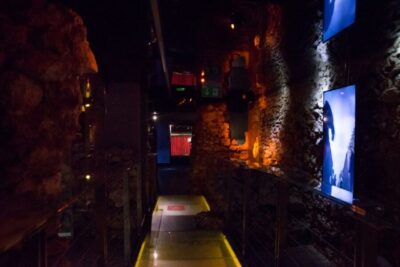
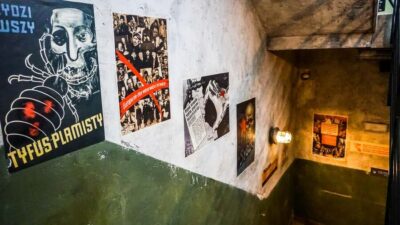
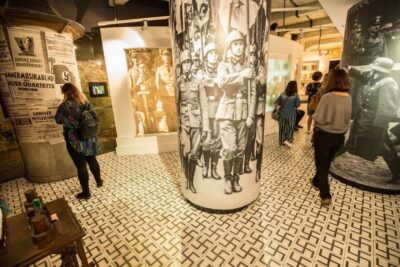
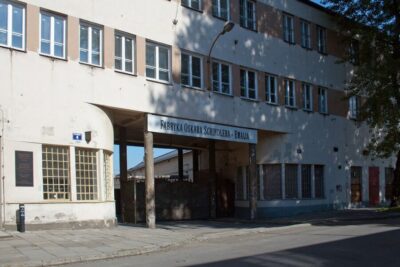
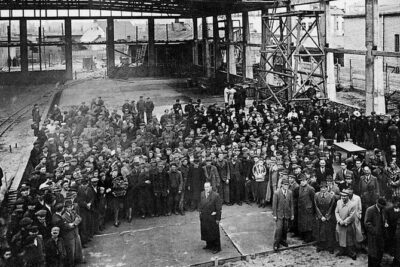
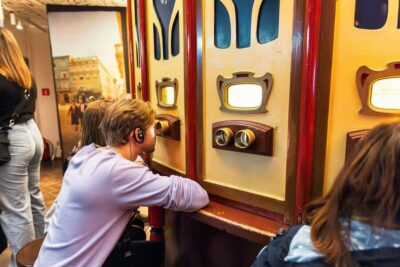
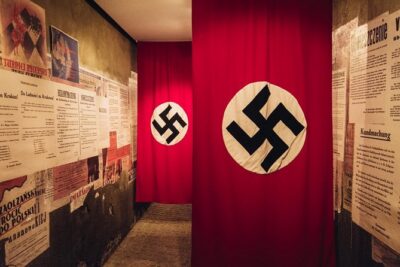
Your first stop is Fabryka Emalia Oskara Schindlera, the Schindler’s Enamel Factory museum. You get about 1 hour 30 minutes inside, and the ticket is included in the price. This museum is part of Krakow’s Historical Museum, and the main exhibition focuses on Kraków under Nazi Occupation, 1939 to 1945.
Here is what is useful to know before you go: it is not presented as a straight-up biographical museum about Oskar Schindler. Instead, it zooms out to the occupied city itself, covering many day-to-day realities of life under Nazi rule. That framing matters. If you already know Schindler’s story from films and headlines, this museum helps you understand the context that made such courage possible, and it shows how systems of oppression shaped ordinary routines.
You can also expect that entry is handled for you, which helps you avoid waiting around. One review-like theme you’ll feel in practice is that this museum becomes more than a stop once the guide explains how exhibits link to the streets you’ll see next.
Practical note: the museum portion is your time to go indoors first, where the pacing is steadier. If you are traveling in chilly or rainy weather, it is a welcome early anchor.
Ghetto Wall Fragment and Ghetto Heroes Square chairs
After the museum, you move to the most direct physical evidence of the ghetto. At the Ghetto Wall Fragment, you’ll stand near a 12-metre stretch of the original wall. There is a commemorative plaque raised in 1983, written in Hebrew and Polish. The message ties the place to where people lived, suffered, and died, and to the final journey toward death camps.
Even though this is a short stop on the clock (about 15 minutes), it’s powerful. You are not seeing a recreated set. You’re seeing a remnant, and your guide helps you connect that remnant to the reality of confinement in the urban fabric of Krakow.
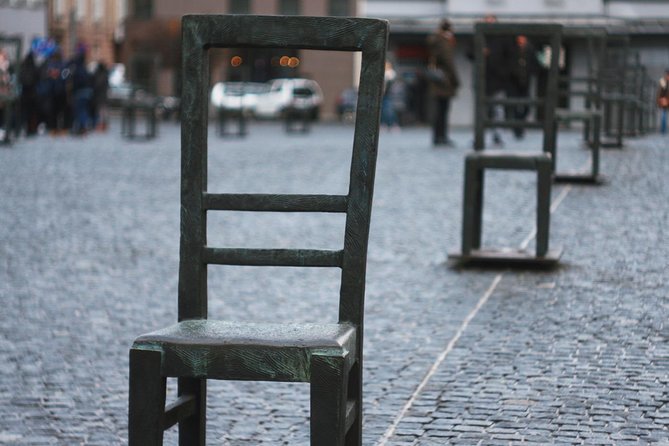
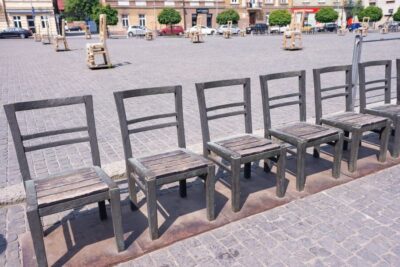
Next comes Plac Bohaterów Getta, also known as Ghetto Heroes Square, in the Podgórze district. You’ll spend about 15 minutes here as well. The centerpiece is the unusual monument made of several dozen cast-iron chairs, positioned separately across the square. The chairs symbolize property and belongings of Krakow’s Jewish residents scattered after the ghetto was liquidated.
Two things I appreciate about these outdoor stops. First, they give you visual memory that you can carry back to your hotel. Second, they keep the day grounded in specific places instead of vague history. You start to see how memorial design can teach without needing to speak.
If you want the full effect, take a minute to look around the square before you move on. The chairs have meaning, but the surrounding streets also help you picture how people would have encountered this space in daily life.
Plaszow camp remains: Liban Quarry and the Krakus Mound climb
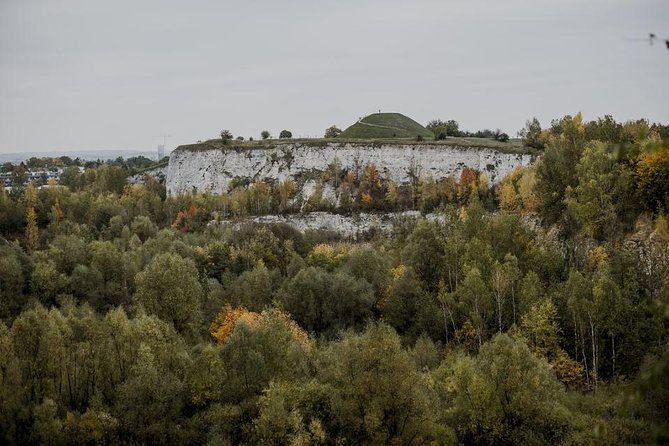
The Plaszow section is the part of the tour that feels the most spatial. Plaszow was founded by the Nazis in Krakow’s southern suburbs, first planned as forced labor, then expanded into a concentration camp. Deportations from the Krakow ghetto began on October 28, 1942, and Plaszow became known for supplying labor tied to military factories and a quarry.
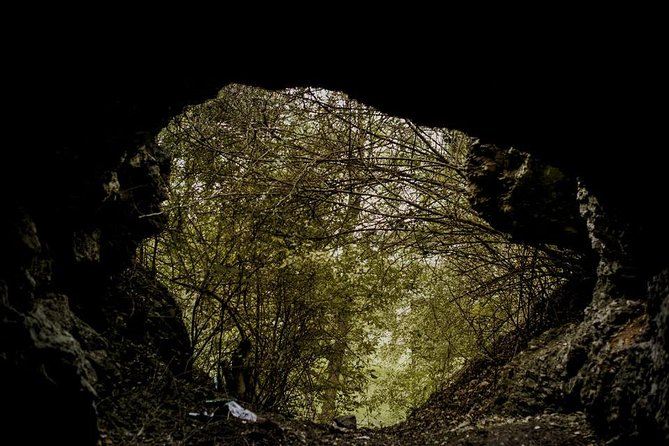
You’ll spend about 1 hour 30 minutes at this stop, and the highlights include the Liban Quarry area plus a climb to Krakus Mound for panoramic views. That view is not just scenic. It helps you understand the terrain, why certain sites were where they were, and how the city spreads around hills and suburbs.
Here is the practical consideration you should plan for: the ground can be uneven, and Plaszow can be muddy or hilly depending on the season. Wear shoes that grip. I’m saying this plainly because it changes the experience. When your footing is steady, you can focus on your guide’s explanations instead of fighting the surface.
Also, don’t expect a tidy museum model. The reality is that much has changed. The site is what it is, which can feel unsettling. That said, the lack of a polished “attraction” layer is part of why the visit hits. You are standing where the past unfolded, not in a theme-park version of it.
Further Jewish heritage and ghetto routes documented in Krakow
- Krakow: Schindler’s Factory & Ghetto Guided Tour★ 4.7 · 1,694 reviews
- Krakow: Bike Tour of the Old Town, Kazimierz, and the Ghetto★ 4.9 · 350 reviews
- Krakow: Jewish Ghetto Walking Tour★ 4.6 · 349 reviews
- Krakow: Jewish Quarter and Ghetto Electric Golf Cart Tour★ 4.6 · 348 reviews
- Krakow: Schindler’s Factory and Jewish Ghetto Guided Tour★ 4.6 · 124 reviews
Your guide, group size, and how the story stays clear
A big quality marker for this tour is the guidance. This route depends on interpretation because the sites are scattered. Your guide is the link that connects Schindler’s Factory exhibits to the surviving ghetto wall, then to the Plaszow landscape.
You’ll also benefit from the small-group size, capped at 25 travelers. A group that size keeps things from turning into a shuffle line. It’s easier to pause, ask a question, and hear what you need without constantly competing for attention.
Local guides get consistent praise for clear English and for explaining operations of the ghetto and Plaszow in a way that doesn’t drown you in generalities. Names that show up in feedback include Dominika and Matthew, and both are described as friendly, patient, and focused on making the story understandable.
Weather matters too. Krakow rain or wind can happen, and the tour goes on. If it’s pouring, you’ll want a light layer that keeps you comfortable so you can stay present for the outdoor parts.
Finally, the pacing is built for a half-day. You won’t spend all day in one place, which is good if you want both context and physical sites. It’s just enough time to cover key points, without turning the day into one long endurance event.
Price and logistics: what’s included, what to budget, what to bring
The price is $76.33 per person for about 5 hours. At this level, the main value isn’t just that someone shows you the sites. The value is that you get a professional guide and the entrance ticket to Schindler’s Factory Museum. That museum ticket alone matters because entry costs time and patience on your own, especially when you have fixed daylight for outdoor stops.
Public transportation is not included. The tour doesn’t add a tram ticket for you, so budget for local transit or plan to walk from nearby stops. You also start at Lipowa 4 and end at Henryka Kamieńskiego 57, so expect to finish in a different neighborhood than where you began.
What to bring is simple:
- Comfortable walking shoes, especially for Plaszow terrain
- A weather layer, because outdoor stops happen
- A small bag that keeps your hands free for photos and for reading plaques without juggling items
One more budgeting tip: because the museum entry is included, you can keep your day simple. You won’t need to scramble for tickets at Stop 1 while your group is waiting.
Who should book this tour
Book this if you want a WWII-focused Krakow route that goes beyond the headline attractions. This itinerary is built for people who are curious about the ghetto area and Plaszow, and who like learning from a guide while standing in real locations.
You’ll also like it if you appreciate practical structure. Starting at a major museum, then moving outdoors in short chunks, helps you absorb information without tiring out too fast.
This may be less ideal if:
- You struggle with extended walking or uneven ground
- You need fully accessible terrain everywhere on the route (the data only says most travelers can participate, not that it is fully accessible)
Should you book Schindler’s Factory, Ghetto, and Plaszow in one tour?
I think this is a strong choice if you want an efficient, guided way to connect occupied Krakow, the ghetto remnants, and the Plaszow landscape in one day. The included Schindler’s Factory ticket and the small-group format make it easier to stay focused. The Plaszow visit is meaningful, but plan for real walking conditions.
If you’re trying to decide between this and doing only the most famous sites, consider this: this tour helps you understand the city’s WWII story from multiple angles, with stops that are harder to reach and harder to interpret on your own.
If your priority is a guided route that feels organized, human, and grounded in place, I’d book it.
FAQ
How long is the Krakow Schindler’s Factory and Ghetto and Plaszow tour?
It runs for about 5 hours.
What is included in the tour price?
You get a professional guide plus the entrance ticket to Schindler’s Factory Museum.
Do I need to pay for museum entry?
Schindler’s Factory Museum entry is included. The ghetto wall fragment and Ghetto Heroes Square are listed as admission ticket not included.
Is the Plaszow camp visit free to enter?
Plaszow is listed as Admission Ticket Free.
Where does the tour start and end?
It starts at Lipowa 4, 32-051 Kraków, Poland and ends at Henryka Kamieńskiego 57, 30-644 Kraków.
Do I need public transportation?
Public transportation is not included, and a tram ticket is specifically not included.
How big is the group?
The tour has a maximum of 25 travelers.
What kind of guide experience should I expect?
The tour includes a professional guide, and feedback highlights guides like Dominika and Matthew for clear explanations.
What is the cancellation policy?
Free cancellation is available up to 24 hours in advance for a full refund.
More Tour Reviews in Krakow
Jewish Heritage and Ghetto Routes in Krakow

The Schindler Factory, Other Ways In

Recently written up around Krakow
More Oskar Schindler Factory Tours.
 ★ 4.2Oskar Schindler’s Factory Entry Ticket & Guided TourFrom $353,793 reviews
 ★ 4.5Schindler’s Factory Tour with Entrance TicketFrom $493,182 reviews
 ★ 4.4Schindler’s Factory Skip-the-Line TicketFrom $253,105 reviews
★ 4.6Schindler’s Factory Tour with Entrance TicketFrom $401,737 reviews
 ★ 4.5Schindler’s Factory in Krakow: Guided Tour & Skip the Line TicketFrom $351,714 reviews
 ★ 4.7Schindler’s Factory & Ghetto Guided TourFrom $571,694 reviews
 ★ 4.3Schindler’s Factory Ticket with Guided Tour OptionFrom $421,485 reviews
 ★ 4.0Krakow Schindler’s Factory Guided Tour with Admission TicketFrom $351,156 reviews
Also on these Poland lists