
REVIEW · GDANSK OLD TOWN TOURS
Museum of the Second World War Gdansk Private Tour & Tickets
Gdansk gets heavy fast, in the best way. This private WWII-focused tour pairs skip-the-line Museum of the Second World War entry with guided walking stops tied to Poland’s fight for freedom. You also get a guide who keeps the story clear, so you do not wander around the city piecing things together.
What I like most is the licensed, English-speaking private guide attention. When I read about guides like Małgorzata, the theme is consistent: punctual, professional, and willing to spend time answering your questions. I also really value the museum part itself, because you are not just “seeing rooms,” you are getting guided context for the artifacts, documents, photos, and interactive exhibits.
One thing to consider: the longer, 4-hour option includes a moderate walking route with some uneven surfaces or steps. Wear comfortable shoes, plan for weather, and do not schedule anything tight right after.
In This Review
- Key highlights worth planning around
- Why this Gdansk route feels focused, not chaotic
- Meeting at the Pilecki memorial, then getting oriented
- Museum of the Second World War: the main event, with real time savings
- Stop 3 in the story: Defenders of the Polish Post Office and the fight that kept going
- European Solidarity Centre and BHP Hall: where WWII’s aftermath becomes Poland’s independence story
- What makes it good value at around $153.49 per person
- Timing, pacing, and not tripping over logistics
- Who should book this private tour
- The bottom line, should you book it?
- FAQ
- FAQ
- How long is the private tour in Gdansk?
- Where do I meet the guide?
- Is pickup included?
- Do I get skip-the-line tickets to the Museum of the Second World War?
- What does my museum admission cover?
- What stops are included on the tour?
- Is the tour only in English?
- Is this a private tour?
- Does the tour run in bad weather?
- Can I get a full refund if my plans change?
Key highlights worth planning around
- Skip-the-line Museum of the Second World War tickets for a pre-booked date and time
- Licensed private guide in English who can tailor pace and questions
- WWII to post-war Communist history walking route focused on key sites in Gdansk
- European Solidarity Centre and BHP Hall stops tied to the August Agreements
- Preserved WWII air raid shelter and war-era shipyard context at the end of the tour
More wartime history routes we have written up in Gdansk
- Gdansk: Guided Round-Trip Cruise to Westerplatte
★ 4.3 · 865 reviews - Malbork Castle and Westerplatte Tour with Lunch
★ 5.0 · 27 reviews - Museum of the Second World War Gdansk Private Tour & Tickets
★ 5.0 · 24 reviews - Gdansk Private WWII Tour with Museum of the Second World War
★ 4.9 · 22 reviews
Why this Gdansk route feels focused, not chaotic
If you only have a short time in Gdansk, the biggest risk is wasting it on confusion. This tour solves that with a tight plan: start at a recognizable WWII memorial area, go straight into the major museum, then connect the story with a focused set of nearby sites. You get a logical sequence instead of a “grab bag” of attractions.
I also like that it treats history as more than dates on a wall. The museum portion covers the global reach of WWII, while the walking stops bring it down to what happened in Poland and in this city specifically. Then the route continues into the post-war Communist era, so you see how the war’s aftermath shaped later resistance.
The “private” part matters too. It means the guide can adjust to your pace and interests. If you want more time on one exhibit or one memorial, you can ask without feeling like you are slowing a group down.
Meeting at the Pilecki memorial, then getting oriented
The tour starts at plac Władysława Bartoszewskiego 1. Your meeting point is in front of the Museum of the Second World War, by the monument to Rotmistrz Witold Pilecki. This is a smart start because you are already in the right neighborhood for the museum, and you can orient yourself quickly.
Stop 1 is brief, about 10 minutes. Think of it as a fast setup: who you are meeting, where you will go next, and what the guide will emphasize inside the museum. If you are worried you might get lost later, this first step gives you a mental map.
If you are using hotel pickup, know the pickup details are limited. Pickup is possible only from accommodation in Gdansk Old Town, and only in the extended version. If you are staying just outside Old Town, plan to meet at the listed point instead.
Museum of the Second World War: the main event, with real time savings
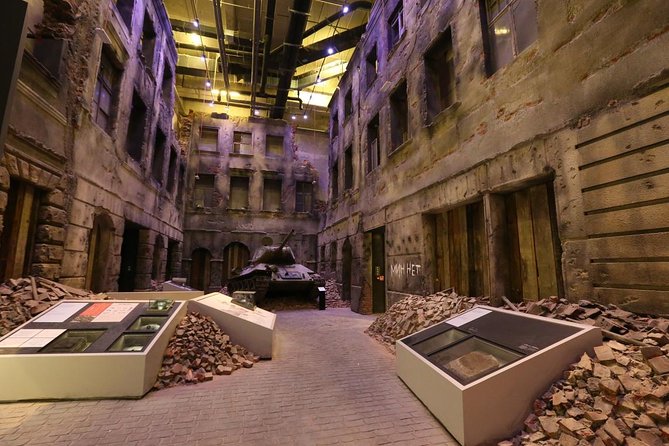
The heart of the tour is your private visit to the Museum of the Second World War. You get about 2 hours inside, and admission is included. The museum experience is built around a large collection of artifacts, documents, photographs, and interactive displays that show both the global impact and the Polish experience during WWII.
Skip-the-line tickets are included, but it is important to understand what that really means. Your tickets are for a pre-booked date and time. You will skip the long line at the ticket office, but not at the entrance. So the best move is simple: arrive on time for your timed slot so you do not lose that advantage.
Also note what your admission covers. Admission is for the permanent exhibition. That is usually what you want for a strong first visit, but if you were hoping for anything temporary or special, this tour’s coverage is specifically the permanent display.
Inside, the value of a private guide shows up quickly. Instead of you trying to guess what you should pay attention to, your guide directs your focus to what matters most in the story of Poland during WWII. This is where guides like Małgorzata stand out in the feedback: the explanations are clear, and the guide uses the time you have to answer questions instead of rushing.
Stop 3 in the story: Defenders of the Polish Post Office and the fight that kept going
If you book the longer option, the walking portion adds another layer. You move from the museum into the city’s memorial sites, starting with Defenders of the Polish Post Office. This is tied to one of the earliest battles of WWII, which makes the site feel immediate, not abstract.
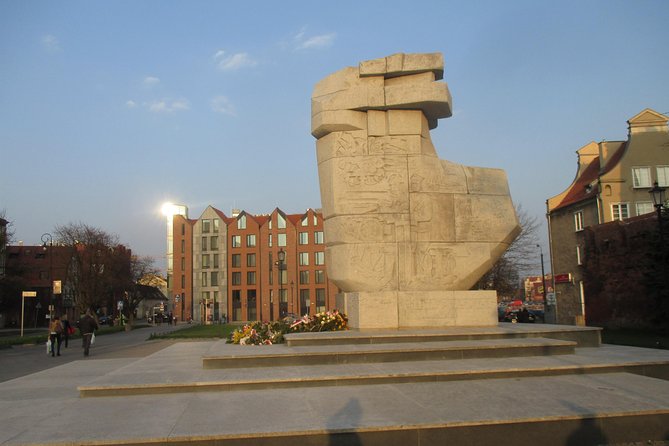
From there, you follow a short chain of meaningful locations with your guide. You will also visit the Church of St. James and the Monument to the Fallen Shipyard Workers. These stops work together because they connect Nazi occupation to resistance on the ground, and then on to the later struggle against Communist control after the war.
This is also the part where the “somber but informative” tone can hit the hardest. The subject matter is tragic. But that is exactly why the guiding helps. A good guide keeps you oriented: what each site represents, how it fits into the larger sequence, and what Poland’s fight for freedom looked like beyond the war’s first headlines.
Time at these stops is about 50 minutes. That is enough to absorb the key moments without turning the walk into a marathon. Still, keep in mind the longer option is a moderate walking tour and may include uneven surfaces or steps, so plan your footwear accordingly.
Gdansk repeats itself well. The other versions we reviewed
- Gdańsk City Sights & History Guided Walking Tour in English★ 4.8 · 876 reviews
- Gdansk: Firearm Shooting Experience with Instructor★ 4.8 · 866 reviews
- Gdansk: Guided Round-Trip Cruise to Westerplatte★ 4.3 · 865 reviews
- Gdańsk: Sightseeing EcoCruise around the Old Town of Gdansk★ 4.6 · 719 reviews
- Main Town Gdańsk Walking Tour★ 5.0 · 644 reviews
European Solidarity Centre and BHP Hall: where WWII’s aftermath becomes Poland’s independence story
The final major stop, in the extended version, is the European Solidarity Centre. This is a shift in theme, but not a random one. It is designed to show Poland’s path toward independence and the political forces that rose after WWII.
One highlight here is the historic BHP Hall, where the famous August Agreements were signed. If you are a “show me the key events” person, this is a big anchor moment. It helps you connect the dots from wartime occupation to resistance culture and later political change.
You will also see the striking Obrońca mural, a tribute to those who defended Poland. Then the tour includes a visit to a preserved WWII air raid shelter, which adds that physical sense of what people experienced. It is one thing to read about danger. It is another to stand in a space built for survival.
The walk ends at the Imperial Shipyard, where wartime industry still leaves traces in the area. It is a fitting close, because the city’s industrial energy is part of both the wartime story and the later resistance story.
Expect about 1 hour for this segment. By then, you will probably be thinking less about “tourist sightseeing” and more about how all these places line up in your head.
What makes it good value at around $153.49 per person
This is priced at $153.49 per person, and it includes more than a basic guided walk. You are paying for a licensed private guide, skip-the-line museum admission for the permanent exhibition, and (in the extended option) additional guided time across multiple major sites.
Here is the practical value equation I would use. If you try to plan this yourself, the work is not just buying tickets. The work is coordinating timed entry, figuring out where to start, and choosing the right sequence so the post-war story makes sense. This tour basically hands you the structure, while the guide provides the context you would otherwise have to research in advance.
It also helps that the tour is private, meaning you get undivided attention for your questions. The feedback around guides like Małgorzata and other guides emphasizes clarity, professionalism, and making time for questions. That is exactly what you want in a museum plus memorials itinerary, because the topics are heavy and you do not want to feel lost.
Two other money-saving notes: there are group discounts available, and some admission is not something you pay separately because it is included for the stops listed as free. (The tour clearly states which admissions are included and which are free on the day.)
Timing, pacing, and not tripping over logistics
The duration is 2 to 4 hours (approx.), depending on your selected option. The shorter route focuses on the museum. The longer route adds the walking stops tied to post-war Communist history and the Solidarity story.
The itinerary on the day is roughly:
- Quick orientation at the Pilecki memorial area
- About 2 hours in the Museum of the Second World War
- About 50 minutes at the Post Office defenders memorial and related sites (extended option)
- About 1 hour at the European Solidarity Centre and the Imperial Shipyard area (extended option)
Weather is not an excuse here. The walking portion runs rain or shine, so dress for conditions and bring a plan for wet weather.
One more timing detail matters for the museum: skip-the-line tickets are valid for a pre-booked date and time, and you should arrive on schedule. You skip the ticket office line, but if you arrive late you will likely pay for it in lost time at the entrance.
If you want the smoothest experience, use the meeting point as your anchor. The tour ends back at the same meeting point, so you do not have to worry about transportation mid-visit.
Who should book this private tour
This works best if you want three things:
- You want history you can understand quickly, without guessing what matters.
- You prefer a guided pace, especially in memorial spaces where you need context.
- You are interested in the arc from WWII into the post-war Communist era and Poland’s later independence story.
It is also a strong fit for first-time visitors to Gdansk who want a concentrated, meaningful route in just half a day. The museum is a major anchor, and the added stops turn it into a city story, not just a museum ticket.
If you are the type who dislikes walking, you might lean toward the shorter option. The extended version adds steps and uneven surfaces, so it is not ideal for someone who struggles with that.
The bottom line, should you book it?
I would book this if you care about clarity, not just coverage. The mix of a major WWII museum visit plus targeted walking stops gives you a story you can actually follow. The pricing also feels reasonable because you are paying for a licensed private guide and a museum entry plan that saves time.
Choose the extended version if you want the Poland-specific thread to continue into the post-war era, including the European Solidarity Centre and BHP Hall. Choose the shorter version if your goal is mostly the museum and you want to keep walking limited.
FAQ
FAQ
How long is the private tour in Gdansk?
The tour lasts about 2 to 4 hours, depending on the selected option. The museum visit is about 2 hours, and the extended walking route adds more time.
Where do I meet the guide?
You meet at Plac Władysława Bartoszewskiego 1, 80-862 Gdańsk, in front of the Museum of the Second World War. The tour meeting point is by the monument to Rotmistrza Witolda Pilecki.
Is pickup included?
Pickup is possible only for accommodations located in Gdansk Old Town, and it is possible only in the extended version. Pickup is available within 1.5 km of the designated meeting point.
Do I get skip-the-line tickets to the Museum of the Second World War?
Yes. Skip-the-line tickets are included for the museum for all options. Your tickets are valid for a pre-booked date and time, and you will skip the line at the ticket office, not at the entrance.
What does my museum admission cover?
Admission included is for the museum’s permanent exhibition. Skip-the-line refers to the ticket office line, with entry still requiring you to go through the entrance area.
What stops are included on the tour?
You’ll include the Museum of the Second World War. In the extended option, you also visit the Defenders of the Polish Post Office memorial area, the Church of St. James, the Monument to the Fallen Shipyard Workers, and the European Solidarity Centre including BHP Hall and related sites.
Is the tour only in English?
Yes, the tour is offered in English. The guide is fluent in your chosen language.
Is this a private tour?
Yes. It is a private tour/activity, so only your group participates.
Does the tour run in bad weather?
Yes. The tour runs rain or shine, and the extended option includes a moderate walking route with some uneven surfaces or steps.
Can I get a full refund if my plans change?
You can cancel for a full refund up to 24 hours before the experience’s start time. If you cancel less than 24 hours before, the amount paid is not refunded.
More Tour Reviews in Gdansk




Gdansk, Three More Ways
Wartime History in Gdansk


Recently written up around Gdansk





More Gdansk Old Town Tours.
 ★ 4.8City Cruise on Historical Polish BoatFrom $222,913 reviews
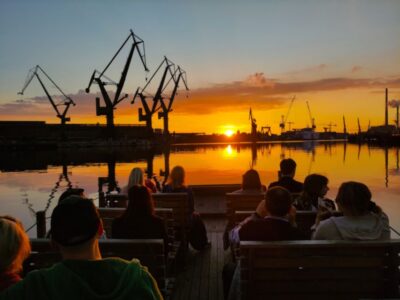 ★ 4.9Sunset Cruise on a Historic Polish BoatFrom $26977 reviews
 ★ 4.8Gdańsk City Sights & History Guided Walking Tour in EnglishFrom $26876 reviews
 ★ 4.8Firearm Shooting Experience with InstructorFrom $41866 reviews
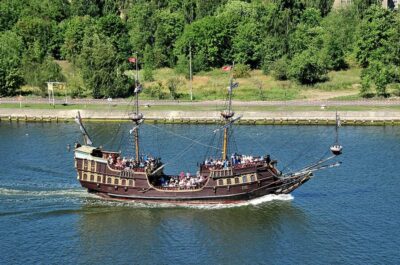 ★ 4.3Guided Round-Trip Cruise to WesterplatteFrom $33865 reviews
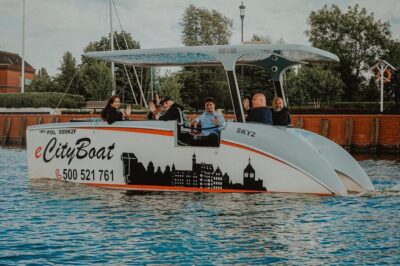 ★ 4.6Sightseeing EcoCruise around the Old Town of GdanskFrom $19719 reviews
 ★ 5.0Main Town Gdańsk Walking TourFrom $26644 reviews
 ★ 5.0Gdansk Pub Crawl with Free DrinksFrom $21553 reviews
Also on these Poland lists