
REVIEW · WROCLAW CITY TOURS
Wroclaw: Skip the Line Panorama Raclawicka and Ostrow Tumski Guided Tour
Wrocław history hits different on foot. This guided route strings together skip-the-line visits to Panorama Raclawicka and Ostrow Tumski, then adds cathedral interiors, museum art, and photo stops around the river islands. It is a smart mix of big-city icons and small details, so you leave with the story of Wrocław, not just a checklist.
My two favorite parts are the Panorama Raclawicka perspective painting and the Cathedral Island feel of Ostrow Tumski. One thing to plan for: with a 2 to 4 hour walk that covers a lot of ground, you can feel time pressure if you want extra minutes inside tower areas or request-entry spots.
In This Review
- Key things you will love on this Wrocław tour
- Why Panorama Raclawicka and Ostrow Tumski fit together so well
- Meeting point, timing, and what private means here
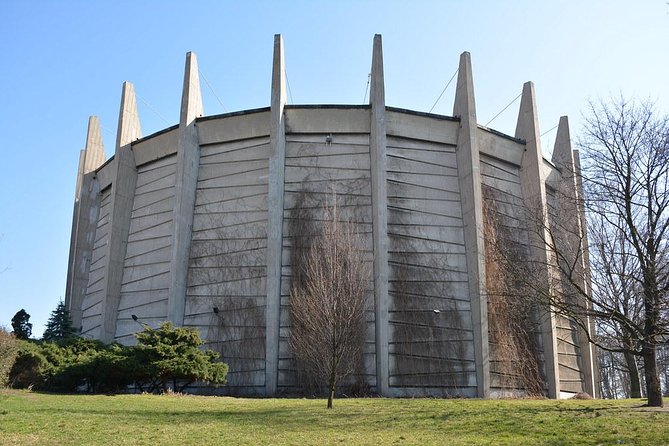
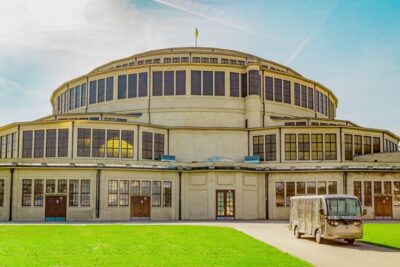
- Panorama Raclawicka inside the round building
- The gnome hunt, a funny way to train your eyes
- Ostrow Tumski, Cathedral Island and the older face of Wrocław
- Archikatedra tower views, what you can expect and what costs extra
- From cathedral stops to a university-museum surprise
- The river route and why it matters more than you think
- Tumski Bridge and the padlock photo moment
- National Museum, Silesian and Polish art plus wider connections
- Ossolineum and garden time for when you need a break
- Churches with request-based access, how to handle it
- Islands for a breather: Bielarska and Słodowa
- Bielarska Island
- Słodowa Island
- The Church of the Holy Cross area and the monument story
- Price and value: what you actually get for $145.41
- Should you book this Wrocław guided tour?
- FAQ
- How long is the Wroclaw skip-the-line panorama and Ostrow Tumski guided tour?
- What is included in the admission tickets?
- Is this tour private?
- Where does the tour start and end?
- Do I get a mobile ticket?
- What does the guide do during the tour?
- Is this tour refundable if I cancel?
Key things you will love on this Wrocław tour
- Skip-the-line tickets for Panorama Raclawicka and the National Museum help your time go where you want it.
- Ostrow Tumski, Cathedral Island is built for walking, with colorful streets, cathedrals, and WWII-era visual context.
- A personal certified guide who connects sights to the bigger Wrocław story and gives practical ideas for what to see next.
- Quick fun stops like the gnome hunt, where you literally look down at windowsills, ground-level spots, and lampposts.
- Water and bridge viewpoints including Tumski Bridge and padlocks, plus river views with boats and floating restaurants.
- A private, customizable flow so your guide can adjust the pacing to your interests.
More of Wroclaw, dwarves and islands included
- Wroclaw: E-Car Tour and Audio Guide
★ 4.6 · 1,738 reviews - Wroclaw: 2-Hour Private Guided Tour by Electric Car
★ 4.8 · 805 reviews - Wrocław: Old Town and Ostrów Tumski Walking Tour in English
★ 4.8 · 311 reviews - Wroclaw: Private Old Town Guided Walking Tour (2 hours)
★ 4.8 · 275 reviews
Why Panorama Raclawicka and Ostrow Tumski fit together so well
This is the kind of tour that makes sense right away. You start with Panorama Raclawicka, where Wrocław’s past is explained through one dramatic, specially designed artwork. Then you shift to Ostrow Tumski, where the city’s older layer comes into focus as you walk among churches, old streets, and the Cathedral Island atmosphere.
The pairing works because it moves you between two different ways of understanding history. One is visual and immersive through the painting’s special perspective inside a rounded building. The other is real-world history you can see on the street, in the churches, and in the way the island looks and feels.
Meeting point, timing, and what private means here
The tour starts at Plac Katedralny 50, Wrocław and ends on Ostrów Tumski. It is a private tour, meaning only your group participates, so you are not squeezed into a big crowd rhythm.
You should also know the time format. It is listed as about 2 to 4 hours, and the route includes multiple major stops plus several shorter ones. That is not bad, but it does mean you will want to keep a steady pace. If you love lingering in towers or churches, you may need to choose where to spend extra minutes.
Good practical notes: you will likely get an email the day before with important information, and you use a mobile ticket. The meeting area is near public transportation, which helps if you are stitching this tour into a busy day.
Panorama Raclawicka inside the round building
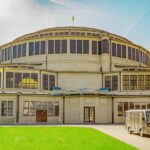
Panorama Raclawicka is a perfect first stop because it pulls you into the tour theme fast. The building itself is part of the experience: it has that unusual rounded shape, made for a painting that uses a specific kind of perspective.
Instead of just looking at art, your guide explains why this type of work matters to the story of the region and the city. You get about 30 minutes here, with an admission ticket included. That timing is ideal for most people. Long enough to understand what you are seeing, short enough that the rest of Wrocław still feels energetic.
If you are the kind of person who likes museums but hates waiting in lines, the skip-the-line ticket piece is a real value. The tour is built around saving time for you, not asking you to spend it standing still.
The gnome hunt, a funny way to train your eyes
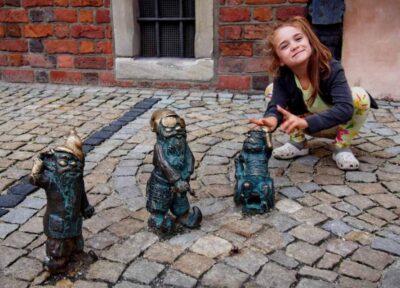
One of the most memorable moments on this route is the playful pause for gnomes. Your guide points them out as you walk, and the fun part is where they show up.
You will be looking for gnomes on the ground, on windowcills, and even hanging onto lampposts. It is a light, almost scavenger-hunt style interlude, but it does something useful too. It forces you to slow down and notice street details you might otherwise miss.
This is also where your guide’s personality tends to shine. It is less lecture, more interaction, and it makes the city feel personal instead of distant.
Below are the other Wroclaw trips we have logged
- From Wrocław: Full-Day Auschwitz-Birkenau Guided Tour★ 4.8 · 117 reviews
- Wroclaw Old Town Guided Walking Tour★ 5.0 · 100 reviews
- Wroclaw: Guided City Walk★ 4.9 · 87 reviews
- 2-Hours Private Electric Car Tour with a Guide, Wroclaw★ 4.5 · 87 reviews
- Wroclaw: 2-Hour Tour by Electric Car with a driver-guide★ 4.8 · 66 reviews
Ostrow Tumski, Cathedral Island and the older face of Wrocław
Ostrow Tumski is the reason many people fall in love with Wrocław. It is the oldest part of the city, and the tour leans into that. You get about 1 hour here, with admission included.
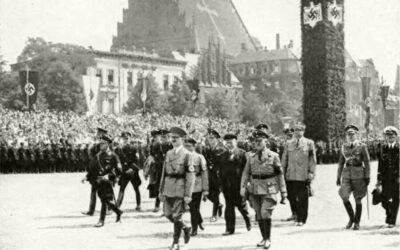
What makes this stop special is the blend of street charm and historical context. You walk through beautiful streets with colorful buildings, then you hit the cathedral side of the island, where the architecture does the talking. Your guide also includes historical visuals, including pictures showing how the place looked by the end of WWII, which gives the area an emotional weight beyond postcard views.
This is also a good time to take in the island layout. Even when you are not in a museum, you are learning the geography of Wrocław in a way that will make the rest of the tour easier to understand.
Archikatedra tower views, what you can expect and what costs extra
After Ostrow Tumski, you move to Archikatedra pw. Sw. Jana Chrzciciela we Wrocławiu. The listed time is about 15 minutes, and admission is not included.
You are there for a few clear reasons:
- A restored cathedral with an interior worth looking at
- Stained glass windows
- A nice view of Wrocław from the top of the tower
Because admission is not included, I treat this as a spot to decide in the moment. If you want the tower views, factor in that you may need to pay separately. Some parts may be subject to access rules, so it helps to be flexible with time.
From cathedral stops to a university-museum surprise
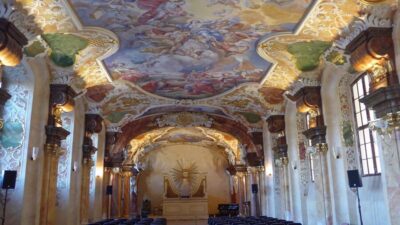
The itinerary also includes a stop that surprises people who expect a university museum to feel strict or boring. Here, it is framed differently. You will visit four rooms, and one of them is not really a hall, but more like a tower with views of the city.
The key practical detail is that entry may be possible by request. That means you should stay alert when your guide approaches the threshold. If access is open, you will want to take it. If it is not, you will still get architectural context from what you can see.
This is a good reminder about the style of this tour. It is not just big monuments. It has those smaller, slightly offbeat spaces that make Wrocław feel like it has layers.
The river route and why it matters more than you think
Wrocław’s river is not background scenery on this tour. It is part of the explanation.
You will hear that the river running through Wrocław is one of the city’s best attractions, and the itinerary backs that up with views of islands and movement on the water. You may spot little boats passing by, and you can also notice floating restaurants and bars plus multiple bridges connecting the city.
What I like about including the river here is that it gives your walking route meaning. You are not just moving from one point to another, you are learning how the city works physically and culturally around the water.
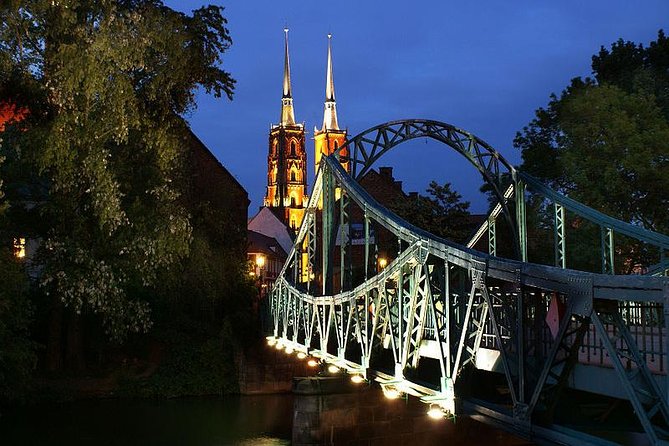
Tumski Bridge and the padlock photo moment
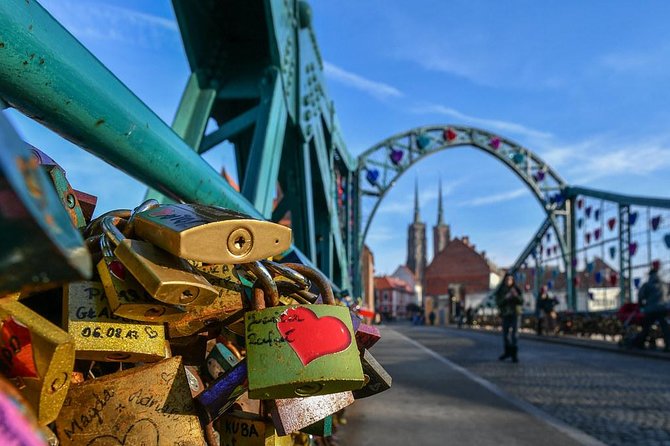
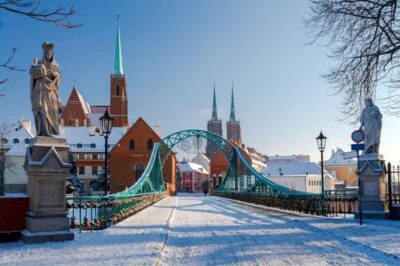
The tour hits Tumski Bridge for about 10 minutes, and this is one of those places that is almost guaranteed to produce a great photo. The bridge is known for padlocks attached to it.
It is described as romantic, and you can feel why quickly. The setting gives you angles back toward the island area, and it is easy to frame your shot without trying too hard.
This is also a good breather stop. Ten minutes is enough time to take a picture and get your legs back, before you head back into more buildings and interior viewing.
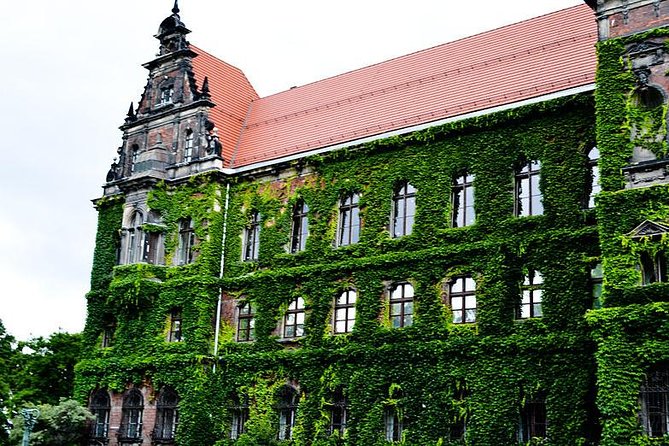
National Museum, Silesian and Polish art plus wider connections
Next you go to the National Museum, with about 1 hour and admission included.
This stop is not only about famous galleries. It is also about feeling grounded in place. The museum focuses on art and sculptures, including Silesian and Polish artists, plus works from more distant regions of the world. That blend helps you understand Wrocław as both local and connected, not isolated.
If you want a practical rule for enjoying this kind of museum stop: pick one or two pieces that really pull you in and let the rest support your mood. Your guide can help you choose directions, but you still get the freedom to focus without racing.
Ossolineum and garden time for when you need a break
The itinerary also brings you to Ossolineum, described as a palace building with a wonderful garden where you can walk around.
This is a nice reset after interiors. It gives your brain a chance to rest, and it also adds variety to the day. Even if you are here for art and architecture, a short garden pause can make the full tour feel less like nonstop sightseeing.
The garden stop also balances the heavier historical stops, like the WWII-era imagery on Ostrow Tumski. It gives the route a little emotional breathing room.
Churches with request-based access, how to handle it
There are several church-related stops where access may depend on timing or request. The itinerary mentions possibilities like entry for request at places including:
- Archikatedra tower areas
- A stunning baroque church near the National Museum stop
- Church of Our Lady on the Sand
- A few other architecture-focused spots later in the route
I recommend you treat these as opportunities, not promises. If you get in, great. If you cannot, you still get exterior views and architecture context, and the guide will keep the story moving.
The itinerary highlights a few specific church moments:
- The Church of Our Lady on the Sand is Gothic, with a large single nave and Gothic altarpieces.
- One chapel has a moving nativity scene, with an old nun attending it.
- There is also a Greek Catholic cathedral on the list, mainly Gothic and unadorned, but it holds a beautiful Baroque chapel on its southern side.
Even when you only catch part of a space, these details make the buildings feel lived-in, not just photographed.
Islands for a breather: Bielarska and Słodowa
This tour gives you nature breaks inside the city. After the church and museum-heavy stretches, you step into island time.
Bielarska Island
Bielarska is described as a quiet natural space with benches and a pleasant walking vibe. It is a calmer moment that fits well if you have been indoors a lot.
Słodowa Island
Then you head to Słodowa Island, where you can relax, take pictures, and enjoy the mix of nature and older buildings. It is specifically framed as an adorable spot with views, and it makes a good counterbalance to the cathedral stops.
I like these island stops because they keep the tour grounded in real city rhythms. You are not trapped in monuments. You get breaks where you can look around and just feel Wrocław for a bit.
The Church of the Holy Cross area and the monument story
Later, the route includes an area connected to the Church of the Holy Cross, with a monument described as standing majestically in front of the church. The monument has historical meaning tied to Chinese students and Polish solidarity with people who stood up against communism and cruelty.
This is one of those moments where the guide’s context matters. Without it, a monument can look like just another statue. With it, it becomes a way to connect Wrocław to wider European and world events.
The itinerary also notes unique architectural solutions: a church with two levels, slender windows, and soaring towers. Entry may be possible by request. Another detail in the route is that this area offers a fantastic view of the Trumski Island and its cathedral when you are on top.
That viewpoint angle ties the whole tour together. You started with a big painted perspective, then you spent hours on Cathedral Island at street level. Finishing with a top-down view of the cathedral gives your brain a satisfying final picture.
Price and value: what you actually get for $145.41
At $145.41 per person, this is not a budget throwaway tour, and you should expect that. The value is in three places that match how the day is built.
First, the tour includes skip-the-line entry for major stops like Panorama Raclawicka and the National Museum. Time saved is not theoretical. It is the difference between enjoying Wrocław and losing part of your day to queues.
Second, you get a private, certified guide and a route that combines multiple high-demand sights without treating them as separate errands. The itinerary also includes admission tickets where listed, plus free stops at places like Tumski Bridge and Church of Our Lady on the Sand.
Third, the guided storytelling makes the smaller moments useful. The gnome hunt becomes more than a cute stop because your guide ties it to how to actually see the city.
Booking timing matters too. This experience is often booked about 20 days in advance, so if you have fixed dates, I would not wait too close to your travel day.
Should you book this Wrocław guided tour?
Book it if you want a guided walk that hits both the headline experiences and the day-to-day details: Panorama Raclawicka, Ostrow Tumski, cathedrals, museum art, river views, and island breaks. This is also a great pick if you hate waiting in lines and you like having someone help you choose where to look and what to notice.
Skip it or consider a shorter, more focused plan if you want a slow day with long interior time at every stop. The route covers a lot in about 2 to 4 hours, so it suits people who like movement and planning.
If you want your first day in Wrocław to feel structured but still fun, this tour is a strong way to do it.
FAQ
How long is the Wroclaw skip-the-line panorama and Ostrow Tumski guided tour?
It is approximately 2 to 4 hours.
What is included in the admission tickets?
Admission ticket is included for Panorama Raclawicka, Ostrow Tumski, and the National Museum. Tumski Bridge is free, and Church of Our Lady on the Sand is listed as free. Other sites note admission not included or entry possible on request.
Is this tour private?
Yes. It is a private tour/activity, and only your group participates.
Where does the tour start and end?
The meeting point is Plac Katedralny 50, and the tour ends at Ostrów Tumski.
Do I get a mobile ticket?
Yes, the tour uses a mobile ticket.
What does the guide do during the tour?
You will have a personal certified tour guide who covers Wrocław’s history while visiting major highlights, with the freedom to adjust the itinerary on a private, customizable tour.
Is this tour refundable if I cancel?
No. It is non-refundable and cannot be changed for any reason.
More Tours in Wroclaw


More Tour Reviews in Wroclaw
More of Wroclaw
Recently written up around Wroclaw
More Wroclaw City Tours.
 ★ 4.6E-Car Tour and Audio GuideFrom $161,738 reviews
 ★ 4.82-Hour Private Guided Tour by Electric CarFrom $38805 reviews
 ★ 4.8Old Town and Ostrów Tumski Walking Tour in EnglishFrom $19311 reviews
 ★ 4.8Private Old Town Guided Walking Tour (2 hours)From $164275 reviews
 ★ 5.0Old Town Wrocław Walking TourFrom $26249 reviews
 ★ 4.8City Tour Sightseeing By Golf Cart Shared Or PrivatFrom $27189 reviews
 ★ 5.0Auschwitz-Birkenau Tour from WrocławFrom $266129 reviews
 ★ 4.4Wroclaw Pub Crawl with Free DrinksFrom $25127 reviews
Also on these Poland lists