
REVIEW · PRIVATE
13-Day Highlights of Poland Tour – private for 2-10 persons
Plan changes itself, you just follow along. This 13 day Poland trip keeps things simple with a small group (max 15) and a private vehicle, so you spend less time coordinating and more time seeing. You also get airport transfers, and a tour leader who meets you early afternoon in Warsaw to kick things off.
I especially like the practical rhythm built into the trip: 3 and 4 star hotels plus all breakfasts and dinners reduce the daily decision fatigue. It also means you can focus on the big contrasts of Poland, from rebuilt Warsaw to the Baltic port life, then the Tatras and underground salt world.
One consideration: the days are full. You’ll have lots of guided time, a moderate fitness level requirement, and even a chilly stop at Wieliczka Salt Mine, so come ready for an active pace.
In This Review
- Key highlights I’d prioritize
- What this tour really feels like: comfort, structure, and room to breathe
- Warsaw, rebuilt and still proud: Old Town, Chopin at Łazienki, and the memorials
- Masuria and Warmia: sleeping in a castle, plus Wolfs Lair with a specialist guide
- Elbląg Canal to Malbork: the day Poland’s power was built in stone
- Gdansk, Sopot, and the Baltic: maritime city, Solidarity, and a longer pier walk
- Toruń to Poznań to Gniezno: Vistula beauty, Copernicus, and early Poland roots
- Czestochowa and Auschwitz Birkenau: Jasna Góra reverence and a day you should approach slowly
- Pieniny rafting and Zakopane: river drama, Polish wooden town style, and mountain air
- Gubalowka and the Tatras: cable car views and a valley walk pace
- Wieliczka Salt Mine and Schindler Factory: underground wonder and moral weight
- Krakow at walking speed: Wawel Castle, St Mary’s, and the layered Old Town walls
- Price and value: what $5,350 per person buys you (and what it doesn’t)
- Who should book this Poland tour, and who should skip it
- Should you book?
- FAQ
- What cities does this Poland tour cover?
- How long is the tour?
- What is the group size?
- Where does the tour start and when?
- What is included in the price?
- Are airport transfers included?
- Are attraction tickets included?
- Do I need moderate physical fitness?
- What special clothing should I bring?
- Is the booking refundable?
Key highlights I’d prioritize
- Max 15 people with a private vehicle, for calmer transit and easier timing
- Hotel stays with breakfasts and dinners so you are not hunting meals every night
- Entry tickets included for many major stops, with a few separate ticket items you should expect
- A rare mix of Poland’s regions, from Warsaw and Gdansk to Zakopane and Krakow
- Two unforgettable anchors: Auschwitz Birkenau and the salt mine at Wieliczka
Below are the other Warsaw trips we have logged
- Private Tour: Warsaw City Sightseeing by Retro Fiat
★ 5.0 · 562 reviews - Warsaw: Warsaw Ghetto Private Walking Tour with Hotel Pickup
★ 4.9 · 369 reviews - Private Tour: Warsaw’s Jewish Heritage by Retro Fiat
★ 5.0 · 208 reviews - Private Historical Tour of Warsaw by a Retro Fiat with Pickup
★ 5.0 · 190 reviews
What this tour really feels like: comfort, structure, and room to breathe
This isn’t a frantic, every-hour-on-the-dot whirlwind. It’s more like you’re given a smart route across Poland, with the hard parts handled: lodging, big drives, local guides, and ticketed sights. The private vehicle matters. It smooths out the long stretches between cities, and it also makes it easier to stick to the day’s plan when traffic or timing gets tricky.
The group size is another big deal. With a small group, you’re more likely to get direct answers to questions and less time waiting. You can also take breaks without feeling like you’re slowing everyone down.
The trip mixes culture and nature in a way that feels intentional. Warsaw and Gdansk give you history you can actually walk through. The Pieniny and Tatras add the outdoors, and Wieliczka brings a truly odd, cool experience underground.
Warsaw, rebuilt and still proud: Old Town, Chopin at Łazienki, and the memorials
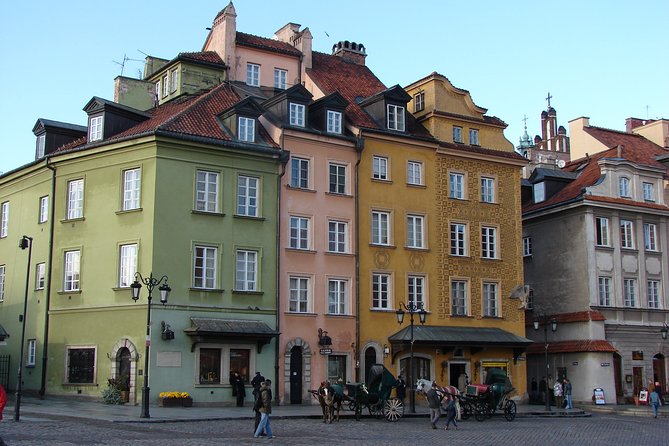
Warsaw is the opening lesson in modern Poland. You arrive, transfer to your hotel, and meet your tour leader early afternoon. Then the city tour takes you through the Old Town, which was totally destroyed during World War II and rebuilt afterward. That context matters as you look at the streetscape. It’s not just pretty facades, it is resilience you can read in the architecture.
You’ll also spend time at Łazienki Park. This is where you see the Frederic Chopin monument and the Palace on the Water, along with a garden walk. It’s a good change of pace after Old Town, and it sets you up for the next stops.
Later, you’ll stand at the Warsaw Uprising Monument and see the Royal Castle area from the outside. A welcome dinner in the Old Town wraps the day in a very practical way. After a travel day, you have a place to go and an order to follow, not another decision.
Practical note: some Warsaw items on the walk list are marked as not included, so you may pay a separate ticket for certain attractions. Build in a little flexibility.
Masuria and Warmia: sleeping in a castle, plus Wolfs Lair with a specialist guide
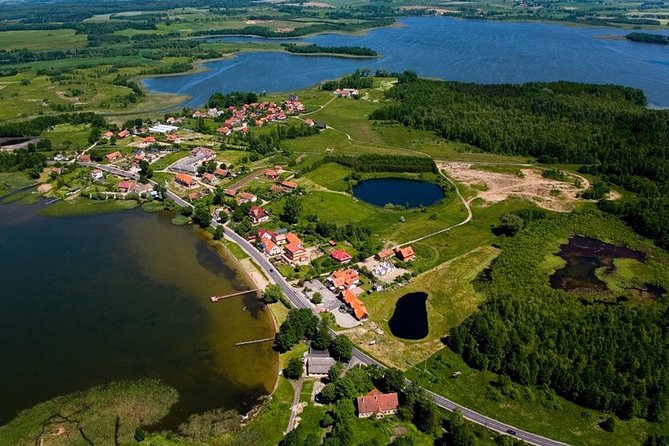
After breakfast, the trip heads north toward Masuria, the region often called the Land of Thousand Lakes. The long drive is part of the value here. You are not switching trains or managing transfers, and you arrive ready for the next experience.
Your first major stop is the Wolfs Lair, Hitler’s WWII headquarters. You get a guided tour with a local specialist. Even without extra details, plan for this to feel heavy and historical. It also helps that it’s paired with a more peaceful setting later, rather than Warsaw repeating itself emotionally.
From there you move to Lidzbark Warminski, staying in a hotel housed in a renovated XIV century castle. This is one of the most distinctive lodging ideas on the entire trip. You get time to relax, and the castle property includes options like a castle pool and sauna, with other activities available for an extra fee.
That combination is what makes this day feel balanced. You get history in the morning, then you switch gears to a real castle stay at night. It’s not a theme park castle. You’re sleeping in the place.
Elbląg Canal to Malbork: the day Poland’s power was built in stone
Next comes a two hour cruise along the Elbląg Canal, described as one of the new seven Poland tourist wonders. This is exactly the kind of activity that turns a long geography day into something memorable. You’re on the water, and the canal is unusual enough that it feels different from typical river rides.
Then you head to Malbork, home to the medieval fortress of the Teutonic Knights. Malbork Castle is presented as the greatest castle in Poland and one of Europe’s best examples of medieval fortifications. If you like places where you can see how power was organized, this is a standout.
After that, you continue to Gdansk for your hotel and dinner.
The practical upside: this is a big-ticket day that still has structure. You’re not trying to line up a boat cruise and a major fortress on your own.
- Warsaw: City Sightseeing Hop-On Hop-Off Bus Tour★ 3.6 · 1,415 reviews
- Warsaw: POLIN Museum of the History of Polish Jews Ticket★ 4.7 · 1,142 reviews
- #1 Pub Crawl Warsaw with Optional Premium 1 Hour Open Bar★ 5.0 · 790 reviews
- Warsaw: Polish Vodka Museum Tour with Tasting★ 4.6 · 788 reviews
- Chopin Concerts at Fryderyk Concert Hall★ 4.7 · 687 reviews
Gdansk, Sopot, and the Baltic: maritime city, Solidarity, and a longer pier walk
Gdansk is Poland’s maritime heart, and the trip uses that idea well. You start with a guided sightseeing focus on the port city: the Basilica, the Neptune Monument, Zuraw Gdanski, the harbor, and a visit to Westerplatte, the place where World War II officially began. That’s a lot in one morning, but it’s also the kind of history that becomes easier once you see it in the actual geography of the harbor.
You also get Westerplatte time built in, plus a short stop for Crane, the famous Gdansk crane. After the harbor concentration, the day moves outward to Sopot. This is where you get the health resort vibe, plus the long wooden pier and a relaxing walk along the Baltic seaside.
One note that helps you plan: dinner on your own is scheduled on this day. The upside is freedom. The downside is you’ll want to eat early and choose wisely, because you’ll likely be tired after the walking and viewpoints.
Another practical detail: there is a concert option in the Gothic Cathedral in Oliwa, featuring a baroque pipe organ. If you like music built into a specific place, keep your schedule steady so you don’t miss it.
Toruń to Poznań to Gniezno: Vistula beauty, Copernicus, and early Poland roots
From Gdansk you head to Toruń, a city set on both banks of the Vistula. The guided Old Town tour focuses on the city hall, the cathedral, and the renovated Nicholas Copernik’s Museum. Toruń is one of those stops where the guide direction really pays off, because the streets and buildings feel much more coherent when someone helps you connect the landmarks.
You also get time for the Copernicus home museum, with admission included. This is a nice contrast to the strictly fortress and WWII days. It shifts your brain toward science and the long arc of ideas.
Then the trip drives to Poznań, with a stop in Biskupin for an open air archaeological site from around 750 BC. This is not a museum you look at behind glass. It’s a reconstructed settlement concept. It’s a good way to reset between eras.
In Gniezno, you visit the Cathedral with a local guide, which gives you a sense of Poland’s early spiritual and political center. Later, in Poznań Old Town, you see the Town Hall and the country’s oldest cathedral with tombs of the first of Poland’s rulers. Even if you are not a big “royal tomb” person, this is the kind of landmark list that helps you understand how the country formed.
That day includes a drive toward Czestochowa and an option tied to Catholic mass at the Black Madonna Monastery. If you want that spiritual context, you’ll have a chance to choose it.
Czestochowa and Auschwitz Birkenau: Jasna Góra reverence and a day you should approach slowly
Czestochowa is built around the Black Madonna at Jasna Góra Monastery. You’ll visit with a guide who takes you around the monastery. This is the Queen of Poland icon and a major pilgrimage focus, and the way the visit is set up helps you treat it respectfully rather than rushing through.
Then you leave before noon and drive to Oświęcim for Auschwitz Birkenau. This is the emotional center of the whole trip. The experience is presented as a Nazi German concentration/death camp, now a martyrdom museum, with a guided tour.
If you do this, plan for mental space. Don’t overstuff the hours around it. Keep your pace slower than your instincts, because your brain will take a while to process what you’re seeing. This is also a good reason the trip gives you dinner and overnight afterward, so you are not forced into immediate travel decisions.
Pieniny rafting and Zakopane: river drama, Polish wooden town style, and mountain air
After breakfast, you head toward the Pieniny mountains. A quick stop in Wadowice gives you the Basilica where John Paul II was baptized. There’s also an invitation to taste the famous cream cakes of the Pope. It sounds like a fun detail, and it is, but it also keeps this transition day human and lighter before the outdoors.
Then it’s on to Dunajec River rafting in Pieniny National Park, piloted by Uplander raftsmen. You cruise the Dunajec Gorge, with views of the two castles of Niedzica and Czorsztyn before you enter the deep gorge with white limestone walls. Even if you don’t think you like rafting, this one is more scenic than adrenaline heavy.
In the evening, you reach Zakopane and check into your hotel, with dinner included. Zakopane is the winter capital of Poland, and you get a morning city tour that highlights unique 19th and early 20th century wooden architecture in the region. It’s a very different vibe from the brick and fortress days.
Gubalowka and the Tatras: cable car views and a valley walk pace
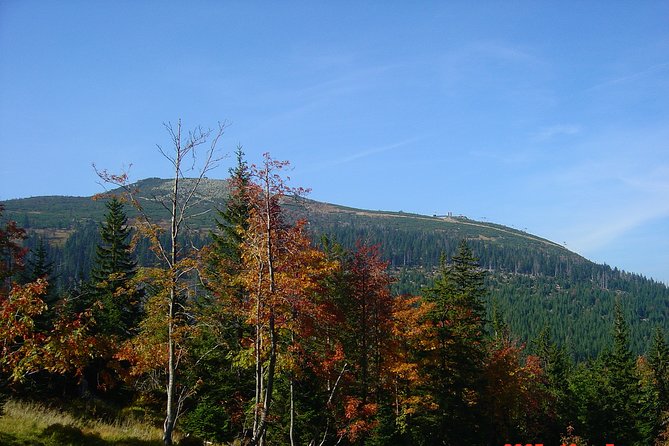
In Zakopane, you go up to Mount Gubałówka by funicular. This is short and simple but delivers the kind of panoramic viewpoint you remember later when you look at photos. From the top, you’ll see the Tatra Mountains.
After that, the plan includes a visit to a selected valley in Tatra National Park. It’s described as a 1 hour visit, and it’s marked free for admission. This is a good way to do nature without turning the day into a hiking challenge.
There is also free time for shops and possibly a guided walk option to a Tatra National Park valley if you want more. Even if you choose the shorter version, you still get the “I was really in the mountains” feeling.
Dinner on this day is in a regional restaurant with live music, which is a great way to end a mountain-focused schedule without having to hunt for an evening plan.
Wieliczka Salt Mine and Schindler Factory: underground wonder and moral weight
Now you trade mountains for the unusual underground world of Wieliczka Salt Mine. Plan for temperature. The mine is described as 14 degrees Celsius only, so bring something suitable. It also helps to do this when you’re not rushing. You need time to notice the details, from salt sculpture spaces to the different underground chambers.
The tour includes walking through a salt rock fantasy world and seeing St. Kinga’s Chapel, with hewn salt sculptures and the medieval mining equipment. There are also subterranean salt lakes.
Right after that, you visit the Schindler Factory Museum. This pairing is emotionally different from the mine. One is a physical underground world shaped by geology and human work. The other is about people and survival in WWII. Together they make the day feel complex in a real way.
Dinner on your own is scheduled this day, so you’ll want to plan a simple meal option nearby or ask your tour leader for a suggestion when you reach Krakow.
Krakow at walking speed: Wawel Castle, St Mary’s, and the layered Old Town walls
Krakow is the easiest city to love on this route because it’s built for walking and it holds up over time. You start with Wawel Hill, visiting the Royal Castle and the Coronation Cathedral. The Coronation Cathedral is presented as the burial place of kings and famous men of letters, science and statescraft, which gives you a sense of why Wawel has always been a power center.
You also visit the royal chambers, where you can discover a collection of Flemish tapestries. Then the walking tour continues through the Old Town, including defensive walls and the Barbican.
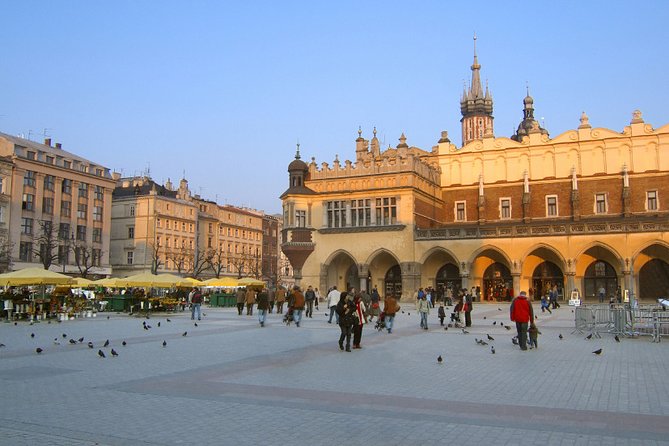
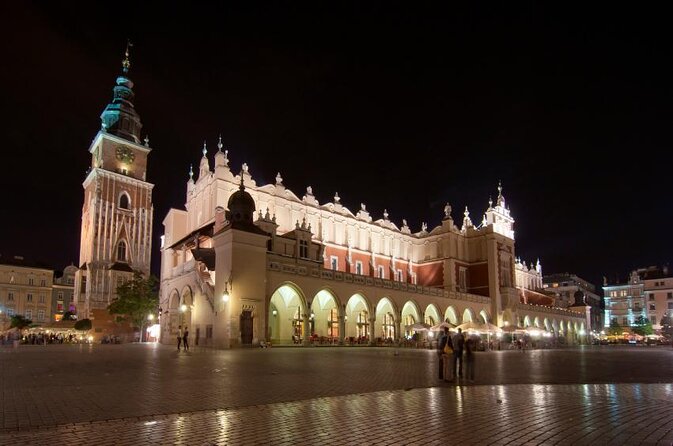
At the heart of Krakow, you visit the Market Square, Rynek Główny, dominated by St. Mary’s Church with its 15th century linden wood structure. The tour also includes Sukiennice, the Cloth Hall, with time to walk along and inside.
One practical note: some admissions on the Krakow day are marked as not included, so keep some budget flexibility for items like Cloth Hall details if you choose to go deeper inside than the walk list covers.
On the final day, you check out after breakfast and get a driver transfer to Krakow airport if your tour ends there.
Price and value: what $5,350 per person buys you (and what it doesn’t)
At $5,350 per person, this is not a budget trip. The value comes from what it bundles.
You are paying for:
- A private, air-conditioned vehicle for long drives
- Hotel stays in 3 and 4 star properties
- All breakfasts and dinner coverage for most days
- Licensed and local guides for key sights
- Airport transfers at the start and end
- Many entry tickets included, not just sightseeing walking
The real savings isn’t just money. It’s time and stress. When you remove the chore of booking trains, lining up hotels city by city, and figuring out which day trips require tickets, the trip becomes easier to enjoy. That matters most if you only have limited time and you want to cover Warsaw, Gdansk, the Baltic, Auschwitz, Zakopane, and Krakow without constant planning.
What it does not guarantee: it cannot replace your personal interests. If you want free-form days with no structure, this plan will feel busy. And since you’ll have a few dinners on your own, you’ll still make choices for where to eat those nights.
Who should book this Poland tour, and who should skip it
Book it if:
- You want a single organized route across Poland with hotel and guide support
- You like a mix of history and nature, including rafting and mountain viewpoints
- You value comfort between cities, not repeated train changes
Consider skipping or switching to a slower version if:
- You hate full days and prefer long, quiet downtime every day
- You are sensitive to heavy WWII sites, since Auschwitz Birkenau is part of the core plan
- You want everything fully included every single evening, since a couple of dinners are listed as on your own
Should you book?
If you want a well-paced way to see the big faces of Poland, this tour is a strong match. The combination of private transport, small group size, and guided stops with included entries makes it feel like expert help without turning the trip into a checklist.
I would book it if your priority is coverage plus comfort, and if you can handle an active schedule. If you prefer total flexibility or slow travel, you might feel squeezed. For most first time Poland travelers, though, this is an efficient and memorable way to get the country in one solid loop.
FAQ
What cities does this Poland tour cover?
It starts in Warsaw and then includes stops across the country such as Masuria, Gdansk (with Sopot), Toruń, Gniezno and Poznań, Czestochowa, Oświęcim (Auschwitz Birkenau), the Pieniny mountains with rafting, Zakopane, Wieliczka, and finishes in Krakow.
How long is the tour?
The tour duration is 13 days, approximately.
What is the group size?
It is a private tour for 2 to 10 persons, and the small-group limit is max 15.
Where does the tour start and when?
The meeting point is Frederic Chopin Airport in Warsaw, with a start time of 9:00 am.
What is included in the price?
The tour includes an air-conditioned vehicle, 3 and 4 star hotels, licensed tour guide and local tour guides, entry tickets, airport transfers on arrival and departure, 12 breakfasts and 12 dinners.
Are airport transfers included?
Yes. Airport transfers on arrival and departure are included.
Are attraction tickets included?
Many attractions have entry tickets included as part of the itinerary. Some stops are marked as admission not included, so a few separate fees may still apply.
Do I need moderate physical fitness?
Yes. Travelers should have a moderate physical fitness level.
What special clothing should I bring?
For the Wieliczka Salt Mine visit, temperatures are described as 14 degrees Celsius only, so you should wear something suitable.
Is the booking refundable?
This experience is non-refundable and cannot be changed for any reason.
More Private in Warsaw

More Tours in Warsaw


More Tour Reviews in Warsaw

Recently written up around Warsaw

More Private.
 ★ 4.82-Hour Private Guided Tour by Electric CarFrom $38805 reviews
 ★ 5.0Private Tour: Warsaw City Sightseeing by Retro FiatFrom $108562 reviews
 ★ 4.9Warsaw Ghetto Private Walking Tour with Hotel PickupFrom $84369 reviews
 ★ 4.5Private Departure Transfer: Krakow City To Krakow Airport BaliceFrom $53367 reviews
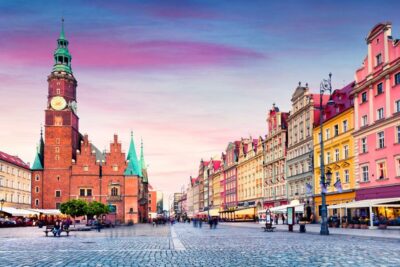 ★ 4.8Private Old Town Guided Walking Tour (2 hours)From $164275 reviews
 ★ 4.7Skip-the-Line Wawel Castle Chambers Private TourFrom $154262 reviews
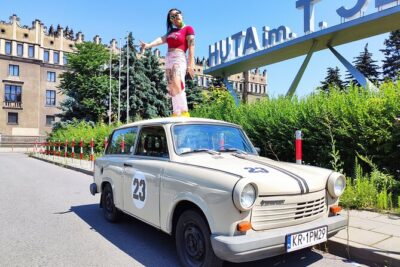 ★ 5.0Legendary Private Nowa Huta Communism Tour with Crazy GuidesFrom $131262 reviews
 ★ 5.0Auschwitz-Birkenau and Salt Mine with Private TransferFrom $260247 reviews