
REVIEW · JEWISH HERITAGE AND GHETTO TOURS
Warsaw: Warsaw Ghetto Private Walking Tour with Hotel Pickup
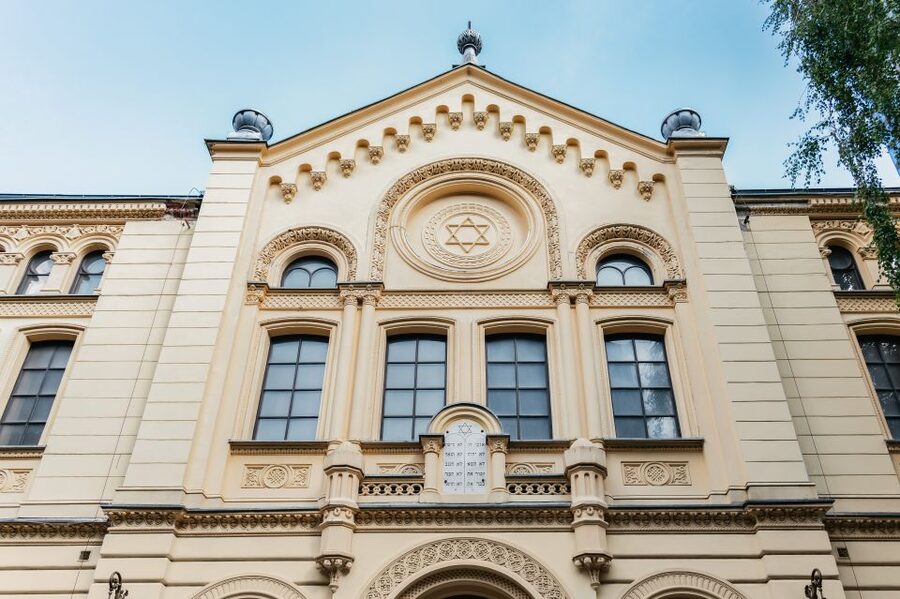
Warsaw history hits hard, up close. This private Warsaw Ghetto walking tour takes you through the story of creation, liquidation, and the 1943 uprising, using real streets and surviving traces where the Nazi plan was carried out. You also stop at the only Warsaw synagogue that survived the Second World War and is still operating.
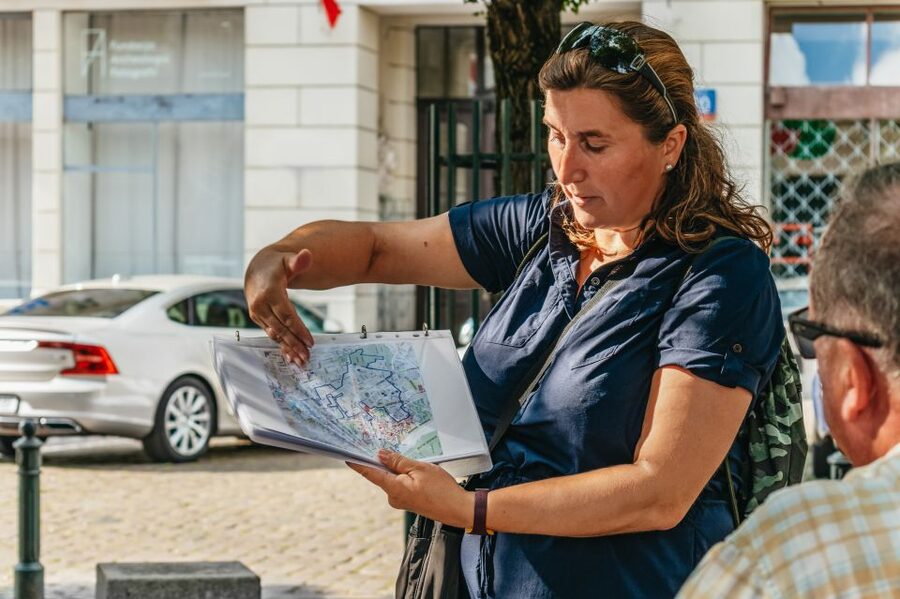
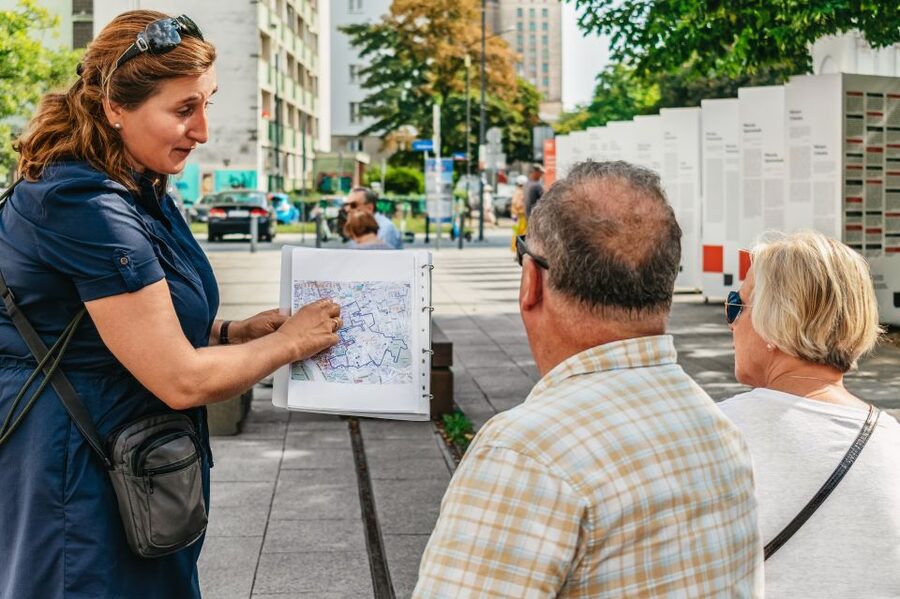
Two things I really like: first, the way the guide ties what you see on the ground to the larger timeline, including the symbolism of Umschlagplatz, the collection point. Second, the focus on physical remnants like fragments of ghetto walls and the last street of the ghetto, so the history feels grounded, not abstract. Guides such as Marzena (and other PolinTours guides) are praised for pacing, stopping often, and using maps and older photos to help you compare then and now.
One consideration: this is an intense, heavy subject and it is not suitable for children under 14 or people with mobility impairments. It also involves a walking pace, plus you need to budget for the synagogue entrance donation fee separately.
In This Review
- Key Highlights You Should Know Before You Go
- Entering the Story at Prozna Street
- Warsaw Before the Ghetto: A City Where Jews Were 30 Percent
- How the Ghetto Was Created in the Heart of the City
- What You See: Wall Fragments and the Last Street
- Umschlagplatz: The Collection Point With a Specific Purpose
- The Warsaw Ghetto Uprising: Why Resistance Took Shape
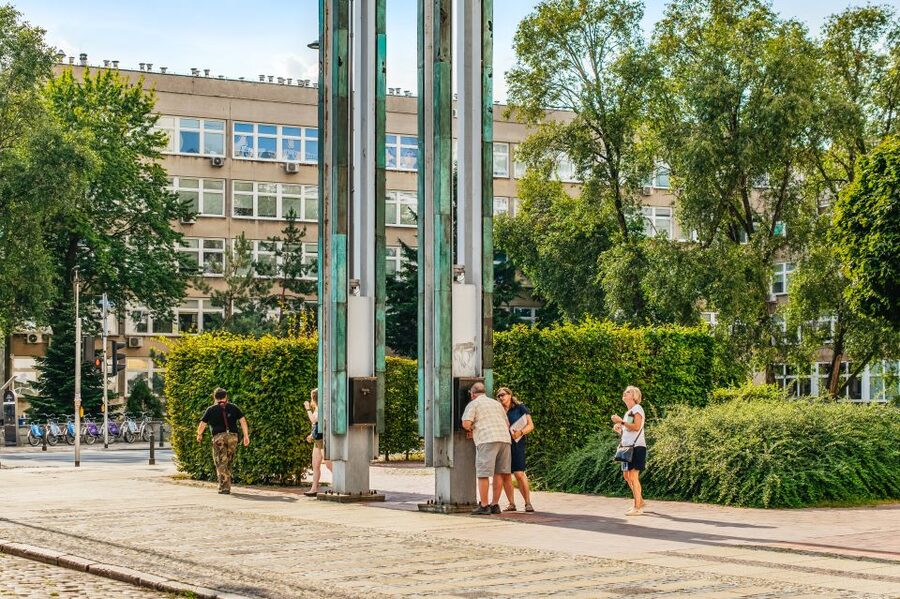
- Monument to the Ghetto Heroes: Remembering Without Turning It Into a Stop
- The Only Surviving Synagogue Still in Operation
- The Names That Come Up: Władysław Szpilman
- Who Your Guide Is, and Why That Changes Everything
- Timing, Pacing, and What You Need on Your Feet
- Price, Value, and What You Are Actually Buying
- Is This Tour Right for You?
- Should You Book This Warsaw Ghetto Private Walking Tour?
- FAQ
- What is the duration of the Warsaw Ghetto Private Walking Tour?
- Where does the tour meet?
- Which languages are offered?
- Is hotel pickup included?
- Do I need to pay anything at the synagogue?
- Is the tour suitable for children or limited mobility?
Key Highlights You Should Know Before You Go
- A tight 3-hour route focused on the ghetto’s key turning points, from establishment to liquidation and uprising
- Umschlagplatz explained clearly, including why it matters and how the process worked
- Real remnants like wall fragments and the last street of the ghetto, not just plaques and general descriptions
- The surviving synagogue in Warsaw, still active, plus a required entrance donation
- Guides who bring materials like maps and older photos to connect current streets with wartime Warsaw
Further Jewish heritage and ghetto routes documented in Warsaw
- Warsaw: POLIN Museum of the History of Polish Jews Ticket
★ 4.7 · 1,142 reviews - Warsaw: Warsaw Ghetto Private Walking Tour with Hotel Pickup
★ 4.9 · 369 reviews - Warsaw: Jewish History Guided Walking Tour in English
★ 4.7 · 324 reviews - Private Tour: Warsaw’s Jewish Heritage by Retro Fiat
★ 5.0 · 208 reviews
Entering the Story at Prozna Street
Your tour starts at Prozna st. 9, between Bistro Charlotte Menora and Strefa Restaurant. Look for the guide holding a PolinTours sign. If you picked the optional hotel pickup, you will be transferred by car, but you should still know this meeting point in case you need a quick backup.
This is not a sightseeing loop. It is a guided walk through a part of Warsaw where the city’s Jewish life was erased fast, and the physical geography of the ghetto played a major role in how that happened.
Warsaw Before the Ghetto: A City Where Jews Were 30 Percent
To understand the ghetto, you need the baseline. Before the Second World War, Warsaw had the second largest Jewish community in the world. Jews made up about 30 percent of the city’s population, and you feel that context shift as the tour moves from “there were thriving communities” to “in less than three years, the community was gone.”
The guide does this in a practical way. You are not asked to memorize dates like a homework assignment. Instead, the narrative connects prewar life to what the Nazis did next, helping you understand why the destruction was not random. It was engineered.
How the Ghetto Was Created in the Heart of the City
In 1940, the Nazis established the ghetto in the heart of Warsaw. The numbers matter here, because they show the design. More than 400,000 Jews from Warsaw and nearby areas were crammed into about 4 square kilometers.
That is where the tour becomes very real. You are walking streets that now look ordinary, but you are learning how those streets and blocks were converted into a sealed system. The guide also covers what followed: around 100,000 people died inside the ghetto from exhaustion, hunger, and disease. Then the killing accelerated even further, with more than 300,000 sent to the extermination camp at Treblinka.
I like that the tour does not throw you only the biggest numbers and leave you there. It explains how the Nazis carried out policy on the ground, step by step, and why the ghetto was a mechanism, not a single event.
What You See: Wall Fragments and the Last Street
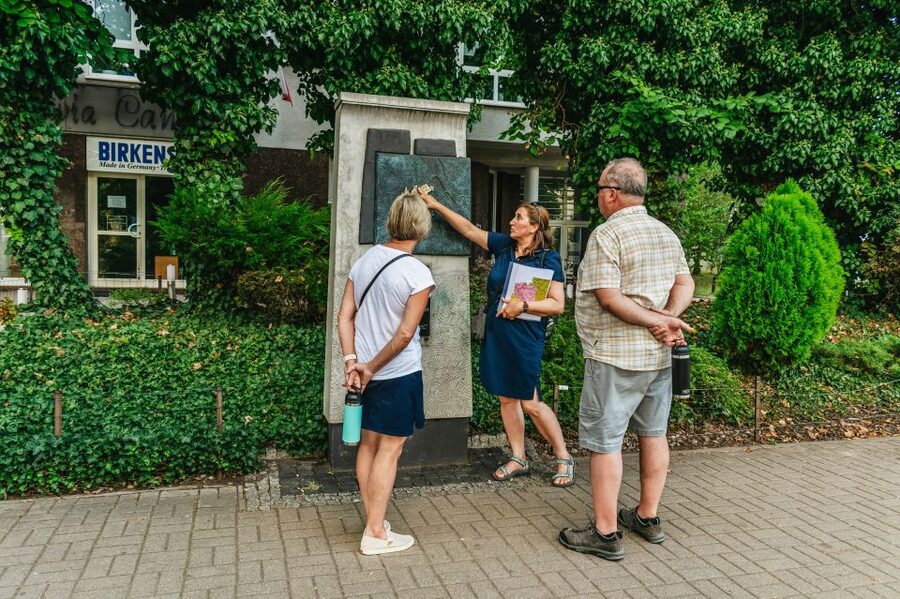
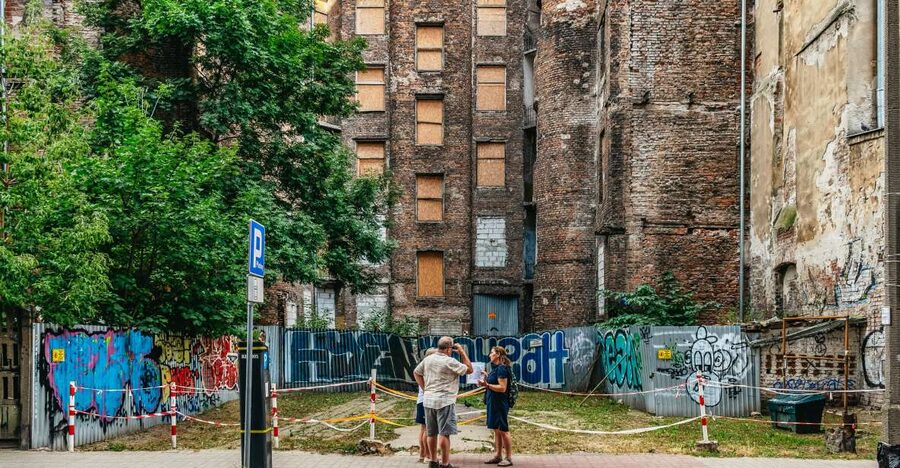
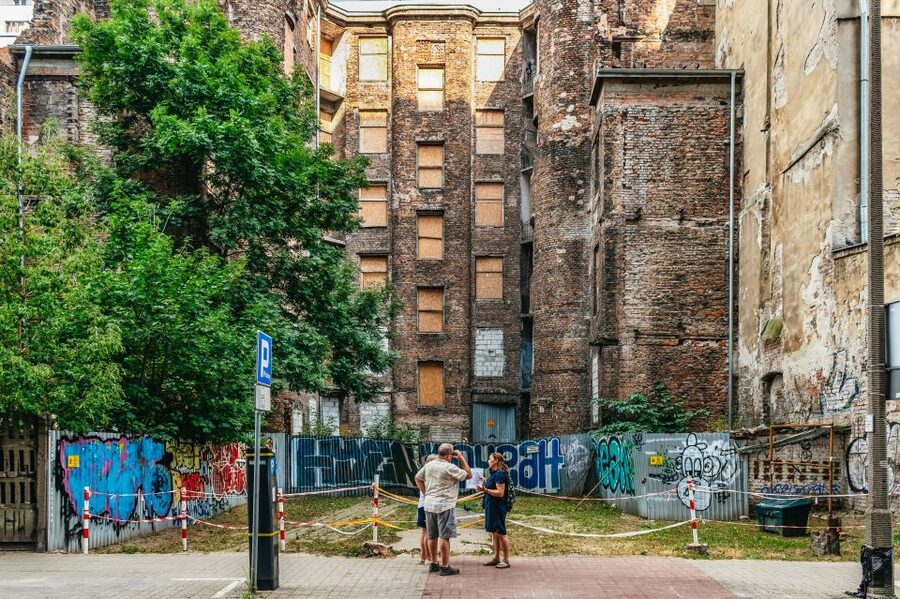
One of the most compelling parts is the tour’s attention to place. You explore fragments of ghetto walls and the last street of the ghetto, along with other areas located within the ghetto boundaries.
Why this matters for you: when you see surviving remnants, your brain stops thinking of the Holocaust as something far away in time. You start noticing how streets, corners, and building lines channel movement. And that helps you understand why the Nazis could control, isolate, and transport people with brutal efficiency.
It also helps that the guide brings visual support. Many guests praise guides like Marzena for using maps and older photos to compare wartime layout to today’s Warsaw. That “then and now” contrast is one of the best ways to make sense of a neighborhood that has been rebuilt.
Warsaw rebuilt itself twice over. Here is how else we saw it
- Warsaw: Chopin Concert in the Old Town★ 4.8 · 2,287 reviews
- Warsaw: Traditional Galar Cruise on The Vistula River★ 4.6 · 1,640 reviews
- Warsaw: Old Town Highlights Walking Tour in English★ 4.7 · 1,516 reviews
- Warsaw Concert: Chopin – Painted by Candlelights with Wine★ 4.8 · 1,442 reviews
- Warsaw: City Sightseeing Hop-On Hop-Off Bus Tour★ 3.6 · 1,415 reviews
Umschlagplatz: The Collection Point With a Specific Purpose
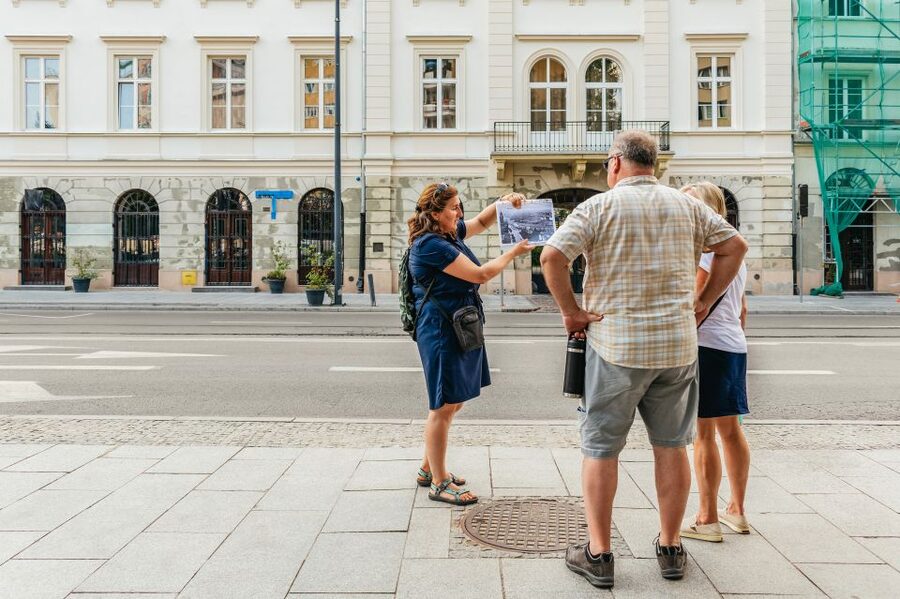
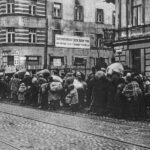
Next comes Umschlagplatz, the collection point. The tour looks at the symbolism and the function of this place, and it explains how the supposed logic of destruction was put into action.
This is one of those stops where the guide’s job is hard, and the difference between a good and an average tour shows. You need clarity, not vague moralizing. You want to understand the machinery: how people were gathered, processed, and moved.
The tour also connects this to the broader story of the “final solution.” The phrase gets used a lot in textbooks, but on this walk you learn how it was operationalized through real locations and real procedures, not just an ideology.
The Warsaw Ghetto Uprising: Why Resistance Took Shape
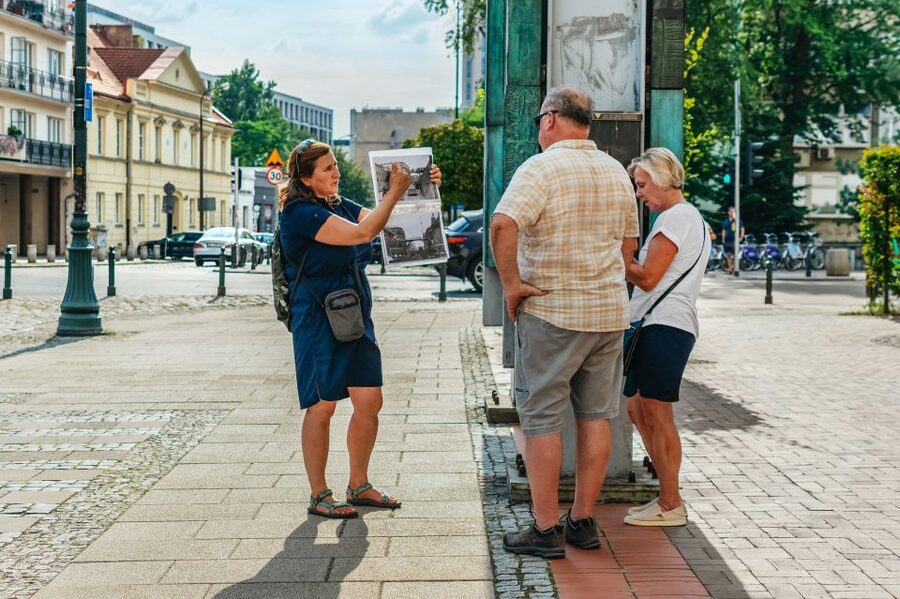
Then the narrative turns to 1943 and the Warsaw Ghetto Uprising. You learn that the attempt to liquidate the ghetto was met with armed resistance, even though the odds were horrific.
You are told clearly what happened: the unequal struggle between the rebels and German troops lasted nearly one month, and in revenge, the Nazis completely destroyed the ghetto. That detail is not included to shock you. It is included because it explains the stakes behind every decision the uprising forced people to make.
The tour also frames this in human terms. It covers everyday life in the ghetto, why people took up arms, and who helped them. This is where the word “heroic” becomes more than a label. You get the sense of why resistance happened when survival was already being crushed.
Monument to the Ghetto Heroes: Remembering Without Turning It Into a Stop
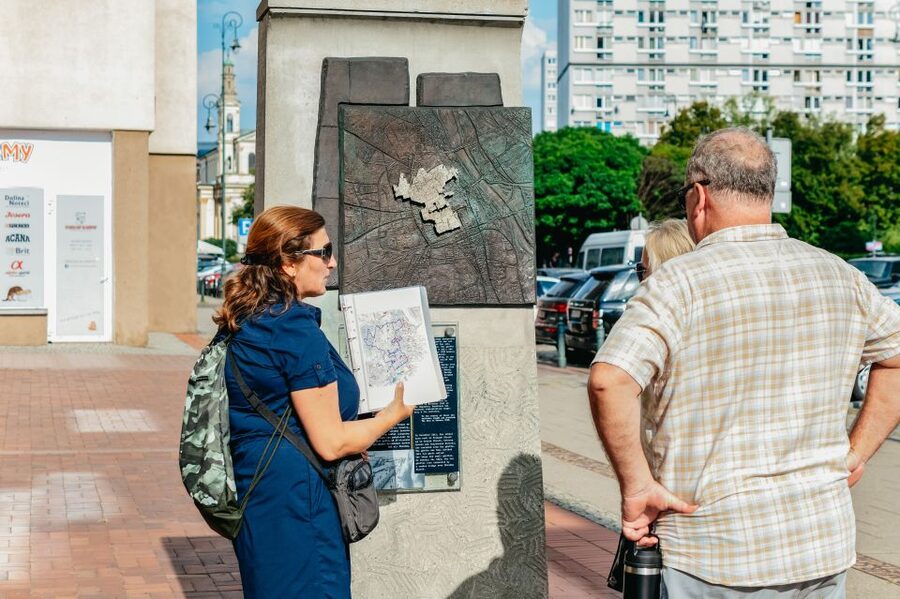
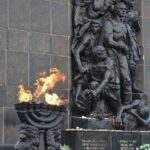
You also visit the Monument to the Ghetto Heroes. Moments like this can feel formal or even touristy on some itineraries. Here, the monument works best as a hinge in the story, pointing you from what happened on the ground to how Warsaw remembers it.
I recommend treating it like a pause, not a photo moment. Spend the extra minute letting what you have just walked through settle. If you are the reflective type, this will land harder than expected.
The Only Surviving Synagogue Still in Operation
One of the most concrete “you are really here” experiences is the synagogue stop. The tour takes you to the only synagogue in Warsaw that survived the Second World War and is still in operation.
This matters for two reasons. First, survival is rare for this period, so it creates a rare thread through the wreckage. Second, being in a working place of worship changes your physical experience of the story. It is not a memorial set behind glass. It is a living institution.
Plan for the entrance fee: you will need to pay 20 PLN (listed also as about 5 EUR or 5 USD) for the synagogue. Donations for the synagogue are not included in the tour price, so bring cash. Comfortable timing helps here too, because the synagogue stop is part of the flow, not a rushed add-on.
The Names That Come Up: Władysław Szpilman
The tour brings in the story of Władysław Szpilman, who survived and later became known through The Pianist by Roman Polanski. You learn about his place in the larger context, not as a celebrity footnote, but as a reminder that survival and survival stories exist because life was being targeted, not because it was an abstract tragedy.
This also gives you a useful way to understand the aftermath. The ghetto no longer existed after the Nazis destroyed it, yet people still had to live with what remained, including those who survived and those who tried to rebuild.
Who Your Guide Is, and Why That Changes Everything
This tour lives or dies by the guide. The praise is consistent: guides are repeatedly described as able to keep people engaged for the full three hours, answer questions in a grounded way, and use real materials like photos and maps to explain locations and changes.
Marzena comes up often in the strongest reviews, with guests highlighting her ability to build the story chronologically while linking it to where you physically stand. Other names show up as well, like Mary and Eva, suggesting different guides may lead your group. Regardless of which guide you get, look for these skills:
- a clear timeline
- frequent check-ins for questions
- visual support that matches what you see outside
If you like asking “why” and “how,” you will likely appreciate this setup. Private groups make that easier, and the tour is designed around explanation, not speed.
Timing, Pacing, and What You Need on Your Feet
The tour lasts 3 hours. That is long enough to cover the major phases of the ghetto story, and short enough that you are not trapped in a lecture marathon.
You should expect walking, and even with car transport included, your shoes are doing the heavy work. Bring comfortable shoes first. Add a hat or head covering, and if you have a kippah, bring it too. Sunscreen helps, because Warsaw weather can flip fast, and there is limited shade when you are outside moving between locations.
Also, bring cash for the synagogue entrance fee. The tour materials include a city plan and information booklets, so you are not walking blind, but cash is still essential.
One more practical note: oversize luggage is not allowed, and large bags are not a fit for this experience. If you are traveling light already, you are good. If not, you may want to rethink what you bring on the day.
Price, Value, and What You Are Actually Buying
At $84 per person, this is not a budget stroll. It is a focused, private historical experience built around a licensed guide, transportation by car, city plan and information booklets, and hotel pickup and drop-off (pickup is optional).
Here is the value logic that matters to you: you are paying for concentrated access to specific places and expert interpretation that you would struggle to piece together accurately on your own. The tour covers a brutal chronology with real locations: ghetto creation in 1940, mass death inside the ghetto, Treblinka deportations, Umschlagplatz, the uprising in 1943, and the destruction of the ghetto afterward.
Then there are the extras. The synagogue entrance fee (20 PLN) is not included, and food and drinks are not included either. So your true day cost includes that entry fee and whatever you choose to eat before or after.
If you want the ghetto story explained in a structured way, with a guide who can answer questions and point to exact places, this price starts to make sense. If you only want a quick overview and you are comfortable reading on your own, you might decide it is more than you need.
Is This Tour Right for You?
This tour suits you if:
- you are visiting Warsaw with the goal of understanding WWII history in place
- you want a guided timeline connected to what you can see today
- you like asking questions and getting straight answers
- you want to pair this with more museum time afterward, since the story is linked to the sites that many people visit next
It is not a good fit if:
- you need mobility-friendly routes. The tour is not suitable for people with mobility impairments.
- you are traveling with kids under 14.
And be honest with yourself about emotional load. This is a story of persecution, mass death, and resistance under impossible conditions. You should go in with respect and readiness.
Should You Book This Warsaw Ghetto Private Walking Tour?
If your Warsaw trip has room for one history-heavy activity that deserves your attention, I think you should book this private tour. The strongest asset is the way it connects the ghetto’s real geography with the timeline of creation, liquidation, Umschlagplatz, and uprising. You are not just looking at sites, you are learning how they fit together.
Just plan smart. Wear comfortable shoes, bring a head covering, carry cash for the synagogue entrance, and do not treat it like a casual walk. If you are ready for serious history and you want it explained clearly with strong guidance, this is a very worthwhile use of your time.
FAQ
What is the duration of the Warsaw Ghetto Private Walking Tour?
The tour lasts 3 hours.
Where does the tour meet?
The meeting point is Prozna st. 9, between Bistro Charlotte Menora and Strefa Restaurant. Look for the guide holding a PolinTours sign.
Which languages are offered?
The live guide is available in English and German.
Is hotel pickup included?
Hotel pickup is optional. If you are not using pickup, meet at the Prozna st. 9 meeting point.
Do I need to pay anything at the synagogue?
Yes. The synagogue entrance donation is not included, and you should expect to pay 20 PLN (about 5 EUR or 5 USD).
Is the tour suitable for children or limited mobility?
No. It is not suitable for children under 14, and it is not suitable for people with mobility impairments.
More Tour Reviews in Warsaw




Warsaw, Keep Looking
Jewish Heritage and Ghetto Routes in Warsaw
Recently written up around Warsaw


More Jewish Heritage and Ghetto Tours.
 ★ 4.7Schindler’s Factory & Ghetto Guided TourFrom $571,694 reviews
 ★ 4.9Jewish Quarter and Former Ghetto TourFrom $191,441 reviews
 ★ 4.9Bike Tour of Old Town, Jewish Quarter and the GhettoFrom $371,155 reviews
 ★ 4.7POLIN Museum of the History of Polish Jews TicketFrom $121,142 reviews
 ★ 4.8Kazimierz, Schindler’s Factory & Ghetto Guided TourFrom $81460 reviews
 ★ 5.0Full Bike Tour – the Old Town, Jewish Qtr & the Ghetto NEW BIKESFrom $35437 reviews
 ★ 4.9Bike Tour of the Old Town, Kazimierz, and the GhettoFrom $26350 reviews
 ★ 4.6Jewish Ghetto Walking TourFrom $11349 reviews
Also on these Poland lists