
REVIEW · JEWISH HERITAGE AND GHETTO TOURS
Private Tour: Warsaw’s Jewish Heritage by Retro Fiat
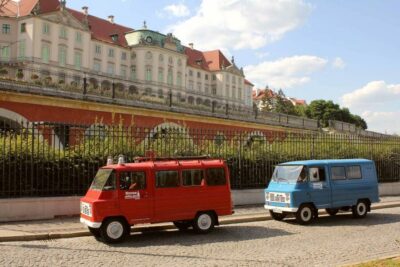
Warsaw’s Jewish past hits different from a vintage Fiat. This private 4-hour tour strings together key spots tied to the Jewish community, from the wartime ghetto to sites still standing today, with hotel pickup and a driver-guide at your side. You roll through history in a Retro Fiat 125p with private tour access, so you can ask questions as you go.
What I really liked is the way the guide handles the story, not just the stops. I’ve seen guides like Alex, Alec, Max, Konrad, Karol, Marcin, and Martin called out for clear English, strong pacing, and fitting the route to what you want to see.
One thing to plan around: timing matters. Nożyk Synagogue and the Jewish Cemetery are closed from Friday evening through all of Saturday, and starting later in the day can mean you might not be able to enter those sites.
In This Review
- Key things that make this tour worth your time
- Why a Retro Fiat works so well for Warsaw’s Jewish Heritage
- Starting at Palace of Culture and Science, then building a clear timeline
- Fragment of the Ghetto Wall and Chłodna Street: memory built into stone
- Muranów’s Large Ghetto area and the Ghetto Heroes Monument
- POLIN Museum: outside views now, entry decision later
- The route includes Treblinka departure history and uprising memorials
- Nożyk Synagogue: the one that survived, and the opening-hour trap
- Jewish Cemetery: when the numbers become personal
- Price and value: what you are paying for at $108.28 per person
- Practical tips that make the tour go smoothly
- Who this tour is for
- Should you book Warsaw’s Jewish Heritage by Retro Fiat?
- FAQ
- How long is the Warsaw Jewish Heritage tour?
- Is hotel pickup and drop-off included?
- Is this tour private?
- What vehicle do you use?
- What language is the tour offered in?
- Are entrance fees included for Nożyk Synagogue, the cemetery, or POLIN Museum?
- When are Nożyk Synagogue and the Jewish Cemetery closed?
- Is free cancellation available?
Key things that make this tour worth your time
- Retro Fiat 125p streetside experience: you get real city time, plus an instantly memorable ride.
- Hotel pickup and drop-off: fewer logistics headaches, more time looking at what matters.
- Private driver-guide control: ask about The Pianist filming locations or your own family interests.
- Major Warsaw Jewish landmarks in one loop: ghetto wall fragments, Muranów, monument stops, Nożyk Synagogue, and the cemetery.
- Optional add-on at POLIN: see the museum from the outside, then choose whether to visit.
- Vehicle choice for bigger groups: for groups of 4-plus, you may ride in a vintage minivan instead of the Fiat.
Further Jewish heritage and ghetto routes documented in Warsaw
- Warsaw: POLIN Museum of the History of Polish Jews Ticket
★ 4.7 · 1,142 reviews - Warsaw: Warsaw Ghetto Private Walking Tour with Hotel Pickup
★ 4.9 · 369 reviews - Warsaw: Jewish History Guided Walking Tour in English
★ 4.7 · 324 reviews - Private Tour: Warsaw’s Jewish Heritage by Retro Fiat
★ 5.0 · 208 reviews
Why a Retro Fiat works so well for Warsaw’s Jewish Heritage
Warsaw can be a lot to process. You’re looking at layered history, hard facts, and streets that have changed names and meanings over time. A private tour helps because you are not trying to piece everything together on your own while also navigating an emotionally heavy route.
The Retro Fiat 125p adds a practical bonus: it slows you down just enough to pay attention. You see buildings and street details that you might skip if you’re speeding between metro stops. And because your guide is with you the whole time, the story stays coherent from start to finish, instead of turning into a set of separate random monuments.
The other big win is the private format. When guides like Karol or Marcin give answers in clear English, you’re not just collecting facts, you’re building a timeline you can carry with you after the tour ends.
Starting at Palace of Culture and Science, then building a clear timeline
Your tour begins at the Palace of Culture and Science area (Plac Defilad), and you can choose pickup from your hotel lobby or meet in front of the building, if you are within the city-center pickup area. Then you are returned to your starting point when the tour wraps up.
This matters because your day has a shape. You start by seeing the physical reminders of the ghetto, then move through areas tied to community life, wartime changes, and key memorial sites. The tour is built so you don’t just see what happened, you understand where it happened and why those places still matter.
You can also tell the guide what you care about. One useful trick: if you are a fan of The Pianist, bring that interest up early. A private driver-guide can point out film-related Warsaw locations as you pass them, which helps the city feel less abstract.
Fragment of the Ghetto Wall and Chłodna Street: memory built into stone
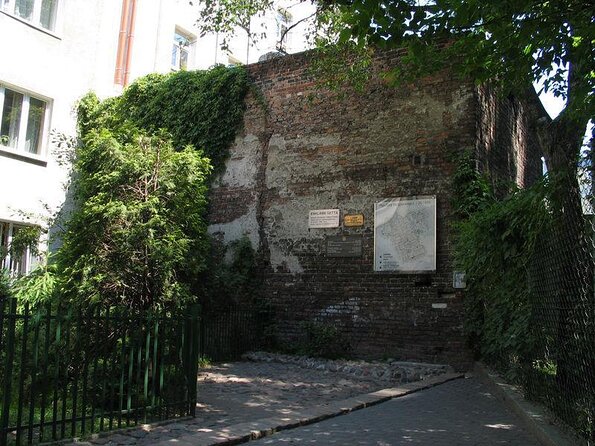
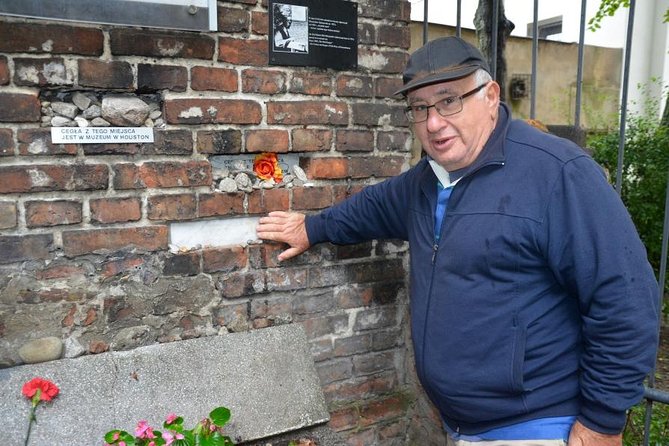
The first stop is a fragment of the Ghetto Wall with commemorative plaques. This is not a museum setting. It is the kind of site that makes the past feel painfully close because you are standing at a piece of something that once literally divided people from safety.
From there, you head to Chłodna Street for a short stop focused on smaller but meaningful details, including the Footbridge of Memory and the building where Adam Czerniaków lived. That name matters in Warsaw Jewish history, and the guide can explain why it shows up in this part of the city.
Two practical notes for this section:
- It is short, so pay attention to what the guide is saying during the drive and right when you stop. The best context often comes in the moments before you take photos.
- Wear comfortable shoes. Even when stops are brief, this is a walk-and-look style of sightseeing.
Muranów’s Large Ghetto area and the Ghetto Heroes Monument
Next comes Warsaw’s ghetto area in Muranów, often referred to as the former Large Ghetto. Today, parts of the area are redeveloped with modern buildings and street art. That contrast can be hard, but it is also valuable. You get to see how a place can be transformed while still holding layers you cannot fully erase.
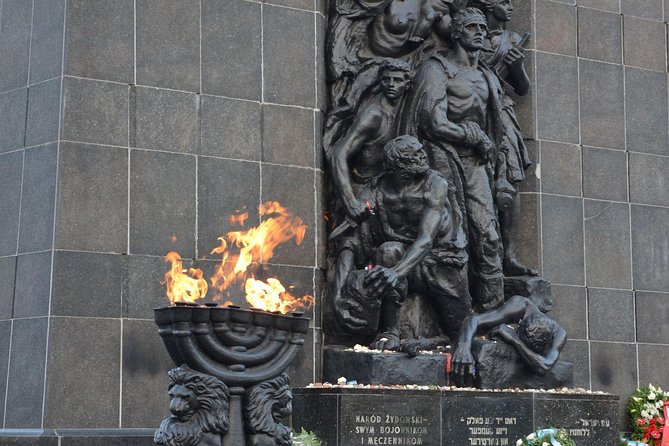
Then you move to the Ghetto Heroes Monument, honoring the Warsaw Ghetto Uprising of 1943. This is one of those stops where the guide’s tone can make a difference. You want someone who can explain the uprising clearly without rushing past the human cost.
This section is often the emotional core of the tour. If you prefer a paced, respectful approach, a private format is ideal because your guide can slow down when you need a moment.
Warsaw rebuilt itself twice over. Here is how else we saw it
- Warsaw: Chopin Concert in the Old Town★ 4.8 · 2,287 reviews
- Warsaw: Traditional Galar Cruise on The Vistula River★ 4.6 · 1,640 reviews
- Warsaw: Old Town Highlights Walking Tour in English★ 4.7 · 1,516 reviews
- Warsaw Concert: Chopin – Painted by Candlelights with Wine★ 4.8 · 1,442 reviews
- Warsaw: City Sightseeing Hop-On Hop-Off Bus Tour★ 3.6 · 1,415 reviews
POLIN Museum: outside views now, entry decision later
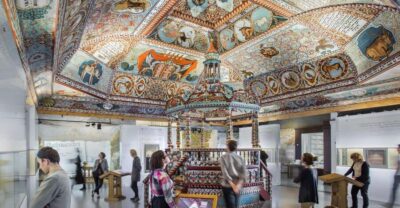
You will see POLIN Museum of the History of Polish Jews from the outside. If you want to go in, you can, but museum entry is not included. The guide can also leave you at the museum after the tour if you choose to extend your visit.
This is a smart setup for most people. POLIN is a major museum, and a private ghetto-focused tour can easily become too much if you try to force a full museum day into a 4-hour window. By seeing it first from outside, you get the big picture. Then you decide based on your energy level and interest.
If you are tight on time, treat the outside stop as your planning shortcut: it tells you what kind of museum experience POLIN offers, so you can decide if it deserves a separate block of time.
The route includes Treblinka departure history and uprising memorials
Between the major anchor stops, the itinerary includes additional moments that are easy to miss if you are self-guiding. You pass by or stop at:
- the departure point to Treblinka extermination camp, including the gas chambers context as part of the historical explanation
- a memorial for those who committed group suicide during the Ghetto Uprising
- a street that survived from both sides in the broader ghetto area
These are brief stops, but they are not filler. They connect wartime decisions to real geography, and they help explain how the ghetto story ended, not just how it began.
Because these points are heavy, the value of a guided route becomes clear. You are not just looking at signage. You are getting the context that turns locations into meaning.
Nożyk Synagogue: the one that survived, and the opening-hour trap
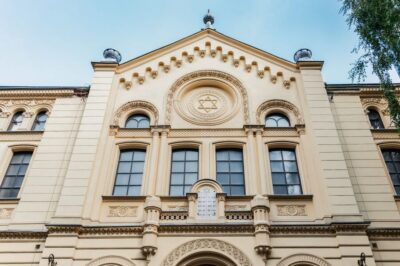
One of the biggest “wow, this is still here” moments is Nożyk Synagogue. It is described as the only surviving prewar Jewish house of prayer in Warsaw, and today it is still an active place of worship.
You get time to step inside for about 30 minutes, but there are two important constraints:
- You may need to cover your head at some Jewish sites.
- The synagogue is closed from Friday evening through Saturday due to Sabbath.
There’s another practical consideration based on real-world scheduling issues: if you book a late start time, double-check whether you can enter. The tour runs about 4 hours, so late-afternoon pickups can push you toward times when entry may not work out. If Nożyk is a top priority, a morning or earlier afternoon tour is a safer bet.
Jewish Cemetery: when the numbers become personal
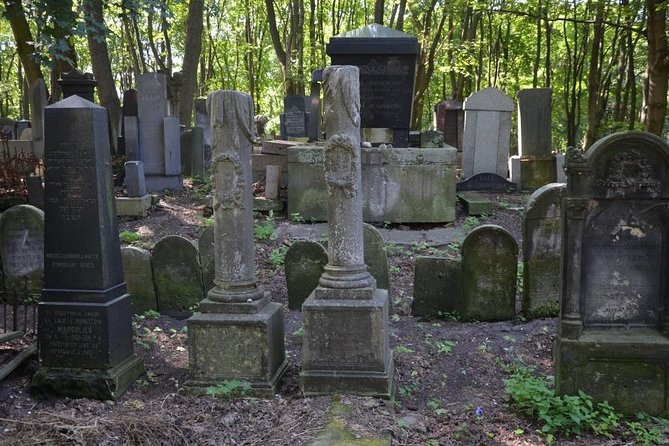
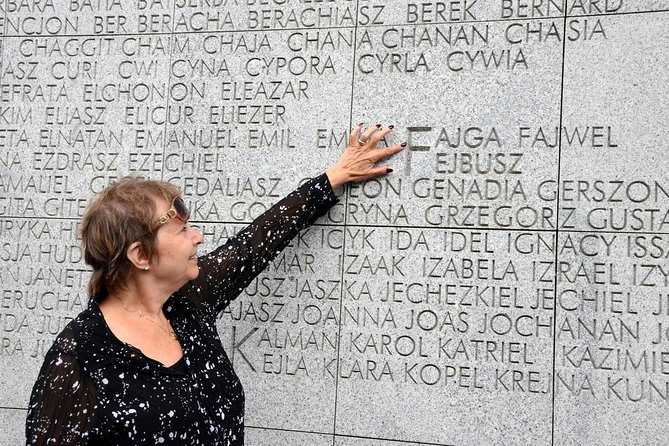
The final major cultural stop is the Jewish Cemetery (Cmentarz Zydowski). The tour highlights graves of over 200,000 people, including spiritual and political leaders, creators of Jewish culture, and thousands of nameless victims. It is also noted that multiple generations of Jewish Warsaw residents are buried there.
This part of the tour is usually quieter, slower, and more reflective. Even with only about 30 minutes, it can feel long because the place pulls you into stillness. You are not just seeing a memorial. You are walking through a landscape of remembrance.
And again, timing matters:
- The cemetery is closed from Friday evening through Saturday due to Sabbath.
- Admission is not included.
If you want maximum impact, give yourself a little buffer afterwards for processing. The cemetery can reorder how you think about the ghetto period, because it shows continuity and loss in the same breath.
Price and value: what you are paying for at $108.28 per person
At $108.28 per person for about 4 hours, this is not a budget “see a few buildings” outing. You are paying for:
- private transport in a Retro Fiat 125p (or a vintage minivan for groups of 4-plus)
- hotel pickup and drop-off
- a driver-guide who gives in-depth explanations at multiple stops
That mix is the real value. If you tried to replicate this on your own, you’d lose time managing transit, you’d miss context between stops, and you’d probably spend extra money on separate entrances and museum planning.
Also, the tour is structured for one consistent story arc. That coherence is worth something. It helps you leave Warsaw with a timeline that makes sense, instead of a photo set with no threads connecting them.
If you are traveling as a couple or small group, private often feels “costly but fair” because you spread the guide and pickup across fewer people. If you are traveling with a group of 4-plus, the vehicle may change, but the format stays private, which keeps the experience focused.
Practical tips that make the tour go smoothly
Here are the details that help you have an easier, more meaningful day.
Bring head covering
Some Jewish sites require you to cover your head. If you forget, you might still be able to manage, but don’t gamble. A simple scarf, hat, or light cover is the easiest solution.
Expect a respectful, heavy theme
This is Jewish heritage through the ages, including Nazi occupation danger and ghetto destruction. You’ll see memorials tied to tragedy. Keep your expectations honest: it is educational, but it is also emotionally intense.
Wear shoes for short walks
Even stops listed as 10 to 30 minutes can add up to several small walks and pauses. Comfortable footwear helps.
Ask about tailoring early
Because it is private, you can mention what you want emphasized. If film history matters to you, bring up The Pianist. If you have family connections, ask how the guide recommends connecting family memories to place.
If you want synagogue and cemetery entry, plan your timing
Nożyk Synagogue and the Jewish Cemetery close from Friday evening through Saturday. If you are booking for those days, you may need an alternate plan. If you are booking a late-day slot, confirm entry timing so you are not disappointed when the day’s schedule runs out.
Who this tour is for
This is a strong fit if you:
- want Warsaw’s Jewish history explained with a clear timeline, not just building names
- prefer a private guide who can answer questions in real time
- care about both wartime sites and living Jewish heritage, like Nożyk Synagogue
It is also a good choice if you like “see, then understand.” The route uses short stops, then ties them together, so you don’t have to process everything alone.
If you want a light, purely scenic city tour, this is probably not your vibe. But if you want respectful, guided context in the places where the story actually happened, it hits the mark.
Should you book Warsaw’s Jewish Heritage by Retro Fiat?
Yes, if you want the practical benefits of a private guide with the memorable experience of riding through Warsaw in a Retro Fiat while visiting the key Jewish heritage sites in one focused loop. The route makes the city’s history legible, and the best guides, like Karol or Marcin, are praised for exactly that kind of clarity and care.
Just do yourself a favor and check timing carefully for Nożyk Synagogue and the Jewish Cemetery. Pick a day and start time that gives you enough room for entry, especially if those are priorities.
FAQ
How long is the Warsaw Jewish Heritage tour?
It runs about 4 hours.
Is hotel pickup and drop-off included?
Yes. Hotel pickup and drop-off are included, and the guide will meet you in your hotel lobby or in front of the Palace of Culture and Science if you are not in the pickup area.
Is this tour private?
Yes. It is a private tour, and only your group participates.
What vehicle do you use?
You ride in a private retro Fiat 125p. For groups of 4-plus, you are driven in a vintage minivan.
What language is the tour offered in?
The tour is offered in English.
Are entrance fees included for Nożyk Synagogue, the cemetery, or POLIN Museum?
No. Entrance to Nożyk Synagogue and the Jewish Cemetery is not included. POLIN Museum entry is also not included, though the guide can leave you there after the tour if you want to visit.
When are Nożyk Synagogue and the Jewish Cemetery closed?
They are closed from Friday evening through Saturday due to Sabbath.
Is free cancellation available?
Yes. You can cancel up to 24 hours in advance for a full refund.
Vintage Rides Around Warsaw



Warsaw, Keep Looking




Jewish Heritage and Ghetto Routes in Warsaw

Recently written up around Warsaw


More Jewish Heritage and Ghetto Tours.
 ★ 4.7Schindler’s Factory & Ghetto Guided TourFrom $571,694 reviews
 ★ 4.9Jewish Quarter and Former Ghetto TourFrom $191,441 reviews
 ★ 4.9Bike Tour of Old Town, Jewish Quarter and the GhettoFrom $371,155 reviews
 ★ 4.7POLIN Museum of the History of Polish Jews TicketFrom $121,142 reviews
 ★ 4.8Kazimierz, Schindler’s Factory & Ghetto Guided TourFrom $81460 reviews
 ★ 5.0Full Bike Tour – the Old Town, Jewish Qtr & the Ghetto NEW BIKESFrom $35437 reviews
 ★ 4.9Warsaw Ghetto Private Walking Tour with Hotel PickupFrom $84369 reviews
 ★ 4.9Bike Tour of the Old Town, Kazimierz, and the GhettoFrom $26350 reviews
Also on these Poland lists