
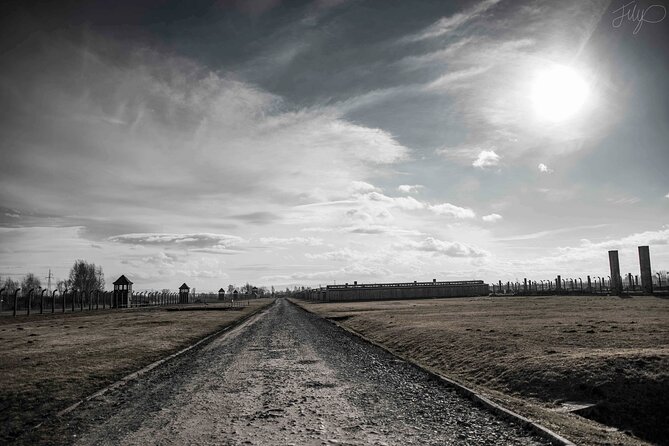
REVIEW · AUSCHWITZ-BIRKENAU MEMORIAL TOURS
Auschwitz-Birkenau: Entry Ticket with Guided Tour
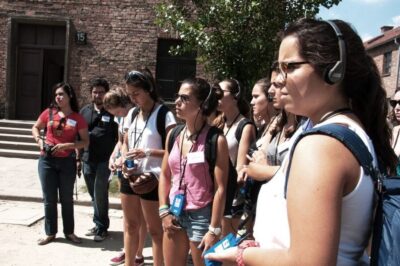
Auschwitz hits fast, and you need context. This guided entry tour takes you to Auschwitz I and Auschwitz II (Birkenau), with a live guide and the admission ticket built in, so you are not stuck figuring things out on your own. I like the straightforward structure, and I like that your time is handled for you in a group capped at 30. One drawback to plan for is that the start time is only confirmed 1 to 2 days before, and it can shift.
Here’s the basic shape of your day: a 3 to 4 hour visit at the former Nazi camps, with most of the focus on the memorial and museum areas. The operator also warns that timings can change last minute due to venue requirements, so you should keep the rest of your schedule flexible.
Because this is a place of mass suffering and remembrance, you should dress modestly, and you’ll also face a strict carry-in rule. Bags and backpacks must be no bigger than 30 x 20 x 10 cm (about an A4 sheet), so pack light.
In This Review
- Key Things You’ll Notice on This Auschwitz-Birkenau Guided Entry Tour
- Auschwitz-Birkenau Entry With a Guided Tour: What Your $52.25 Buys
- Ticket-Plus-Guide Value: Why a Live Guide Helps Here
- Planning Your Day: Start-Time Changes, Group Cap, and Real-World Timing
- First Stop: Auschwitz I Museum and Memorial, Guided in English
- Auschwitz II (Birkenau): How the Second Camp Area Changes What You Think You Know
- How Long It Really Takes: 3 to 4 Hours, Moderate Pace, Limited Linger Time
- What to Pack and Wear: Modest Dress and the A4-Size Bag Rule
- Languages: Private Tour Options and a Live Guide
- Transportation and Getting There From Oswiecim
- The Biggest Planning Risks: Start-Time Shifts and Meeting-Point Confusion
- Should You Book This Auschwitz-Birkenau Guided Entry Tour?
- FAQ
- How long is the Auschwitz-Birkenau entry with a guided tour?
- What is included in the tour price?
- What languages are available for the guide?
- How far in advance should I book?
- What bag size is allowed?
- Is this tour refundable if I cancel?
Key Things You’ll Notice on This Auschwitz-Birkenau Guided Entry Tour
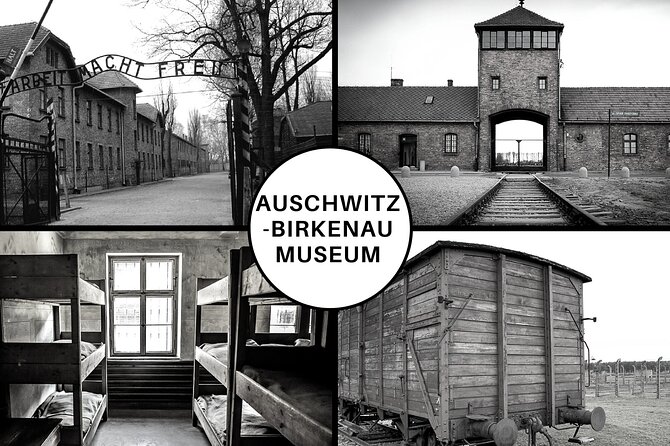
- Ticket included: you do not need to hunt for entry paperwork.
- Live professional guide: explanations help you understand what you are seeing.
- Auschwitz I and Auschwitz II: you cover both former camp areas in one outing.
- Small group size: maximum 30 travelers means it stays manageable.
- Start time confirmed later: expect your exact time to be confirmed 1 to 2 days in advance.
- Strict bag size and modest dress: plan for security rules before you leave home.
Other Auschwitz-Birkenau visits we have reviewed, with entry and transport noted
- Auschwitz-Birkenau: Guided Tour and Skip-The-Line Ticket
★ 4.4 · 215 reviews - Auschwitz-Birkenau: Museum Entry Ticket with Guided Tour
★ 4.2 · 146 reviews - Auschwitz & Birkenau Live Guide Tour Entrance Ticket
★ 4.0 · 110 reviews - Auschwitz-Birkenau: Entry Ticket with Guided Tour
★ 4.5 · 105 reviews
Auschwitz-Birkenau Entry With a Guided Tour: What Your $52.25 Buys
For $52.25 per person, you are paying for two big things: a guided visit and the entry ticket. In a place like Auschwitz-Birkenau, that combination is not a luxury. It is practical. The site is structured, rules are real, and the meaning behind what you see can be hard to piece together without help.
This also tends to be good value because the visit is set up for about 3 to 4 hours. You are not paying for a long day with a lot of waiting. You are paying for focused time with a guide, which matters when your brain and emotions are already working overtime.
One more reason the price can feel fair: the tour is run by Legendary Krakow, and it offers private tours in up to 20 languages. Even if you choose English, the availability means you are more likely to find a match for your group’s language needs.
Ticket-Plus-Guide Value: Why a Live Guide Helps Here
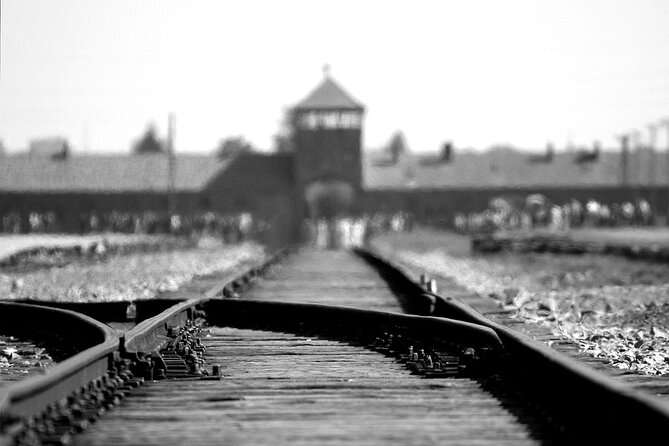
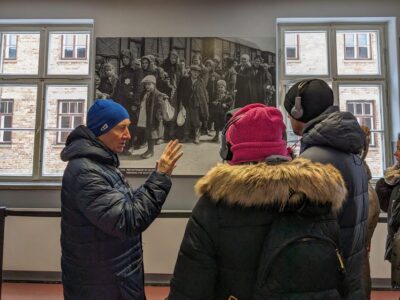
A guided Auschwitz-Birkenau visit is not about adding facts. It is about giving you a map for interpretation while you are standing in the place itself. A professional guide can help you connect the dots between what you see in Auschwitz I and what you later encounter at Auschwitz II (Birkenau).
It also removes a lot of friction. You start with a guided plan instead of trying to guess where to go first, how to behave, or how long certain sections take. The operator includes the admission ticket, so you are not juggling separate purchases or arrival timing for entry.
And because the guide is live, you can ask for clarification on the spot. That matters when you see something that looks confusing or when you want help understanding why certain objects or areas are significant.
Planning Your Day: Start-Time Changes, Group Cap, and Real-World Timing
This tour runs from Oswiecim, Poland, and it can be a smooth day, but you should plan for the timing realities.
Your start time is listed as an approximate time. The exact starting time is confirmed 1 to 2 days before the tour, and the operator notes it can shift last minute due to venue requirements. That means you should not lock in a tight connection right after the tour ends.
The group size is capped at 30 travelers. That is fairly small for a site this large, and it usually helps with pacing. It also means you will have a better chance of staying together if the route changes.
One planning tip that has come up for others: the meeting point details can be tricky. If you get a GPS pin that seems to point inside the museum area, treat that as a clue, not gospel. Security and ticket checks can mean you cannot meet exactly where a map pin lands. Arrive a little early, read your instructions carefully, and be ready to follow the staff directions when you get there.
First Stop: Auschwitz I Museum and Memorial, Guided in English
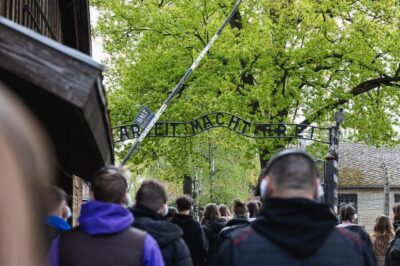
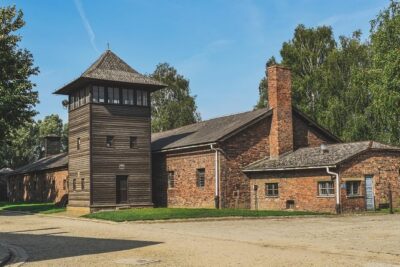
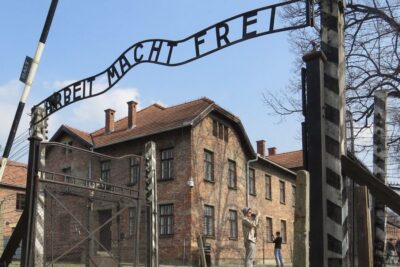
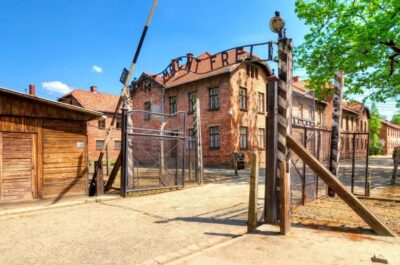
The visit begins at the memorial and museum areas of Auschwitz-Birkenau, focusing first on Auschwitz I. This portion is guided in English with a live guide, and it includes your admission ticket.
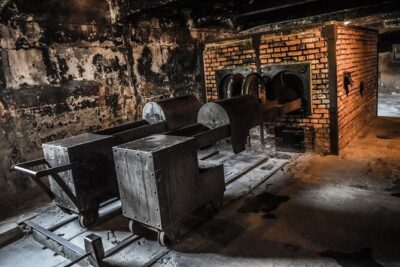
Auschwitz I is often where you build your baseline understanding. Even if you already know the basics, the site can feel overwhelming because it is not one single “moment.” It is an organized set of spaces that ask you to look at how the camp functioned and how it was built.
What I like about this first stop is the logic of it. A guided introduction helps you interpret what you are seeing before you move to Birkenau, where the scale can feel even harder to process.
The drawback is emotional. You cannot “speed-run” this section. If you get exhausted quickly, this first stop may take more out of you than you expect. Plan for a slower mental pace than a normal museum day.
Below are the other Oswiecim trips we have logged
- Auschwitz-Birkenau – Skip the Line Tickets★ 3.5 · 29 reviews
- Auschwitz-Birkenau: Fast-Track Ticket & Guided Tour No Transfers★ 3.5 · 17 reviews
Auschwitz II (Birkenau): How the Second Camp Area Changes What You Think You Know
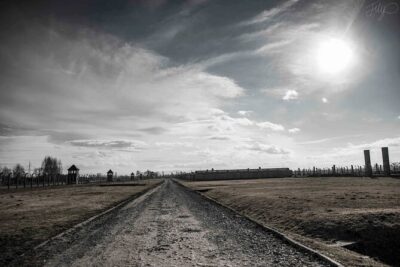
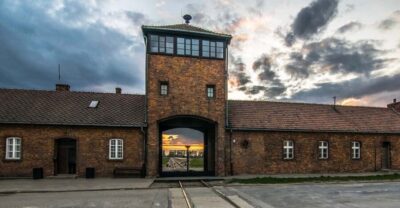
After Auschwitz I, the tour continues to Auschwitz II (Birkenau), the other former camp area included in this experience. Even though the timing is still part of the same 3 to 4 hour window, the feeling of the visit can shift.
Birkenau can be difficult because it can read like “space” more than “exhibits.” You may find yourself processing scale and layout while a guide frames what it meant during the war. That framing is the key reason to keep the tour guided rather than self-paced.
What to watch for on this part of the tour is understanding, not “photos.” Look for what your guide points out and focus on the explanations that connect different parts of the site. If you spend your energy on trying to capture the perfect picture, you will miss the point of what the guide is doing for you.
Also, keep your expectations grounded. You are touring a memorial site, not browsing at your leisure. You may be asked to follow the group route and the timing of the visit.
How Long It Really Takes: 3 to 4 Hours, Moderate Pace, Limited Linger Time
The tour runs about 3 to 4 hours. That is a reasonable window for a guided visit that includes both Auschwitz I and Auschwitz II, but it is still a long stretch of standing, walking, and absorbing heavy material.
The operator asks for moderate physical fitness. That does not mean you need athletic ability, but you should be comfortable with walking for hours and moving between sections.
A practical approach: plan footwear like you would for a long day in any major museum complex. Also, do not plan a “back-to-back” activity afterward unless your schedule is forgiving. Your body may be fine, but your mind might not be.
What to Pack and Wear: Modest Dress and the A4-Size Bag Rule
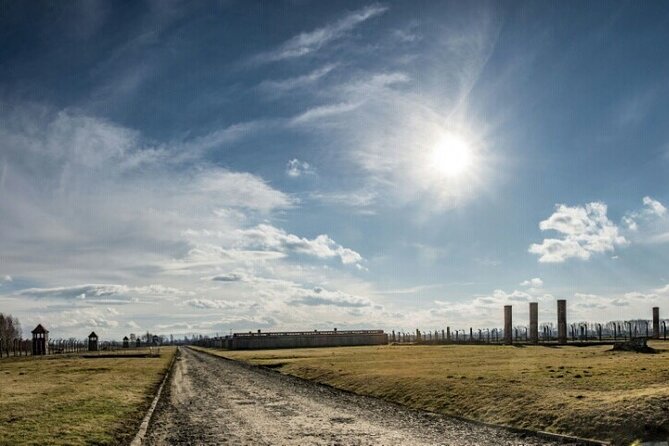
You will want to take packing seriously for this tour. The site requires that your luggage or bag or purse or backpack be no larger than 30 x 20 x 10 cm, about the size of an A4 sheet.
That is not a small suggestion. It shapes what you can bring, and it affects how easily you move. If you normally travel with a larger daypack, you may need to switch to a smaller bag or use a wallet-friendly approach.
Dress also matters. The operator expects modest clothing due to the character of the place. In practice, I treat that as: cover up more than you would for a typical city day. Bring layers if the weather is cool, because staying comfortable helps you pay attention to the guide instead of worrying about your clothes.
Finally, bring only what you truly need, because you may be restricted from carrying larger items and you do not want that stress in the middle of your visit.
Languages: Private Tour Options and a Live Guide
This experience offers private tours in 20 languages. That includes English, Italian, French, Spanish, German, Russian, Czech, Slovak, Croatian, Greek, Hebrew, Japanese, Korean, Dutch, Romanian, Serbian, Swedish, Ukrainian, Hungarian, and Polish.
Even though this particular listing highlights the tour being guided in English, the larger point for you is that the operator is set up to support multiple language needs through the live guide format.
If you are traveling with someone who reads English comfortably but prefers another language, it can be worth checking language options during booking. Understanding the guide’s wording helps you follow the flow between Auschwitz I and Auschwitz II.
Transportation and Getting There From Oswiecim
This tour is noted as being near public transportation. That is helpful because you can avoid complex parking logistics and rely on local options.
Still, because start times are confirmed later, I recommend you plan your route with some buffer. If you are relying on transit, it is better to arrive early and wait than to rush and end up stressed during entry.
The Biggest Planning Risks: Start-Time Shifts and Meeting-Point Confusion
The most common practical issue with this kind of tour is not the content. It is coordination.
First, the tour’s start time is approximate, and the exact time is confirmed 1 to 2 days before. If your travel plans are rigid, you might get squeezed. Keep at least some flexibility in the rest of your day.
Second, meeting-point instructions can be confusing if a GPS pin appears to land you inside areas that require security checks first. Plan to arrive a bit early and follow what staff indicates once you are at the site, not what a map pin might suggest.
Third, timings may change last minute due to venue requirements. The operator flags that possibility. That is not something to fear, but it is something to plan around.
And if you are thinking about canceling: this experience is non-refundable and cannot be changed. So double-check your date before you book, especially if your itinerary is still moving around.
Should You Book This Auschwitz-Birkenau Guided Entry Tour?
Yes, if you want a structured, guided way to cover Auschwitz I and Auschwitz II with the ticket included and a live guide in English. I think the value is strongest for visitors who want clarity and context while standing in a place that is too heavy to treat like a normal attraction.
You might skip or rethink if:
- your schedule cannot absorb a possible start-time change
- you have trouble meeting strict bag and modest dress rules
- you prefer absolute self-direction and zero waiting (this tour is built for guided pacing)
If you do book, the smartest move is simple: pack small, dress modest, and treat the confirmation message as the real start time, not the listed one. Arrive a little early, because you will be glad you did when security and meeting logistics slow things down.
FAQ
How long is the Auschwitz-Birkenau entry with a guided tour?
The duration is about 3 to 4 hours.
What is included in the tour price?
The price includes a professional guide and the admission ticket.
What languages are available for the guide?
Private tours are offered in 20 languages, including English, Italian, French, Spanish, German, Russian, Czech, Slovak, and many others.
How far in advance should I book?
On average, this tour is booked about 24 days in advance, and booking with plenty of time is strongly recommended.
What bag size is allowed?
Bags and backpacks must not exceed 30 x 20 x 10 cm (about A4 size).
Is this tour refundable if I cancel?
No. This experience is non-refundable and cannot be changed for any reason.
More Tours in Oswiecim




More Tour Reviews in Oswiecim
Auschwitz-Birkenau: Other Reviewed Visits
Recently written up around Oswiecim

More Auschwitz-Birkenau Memorial Tours.
 ★ 4.5Auschwitz-Birkenau Guided Tour & Hotel PickupFrom $2133,358 reviews
★ 4.5Auschwitz-Birkenau Guided Tour & Hotel PickupFrom $2129,340 reviews
 ★ 4.5Auschwitz Guided Tour with Optional Hotel PickupFrom $6915,280 reviews
 ★ 4.5Auschwitz-Birkenau Guided Tour with Pickup & LunchFrom $219,800 reviews
 ★ 4.5Auschwitz-Birkenau Guided Tour Pickup/Lunch OptionsFrom $2009,057 reviews
 ★ 4.7Auschwitz-Birkenau and Salt Mine Guided TourFrom $549,020 reviews
 ★ 5.0Krakow to Auschwitz Birkenau Guided Tour with Transfer and TicketFrom $368,197 reviews
 ★ 4.0Auschwitz Birkenau Tour with TransferFrom $216,134 reviews
Also on these Poland lists