
REVIEW · GDANSK OLD TOWN TOURS
Bike Tour Gdansk – Standard
Pedal through Gdańsk’s key turning points. This short bike tour gives you a fast, friendly overview of the city at an easy pace, guided by a local who can tailor stops to what you care about most. I especially love how the route strings together famous sights with Solidarity-era history, and how you get real context instead of just names on a sign.
The main thing to keep in mind is that it is only about 2 hours, so each stop is brief. You will get highlights and explanations, but this is not a slow, museum-day kind of tour.
In This Review
- Key highlights at a glance
- Why this Gdańsk bike tour feels like a smart first day
- Meeting point and how to plan your timing
- Stop 1: Długa Street and Neptune’s Fountain without the overwhelm
- Stop 2: St. Mary’s Church, where art and the astronomy clock steal the show
- Stop 3: Europejskie Centrum Solidarności and the story you should understand
- Stop 4: The Gdańsk Shipyard and the Solidarity movement context
- Stop 5: Museum of the Second World War, a short but necessary taste
- Stop 6: Golden Gate (Złota Brama) and its allegorical statues
- Stop 7: Wyspa Spichrzów, the rebuilt heart of the Old Town
- Stop 8: Kladka nad Motławą na Ołowiankę, if it is open
- Stop 9: The Crane, a defining Gdańsk symbol
- Stop 10: Green Gate (Brama Zielona) and the path toward Green Bridge
- What makes the guide factor so important here
- How this fits your travel style
- Price and value, is $43.05 a fair deal?
- Should you book Bike Tour Gdansk Standard?
- FAQ
- How long is the Bike Tour Gdansk Standard?
- How much does the tour cost per person?
- Where does the tour start and end?
- Is it a private tour?
- Is there a mobile ticket?
- What is included at St. Mary’s Church?
- Which stops include admission tickets?
- Are there stops that do not include admission?
- What weather conditions does the tour require?
- What is the cancellation policy?
Key highlights at a glance
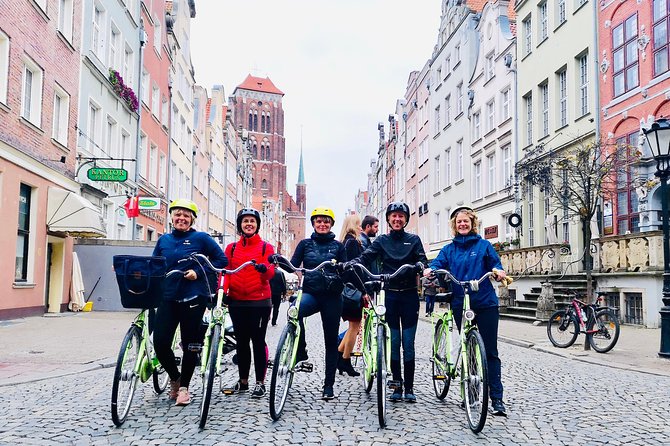
- Local-led route with customization so you can steer toward history, landmarks, or both
- St. Mary’s Church stop with major art and clocks included in the experience time
- Solidarity landmarks explained clearly at places tied to the 1980s movement
- A practical, relaxed way to see the Old Town core without walking everywhere
- Photo-friendly timing built around short, efficient stops at icons
Gdansk repeats itself well. The other versions we reviewed
- Gdańsk City Sights & History Guided Walking Tour in English
★ 4.8 · 876 reviews - Gdansk: Firearm Shooting Experience with Instructor
★ 4.8 · 866 reviews - Gdansk: Guided Round-Trip Cruise to Westerplatte
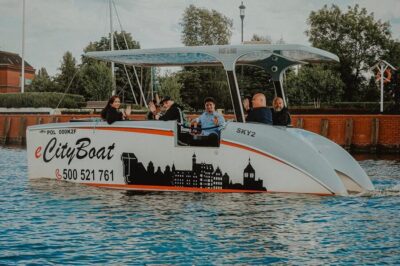
★ 4.3 · 865 reviews - Gdańsk: Sightseeing EcoCruise around the Old Town of Gdansk
★ 4.6 · 719 reviews
Why this Gdańsk bike tour feels like a smart first day
If you have only a day in Gdańsk, you need two things: quick orientation and meaningful context. This tour nails both by moving you by bike through the historic center while your guide explains what matters and why. It is a solid way to get your bearings fast, then decide what to revisit later.
I like that it feels intentionally paced. You are not sprinting from one viewpoint to the next. The schedule builds in time for you to look closely, take a few photos, and listen without feeling rushed. And because it is customizable, you can ask more questions where your interests land, instead of treating every stop the same.
Price is also refreshingly straightforward for a focused, guided experience. At $43.05 per person for about 2 hours, you are paying for a local guide plus access to some included sites. It is not a budget street-ride with no substance. It is a short, guided route that aims to maximize value in a small chunk of time.
Meeting point and how to plan your timing
You start at Kołodziejska 7, 80-836 Gdańsk, Poland and the ride ends back at the same spot. That matters because it keeps the logistics simple. You can show up, get your bike, and know you are not signing up for a one-way ending.
Since the tour is weather-dependent, I would plan around forecasts and keep your day flexible. Bike tours in old-city areas work best when roads are dry and visibility is good. If the day is wet, expect changes, because this experience requires good weather.
For a smooth start, arrive a few minutes early. You want time to get settled before you roll. And if you have a lot of photo plans later, do those after, not during the tour. The stops are short by design.
Stop 1: Długa Street and Neptune’s Fountain without the overwhelm
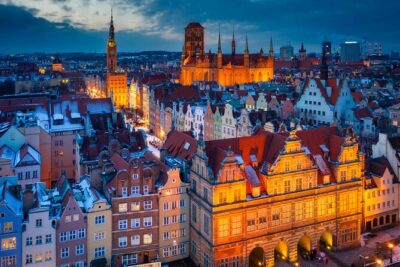
Your first moments are on Gdańsk’s Długa Street. This is one of those places where the city instantly looks like a postcard, but the guide keeps it grounded. You get Neptune’s Fountain and the area around the Town Hall right at the start, which is a great way to set the tone for the trip.
This opening stop is ideal if you want history without heavy commitment. You spend around 10 minutes, which is enough to get the key sights, ask one or two questions, and get comfortable with the route. If you are the type who hates walking big distances on day one, this quick intro is a relief.
Possible drawback: because it is early and brief, it is not the time to go deep on every detail. If you love fountains, facades, and architecture, save more time for a return visit later once you know where you want to linger.
Stop 2: St. Mary’s Church, where art and the astronomy clock steal the show
Next is St. Mary’s Church, and this is one of the strongest parts of the tour. Admission is included for this stop, and the visit focuses on specific highlights: Memling’s triptych The Last Judgment, the Beautiful Madonna sculpture, a basket chandelier from 1490, and the famous astronomical clock.
What makes this stop valuable is not just the big-name art. It is the variety in one place. You see painting, sculpture, and a clock tied to how people once measured time and meaning. The tour keeps the visit efficient, around 10 minutes, so you get the main takeaways without turning it into an all-afternoon church marathon.
One practical tip: arrive with a quick plan for what you want to notice. If you are drawn to the clock, let your guide know early so you can get the best orientation when you are inside. If you care more about the triptych, ask your guide what to look for first.
Below are the other Gdansk trips we have logged
- Gdansk Private Bike Tour★ 5.0 · 36 reviews
- Gdansk Private Bike Tour★ 5.0 · 21 reviews
- Sopot Private City Walking or Bike Tour with a local architect★ 5.0 · 19 reviews
- Bike Tour Gdansk – Standard★ 4.0 · 8 reviews
- Gdansk: City Highlights Guided Private Bike Tour★ 5.0 · 7 reviews
Stop 3: Europejskie Centrum Solidarności and the story you should understand
Then comes Europejskie Centrum Solidarności. This is where the tour shifts from “pretty monuments” to “why this city matters.” The stop is about the importance of this place for Polish people, and it is timed at about 10 minutes with admission included.
You will feel the difference immediately if you have any interest in modern European history. Gdańsk is not just scenic. It is tied to labor activism, political change, and the larger story of the fall of the communist system. The guide’s role here is crucial: they connect the dots so you do not leave with only vague impressions.
What I like about including this stop in a bike tour is the pacing. You get a meaningful landmark without needing a separate full-day museum plan. Even if the visit is short, you walk away with a framework you can use afterward.
Stop 4: The Gdańsk Shipyard and the Solidarity movement context
From the center of the story, you move to the Gdańsk Shipyard, where the explanation centers on why this shipyard gained international fame through the Solidarity movement and the collapse of the communist system. This stop is about 10 minutes, and admission is included.
This is one of those locations where the setting does some of the storytelling for you. The shipyard is physical proof that history happened in real places where work, organizing, and daily life intersected. If you have read a bit about Solidarity already, the tour helps you attach those facts to a specific geography.
If you prefer hands-on history, you might want to budget extra time later to return on your own. The tour gives you a strong overview, but a factory-history topic like this can reward deeper follow-up.
Stop 5: Museum of the Second World War, a short but necessary taste
You also stop at the Museum of the Second World War. Admission is not included for this stop, and the visit is short at around 5 minutes.
Treat this as a nudge. In a tight 2-hour tour, you are not meant to do the whole museum. But you do get the chance to see it, orient yourself in the area, and decide if it is a must for your schedule. If world-war history is a priority for you, this quick touchpoint can save you time deciding what to plan next.
If you are not into museums, it still helps to know what is nearby. Museums often feel intimidating when you arrive cold. A brief introduction makes it easier to choose later.
Stop 6: Golden Gate (Złota Brama) and its allegorical statues
Next is Golden Gate (Złota Brama), with about 5 minutes on the site and admission not included. This gate is decorated with allegorical statues representing peace, freedom, wealth, fame, piety, justice, and concord.
This stop is brief, but it is surprisingly meaningful. When you know what the statues represent, you start reading the gate like a message, not just a landmark. It connects to the broader themes you have been hearing about: freedom, justice, and political change.
If you like symbolism in architecture, you will enjoy this quick stop. If you want more time, you can always linger afterward once you have that interpretation.
Stop 7: Wyspa Spichrzów, the rebuilt heart of the Old Town
Then you reach Wyspa Spichrzów, described as the historical heart of Gdańsk that was destroyed during World War II. Admission is included, and the stop is about 5 minutes.
This is one of those moments that lands emotionally, even in a short stop. Knowing the site was destroyed and later rebuilt adds weight to what you see now. You are not just walking past attractive old warehouses. You are standing in a place tied to loss and recovery.
Practical note: because the time is short, focus on the big picture views your guide points out. If you want to read more or take longer photos, schedule a separate return later.
Stop 8: Kladka nad Motławą na Ołowiankę, if it is open
You also have a stop at Kladka nad Motławą na Ołowiankę. The key detail is simple: if it is open, you go. Admission is included, and the stop is around 5 minutes.
This is a smart inclusion for two reasons. First, it offers a different angle than the street-level views. Second, it breaks up the timeline with a quick practical crossing moment. It is the kind of stop that feels small but memorable because it changes your perspective.
The only consideration is the obvious one. If it is closed, your experience shifts slightly. That is normal for outdoor features that depend on current conditions.
Stop 9: The Crane, a defining Gdańsk symbol
Another icon you get to see is the Crane, one of Gdańsk’s defining symbols. The stop is about 5 minutes, and admission is not included.
This is a good quick stop for people who want at least one signature “only-in-Gdańsk” moment. The Crane works well on a bike tour because you can see it in context from nearby, rather than treating it as a standalone photo stop.
If you are a photographer, this is where I would slow down with your guide’s cues, not right at the start. Let the tour settle you first. Then take your shots when the route brings you closest.
Stop 10: Green Gate (Brama Zielona) and the path toward Green Bridge
You finish with Green Gate (Brama Zielona), about 5 minutes, admission not included. The gate leads to the Green Bridge.
This ending stop is useful because it gives you a final visual anchor. You can end the tour feeling like you have touched multiple eras of the city, from Old Town streets to major historical landmarks and back to iconic gates.
If you want one last photo on your own time, this is an easy place to use as a starting point. Knowing where the gate points helps you navigate afterward without guessing.
What makes the guide factor so important here
This tour is led by a local, and that is not a throwaway feature. A local guide changes how history feels. Instead of listing dates, they connect places to meaning, especially at the Solidarity-linked stops. The result is that the city starts to feel like a single story instead of separate monuments.
One of the most praised elements from past participants is exactly this: the bike ride plus history explained in a way that makes the Solidarność period in the 1980s easier to understand. If that topic interests you, this tour is a strong fit because it includes the key landmarks connected to it.
And because the tour is customizable, you can push for more time on whichever stop grabs you most. That flexibility matters, since people have different interests. Some will focus on church art, others on labor history, and others on architecture and gates.
How this fits your travel style
This experience works best if you want:
- A high-impact overview of Gdańsk in a short time
- A guided understanding of Solidarity-era context
- A low-stress way to see many landmarks without burning your legs on hills and long walks
It is less ideal if you want:
- Deep museum time, especially at the Museum of the Second World War
- A long list of fully independent exploration where you control every minute
- A slow, sit-down pace with long indoor visits at each stop
For most first-time visitors, this is a great “set the stage” tour. Then you can return on your own to the spots that call you back.
Price and value, is $43.05 a fair deal?
At $43.05 per person, you are paying for a structured, guided bike route in a compact time window. The value comes from two things: you get a local guide, and several meaningful stops include admission (like St. Mary’s Church, Europejskie Centrum Solidarności, Gdańsk Shipyard, Wyspa Spichrzów, and Kladka nad Motławą na Ołowiankę when open).
Some stops have admission not included, such as the areas tied to Długa Street highlights, the Museum of the Second World War, Golden Gate, Crane, and Green Gate. That is not automatically a bad thing. It keeps the tour from feeling like a ticket bundle. Instead, you decide if you want to pay for extra time later.
If you compare this to doing everything on your own without any guided context, the guide component is the main return on investment. You will feel it most at the Solidarity-related stops, where knowing what to look for changes your whole experience.
Should you book Bike Tour Gdansk Standard?
I would book it if you want a short, high-value day starter. The bike-friendly pace, local guiding, and especially the Solidarity-era storytelling make it more than just a sightseeing loop. It is also a good choice if you are traveling with limited time, want to reduce walking, and prefer your history explained with real place context.
Skip it or upgrade your expectations if you want long museum hours or you are planning to spend most of your day indoors. This tour gives highlights, not a full deep-dive. And if the weather looks iffy, be ready for a different date or a refund path.
If you are the kind of traveler who likes to see a city quickly, understand what you are looking at, and then choose what to explore next, this is a smart bet.
FAQ
How long is the Bike Tour Gdansk Standard?
The tour is approximately 2 hours.
How much does the tour cost per person?
The price is listed as $43.05 per person.
Where does the tour start and end?
The tour starts at Kołodziejska 7, 80-836 Gdańsk, Poland and ends back at the meeting point.
Is it a private tour?
Yes. Only your group will participate.
Is there a mobile ticket?
Yes, it includes a mobile ticket.
What is included at St. Mary’s Church?
St. Mary’s Church includes admission, and the key sights highlighted are Memling’s triptych The Last Judgment, the Beautiful Madonna sculpture, a basket chandelier from 1490, and the astronomical clock.
Which stops include admission tickets?
Admission tickets are included for St. Mary’s Church, Europejskie Centrum Solidarności, Gdańsk Shipyard, Wyspa Spichrzów, and Kladka nad Motławą na Ołowiankę (if open). Other listed stops specify admission not included.
Are there stops that do not include admission?
Yes. Stops such as the Długa Street area, Museum of the Second World War, Golden Gate, the Crane, and Green Gate note admission not included.
What weather conditions does the tour require?
It requires good weather. If canceled due to poor weather, you will be offered a different date or a full refund.
What is the cancellation policy?
Free cancellation is available up to 24 hours in advance for a full refund. If you cancel less than 24 hours before the start time, the amount paid is not refunded.
More Tours in Gdansk
More Tour Reviews in Gdansk

Gdansk, Three More Ways
Recently written up around Gdansk




More Gdansk Old Town Tours.
 ★ 4.8City Cruise on Historical Polish BoatFrom $222,913 reviews
 ★ 4.9Sunset Cruise on a Historic Polish BoatFrom $26977 reviews
 ★ 4.8Gdańsk City Sights & History Guided Walking Tour in EnglishFrom $26876 reviews
 ★ 4.8Firearm Shooting Experience with InstructorFrom $41866 reviews
 ★ 4.3Guided Round-Trip Cruise to WesterplatteFrom $33865 reviews
 ★ 4.6Sightseeing EcoCruise around the Old Town of GdanskFrom $19719 reviews
 ★ 5.0Main Town Gdańsk Walking TourFrom $26644 reviews
 ★ 5.0Gdansk Pub Crawl with Free DrinksFrom $21553 reviews
Also on these Poland lists