
REVIEW · GOLF CART AND ELECTRIC CAR TOURS
GDANSK City Tour by Golf Cart Live Guide & City Sightseeing 90min
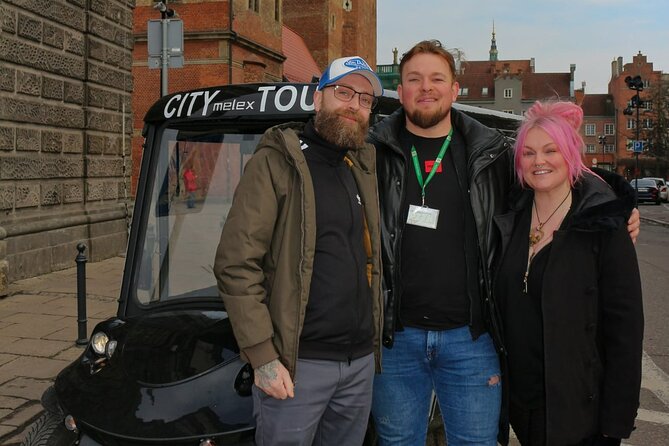
Gdansk moves fast on a golf cart. This 90-minute city loop is a smart way to see the main sights without burning time on long walks, and it comes with an English live guide who turns famous corners into a clear story. I especially like the stop rhythm, where you get quick looks at top landmarks like St. Mary’s Church and the Royal Chapel, and the open-air ride that keeps things lively. One thing to consider: most stops are brief, so if you want slow, deep visits inside museums and churches, this tour is more snapshot than full immersion.
What makes this tour feel worth your money is how many landmarks fit into one afternoon, while still keeping the vibe personal. I also like that pickup is offered and the meeting point is straightforward at Pocztowa, so you can plan your time in Gdansk without stress.
In This Review
- Key highlights to know before you go
- Why this golf cart tour works in Gdansk
- Price and time: what you’re really paying for
- The route: from Main Town Hall to shipyard-era Gdansk
- Stop 1: Main Town Hall, Museum of Gdańsk
- Stop 2: Dluga Street (including a WWII-survivor building)
- Stop 3: Katownia
- Stop 4: Golden Gate (Langgasser Tor)
- Passing moment: the city center shopping street
- Stop 5: Jan III Sobieski Monument
- Stop 6: Great Armoury (Wielka Zbrojownia)
- Stop 7: Hala Targowa Kupcow Dominikanskich
- Stop 8: St. Mary’s Church
- Stop 9: Royal Chapel (Kaplica Królewska)
- Passing moment: the very first lord of the city
- Stop 10: Zuraw miniatura (harbor crane)
- Stop 11: Motława River Embankment (Długie Pobrzeże)
- Stop 12: St. Bridget’s Church, Solidarity beginnings, and amber art
- Stop 13: The Great Mill
- Stop 14: Ratusz Starego Miasta
- Stop 15: Gdansk Shipyard
- Stop 16: Wałowa
- Guides, pacing, and that golf cart feel
- Weather, festivals, and why flexibility helps
- How to get the most out of the quick stops
- Who this tour suits best
- Should you book this golf cart tour of Gdańsk?
- FAQ
- How long is the Gdańsk City Tour by golf cart?
- What does it cost per person?
- Is the tour private?
- Is pickup included, and where do we meet?
- Is there a live guide, and is English available?
- Is there a mobile ticket?
- Are entrance fees included for the stops?
- What is included in the tour price?
- Are tips included?
- What if the weather is bad?
Key highlights to know before you go
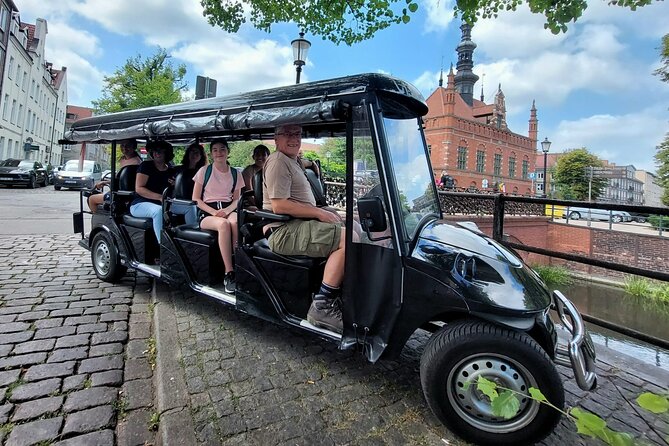
- Golf cart access for narrow streets, so you can get closer to sights than bigger buses can
- English live guiding with local stories that connect the dots across medieval, WWII, and modern Solidarity-era Gdansk
- Many quick, free-entry photo stops (most listed sights have free admission for the stop time)
- St. Bridget’s Church visit is included, including the amber art focus and the Solidarity connection
- Big-hits spread across the center and waterfront, from the Golden Gate to the old harbor crane and shipyard
Gdansk repeats itself well. The other versions we reviewed
- Gdańsk City Sights & History Guided Walking Tour in English
★ 4.8 · 876 reviews - Gdansk: Firearm Shooting Experience with Instructor
★ 4.8 · 866 reviews - Gdansk: Guided Round-Trip Cruise to Westerplatte
★ 4.3 · 865 reviews - Gdańsk: Sightseeing EcoCruise around the Old Town of Gdansk
★ 4.6 · 719 reviews
Why this golf cart tour works in Gdansk
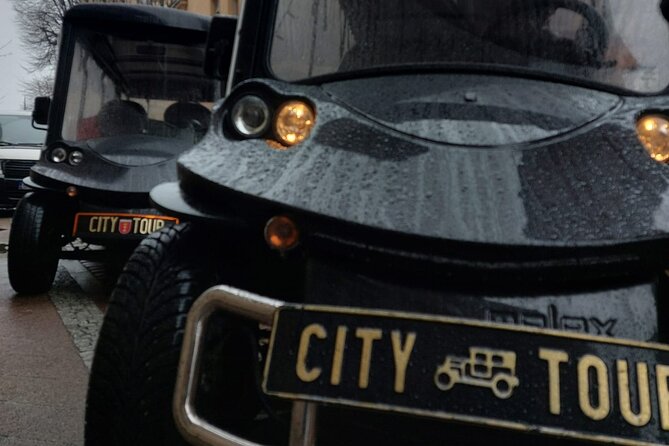
Gdansk is one of those cities where the important places are close together, but the streets can be tight, old, and full of turns. A golf cart tour is a practical fix. You get that “city in motion” feeling, and you can still pause at the right spots. In plain terms, it helps you get your bearings fast while staying comfortable.
I also like how the tour is built around what most first-time visitors actually need. You start in the Old Town core, you hit major landmarks along the Royal Route style area, and then you move toward the Motława River and the shipyard side. The structure is efficient, not random.
The other big plus is the guide style. Across the experience, you’ll see a strong theme: the guide isn’t just reciting dates. For example, guides such as Maciej, Robert, and Michael, nicknamed the Professor, are described as bringing personal stories and a genuine love for the city into the ride. That’s what turns a quick stop into something you remember, even if you only spend minutes there.
Price and time: what you’re really paying for
At about $38.87 per person for roughly 1 to 2 hours, you’re paying for four things: transportation, a live English guide, included fees, and the ability to cover a lot of ground without navigating yourself. Because it’s a private tour for your group, it also feels less crowded than a large group bus tour, and your guide can adapt your pace slightly.
You should also know how the time is used. Many stops are listed at 5 minutes, with a few longer ones such as St. Bridget’s Church and parts of the waterfront. That does not mean the sights are unimportant. It means the tour is designed for orientation and key viewpoints. If your goal is to see the highlights and understand what they mean, this format is a strong value.
Where you might feel the tradeoff: if you want to sit through long museum exhibits or take your time reading everything in a church, you’ll probably want to return on your own after the tour. Think of this as your “first pass,” then you decide what deserves a second visit.
The route: from Main Town Hall to shipyard-era Gdansk
This tour follows a clear storyline. It moves through the Old Town center, touches on WWII scars and surviving architecture, then shifts to the port and shipyard world, including the Solidarity connection.
Stop 1: Main Town Hall, Museum of Gdańsk
You begin at the Main Town Hall and Museum of Gdańsk. The draw here is the setting: it’s on the Royal Route area, and you get a short window to take in the architecture. Admission is listed as free for the stop time, so you can focus on the exterior look and the sense of place without feeling like you must commit to a full museum visit.
Practical tip: take a few photos first, then spend your minutes looking at details. With a stop this short, you’ll get more from choosing one or two features to study than trying to see everything at once.
If the walking is the problem, these rolled-through reviews help
- Gdansk: City Sightseeing Tour by Golf Cart/Buggy Guided Tour★ 4.9 · 510 reviews
- Gdansk: Shared or Private City Tour Sightseeing By Golf Cart★ 4.8 · 233 reviews
- Gdańsk: City Sightseeing Tour by Buggy/Golf Cart LIVE GUIDED 1H★ 5.0 · 208 reviews
- Gdansk: Private Top City Tour by Electric Cart & Live Guided★ 4.9 · 114 reviews
- Gdansk: 2H City Sightseeing Tour LIVE GUIDED by Buggy/Golf cart★ 5.0 · 89 reviews
Stop 2: Dluga Street (including a WWII-survivor building)
Next is Dluga Street, one of the main historic corridors. The tour’s note here is specific: you’ll see houses that look like they did before 1945, plus the one building that survived WWII. It’s a quick stop, but it lands the city’s big story in a tangible way.
Why it matters: Gdańsk’s history isn’t only on plaques. It shows up in what remained, what was rebuilt, and what the street still communicates even today.
Stop 3: Katownia
Katownia is next, and this stop is darker by design. You’ll admire the old tortured house and the prison tower. Even with limited time, the point is clear: this is where the tour acknowledges how difficult life could be in the past.
Consideration: if your group prefers only uplifting stops, you may want to mentally prepare for this one. It’s still part of the city’s full picture.
Stop 4: Golden Gate (Langgasser Tor)
Then you hit Langgasser Tor, also known as the Golden Gate. This is tied to Dluga Street and is presented as the representative gate leading into the street. Gates like this matter in city tours because they’re a visual anchor, a natural point to orient yourself.
Quick photo idea: stand back for one shot that includes the approach, then move closer for one shot with the gate details. That’s the best use of a short stop.
Passing moment: the city center shopping street
You also pass the biggest shopping area in the city center. This is more of a moving “sightline” moment than a stop you’ll explore. If you’re hungry or you want souvenirs later, note what it feels like so you can find it again after the tour.
Stop 5: Jan III Sobieski Monument
You’ll then see the Jan III Sobieski Monument, connected to the battle of Vienna. The value here is the context. It’s a reminder that Gdańsk sits inside a wider European history, not just local medieval politics.
Stop 6: Great Armoury (Wielka Zbrojownia)
Next comes the Great Armoury, where you can learn about medieval weapons and appreciate the architecture. The stop time is brief, so focus on what you can visually confirm: the weapons theme is the main takeaway, and the building itself is part of the appeal.
If you like military and trade-era history, this is one of the stops that tends to “click” quickly because the visuals do a lot of the work.
Stop 7: Hala Targowa Kupcow Dominikanskich
Then you pass or visit the Hala Targowa Kupców Dominikańskich, tied to historical fest elements and described as one of the oldest orders in the city. Markets and halls are where cities show their daily rhythm, so even a short stop is a good reminder that this place was not only ceremonial.
Stop 8: St. Mary’s Church
St. Mary’s Church is one of the biggest moments on the route. You’ll see the biggest Gothic church in the world by brick, and you’ll learn about medieval religion in the city. This is a longer stop than the 5-minute points, which helps you absorb the space.
What to look for: the brick Gothic look is the headline, but also pay attention to how the church dominates the street geometry around it. The architecture is part of how Gdańsk projects importance.
Stop 9: Royal Chapel (Kaplica Królewska)
The Royal Chapel is next, and the key detail is style. It’s described as barok style, different from other chapels you might see in the area. If St. Mary’s gives you the scale and Gothic vibe, the Royal Chapel helps you notice the later layers.
Passing moment: the very first lord of the city
You pass a monument connected to the city’s very first lord. Even without a long visit, monuments like this give you a “who matters here” anchor.
Stop 10: Zuraw miniatura (harbor crane)
Now the tour turns toward the waterfront. You’ll learn about the Zuraw miniatura, an old harbor crane in Europe and a clue to how port buildings were powered. A crane is practical history you can see immediately, and it fits Gdansk’s identity as a port city.
Stop 11: Motława River Embankment (Długie Pobrzeże)
At the Motława River embankment, you get a feel for the freshness and ambiance of the river. The tour also frames this as a window into medieval port life.
This is one of those stops where time matters less than mood. Even a short pause near water can reset how the rest of the tour feels.
Stop 12: St. Bridget’s Church, Solidarity beginnings, and amber art
St. Bridget’s Church is where the tour includes entry. You’ll hear the story of the monument, visit the church where the Solidarity movement began, and enjoy amber art.
If you care about modern European history, this stop is a standout. It connects Gdańsk’s medieval architecture to the political awakening that shaped the modern era.
Stop 13: The Great Mill
Then you learn about work tied to the Great Mill, including the history of the first water mill in the city. This stop is small but clever. It reminds you that cities ran on real jobs, not only major monuments.
Stop 14: Ratusz Starego Miasta
Ratusz Starego Miasta is next, focusing on old town life and the history of one astronomy point. City halls often handled more than paperwork, and anything tied to astronomy suggests how practical science and civic planning overlapped in older times.
Stop 15: Gdansk Shipyard
You then reach the shipyard, described as an old Prussian shipyard, with a connection to Solidarity. This is a key shift in tone. Instead of churches and gates, you’re thinking about labor, industry, and collective action.
Stop 16: Wałowa
The last stop is Wałowa, where you can enjoy old Prussian architecture. It’s a strong way to wrap up, since the shipyard stop is not the only place where Prussian-era influence shows up.
Guides, pacing, and that golf cart feel
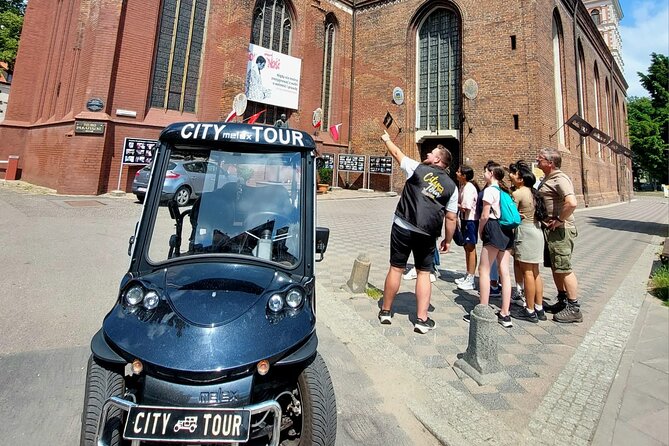
A lot of this tour’s quality comes down to the guide. I’ve seen names like Maciej, Robert, and Michael the Professor associated with the experience, and the common thread is passion. The best guiding style here is the kind that gives you little human details, not just big facts.
You might also see extra touches that make the day feel special. One guest described a small gift of a traditional Polish doughnut called paczki at the start, and others talk about photo help. If your guide offers to take pictures, say yes. It’s an easy way to get clean shots without everybody crowding around a phone at the gate.
Pacing is also part of the deal. Stops are short by design, so your guide may prompt you to look, shoot photos, and move on. It keeps the tour moving, but it also means you should have your priorities ready. Decide in advance which 2 to 3 stops you want to really focus on.
Also, the ride itself matters. Review notes mention an open-air buggy feel, which is a plus for photos and atmosphere, especially on a pleasant day.
Weather, festivals, and why flexibility helps
This tour requires good weather. That’s not just a “comfort” note. Since the route involves multiple short stops, rain or poor conditions can impact whether the guide can keep the plan as tightly as described.
There’s another real-life factor: street access. One account mentioned that festival closures affected parts of the route, but the guide adjusted to show everything possible. So go in expecting a few small schedule wrinkles, especially if you’re traveling during events.
My advice: bring a light layer and plan for the fact that you may spend a bit less time at one stop than expected if the street situation changes. The guide is your buffer.
How to get the most out of the quick stops
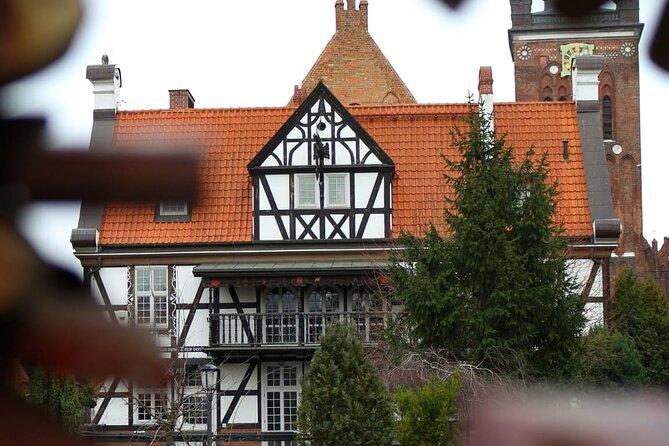
Because the stops are short, you’ll enjoy this tour more if you treat it like a guided checklist, then you branch out after.
Here’s how to make it pay off:
- Pick your top three priorities before you ride. For many people, that’s St. Mary’s Church, St. Bridget’s Church, and the shipyard area tied to Solidarity.
- Use a simple photo method: wide shot first, detail shot second. The time is tight, so don’t spend 8 minutes trying to frame the perfect detail.
- Ask questions as you move. The cart transitions are part of the learning moment, especially when the guide connects WWII survival details on Dluga Street with later political history.
- Plan your next move afterward. Since the tour ends back at the meeting point, you’re free to return to whichever stop caught your attention most.
If you’re short on time in Gdańsk, this tour is also a strong “first day” option. It gives you a mental map so your later wandering makes sense.
Who this tour suits best
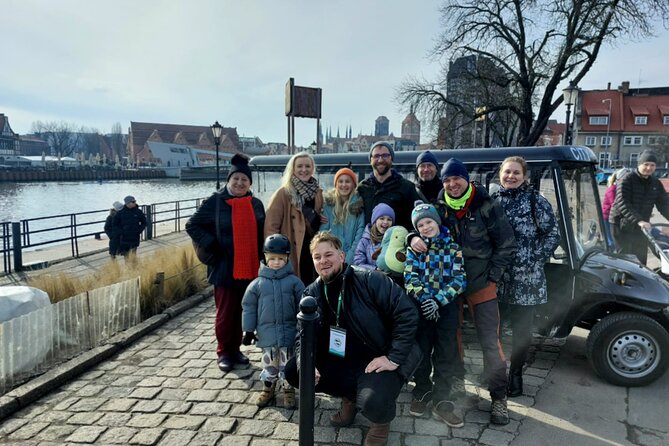
This is a good fit if you want:
- A fast overview that hits major sights in a logical order
- Low-walking touring, since most of the day is by golf cart and stops are brief
- A private group setup, which tends to feel calmer and easier for asking questions
- English live guiding and clear context from start to finish
You might skip this one if:
- You’re planning a deep museum day and hate quick stops
- Your group wants long church visits, lots of reading time, or extended interior time at multiple sites
Should you book this golf cart tour of Gdańsk?
If your goal is to get your bearings and understand the city’s major layers, I think this is a smart booking. The combination of a private golf cart ride, an English live guide, and a route that covers Old Town, the waterfront, and the shipyard side is exactly what you want when your time is limited.
Book it if you value efficiency and good storytelling more than slow museum wandering. Hold off if you know you want hours inside a single church or museum, because this format is built for short, meaningful stops, not long stays. Either way, on a good-weather day, it’s one of the easiest ways to see a lot of Gdańsk without turning your afternoon into a navigation project.
FAQ
How long is the Gdańsk City Tour by golf cart?
The tour is listed as about 1 to 2 hours.
What does it cost per person?
The price is $38.87 per person.
Is the tour private?
Yes. It is a private tour/activity, meaning only your group participates.
Is pickup included, and where do we meet?
Pickup is offered. The start meeting point is Pocztowa, Gdańsk, Poland, and pickup details require contacting the provider to confirm your address. Please wait in the lobby 10 minutes before pickup.
Is there a live guide, and is English available?
Yes. It includes a live guide in your language, and the tour is offered in English.
Is there a mobile ticket?
Yes. A mobile ticket is offered.
Are entrance fees included for the stops?
All fees and taxes are included. The itinerary notes free admission for many stops, and St. Bridget’s Church entry is included in the tour.
What is included in the tour price?
Included items are private transportation, all fees and taxes, a live guide in your language, and pickup services.
Are tips included?
No. Gratuities are not included.
What if the weather is bad?
The experience requires good weather. If it is canceled due to poor weather, you will be offered a different date or a full refund.
More Tour Reviews in Gdansk
Sightseeing Without the Walking


Gdansk, Three More Ways
Recently written up around Gdansk




More Golf Cart and Electric Car Tours.
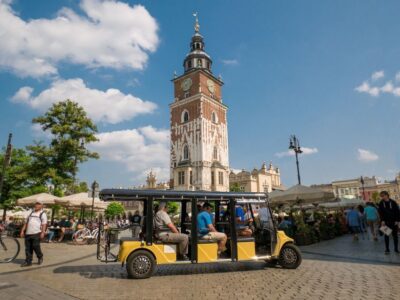 ★ 4.5City Sightseeing Tour by Electric Golf CartFrom $133,264 reviews
 ★ 4.7City Sightseeing Tour Eco Electric Buggy Golf CartFrom $133,143 reviews
 ★ 4.6E-Car Tour and Audio GuideFrom $161,738 reviews
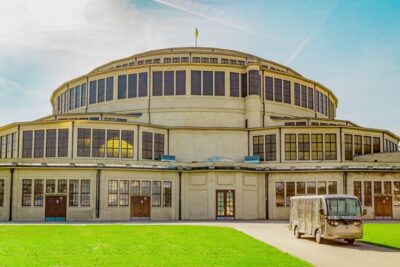 ★ 4.82-Hour Private Guided Tour by Electric CarFrom $38805 reviews
 ★ 4.7Extended City Sightseeing Tour – Eco Buggy Golf CartFrom $13794 reviews
 ★ 4.9City Sightseeing Tour by Golf Cart/Buggy Guided TourFrom $40510 reviews
 ★ 4.4Electric Car Sightseeing TourFrom $25450 reviews
 ★ 5.0Guided City Tour by Golf Buggy (with hotel pickup)From $53426 reviews
Also on these Poland lists