
REVIEW · JEWISH HERITAGE AND GHETTO TOURS
Guided Tour in Kraków-Płaszów Former Concentration Camp
Płaszów is Auschwitz, but in Kraków’s shadow. This guided stop-and-walk look at the former Konzentrationslager Plaszów connects the Holocaust story to places you can actually see today.
Two things I really like: you get a clear route that starts at Ghetto Heroes Square and then moves into Płaszów, and you’re not left guessing, the guide talks through what you’re seeing and why it matters. I also like the small-group feel, with a maximum of 25 people, which makes it easier to ask questions.
One possible drawback: you’re walking through real outdoor ground at a former camp site, so wear comfy shoes and expect a slower, respectful pace on uneven terrain.
In This Review
- Key takeaways before you go
- Where this tour makes sense: Ghetto Heroes Square first
- Plac Bohaterów Getta: the chairs, the controversy, and what the square remembers
- The Ghetto wall fragment: a short walk, a big meaning
- The main event: Płaszów camp grounds, in Kraków’s backyard
- What you should expect to see, and how to handle it well
- The role of the guide: context in plain language, not just names
- Small group size, big impact: why the cap matters
- Price and value: about $30 for a guided Holocaust-era visit
- Timing and route: where you start, where you finish
- Who this tour fits best in Kraków
- Should you book the Kraków-Płaszów guided tour?
- FAQ
- How long is the guided tour in Kraków-Płaszów?
- What language is the tour offered in?
- How much does the tour cost?
- Where does the tour start?
- Where does the tour end?
- Is there an admission ticket fee for the Płaszów camp visit?
- What is the maximum group size?
- What is the cancellation policy?
Key takeaways before you go
- Start at Ghetto Heroes Square, where history and modern memorial design collide in a way you can’t miss.
- See the 12-metre fragment of the Kraków Ghetto wall, with a commemorative plaque added in 1983.
- Visit Płaszów on guided time, not as a quick photo stop, with context built into the walk.
- No separate admission fee is listed for the camp visit portion, which helps the value.
- English-speaking guide, and the group size is capped at 25.
- You get a mobile ticket, handy if you like to keep everything on your phone.
Further Jewish heritage and ghetto routes documented in Krakow
- Krakow: Schindler’s Factory & Ghetto Guided Tour
★ 4.7 · 1,694 reviews - Krakow: Jewish Quarter and Former Ghetto Tour
★ 4.9 · 1,441 reviews - Krakow: Bike Tour of Old Town, Jewish Quarter and the Ghetto
★ 4.9 · 1,155 reviews - Krakow: Kazimierz, Schindler’s Factory & Ghetto Guided Tour
★ 4.8 · 460 reviews
Where this tour makes sense: Ghetto Heroes Square first
This is one of those tours where the order matters. You begin across the river in Podgórze at Plac Bohaterów Getta, and that sets the tone before you even reach Płaszów.
You’ll also notice something important right away. The area you start at is not a sealed museum space. It’s a real public square, shaped by decades of renaming and redesign, which makes the story feel less like a textbook and more like a place people lived through.
Plac Bohaterów Getta: the chairs, the controversy, and what the square remembers
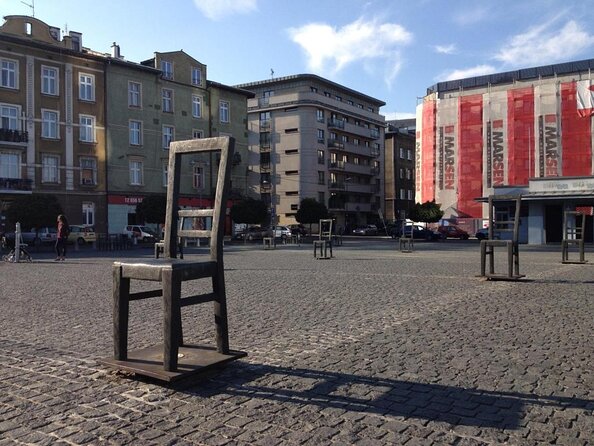
Your first stop is Ghetto Heroes Square, at Plac Bohaterów Getta 18. The square used to be called Plac Zgody after the war, and later the name changed to honor the victims of the Kraków Ghetto. Long before the renovation, it also had a grim everyday use, at times functioning as a public toilet or a parking lot.
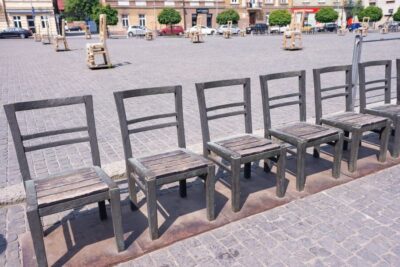
Then in 2005, the square was renovated, and the design caused controversy. The memorial layout includes 70 large metal chairs meant to symbolize departure and the absence that followed. Even if you’re not sure what to feel about the styling, it’s hard to miss what the designers were trying to do, turn a public hangout space into a place for mourning.
What I find valuable here is how it frames your visit to Płaszów. You start with memory in an urban setting, not memory hidden behind walls. That helps you understand why the camp grounds later feel eerie in a different way, open to the city yet tied to something that should never be ordinary.
The Ghetto wall fragment: a short walk, a big meaning
Right after the main portion, you pass one of Kraków’s most direct reminders of the ghetto. It’s a 12-metre stretch of the original ghetto wall, preserved and marked.
In 1983, a commemorative plaque was added in Hebrew and Polish. The message is clear and painful: it explains that people lived, suffered, and died there at the hands of German torturers, and that those were the starting points for the final journey to the death camps.
Even though it’s only a small physical segment, this part of the route works. You get a concrete reference point for the stories your guide is sharing. If you’re the type who likes to connect facts to specific places, this stop gives you something to anchor on.
The main event: Płaszów camp grounds, in Kraków’s backyard
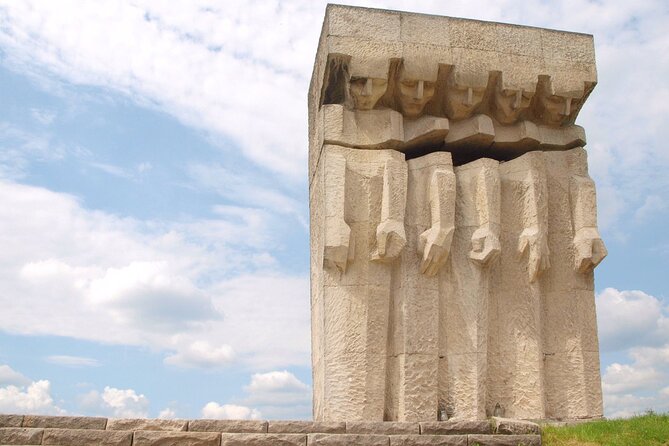
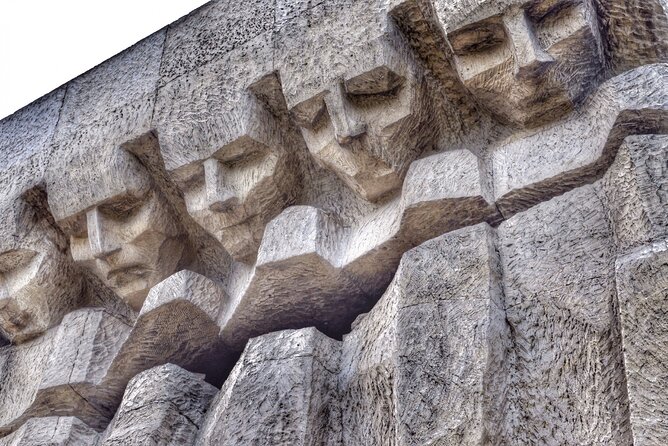
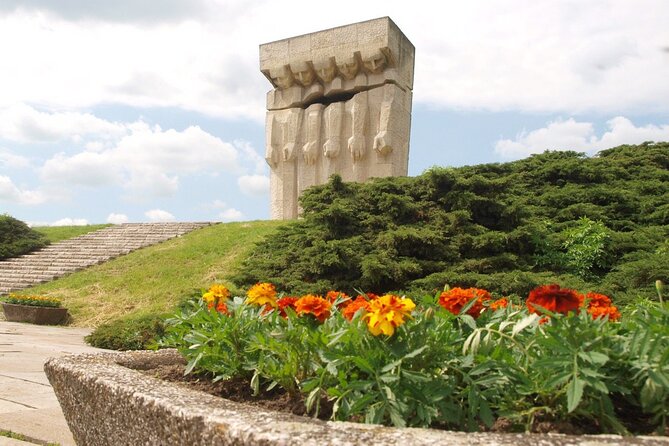
Now the tour shifts to the former camp area, the Konzentrationslager Plaszów bei Krakau. What makes this stop hit harder is how little it looks like a camp site at first glance.
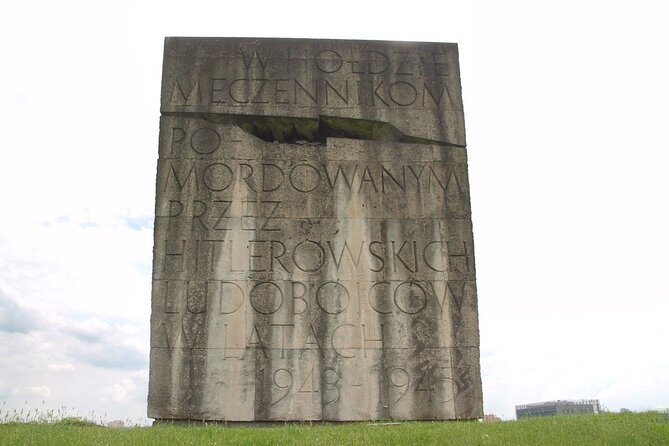
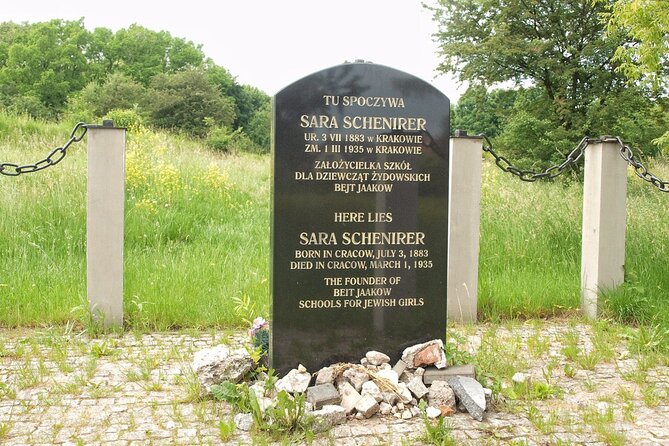
During the war it was a German Nazi concentration camp, but today the area reads like an open, uneven patch of land. The tour route places this in Podgórze, close to major city surroundings like Wielicka Street and near the Bonarka shopping area. The fact that it sits amid what feels like a normal district is part of the point. It forces you to hold two realities at once.
You’ll walk with your guide, and this is where the guided piece matters most. Instead of wandering alone, you get the explanations that give shape to what you see. The tour is listed at about 2 hours total, and the camp visit portion is about 1 hour, so you’re not stuck for endless time, but you also don’t rush through it like a drive-by.
Below are the other Krakow trips we have logged
- From Krakow: Auschwitz-Birkenau Guided Tour & Hotel Pickup★ 4.5 · 33,358 reviews
- From Krakow: Auschwitz-Birkenau Guided Tour & Hotel Pickup★ 4.5 · 29,340 reviews
- Krakow: Auschwitz Guided Tour with Optional Hotel Pickup★ 4.5 · 15,280 reviews
- Krakow: Auschwitz-Birkenau Guided Tour with Pickup & Lunch★ 4.5 · 9,800 reviews
- Krakow: Auschwitz-Birkenau Guided Tour Pickup/Lunch Options★ 4.5 · 9,057 reviews
What you should expect to see, and how to handle it well
Because the camp grounds are outdoors and uneven, plan for a walking tour, not a sit-down lecture. The provided description notes the site is a wild, uneven space of land, so you’ll want footwear that works on irregular ground.
Emotionally, this is not a light sightseeing stop. You’re dealing with tragic events from the Holocaust era, and the guide’s job is to contextualize what happened there. That’s also why the guide approach matters. A good tour won’t try to sensationalize. It will help you understand the timeline and the meaning of the places you’re standing in.
If you’re worried about not knowing what to ask, don’t be. This kind of tour is ideal for people who want to show respect while still learning. I like that the format gives you time for understanding without turning it into a checklist.
The role of the guide: context in plain language, not just names
The tour is offered in English, and the guide is the difference between a confusing walk and a meaningful one. The description promises contextualization, and the review detail backs up the idea that guides spend real time on explanation.
One review specifically mentioned a guide named Olga, praised for being very well prepared and kind, and even helping the group with tram ticketing. That’s the practical side you’ll appreciate when you’re busy moving around Kraków and want everything to flow.
In your case, what you can look for is simple: ask for clarification when something feels unclear. This tour’s value comes from turning locations into understanding, not just taking in scenery.
Small group size, big impact: why the cap matters
The maximum group size is 25 travelers. That number matters more than it sounds. Smaller groups tend to keep things readable, especially when you’re learning in an emotional space where it’s hard to take in everything at once.
In practice, this also helps you move at a pace that fits the setting. The tour is about 2 hours, so you’ll want your guide to manage time well while still giving you enough context at each stop. A capped group makes it more likely you’ll get answers rather than being left behind.
Price and value: about $30 for a guided Holocaust-era visit
At $30.01 per person for about 2 hours, this is priced like a mid-range guided tour. The value comes from two things you don’t always get in city tours: a structured route across multiple Holocaust-related landmarks, and guided context for what you’re seeing.
There’s also a specific value clue in the format. The camp visit portion lists Admission Ticket Free. That doesn’t mean the tour is free, but it does mean you’re not stacking extra entry costs on top of what you already paid for the guide and time.
One more value factor is planning effort. The tour is often booked about 29 days in advance on average. If you want an English tour at a time that fits your Kraków schedule, booking ahead is smart.
Timing and route: where you start, where you finish
The meeting point is Apteka pod Orłem, Plac Bohaterów Getta 18, 33-332 Kraków. You’ll be starting across the river in Podgórze, so it’s a good idea to give yourself a little time to get oriented before the group gathers.
The tour ends at Henryka Kamieńskiego 57, 30-644 Kraków, near a bus stop at that street number. Since the description also notes it’s near public transportation, you’ll likely find it easier to continue your day without backtracking.
And yes, the tour uses a mobile ticket, so keep your phone charged and ready. It’s a small thing, but in Kraków, your phone is often your map and transit helper all day.
Who this tour fits best in Kraków
This tour is a strong fit if you want more than the usual Auschwitz focus. Kraków has Holocaust-era sites beyond the headline attraction, and Płaszów is one of the most important examples.
It also suits you if you prefer guided learning with a clear route. You’ll see both a modern public memorial (with the chairs) and a physical ghetto wall fragment, then move into the former camp grounds with explanations built in.
You’ll likely enjoy it most if you:
- want a Holocaust context in Kraków itself, not only as a side trip
- like walking tours that connect places to meaning
- appreciate an English-speaking guide and a relatively small group
Should you book the Kraków-Płaszów guided tour?
I’d recommend booking if you want a guided, respectful visit that ties together multiple Holocaust-related locations in a single focused outing. The route makes sense, the time is reasonable, and the guide-led context is the difference between seeing land and understanding what it represents.
I’d think twice only if you’re expecting a polished museum experience. This tour includes outdoor ground and a site that does not feel like a tidy attraction. If you want “easy mode” sightseeing, Płaszów is not that. But if you want honest place-based learning, it’s a compelling choice.
FAQ
How long is the guided tour in Kraków-Płaszów?
It’s listed at about 2 hours total.
What language is the tour offered in?
The tour is offered in English.
How much does the tour cost?
The price is $30.01 per person.
Where does the tour start?
The meeting point is Apteka pod Orłem, Plac Bohaterów Getta 18, 33-332 Kraków.
Where does the tour end?
The tour ends at Henryka Kamieńskiego 57, 30-644 Kraków, near the bus stop on Kamienskiego street at 57.
Is there an admission ticket fee for the Płaszów camp visit?
The camp visit portion is listed as admission ticket free.
What is the maximum group size?
The tour has a maximum of 25 travelers.
What is the cancellation policy?
Free cancellation is available. You can cancel up to 24 hours in advance for a full refund. If you cancel less than 24 hours before the start time, the amount you paid is not refunded.
More Tours in Krakow
More Tour Reviews in Krakow
Jewish Heritage and Ghetto Routes in Krakow

Recently written up around Krakow
More Jewish Heritage and Ghetto Tours.
 ★ 4.7Schindler’s Factory & Ghetto Guided TourFrom $571,694 reviews
 ★ 4.9Jewish Quarter and Former Ghetto TourFrom $191,441 reviews
 ★ 4.9Bike Tour of Old Town, Jewish Quarter and the GhettoFrom $371,155 reviews
 ★ 4.7POLIN Museum of the History of Polish Jews TicketFrom $121,142 reviews
 ★ 4.8Kazimierz, Schindler’s Factory & Ghetto Guided TourFrom $81460 reviews
 ★ 5.0Full Bike Tour – the Old Town, Jewish Qtr & the Ghetto NEW BIKESFrom $35437 reviews
 ★ 4.9Warsaw Ghetto Private Walking Tour with Hotel PickupFrom $84369 reviews
 ★ 4.9Bike Tour of the Old Town, Kazimierz, and the GhettoFrom $26350 reviews
Also on these Poland lists