
REVIEW · WARSAW CITY TOURS
Historic Heart of Warsaw Walking Tour
Warsaw’s core tells its story fast. This Historic Heart of Warsaw Walking Tour strings together major landmarks and short, meaningful stops so the city feels connected instead of random. I especially like the entertaining, humorous guide style and the way you move from royal power to war memory in one smooth route. One thing to plan for: Royal Castle and the Marie Curie museum tickets are not included, so you’ll decide whether to pay for those indoor visits.
You’ll also like the practical structure. It runs about 2 hours, with a small group size capped at 15 people, and you get a mobile ticket plus a handy pre-tour info pack with useful links and place recommendations. If you need it, the tour is listed as wheelchair-friendly, and service animals are welcome.
A possible drawback is that many stops are intentionally brief, from 5 to 15 minutes, so if you want long museum time or slow photo wandering, you’ll feel a bit rushed.
In This Review
- Key highlights worth focusing on
- A 2-hour “big picture” walk that keeps Warsaw understandable
- Where the tour starts: Sigismund’s Column and the Royal Castle area
- Monuments and small squares: Sigismund’s Column, Kanonia, and the Wishing Bell
- Gnojna Góra viewpoints and Rynek Starego Miasta, the heart of the Old Town
- Archikatedra Sw. Jana Chrzciciela and Warsaw’s faith-and-fortification mix
- Muzeum Marii Sklodowskiej-Curie: a quick birthplace stop without forcing tickets
- The Warsaw Ghetto boundary markers: sober, brief, and important
- Warsaw Uprising Monument: ending with memory and a clear finish point
- Price and value: where $28.75 makes sense, and where it might not
- Accessibility and comfort, what you should expect while walking
- Who should book this walking tour
- Should you book this Historic Heart of Warsaw Walking Tour?
Key highlights worth focusing on
- Small group format (up to 15) that keeps the tour conversational and question-friendly
- Two ticketed indoor stops you can skip or add, rather than being forced to buy everything
- A well-paced mix of Old Town charm and serious memorials including ghetto boundary markers and the uprising monument
- Off-the-main-arc stops like Kanonia and the Wishing Bell that add texture to the walk
- Old Town viewpoints and iconic symbols such as the mermaid at Rynek Starego Miasta
Warsaw rebuilt itself twice over. Here is how else we saw it
- Warsaw: Chopin Concert in the Old Town
★ 4.8 · 2,287 reviews - Warsaw: Traditional Galar Cruise on The Vistula River
★ 4.6 · 1,640 reviews - Warsaw: Old Town Highlights Walking Tour in English
★ 4.7 · 1,516 reviews - Warsaw Concert: Chopin – Painted by Candlelights with Wine
★ 4.8 · 1,442 reviews
A 2-hour “big picture” walk that keeps Warsaw understandable
Warsaw can feel like it has a lot going on at once. This tour helps you sort it out. The route focuses on the historic center, but it is not only about pretty streets and photos. You get a timeline effect: monarchy and city life, then the physical reminders of defense and faith, and then the stark markers of the Second World War.
That structure is where the value really is. With only about two hours, you want a guide who can turn landmarks into story beats. The standout from past departures is that the guides keep things engaging, with humour and clear explanations that make you actually remember what you saw after you stop looking at your phone.
It also helps that the tour keeps a steady rhythm. You’re not stuck in one place for long. You’ll get a short look at major points, then move on. That means you spend more time orienting and less time waiting.
Where the tour starts: Sigismund’s Column and the Royal Castle area
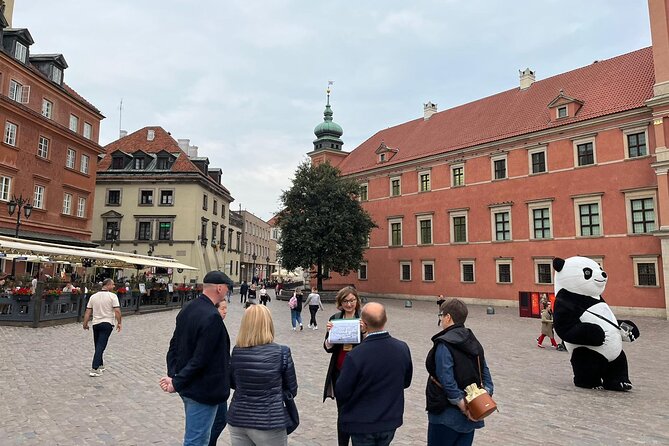
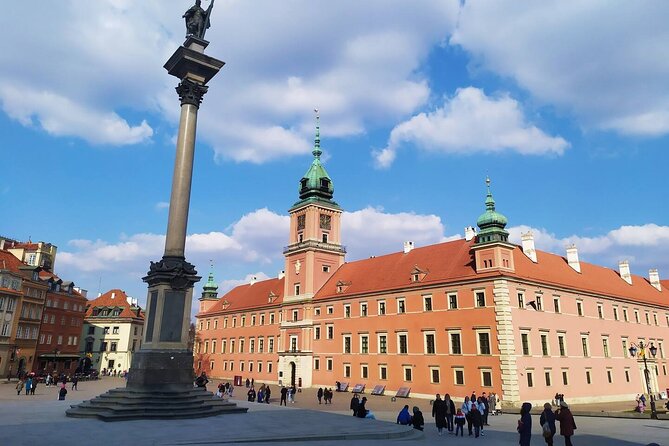
The meeting point is at Sigismund’s Column, at Plac Zamkowy, 00-001 Warszawa. This area is a good opener because it puts you right into the “this is the center” feeling of Warsaw’s historic core.
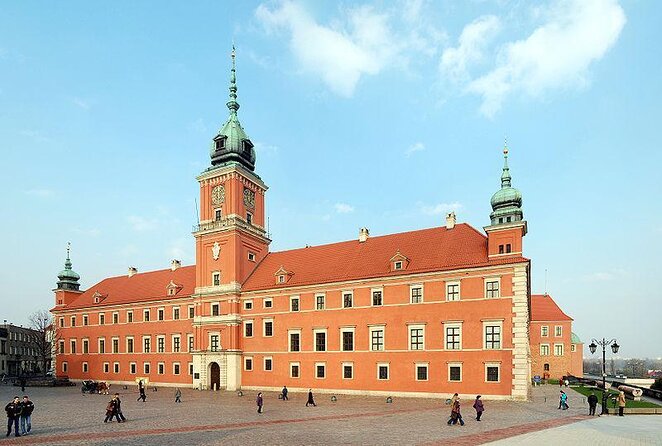
From there, you’re set up for the first big landmark visit: the Royal Castle in Warsaw (Museum). The time at the castle stop is about 15 minutes, and the important detail for planning is that admission is not included. In practice, that usually means you can enjoy the setting and context with the group, but you will likely need to decide whether you want to purchase a ticket for any interior museum time on your own.
Why this stop matters: the Royal Castle area is an anchor. Even if you just get outside views and the guide’s context, it helps you understand why so many other places in the Old Town look the way they do, and how Warsaw’s identity got shaped over time.
If you’re on a tight schedule, you can treat the castle as a “context stop” and save extra museum time for another day. If you like interiors and exhibits, plan extra budget and consider how this affects your flow at later stops.
Monuments and small squares: Sigismund’s Column, Kanonia, and the Wishing Bell
After the castle stop, the tour moves you to King Sigismund’s Column (Kolumna Zygmunta). This is quick, about 10 minutes, and the focus is the monumental column featuring a statue of a Polish king. It’s the kind of landmark that looks impressive in photos, but the real payoff comes when your guide explains how a single statue can represent political identity and continuity.
Then you step into a quieter pocket of the Old Town with Kanonia. This is described as a charming square at the rear of the Cathedral of Saint John the Baptist, and the time is about 10 minutes. Stops like this are worth it because they break up the big-icon rhythm. You get a feel for how the neighborhood flows around religious buildings, courtyards, and side spaces that you’d otherwise breeze past.
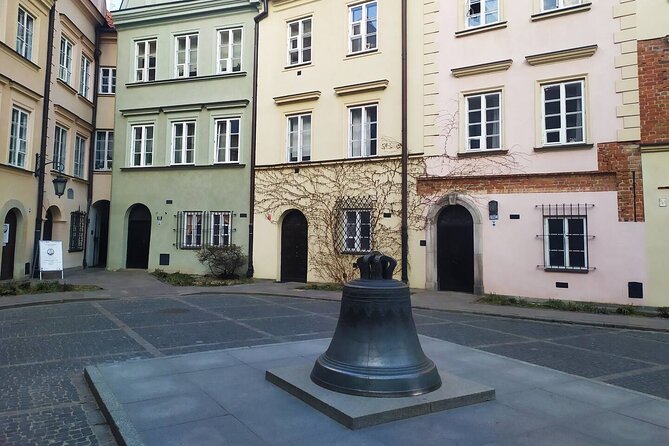
Next is the Wishing Bell, an older bell from the 17th century. This stop is short at 5 minutes, and it’s known for drawing visitors who come to make wishes. The value here is less about the bell’s technical details and more about the lived-in, tourist-to-tradition moment. You’ll see people doing the ritual, and it helps you understand how modern visitors connect to the feel of the area.
Gnojna Góra viewpoints and Rynek Starego Miasta, the heart of the Old Town
From those characterful side stops, the tour climbs into a viewpoint experience at Gnojna Góra, a lesser-known lookout point in the Old Town. The scheduled time is about 10 minutes, and the key payoff is the view of the Vistula River and the opposite side. Even when a viewpoint stop is short, it can change how you understand the entire map of the city center. You start to see the Old Town as part of a wider river system, not just a cluster of streets.
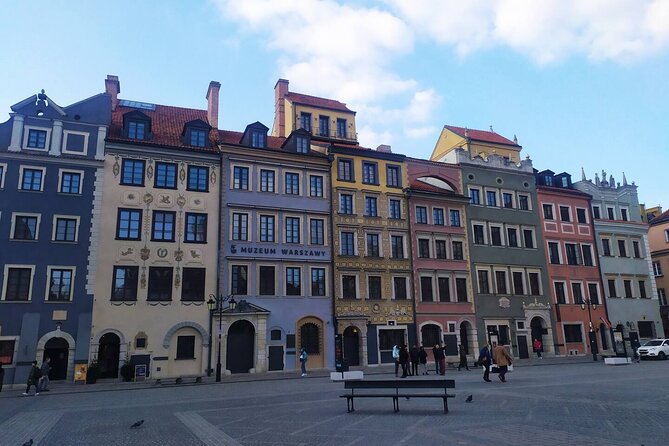
Then you land at Rynek Starego Miasta, the heart of the Old Town. You get about 10 minutes here, focused on colourful tenement houses and the Warsaw mermaid symbol. This is one of those places where the architecture pulls you in, but the guide helps you look past the obvious postcard view. You’ll leave with a better understanding of why this square is still treated like the center of gravity for the historic district.
Tip for your own timing: if you care about photos, this is where you can spend your energy. The square tends to be visually dense, so it’s worth taking a few minutes to frame shots before you move on.
Below are the other Warsaw trips we have logged
- Warsaw: Old Town Guided Walking Tour★ 4.9 · 599 reviews
- Half-Day Polish Food Walking Tour with Guide and Dinner★ 4.5 · 381 reviews
- Warsaw: Warsaw Ghetto Private Walking Tour with Hotel Pickup★ 4.9 · 369 reviews
- Old Town Warsaw Walking Tour★ 4.5 · 333 reviews
- Warsaw: Jewish History Guided Walking Tour in English★ 4.7 · 324 reviews
Archikatedra Sw. Jana Chrzciciela and Warsaw’s faith-and-fortification mix
Next comes Archikatedra Sw. Jana Chrzciciela, described as the most important church in Warsaw. The stop is about 10 minutes, and it’s free. Even if churches are not your main interest, this is a key cultural hinge for understanding Old Town Warsaw. Your guide’s explanation turns the building from a landmark you walk past into a marker of what mattered to the city over time.
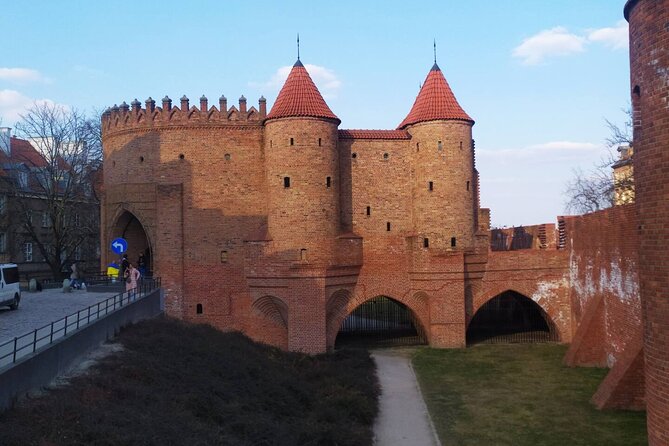
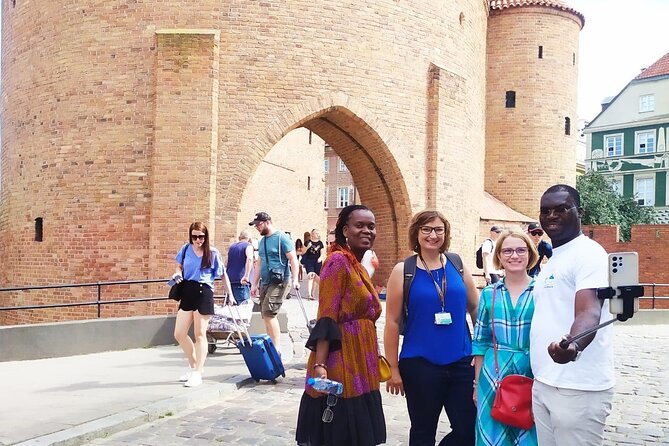
Then the tour hits Warsaw Barbican (Barbakan Warszawski), with about 5 minutes scheduled. This is another free stop and focuses on the medieval defensive walls that once encircled Warsaw. The Barbican is one of those structures that you feel immediately. It’s part history, part scale, and part reminder that the city’s survival required serious walls long before modern borders and security.
What I like about placing defense and faith in the same stretch: you see how Warsaw’s identity was shaped by both protection and community. The tour keeps those ideas moving rather than pausing in one topic bubble.
Muzeum Marii Sklodowskiej-Curie: a quick birthplace stop without forcing tickets
After the Barbican, you stop at Muzeum Marii Sklodowskiej-Curie, the birthplace of Maria Skłodowska-Curie, a double Nobel prize winner. The stop time is about 10 minutes. This is where the “ticket not included” planning matters again, because admission is not included.
So how do you handle it? If your main interest is street-level context, you can treat this as a short, meaningful marker. If you want the museum experience and exhibits, you’ll need to plan for the extra ticket cost and time on your own.
This stop is valuable because it gives Warsaw an “achievement and science” angle that balances the political and wartime sites. In a short walk, that kind of variety helps you avoid the feeling that you only learned tragedy and monuments.
The Warsaw Ghetto boundary markers: sober, brief, and important
One of the most serious segments comes when the tour reaches Warsaw Ghetto boundary markers. The stop is about 10 minutes, free, and focused on memorial plaques marking the maximum perimeter of the former ghetto established in 1940.
This isn’t the kind of stop where you want distractions. If you’re the type who likes to read and pause, give yourself a mindset for quiet attention. A short time can feel limiting, but your guide’s framing matters here, because you’re not just looking at metal plaques. You are learning how geography and borders were used to control lives.
Practical advice: hold off on big photo sessions here unless your own style is respectful and intentional. For many people, this is where the tour stops being sightseeing and starts being education.
Warsaw Uprising Monument: ending with memory and a clear finish point
The tour ends at the Warsaw Uprising Monument, with about 10 minutes scheduled and free admission. The meeting point is at Sigismund’s Column, and the tour ends in front of the uprising monument at a walk of about 15 minutes from the meeting point, with the guide able to help with directions if needed.
This ending is powerful because it closes the loop from the ghetto markers into the broader story of resistance in 1944. Even if you already know the basics, standing at a dedicated memorial changes your attention. You’ll notice how the tour chooses its order: it escalates the human stakes before you finish.
It also gives you a clean way to continue your day afterward. Once you’re at the uprising monument area, you have a recognizable landmark to orient around for the rest of your evening.
Price and value: where $28.75 makes sense, and where it might not
At $28.75 per person for about 2 hours, this tour is priced for value if your priority is interpretation, structure, and short stops you might not find alone.
Two cost points stand out:
1) Royal Castle admission is not included
2) Marie Curie museum admission is not included
If you plan to skip interiors and focus on outside stops and guided context, you’ll likely feel the price is fair. If you know you want to pay for both indoor tickets, the total cost becomes higher, but the tour still helps because you’ll know what to look for and why those places matter.
Group size also supports the value. With a maximum of 15 people, your guide can keep the pace moving while still fielding questions. Based on typical guide feedback in this area, guides tend to use humour and clear explanations to keep energy up, which is a big deal on a walking tour where attention can drift.
One more practical value note: you get a full info pack before the tour, with FAQ and useful links plus recommendations for where to eat and drink. Even if you don’t follow every suggestion, it reduces decision fatigue.
Accessibility and comfort, what you should expect while walking
The tour is listed as wheelchair-friendly, and service animals are welcome. That’s a strong start.
What you should still consider: this is a walking route with multiple stops spread across the Old Town. Even with accessibility, you may spend time moving between locations and stopping outdoors. If you’re someone who prefers very long sit-down rests, you might find the frequent short segments a bit brisk. The schedule is built for flow, not extended lingering.
Who should book this walking tour
This is a good fit if you:
- Want a guided way to understand Warsaw’s historic center in a tight time window
- Like clear storytelling with humour, not just facts read off a sign
- Want both classic Old Town highlights and memorial sites in one outing
- Prefer a small group format that keeps questions manageable
It may not be perfect if you:
- Want long museum time for both Royal Castle and the Marie Curie museum
- Prefer very slow pacing with lots of unstructured wandering
- Don’t want any serious memorial stops included in your sightseeing day
Should you book this Historic Heart of Warsaw Walking Tour?
I think you should book this tour if you’re arriving in Warsaw with limited time and you want the center explained in a way that sticks. The mix of Royal Castle context, Old Town landmarks like Rynek Starego Miasta and the mermaid, plus serious stops like the ghetto boundary markers and the Warsaw Uprising Monument, makes it feel like one coherent lesson rather than separate photo stops.
If you are excited about museums, budget for Royal Castle and the Marie Curie museum tickets, since they are not included. If you want a lighter day indoors and more time learning from the streets, the price feels especially reasonable.
One last practical nudge: it tends to get booked ahead, with an average of about 68 days before the start date. If your trip dates are fixed, reserve early so you aren’t choosing between time slots later.
More Tours in Warsaw



More Tour Reviews in Warsaw


Warsaw, Keep Looking
Recently written up around Warsaw



More Warsaw City Tours.
 ★ 4.8Chopin Concert in the Old TownFrom $262,287 reviews
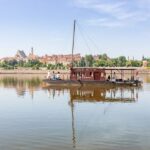
 ★ 4.6Traditional Galar Cruise on The Vistula RiverFrom $201,640 reviews
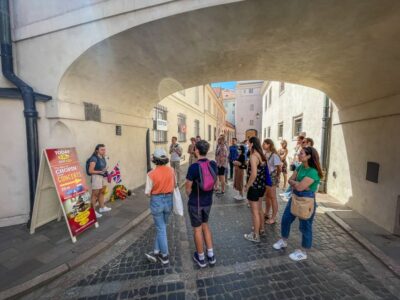 ★ 4.7Old Town Highlights Walking Tour in EnglishFrom $261,516 reviews
 ★ 4.8Warsaw Concert: Chopin – Painted by Candlelights with WineFrom $251,442 reviews
 ★ 3.6City Sightseeing Hop-On Hop-Off Bus TourFrom $411,415 reviews
 ★ 4.7POLIN Museum of the History of Polish Jews TicketFrom $121,142 reviews
 ★ 5.0#1 Pub Crawl Warsaw with Optional Premium 1 Hour Open BarFrom $28790 reviews
 ★ 4.6Polish Vodka Museum Tour with TastingFrom $22788 reviews
Also on these Poland lists