
REVIEW · WROCLAW CITY TOURS
III Reich & WW2 in Wroclaw. Monday, Wendsday, Friday regular tour
Wroclaw history hits fast. This is a tightly paced English walking tour that connects key WWII and Nazi-era locations across the city, moving from synagogue destruction to the scars left by the siege.
I like the smart pacing. You cover a lot of ground in a short time, and you get clear stories tied to specific places, from Wolności Square to the Dietrich Bonhoeffer Memorial.
One thing to keep in mind: it is a walking route, about 1.7 miles for some departures, and it can feel brisk, especially in cold weather or if the guide’s style is not your preference.
In This Review
- Key highlights worth planning around
- Nazi Germany in Wroclaw, and why this walk feels so real
- The practical version: cost, timing, and what you actually pay for
- Where you start: Hotel Monopol to the destroyed New Synagogue site
- Wolności Square and the early Nazi-era story you can place on a map
- White Stork Synagogue: surviving the war, then holding memory
- Rynek (Main Square): daily life under Nazism and Festung Breslau
- Dietrich Bonhoeffer Memorial: resistance beyond slogans
- Wroclaw University and the education system under the Third Reich
- Parish of the Most Holy Name of Jesus and siege-era everyday survival
- Ossolineum: education stories and what institutions changed
- Hala Targowa (Market Hall): siege reality plus a short break
- Sand Island, Edith Stein, and the Cathedral Island finale
- The guide factor: Michael, and what to watch for
- Who this tour suits best
- Weather, shoes, and how to be comfortable
- Price vs value: where the $32.20 really goes
- Should you book this Wroclaw WWII walk?
- FAQ
- How long is the III Reich & WWII in Wroclaw walking tour?
- Where does the tour start and where does it end?
- Is the tour offered in English?
- Do I need to pay admission at each stop?
- How big is the group?
- What days does the regular tour run?
- What happens if the weather is bad?
- What is the cancellation policy?
Key highlights worth planning around
- Compact route, big story density, with stops clustered through older central areas and the Jewish district
- Nazi-era context that stays place-based, from visible landmarks like a Gestapo building to major city squares
- Holocaust and Jewish heritage focus, including a synagogue that survived the war and later memory stories
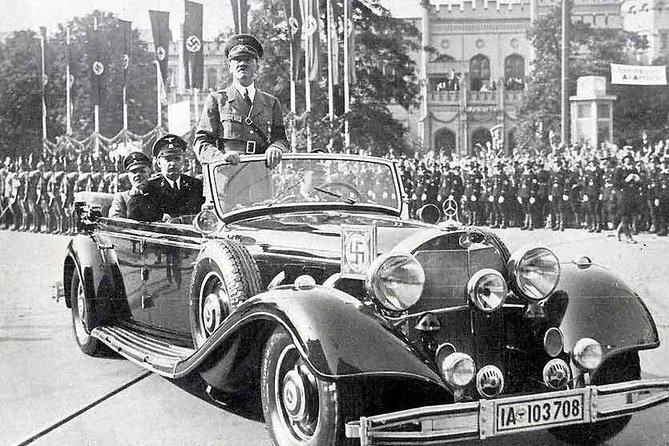
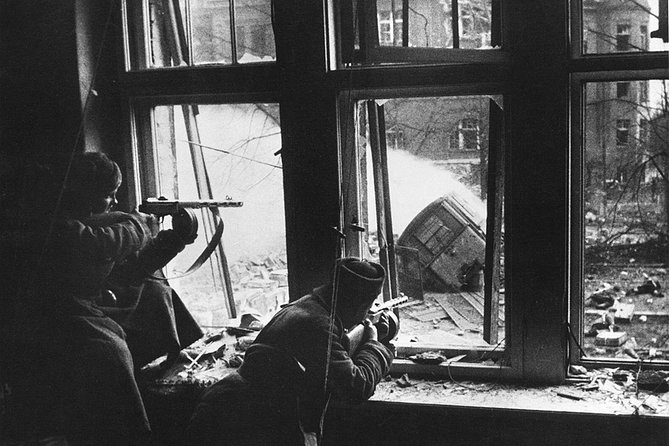
- Siege of Festung Breslau framing, including the city’s destruction and day-to-day survival themes
- Small group feel, max 20 people, which helps keep the questions moving
- Many stops include free admission, while a few key indoor sites are not included
More wartime history routes we have written up in Wroclaw
- Wroclaw: Third Reich and World War Two Historical Tour
★ 4.9 · 43 reviews - Wroclaw: Project Riese and Ksiaz Castle Private Tour
★ 4.7 · 39 reviews - III Reich & WW2 in Wroclaw. Monday, Wendsday, Friday regular tour
★ 4.5 · 32 reviews - Wroclaw: Private Tour to Project Riese
★ 4.6 · 22 reviews
Nazi Germany in Wroclaw, and why this walk feels so real
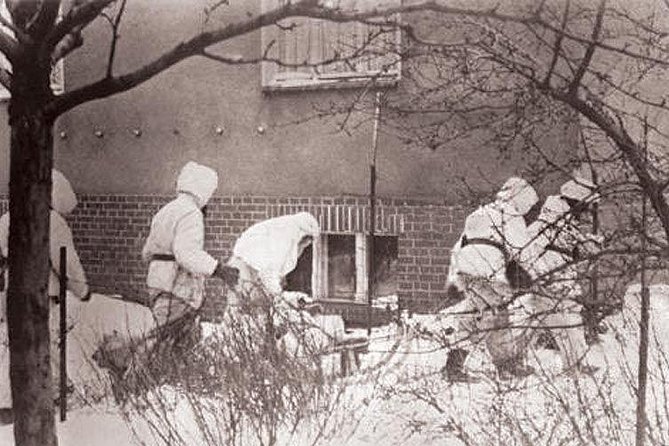
Wroclaw does not look like a WWII battlefield at first glance. That is exactly why a good walking tour matters here. You start seeing the city as a timeline, not just a map. In a couple of hours, you trace how Nazi power took hold, how Jewish life was targeted, and how the siege-era reality reshaped everyday existence.
This tour runs on regular days, Monday, Wednesday, and Friday. It lasts about 2 hours to 2 hours 30 minutes, with a maximum of 20 people, so it stays manageable even when the subject matter gets heavy. The group starts at the Hotel Monopol, then finishes on Cathedral Island (Ostrow Tumski), so you end in one of the most atmospheric parts of town.
The best part is the way each stop is tied to what you can still see. You are not just reading about history in a vacuum. You walk to the site where the New Synagogue was destroyed in 1938, you pass a Gestapo building, and you move through squares and institutions that shaped education, daily life, and resistance stories.
The practical version: cost, timing, and what you actually pay for
The price is $32.20 per person, and the tour is offered in English with a mobile ticket. That matters because you do not need to puzzle out where to stand or how to find your way after you book.
Value-wise, the ticket structure is a big reason to consider it. Many stops list admission tickets as free, so you are not constantly paying again just to enter a doorway. A few stops do not include admission, including Wroclaw University, the parish of the Most Holy Name of Jesus, and Ossolineum.
That means your total experience cost can stay close to the tour price if you are flexible about what you do for those indoor stops. If you know you really want those buildings and they require extra entry, plan a little buffer in your budget.
You will also walk. Some departures clock about 1.7 miles, and it is mostly outdoor street walking between multiple points. If you are visiting in winter, dress like you mean it. This is the kind of tour where cold can make you rush, not listen.
Where you start: Hotel Monopol to the destroyed New Synagogue site
You begin at Hotel Monopol, on Ulica Heleny Modrzejewskiej 2. From there, the tour heads toward one of the hardest starting points on the route: the location where the New Synagogue was destroyed in 1938.
Even if you have studied WWII before, this type of opening landing spot works. It gives you a clear entry into the Nazi-era targeting of Jewish life before the tour moves outward to broader political and citywide changes. The stop also includes a look at a Gestapo building nearby, which helps ground the story in the machinery of repression, not just the dates.
This first leg is short, about 5 minutes listed on the itinerary. That is intentional. The tour moves quickly, so you keep momentum and do not lose your group, especially with traffic lights and street corners.
Wolności Square and the early Nazi-era story you can place on a map
Next comes Wolności Square. Here, you learn about the beginnings of the Nazi era in Germany, framed in a way that connects broader history to the city setting you are standing in.
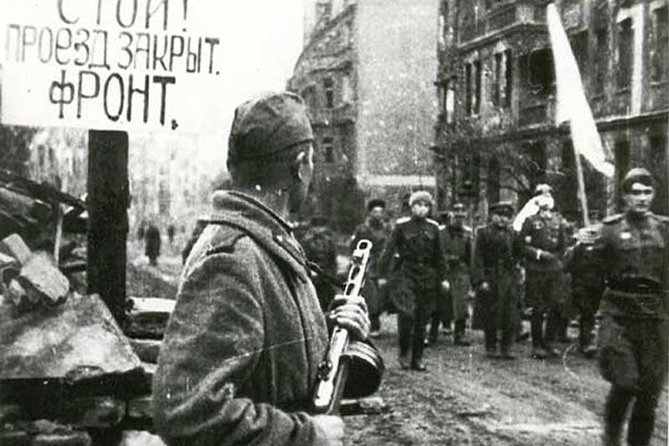
This stop is another short one, also around 5 minutes. Think of it as your history anchor point. It is where the tour often helps you understand how Nazi power grew from ideology into institutions that shaped daily life. If you have ever had trouble connecting early propaganda and later violence, this is the kind of transition this stop is meant to cover.
It also helps you set expectations for what comes next: Jewish heritage stories, then the lived experience of occupation, siege, and post-war reality.
More of Wroclaw, dwarves and islands included
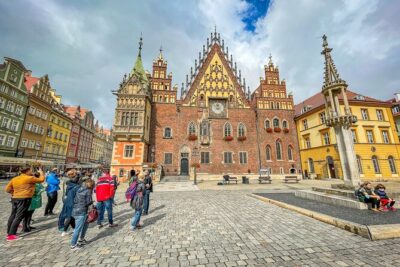
- Old Town Wrocław Walking Tour★ 5.0 · 249 reviews
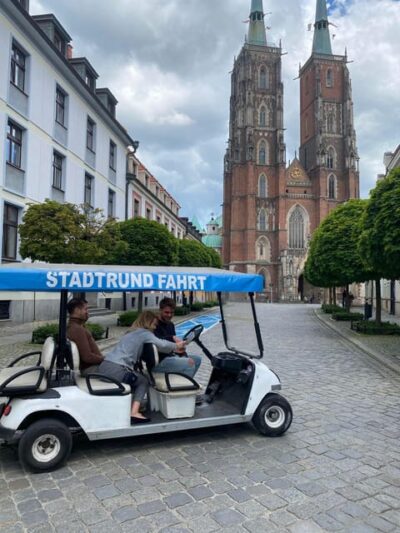
- Wroclaw: City Tour Sightseeing By Golf Cart Shared Or Privat★ 4.8 · 189 reviews
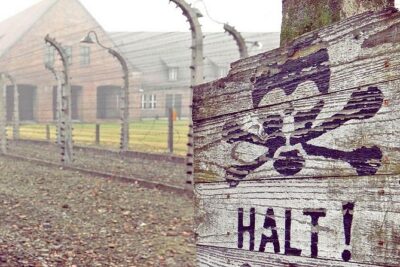
- Auschwitz-Birkenau Tour from Wrocław★ 5.0 · 129 reviews
- Wroclaw Pub Crawl with Free Drinks★ 4.4 · 127 reviews
- From Wrocław: Full-Day Auschwitz-Birkenau Guided Tour★ 4.8 · 117 reviews
White Stork Synagogue: surviving the war, then holding memory
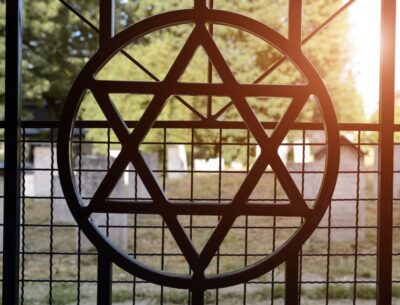
One of the most meaningful stops is the White Stork Synagogue. It survived the war, and it sits in the heart of Wroclaw’s Jewish district. Here, the guide tells local Jewish heritage stories and Holocaust-related stories tied to place.
This is around 10 minutes on the schedule. That is long enough to feel the weight without turning the stop into a lecture you rush through. If you want a tour where the Jewish story is not just a sidebar, this is one of the places that makes that happen.
You will likely notice how the tour balances grief with context, including what remained and what was lost. In a city that rebuilt and repurposed, a synagogue that survived is a powerful physical reminder that history did not only destroy, it also left survivors and memory behind.
Rynek (Main Square): daily life under Nazism and Festung Breslau
From the Jewish district, the tour moves to the Rynek of Wroclaw, the main square. This stop focuses on everyday life under the Nazi regime and stories about Festung Breslau, the name associated with the city’s siege and destruction.
You get about 10 minutes here. That timing is good because it keeps the main-square emotions in check, while still giving you enough detail to understand what siege meant in real terms: pressure, scarcity, danger, and a city strained to the breaking point.
Even if you have heard the phrase Festung Breslau before, walking into the central public space where people lived and gathered helps you picture the contrast. You are standing in a civic heart, hearing about what it cost and what it looked like when survival became the daily rhythm.
Dietrich Bonhoeffer Memorial: resistance beyond slogans
The tour then includes the Dietrich Bonhoeffer Memorial for a short stop, about 5 minutes. This is where you get “a few words about German opposition,” which is a helpful counterweight in a WWII tour focused on Nazi control.
I like including resistance in the story early, not only at the end. It prevents the whole experience from feeling like a one-way machine. It gives you a sense that moral choices and opposition existed even inside the Nazi system, not just outside it.
Wroclaw University and the education system under the Third Reich
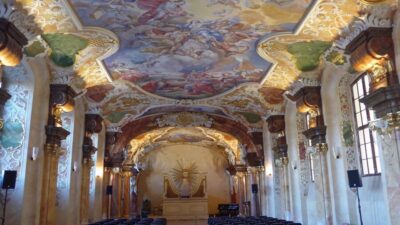
Wroclaw University is next, with a listed time of about 10 minutes. Admission is not included for this stop, so you may need to decide on the spot whether to pursue entry depending on what the tour offers on your departure.
This stop covers education in the Third Reich and includes stories about Jewish scientists. That combination matters because it connects ideology and policy to learning institutions. It also reinforces how discrimination and exclusion reached into academic life.
If you enjoy seeing the Nazi era as a system, not just an event, this is the segment that helps you understand how the regime shaped credentials, careers, and what ideas were allowed to grow.
Parish of the Most Holy Name of Jesus and siege-era everyday survival
Next is the parish of the Most Holy Name of Jesus, another about 10 minutes stop. Admission is not included here either.
This part focuses on everyday life during the siege time and the first months after the war. The value of this stop is that it moves from big-picture power into routines, routines under stress. You hear how people adapted, what shifted when survival mattered more than normal life, and how the city moved through the immediate aftermath.
If your goal is to understand what civilians went through, this stop typically lands well. It also keeps the tour from feeling like pure political history.
Ossolineum: education stories and what institutions changed
Ossolineum is listed for about 10 minutes and also has admission not included. Here, the tour shares stories about education in the Third Reich.
I like this segment because it broadens the education theme beyond a single campus. You start to see how institutions helped normalize Nazi-era thinking, and how education became part of the regime’s control.
If you are the kind of traveler who wants to understand what changed in daily life behind the scenes, this is one of the stops that helps you connect policy to ordinary people.
Hala Targowa (Market Hall): siege reality plus a short break
Market Hall, known as Hala Targowa, is next for about 10 minutes. This stop includes a story about the siege, and it also functions as a short break.
That matters on a walking tour like this because you are moving between multiple points quickly. A market-hall stop is a practical pause, and it also helps you mentally reset while staying in the same theme of daily life under siege pressure.
If you need a quick moment to warm up or regroup, this is usually where you get it.
Sand Island, Edith Stein, and the Cathedral Island finale
After Market Hall, you move to the Sand Island in Wroclaw. This is a short stop, about 5 minutes, with stories about Edith Stein and the siege.
Edith Stein is a person you might know from general history, but putting her into a Wroclaw setting gives the name a geography and a timeline. It ties individual memory to the city’s WWII story.
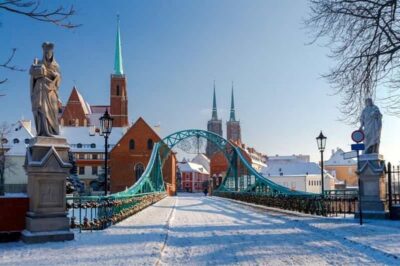
Finally, the tour ends on Ostrow Tumski, Cathedral Island, with a few extra stories. Ending here is smart. The setting helps you shift from “what happened” into “how the city remembers.” It gives the tour a natural closing mood without turning it into a museum experience.
The guide factor: Michael, and what to watch for
In the most praised departures, the guide is called Michael and people talk about his clear, detailed explanations and willingness to answer questions. I like that style because it turns the walk into a two-way learning experience, not just a scripted route.
This is also where you can spot a potential drawback. One departure described a guide as disinterested, with information that felt surface-level. That does not mean the tour is always like that, but it is a reminder that storytelling quality matters on history-heavy routes.
If you care a lot about depth, arrive with a few focused questions. Ask about how the Jewish community shifted, how siege life worked, or how opposition inside Germany showed up locally. A strong guide tends to work with that energy.
Who this tour suits best
This tour is a great fit if you want WWII history tied to real city corners, not just facts in a room. It is especially good for travelers who like Jewish heritage stories, Holocaust memory, and the way Nazi policy touched education and daily life.
It also works well for people who do not want a full day. With a schedule around 2 to 2.5 hours, you can pair it with museums or a longer meal break afterward.
If you dislike brisk walking, or you are traveling with mobility limits, you might find the pace challenging. The tour does say most travelers can participate, and service animals are allowed. Still, the route is built for walking and short stops, so plan accordingly.
Weather, shoes, and how to be comfortable
The tour requires good weather. If it gets canceled for poor weather, you should expect a different date or a full refund. Because it is outdoors between multiple stops, your comfort depends on what the day feels like.
For clothing, think layers. Even when the route is only about 1.7 miles for some departures, you are standing still at points and walking between them. Cold can sneak in fast, and it can make you less likely to linger for details.
Also bring your attention span like it is a physical item. The subject matter is intense, and the tour is structured to keep moving. If you prefer slow, deep museum-style pacing, this might feel quick.
Price vs value: where the $32.20 really goes
At $32.20, you are paying for a guided, place-based route with multiple themed stops. The value improves because many stops list free admission tickets. You are not just touring exteriors, you are also getting entry included for several key locations.
At the same time, a few interior stops are not included. That is not a deal-breaker, but it means you should treat the tour as the backbone and decide on additional entry where you want it.
Given the short duration and small group cap of 20, it is a solid “history in motion” option, especially if you want a guided overview before spending more time on your own.
Should you book this Wroclaw WWII walk?
I would book it if you want Nazi-era and WWII context that feels grounded in Wroclaw’s actual locations. The mix of synagogue sites, Jewish heritage, siege framing, and resistance references gives you a broad understanding without turning into a full-day commitment.
Skip or reconsider if you prefer slow pacing, long indoor visits, or you know you struggle with brisk walking in cold conditions. Also, if you strongly value a very specific guide style, you may want to check for the most recent guide comments before choosing a date.
If you do book, come ready to walk, and come ready to ask questions. This tour rewards curiosity, especially at stops where the story connects to what you can still see.
FAQ
How long is the III Reich & WWII in Wroclaw walking tour?
It lasts about 2 hours to 2 hours 30 minutes.
Where does the tour start and where does it end?
It starts at Hotel Monopol, Ulica Heleny Modrzejewskiej 2, Wrocław. It ends on Cathedral Island (Ostrow Tumski), Wrocław.
Is the tour offered in English?
Yes, the tour is offered in English.
Do I need to pay admission at each stop?
Many stops include free admission tickets. Some stops list admission as not included: Wroclaw University, the Parish of the Most Holy Name of Jesus, and Ossolineum.
How big is the group?
The maximum group size is 20 travelers.
What days does the regular tour run?
It runs on Monday, Wednesday, and Friday.
What happens if the weather is bad?
The tour requires good weather. If it is canceled due to poor weather, you will be offered a different date or a full refund.
What is the cancellation policy?
You can cancel for a full refund up to 24 hours in advance. If you cancel less than 24 hours before the start time, the amount you paid will not be refunded.
More Tour Reviews in Wroclaw

More of Wroclaw
Wartime History in Wroclaw
Recently written up around Wroclaw
More Wroclaw City Tours.
 ★ 4.6E-Car Tour and Audio GuideFrom $161,738 reviews
 ★ 4.82-Hour Private Guided Tour by Electric CarFrom $38805 reviews
 ★ 4.8Old Town and Ostrów Tumski Walking Tour in EnglishFrom $19311 reviews
 ★ 4.8Private Old Town Guided Walking Tour (2 hours)From $164275 reviews
 ★ 5.0Old Town Wrocław Walking TourFrom $26249 reviews
 ★ 4.8City Tour Sightseeing By Golf Cart Shared Or PrivatFrom $27189 reviews
 ★ 5.0Auschwitz-Birkenau Tour from WrocławFrom $266129 reviews
 ★ 4.4Wroclaw Pub Crawl with Free DrinksFrom $25127 reviews
Also on these Poland lists