
REVIEW · KAZIMIERZ JEWISH QUARTER TOURS
Kazimierz, Schindler’s Factory & Ghetto Guided Tour
Two worlds share one Krakow street. This tour strings together Kazimierz synagogue streets, Schindler’s story, and Podgórze ghetto remains in one smart loop. It’s a lot to take in, but it stays clear and organized.
I love the way it walks you through daily Jewish life first, not just WWII tragedy. You’ll see the Old Synagogue (now a museum) and the Remuh Synagogue and Cemetery, then keep moving past other key synagogues and ended at Plac Nowy. That flow makes the later history hit harder, in a good way.
One drawback to consider: Schindler’s Factory museum can feel tight if your group hits the maximum size. In at least one tour, a larger-than-usual group made it hard to see what the guide was pointing out in the narrow rooms.
In This Review
- Key Things to Know Before You Go
- Meeting at the Old Synagogue, Then Getting Oriented Fast
- Szeroka Street and Kazimierz Synagogues: How a Neighborhood Worked
- Schindler’s Enamel Factory: Where the Museum Does the Talking
- Podgórze Ghetto Walls Remnants: Seeing the Boundary
- Ghetto Heroes Square and the Empty Chairs Memorial
- Price and Timing: Is $81 Worth Five Hours?
- Group Size and Comfort: The Practical Reality
- Languages and How the Guide Shapes the Experience
- Who Should Book This Tour
- Should You Book This Kazimierz, Schindler’s Factory, and Ghetto Tour?
- FAQ
- Where do I meet the guide?
- How long is the tour?
- What does the tour include besides the walking route?
- Which sites will we see in Kazimierz?
- What WWII-related places are part of this tour?
- Do I need to bring my own tickets?
- What languages are offered?
- Is there a limit on group size?
- Is food included in the price?
Key Things to Know Before You Go
- Meeting at the Old Synagogue steps means you start in the right place, with easy orientation for Kazimierz.
- Kazimierz synagogues on foot give you context for faith, community, and how neighborhoods worked before the war.
- Schindler’s Factory has a focused exhibition (Kraków under Nazi Occupation 1939-1945) built around Oskar Schindler’s actions.
- Podgórze ghetto walls and Ghetto Heroes Square bring the wartime geography into focus, including the memorial with empty metal chairs.
- Small groups max 25 help keep it personal, but the museum layout can still get crowded.
Other reviewed ways into the Schindler factory museum
- Krakow: Oskar Schindler’s Factory Entry Ticket & Guided Tour
★ 4.2 · 3,793 reviews - Krakow: Schindler’s Factory Tour with Entrance Ticket
★ 4.5 · 3,182 reviews - Krakow: Schindler’s Factory Tour with Entrance Ticket
★ 4.6 · 1,737 reviews - Schindler’s Factory in Krakow: Guided Tour & Skip the Line Ticket
★ 4.5 · 1,714 reviews
Meeting at the Old Synagogue, Then Getting Oriented Fast
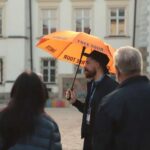
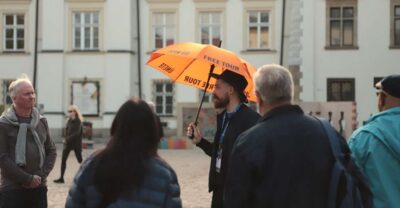
The tour starts right where it should, on the steps of the Old Synagogue. Your guide holds a Kazimierz Guided Tour sign, so you can spot them quickly and avoid that awkward wandering-around thing.
This matters because Kazimierz is easy to explore on your own, but harder to understand without a plan. With a licensed guide, you get the “why” behind each place as you go. You’re not just seeing buildings, you’re learning how this neighborhood functioned across centuries, and how it got torn apart in WWII.
You’ll also want to arrive at least 10 minutes early. Once the group has entered, latecomers can’t be accommodated and tickets are non-refundable. So treat that early arrival like part of the tour, not a suggestion.
Szeroka Street and Kazimierz Synagogues: How a Neighborhood Worked
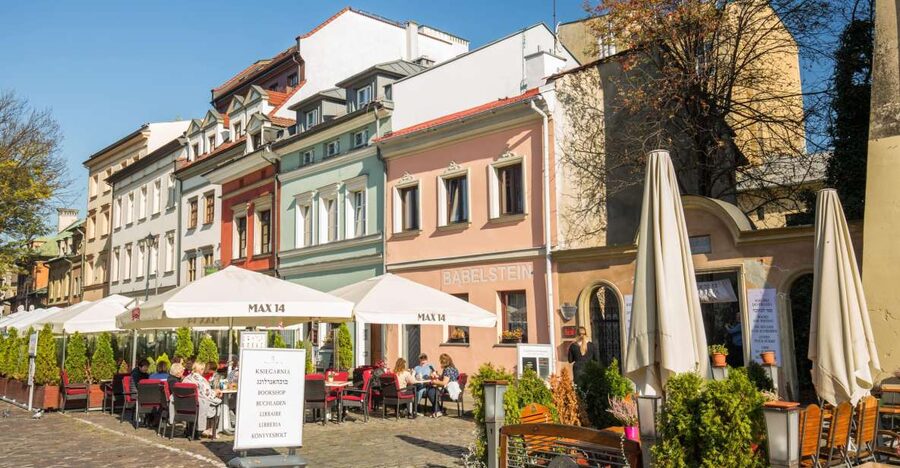
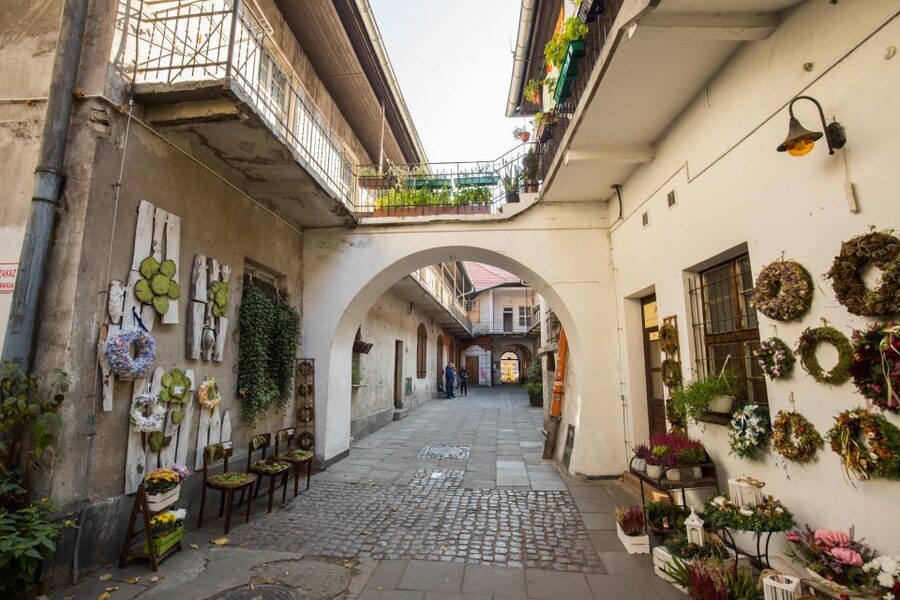
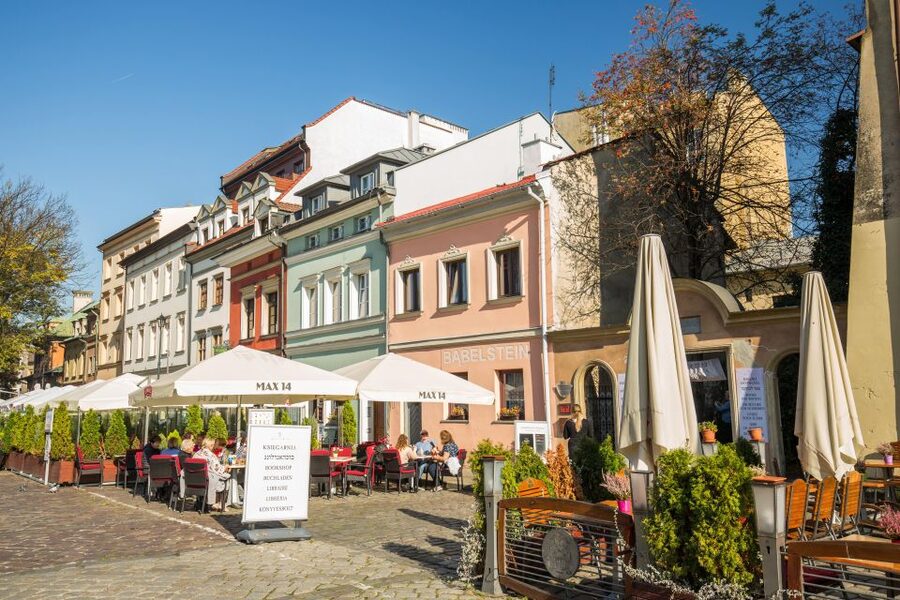
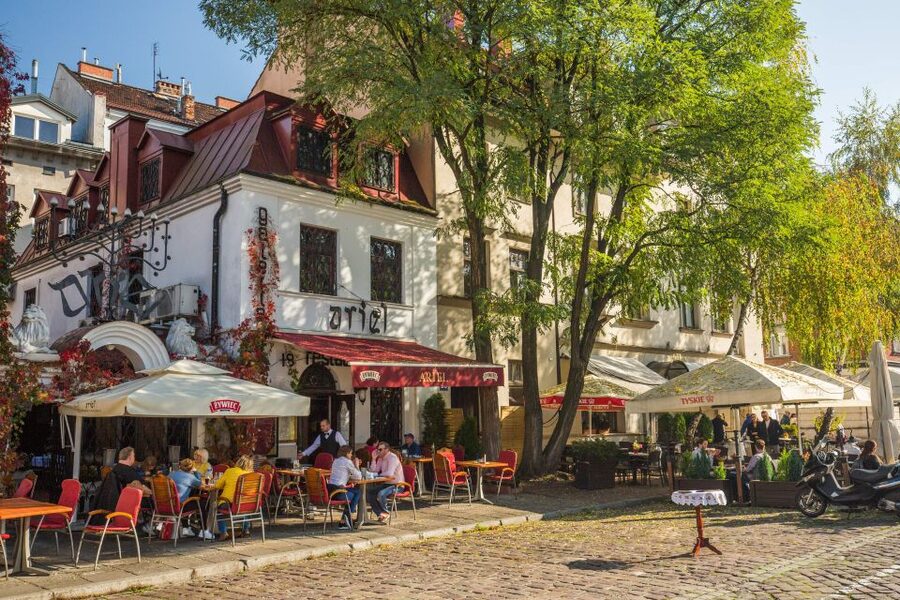
The walk begins on Szeroka Street, the historic heart of Kazimierz. This is where the atmosphere does the heavy lifting. Historic townhouses and synagogues sit side by side, and the street layout helps you grasp how a community lived close to its religious and social core.
From there, you’ll move through several synagogue landmarks, each with a different angle:
- Old Synagogue: Today it functions as a museum of Jewish history. It’s the oldest preserved synagogue in Poland, and it gives you a strong starting point for understanding time, tradition, and continuity.
- Remuh Synagogue and Cemetery: One of the most important Jewish religious sites in the country. Even if you’re not a religious history buff, the cemetery connection makes everything feel more grounded and human.
- Kupa Synagogue: It once served the poorest residents, so it’s a useful reminder that community life included real social differences.
- Tempel Synagogue: Now an active center of cultural life, not a dead monument. That keeps the tour from feeling stuck only in the past.
As you walk, your guide ties these stops into the bigger story: Jewish traditions, community rhythms, and the way Jewish and Christian cultures developed side by side in Krakow. In one English-or-not-specific experience, the guide was praised for explaining Jewish life and cultural details from the medieval period through World War II, which is exactly the kind of context you want before the wartime sections.
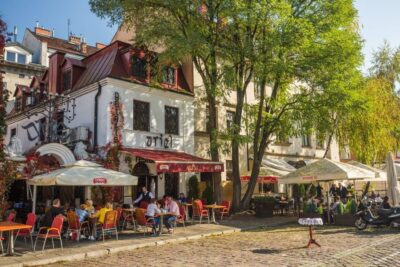
The walk then closes at Plac Nowy, a lively square with cafés and local market energy. You get a final beat of everyday life before the story shifts into occupation and survival.
Schindler’s Enamel Factory: Where the Museum Does the Talking
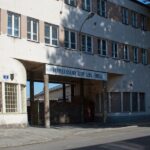
After Kazimierz, the tour heads to Schindler’s Enamel Factory, now one of Krakow’s most visited and moving museums. Fast-track admission is included, which is practical. You spend less time in lines and more time listening and looking.
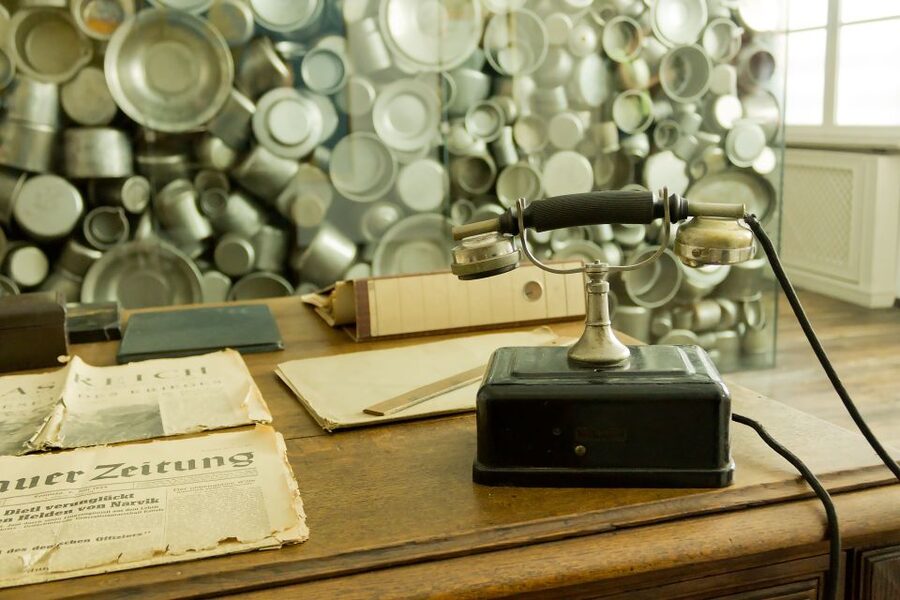
Important detail: even though it originally functioned as Schindler’s factory, it now operates as a museum and no longer contains original production equipment. So think of this visit as a story experience, built with exhibits.
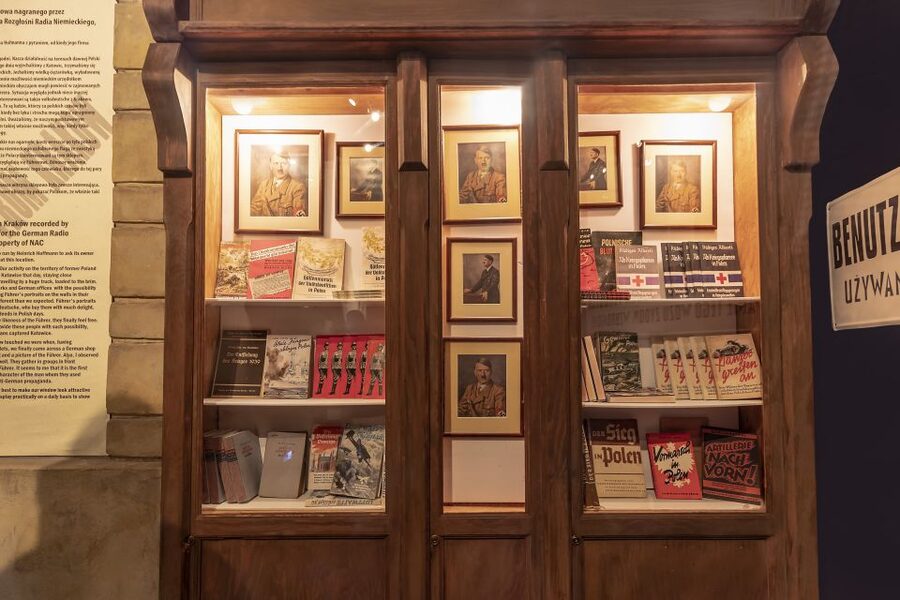
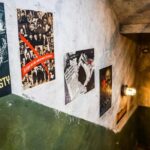
Inside, the guide focuses your attention on the exhibition Kraków under Nazi Occupation 1939-1945, seen through Oskar Schindler’s life. This is where the tour earns its emotional weight without getting messy. You’ll see photographs, personal objects, and reconstructed streets that show fear, uncertainty, and day-to-day struggle under oppression.
The centerpiece idea is Schindler’s use of his position to protect Jewish workers from deportation. More than a thousand men and women survived because he pushed back in the only ways he could, with resources, influence, and persistent risk. The term you’ll hear is “Schindlerjuden,” referencing the people he saved, and the tour connects that to testimony and memory across generations.
One more reason I like this stop: it’s not only about what happened to victims, it’s also about how a single person made choices inside a brutal system. That’s a useful perspective, especially if you’re also planning other WWII sites later. Context helps you connect the dots, and this tour gives you a strong start.
Podgórze Ghetto Walls Remnants: Seeing the Boundary
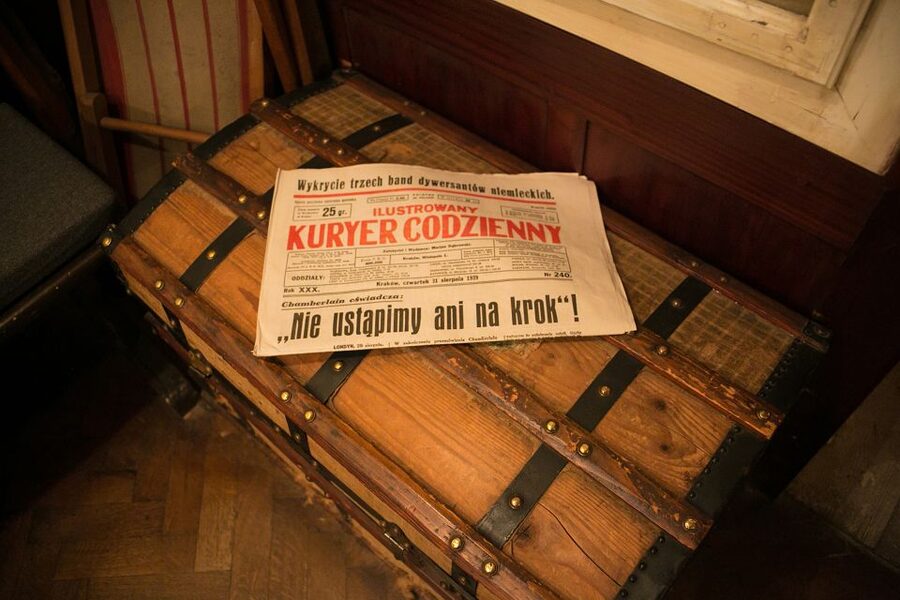
Then you move from museum space into street space, toward the former Jewish ghetto area in Podgórze. This is where Krakow’s wartime geography becomes tangible.
You’ll see surviving remnants of the Ghetto Walls. Standing near these fragments, you can feel the point the guide is making: the boundary wasn’t abstract. It was physical, enforced, and designed to separate people from the rest of the city.
Even if you already know the basics of the ghetto system, these wall pieces make it harder to keep history in your head only as facts. It turns into an environment. You start thinking about routes people took, where they could go, and how confinement reshaped daily life.
Kazimierz on foot, by cart and after dark. Our other write-ups
- Krakow: Jewish Quarter and Former Ghetto Tour★ 4.9 · 1,441 reviews
- Krakow: Bike Tour of Old Town, Jewish Quarter and the Ghetto★ 4.9 · 1,155 reviews
- Krakow: Kazimierz Jewish Quarter Walking Tour★ 4.8 · 571 reviews
- Full Bike Tour – the Old Town, Jewish Qtr & the Ghetto NEW BIKES★ 5.0 · 437 reviews
- Krakow: Bike Tour of the Old Town, Kazimierz, and the Ghetto★ 4.9 · 350 reviews
Ghetto Heroes Square and the Empty Chairs Memorial
The final major stop related to the ghetto is Ghetto Heroes Square, the former center of the Krakow Ghetto and closely connected with deportations.
Today, the square functions as a remembrance space. The memorial of empty metal chairs is the key visual cue. It’s simple, direct, and hard to forget. If you’re the type who likes symbolism that isn’t overdone, this works.
Your guide will frame what you’re seeing so it doesn’t become just a photo stop. The goal here is respect and understanding, not shock for shock’s sake. If you take a breath and look around the square for a moment after the explanation, the space tends to stick with you.
Price and Timing: Is $81 Worth Five Hours?
At $81 per person for about 5 hours, the price feels fair if you factor in two things: you’re paying for a guided, licensed walk plus fast-track admission to Schindler’s Factory.
Walking tours can be cheap if they skip ticketed museums, but this one includes a museum entry tied to a major WWII narrative. Also, the time is used well. You get multiple Kazimierz synagogue stops, then you switch to Schindler’s Factory, then you finish in Podgórze ghetto sites. It’s not just one neighborhood in circles.
What’s not included is food and drinks. That’s normal for a half-day walk, but it’s a good reason to plan ahead. If you know you get hungry, bring water and have a snack idea for before or after, so you can focus instead of managing hunger mid-tour.
Group Size and Comfort: The Practical Reality
This is a guided group tour with a maximum group size of 25 participants. That limit matters because the experience is heavily guide-led, especially inside the museum spaces and in narrower corridors.
A practical drawback showed up in one experience: when the group grew to 25, it became harder to both hear and see the guide’s points in tight, winding areas. In other words, even within the limit, museum layout can make visuals harder when your group is big.
My advice: if you’re sensitive to crowd noise, consider booking an earlier slot when possible, and don’t expect a museum-style view from the back row. Be ready to stand where your guide can guide you, because the tour is about attention, not speed.
Weather can also influence comfort. You’re outside a fair amount between stops, so dress for Krakow conditions, not just the forecast.
Languages and How the Guide Shapes the Experience
The tour runs in a single language per group: French, English, German, Spanish, or Italian. That’s a quiet but important detail. It means the guide can explain clearly without splitting attention, and you won’t miss key context by listening to a partial translation.
In one German-language booking, the guide was praised by name: Aneta. That’s a good signal that the tour can be led with strong structure and clarity, and not just “walk, read plaque, move on.”
You’ll also notice that the tour doesn’t treat the WWII sections as a separate topic. The guide stitches Kazimierz, traditions, occupation, and survival into one continuous line. That’s the real value for most people: you leave with understanding, not a checklist.
Who Should Book This Tour
I think this tour is best for you if you want:
- A focused introduction to Krakow’s Jewish quarter history and WWII story in one afternoon.
- A guide-led walk that connects synagogues, community life, and survival rather than only showing famous landmarks.
- A respectful, reflective experience where Schindler’s story is explained with museum exhibits and local geography.
You might prefer a different plan if you:
- Hate crowds and narrow spaces, since Schindler’s Factory rooms can feel tight.
- Want a strictly sightseeing tour with minimal context. This one is explanation-heavy.
Should You Book This Kazimierz, Schindler’s Factory, and Ghetto Tour?
If you want a smart way to understand Krakow beyond postcards, I’d book it. The strength here is the pacing and the sequence: you start in Kazimierz with the texture of everyday Jewish life, then you shift into Schindler’s Factory with objects and testimonies that make occupation personal, and you finish where the ghetto’s boundaries and memorial meaning become visible in the street.
At $81 for 5 hours, with guided interpretation and fast-track museum entry, it’s good value for what you get. Just go in with the right mindset: wear comfortable shoes, arrive early, and give yourself a little silence at the end. This tour tends to land best when you let it.
FAQ
Where do I meet the guide?
Meet your guide on the steps of the Old Synagogue. The guide will hold a Kazimierz Guided Tour sign.
How long is the tour?
The duration is listed as 5 hours. Exact timing can be approximate and may change due to site or museum scheduling.
What does the tour include besides the walking route?
You get a professional, licensed guide and fast-track admission to Schindler’s Factory.
Which sites will we see in Kazimierz?
You’ll walk through Kazimierz and pass key synagogue-related stops, including the Old Synagogue (now a museum), Remuh Synagogue and Cemetery, Kupa Synagogue, and Tempel Synagogue, with the walk concluding at Plac Nowy.
What WWII-related places are part of this tour?
You’ll visit Schindler’s Enamel Factory museum area and explore the former Jewish Ghetto in Podgórze, including remnants of the ghetto walls and Ghetto Heroes Square.
Do I need to bring my own tickets?
You’ll need personalized tickets issued by the museum, and providing the full names of all participants at booking is mandatory.
What languages are offered?
The tour is offered in French, English, German, Spanish, and Italian.
Is there a limit on group size?
Yes. Group size is limited to a maximum of 25 participants.
Is food included in the price?
No. Food and drinks are not included.
Jewish Heritage and Ghetto Routes in Krakow

Kazimierz, Keep Going
The Schindler Factory, Other Ways In

Recently written up around Krakow
More Kazimierz Jewish Quarter Tours.
 ★ 4.9Jewish Quarter and Former Ghetto TourFrom $191,441 reviews
 ★ 4.9Bike Tour of Old Town, Jewish Quarter and the GhettoFrom $371,155 reviews
 ★ 4.8Kazimierz Jewish Quarter Walking TourFrom $27571 reviews
 ★ 4.8Kazimierz, Schindler’s Factory & Ghetto Guided TourFrom $81460 reviews
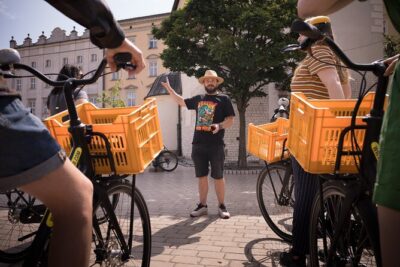 ★ 5.0Full Bike Tour – the Old Town, Jewish Qtr & the Ghetto NEW BIKESFrom $35437 reviews
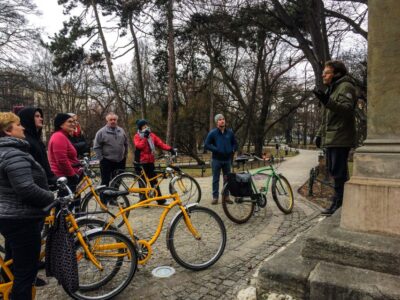 ★ 4.9Bike Tour of the Old Town, Kazimierz, and the GhettoFrom $26350 reviews
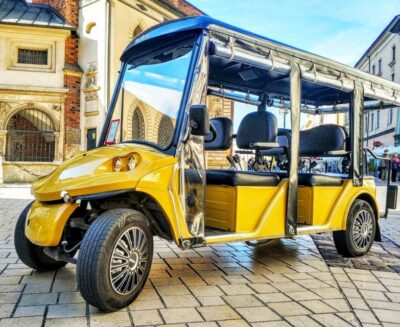 ★ 4.6Jewish Quarter and Ghetto Electric Golf Cart TourFrom $34348 reviews
 ★ 5.0Jewish Krakow Walking TourFrom $26307 reviews
Also on these Poland lists